
Overview of the U S Equal Employment Opportunity
- Slides: 19
Overview of the U. S. Equal Employment Opportunity Commission Presented by: Alexa Moore, Federal Investigator
Training Objectives Learn about laws enforced by the EEOC and the agency’s jurisdiction Learn about the EEOC’s priority topics to better identify such issues in your communities Brief overview of general best practices for employers
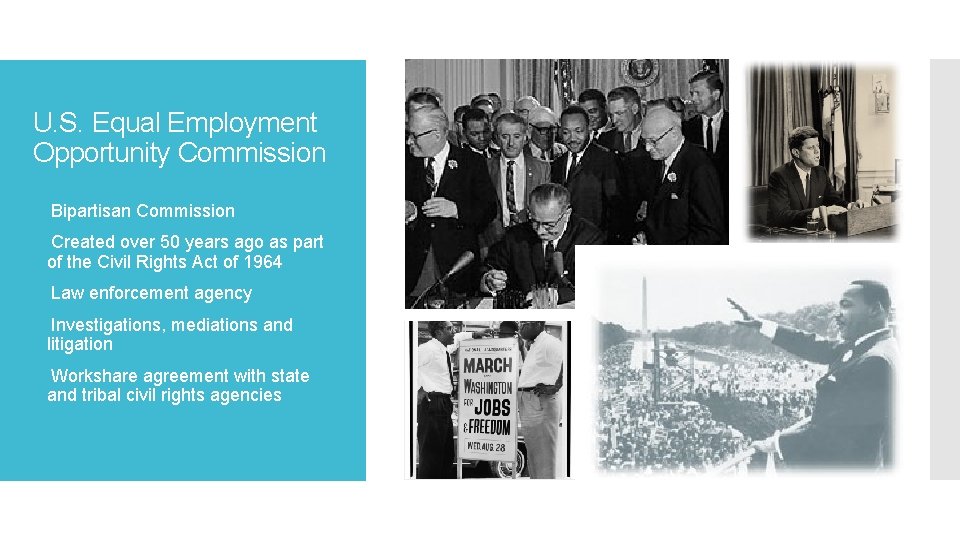
U. S. Equal Employment Opportunity Commission Bipartisan Commission Created over 50 years ago as part of the Civil Rights Act of 1964 Law enforcement agency Investigations, mediations and litigation Workshare agreement with state and tribal civil rights agencies
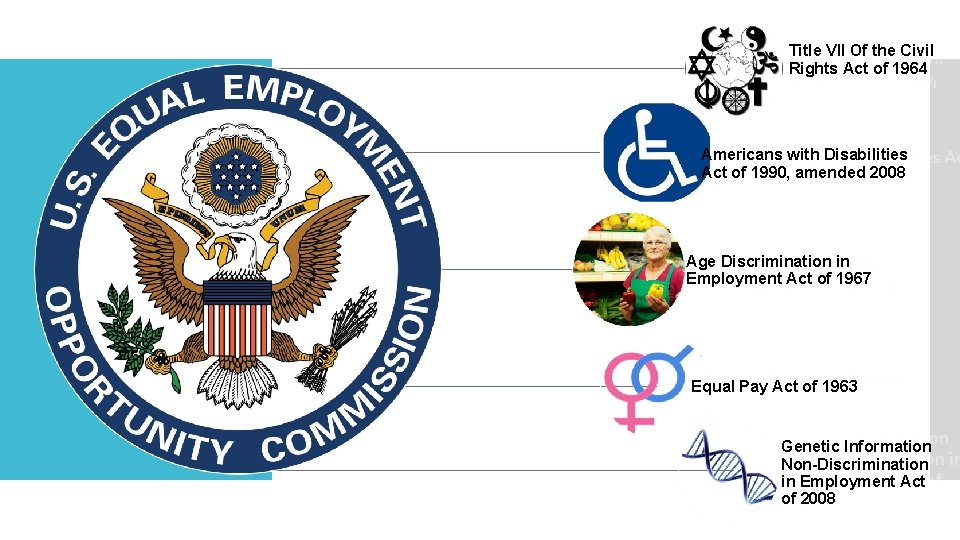
Title VII Of the Civil Rights Act of 1964 Americans with Disabilities Act of 1990, amended 2008 Age Discrimination in Employment Act of 1967 Equal Pay Act of 1963 Genetic Information Non-Discrimination in Employment Act of 2008
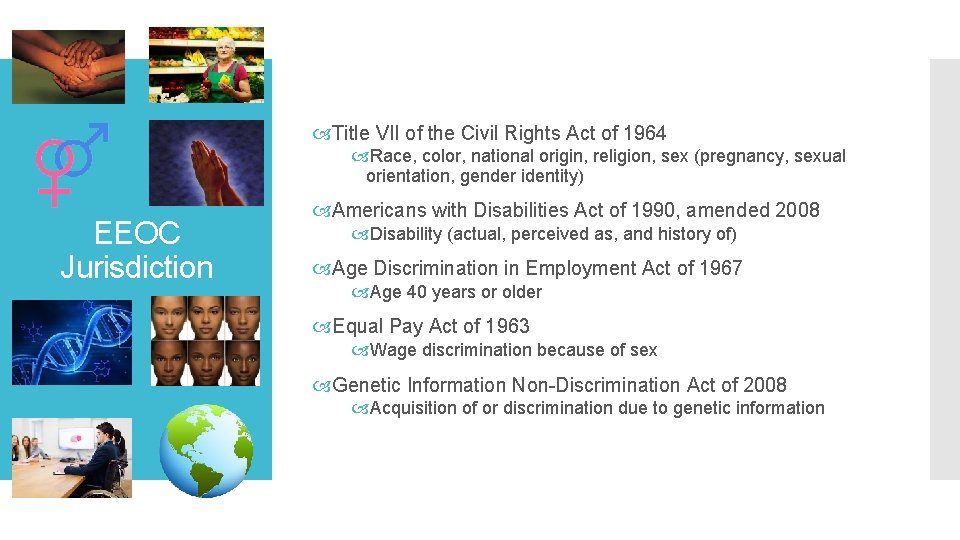
Title VII of the Civil Rights Act of 1964 Race, color, national origin, religion, sex (pregnancy, sexual orientation, gender identity) EEOC Jurisdiction Americans with Disabilities Act of 1990, amended 2008 Disability (actual, perceived as, and history of) Age Discrimination in Employment Act of 1967 Age 40 years or older Equal Pay Act of 1963 Wage discrimination because of sex Genetic Information Non-Discrimination Act of 2008 Acquisition of or discrimination due to genetic information
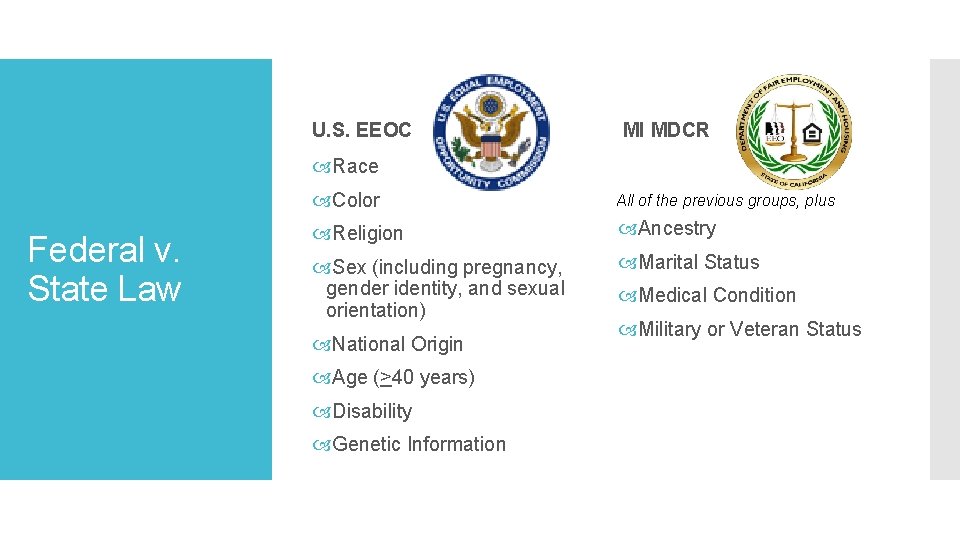
U. S. EEOC MI MDCR Race Federal v. State Law Color All of the previous groups, plus Religion Ancestry Sex (including pregnancy, gender identity, and sexual orientation) Marital Status National Origin Age (>40 years) Disability Genetic Information Medical Condition Military or Veteran Status
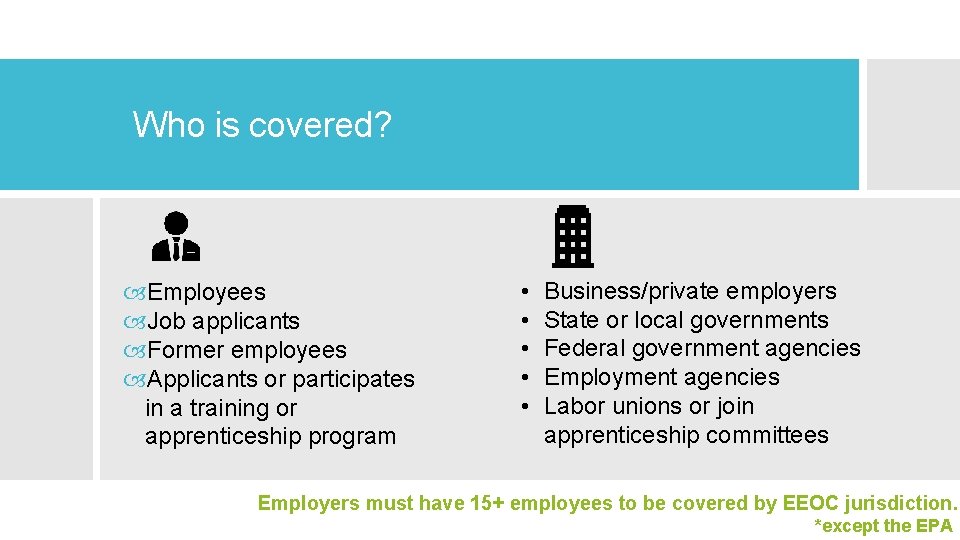
Who is covered? Employees Job applicants Former employees Applicants or participates in a training or apprenticeship program • • • Business/private employers State or local governments Federal government agencies Employment agencies Labor unions or join apprenticeship committees Employers must have 15+ employees to be covered by EEOC jurisdiction. *except the EPA
Statute of Limitations Most EEOC Offices: 300 days from the date of harm State Agencies: 180 days from the date of harm
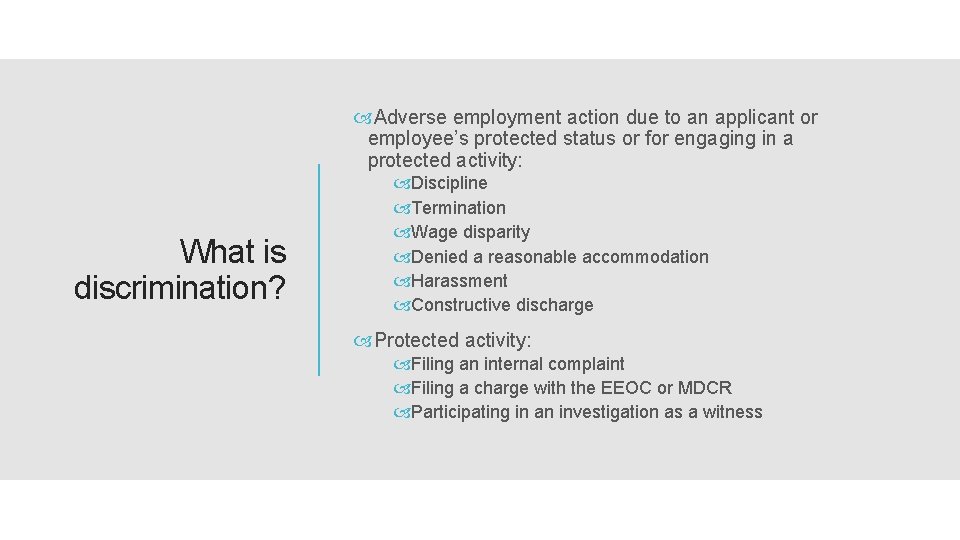
Adverse employment action due to an applicant or employee’s protected status or for engaging in a protected activity: What is discrimination? Discipline Termination Wage disparity Denied a reasonable accommodation Harassment Constructive discharge Protected activity: Filing an internal complaint Filing a charge with the EEOC or MDCR Participating in an investigation as a witness
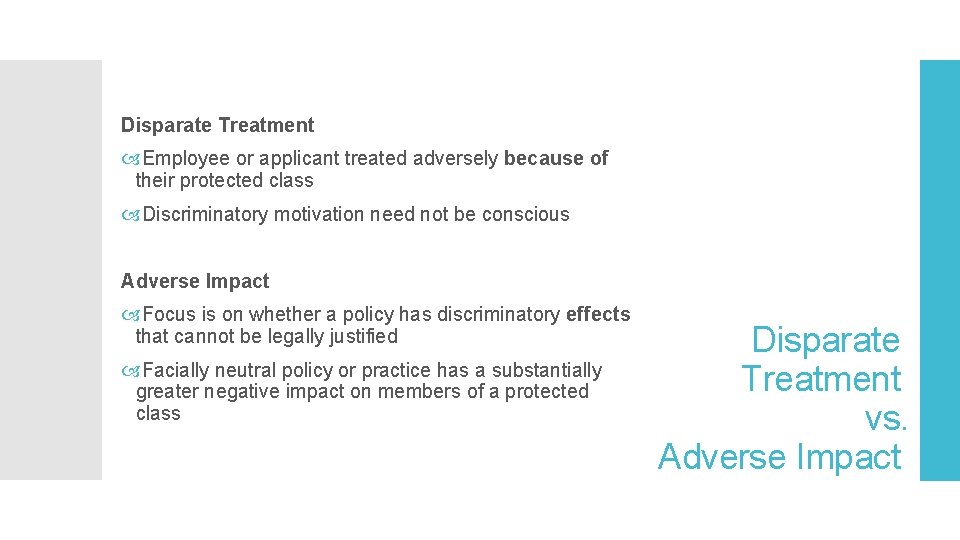
Disparate Treatment Employee or applicant treated adversely because of their protected class Discriminatory motivation need not be conscious Adverse Impact Focus is on whether a policy has discriminatory effects that cannot be legally justified Facially neutral policy or practice has a substantially greater negative impact on members of a protected class Disparate Treatment vs. Adverse Impact
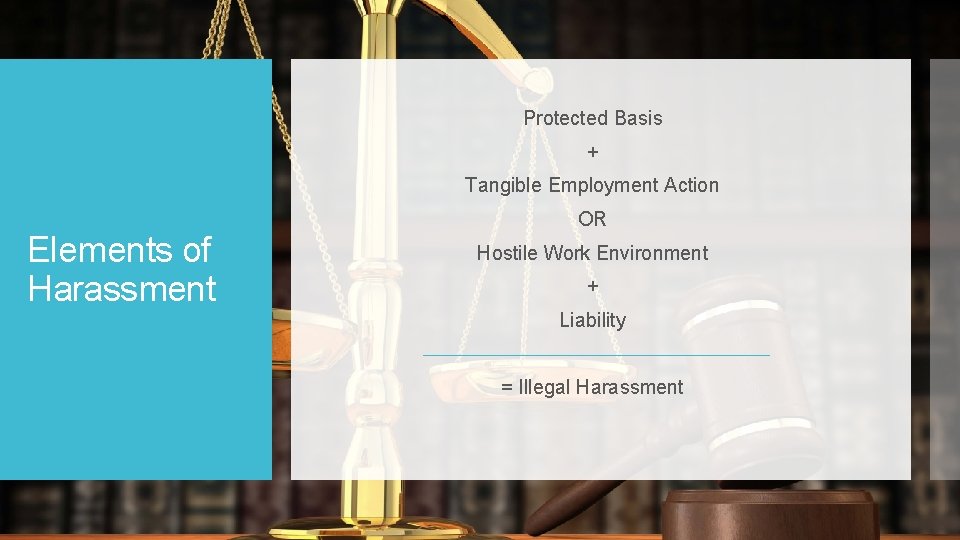
Protected Basis + Tangible Employment Action Elements of Harassment OR Hostile Work Environment + Liability = Illegal Harassment
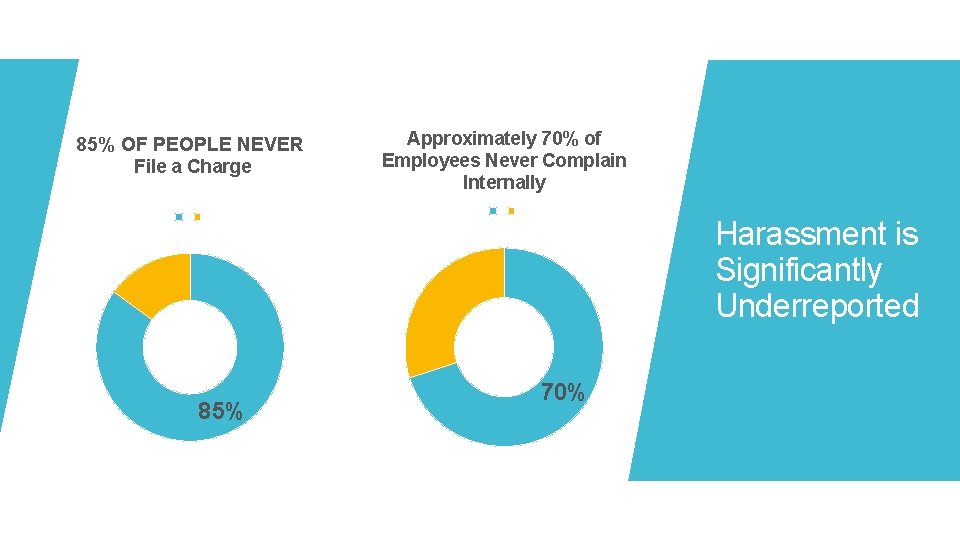
85% OF PEOPLE NEVER File a Charge Approximately 70% of Employees Never Complain Internally Harassment is Significantly Underreported 85% 70%
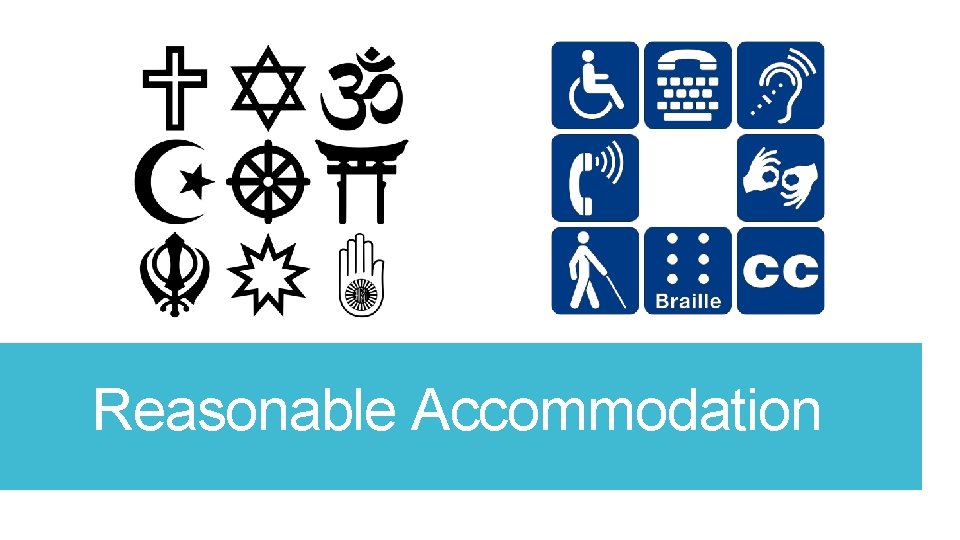
Reasonable Accommodation
Disability: physical or mental impairment which substantially limits one or more major life activities Covers: Individuals with a disability Record of disability Reasonable Accommodation Under the ADA Request can be verbal or in writing Interactive process Employer may request additional medical documentation if accommodation request needs clarification Discussion May be more than one effective accommodation option Leave may be considered as a reasonable accommodation Reasonable accommodation must be absent an undue hardship for the employer
Employers cannot take an adverse action against an individual for engaging in a “protected activity” filing a charge of discrimination participating in a discrimination proceeding otherwise opposing discrimination Complaint must indicate they believe treatment is due to a protected status Adverse action could create a “chilling effect” Must be a connection between the protected activity and the adverse action Retaliation
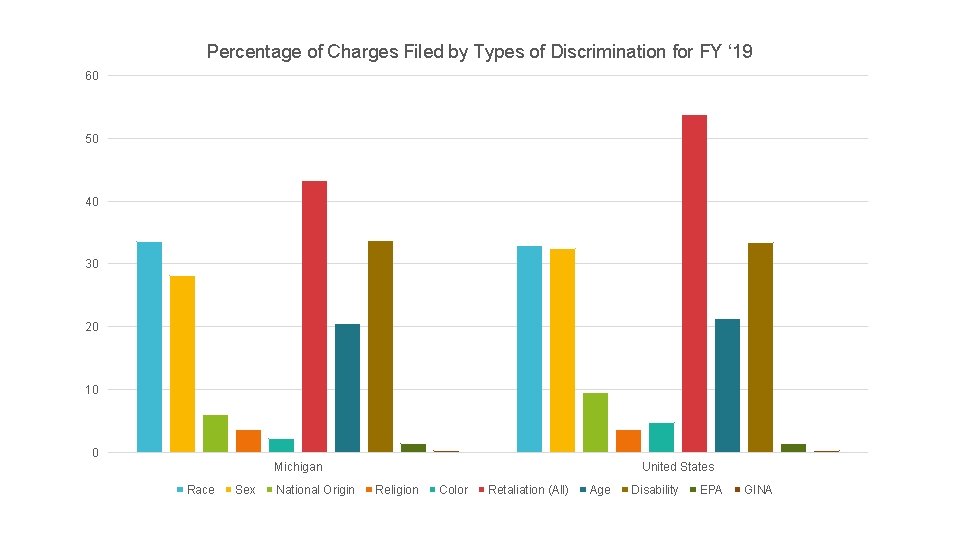
Percentage of Charges Filed by Types of Discrimination for FY ‘ 19 60 50 40 30 20 10 0 Michigan Race Sex National Origin United States Religion Color Retaliation (All) Age Disability EPA GINA
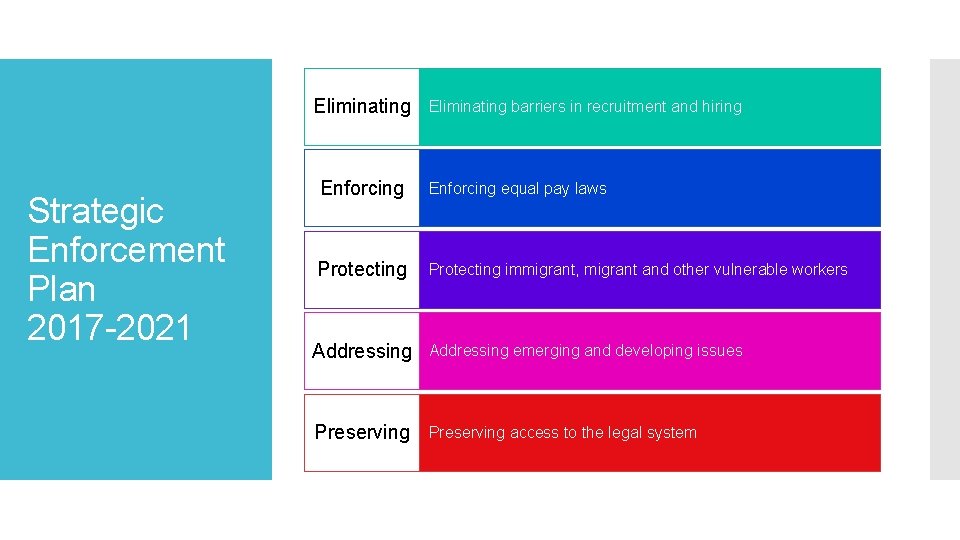
Eliminating Strategic Enforcement Plan 2017 -2021 Eliminating barriers in recruitment and hiring Enforcing equal pay laws Protecting immigrant, migrant and other vulnerable workers Addressing emerging and developing issues Preserving access to the legal system
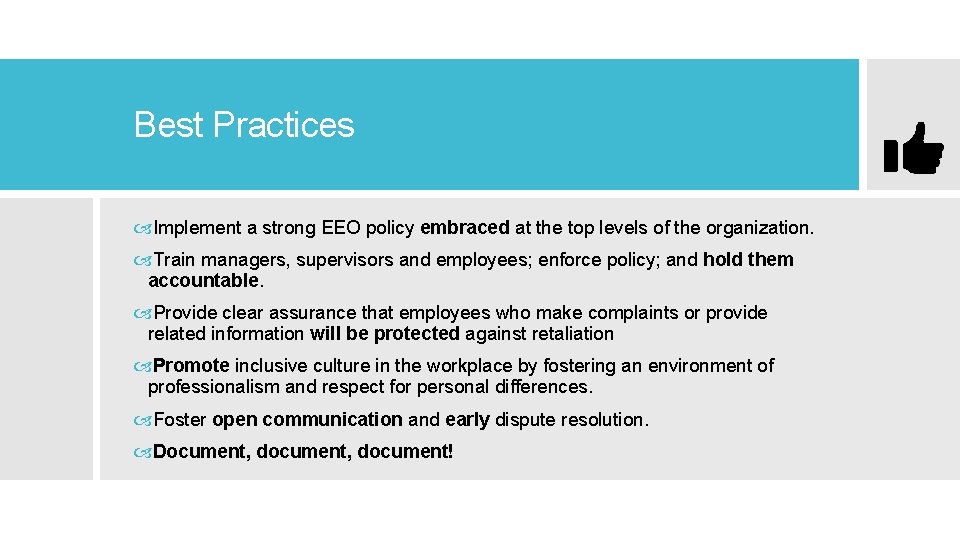
Best Practices Implement a strong EEO policy embraced at the top levels of the organization. Train managers, supervisors and employees; enforce policy; and hold them accountable. Provide clear assurance that employees who make complaints or provide related information will be protected against retaliation Promote inclusive culture in the workplace by fostering an environment of professionalism and respect for personal differences. Foster open communication and early dispute resolution. Document, document!
www. eeoc. gov Detroit Field Office: (313) 226 -4600 Contact the EEOC! Lolita Davis, Outreach & Education Coordinator: (313) 226 -3783 Alexa Moore, Federal Investigator: (313) 226 -4626 or alexa. moore@eeoc. gov