
Overview of the SCEC Unified Community Velocity Model


- Slides: 36
Overview of the SCEC Unified Community Velocity Model (UCVM) Software Framework Philip Maechling SCEC Community Velocity Model Workshop 2 October 2018 Pomona, California Southern California Earthquake Center
Overview SCEC’s Unified Community Velocity Model (UCVM) Software provides a way to query 3 D seismic velocity models for location-specific seismic properties (Vp, Vs, and density) with eight (8) California 3 D velocity models currently supported. (a) UCVM provides a distribution mechanism for CVMs UCVM provides additional utilities for using CVMs in wave propagation simulations including (a) code to add (or remove) low velocities in top 300 m meters, (b) ability to combine or “tile” multiple small models to increase coverage area (c) MPI-codes to build very large regular and Etree meshes (d) basic plotting tools to show characteristics of velocity models
UCVM SCEC Web Page
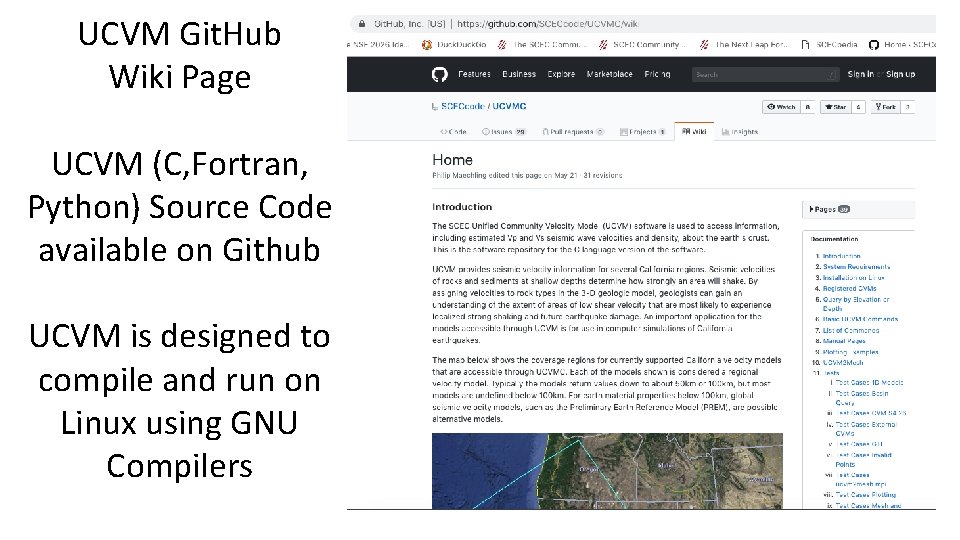
UCVM Git. Hub Wiki Page UCVM (C, Fortran, Python) Source Code available on Github UCVM is designed to compile and run on Linux using GNU Compilers
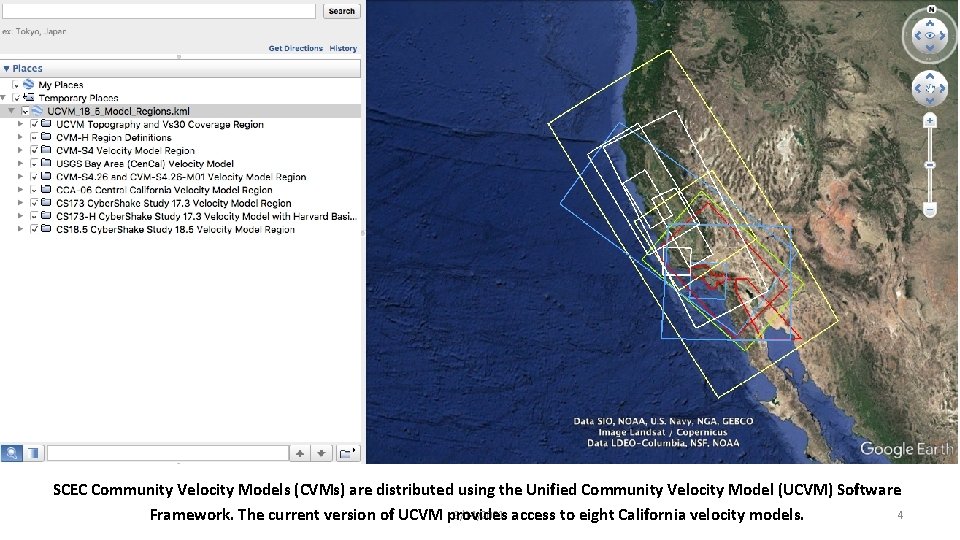
SCEC Community Velocity Models (CVMs) are distributed using the Unified Community Velocity Model (UCVM) Software 9/14/2021 access to eight California velocity models. 4 Framework. The current version of UCVM provides
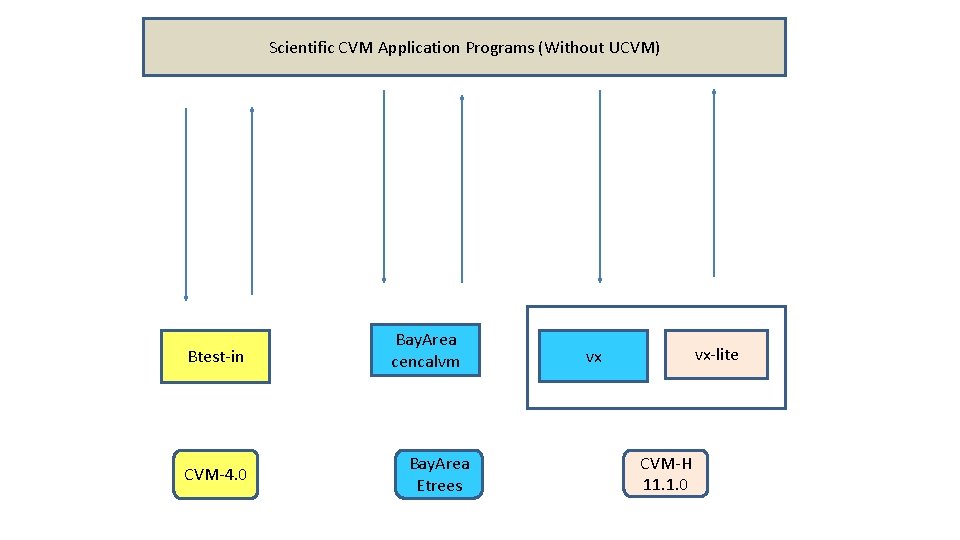
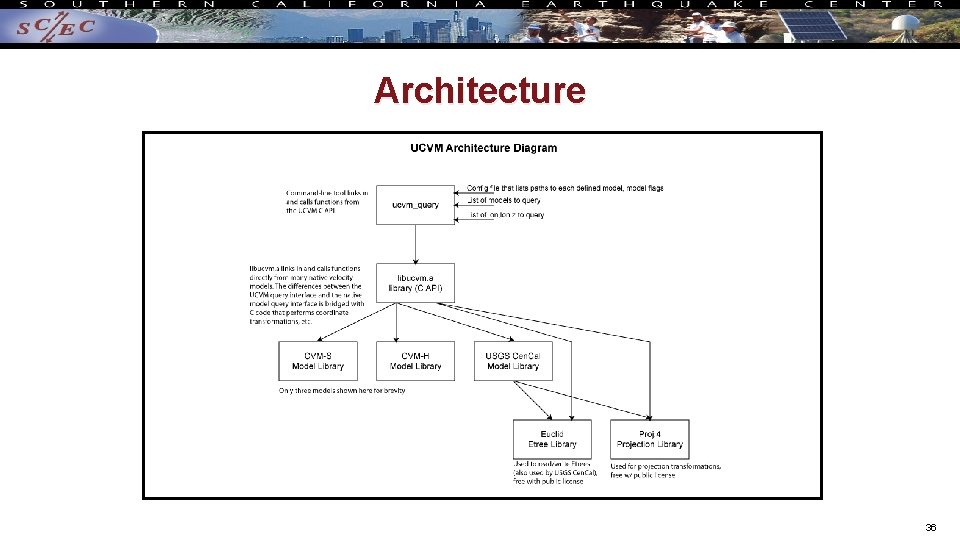
Seismic Velocity Models Software Existing California Seismic velocity models: • are delivered in a variety of formats (on regular grids, rule-based software, custom software interfaces) • may use different projections: • may provide their own query interface. Examples include: • CVM-S 4 – provides btest-in (Fortran) software interface • CVM-H - provides vx and vx-lite (C-language) software interface) • CCA 06 - provides properties defined on 500 m regular mesh • Cen. Cal (USGS Bay Area Model) – provides properties defined in high and low resolution etree structures.
The Need to work with Multiple CVMs Motivated UCVM Development SCEC researchers use multiple seismic velocity models including: (1) (2) (3) (4) (5) CVM-S 4 (SCEC original S. California model) CVM-H v 15. 1 (Harvard-developed S. California model) CVM-S 4. 26 (Tomography improved Southern California velocity models) CCA 06 (Tomography improved Central California velocity model) And others… Coverage regions may overlap, but material properties differ for each model
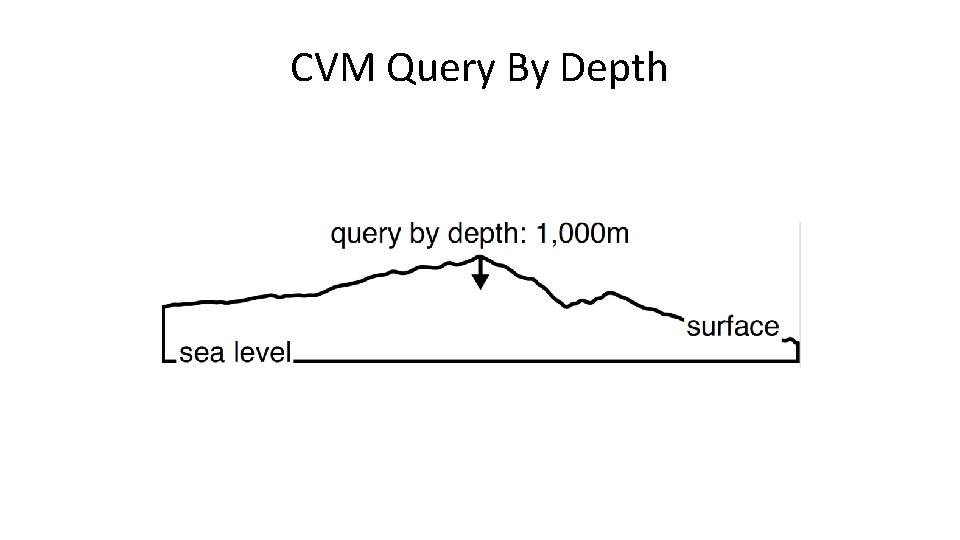
Motivations for UCVM Development 1. Ground motion modelers want to compare ground motion simulations using alternative velocity models. 2. Goal was to create software tools for generating equivalent meshes from different velocity models (e. g. develop a standard way to query by depth for models that are query by elevation) 3. Needed to convert models from one projection to another. 4. Needed to combine CVMs and add background models. 5. Needed tools to query models provided on regular grids, including standard interpolation methods
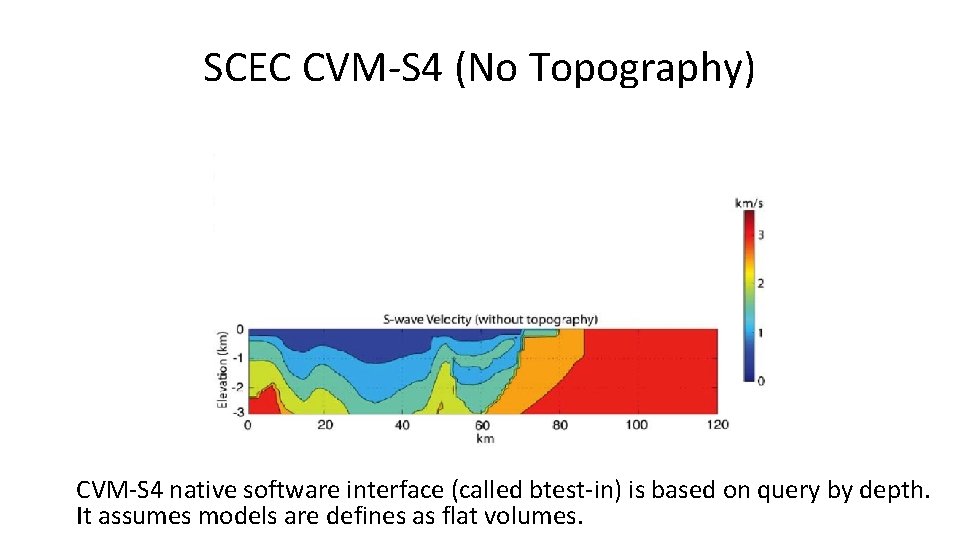
SCEC CVM-S 4 (No Topography) CVM-S 4 native software interface (called btest-in) is based on query by depth. It assumes models are defines as flat volumes.
CVM Query By Depth
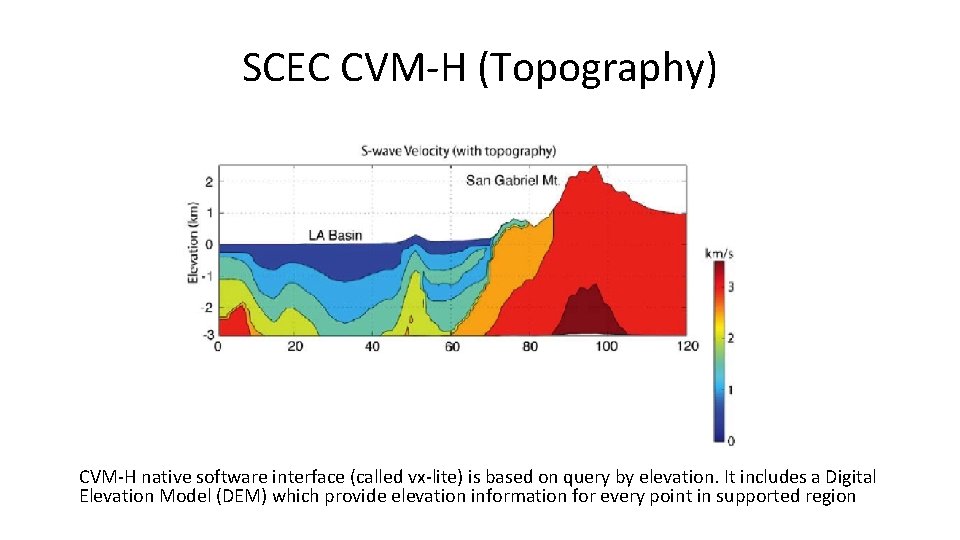
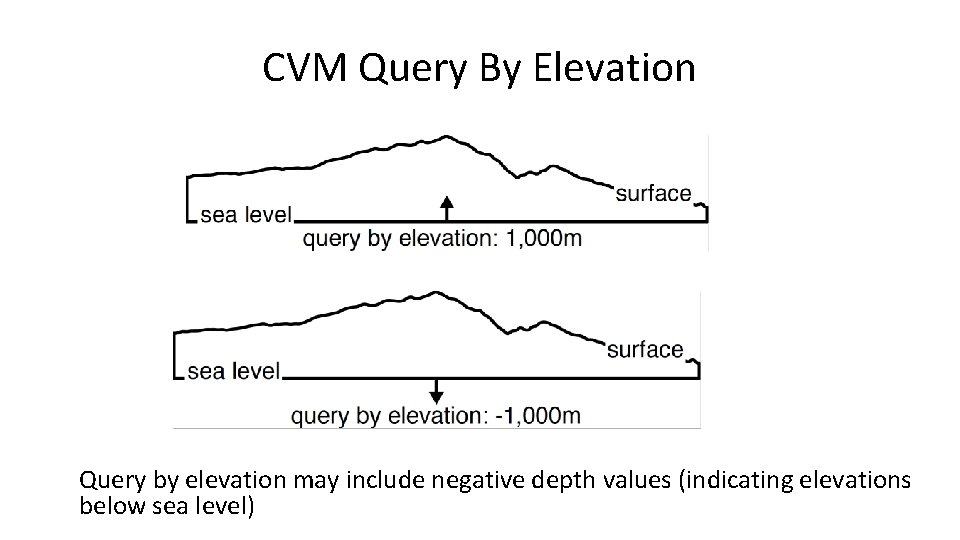
SCEC CVM-H (Topography) CVM-H native software interface (called vx-lite) is based on query by elevation. It includes a Digital Elevation Model (DEM) which provide elevation information for every point in supported region
CVM Query By Elevation Query by elevation may include negative depth values (indicating elevations below sea level)
Scientific CVM Application Programs (Without UCVM) Btest-in CVM-4. 0 Bay. Area cencalvm Bay. Area Etrees vx-lite vx CVM-H 11. 1. 0
UCVM is not a Velocity Model • SCEC’s Unified Community Velocity Model (UCVM) software is not a seismic velocity model. • UCVM is a collection of software tools for working with existing and future seismic velocity models.
UCVM Development Approach • We designed UCVM to require minimal changes to existing CVMs. • We want to avoid changing our application software to query each model in its own way. • We implemented standardized query and projection conversion methods so results are repeatable and comparable
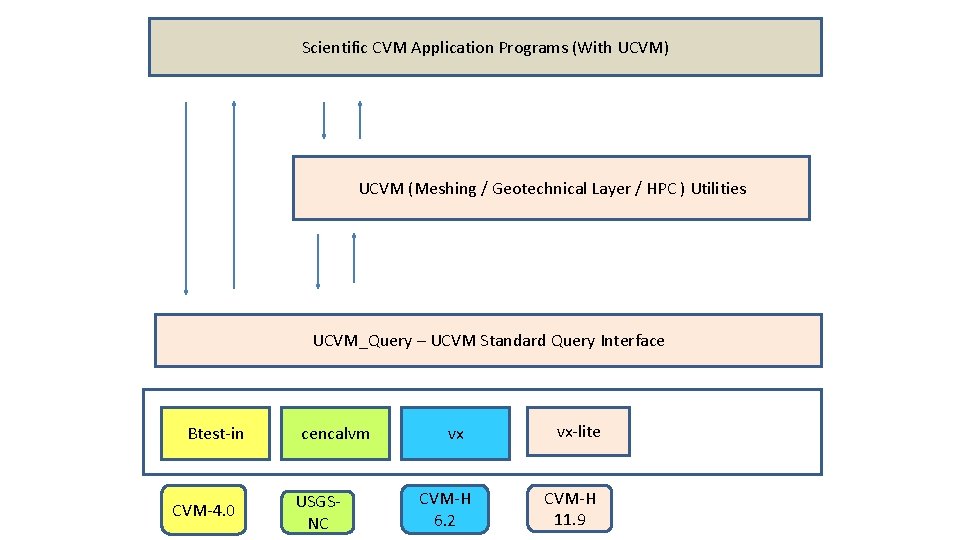
Scientific CVM Application Programs (With UCVM) UCVM (Meshing / Geotechnical Layer / HPC ) Utilities UCVM_Query – UCVM Standard Query Interface Btest-in CVM-4. 0 cencalvm USGSNC vx CVM-H 6. 2 vx-lite CVM-H 11. 9
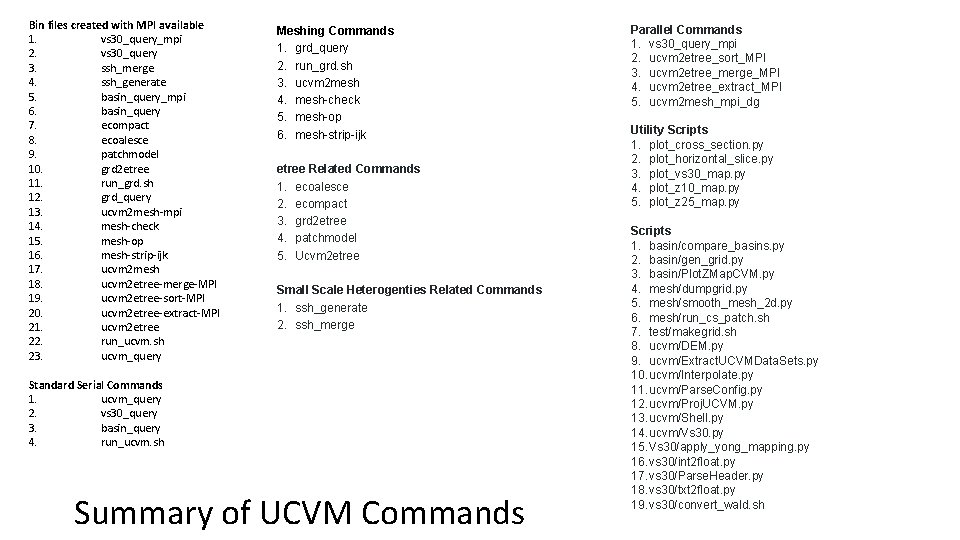
Bin files created with MPI available 1. vs 30_query_mpi 2. vs 30_query 3. ssh_merge 4. ssh_generate 5. basin_query_mpi 6. basin_query 7. ecompact 8. ecoalesce 9. patchmodel 10. grd 2 etree 11. run_grd. sh 12. grd_query 13. ucvm 2 mesh-mpi 14. mesh-check 15. mesh-op 16. mesh-strip-ijk 17. ucvm 2 mesh 18. ucvm 2 etree-merge-MPI 19. ucvm 2 etree-sort-MPI 20. ucvm 2 etree-extract-MPI 21. ucvm 2 etree 22. run_ucvm. sh 23. ucvm_query Meshing Commands 1. grd_query 2. run_grd. sh 3. ucvm 2 mesh 4. mesh-check 5. mesh-op 6. mesh-strip-ijk etree Related Commands 1. ecoalesce 2. ecompact 3. grd 2 etree 4. patchmodel 5. Ucvm 2 etree Small Scale Heterogenties Related Commands 1. ssh_generate 2. ssh_merge Standard Serial Commands 1. ucvm_query 2. vs 30_query 3. basin_query 4. run_ucvm. sh Summary of UCVM Commands Parallel Commands 1. vs 30_query_mpi 2. ucvm 2 etree_sort_MPI 3. ucvm 2 etree_merge_MPI 4. ucvm 2 etree_extract_MPI 5. ucvm 2 mesh_mpi_dg Utility Scripts 1. plot_cross_section. py 2. plot_horizontal_slice. py 3. plot_vs 30_map. py 4. plot_z 10_map. py 5. plot_z 25_map. py Scripts 1. basin/compare_basins. py 2. basin/gen_grid. py 3. basin/Plot. ZMap. CVM. py 4. mesh/dumpgrid. py 5. mesh/smooth_mesh_2 d. py 6. mesh/run_cs_patch. sh 7. test/makegrid. sh 8. ucvm/DEM. py 9. ucvm/Extract. UCVMData. Sets. py 10. ucvm/Interpolate. py 11. ucvm/Parse. Config. py 12. ucvm/Proj. UCVM. py 13. ucvm/Shell. py 14. ucvm/Vs 30. py 15. Vs 30/apply_yong_mapping. py 16. vs 30/int 2 float. py 17. vs 30/Parse. Header. py 18. vs 30/txt 2 float. py 19. vs 30/convert_wald. sh
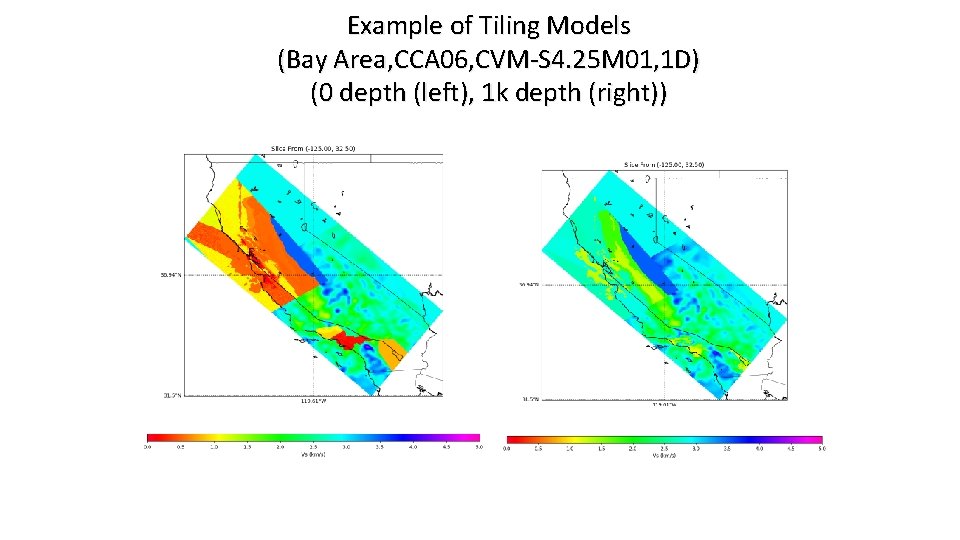
Example of Tiling Models (Bay Area, CCA 06, CVM-S 4. 25 M 01, 1 D) (0 depth (left), 1 k depth (right))
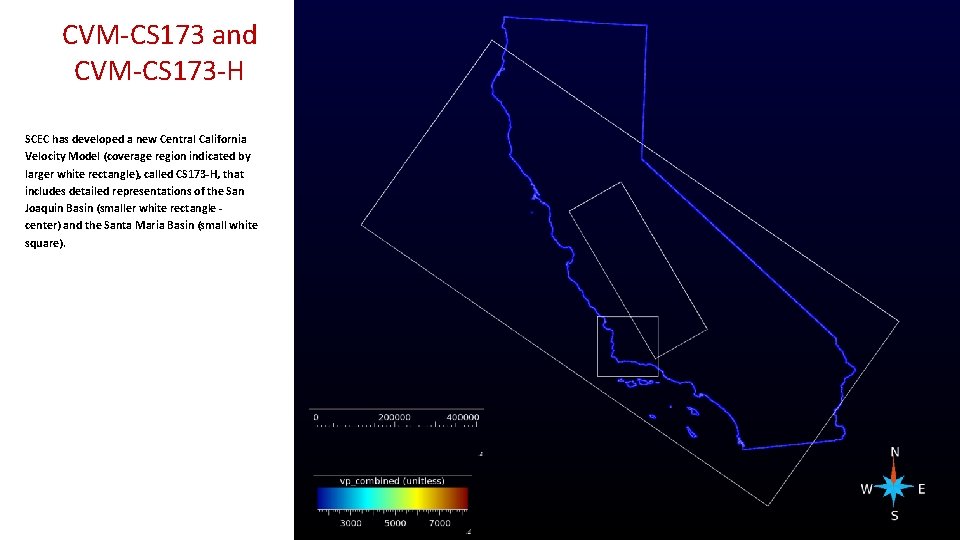
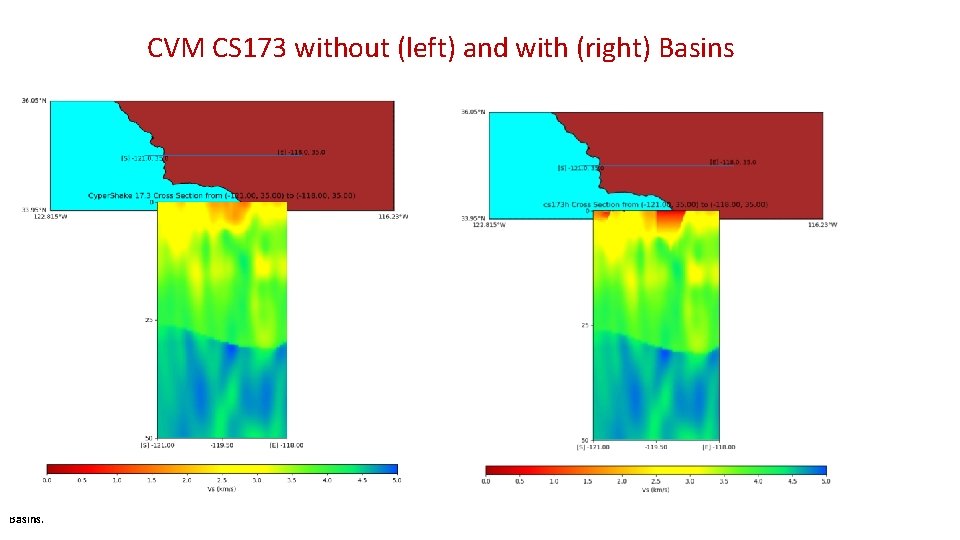
CVM-CS 173 and CVM-CS 173 -H SCEC has developed a new Central California Velocity Model (coverage region indicated by larger white rectangle), called CS 173 -H, that includes detailed representations of the San Joaquin Basin (smaller white rectangle center) and the Santa Maria Basin (small white square).
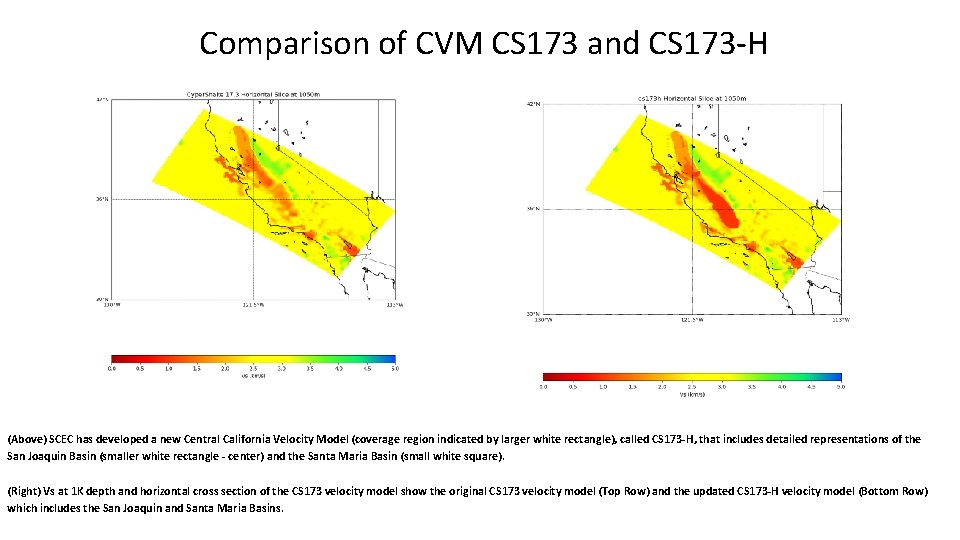
Comparison of CVM CS 173 and CS 173 -H (Above) SCEC has developed a new Central California Velocity Model (coverage region indicated by larger white rectangle), called CS 173 -H, that includes detailed representations of the San Joaquin Basin (smaller white rectangle - center) and the Santa Maria Basin (small white square). (Right) Vs at 1 K depth and horizontal cross section of the CS 173 velocity model show the original CS 173 velocity model (Top Row) and the updated CS 173 -H velocity model (Bottom Row) which includes the San Joaquin and Santa Maria Basins.
CVM CS 173 without (left) and with (right) Basins (Above) SCEC has developed a new Central California Velocity Model (coverage region indicated by larger white rectangle), called CS 173 -H, that includes detailed representations of the San Joaquin Basin (smaller white rectangle - center) and the Santa Maria Basin (small white square). (Right) Vs at 1 K depth and horizontal cross section of the CS 173 velocity model show the original CS 173 velocity model (Top Row) and the updated CS 173 -H velocity model (Bottom Row) which includes the San Joaquin and Santa Maria Basins.
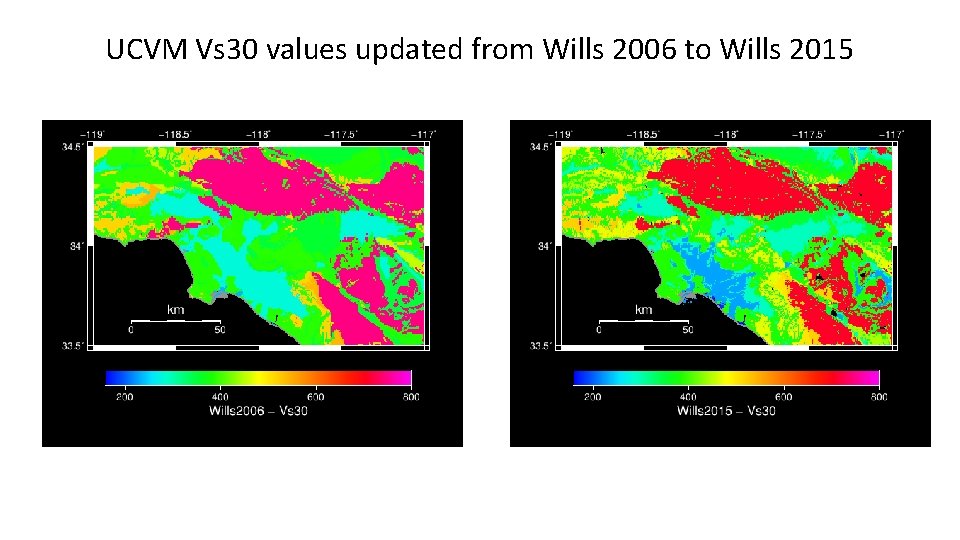
UCVM Vs 30 values updated from Wills 2006 to Wills 2015
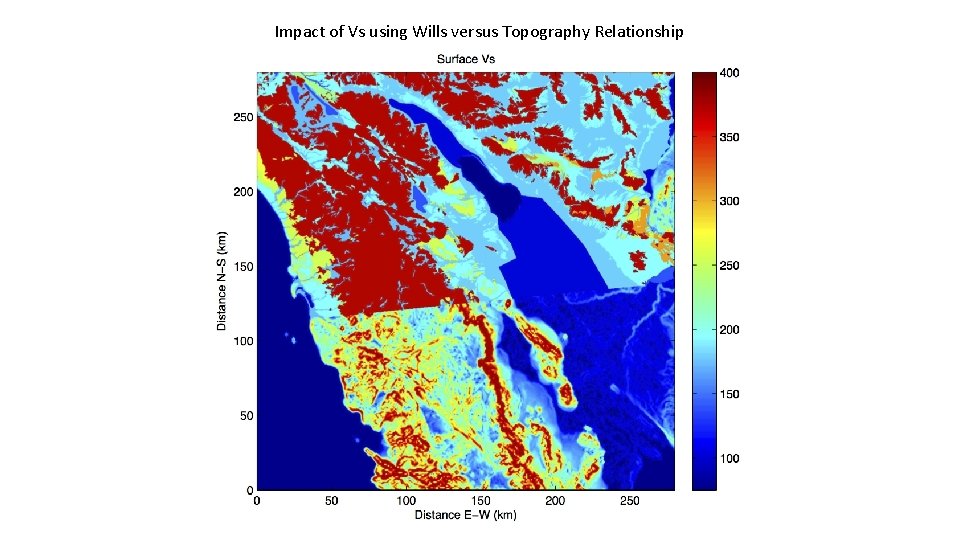
Impact of Vs using Wills versus Topography Relationship
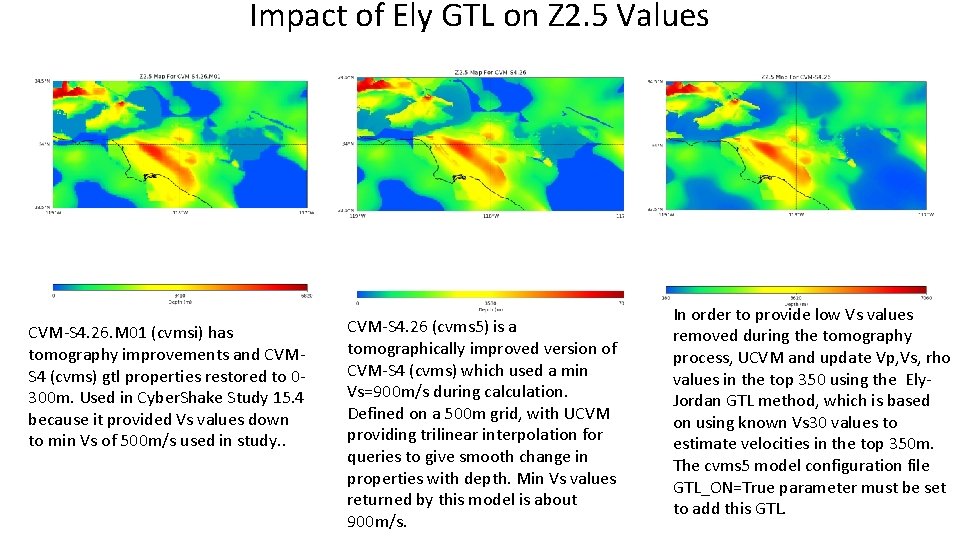
Impact of Ely GTL on Z 2. 5 Values CVM-S 4. 26. M 01 (cvmsi) has tomography improvements and CVMS 4 (cvms) gtl properties restored to 0300 m. Used in Cyber. Shake Study 15. 4 because it provided Vs values down to min Vs of 500 m/s used in study. . CVM-S 4. 26 (cvms 5) is a tomographically improved version of CVM-S 4 (cvms) which used a min Vs=900 m/s during calculation. Defined on a 500 m grid, with UCVM providing trilinear interpolation for queries to give smooth change in properties with depth. Min Vs values returned by this model is about 900 m/s. In order to provide low Vs values removed during the tomography process, UCVM and update Vp, Vs, rho values in the top 350 using the Ely. Jordan GTL method, which is based on using known Vs 30 values to estimate velocities in the top 350 m. The cvms 5 model configuration file GTL_ON=True parameter must be set to add this GTL.
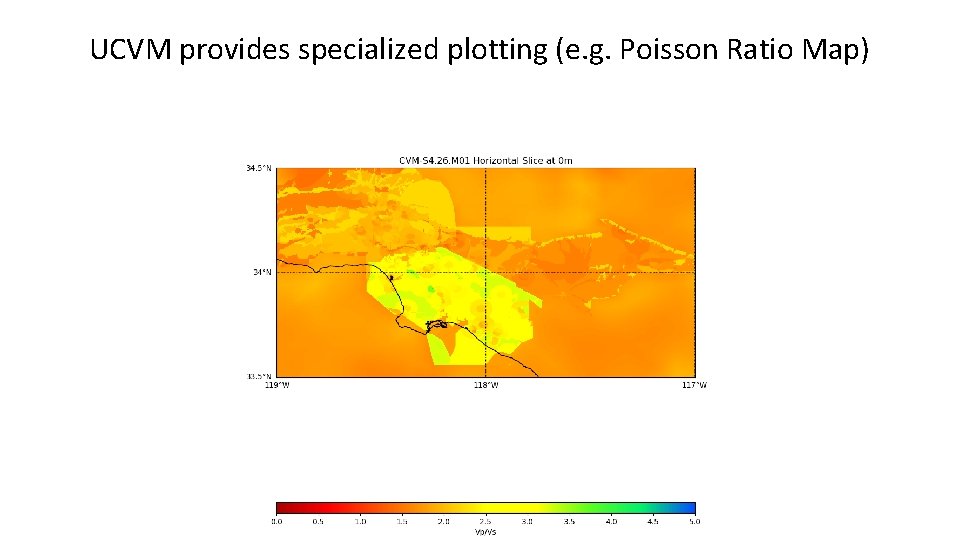
UCVM provides specialized plotting (e. g. Poisson Ratio Map)
Recent CVM Developments: Recent UCVM Software related developments include: 1. Integrated CCA 06 to support Northern California Cyber. Shake study. 2. Integrated CS 173 Central California Velocity Model to support Central California Cyber. Shake. 3. Integrated CS 173 -H Central California Velocity Model updated with San Joaquin and Santa Maria Basins to support updated Central California Cyber. Shake. 4. Added Ely GTL to models CCA 06, CVM-S 4. 26, CS 173 5. Constructed large simulation meshes in support of High-F simulations 6. Constructed Northern California Cyber. Shake Velocity Model by tiling Cen. Cal, CCA 06, and CVM-S 4. 26. M 01 models. 7. Integrated Updated Wills Vs 30 map into UCVM which will affect Ely GTL when added. 8. Posted release candidate version of UCVM-18. 5 on github to make these updates available.
Significant Usage of UCVM • UCVM used to construct very large meshes for SCEC ground motion simulations (e. g. M 8, Cyber. Shake) • UCVM used to construct Hercules Etrees comparing impact of CVMs on ground motion goodness-of-fit studies (e. g. Chino Hills event) • UCVM used for to construct meshes for several SCEC Cyber. Shake studies (e. g. 15. 3, 17. 3) • Used to support SCEC High Frequency (High-F) ground motion modeling group building high resolution (e. g. 20 m resolution) meshes
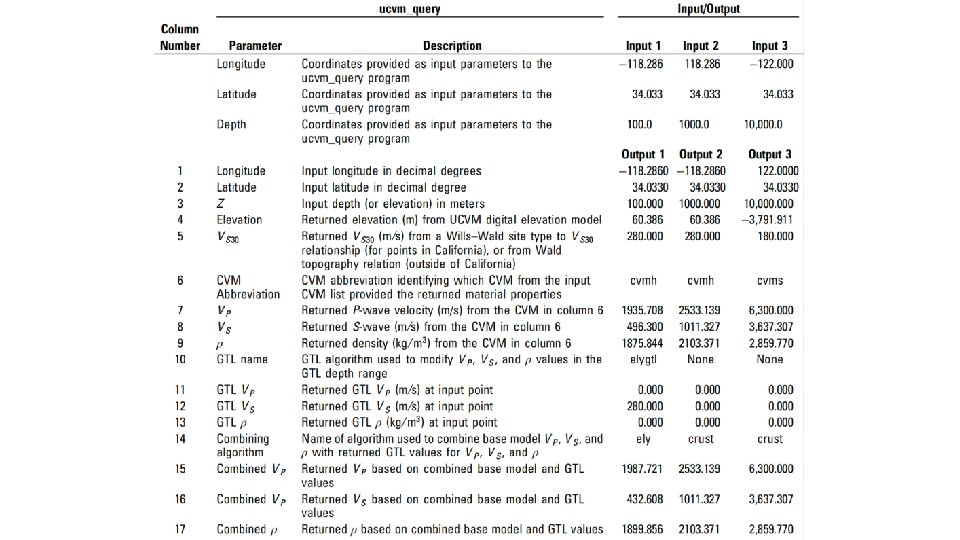
Summary of UCVM Software Features 1. UCVM provides a uniform query interface to several California velocity models. Models may be queried by (lon, lat, depth) or (lon, lat, elev). • ucvm_query: Linux command-line query tool • API: C interface to UCVM 2. UCVM easily combine two or more regional velocity models together into one meta-model. Models are tiled in specified order. 3. Codes to modify top 350 meters as geotechnical layer using Ely-Jordan, and other methods. 4. Allows users to add 1 D background models for regions outside CVM coverage 5. Create and populate meshes from any registered CVM in various formats including AWP (Cartesian meshes) and CMU/SCEC-formatted Etrees 6. Support parallel mesh building and population for very large meshes 7. Plotting and visualization scripts
Southern California Earthquake Center Summary • Currently supported version (described here and in reference) is the C -language version (UCVMC) available at: https: //github. com/SCECcode/UCVMC • UCVM is a distribution and access software for SCEC-developed velocity models, including tomography improved CVM’s and regionalmodels developed by combining existing CVMs
Preferred UCVM Reference If you use the UCVM software in your research, please include a reference to this software. The preferred reference for the UCVM software is: • Small, P. , Gill, D. , Maechling, P. J. , Taborda, R. , Callaghan, S. , Jordan, T. H. , Ely, G. P. , Olsen, K. B. , & Goulet, C. A. (2017). The SCEC Unified Community Velocity Model Software Framework. Seismological Research Letters, 88(5). https: //doi. org/doi: 10. 1785/0220170082 9/14/2021 Southern California Earthquake Center 32
www. SCEC. org
Definitions and Conventions Depth: Measured in meters relative to ground/water, ground/air interface, positive down. Constrained to >= 0. 0. UCVM translates model depth references if different from this definition. Elevation: Measured in meters relative to MSL, positive up. UCVM translates model elevation references if different from this definition. Geographic coordinates: Longitude and latitude are measured in DD, longitude west is negative. Vp and Vs: Measured in m/s. Density: Measured in kg/m^3. “No data” values: Value is set to 0. 0. 34
Known SCEC UCVM Issues • Software can be difficult to build, has hidden settings, and lacks easy to use interface. • Adding new velocity models (called registering models) requires software developer time. • Registration of new models lagging behind demand (several pending velocity models including Kohler off -shore, Ben Zion Salton Sea, Central US…) • Significant installation issues on several computing environments (designed and tested on USC HPC Cent. OS Linux) • Feature creep has led to a large number of rarely used but difficult to use and to maintain features. • UCVM software hard fork produced original C-language codebase (UCVM-C) and beta Python codebase (UCVM-P) with desirable features in each.
Architecture 36
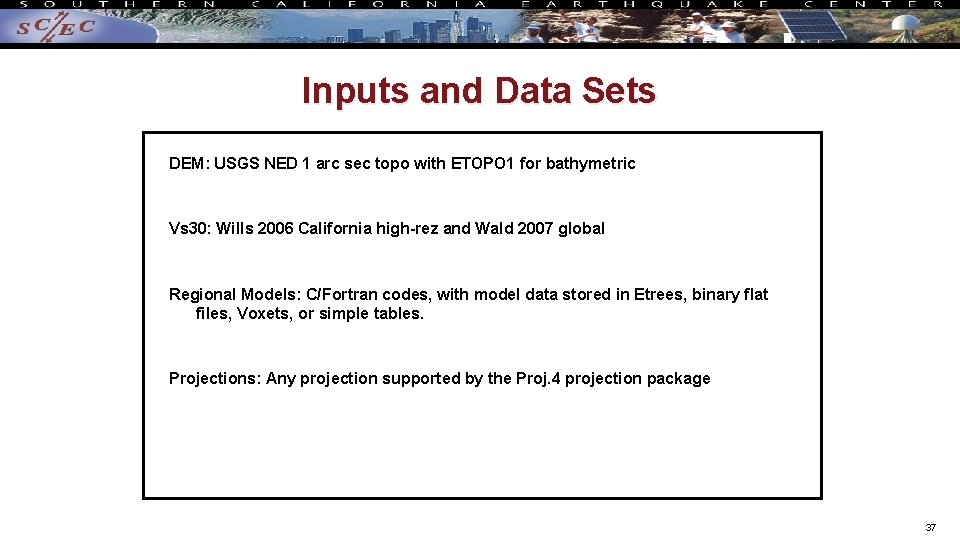
Inputs and Data Sets DEM: USGS NED 1 arc sec topo with ETOPO 1 for bathymetric Vs 30: Wills 2006 California high-rez and Wald 2007 global Regional Models: C/Fortran codes, with model data stored in Etrees, binary flat files, Voxets, or simple tables. Projections: Any projection supported by the Proj. 4 projection package 37