
Overview of the Red and White Wine Mouthfeel
- Slides: 43
Overview of the Red and White Wine Mouthfeel Wheels Anita Oberholster
Introduction • • Tastes and tactile sensations Matrix influence on bitterness + astringency Phenol composition Sensory properties of phenolics Development of red wine mouthfeel wheel Use of RMFW Development of white wine mouthfeel wheel
Astringency Perception • Astringency described as “roughing”, “drying” and “puckering” • Tactile sensation • Mechanism of astringency – Phenols bind with saliva proteins and precipitate – Stripping the mouth of lubrication “drying” – Texture effect of astringency could be due to precipitated complexes or those in solution • Astringency is dynamic process – Changes during ingestion and expectoration Oberholster (2008)
Influences on Astringency + Bitterness • Ethanol % – Decrease astringency perception – Increase bitterness perception • Sugar content – Decrease bitterness – No influence on astringency, but more difficult to perceive Gawel (1998) Austr. J. Grape Wine Res. 4, p. 74 -94
Influences on Astringency + Bitterness • Other wine compounds such as organic acid have astringent sub-qualities themselves – Also contribute by lowering p. H, phenol-protein interactions • Polysaccharides and proteins – Binds with tannins, reduce astringency Gawel (1998) Austr. J. Grape Wine Res. 4, p. 74 -94 Mc. Rae and Kennedy (2011) Molecules 16, p. 2348 -2364
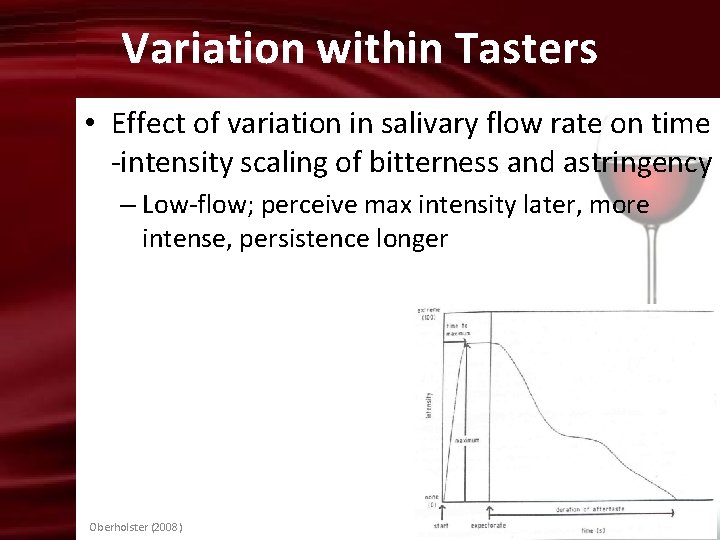
Variation within Tasters • Effect of variation in salivary flow rate on time -intensity scaling of bitterness and astringency – Low-flow; perceive max intensity later, more intense, persistence longer Oberholster (2008)
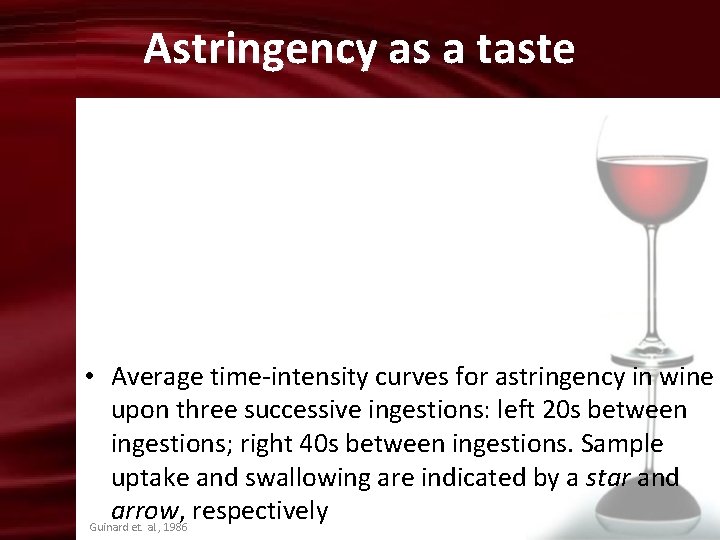
Astringency as a taste • Average time-intensity curves for astringency in wine upon three successive ingestions: left 20 s between ingestions; right 40 s between ingestions. Sample uptake and swallowing are indicated by a star and arrow, respectively Guinard et. al. , 1986
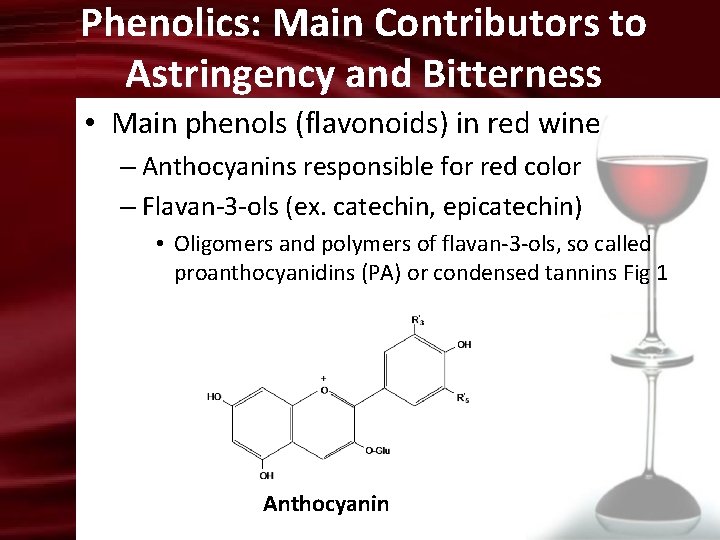
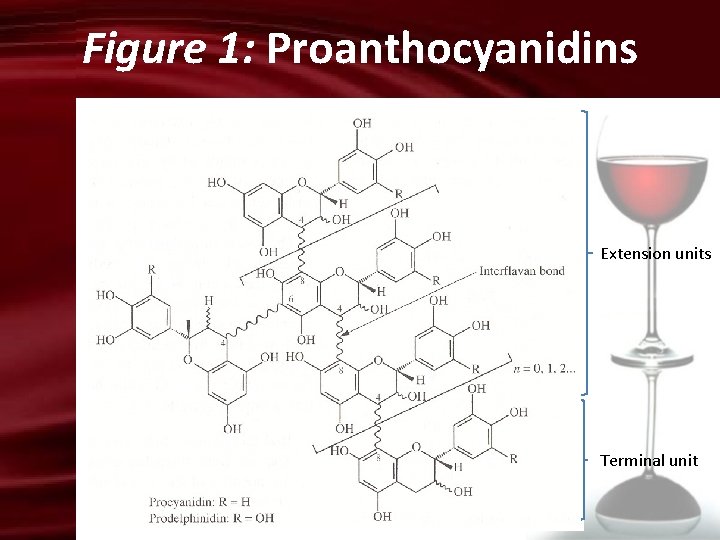
Phenolics: Main Contributors to Astringency and Bitterness • Main phenols (flavonoids) in red wine – Anthocyanins responsible for red color – Flavan-3 -ols (ex. catechin, epicatechin) • Oligomers and polymers of flavan-3 -ols, so called proanthocyanidins (PA) or condensed tannins Fig 1 Anthocyanin
Figure 1: Proanthocyanidins Extension units Terminal unit
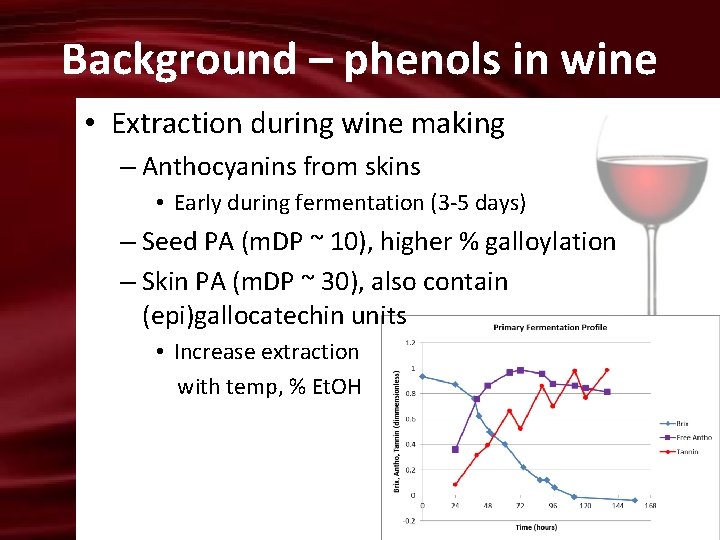
Background – phenols in wine • Extraction during wine making – Anthocyanins from skins • Early during fermentation (3 -5 days) – Seed PA (m. DP ~ 10), higher % galloylation – Skin PA (m. DP ~ 30), also contain (epi)gallocatechin units • Increase extraction with temp, % Et. OH
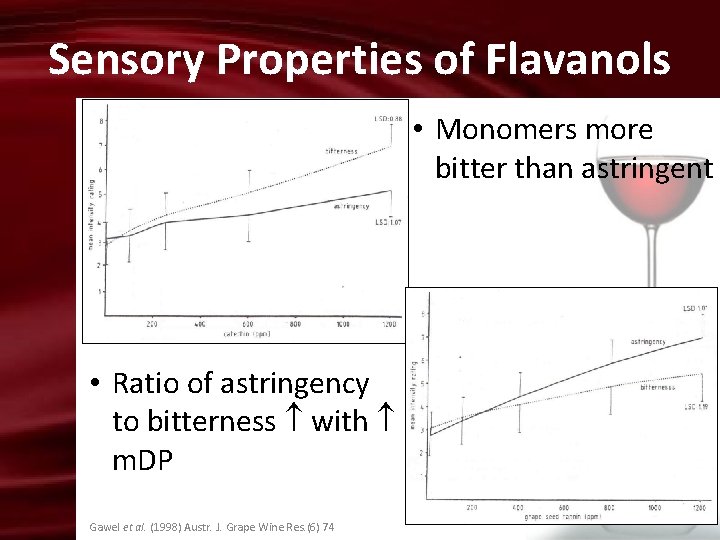
Sensory Properties of Flavanols • Monomers more bitter than astringent • Ratio of astringency to bitterness with m. DP Gawel et al. (1998) Austr. J. Grape Wine Res. (6) 74
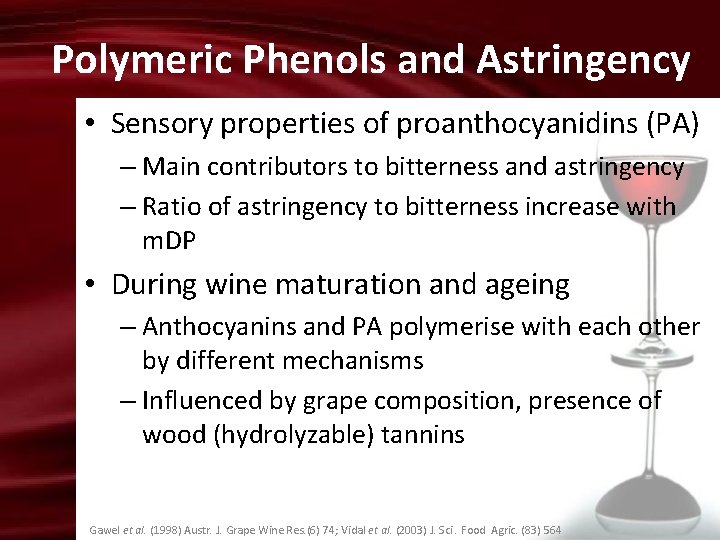
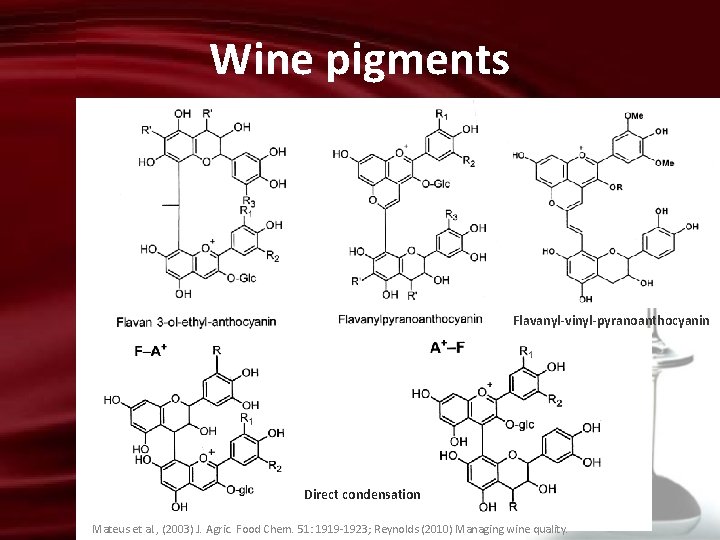
Polymeric Phenols and Astringency • Sensory properties of proanthocyanidins (PA) – Main contributors to bitterness and astringency – Ratio of astringency to bitterness increase with m. DP • During wine maturation and ageing – Anthocyanins and PA polymerise with each other by different mechanisms – Influenced by grape composition, presence of wood (hydrolyzable) tannins Gawel et al. (1998) Austr. J. Grape Wine Res. (6) 74; Vidal et al. (2003) J. Sci. Food Agric. (83) 564
Wine pigments Flavanyl-vinyl-pyranoanthocyanin Direct condensation Mateus et al. , (2003) J. Agric. Food Chem. 51: 1919 -1923; Reynolds (2010) Managing wine quality.
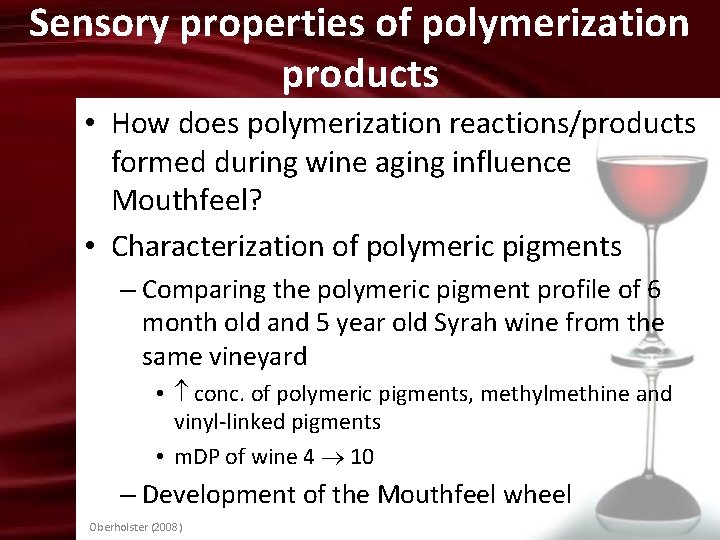
Sensory properties of polymerization products • How does polymerization reactions/products formed during wine aging influence Mouthfeel? • Characterization of polymeric pigments – Comparing the polymeric pigment profile of 6 month old and 5 year old Syrah wine from the same vineyard • conc. of polymeric pigments, methylmethine and vinyl-linked pigments • m. DP of wine 4 10 – Development of the Mouthfeel wheel Oberholster (2008)
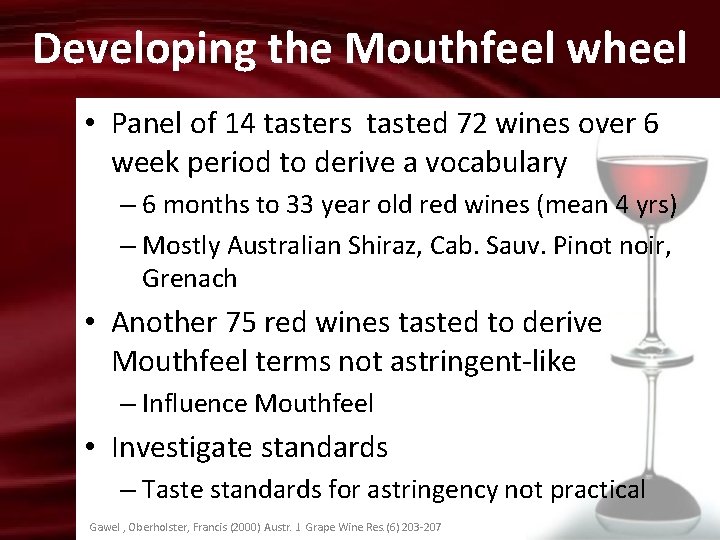
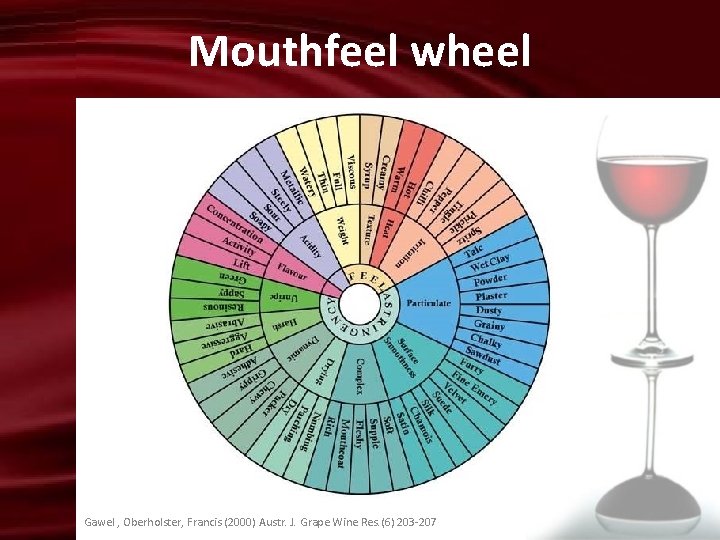
Developing the Mouthfeel wheel • Panel of 14 tasters tasted 72 wines over 6 week period to derive a vocabulary – 6 months to 33 year old red wines (mean 4 yrs) – Mostly Australian Shiraz, Cab. Sauv. Pinot noir, Grenach • Another 75 red wines tasted to derive Mouthfeel terms not astringent-like – Influence Mouthfeel • Investigate standards – Taste standards for astringency not practical Gawel , Oberholster, Francis (2000) Austr. J. Grape Wine Res. (6) 203 -207
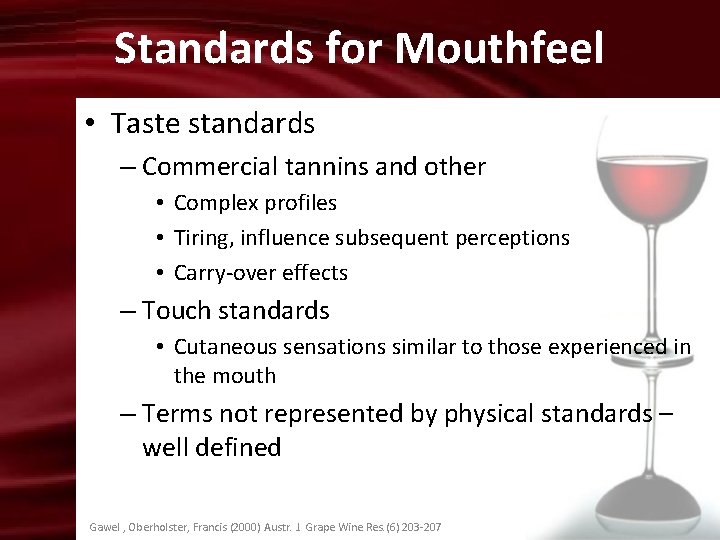
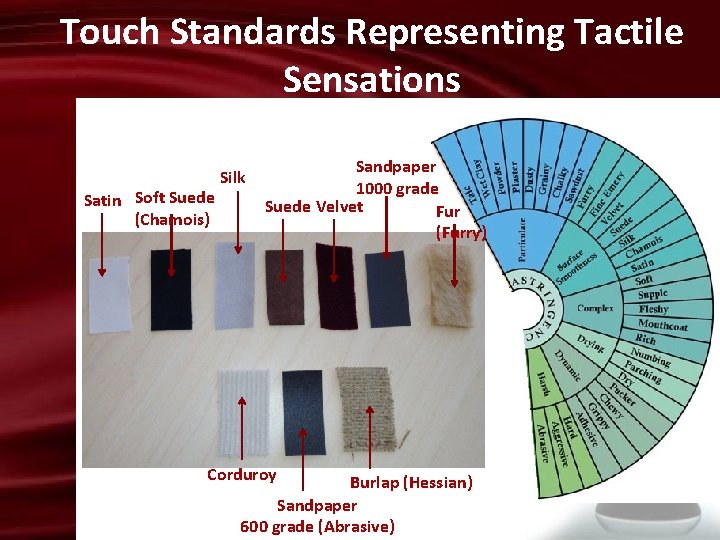
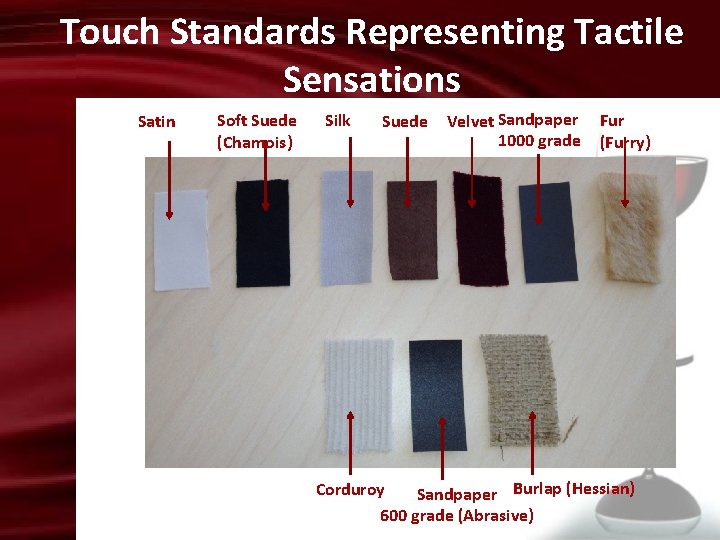
Standards for Mouthfeel • Taste standards – Commercial tannins and other • Complex profiles • Tiring, influence subsequent perceptions • Carry-over effects – Touch standards • Cutaneous sensations similar to those experienced in the mouth – Terms not represented by physical standards – well defined Gawel , Oberholster, Francis (2000) Austr. J. Grape Wine Res. (6) 203 -207
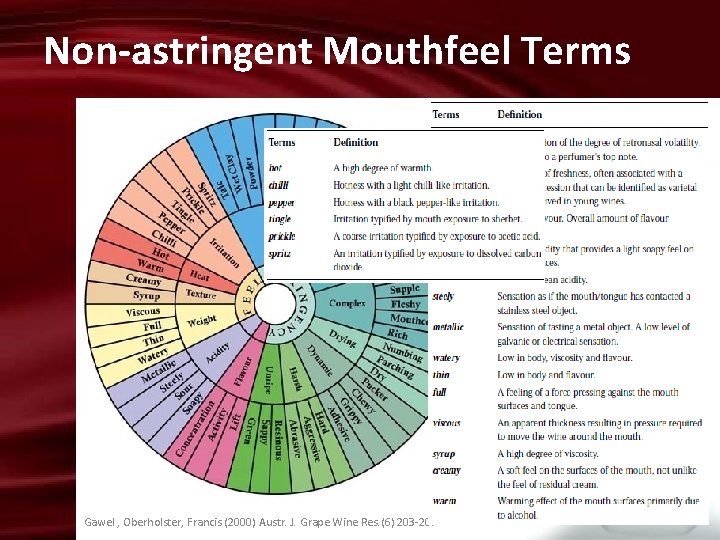
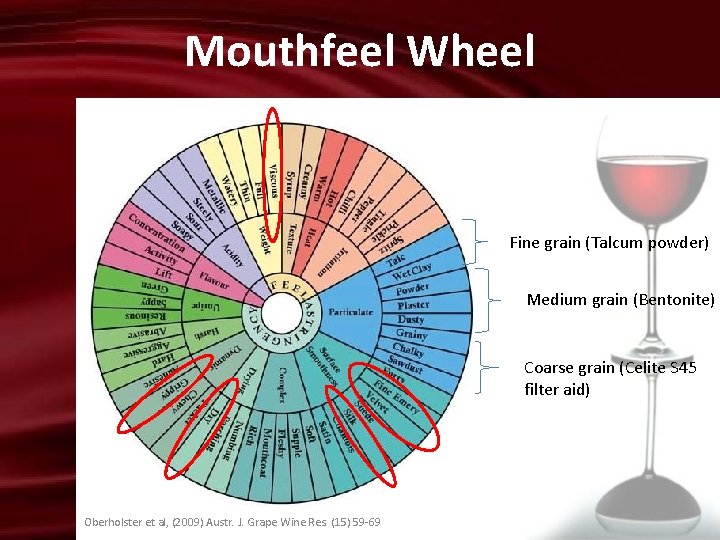
Mouthfeel wheel Gawel , Oberholster, Francis (2000) Austr. J. Grape Wine Res. (6) 203 -207
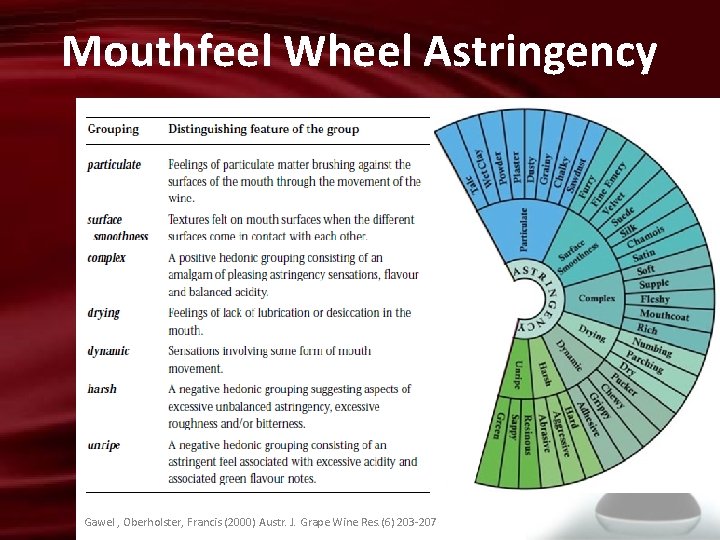
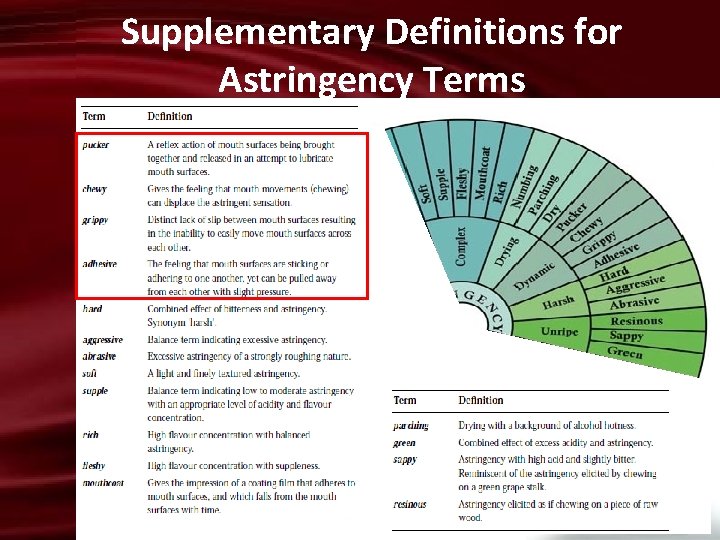
Mouthfeel Wheel Astringency Gawel , Oberholster, Francis (2000) Austr. J. Grape Wine Res. (6) 203 -207
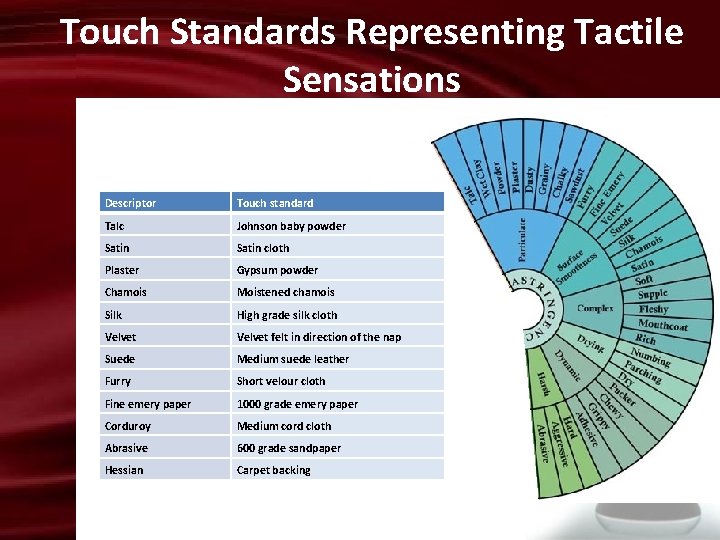
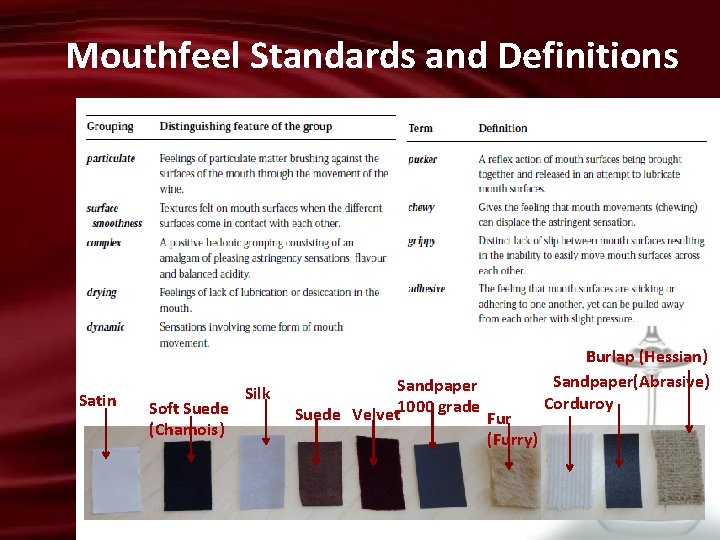
Touch Standards Representing Tactile Sensations Descriptor Touch standard Talc Johnson baby powder Satin cloth Plaster Gypsum powder Chamois Moistened chamois Silk High grade silk cloth Velvet felt in direction of the nap Suede Medium suede leather Furry Short velour cloth Fine emery paper 1000 grade emery paper Corduroy Medium cord cloth Abrasive 600 grade sandpaper Hessian Carpet backing
Touch Standards Representing Tactile Sensations Satin Soft Suede (Chamois) Silk Sandpaper 1000 grade Suede Velvet Fur (Furry) Corduroy Burlap (Hessian) Sandpaper 600 grade (Abrasive)
Supplementary Definitions for Astringency Terms
Non-astringent Mouthfeel Terms Gawel , Oberholster, Francis (2000) Austr. J. Grape Wine Res. (6) 203 -207
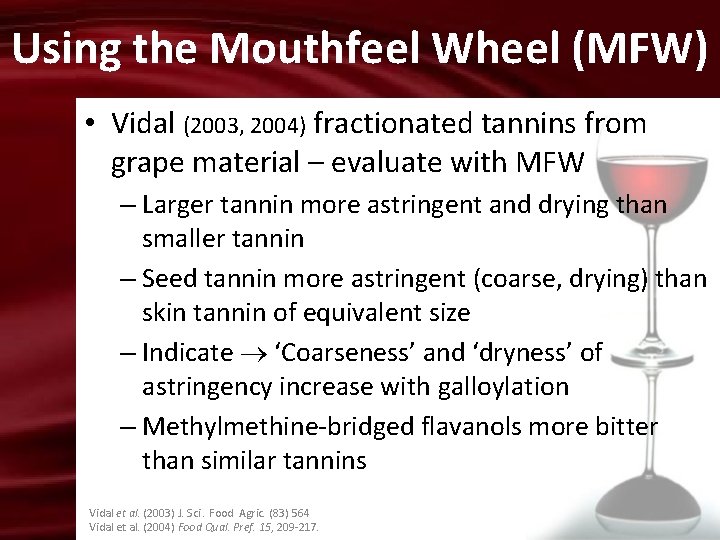
Using the Mouthfeel Wheel (MFW) • Vidal (2003, 2004) fractionated tannins from grape material – evaluate with MFW – Larger tannin more astringent and drying than smaller tannin – Seed tannin more astringent (coarse, drying) than skin tannin of equivalent size – Indicate ‘Coarseness’ and ‘dryness’ of astringency increase with galloylation – Methylmethine-bridged flavanols more bitter than similar tannins Vidal et al. (2003) J. Sci. Food Agric. (83) 564 Vidal et al. (2004) Food Qual. Pref. 15, 209 -217.
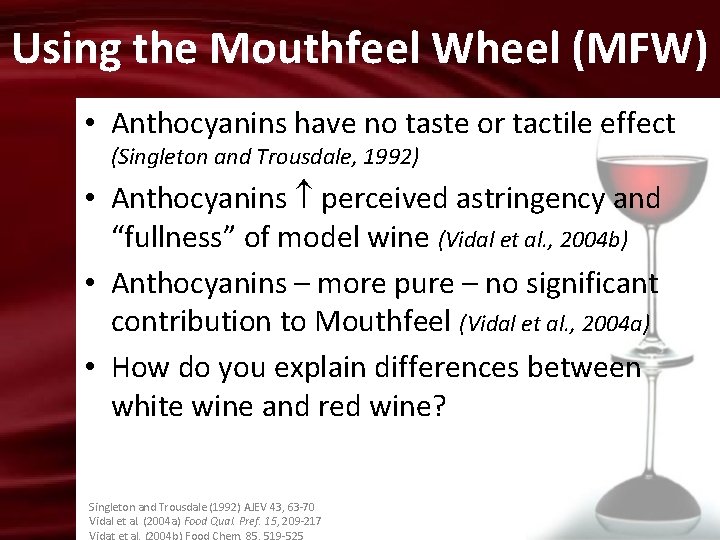
Using the Mouthfeel Wheel (MFW) • Anthocyanins have no taste or tactile effect (Singleton and Trousdale, 1992) • Anthocyanins perceived astringency and “fullness” of model wine (Vidal et al. , 2004 b) • Anthocyanins – more pure – no significant contribution to Mouthfeel (Vidal et al. , 2004 a) • How do you explain differences between white wine and red wine? Singleton and Trousdale (1992) AJEV 43, 63 -70 Vidal et al. (2004 a) Food Qual. Pref. 15, 209 -217 Vidat et al. (2004 b) Food Chem. 85, 519 -525
Using the Mouthfeel Wheel (MFW) • How do you explain changes in Mouthfeel observed during aging? – Could polymerization reactions explain changes in Mouthfeel observed? – Increase m. DP proanthocyanidins astringency – Formation of polymeric pigments? Oberholster et al, (2009) Austr. J. Grape Wine Res. (15) 59 -69 Singleton and Trousdale (1992) AJEV 43, 63 -70 Vidal et al. (2004 a) Food Qual. Pref. 15, 209 -217 Vidat et al. (2004 b) Food Chem. 85, 519 -525
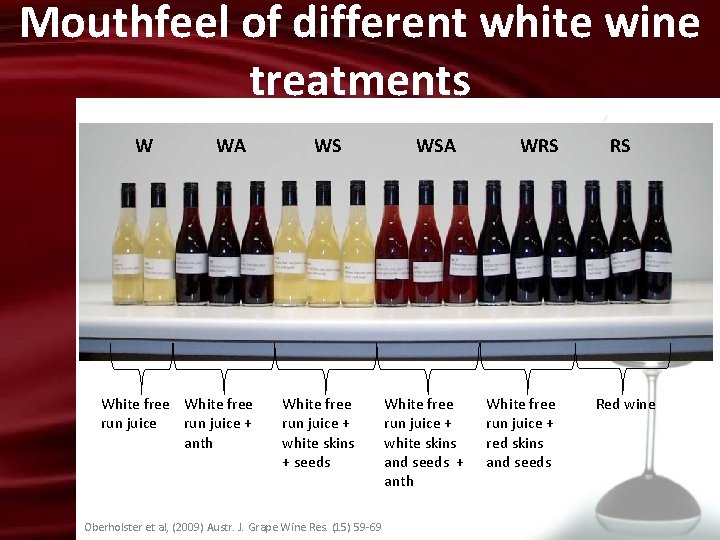
Mouthfeel of different white wine treatments W WA White free run juice + anth WS White free run juice + white skins + seeds Oberholster et al, (2009) Austr. J. Grape Wine Res. (15) 59 -69 WSA White free run juice + white skins and seeds + anth WRS White free run juice + red skins and seeds RS Red wine
Mouthfeel Wheel Fine grain (Talcum powder) Medium grain (Bentonite) Coarse grain (Celite S 45 filter aid) Oberholster et al, (2009) Austr. J. Grape Wine Res. (15) 59 -69
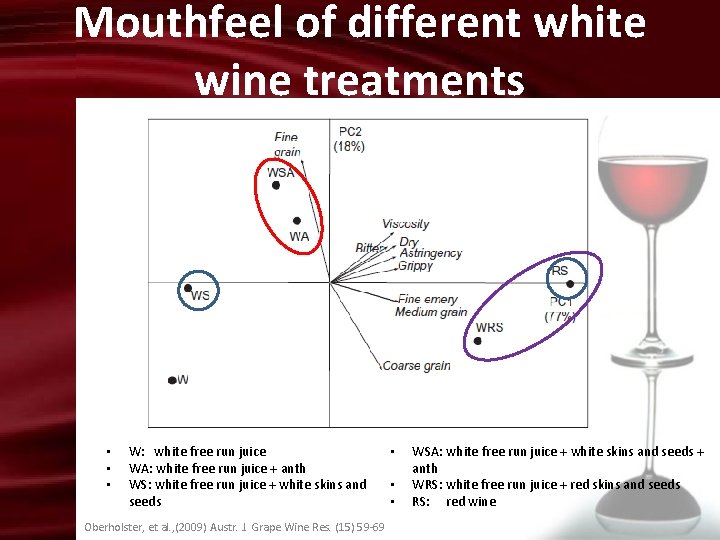
Mouthfeel of different white wine treatments • • • W: white free run juice WA: white free run juice + anth WS: white free run juice + white skins and seeds Oberholster, et al. , (2009) Austr. J. Grape Wine Res. (15) 59 -69 • • • WSA: white free run juice + white skins and seeds + anth WRS: white free run juice + red skins and seeds RS: red wine
Conclusion – RW-MFW • Using the MFW – small differences in phenol content could be related to Mouthfeel differences – Anth increases astringency related terms, mainly fine grain sub-attributes • But MFW is difficult to use – needs extensive training • Doubt wine consumers will be able to use this wheel to communicate in meaningful way
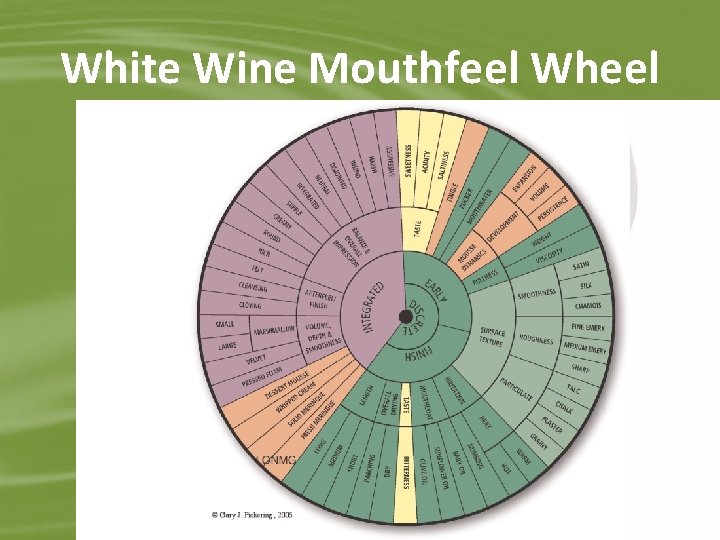
White Wine Mouthfeel Wheel • White wine elicit wide range of taste and mouthfeel sensations • Pickering et al. (2008) evaluated 136 wines – Table, sparkling, dessert and fortified white wines – Using hierarchical wheel structure – Developed definitions and reference standards • Tool to aid training and communication between wine professionals – Help define influence of viticultural and enological variable on white wine quality
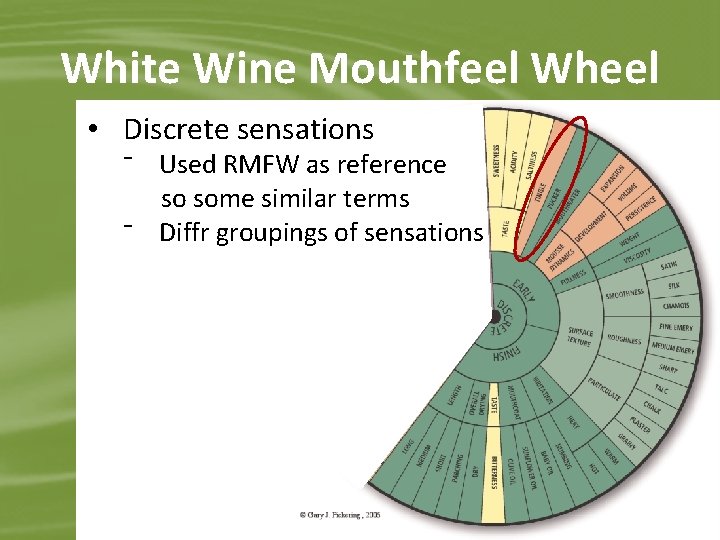
White Wine Mouthfeel Wheel
White Wine Mouthfeel Wheel • Some major difference between the white and red mouthfeel wheel – Contains taste parameters – Avoided terms related to flavor even though observed retro-nasally – Inclusion of “time dimension” in the wheel – Descriptors are ordered clockwise starting at 12’ noon in approx order of perception and intensity perceived • RMFW has no intensity levels build in Pickering and De. Miglio (2008) J. Wine Res. 19 (1) p. 51 -67
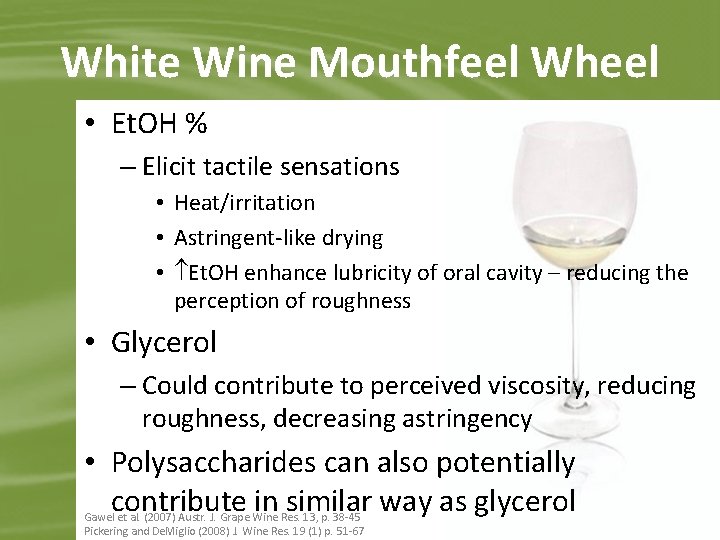
White Wine Mouthfeel Wheel • Et. OH % – Elicit tactile sensations • Heat/irritation • Astringent-like drying • Et. OH enhance lubricity of oral cavity – reducing the perception of roughness • Glycerol – Could contribute to perceived viscosity, reducing roughness, decreasing astringency • Polysaccharides can also potentially contribute in similar way as glycerol Gawel et al. (2007) Austr. J. Grape Wine Res. 13, p. 38 -45 Pickering and De. Miglio (2008) J. Wine Res. 19 (1) p. 51 -67
White Wine Mouthfeel Wheel • Discrete sensations ⁻ Used RMFW as reference so some similar terms ⁻ Diffr groupings of sensations
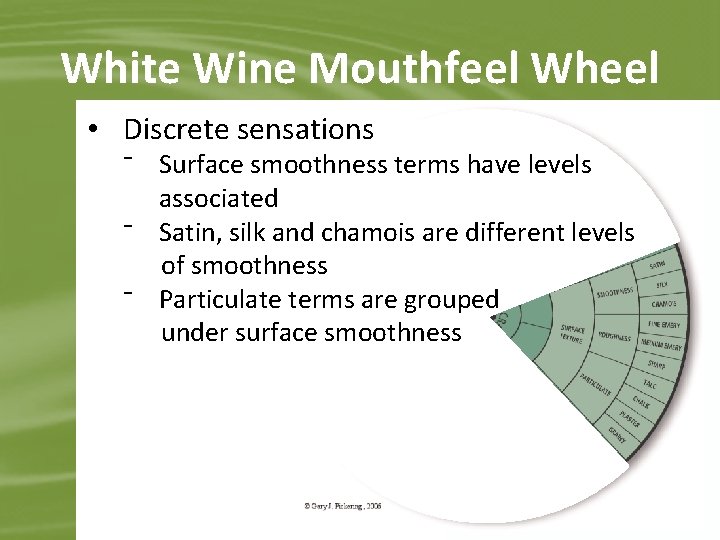
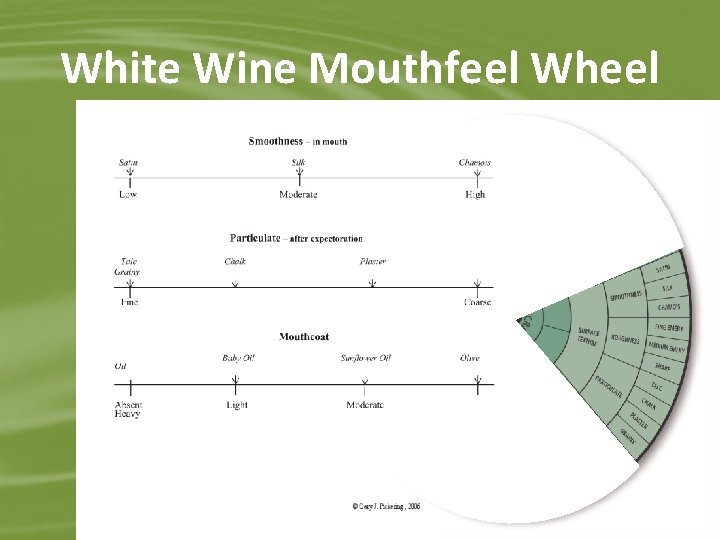
White Wine Mouthfeel Wheel • Discrete sensations ⁻ Surface smoothness terms have levels associated ⁻ Satin, silk and chamois are different levels of smoothness ⁻ Particulate terms are grouped under surface smoothness
White Wine Mouthfeel Wheel
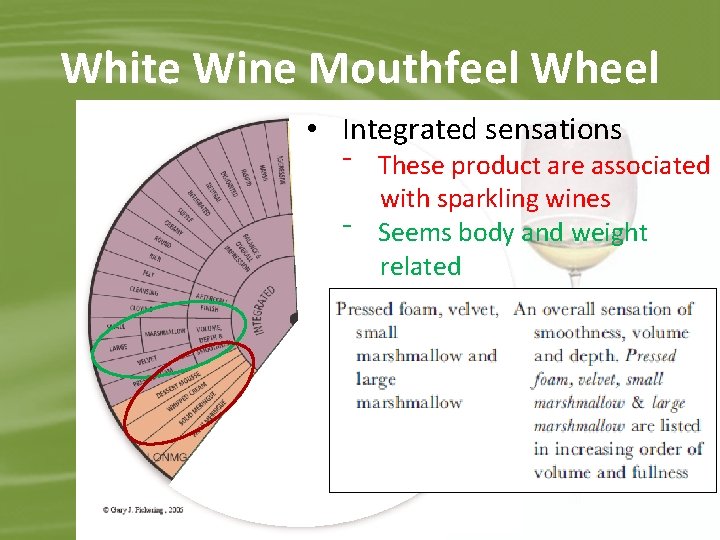
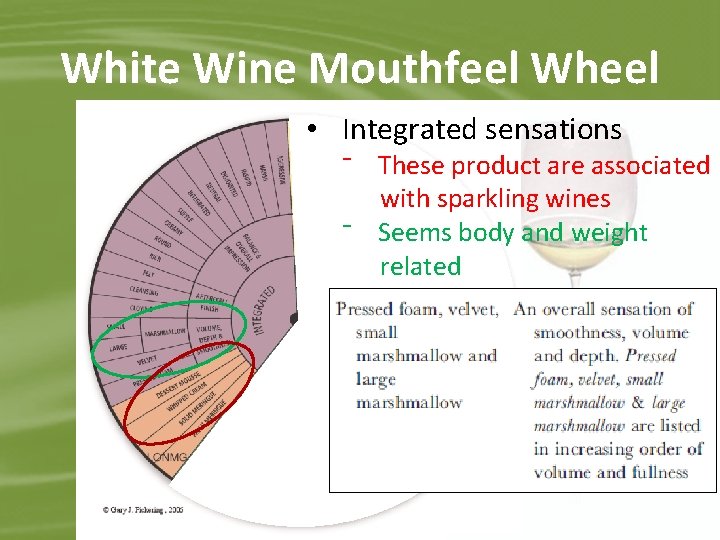
White Wine Mouthfeel Wheel • Integrated sensations ⁻ These product are associated with sparkling wines ⁻ Seems body and weight related
White Wine Mouthfeel Wheel • Integrated sensations ⁻ These product are associated with sparkling wines ⁻ Seems body and weight related
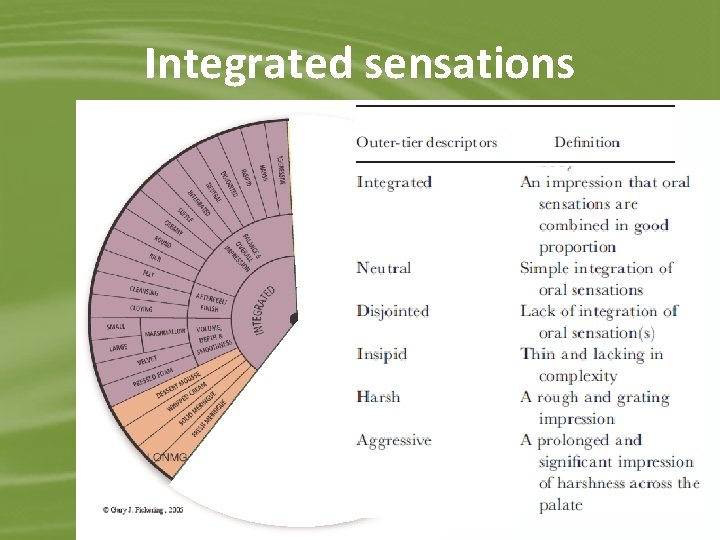
Integrated sensations
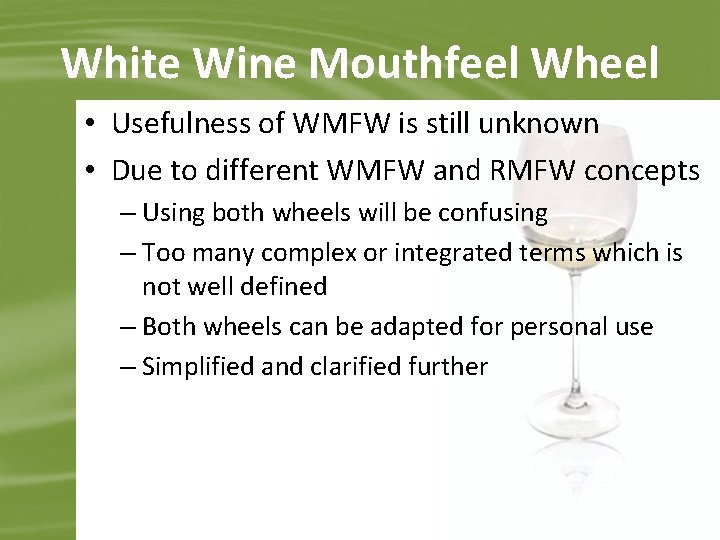
White Wine Mouthfeel Wheel • Usefulness of WMFW is still unknown • Due to different WMFW and RMFW concepts – Using both wheels will be confusing – Too many complex or integrated terms which is not well defined – Both wheels can be adapted for personal use – Simplified and clarified further
Thank you • Funding (GWRDC) • Mouthfeel panel Elizabeth Waters Graham Jones Patrick Iland Leigh Francis Richard Gawel Karen Block Linda Bisson Lucy Joseph Kay Bogart
Touch Standards Representing Tactile Sensations Satin Soft Suede (Chamois) Silk Suede Velvet Sandpaper 1000 grade Fur (Furry) Corduroy Sandpaper Burlap (Hessian) 600 grade (Abrasive)
Mouthfeel Standards and Definitions Satin Soft Suede (Chamois) Silk Sandpaper Suede Velvet 1000 grade Fur (Furry) Burlap (Hessian) Sandpaper(Abrasive) Corduroy