
Overview of the NRCS in Nevada Feb 21
Overview of the NRCS in Nevada Feb. 21, 2013
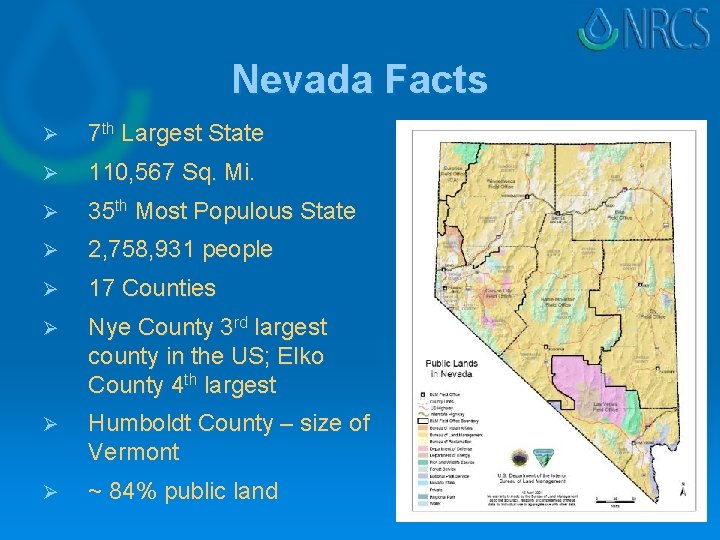
Nevada Facts Ø 7 th Largest State Ø 110, 567 Sq. Mi. Ø 35 th Most Populous State Ø 2, 758, 931 people Ø 17 Counties Ø Nye County 3 rd largest county in the US; Elko County 4 th largest Ø Humboldt County – size of Vermont Ø ~ 84% public land
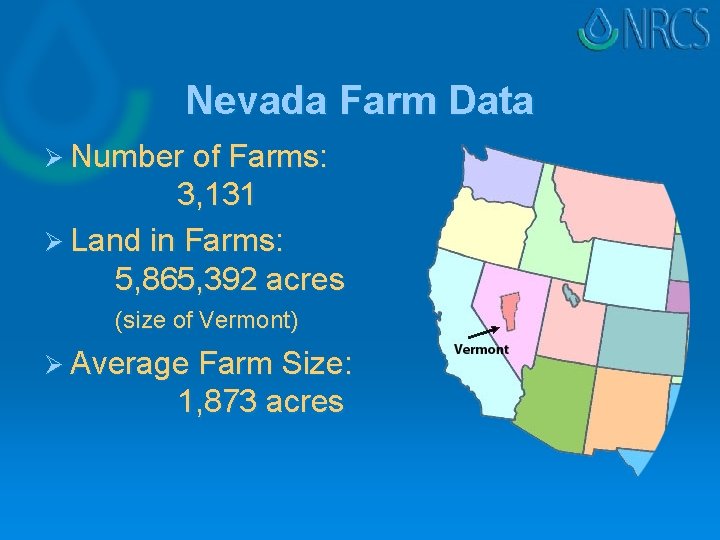
Nevada Farm Data Ø Number of Farms: 3, 131 Ø Land in Farms: 5, 865, 392 acres (size of Vermont) Ø Average Farm Size: 1, 873 acres
Nevada Economy Ø The most valuable mined product in the state is gold. Nevada produces about 3/4 of the gold produced in the United States. Ø Tourism in Las Vegas and Reno are essential to Nevada’s economy. Ø Agriculture is the third largest industry. Ø Nevada unemployment is 12. 6%. National unemployment is 8. 5%
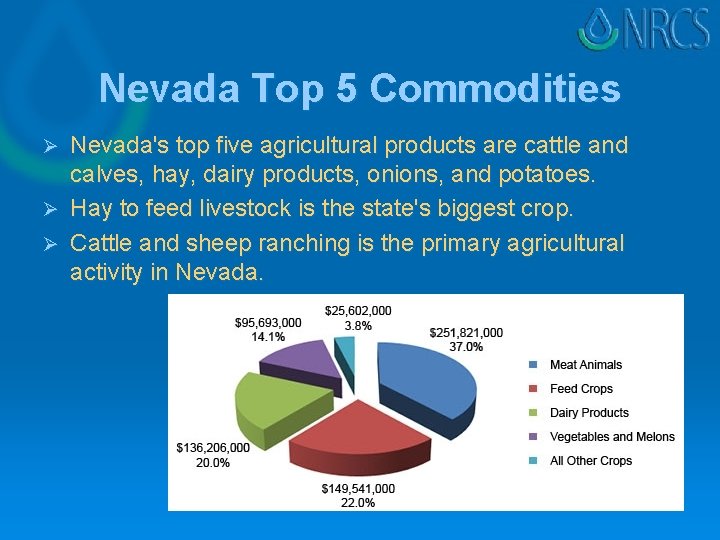
Nevada Top 5 Commodities Nevada's top five agricultural products are cattle and calves, hay, dairy products, onions, and potatoes. Ø Hay to feed livestock is the state's biggest crop. Ø Cattle and sheep ranching is the primary agricultural activity in Nevada. Ø
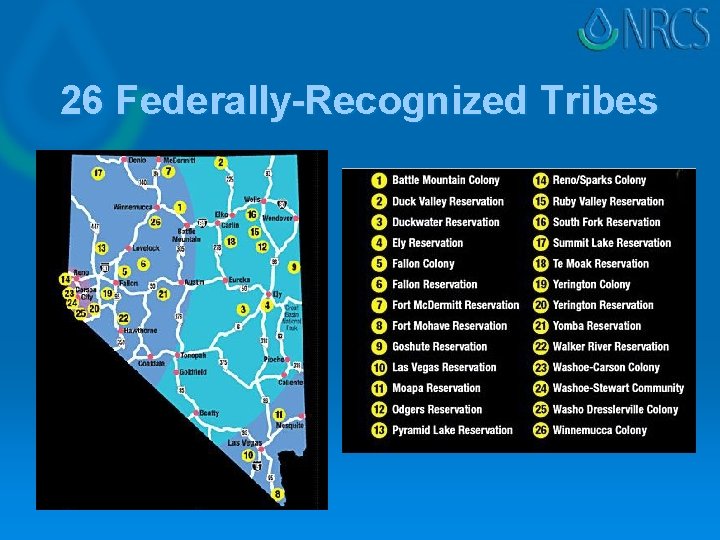
26 Federally-Recognized Tribes
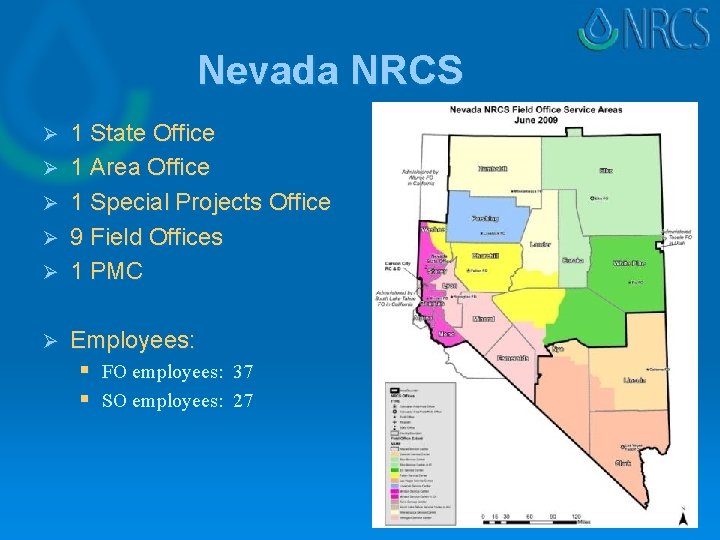
Nevada NRCS Ø Ø Ø 1 State Office 1 Area Office 1 Special Projects Office 9 Field Offices 1 PMC Employees: § FO employees: 37 § SO employees: 27
Resources Ø Structure § State Resource Conservationist § Rangeland Management Specialist § Archaeologist § Agronomist § Wildlife Biologist § Resource Conservationist
Resource Concerns Water Quantity Ø Water Quality Ø T&E Species - Greater Sage-Grouse § Bi-state population of Nevada/California will be considered for T&E listing in Sept. 2013 § Southwestern Willow Flycatcher Ø Rangeland health Ø Noxious/invasive weed control Ø
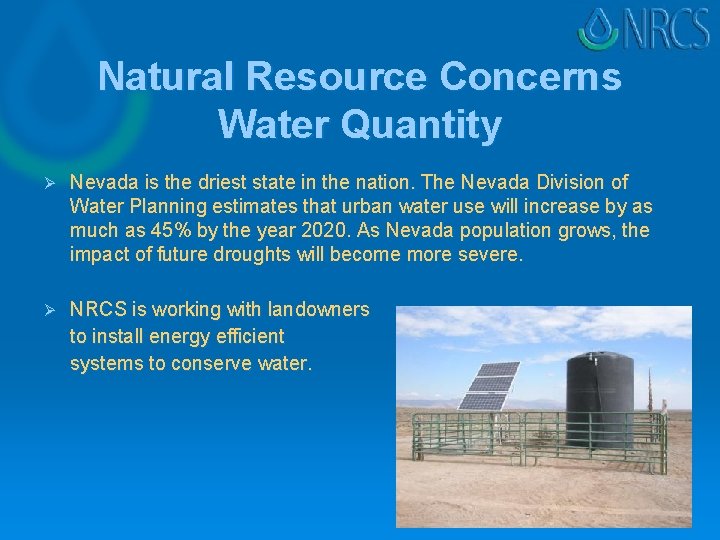
Natural Resource Concerns Water Quantity Ø Nevada is the driest state in the nation. The Nevada Division of Water Planning estimates that urban water use will increase by as much as 45% by the year 2020. As Nevada population grows, the impact of future droughts will become more severe. Ø NRCS is working with landowners to install energy efficient systems to conserve water.
Water Quality Ø Nevada shows some level of water quality impairment, including elevated levels of total phosphorus and nitrogen. Groundwater supplies are contaminated with industrial contaminants or nitrates and bacteria from septic systems and livestock waste. Ø Practices implemented to protect water quality: § Waste Storage Facility § Structure for Water Control § Pest Management § Mulching
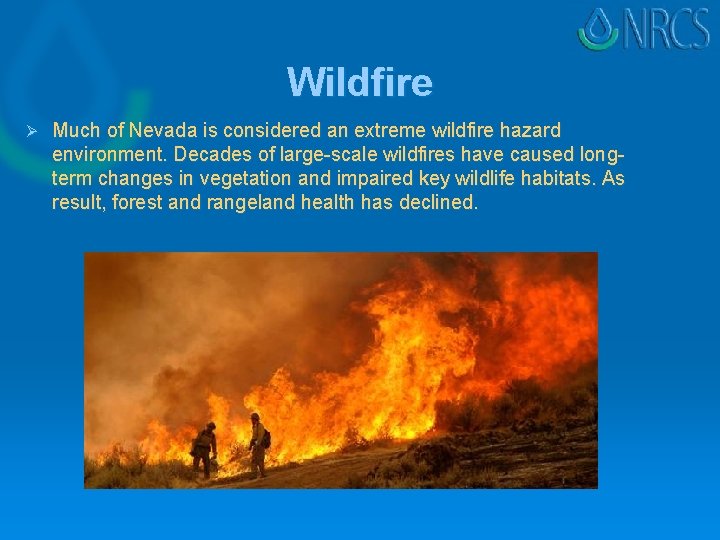
Wildfire Ø Much of Nevada is considered an extreme wildfire hazard environment. Decades of large-scale wildfires have caused longterm changes in vegetation and impaired key wildlife habitats. As result, forest and rangeland health has declined.
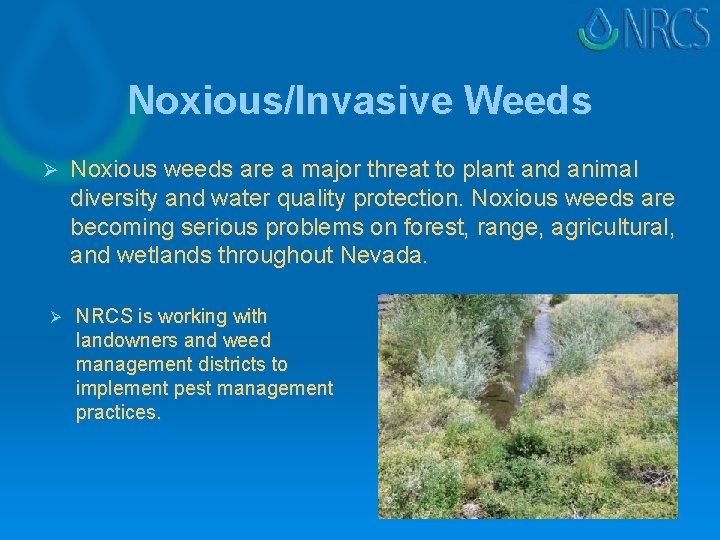
Noxious/Invasive Weeds Ø Ø Noxious weeds are a major threat to plant and animal diversity and water quality protection. Noxious weeds are becoming serious problems on forest, range, agricultural, and wetlands throughout Nevada. NRCS is working with landowners and weed management districts to implement pest management practices.
Conservation Implementation Improved Irrigation Efficiency: 184, 841 acres Improved Cropland Health: 23, 993 acres 369, 356 acres Improved Rangeland Health: High Tunnels (three-year data): 52 contracts $234, 838 obligated
Resources Conservation Planning Ø CDSI § Cleanup § Installation Ø Job Approval Authority § Importance
Resources Ø Partnerships § Agreements § BLM § College of Agriculture
Resources Ø Shared Biologist Positions § Pheasants Forever/ Nevada Department of Wildlife § § § Elko § Ely § Winnemucca (pending) Nevada Department of Wildlife § Reno § Elko US Fish and Wildlife Service § Minden
Resources Ø NRI § Private Land: § Public Land: Ø 590 61 points (field) 314 points (field) 223 points (on line)
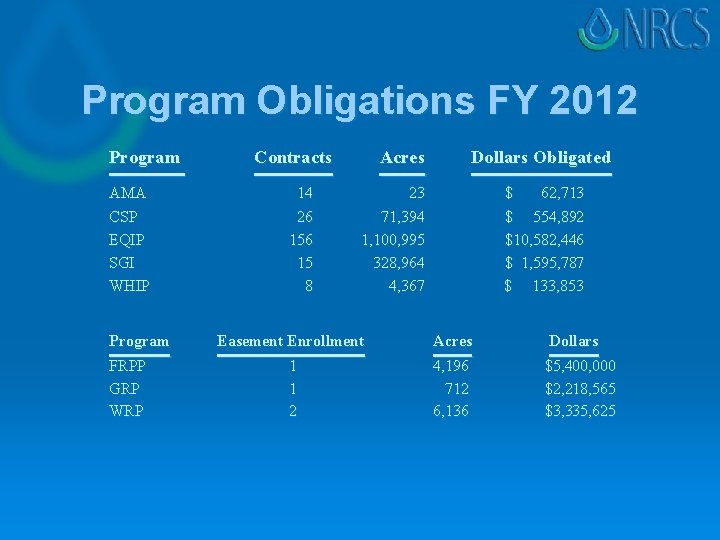
Program Obligations FY 2012 Program Contracts Acres AMA 14 23 CSP EQIP SGI WHIP 26 15 8 71, 394 1, 100, 995 328, 964 4, 367 Program FRPP GRP WRP Dollars Obligated $ 62, 713 $ 554, 892 $10, 582, 446 $ 1, 595, 787 $ 133, 853 Easement Enrollment Acres Dollars 1 1 2 4, 196 712 6, 136 $5, 400, 000 $2, 218, 565 $3, 335, 625
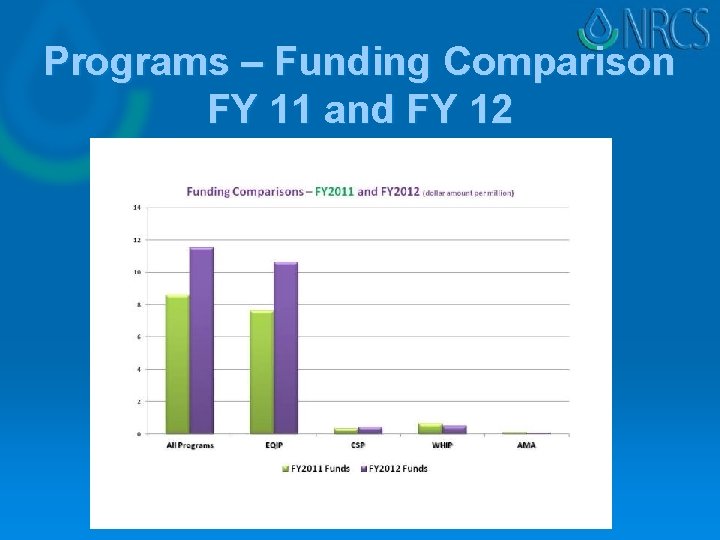
Programs – Funding Comparison FY 11 and FY 12
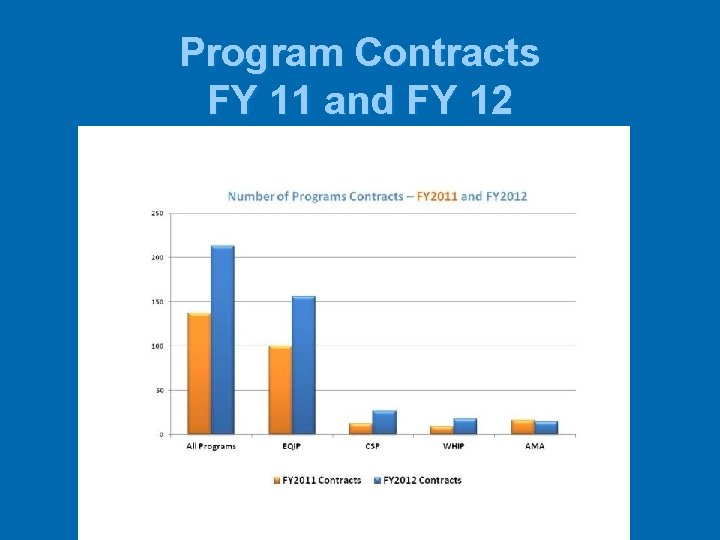
Program Contracts FY 11 and FY 12
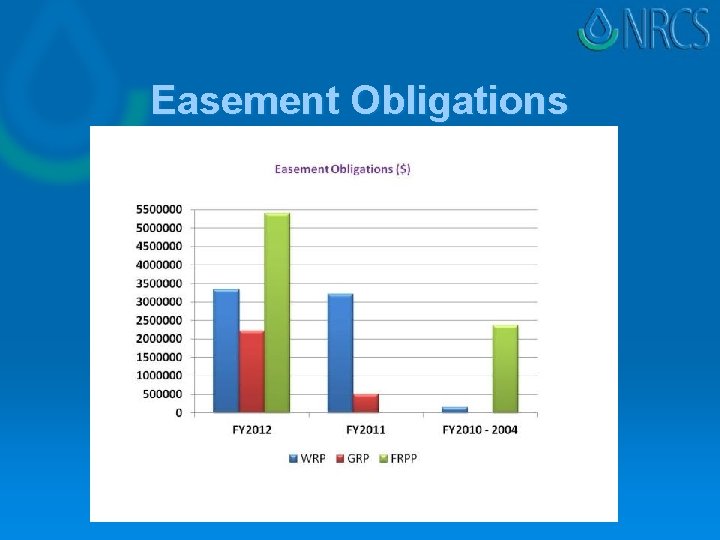
Easement Obligations
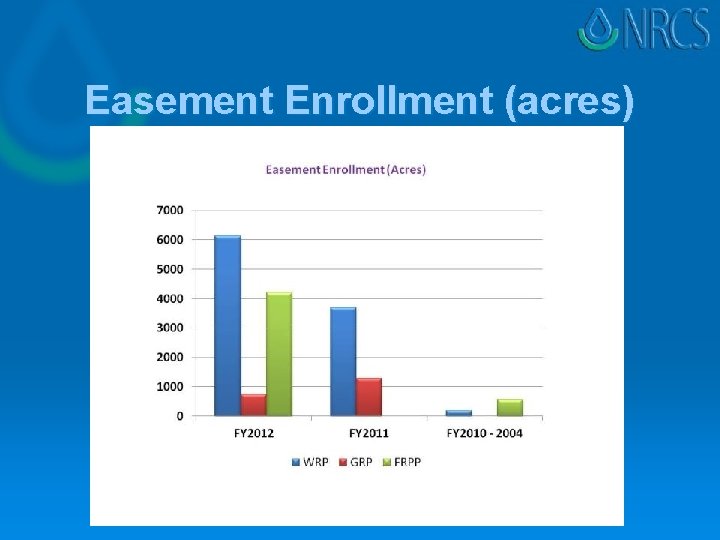
Easement Enrollment (acres)
Programs Ø Closing Efficiency and Restoration: § 100 percent closed on 2011 and prior year enrollments for § § § all easement programs. 20 percent closed on 2012 enrollments for second quarter for all easement programs. 1 WRP restoration agreement on a closed easement to complete in FY 2013. 3 restoration agreements to commence construction activities in FY 2013.
FA Program Initiatives in Nevada § Sage-Grouse Initiative § High Tunnel Initiative - EQIP and AMA § National Water Quality Initiative § Energy Initiative § Strike. Force Initiative § Working Lands for Wildlife – Sage-Grouse and Southwestern Willow Flycatcher § 2012 Drought Initiative § Organic
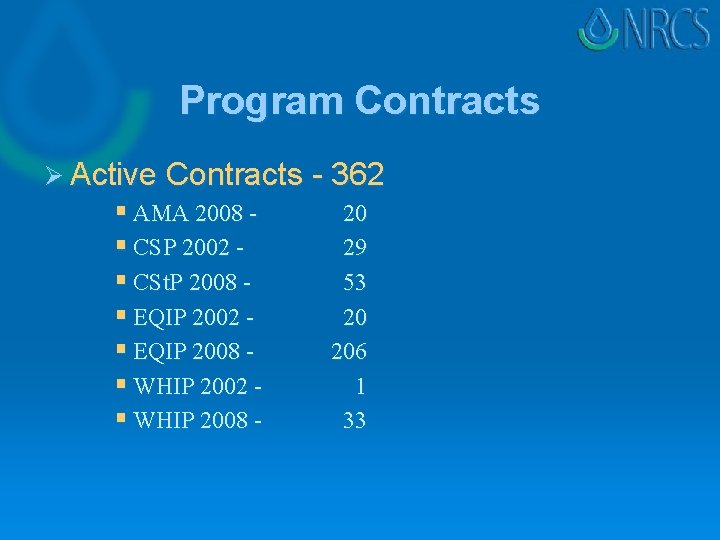
Program Contracts Ø Active Contracts - 362 § AMA 2008 § CSP 2002 § CSt. P 2008 § EQIP 2002 § EQIP 2008 § WHIP 2002 § WHIP 2008 - 20 29 53 20 206 1 33
Historically Underserved § 64 of 206 EQIP Contracts are LR/BF/SD § 31% § 2008 EQIP - 107 of 112 contracts developed with LR/BF/SD producers are active or have been completed. § 96% (4% cancellation rate)
Collaboration with Other States § Nevada working closely with Oregon to conserve sagegrouse habitat that was impacted by wildfires in 2011 and 2012. • Monitoring Prescribed Grazing • Brush Management • Watering Facilities § Nevada working closely with California Wetlands Team to complete WRP restoration planning for sage-grouse
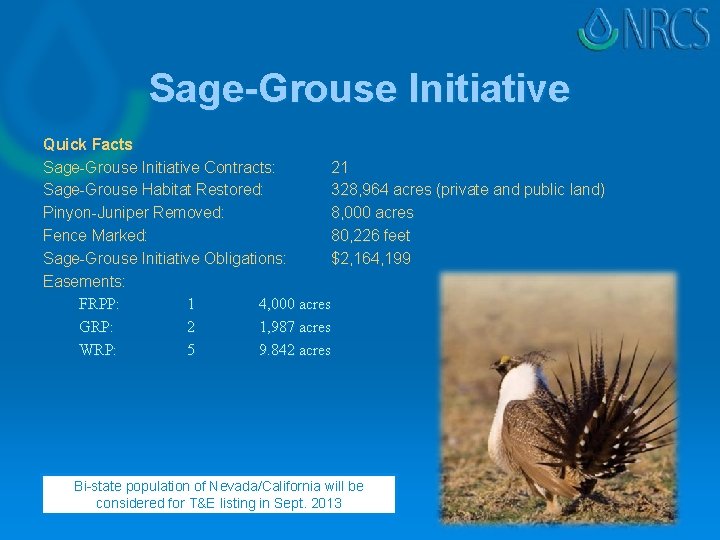
Sage-Grouse Initiative Quick Facts Sage-Grouse Initiative Contracts: 21 Sage-Grouse Habitat Restored: 328, 964 acres (private and public land) Pinyon-Juniper Removed: 8, 000 acres Fence Marked: 80, 226 feet Sage-Grouse Initiative Obligations: $2, 164, 199 Easements: FRPP: 1 4, 000 acres GRP: 2 1, 987 acres WRP: 5 9. 842 acres Bi-state population of Nevada/California will be considered for T&E listing in Sept. 2013
Current Constraints § Significant number of farmers and ranchers have met their $300 K Farm Bill payment limits § Some differences with payment schedule scenarios with Idaho, Oregon and California § Identification of suitable watersheds for National Water Quality Initiative
Engineering Ø Structure § State Conservation Engineer GS-13 § § Ø One GS-12 engineer (State Office) Two GS-11 engineers (Field Offices) One GS-9 engineer (Field Office) One GS-10 CET (Field Office) Engineering Backlog § Background information § Backlog resolution (short term/long term)
Engineering Ø Engineering Job Approval Authority § Signature update every 3 years § Updates as needed Ø Snow Survey Program § GS-12 Hydrologist § Funding directly from NHQ with support from State § Providing monthly water supply outlook reports for Nevada § 66 SNOTEL sites (automated) & 38 Snow Courses (manual readings) § 16 aerial markers automated to improve efficiency, provide additional data, and enable customers to have faster access to data
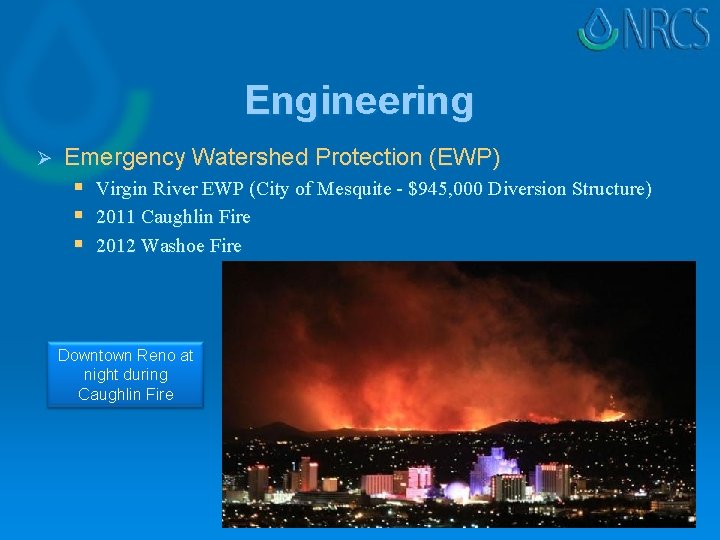
Engineering Ø Emergency Watershed Protection (EWP) § Virgin River EWP (City of Mesquite - $945, 000 Diversion Structure) § 2011 Caughlin Fire § 2012 Washoe Fire Downtown Reno at night during Caughlin Fire
Engineering Ø Watersheds Assessment/Rehabilitation § 4 watershed dams located in City of Reno (West Wash, East Wash, § § Ø Upper Peavine, and Lower Peavine) West Wash Dam was chosen for rehab funding § $280, 000 requested for planning 3 watershed dams located in City of Elko (Eight Mile Creek, Fifth Street, South Side Wash) Dam. Watch § States to upload all data by February 28, 2013 § Software is scheduled to deploy April 1, 2013 Done ahead of schedule
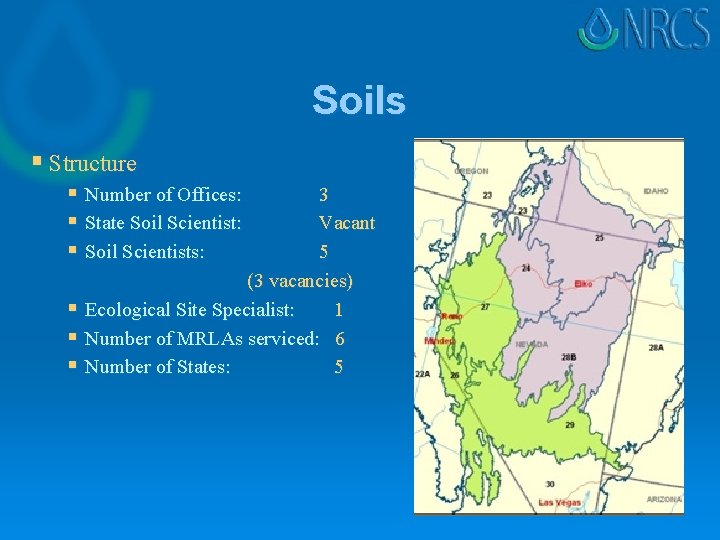
Soils § Structure § Number of Offices: § State Soil Scientist: § Soil Scientists: 3 Vacant 5 (3 vacancies) § Ecological Site Specialist: 1 § Number of MRLAs serviced: 6 § Number of States: 5
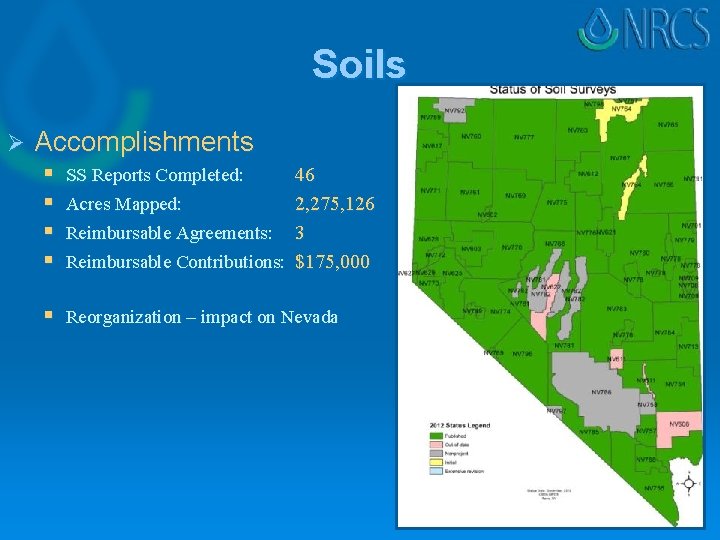
Soils Ø Accomplishments § § 46 2, 275, 126 Reimbursable Agreements: 3 Reimbursable Contributions: $175, 000 SS Reports Completed: Acres Mapped: § Reorganization – impact on Nevada
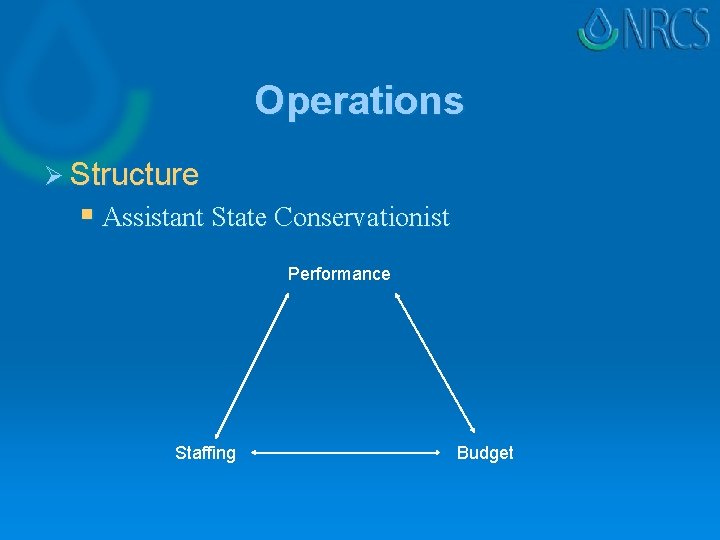
Operations Ø Structure § Assistant State Conservationist Performance Staffing Budget
Staffing § Absolute staffing levels have dropped 17% since 2010 § Total field support has risen 4% since 2010 § The percentage of field/technical support to total overhead continues to fall: § 29% in 2011 § 16% in 2012 § 11% in 2013
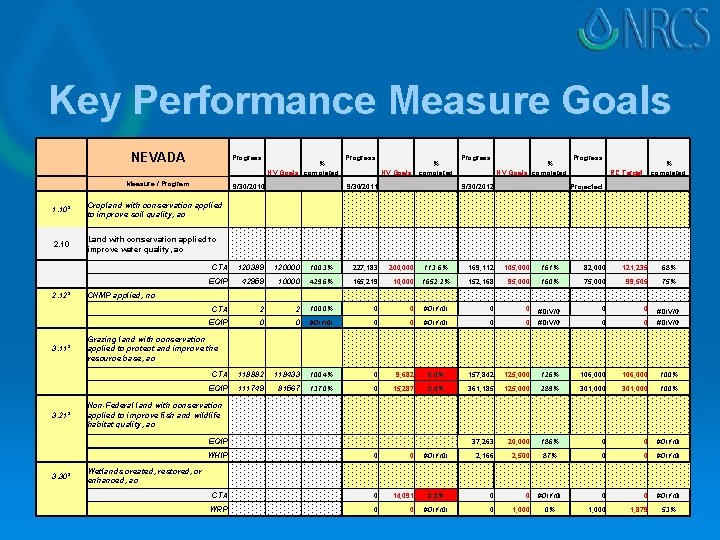
Key Performance Measure Goals NEVADA Progress Ø KPM goals and achievements Measure / Program % NV Goals completed 9/30/2010 1. 10* Cropland with conservation applied to improve soil quality, ac 2. 10 Land with conservation applied to improve water quality, ac % NV Goals completed 9/30/2011 Ø 2. 10 irrigation efficiency Progress % NV Goals completed % completed RC Target 9/30/2012 Projected CTA 120389 120000 100. 3% 227, 183 200, 000 113. 6% 169, 112 105, 000 161% 82, 000 121, 235 68% EQIP 42959 10000 429. 6% 165, 219 10, 000 1652. 2% 152, 168 95, 000 160% 75, 000 99, 505 75% 2. 12* CNMP applied, no CTA 2 2 100. 0% 0 0 #DIV/0! 0 0 EQIP 0 0 #DIV/0! 0 0 3. 11* Grazing land with conservation applied to protect and improve the resource base, ac #DIV/0! 0 0 #DIV/0! CTA 118882 118433 100. 4% 0 9, 682 0. 0% 157, 842 125, 000 126% 106, 000 100% EQIP 111749 81567 137. 0% 0 15, 287 0. 0% 361, 185 125, 000 289% 301, 000 100% Non-Federal land with conservation applied to improve fish and wildlife habitat quality, ac EQIP 37, 263 20, 000 186% 0 0 #DIV/0! WHIP #DIV/0! 2, 166 2, 500 87% 0 0 #DIV/0! CTA 0 14, 091 WRP 0 0 3. 21* 3. 30* Wetlands created, restored, or enhanced, ac 0 0 0. 0% 0 0 #DIV/0! 0 1, 000 #DIV/0! 0% 0 0 1, 000 1, 879 #DIV/0! 53%
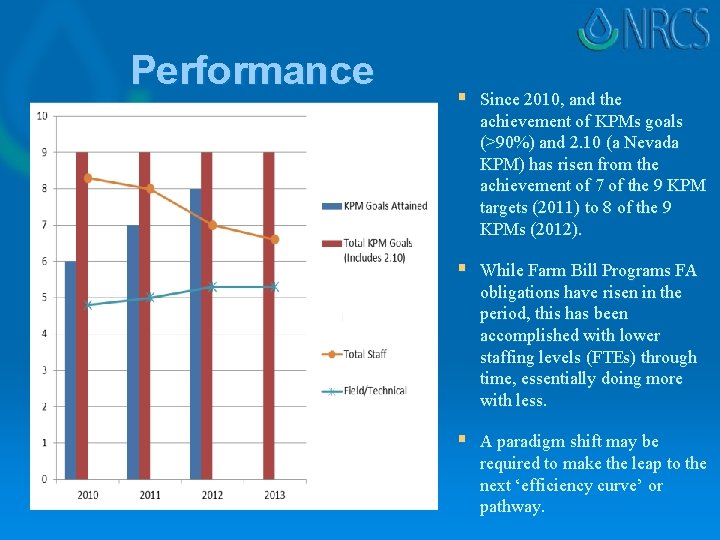
Performance § Since 2010, and the achievement of KPMs goals (>90%) and 2. 10 (a Nevada KPM) has risen from the achievement of 7 of the 9 KPM targets (2011) to 8 of the 9 KPMs (2012). § While Farm Bill Programs FA obligations have risen in the period, this has been accomplished with lower staffing levels (FTEs) through time, essentially doing more with less. § A paradigm shift may be required to make the leap to the next ‘efficiency curve’ or pathway.
Quality Assurance § Nevada has engaged in a mentoring program as a formal communication pathway to promote self and situational awareness. § The Nevada State Leadership Team is in a position to provide mission support – the training and tools to get the job done, on time, and completed to an expected standard of quality. § Other activities include: § Annual Spot Checks per policy § Field Office Core Function Reviews
Civil Rights § National Civil Rights Review conducted in February 2011 § two findings; both were addressed within the agreed-to timeframe, and certified by the Director of the CRD. § Nevada conducts an internal continuous review process to serve as an orientation and training opportunity, and fostering relationships with a number of Historically Underserved producers permitting Nevada to leverage Strike Force efforts.
Great Basin Plant Materials Center Structure § Manager § Farm Technician Ø Accomplishments – FY 12 Highlights § Final year of ‘Sandberg’ Bluegrass Trial (USFS) § 2 nd year of ‘Searles Prairie Clover’ Study (ARS) § 2 nd year of ‘Bottlebrush Squirreltail’ Trial (NRCS) § Completed Monarch Butterfly Pollinator Trial (Xerces Ø Society)
Administration Overview Ø Structure § State Administrative Officer § Contracting Officer § Purchasing Agent § Budget Officer § Budget Analyst § Supply Clerk Human Resources serviced by California
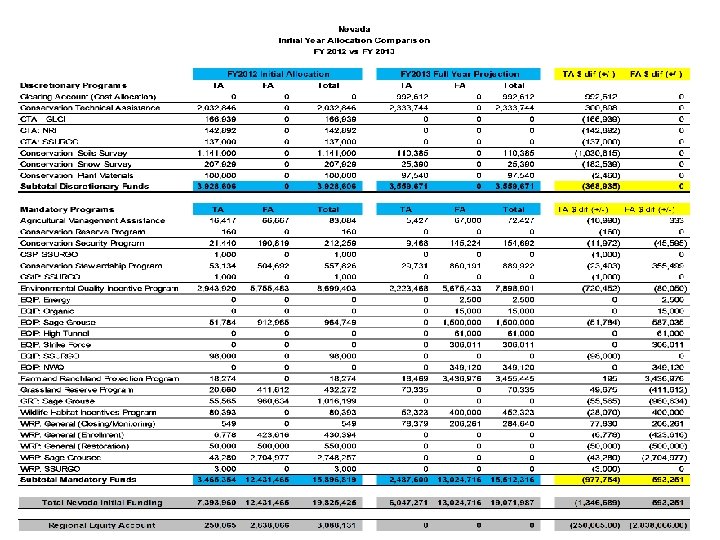
Financial Management Ø FY 12/13 Initial Allocation Comparisons § Not a Regional Equity State § 9% less in TA Discretionary § 28% less in TA Mandatory and 5% more in FA § Soils reduction accounts for 77% of total reduction § Sequestration projection additional ($336, 205)
Administration Audit Remediation and Assigned State Targets Procurement: Ø Fleet Cards § Implemented a monthly review process of Fleet Card activities through Share. Point Ø Vehicle Fleet § Continuing efforts to meet the established reduction target § Evaluating the assignment of Fleet Vehicles to determine additional reductions § Reduced fleet by 5% (3 vehicles) Ø
Administration Audit Remediation and Assigned State Targets Procurement: Ø IT Equipment § Reduced Telecommunications Equipment by 33% § canceled services on bag phones and satellite phones Ø Purchase Cards § Reduced number of assigned purchased cards by 54% (from eleven to § five) Implemented a monthly review process of Purchase Card activities through Share. Point
Administration Financial Management Ø Undelivered Orders / Unfilled Customer Orders § Ensuring Obligations are entered and adjusted in a timely manner § Ensuring liquidations are processed timely § Work with COTRs and/or appropriate staff to proactively review unliquidated obligations to ensure obligations are valid
Administration Financial Management Ø Improper Payments § Working with COTRs and/or appropriate staff to ensure documentation is received prior to processing payments. Ø Web. TCAS § Reduced Timekeeper roles by 83% from twenty-four to four.
Administration Segregation of Duties Ø Segregation of Duties: § Reviewing user role assignments regularly for all systems (IAS, PROP, Gov. Trip, Web. TCAS, FMMI, etc. ) to ensure proper segregation of duties are maintained throughout the Procurement and Financial areas.
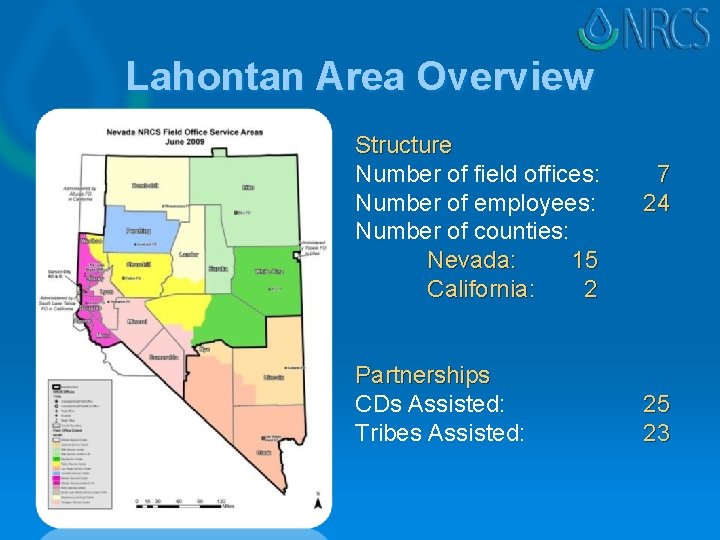
Lahontan Area Overview Structure Number of field offices: Number of employees: Number of counties: Nevada: 15 California: 2 Partnerships CDs Assisted: Tribes Assisted: 7 24 25 23
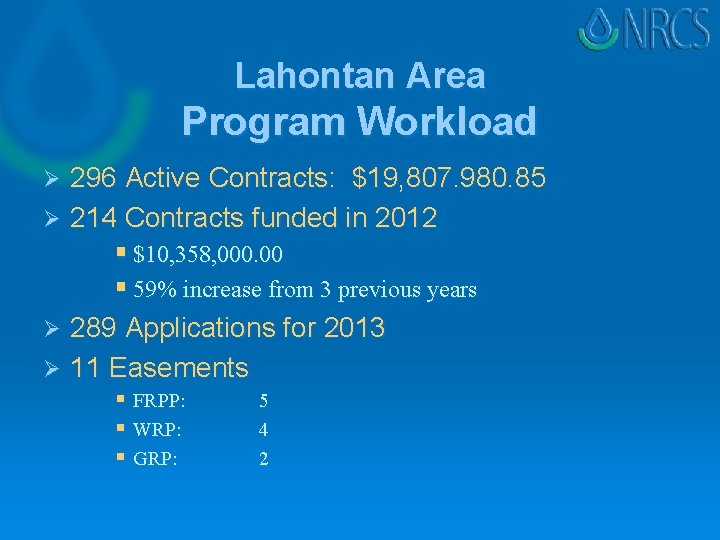
Lahontan Area Program Workload 296 Active Contracts: $19, 807. 980. 85 Ø 214 Contracts funded in 2012 § $10, 358, 000. 00 § 59% increase from 3 previous years Ø 289 Applications for 2013 Ø 11 Easements Ø § FRPP: § WRP: § GRP: 5 4 2
Lahontan Area Ø Special Projects § Nevada/Oregon Sage-Grouse & Fire Rehab Effort § § § 8 Applications 40, 067 Acres of Sage-Grouse Habitat 17, 813 Acres has burned
Lahontan Area Unique Challenges § Huge Service Areas § Lengthy Travel Distances § Large Percentage of Public Land § No Technical Area Staff
Lahontan Area Opportunities for Success Ø Water Quality Initiative
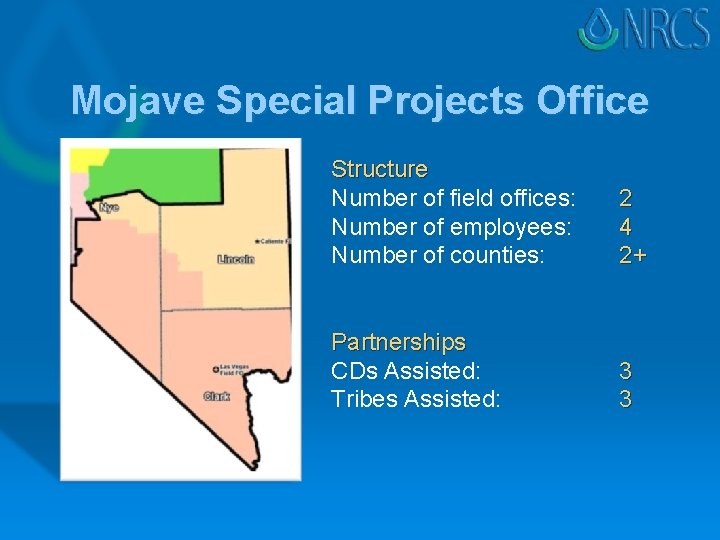
Mojave Special Projects Office Structure Number of field offices: Number of employees: Number of counties: 2 4 2+ Partnerships CDs Assisted: Tribes Assisted: 3 3
Mojave Special Projects Office 66 Active Contracts: $5, 177, 713 Ø 27 Contracts funded in 2012 § $1, 297, 075 § 15 % Increase from 3 Previous Years Ø 45 Applications for 2013 Ø 1 Easement Ø
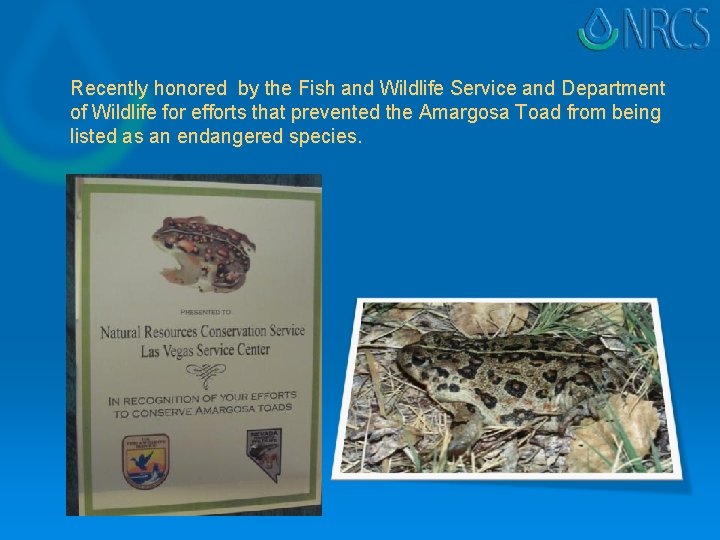
Recently honored by the Fish and Wildlife Service and Department of Wildlife for efforts that prevented the Amargosa Toad from being listed as an endangered species.
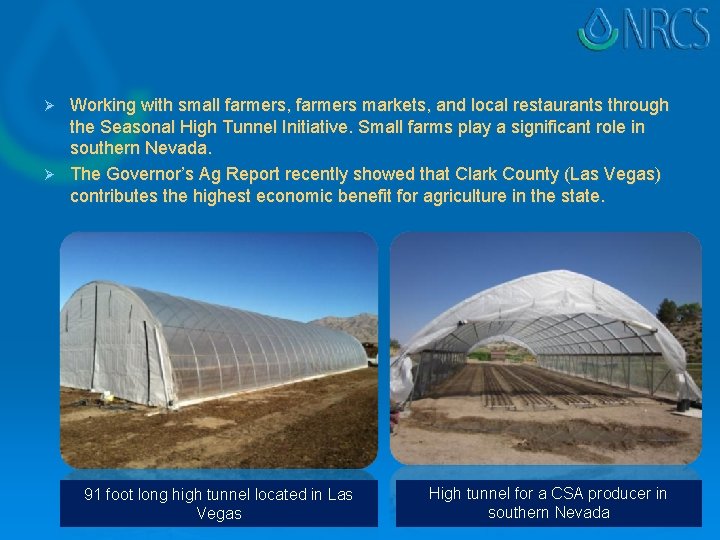
Working with small farmers, farmers markets, and local restaurants through the Seasonal High Tunnel Initiative. Small farms play a significant role in southern Nevada. Ø The Governor’s Ag Report recently showed that Clark County (Las Vegas) contributes the highest economic benefit for agriculture in the state. Ø 91 foot long high tunnel located in Las Vegas High tunnel for a CSA producer in southern Nevada
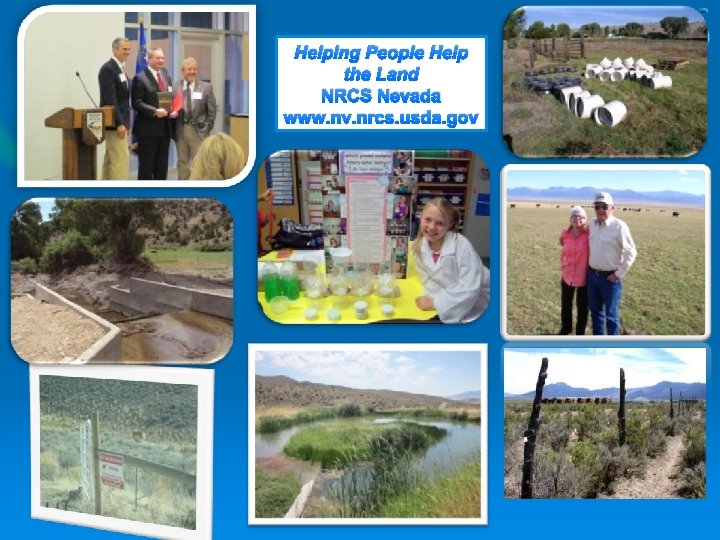
Helping People Help the Land NRCS Nevada www. nv. nrcs. usda. gov
- Slides: 61