
Overview of the NOAA Geostationary Program with a

- Slides: 29
Overview of the NOAA Geostationary Program (with a slight Wisconsin bias) Gary S. Wade and Timothy J. Schmit Research Satellite Meteorologists NOAA/NESDIS/ORA(STAR) Advanced Satellite Products Branch (ASPB) Madison, WI and many, many others Cachoeira Paulista - São Paulo 26 -30 November 2007 UW-Madison
Geostationary Operational Environmental Satellite
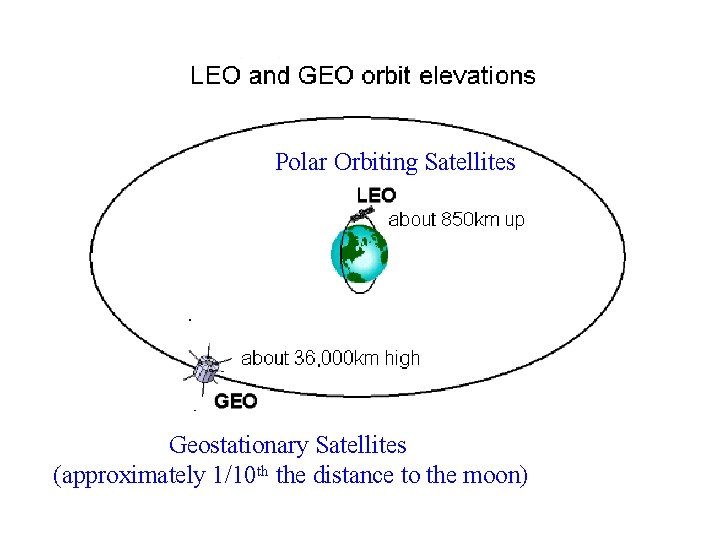
Polar Orbiting Satellites Geostationary Satellites (approximately 1/10 th the distance to the moon)
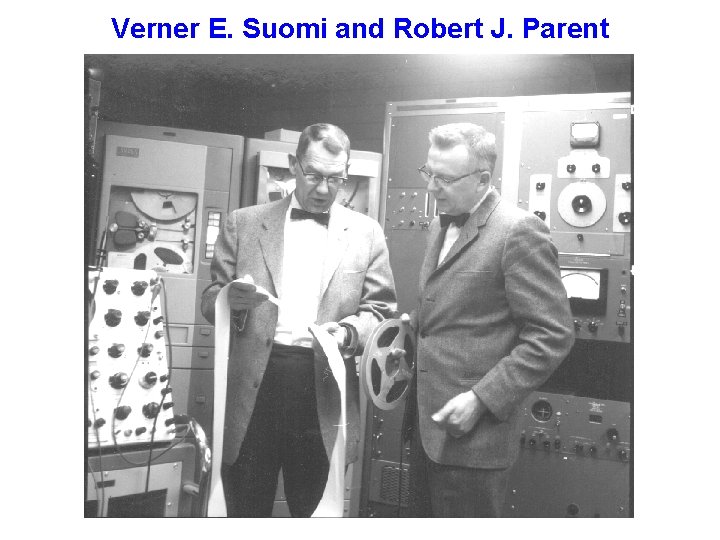
Verner E. Suomi and Robert J. Parent
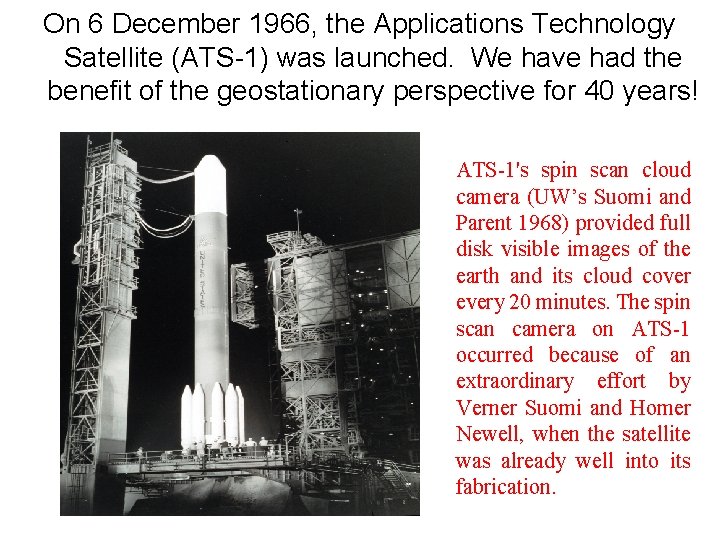
On 6 December 1966, the Applications Technology Satellite (ATS-1) was launched. We have had the benefit of the geostationary perspective for 40 years! ATS-1's spin scan cloud camera (UW’s Suomi and Parent 1968) provided full disk visible images of the earth and its cloud cover every 20 minutes. The spin scan camera on ATS-1 occurred because of an extraordinary effort by Verner Suomi and Homer Newell, when the satellite was already well into its fabrication.
6 December 1966
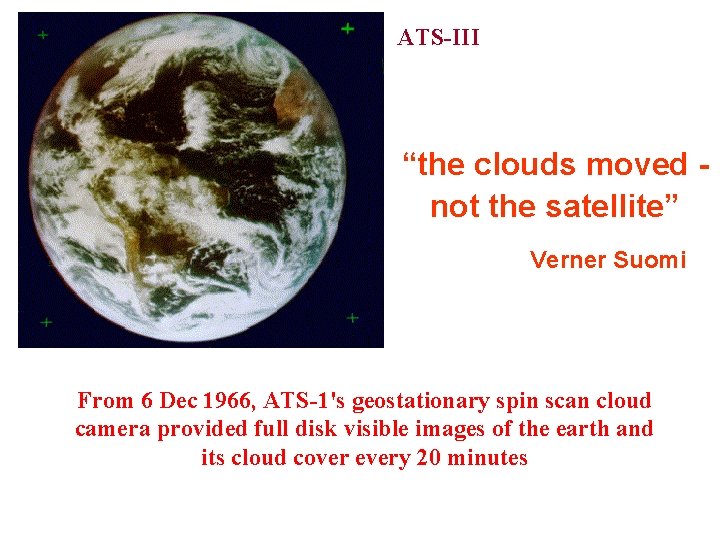
ATS-III “the clouds moved not the satellite” Verner Suomi From 6 Dec 1966, ATS-1's geostationary spin scan cloud camera provided full disk visible images of the earth and its cloud cover every 20 minutes
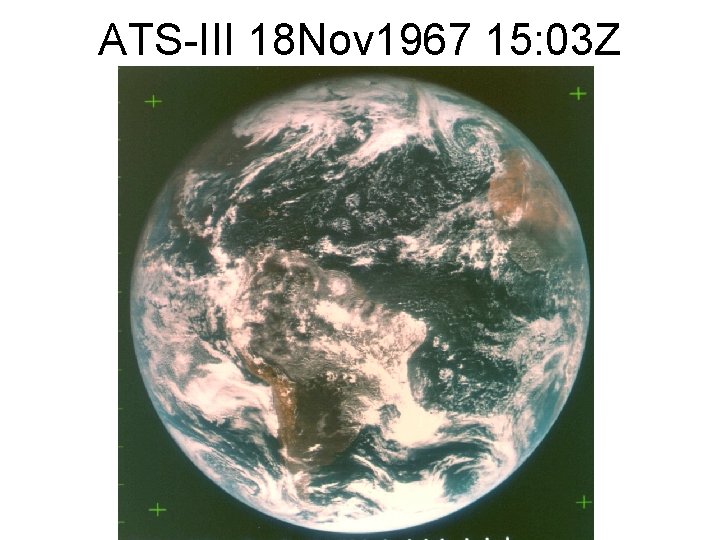
ATS-III 18 Nov 1967 15: 03 Z
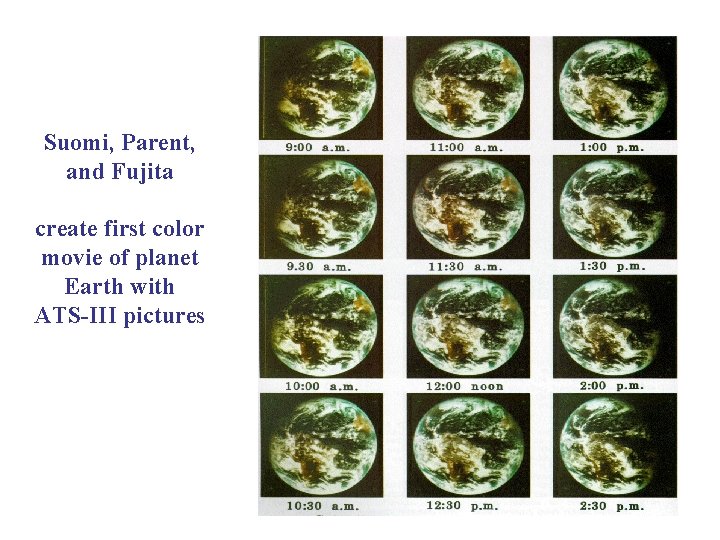
Suomi, Parent, and Fujita create first color movie of planet Earth with ATS-III pictures
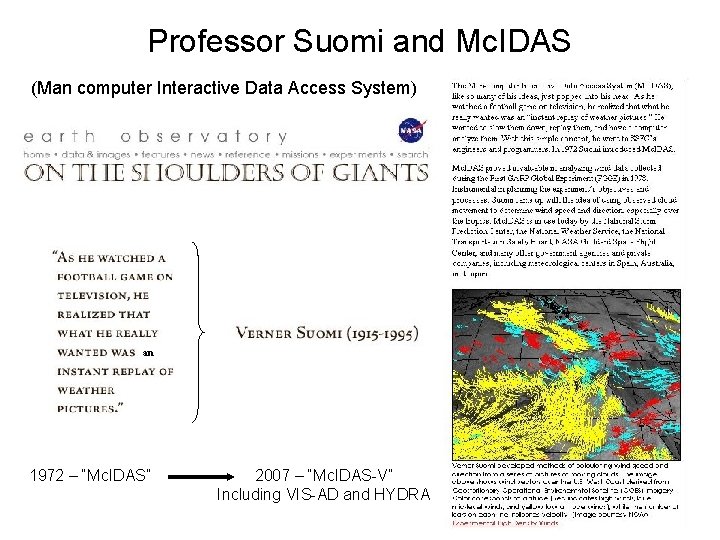
Professor Suomi and Mc. IDAS (Man computer Interactive Data Access System) an 1972 – “Mc. IDAS” 2007 – “Mc. IDAS-V” Including VIS-AD and HYDRA
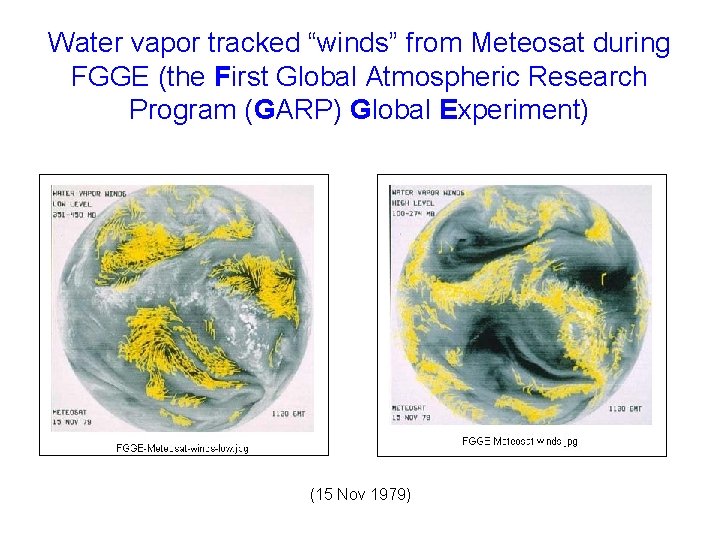
Water vapor tracked “winds” from Meteosat during FGGE (the First Global Atmospheric Research Program (GARP) Global Experiment) (15 Nov 1979)
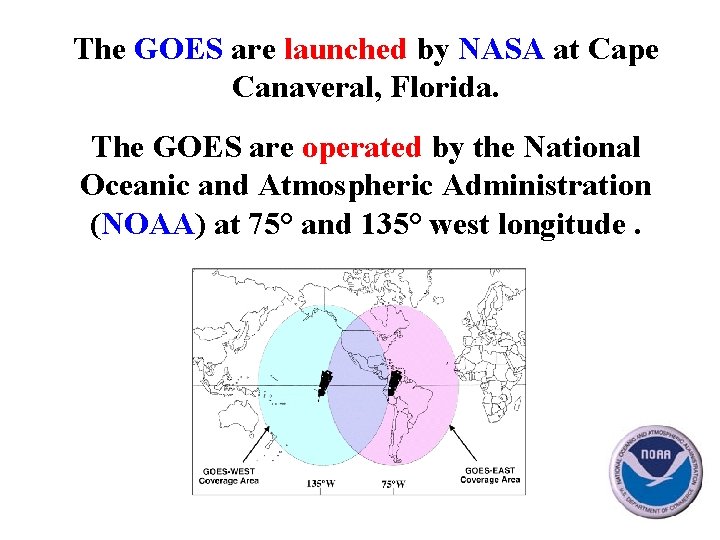
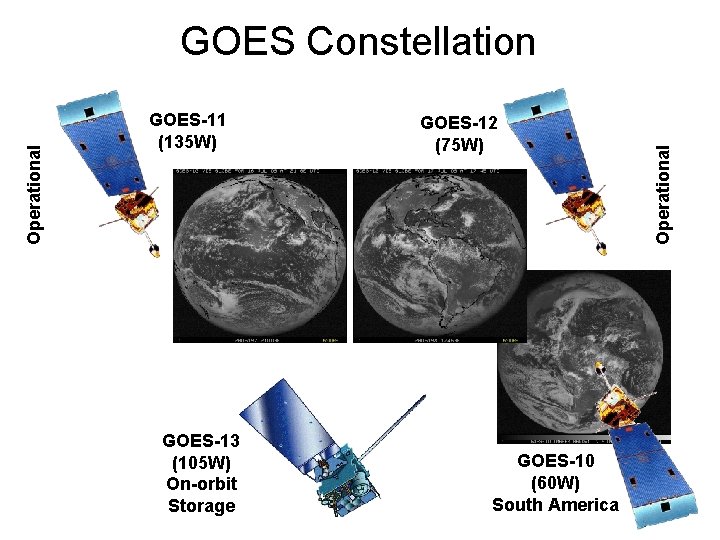
The GOES are launched by NASA at Cape Canaveral, Florida. The GOES are operated by the National Oceanic and Atmospheric Administration (NOAA) at 75° and 135° west longitude.
Physical vertical retrievals from geostationary orbits – another NOAA and Wisconsin connection Bill Smith - Suomi student at UW; NOAA researcher, expanding physical iterative sounding retrievals from POES (HIRS) to GOES/VAS, as NOAA/NESDIS Development Lab moved to UW-SSEC (mid 1970 s); became first director of CIMSS (early 1980 s); went to NASA Langley to continue development of a geostationary hyper-spectral sounding capability; now at Hampton University as well as part time at UW-SSEC, still promoting geo hyper-spectral Kit Hayden – NOAA/NESDIS DL member and retrieval developer (retired) Paul Menzel – Suomi colleague; multi-spectral remote sensing expert and teacher at UW-SSEC; senior scientist for NOAA/NESDIS/ORA; first Suomi Distinguished Professor at UW-AOS Ma Xa Lin – SSEC geo retrieval algorithm developer (California) Allen Huang – Suomi student at UW; hyper-spectral remote sensing advocate and expert extraordinaire Jun Li – SSEC geo retrieval algorithm developer
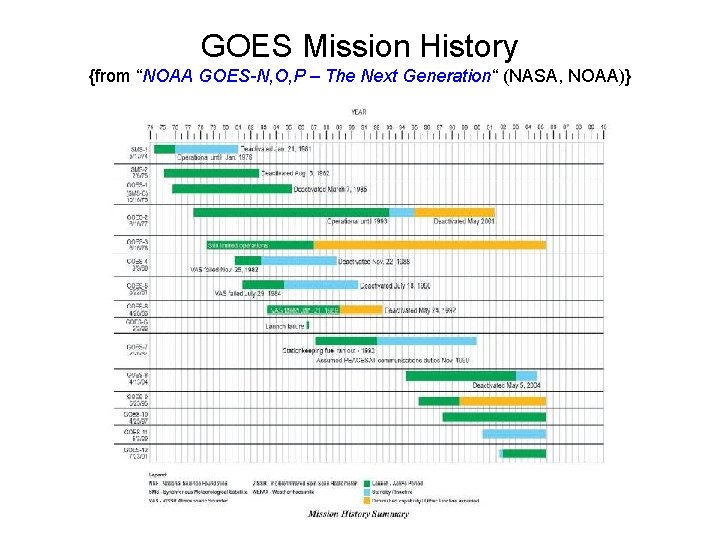
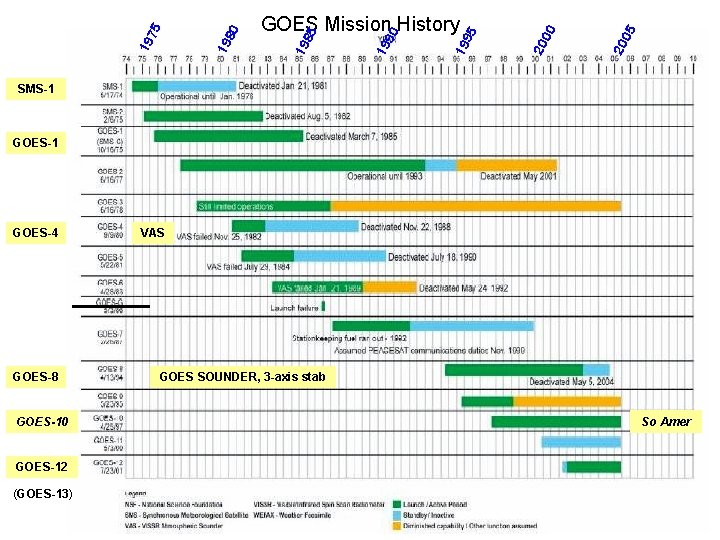
GOES Mission History {from “NOAA GOES-N, O, P – The Next Generation“ (NASA, NOAA)}
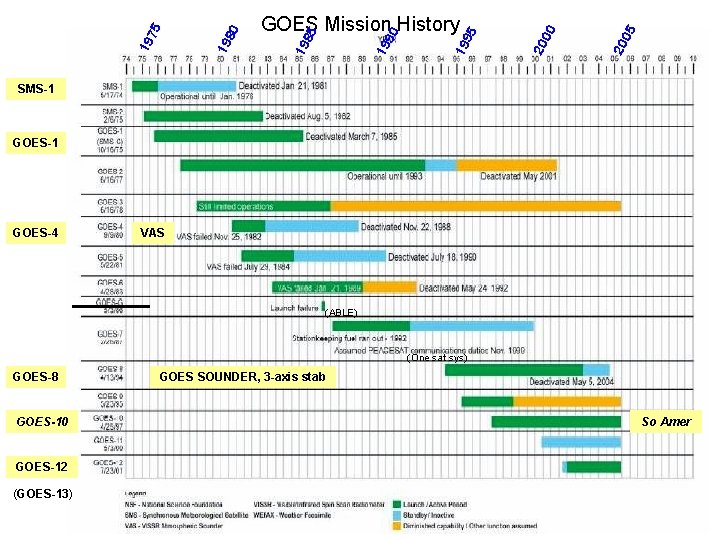
05 20 00 95 20 19 19 90 85 19 19 80 75 19 GOES Mission History SMS-1 GOES-4 VAS (ABLE) (One sat sys) GOES-8 GOES-10 GOES-12 (GOES-13) GOES SOUNDER, 3 -axis stab So Amer
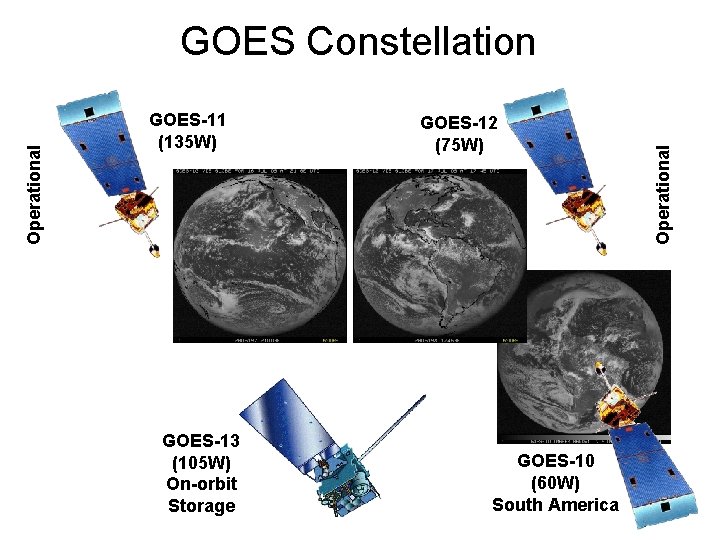
GOES-11 (135 W) GOES-13 (105 W) On-orbit Storage GOES-12 (75 W) GOES-10 (60 W) South America Operational GOES Constellation
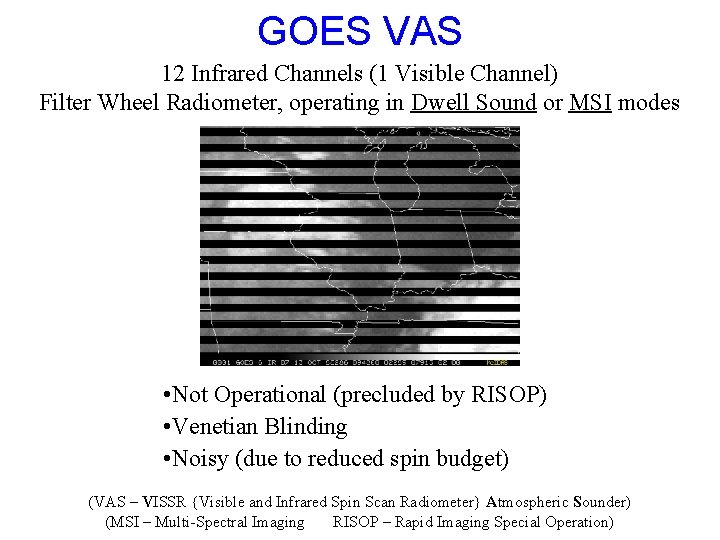
GOES VAS 12 Infrared Channels (1 Visible Channel) Filter Wheel Radiometer, operating in Dwell Sound or MSI modes • Not Operational (precluded by RISOP) • Venetian Blinding • Noisy (due to reduced spin budget) (VAS – VISSR {Visible and Infrared Spin Scan Radiometer} Atmospheric Sounder) (MSI – Multi-Spectral Imaging RISOP – Rapid Imaging Special Operation)
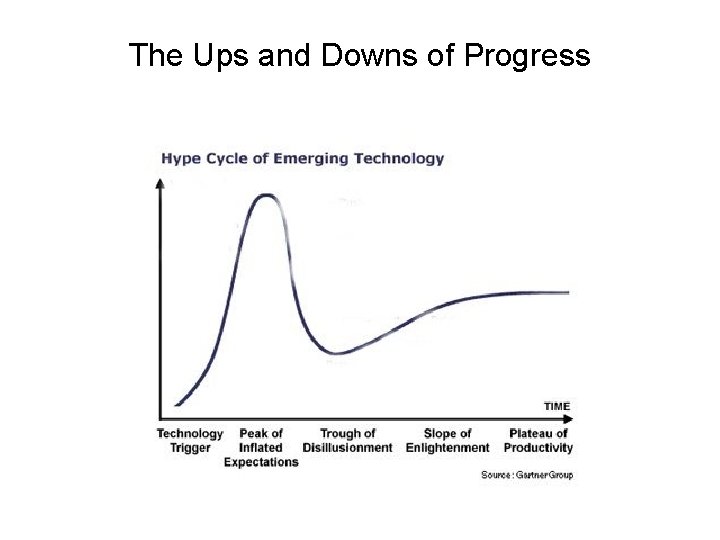
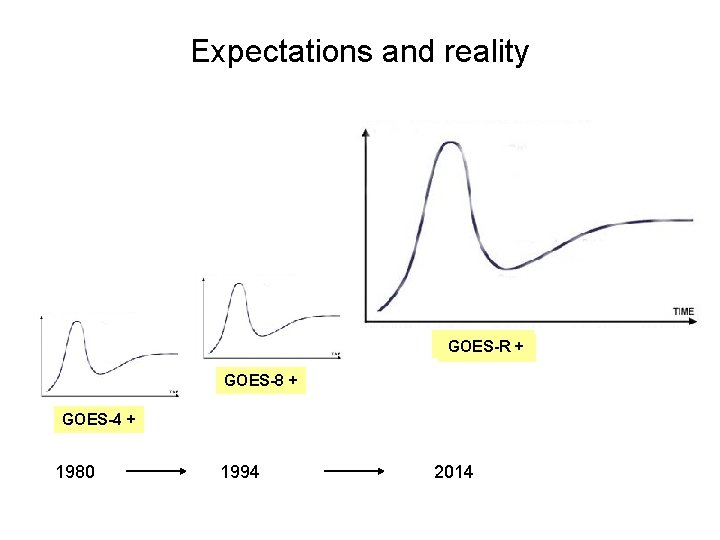
The Ups and Downs of Progress
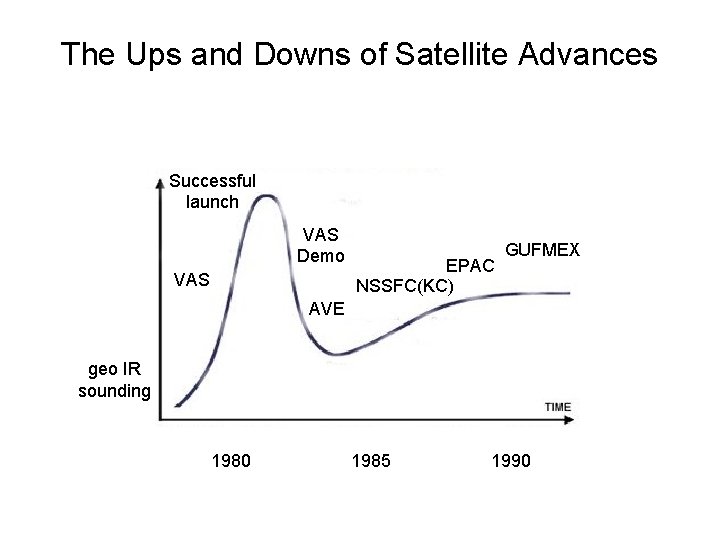
The Ups and Downs of Satellite Advances Successful launch VAS Demo VAS EPAC NSSFC(KC) GUFMEX AVE geo IR sounding 1980 1985 1990
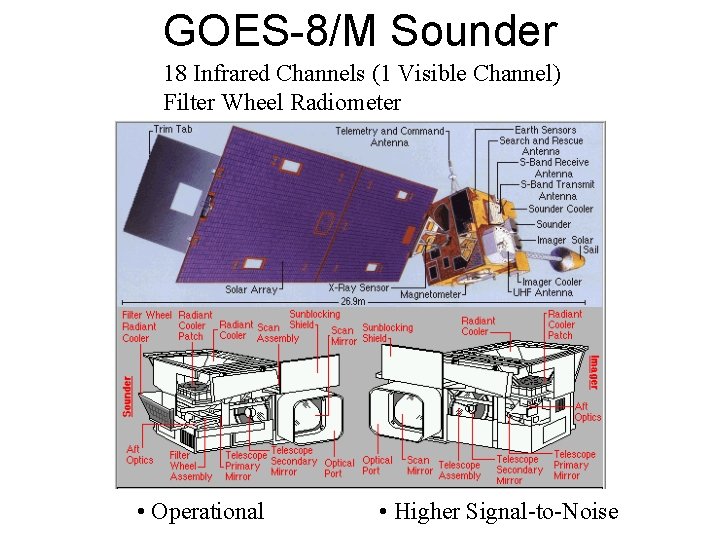
GOES-8/M Sounder 18 Infrared Channels (1 Visible Channel) Filter Wheel Radiometer • Operational • Higher Signal-to-Noise
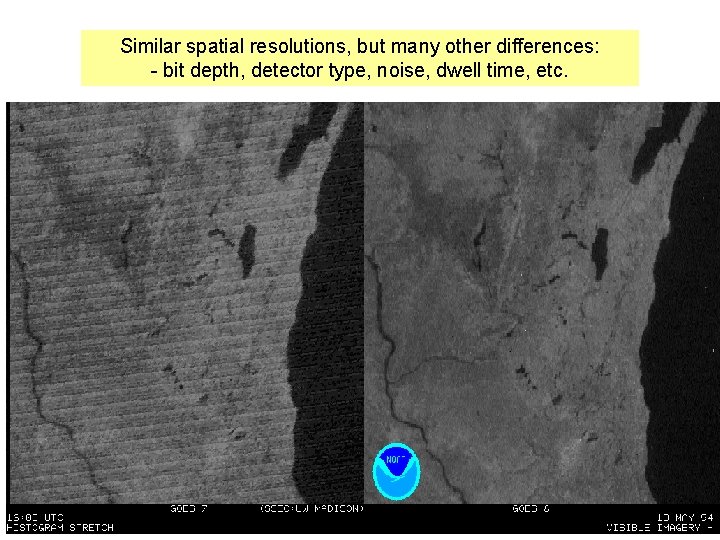
Similar spatial resolutions, but many other differences: - bit depth, detector type, noise, dwell time, etc.
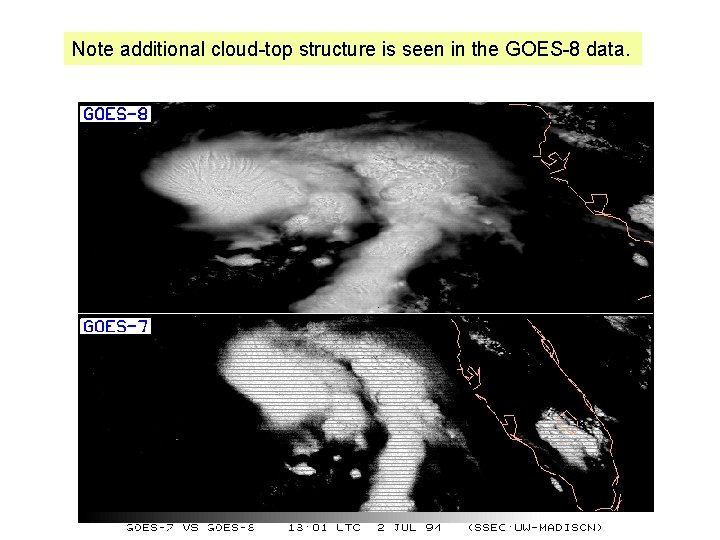
Note additional cloud-top structure is seen in the GOES-8 data.
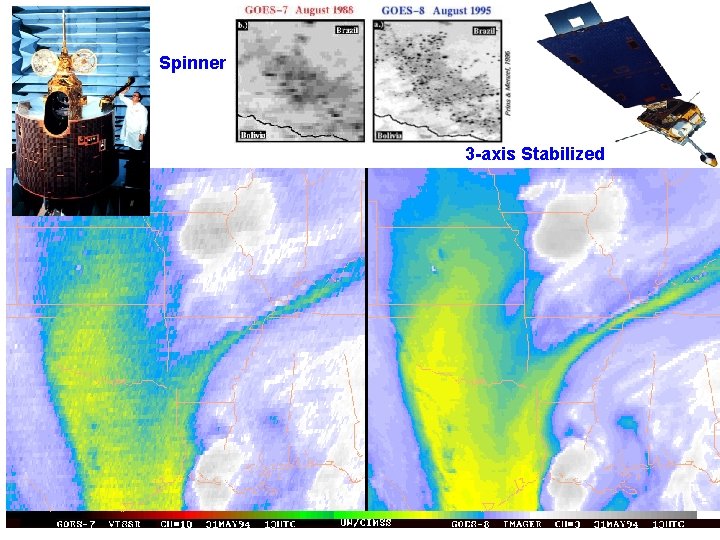
Spinner 3 -axis Stabilized
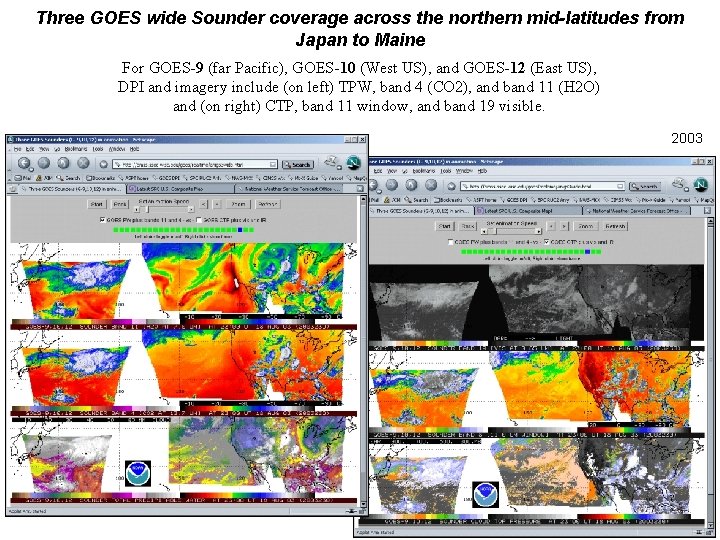
Three GOES wide Sounder coverage across the northern mid-latitudes from Japan to Maine For GOES-9 (far Pacific), GOES-10 (West US), and GOES-12 (East US), DPI and imagery include (on left) TPW, band 4 (CO 2), and band 11 (H 2 O) and (on right) CTP, band 11 window, and band 19 visible. 2003
GOES-11 (135 W) GOES-13 (105 W) On-orbit Storage GOES-12 (75 W) GOES-10 (60 W) South America Operational GOES Constellation
05 20 00 20 95 19 90 19 85 19 19 80 75 19 GOES Mission History SMS-1 GOES-4 GOES-8 GOES-10 GOES-12 (GOES-13) VAS GOES SOUNDER, 3 -axis stab So Amer
Expectations and reality GOES-R++ + GOES-8 + GOES-4 + 1980 1994 2014
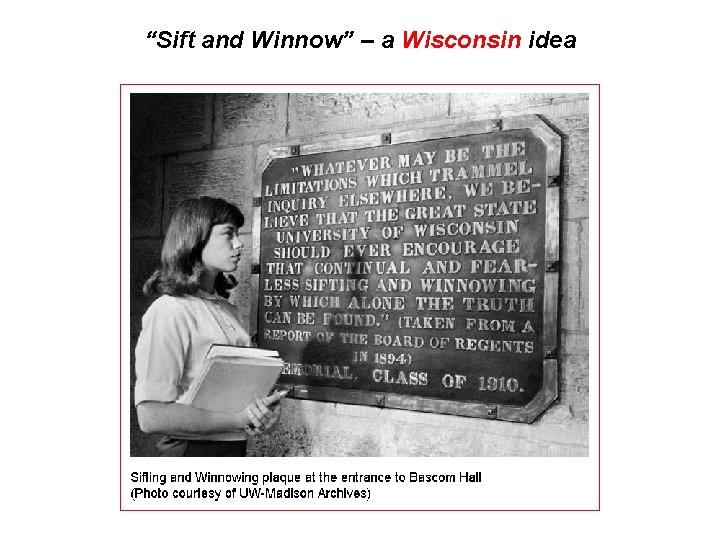
“Sift and Winnow” – a Wisconsin idea