
Overview of the Immune System The bottom line
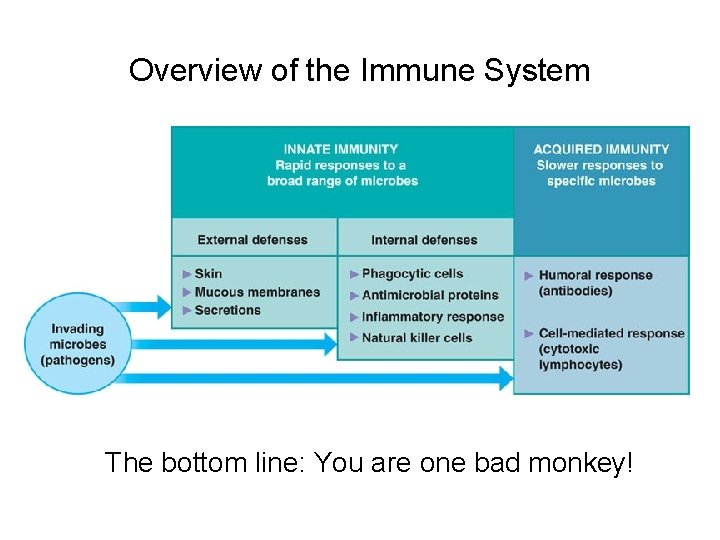
Overview of the Immune System The bottom line: You are one bad monkey!
A closer look at general (Innate) Immune Response • • Skin Mucous Membranes Mucus, Fluids Cillia, hairs Inflammation Fever! Serum Proteins: Complement System. Infection - cell lysis • Interferons • Natural Killer Cells (NK) Cells: Apoptosis, general fighters against Cancer and Viruses
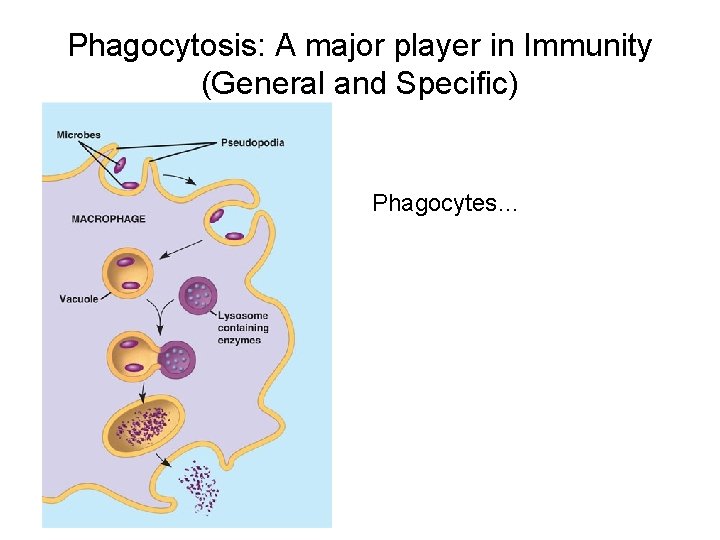
Phagocytosis: A major player in Immunity (General and Specific) Phagocytes…
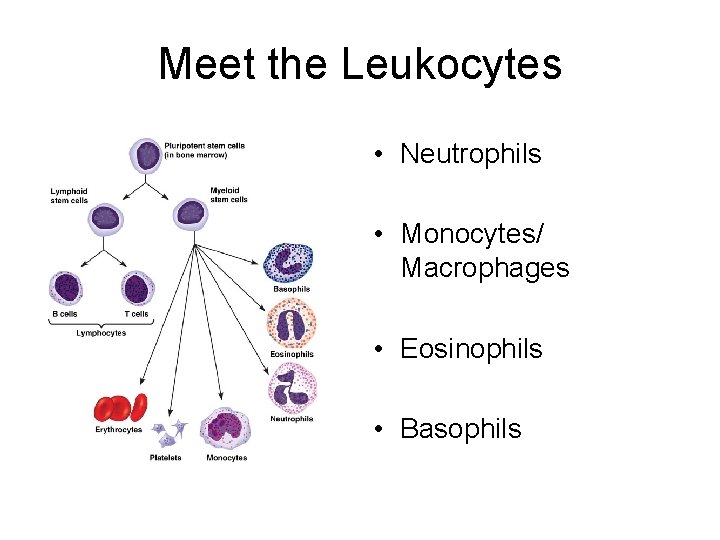
Meet the Leukocytes • Neutrophils • Monocytes/ Macrophages • Eosinophils • Basophils
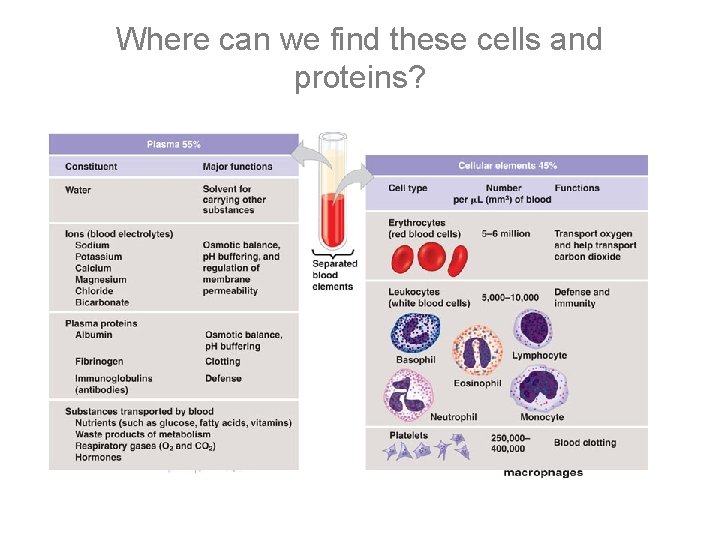
Where can we find these cells and proteins?
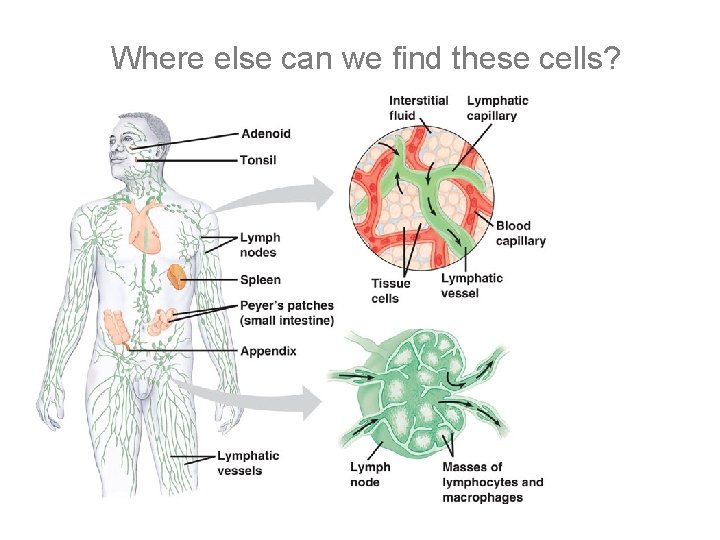
Where else can we find these cells?
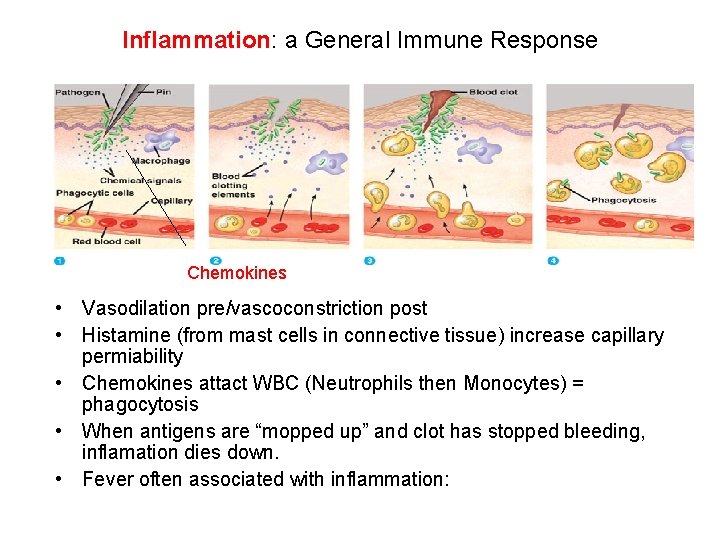
Inflammation: a General Immune Response Chemokines • Vasodilation pre/vascoconstriction post • Histamine (from mast cells in connective tissue) increase capillary permiability • Chemokines attact WBC (Neutrophils then Monocytes) = phagocytosis • When antigens are “mopped up” and clot has stopped bleeding, inflamation dies down. • Fever often associated with inflammation:
An overview of Specific Immunity: • Four Characteristics/Attributes of Immunity • • Specificity Diversity Memory (Effective Response) Capacity to distinguish self from non-self • Two types of immunity – Humoral: – Cellular:
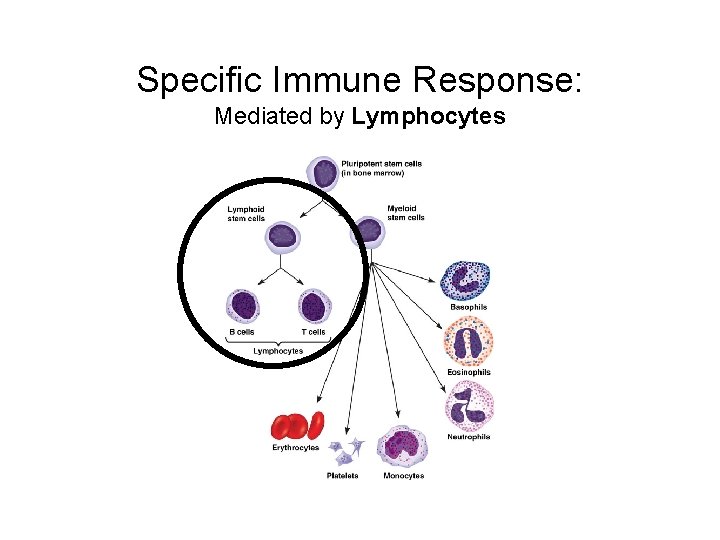
Specific Immune Response: Mediated by Lymphocytes

Lymphocyte development
Four Characteristics/Attributes of Immunity • Specificity: Each Lymphocyte is specific for a specific antigen • Diversity • Memory • Capacity to distinguish self from non-self
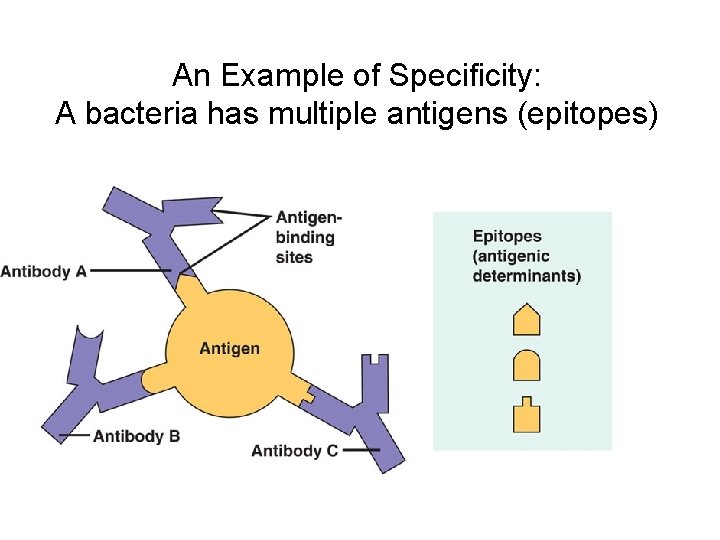
An Example of Specificity: A bacteria has multiple antigens (epitopes)
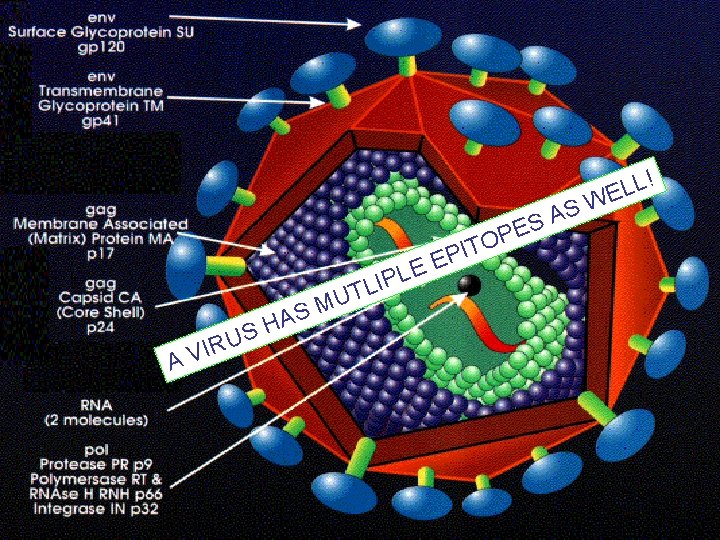
S A PES A IR V A H S U U M S LE P I TL O T I EP ! L L WE
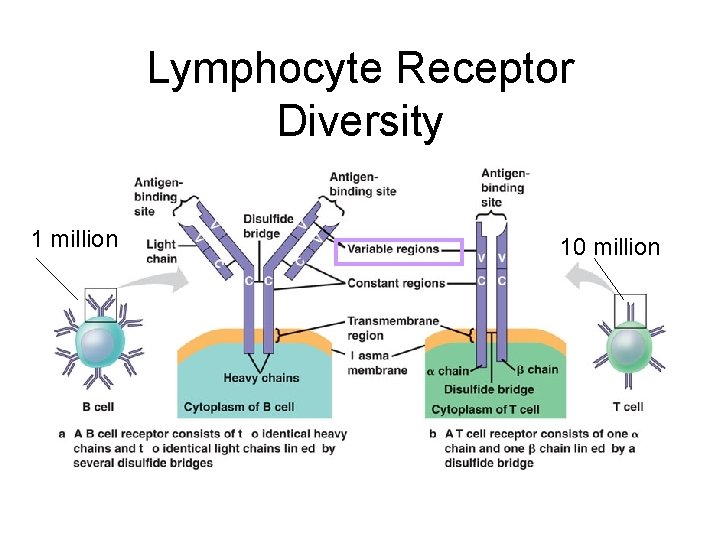
Lymphocyte Receptor Diversity 1 million 10 million
Four Characteristics/Attributes of Immunity • Specificity • Diversity: Your immune system can respond to millions of antigens • Memory (Effective Response) • Capacity to distinguish self from non-self
Lymphocytes are Diverse ØWhy: receptors (B & T Cell) are polymorphic proteins based on a similar structure which are translated from polymorphic, recombined genes. This occurs during lymphocyte development. ØThese receptors hook up with other diverse, specific proteins found in other cells called MHC molecules Ø These other proteins arise from Multi Histonecompatibility Complex (MHC) genes (these genes are in your cells, and produce proteins as needed)
How does this specificity arise? • Lymphocytes (T cells) become activated for an antigen when they interact with infected cells or with macrophages or dedritic cells. • This specificity is made possible by: Class I MHC Class II MHC

T-cell + MHC = Specificity
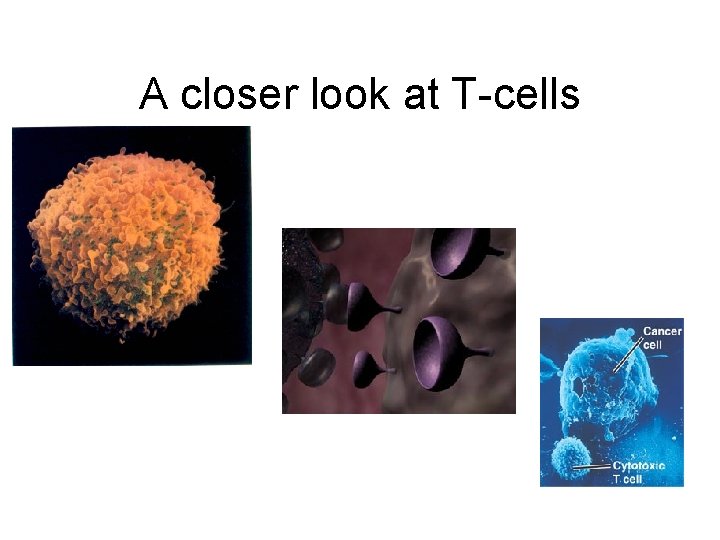
A closer look at T-cells
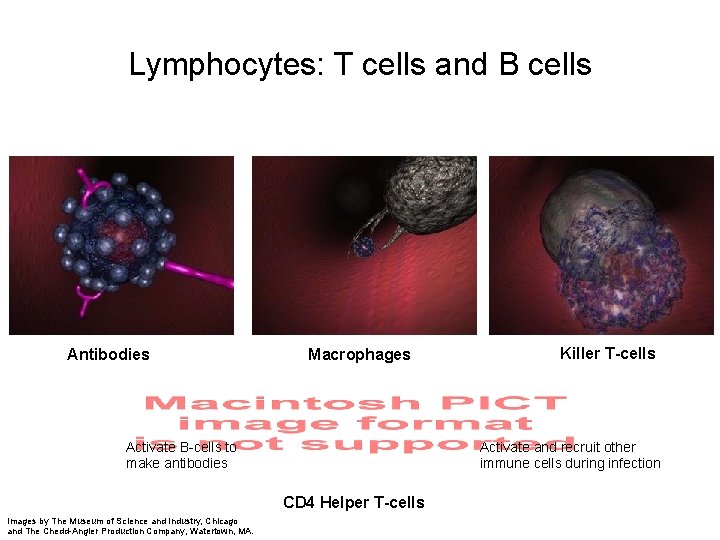
Lymphocytes: T cells and B cells Antibodies Macrophages Activate B-cells to make antibodies Activate and recruit other immune cells during infection CD 4 Helper T-cells Images by The Museum of Science and Industry, Chicago and The Chedd-Angier Production Company, Watertown, MA. Killer T-cells
Four Characteristics/Attributes of Immunity • Specificity • Diversity • Memory (Effective Response) • Capacity to distinguish self from non-self
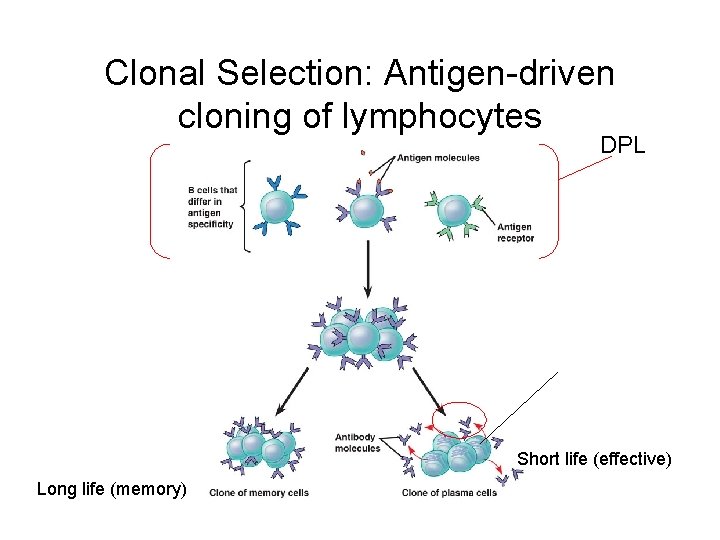
Clonal Selection: Antigen-driven cloning of lymphocytes DPL Short life (effective) Long life (memory)
In other words… Each antigen, by binding to specific receptors, selectively activates a tiny fraction of cells from the body’s diverse pool of lymphocytes: this relatively small number of selected cells gives rise to clones of 1000 s of cells, all specific for -- and dedicated to -- eliminating that antigen.
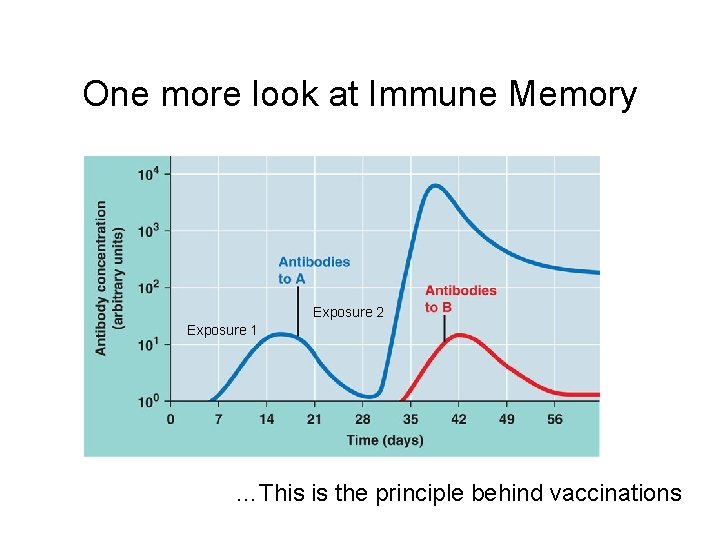
One more look at Immune Memory Exposure 2 Exposure 1 …This is the principle behind vaccinations
Four Characteristics/Attributes of Immunity • • Specificity Diversity Memory (Effective Response) Capacity to distinguish self from non-self
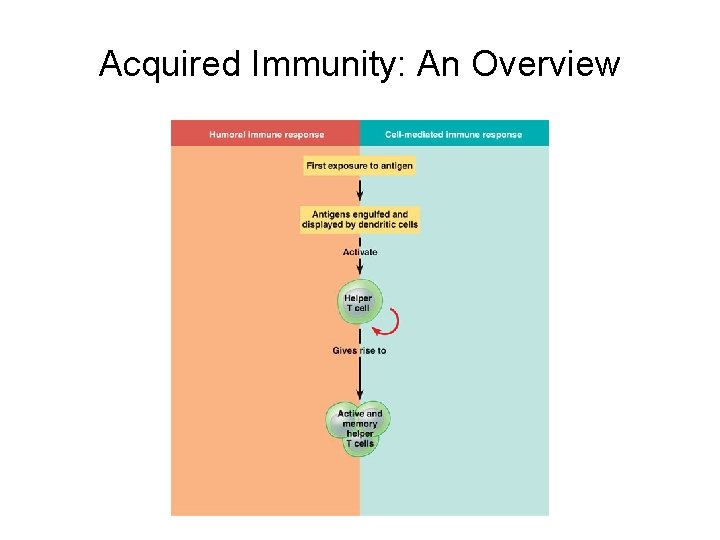
Acquired Immunity: An Overview
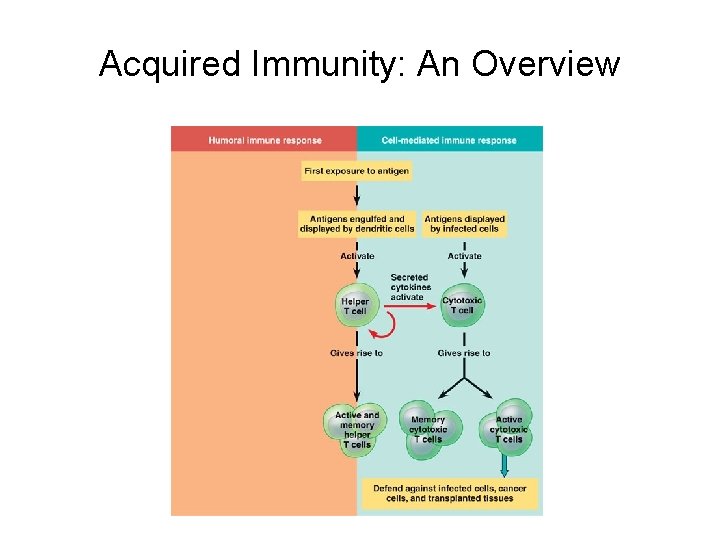
Acquired Immunity: An Overview
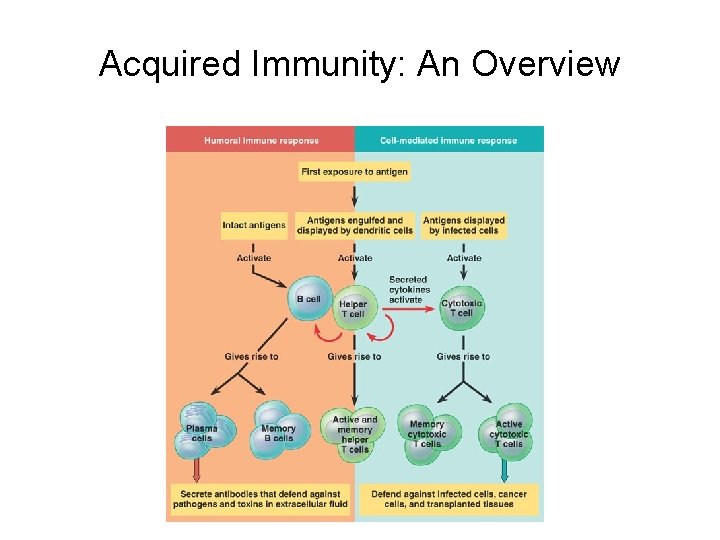
Acquired Immunity: An Overview
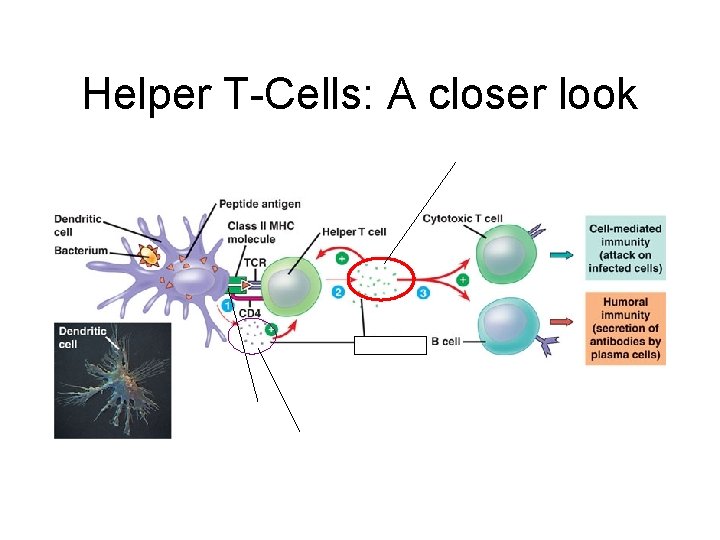
Helper T-Cells: A closer look
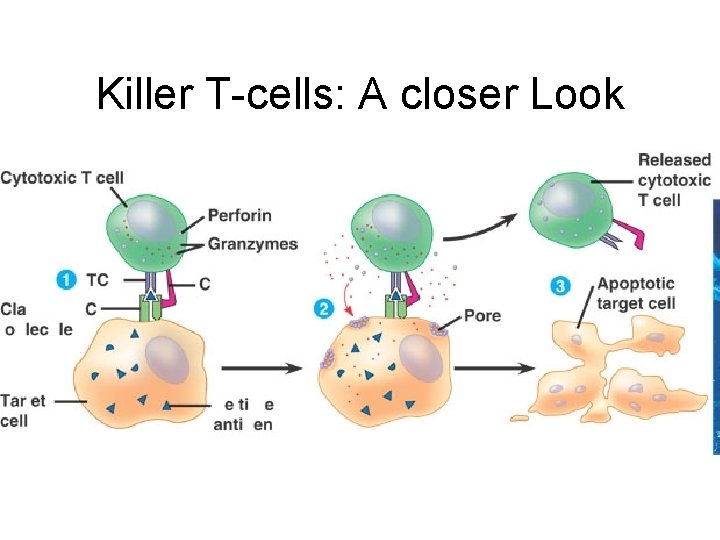
Killer T-cells: A closer Look
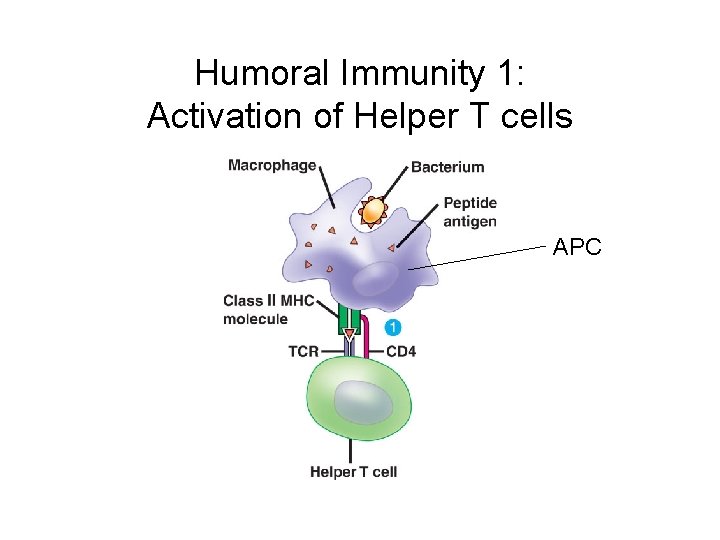
Humoral Immunity 1: Activation of Helper T cells APC
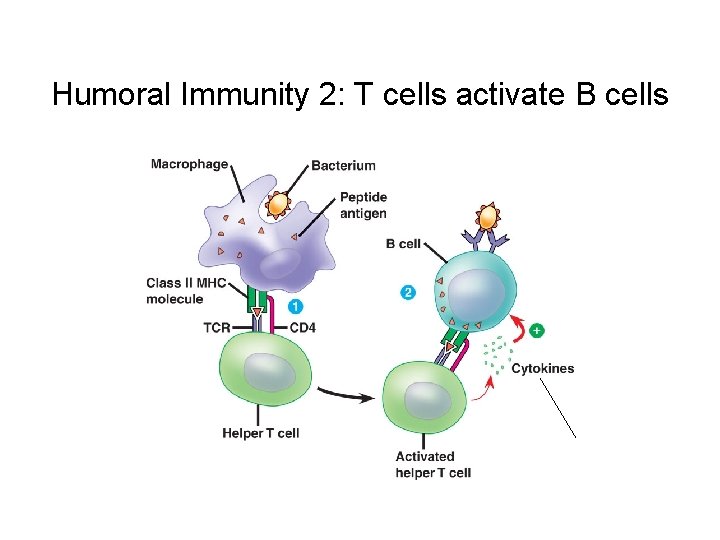
Humoral Immunity 2: T cells activate B cells
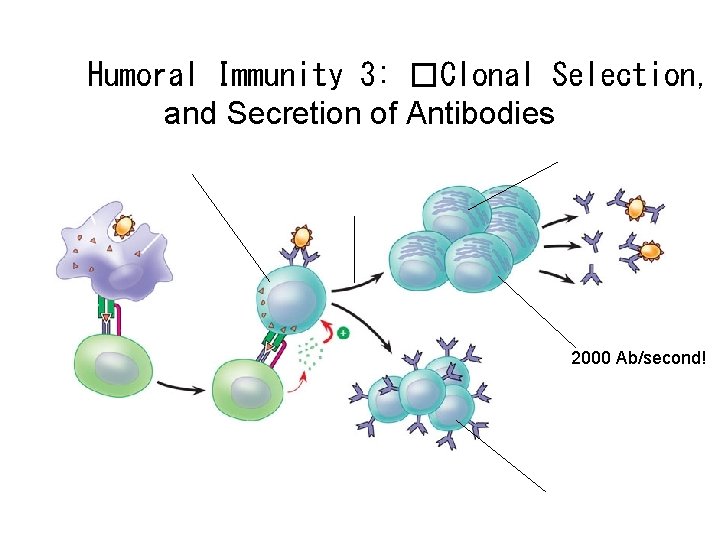
Humoral Immunity 3: �Clonal Selection, and Secretion of Antibodies 2000 Ab/second!
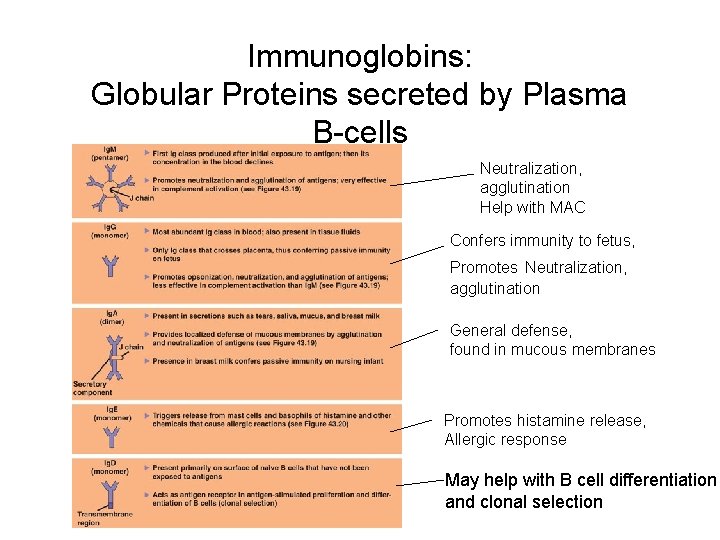
Immunoglobins: Globular Proteins secreted by Plasma B-cells Neutralization, agglutination Help with MAC Confers immunity to fetus, Promotes Neutralization, agglutination General defense, found in mucous membranes Promotes histamine release, Allergic response May help with B cell differentiation and clonal selection
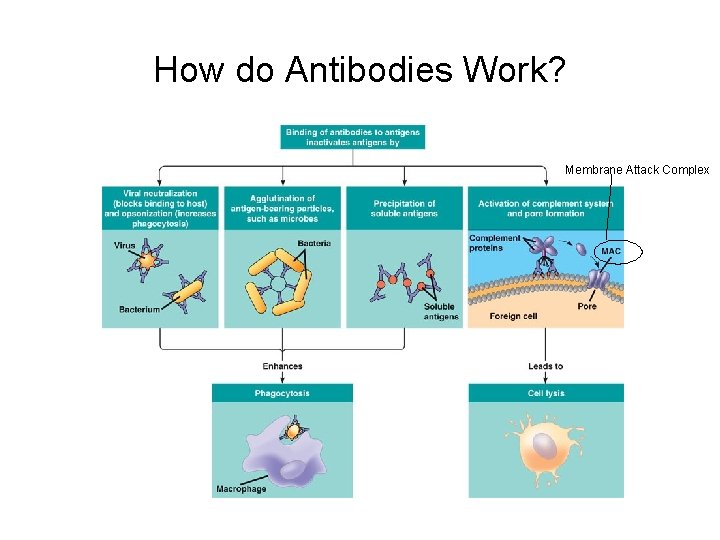
How do Antibodies Work? Membrane Attack Complex
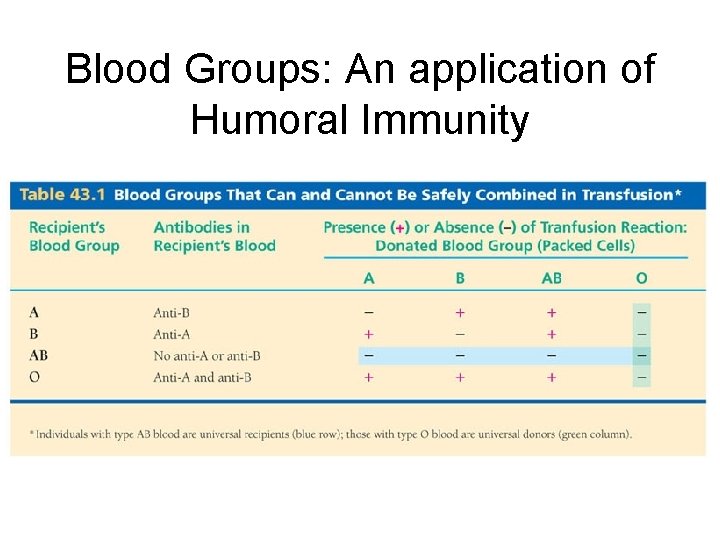
Blood Groups: An application of Humoral Immunity
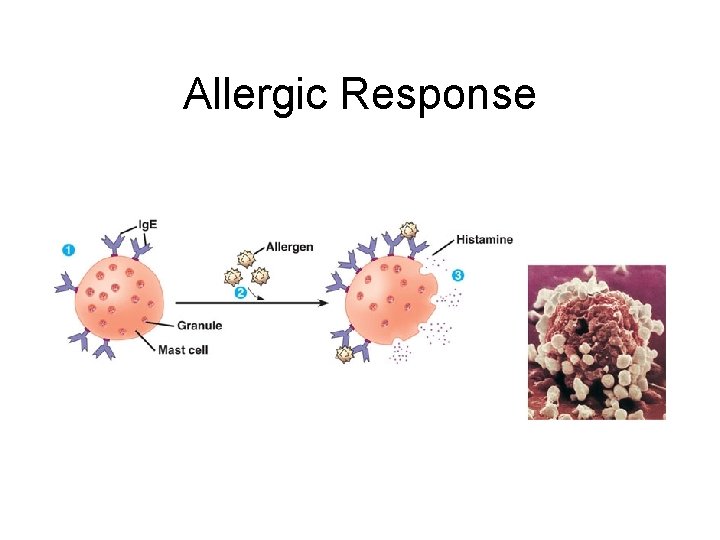
Allergic Response
- Slides: 37