
Overview of The HAMS Alcohol Harm Reduction Program

- Slides: 38
Overview of The HAMS Alcohol Harm Reduction Program Copyright © 2012 The HAMS Harm Reduction Network http: //hamsnetwork. org
• The acronym HAMS stands for – Harm reduction – Abstinence from alcohol – Moderation and – Support • HAMS is a free-of-charge, lay-led support and informational group which supports any positive change from safer drinking to reduced drinking to quitting alcohol altogether
Our members usually like to call themselves HAMSTERS
HAMS is an INFORMATIONAL and SUPPORT group • Participation in the support group is not required • Many people succeed in changing their drinking habits by reading the book or information on the web site • Many people benefit greatly by participating in support groups • It is up to the individual whether they prefer to change their drinking by using the written material, the support group, or both • Most HAMS support groups are online
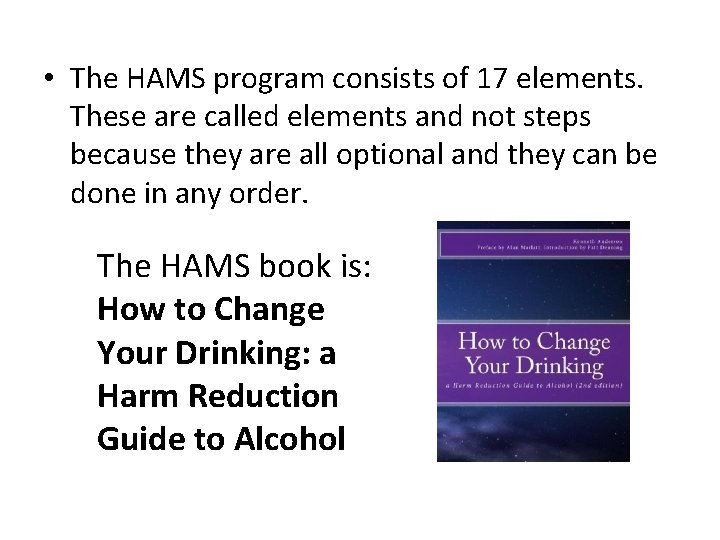
• The HAMS program consists of 17 elements. These are called elements and not steps because they are all optional and they can be done in any order. The HAMS book is: How to Change Your Drinking: a Harm Reduction Guide to Alcohol
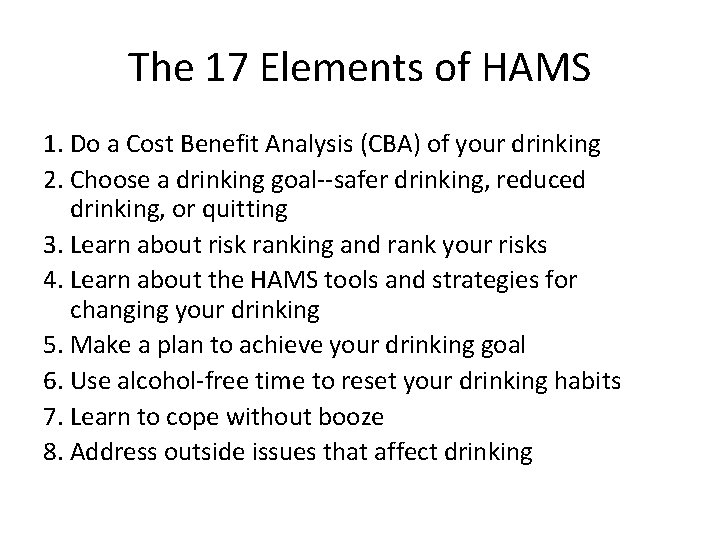
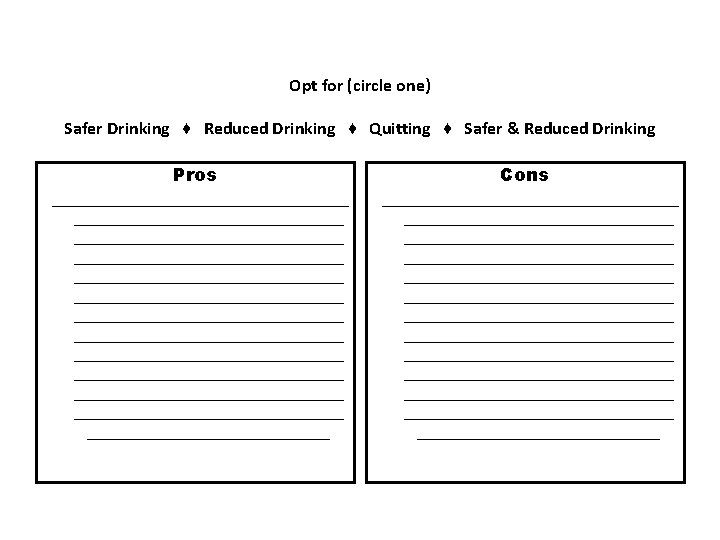
The 17 Elements of HAMS 1. Do a Cost Benefit Analysis (CBA) of your drinking 2. Choose a drinking goal--safer drinking, reduced drinking, or quitting 3. Learn about risk ranking and rank your risks 4. Learn about the HAMS tools and strategies for changing your drinking 5. Make a plan to achieve your drinking goal 6. Use alcohol-free time to reset your drinking habits 7. Learn to cope without booze 8. Address outside issues that affect drinking
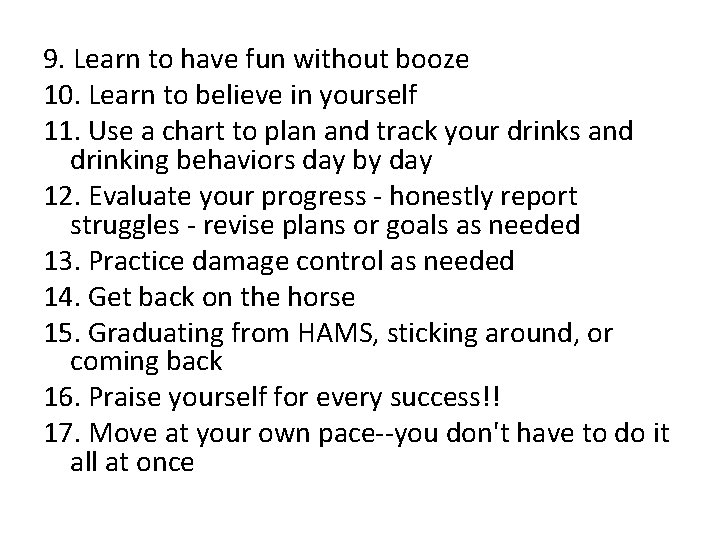
9. Learn to have fun without booze 10. Learn to believe in yourself 11. Use a chart to plan and track your drinks and drinking behaviors day by day 12. Evaluate your progress - honestly report struggles - revise plans or goals as needed 13. Practice damage control as needed 14. Get back on the horse 15. Graduating from HAMS, sticking around, or coming back 16. Praise yourself for every success!! 17. Move at your own pace--you don't have to do it all at once
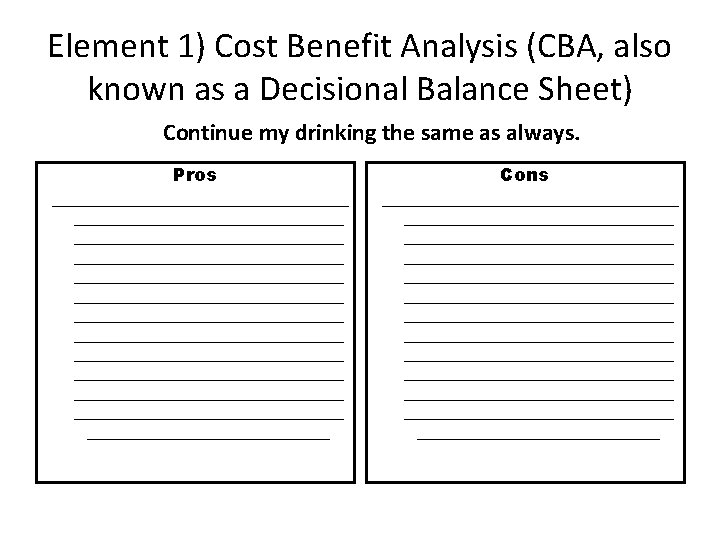
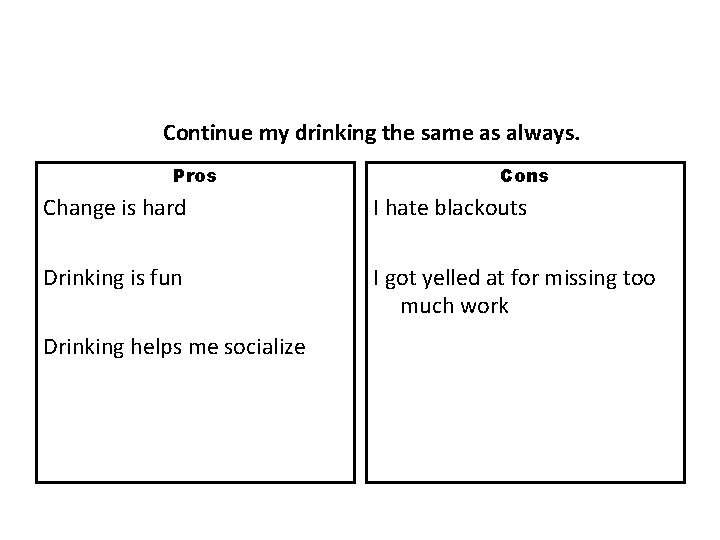
Continue my drinking the same as always. Pros Change is hard Drinking is fun Drinking helps me socialize Cons I hate blackouts I got yelled at for missing too much work
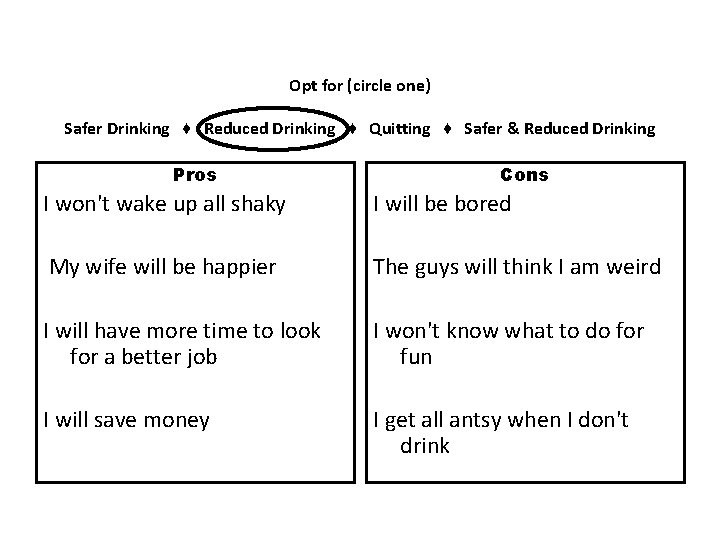
Opt for (circle one) Safer Drinking ♦ Reduced Drinking ♦ Quitting ♦ Safer & Reduced Drinking Pros I won't wake up all shaky My wife will be happier I will have more time to look for a better job I will save money Cons I will be bored The guys will think I am weird I won't know what to do for fun I get all antsy when I don't drink
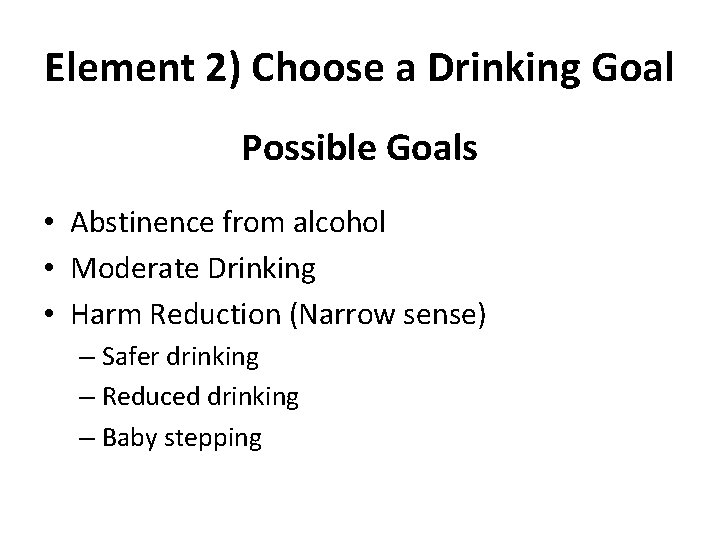
Element 2) Choose a Drinking Goal Possible Goals • Abstinence from alcohol • Moderate Drinking • Harm Reduction (Narrow sense) – Safer drinking – Reduced drinking – Baby stepping
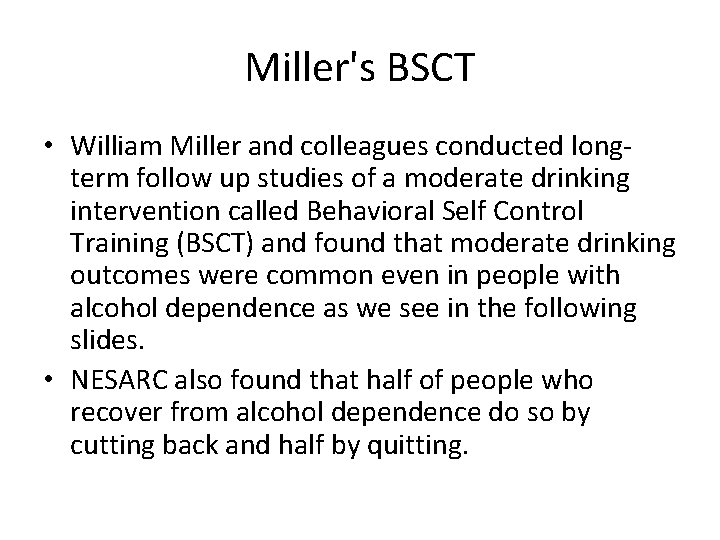
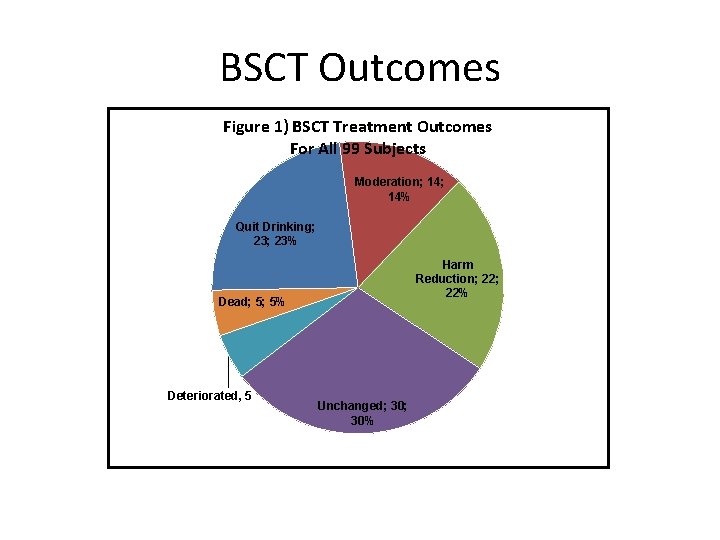
Miller's BSCT • William Miller and colleagues conducted longterm follow up studies of a moderate drinking intervention called Behavioral Self Control Training (BSCT) and found that moderate drinking outcomes were common even in people with alcohol dependence as we see in the following slides. • NESARC also found that half of people who recover from alcohol dependence do so by cutting back and half by quitting.
BSCT Outcomes Figure 1) BSCT Treatment Outcomes For All 99 Subjects Moderation; 14% Quit Drinking; 23% Harm Reduction; 22% Dead; 5; 5% Deteriorated, 5 Unchanged; 30%
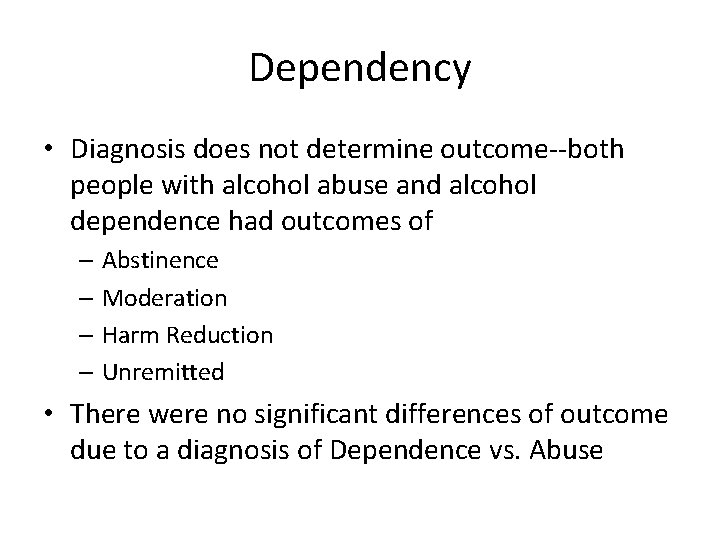
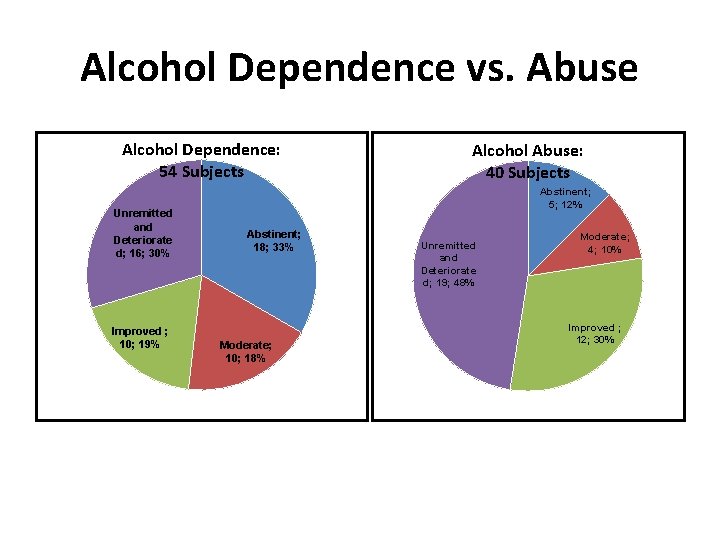
Dependency • Diagnosis does not determine outcome--both people with alcohol abuse and alcohol dependence had outcomes of – Abstinence – Moderation – Harm Reduction – Unremitted • There were no significant differences of outcome due to a diagnosis of Dependence vs. Abuse
Alcohol Dependence vs. Abuse Alcohol Dependence: 54 Subjects Unremitted and Deteriorate d; 16; 30% Improved ; 10; 19% Alcohol Abuse: 40 Subjects Abstinent; 5; 12% Abstinent; 18; 33% Moderate; 10; 18% Unremitted and Deteriorate d; 19; 48% Moderate; 4; 10% Improved ; 12; 30%
Severity of Dependence • Significantly fewer subjects with Severe Alcohol Dependence (MAST >= 19) achieved Moderate Drinking Outcomes • However, Severely Dependent drinkers were just as likely to achieve Harm Reduction Outcomes as less severely dependent drinkers • Severely Dependent Drinkers who are unable or unwilling to achieve Abstinence or Moderate Drinking Goals should be encouraged to pursue Harm Reduction goals of Safer and/or Reduced Drinking
Choosing a Goal • Safer Drinking and Reduced Drinking vs. Quitting Drinking: Although it is possible to become a safer drinker without reducing drinking (e. g. by giving up drinking and driving without changing amounts consumed) most people who choose a controlled drinking goal choose to work on both being safer and reducing amounts. Usually the difficult decision is whether controlled drinking or quitting completely is the best goal.
NO MAGIC BULLET • Harm reduction is not a magic bullet to allow everyone with alcohol problems to drink with no consequences--we recommend that people who have been successful in resolving their problems via abstinence continue to abstain • However for people who are determined to drink again no matter what, a harm reduction program can help them be safer than doing it on their own entirely
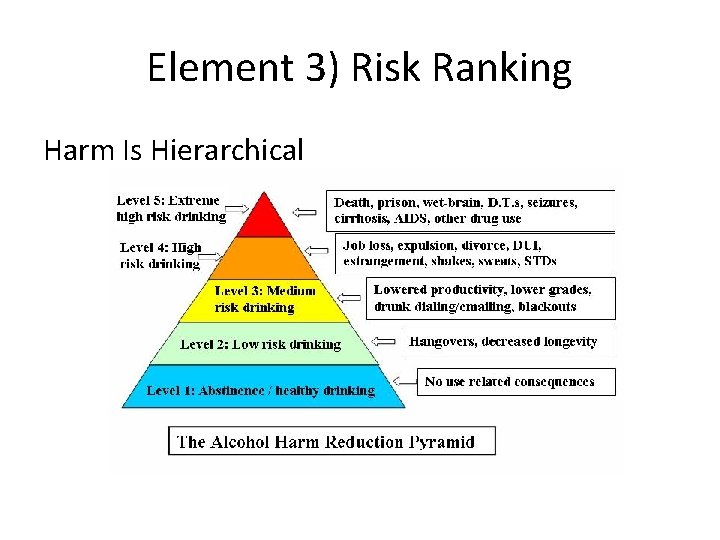
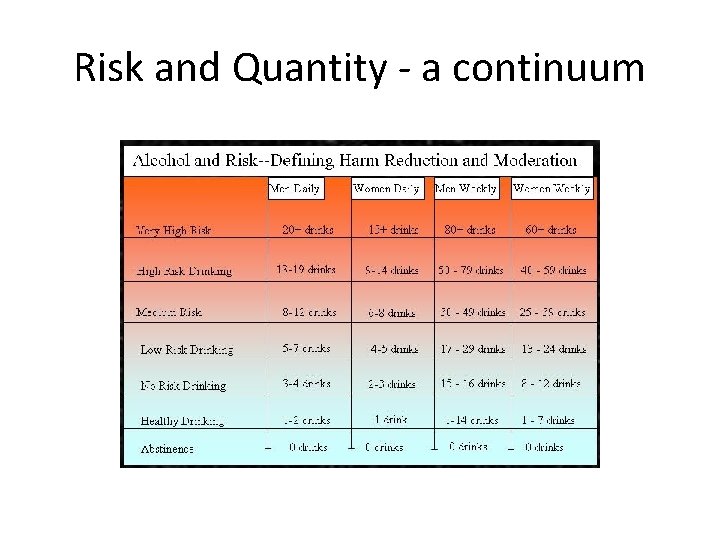
Element 3) Risk Ranking Harm Is Hierarchical
Risk and Quantity - a continuum
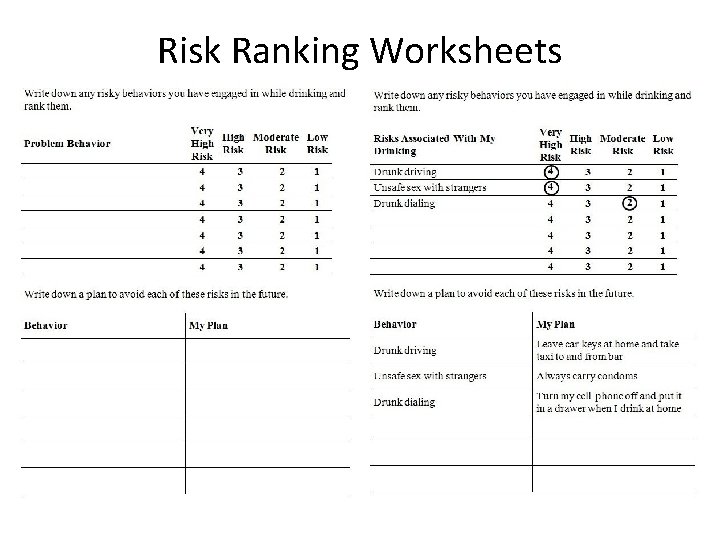
Risk Ranking Worksheets
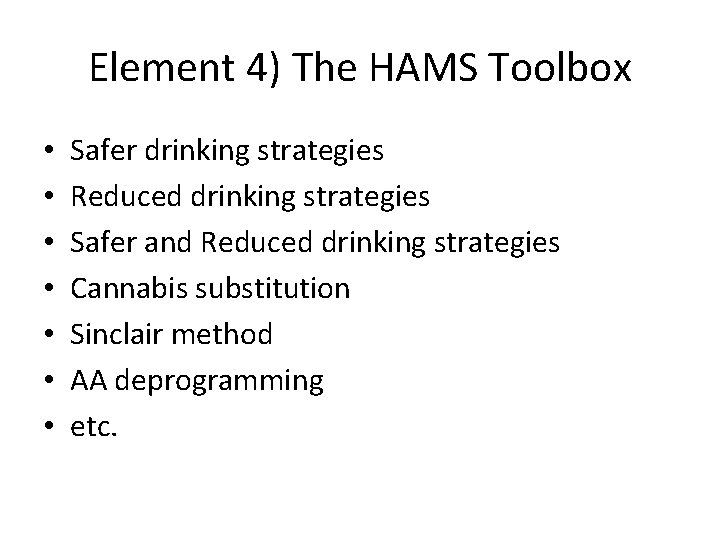
Element 4) The HAMS Toolbox • • Safer drinking strategies Reduced drinking strategies Safer and Reduced drinking strategies Cannabis substitution Sinclair method AA deprogramming etc.
Strategies Are Totally Individualistic! • Someone who gets into fights when they go to bars may choose a strategy of only drinking at home to resolve this problem • Someone who wants to reduce quantities may choose a strategy of only drinking in public to resolve this problem • Different strokes for different folks!
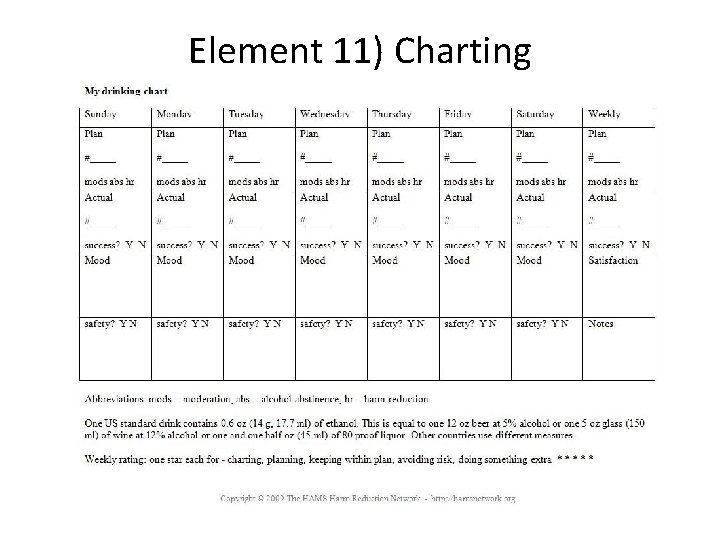
Element 5) Make a Plan • Written plans can help a lot to define one's goals and strategies--many people like to post this to the email group • Some people plan the number of drinks for each day on their drinking chart (see element 11) • Some people use our worksheet to help them develop a plan
Drinking Plan Worksheet
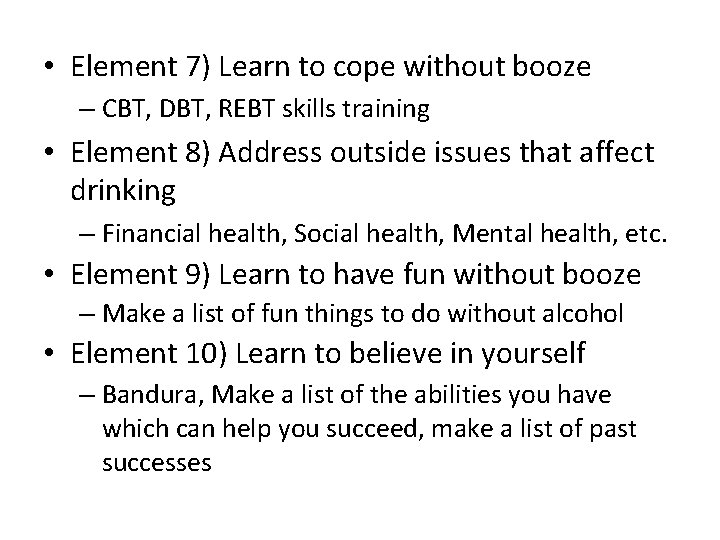
• Element 7) Learn to cope without booze – CBT, DBT, REBT skills training • Element 8) Address outside issues that affect drinking – Financial health, Social health, Mental health, etc. • Element 9) Learn to have fun without booze – Make a list of fun things to do without alcohol • Element 10) Learn to believe in yourself – Bandura, Make a list of the abilities you have which can help you succeed, make a list of past successes
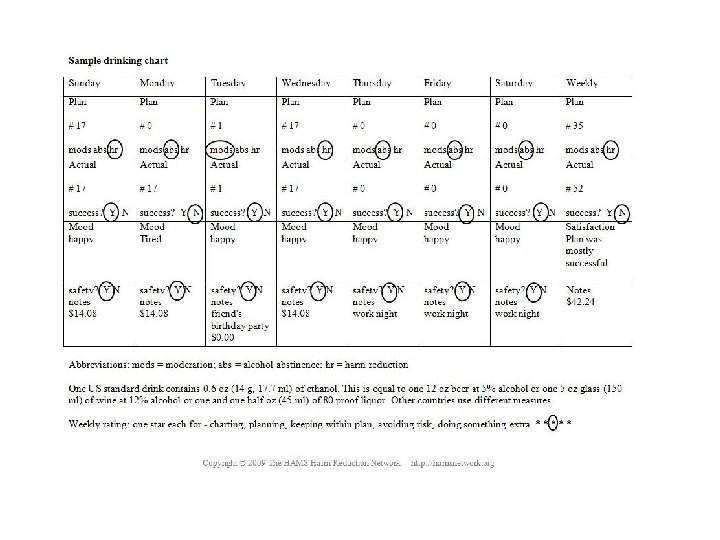
Element 11) Charting
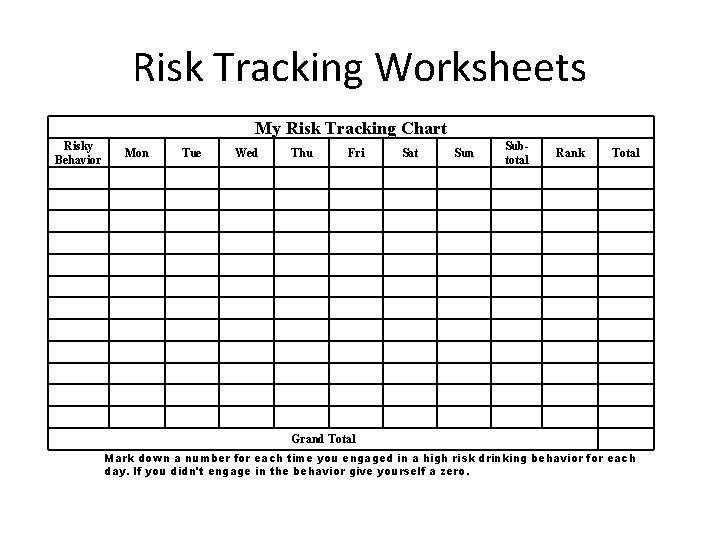
Risk Tracking Worksheets My Risk Tracking Chart Risky Behavior Mon Tue Wed Thu Fri Sat Sun Subtotal Rank Total Grand Total Mark down a number for each time you engaged in a high risk drinking behavior for each day. If you didn't engage in the behavior give yourself a zero.
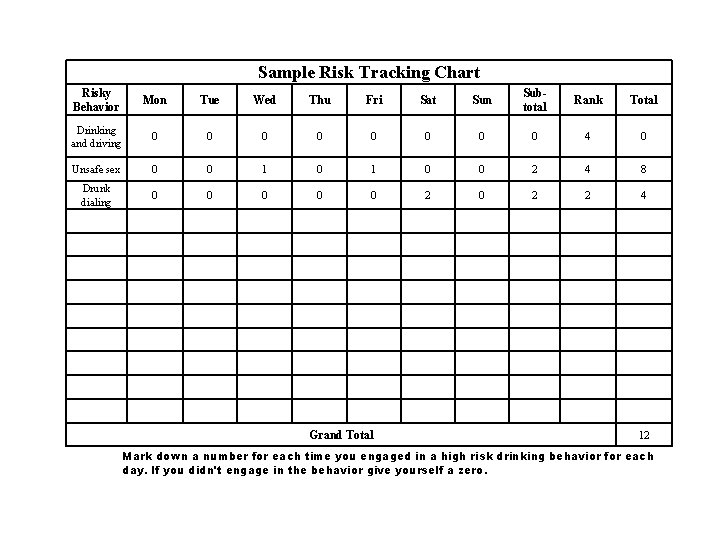
Sample Risk Tracking Chart Risky Behavior Mon Tue Wed Thu Fri Sat Sun Subtotal Rank Total Drinking and driving 0 0 0 0 4 0 Unsafe sex 0 0 1 0 0 2 4 8 Drunk dialing 0 0 0 2 2 4 Grand Total 12 Mark down a number for each time you engaged in a high risk drinking behavior for each day. If you didn't engage in the behavior give yourself a zero.
Element 12) Evaluate your progress - honestly report struggles - revise plans or goals as needed • One method of reviewing progress is to use the tracking sheets we just mentioned • Some people like to review progress by posting where they are at to the email group • It is very important to remind people not to be hypercritical when doing self-evaluation • "The curious paradox is that when I accept myself just as I am, then I can change. " Carl Rogers. • Other self-evaluation methods are currently under construction
Element 13) Damage Control • These are Alan Marlatt's Relapse Prevention strategies adapted to goals of safer or reduced drinking as will as the goal of abstinence which Marlatt originally wrote about • It is common to have a setback in the process of behavioral change but if one forgives oneself then a lapse does not have to turn into a relapse
Element 14) Get Back On The Horse • This is a continuation of Marlatt's Relapse Prevention strategies--be prepared to get right back to your goal after a slip
Element 15) Graduating from HAMS, sticking around, or coming back • HAMS is "apply as needed" • People are free to leave when they are happy with where they are at and can come back for a tune up at any time • Since people are allowed to take pride in achieving their goals, they often come back very quickly if there is any slipping before any real damage occurs • People can also come back to work on other issues such as tobacco or marijuana or if they decide to later change their drinking goal
16. Praise yourself for every success!! • • • Affirmations - look in the mirror "I am a capable, competent human being" "I have the ability to achieve my goal" "I love myself" "I accept myself just as I am" People get lots of praise in the support groups --every abs day is a success and no one can ever lose an abs day or a mods day
17. Move at your own pace--you don't have to do it all at once • Getting overwhelmed by trying to do everything at once can set you up for failure-just like when you start an exercise routine • Eat the elephant one bite at a time
THANK YOU