
Overview of the Food Management Process Menu Planning
- Slides: 16
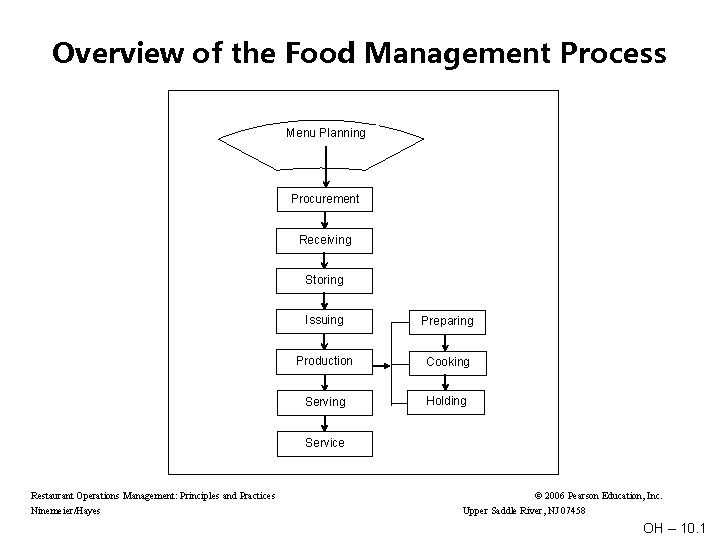
Overview of the Food Management Process Menu Planning Procurement Receiving Storing Issuing Preparing Production Cooking Serving Holding Service Restaurant Operations Management: Principles and Practices Ninemeier/Hayes © 2006 Pearson Education, Inc. Upper Saddle River, NJ 07458 OH – 10. 1
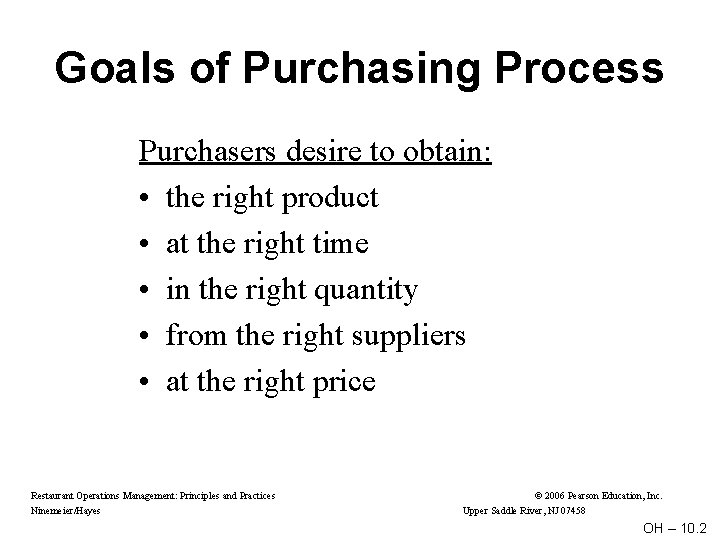
Goals of Purchasing Process Purchasers desire to obtain: • the right product • at the right time • in the right quantity • from the right suppliers • at the right price Restaurant Operations Management: Principles and Practices Ninemeier/Hayes © 2006 Pearson Education, Inc. Upper Saddle River, NJ 07458 OH – 10. 2
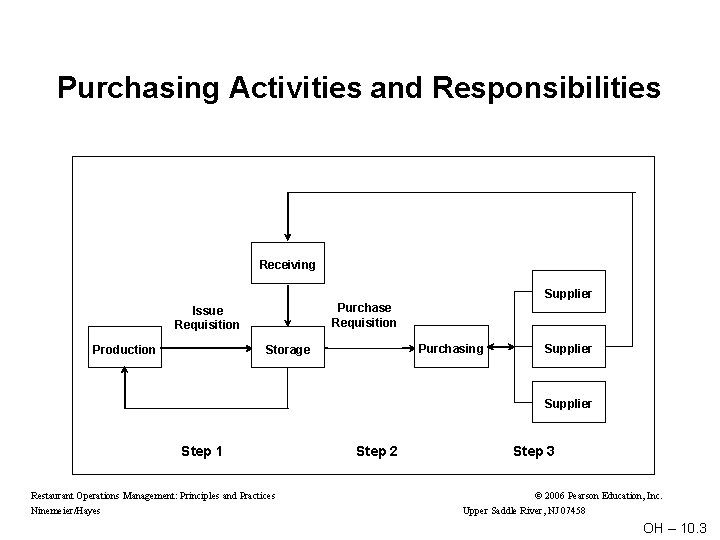
Purchasing Activities and Responsibilities Receiving Supplier Purchase Requisition Issue Requisition Production Purchasing Storage Supplier Step 1 Restaurant Operations Management: Principles and Practices Ninemeier/Hayes Step 2 Step 3 © 2006 Pearson Education, Inc. Upper Saddle River, NJ 07458 OH – 10. 3
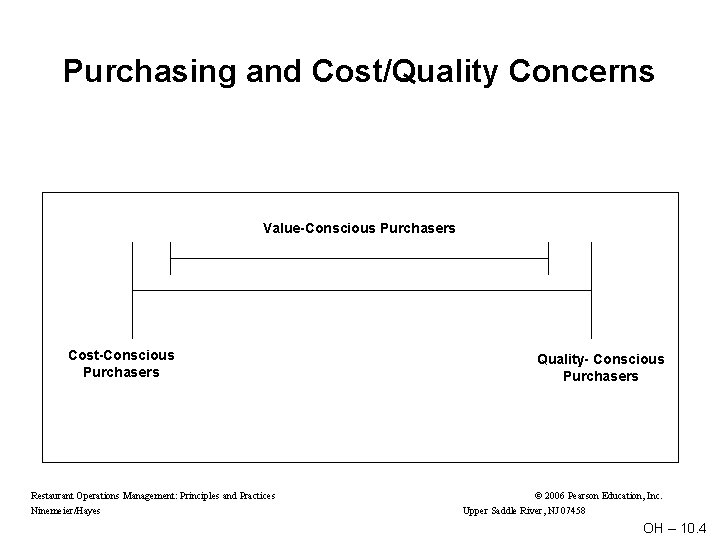
Purchasing and Cost/Quality Concerns Value-Conscious Purchasers Cost-Conscious Purchasers Restaurant Operations Management: Principles and Practices Ninemeier/Hayes Quality- Conscious Purchasers © 2006 Pearson Education, Inc. Upper Saddle River, NJ 07458 OH – 10. 4
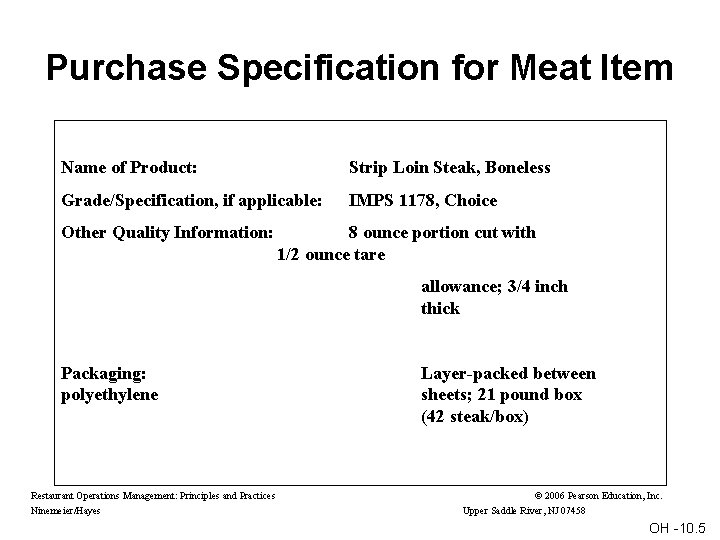
Purchase Specification for Meat Item Name of Product: Strip Loin Steak, Boneless Grade/Specification, if applicable: IMPS 1178, Choice Other Quality Information: 8 ounce portion cut with 1/2 ounce tare allowance; 3/4 inch thick Packaging: polyethylene Restaurant Operations Management: Principles and Practices Ninemeier/Hayes Layer-packed between sheets; 21 pound box (42 steak/box) © 2006 Pearson Education, Inc. Upper Saddle River, NJ 07458 OH -10. 5
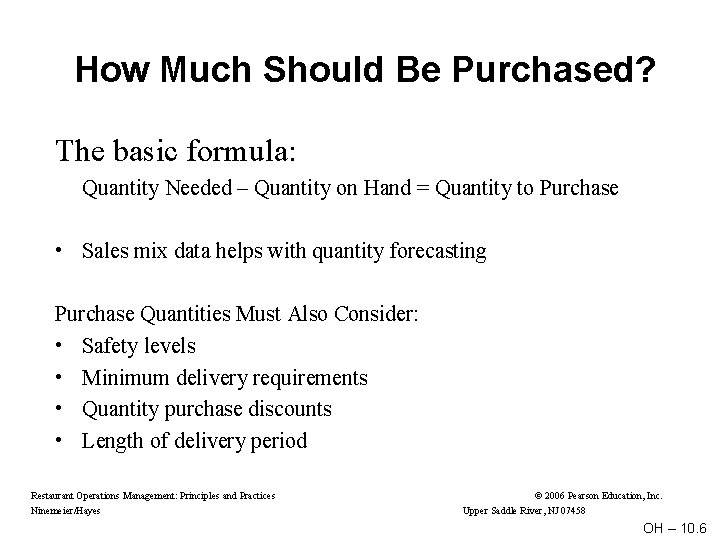
How Much Should Be Purchased? The basic formula: Quantity Needed – Quantity on Hand = Quantity to Purchase • Sales mix data helps with quantity forecasting Purchase Quantities Must Also Consider: • Safety levels • Minimum delivery requirements • Quantity purchase discounts • Length of delivery period Restaurant Operations Management: Principles and Practices Ninemeier/Hayes © 2006 Pearson Education, Inc. Upper Saddle River, NJ 07458 OH – 10. 6
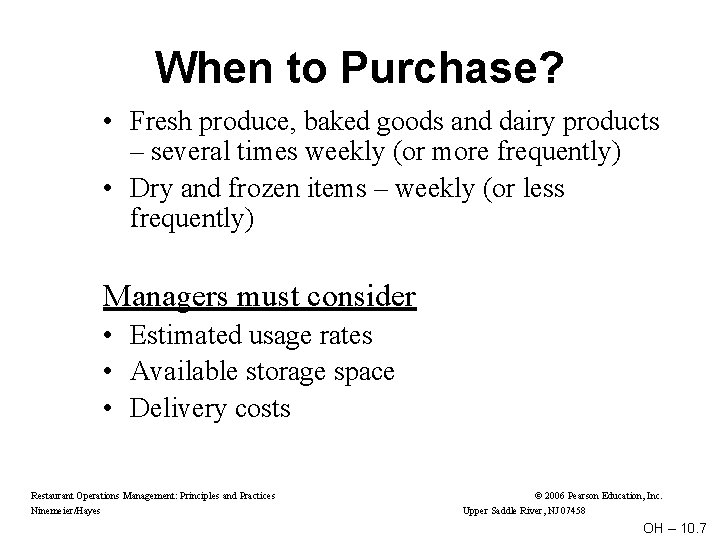
When to Purchase? • Fresh produce, baked goods and dairy products – several times weekly (or more frequently) • Dry and frozen items – weekly (or less frequently) Managers must consider • Estimated usage rates • Available storage space • Delivery costs Restaurant Operations Management: Principles and Practices Ninemeier/Hayes © 2006 Pearson Education, Inc. Upper Saddle River, NJ 07458 OH – 10. 7
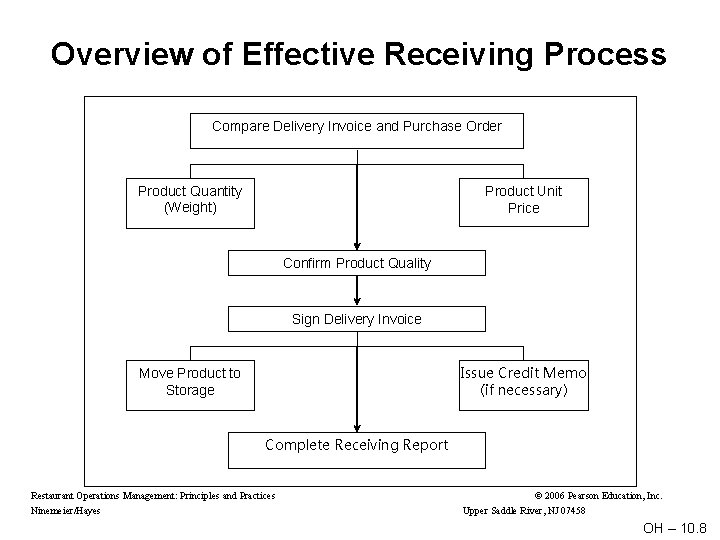
Overview of Effective Receiving Process Compare Delivery Invoice and Purchase Order Product Quantity (Weight) Product Unit Price Confirm Product Quality Sign Delivery Invoice Issue Credit Memo (if necessary) Move Product to Storage Complete Receiving Report Restaurant Operations Management: Principles and Practices Ninemeier/Hayes © 2006 Pearson Education, Inc. Upper Saddle River, NJ 07458 OH – 10. 8
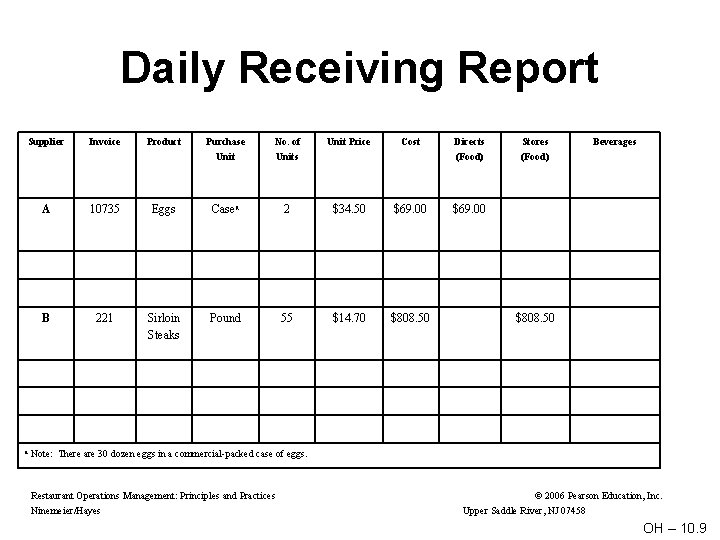
Daily Receiving Report Supplier Invoice Product Purchase Unit No. of Units Unit Price Cost Directs (Food) A 10735 Eggs Casea 2 $34. 50 $69. 00 B 221 Sirloin Steaks Pound 55 $14. 70 $808. 50 a Stores (Food) Beverages $808. 50 Note: There are 30 dozen eggs in a commercial-packed case of eggs. Restaurant Operations Management: Principles and Practices Ninemeier/Hayes © 2006 Pearson Education, Inc. Upper Saddle River, NJ 07458 OH – 10. 9
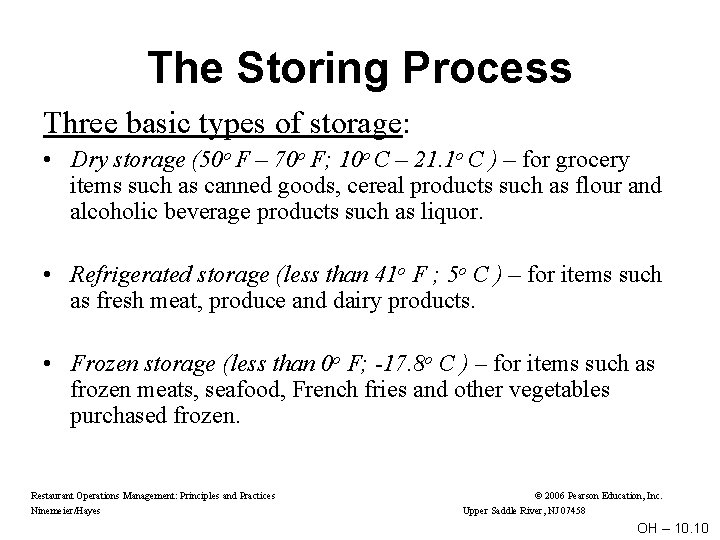
The Storing Process Three basic types of storage: • Dry storage (50 o F – 70 o F; 10 o C – 21. 1 o C ) – for grocery items such as canned goods, cereal products such as flour and alcoholic beverage products such as liquor. • Refrigerated storage (less than 41 o F ; 5 o C ) – for items such as fresh meat, produce and dairy products. • Frozen storage (less than 0 o F; -17. 8 o C ) – for items such as frozen meats, seafood, French fries and other vegetables purchased frozen. Restaurant Operations Management: Principles and Practices Ninemeier/Hayes © 2006 Pearson Education, Inc. Upper Saddle River, NJ 07458 OH – 10. 10
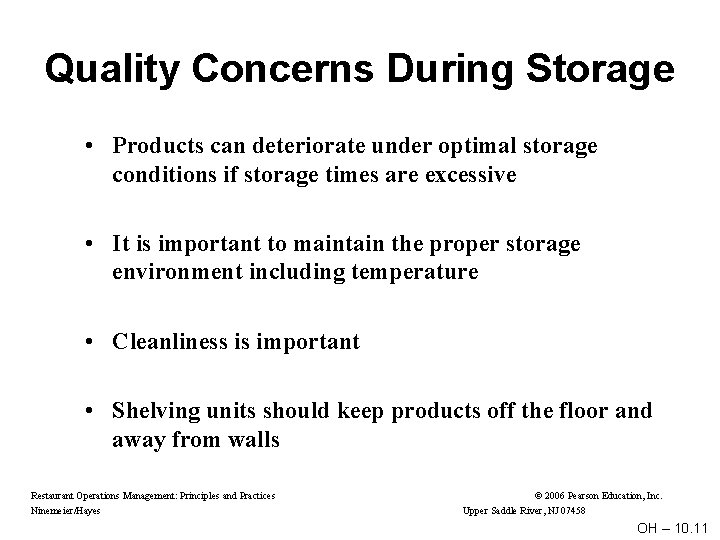
Quality Concerns During Storage • Products can deteriorate under optimal storage conditions if storage times are excessive • It is important to maintain the proper storage environment including temperature • Cleanliness is important • Shelving units should keep products off the floor and away from walls Restaurant Operations Management: Principles and Practices Ninemeier/Hayes © 2006 Pearson Education, Inc. Upper Saddle River, NJ 07458 OH – 10. 11
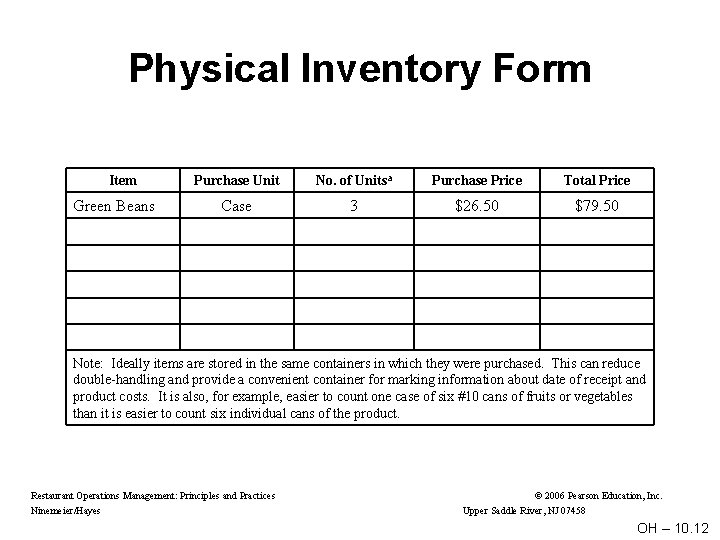
Physical Inventory Form Item Green Beans Purchase Unit No. of Unitsa Purchase Price Total Price Case 3 $26. 50 $79. 50 Note: Ideally items are stored in the same containers in which they were purchased. This can reduce double-handling and provide a convenient container for marking information about date of receipt and product costs. It is also, for example, easier to count one case of six #10 cans of fruits or vegetables than it is easier to count six individual cans of the product. Restaurant Operations Management: Principles and Practices Ninemeier/Hayes © 2006 Pearson Education, Inc. Upper Saddle River, NJ 07458 OH – 10. 12
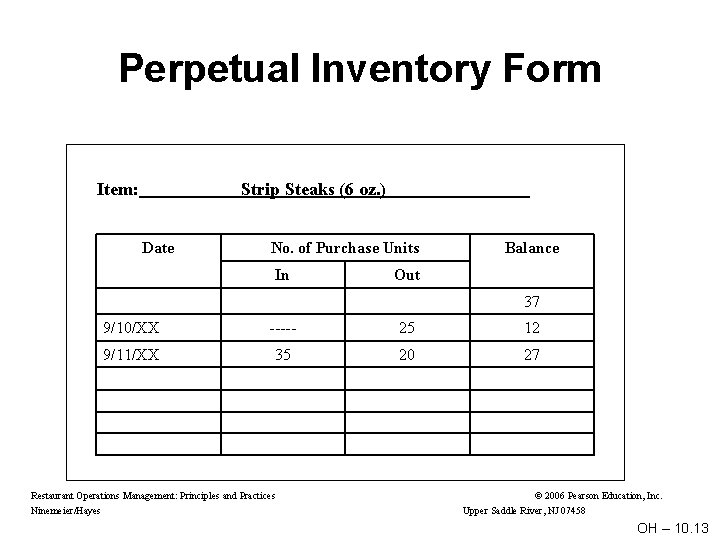
Perpetual Inventory Form Item: Strip Steaks (6 oz. ) Date No. of Purchase Units In Balance Out 37 9/10/XX ----- 25 12 9/11/XX 35 20 27 Restaurant Operations Management: Principles and Practices Ninemeier/Hayes © 2006 Pearson Education, Inc. Upper Saddle River, NJ 07458 OH – 10. 13
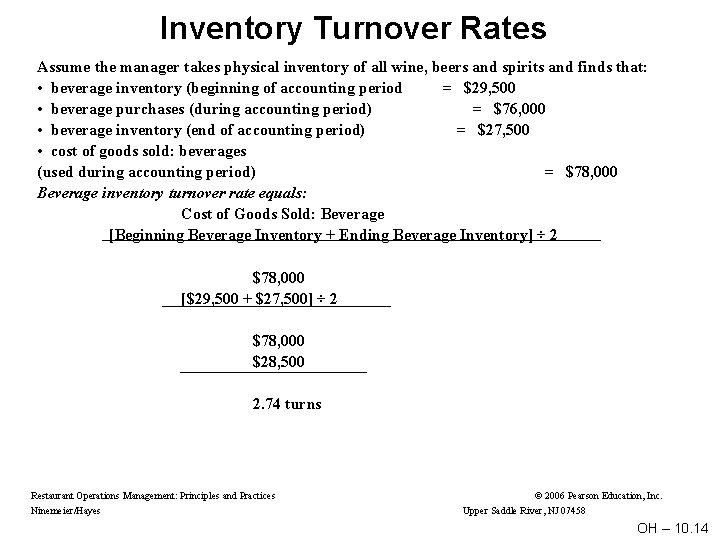
Inventory Turnover Rates Assume the manager takes physical inventory of all wine, beers and spirits and finds that: • beverage inventory (beginning of accounting period = $29, 500 • beverage purchases (during accounting period) = $76, 000 • beverage inventory (end of accounting period) = $27, 500 • cost of goods sold: beverages (used during accounting period) = $78, 000 Beverage inventory turnover rate equals: Cost of Goods Sold: Beverage [Beginning Beverage Inventory + Ending Beverage Inventory] ÷ 2 $78, 000 [$29, 500 + $27, 500] ÷ 2 $78, 000 $28, 500 2. 74 turns Restaurant Operations Management: Principles and Practices Ninemeier/Hayes © 2006 Pearson Education, Inc. Upper Saddle River, NJ 07458 OH – 10. 14
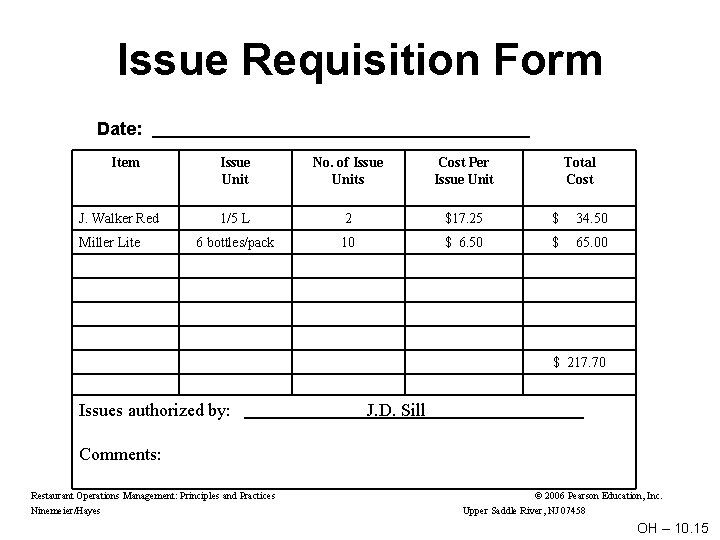
Issue Requisition Form Date: Item J. Walker Red Miller Lite Issue Unit No. of Issue Units Cost Per Issue Unit Total Cost 1/5 L 2 $17. 25 $ 34. 50 6 bottles/pack 10 $ 6. 50 $ 65. 00 $ 217. 70 Issues authorized by: J. D. Sill Comments: Restaurant Operations Management: Principles and Practices Ninemeier/Hayes © 2006 Pearson Education, Inc. Upper Saddle River, NJ 07458 OH – 10. 15
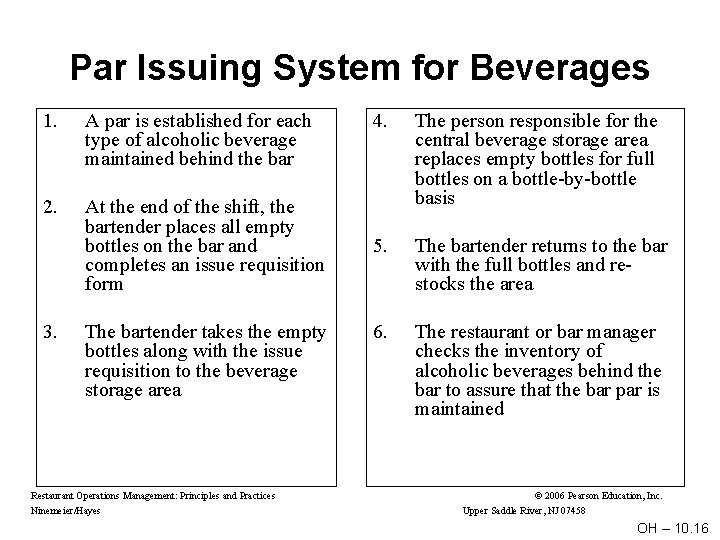
Par Issuing System for Beverages 1. A par is established for each type of alcoholic beverage maintained behind the bar 2. At the end of the shift, the bartender places all empty bottles on the bar and completes an issue requisition form 3. The bartender takes the empty bottles along with the issue requisition to the beverage storage area Restaurant Operations Management: Principles and Practices Ninemeier/Hayes 4. The person responsible for the central beverage storage area replaces empty bottles for full bottles on a bottle-by-bottle basis 5. The bartender returns to the bar with the full bottles and restocks the area 6. The restaurant or bar manager checks the inventory of alcoholic beverages behind the bar to assure that the bar par is maintained © 2006 Pearson Education, Inc. Upper Saddle River, NJ 07458 OH – 10. 16