
Overview of The Cell Basic Unit of Life
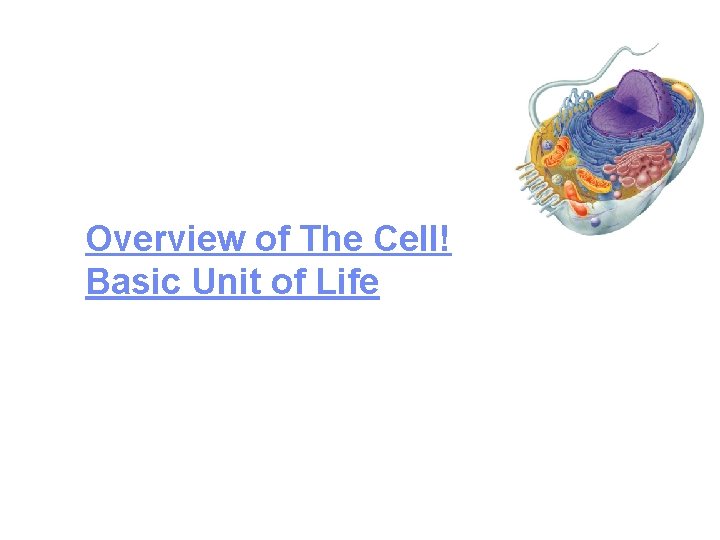
Overview of The Cell! Basic Unit of Life
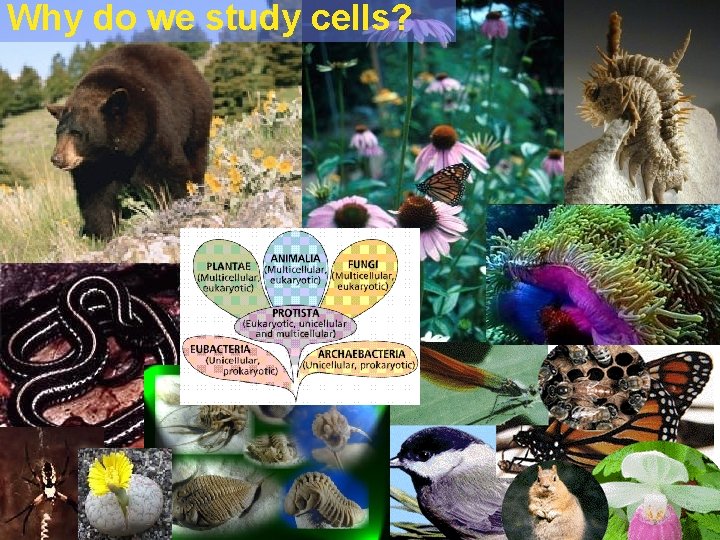
Why do we study cells? 2005 -2006
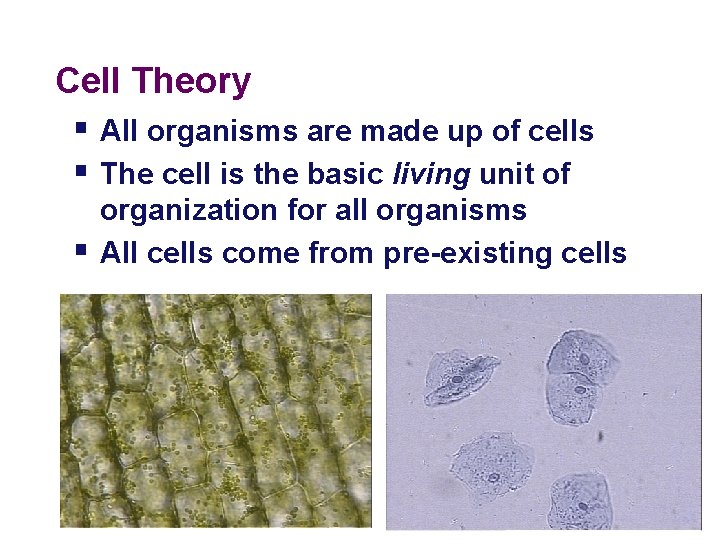
Cell Theory § All organisms are made up of cells § The cell is the basic living unit of § organization for all organisms All cells come from pre-existing cells 2005 -2006
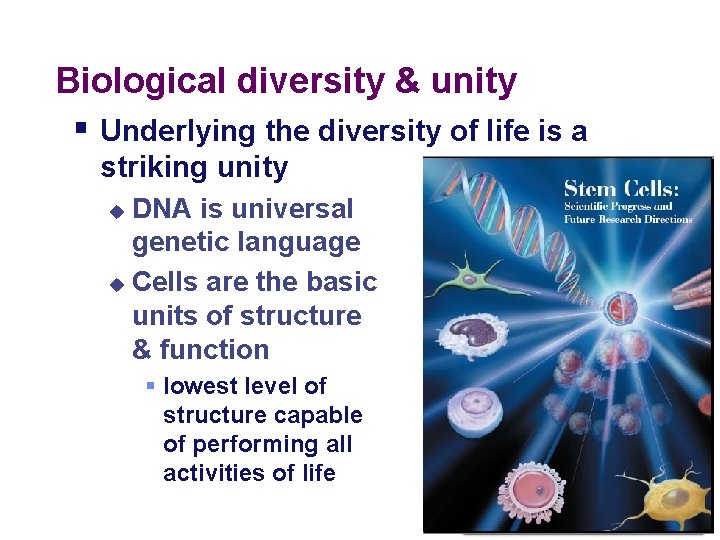
Biological diversity & unity § Underlying the diversity of life is a striking unity DNA is universal genetic language u Cells are the basic units of structure & function u § lowest level of structure capable of performing all activities of life 2005 -2006
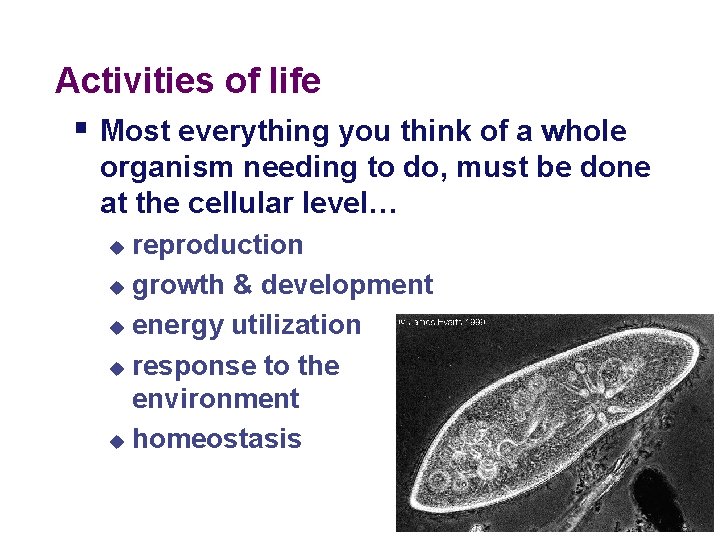
Activities of life § Most everything you think of a whole organism needing to do, must be done at the cellular level… reproduction u growth & development u energy utilization u response to the environment u homeostasis u 2005 -2006
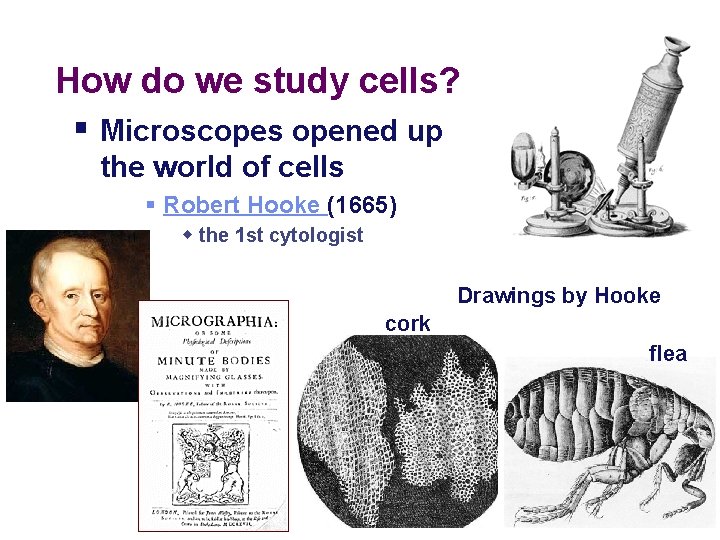
How do we study cells? § Microscopes opened up the world of cells § Robert Hooke (1665) w the 1 st cytologist Drawings by Hooke cork flea 2005 -2006
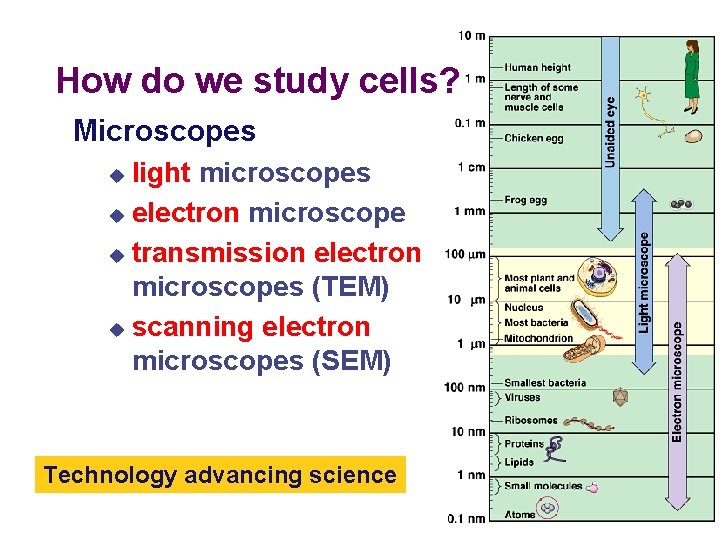
How do we study cells? Microscopes light microscopes u electron microscope u transmission electron microscopes (TEM) u scanning electron microscopes (SEM) u Technology advancing science 2005 -2006
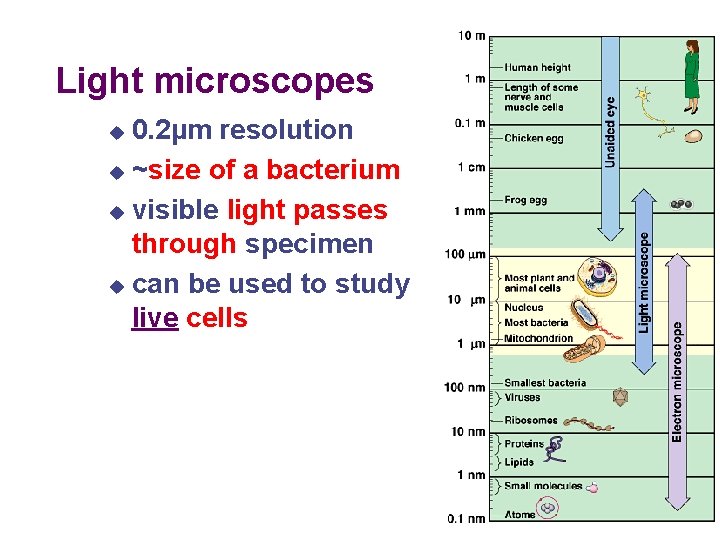
Light microscopes 0. 2µm resolution u ~size of a bacterium u visible light passes through specimen u can be used to study live cells u 2005 -2006
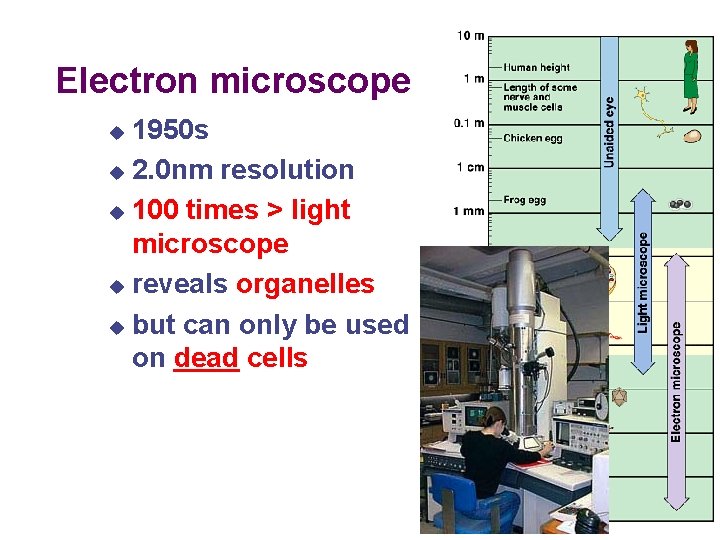
Electron microscope 1950 s u 2. 0 nm resolution u 100 times > light microscope u reveals organelles u but can only be used on dead cells u 2005 -2006
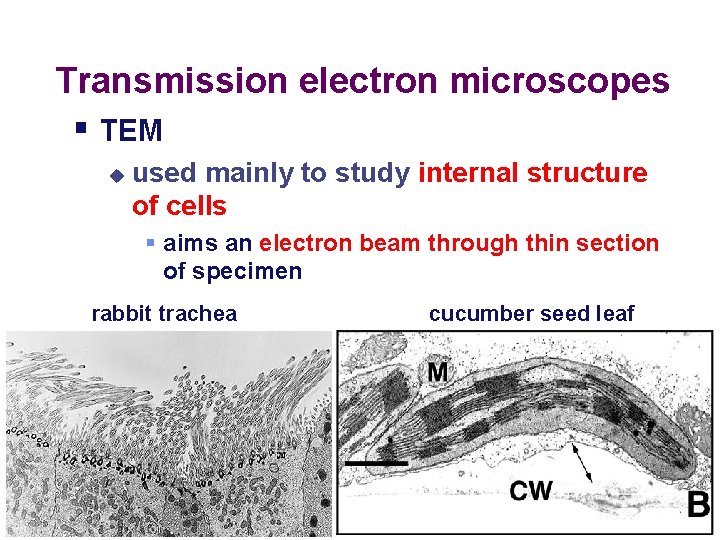
Transmission electron microscopes § TEM u used mainly to study internal structure of cells § aims an electron beam through thin section of specimen rabbit trachea cucumber seed leaf 2005 -2006
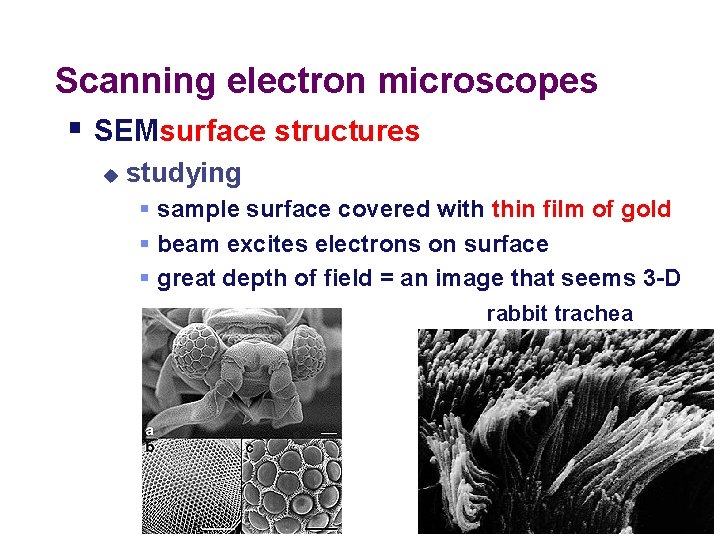
Scanning electron microscopes § SEMsurface structures u studying § sample surface covered with thin film of gold § beam excites electrons on surface § great depth of field = an image that seems 3 -D rabbit trachea 2005 -2006
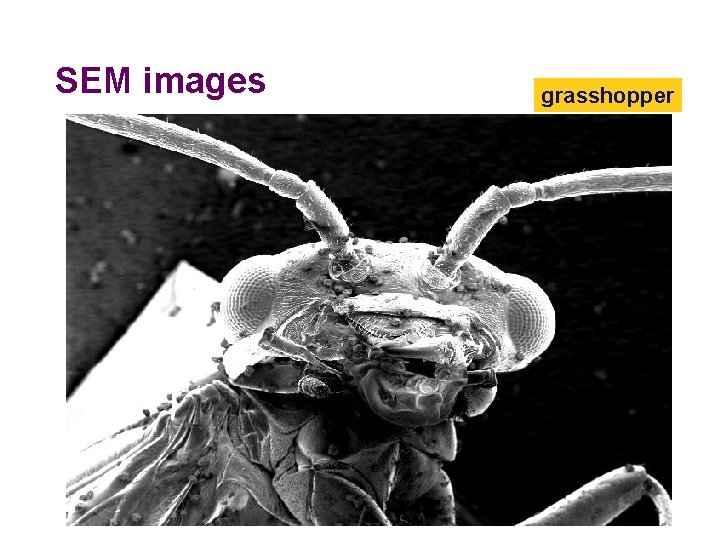
SEM images grasshopper 2005 -2006
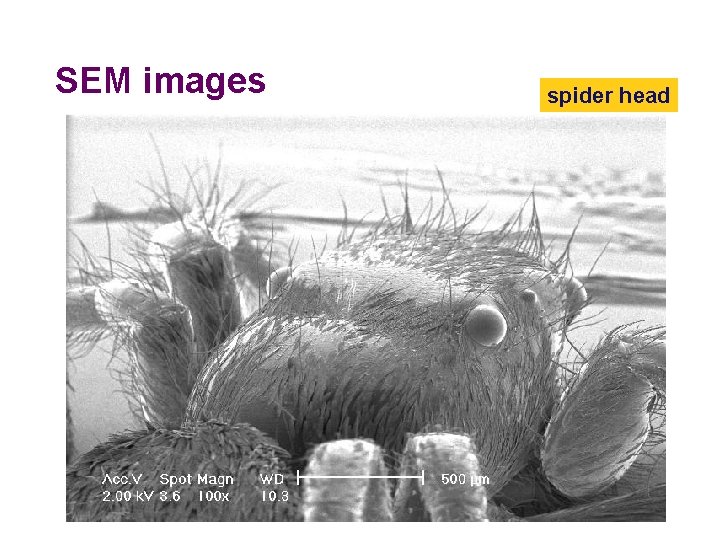
SEM images spider head 2005 -2006
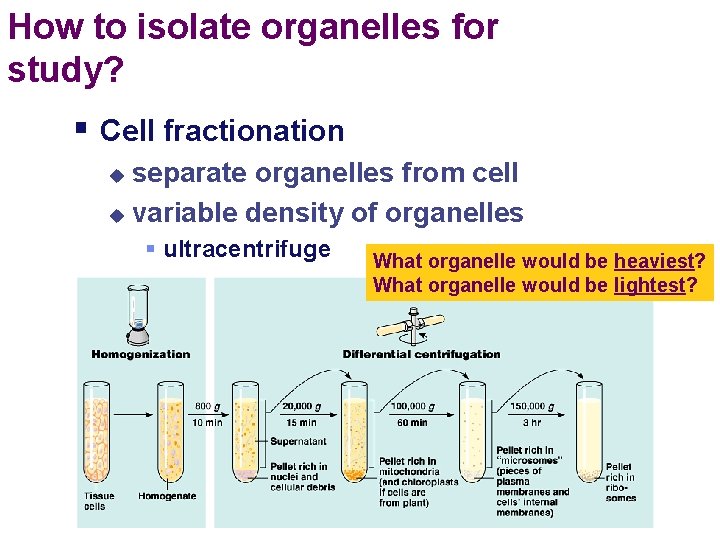
How to isolate organelles for study? § Cell fractionation separate organelles from cell u variable density of organelles u § ultracentrifuge What organelle would be heaviest? What organelle would be lightest? 2005 -2006
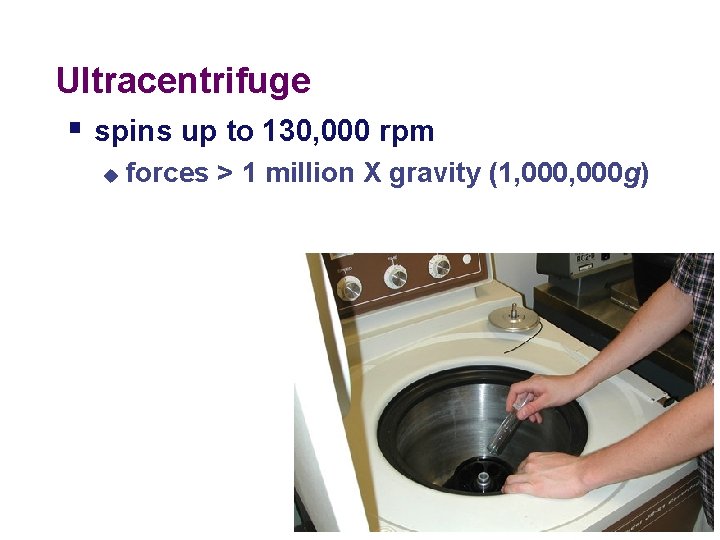
Ultracentrifuge § spins up to 130, 000 rpm u forces > 1 million X gravity (1, 000 g) 2005 -2006
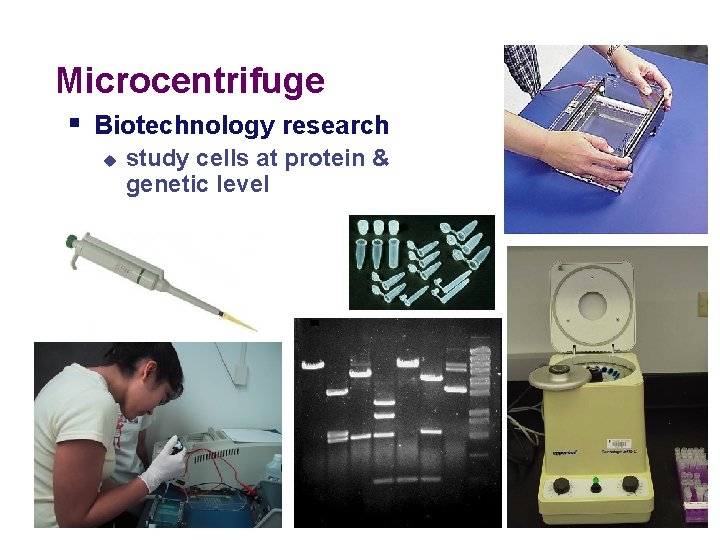
Microcentrifuge § Biotechnology research u study cells at protein & genetic level 2005 -2006
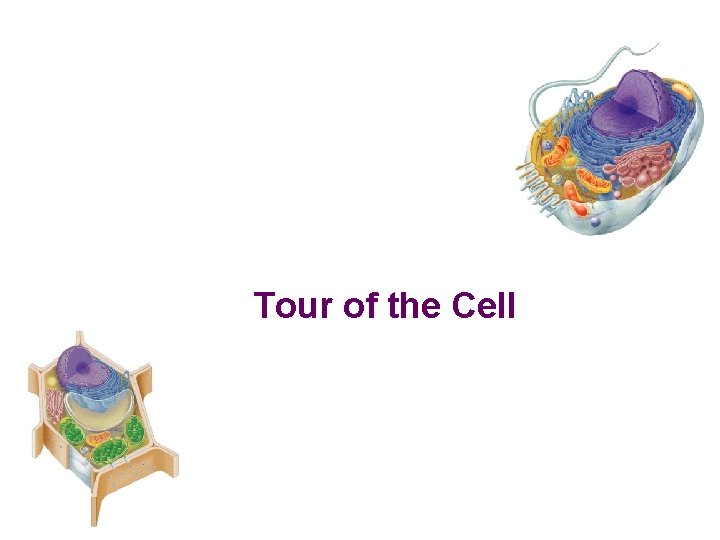
Tour of the Cell
Cell characteristics – Video: Inner life of the cell § All cells: surrounded by a plasma membrane u have cytosol u § semi-fluid substance within the membrane § cytoplasm = cytosol + organelles contain chromosomes which have genes in the form of DNA u have ribosomes u § tiny “organelles” that make proteins using instructions contained in genes
Types of cells § Prokaryotic vs. eukaryotic cells u Location of chromosomes Prokaryotic cell § DNA in nucleoid region, without a membrane separating it from rest of cell Eukaryotic cell § chromosomes in nucleus, membraneenclosed organelle 2005 -2006
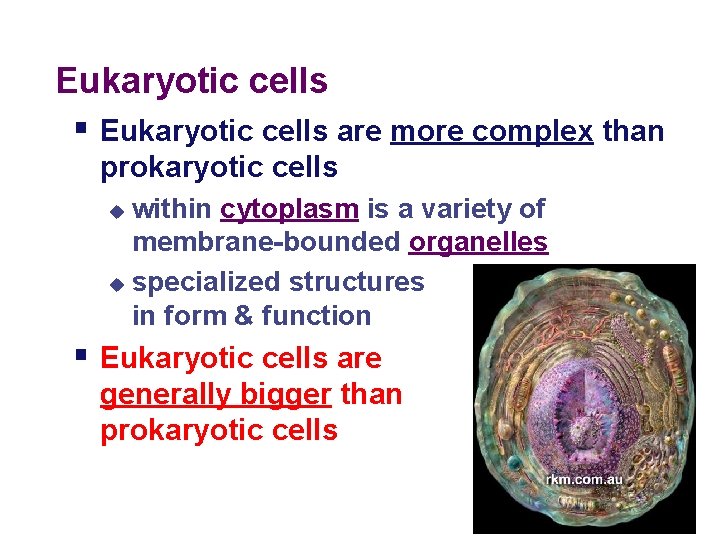
Eukaryotic cells § Eukaryotic cells are more complex than prokaryotic cells within cytoplasm is a variety of membrane-bounded organelles u specialized structures in form & function u § Eukaryotic cells are generally bigger than prokaryotic cells 2005 -2006
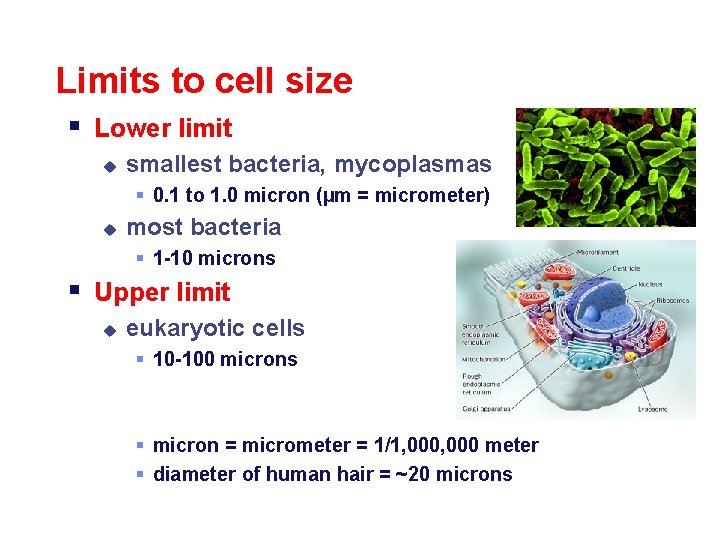
Limits to cell size § Lower limit u smallest bacteria, mycoplasmas § 0. 1 to 1. 0 micron (µm = micrometer) u most bacteria § 1 -10 microns § Upper limit u eukaryotic cells § 10 -100 microns § micron = micrometer = 1/1, 000 meter § diameter of human hair = ~20 microns
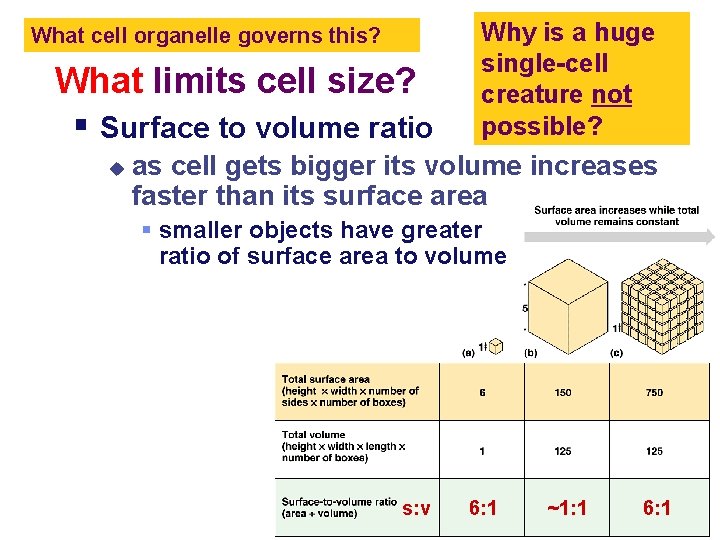
What cell organelle governs this? What limits cell size? § Surface to volume ratio u Why is a huge single-cell creature not possible? as cell gets bigger its volume increases faster than its surface area § smaller objects have greater ratio of surface area to volume s: v 6: 1 ~1: 1 2005 -2006 6: 1
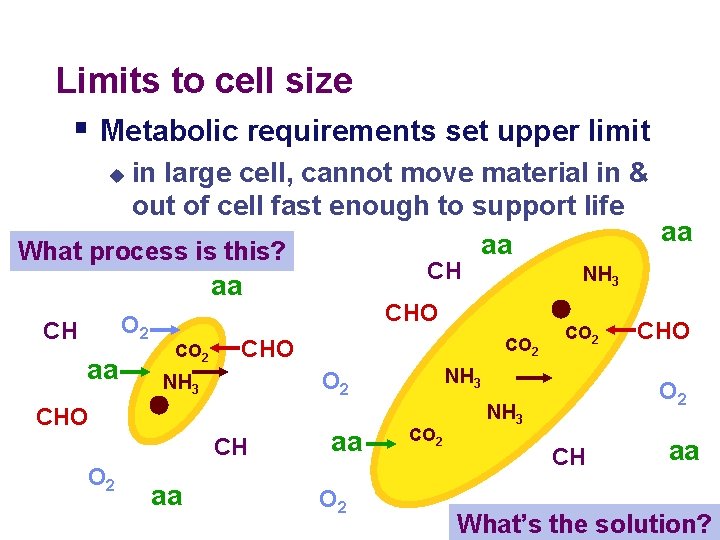
Limits to cell size § Metabolic requirements set upper limit in large cell, cannot move material in & out of cell fast enough to support life aa aa What process is this? CH NH 3 aa u O 2 CH aa CHO CO 2 CHO CH aa aa O 2 CO 2 NH 3 CHO O 2 CO 2 CHO O 2 NH 3 CH aa What’s the 2005 -2006 solution?
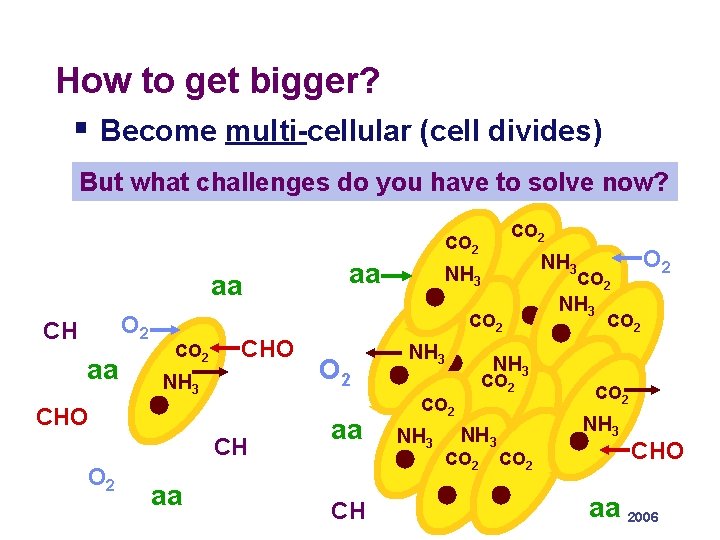
How to get bigger? § Become multi-cellular (cell divides) But what challenges do you have to solve now? CO 2 aa O 2 CH aa NH 3 CO 2 CHO NH 3 CHO CH O 2 aa aa O 2 aa CH NH 3 CO 2 NH 3 O 2 NH 3 CO 2 CHO aa 2005 -2006
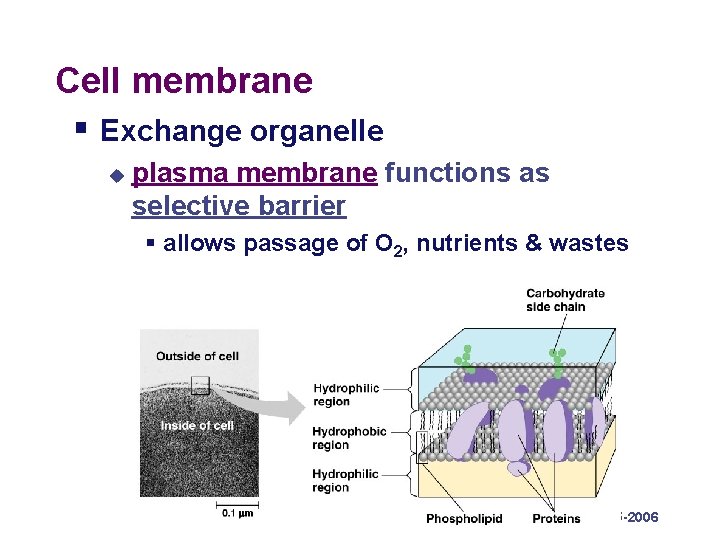
Cell membrane § Exchange organelle u plasma membrane functions as selective barrier § allows passage of O 2, nutrients & wastes 2005 -2006
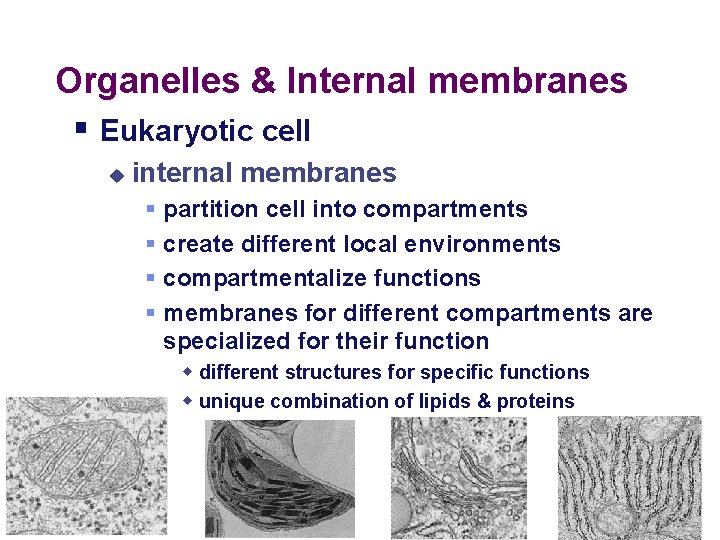
Organelles & Internal membranes § Eukaryotic cell u internal membranes § § partition cell into compartments create different local environments compartmentalize functions membranes for different compartments are specialized for their function w different structures for specific functions w unique combination of lipids & proteins 2005 -2006
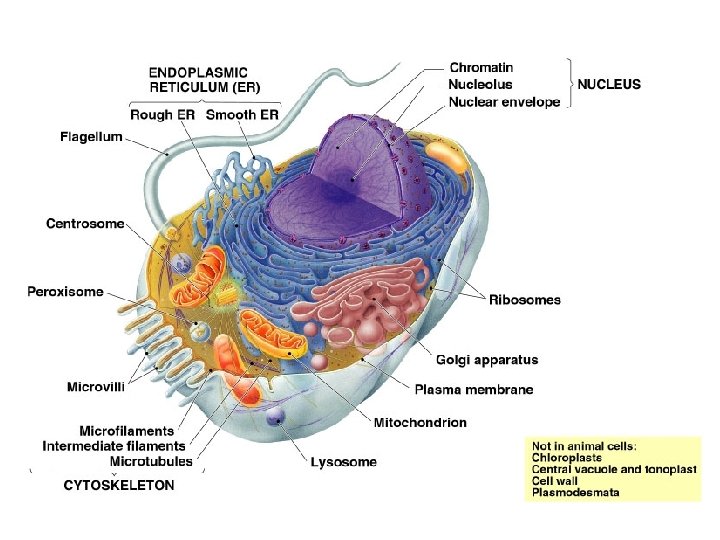
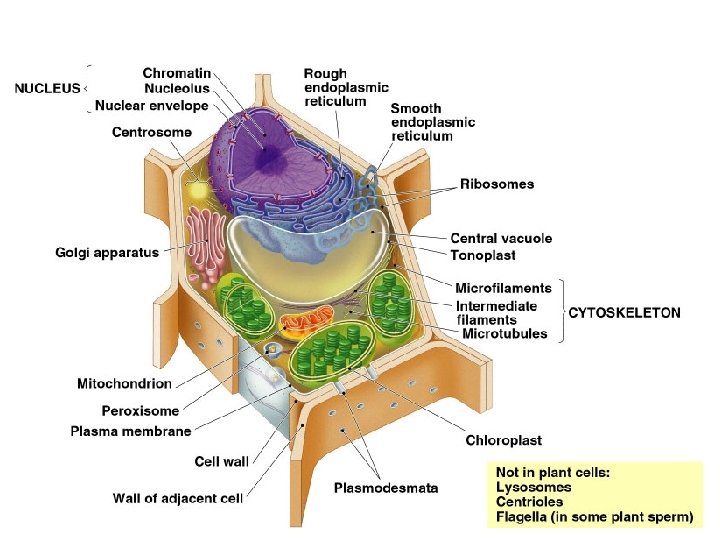
2005 -2006
Cell Compartmentalization Video The Inner Life of the Cell – Harvard version
- Slides: 29