
Overview of the 3 8 ELA Curriculum Modules

- Slides: 22
Overview of the 3 -8 ELA Curriculum Modules Session 1 A, May 2014 NTI Engage. NY. org
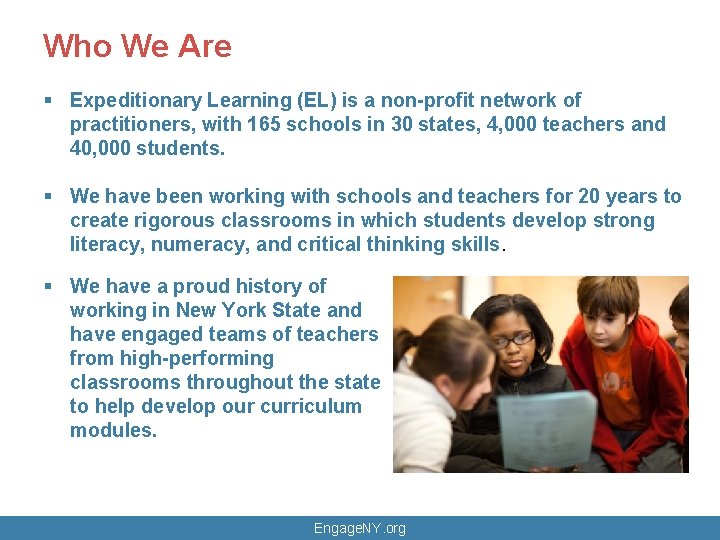
Who We Are § Expeditionary Learning (EL) is a non-profit network of practitioners, with 165 schools in 30 states, 4, 000 teachers and 40, 000 students. § We have been working with schools and teachers for 20 years to create rigorous classrooms in which students develop strong literacy, numeracy, and critical thinking skills. § We have a proud history of working in New York State and have engaged teams of teachers from high-performing classrooms throughout the state to help develop our curriculum modules. Engage. NY. org 2
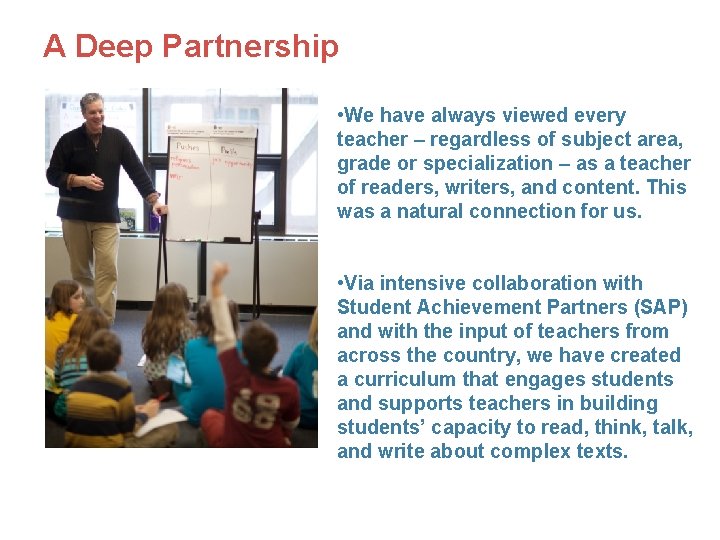
A Deep Partnership • We have always viewed every teacher – regardless of subject area, grade or specialization – as a teacher of readers, writers, and content. This was a natural connection for us. • Via intensive collaboration with Student Achievement Partners (SAP) and with the input of teachers from across the country, we have created a curriculum that engages students and supports teachers in building students’ capacity to read, think, talk, and write about complex texts.
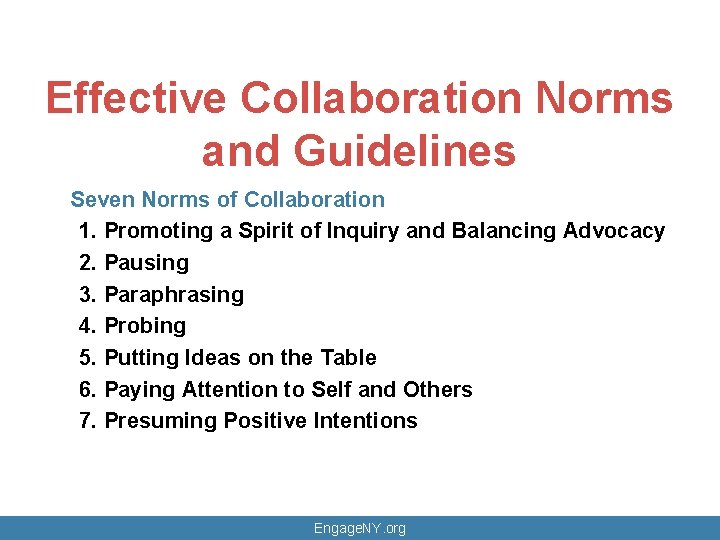
Effective Collaboration Norms and Guidelines Seven Norms of Collaboration 1. Promoting a Spirit of Inquiry and Balancing Advocacy 2. Pausing 3. Paraphrasing 4. Probing 5. Putting Ideas on the Table 6. Paying Attention to Self and Others 7. Presuming Positive Intentions Engage. NY. org
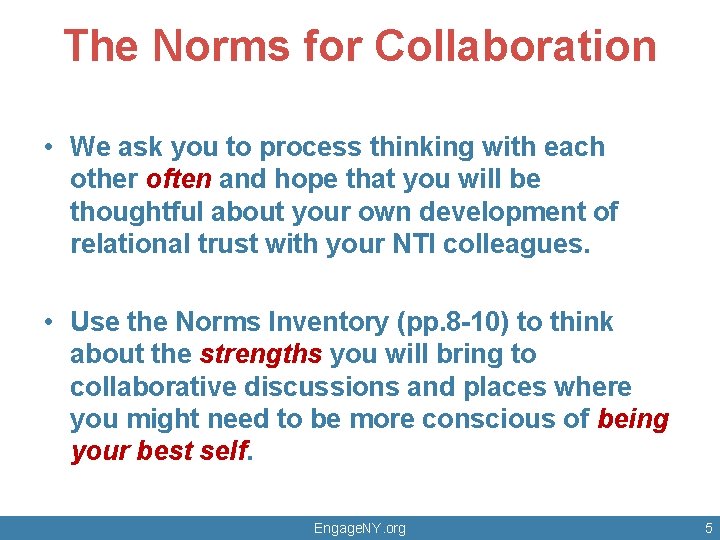
The Norms for Collaboration • We ask you to process thinking with each other often and hope that you will be thoughtful about your own development of relational trust with your NTI colleagues. • Use the Norms Inventory (pp. 8 -10) to think about the strengths you will bring to collaborative discussions and places where you might need to be more conscious of being your best self. Engage. NY. org 5
Learning Target • I can describe the structure and content of the 3 -8 ELA Modules. ¦ ¦ An important note about our curriculum overall: We are proud that our curriculum was designed, written, and vetted by practicing classroom teachers – both teachers from our network and teachers outside of our network living and working in NYS. The practices and protocols in our curriculum have been used successfully in schools for more than 20 years. Engage. NY. org 6
NTI Focus • Research modules, specifically the module 4 s • Importance of backwards design in order to scaffold student success • Need for accommodations for some students to be successful • Increase of complexity regarding research from grade 3 through grade 12 Engage. NY. org 7
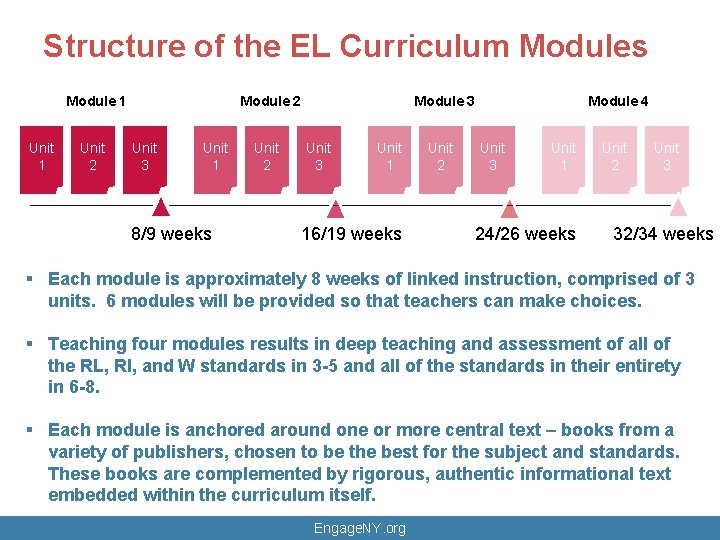
Structure of the EL Curriculum Modules Module 1 Unit 2 Module 2 Unit 3 Unit 1 8/9 weeks Unit 2 Module 3 Unit 1 16/19 weeks Unit 2 Module 4 Unit 3 Unit 1 24/26 weeks Unit 2 Unit 3 32/34 weeks § Each module is approximately 8 weeks of linked instruction, comprised of 3 units. 6 modules will be provided so that teachers can make choices. § Teaching four modules results in deep teaching and assessment of all of the RL, RI, and W standards in 3 -5 and all of the standards in their entirety in 6 -8. § Each module is anchored around one or more central text – books from a variety of publishers, chosen to be the best for the subject and standards. These books are complemented by rigorous, authentic informational text embedded within the curriculum itself. Engage. NY. org
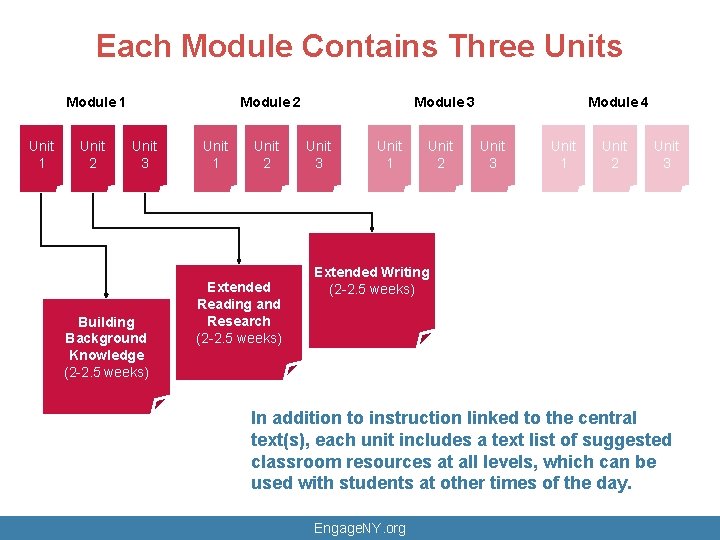
Each Module Contains Three Units Module 1 Unit 2 Module 2 Unit 3 Building Background Knowledge (2 -2. 5 weeks) Unit 1 Unit 2 Extended Reading and Research (2 -2. 5 weeks) Module 3 Unit 1 Unit 2 Module 4 Unit 3 Unit 1 Unit 2 Unit 3 Extended Writing (2 -2. 5 weeks) In addition to instruction linked to the central text(s), each unit includes a text list of suggested classroom resources at all levels, which can be used with students at other times of the day. 9 Engage. NY. org
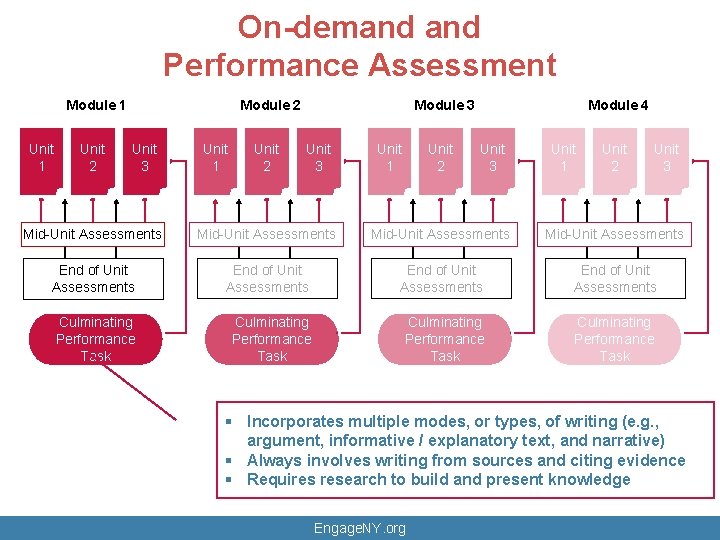
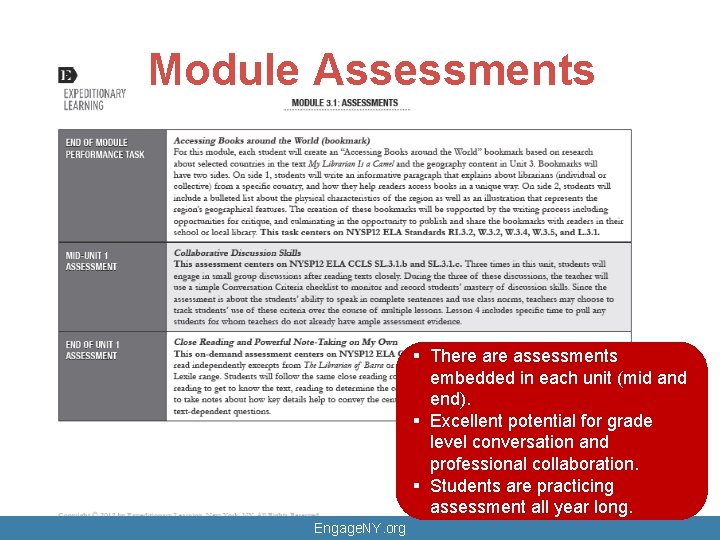
On-demand Performance Assessment Module 1 Unit 2 Module 2 Unit 3 Unit 1 Unit 2 Module 4 Unit 3 Unit 1 Unit 2 Unit 3 Mid-Unit Assessments End of Unit Assessments Culminating Performance Task § Incorporates multiple modes, or types, of writing (e. g. , argument, informative / explanatory text, and narrative) § Always involves writing from sources and citing evidence § Requires research to build and present knowledge Engage. NY. org 10
Curriculum Plan. A Year at a Glance • Please note this has been UPDATED. • The “B” modules (not shown on this plan) are still being finalized, although 2 B will be released very soon. • Please check that your school is using this most recent version – October 2013. Engage. NY. org 11
Curriculum Plan. A Year at A Glance • Notice the headings: ¦ ¦ “Becoming a Close Reader” “Researching to Build Knowledge” • Standards are arranged in this manner to provide focus on a coherent set of standards at a time. • Not all standards are taught in all the modules – they are strategically clumped. Engage. NY. org 12
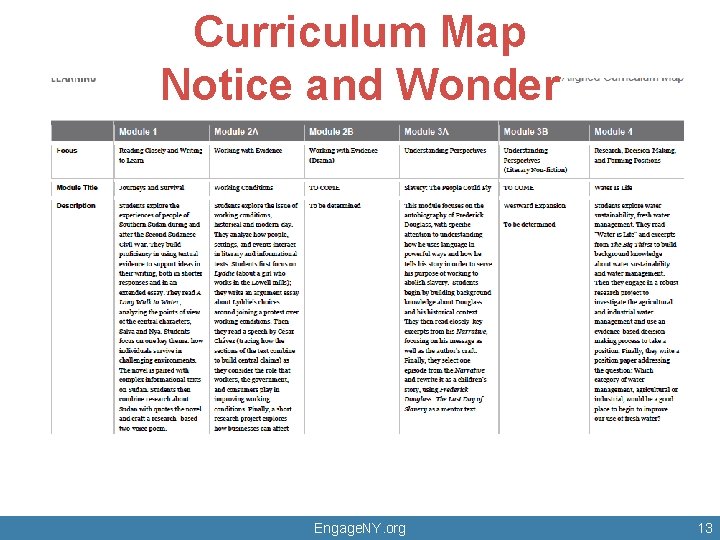
Curriculum Map Notice and Wonder Engage. NY. org 13
Become an “Expert” • Form a group of 4. • Assign each member one of the following sections: ¦ ¦ Module Overview Unit Overview(s) Assessments and/or Assessment Lesson First Week of Lessons Engage. NY. org 14
Become an “Expert” Continued • As you read your section(s), list: 3 - Characteristics 2 - Surprising or interesting elements 1 - Most important point • Share your 3 -2 -1 with other members of your group (2 minutes each. ) Engage. NY. org 15
The Module Overview • Provides an overview of the entire Module • Shows how the texts and activities progress toward the final performance task ¦ ¦ ¦ Describes what students will read and write and the assessments that teachers will use to measure progress. Central texts are the texts that lessons are specifically designed around. Alignment to CC Standards is described in the “English Language Arts Outcomes Table. ” Engage. NY. org 16
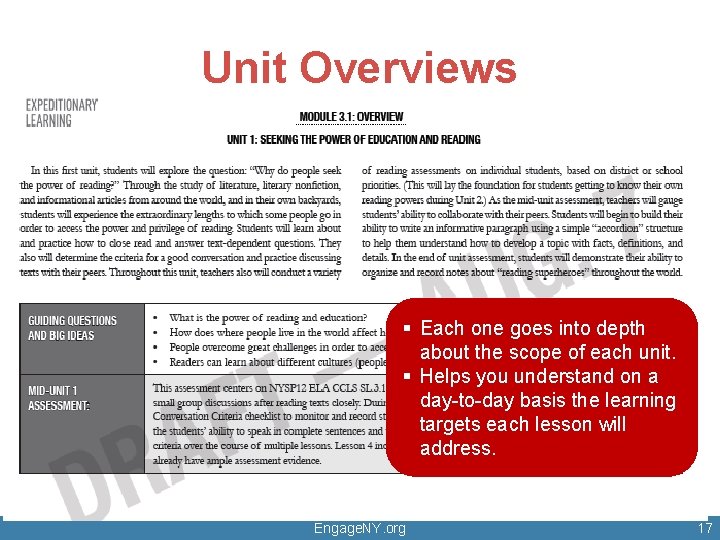
Unit Overviews § Each one goes into depth about the scope of each unit. § Helps you understand on a day-to-day basis the learning targets each lesson will address. Engage. NY. org 17
Module Assessments § There assessments embedded in each unit (mid and end). § Excellent potential for grade level conversation and professional collaboration. § Students are practicing assessment all year long. Engage. NY. org 18
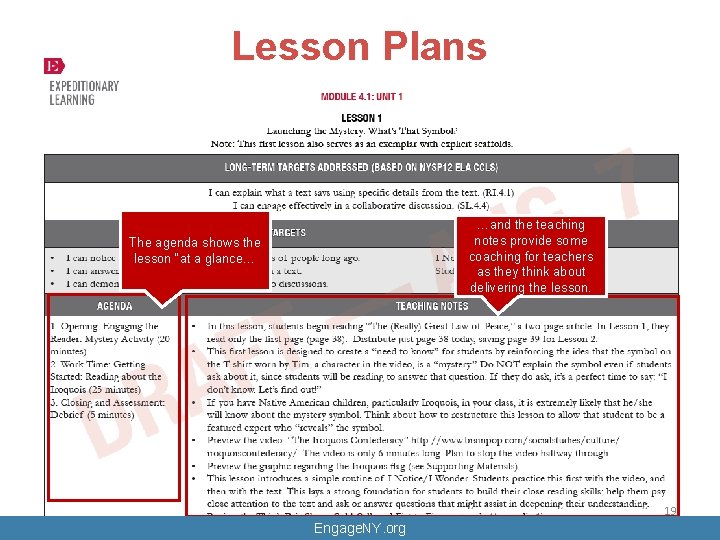
Lesson Plans …and the teaching notes provide some coaching for teachers as they think about delivering the lesson. The agenda shows the lesson “at a glance… 19 Engage. NY. org
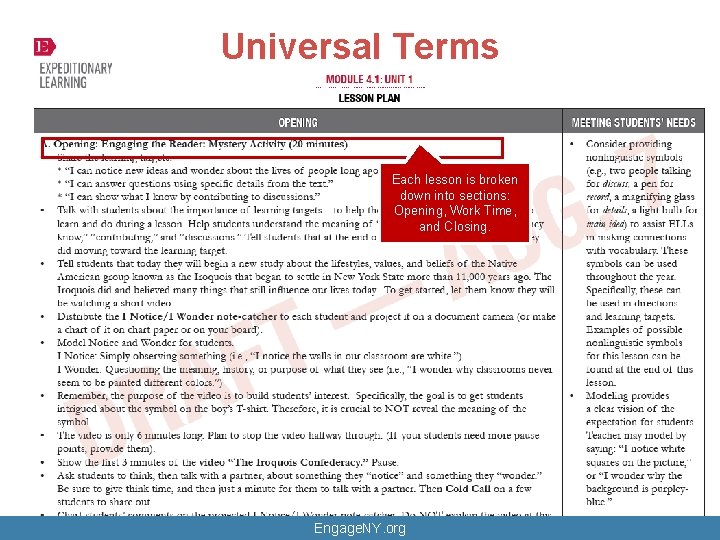
Universal Terms Each lesson is broken down into sections: Opening, Work Time, and Closing. 20 Engage. NY. org
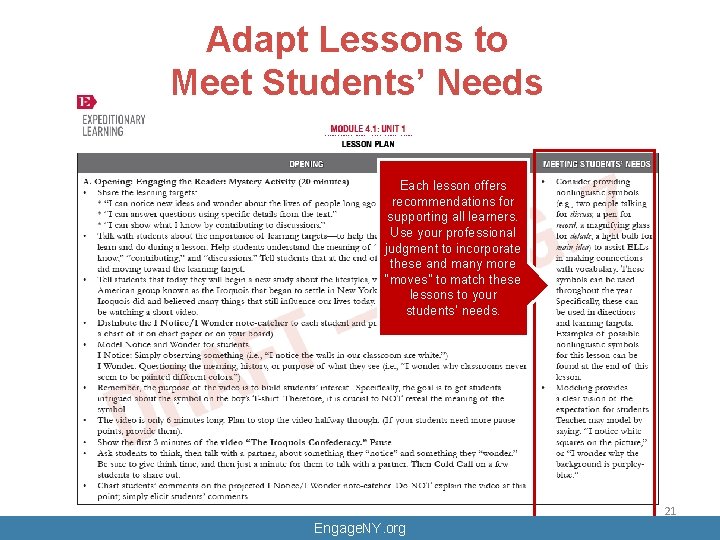
Adapt Lessons to Meet Students’ Needs Each lesson offers recommendations for supporting all learners. Use your professional judgment to incorporate these and many more “moves” to match these lessons to your students’ needs. 21 Engage. NY. org
Reflect • What is your “best” learning from this session? • Whip around the table and share this final thought. Engage. NY. org 22