
Overview of the 2019 IDDR Theme Critical Infrastructure
- Slides: 30
Overview of the 2019 IDDR Theme: Critical Infrastructure Protection DR MMAPHAKA TAU DEPUTY DIRECTOR-GENERAL (HEAD): NATIONAL DISASTER MANAGEMENT CENTRE 06 December 2019
Presentation outline 1. 2. 3. 4. 5. 6. 7. 8. 9. 10. 11. 12. Purpose 2019 IDDR Theme Regulatory frameworks Overview of South Africa’s disaster risks Key drivers of disaster risks in South Africa Defining critical infrastructure Impact of disasters on critical infrastructure in SA Critical infrastructure: Implications of failure/ disruption Examples of critical infrastructure damage from recent disasters in the country Critical Infrastructure rehabilitation & reconstructing using Disaster Grants – some examples Key Strategic Actions to enhance critical infrastructure resilience Concluding remarks 2
Purpose To provide an overview of the 2019 IDDR theme and its implications for South Africa. 3
2019 International Day for Disaster Reduction (IDDR) Theme: Reduce disaster damage to critical infrastructure & disruption of basic services q The IDDR was started by the United Nations (UN) in 1989. q This was after the UN General Assembly called for a Day to promote a global culture of risk-awareness & disaster reduction. q It is held annually on October 13 and celebrates how people & communities around the world are reducing their exposure to disasters. q The UN Secretary-General Antonio Guterres acknowledged, in his 2019 IDDR message that making infrastructure more climate-resilient can have a benefit-cost ratio of about six to one: For every dollar invested, six dollars can be saved. q This means that investing in resilient infrastructure creates jobs & saves money. 4
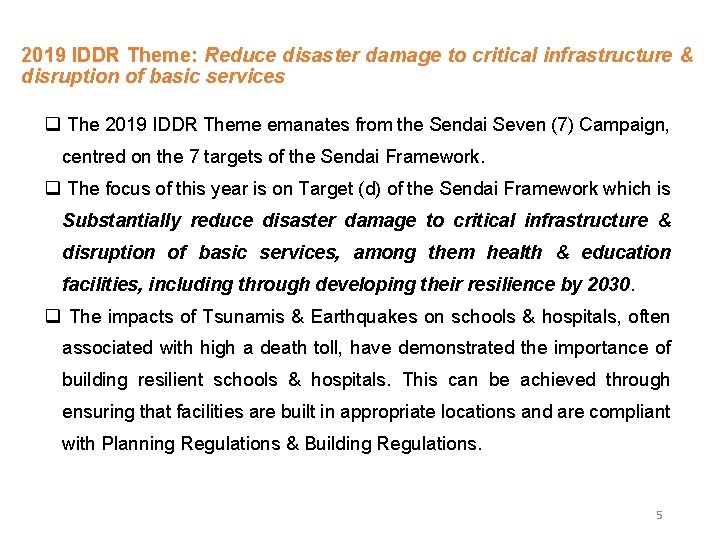
2019 IDDR Theme: Reduce disaster damage to critical infrastructure & disruption of basic services q The 2019 IDDR Theme emanates from the Sendai Seven (7) Campaign, centred on the 7 targets of the Sendai Framework. q The focus of this year is on Target (d) of the Sendai Framework which is Substantially reduce disaster damage to critical infrastructure & disruption of basic services, among them health & education facilities, including through developing their resilience by 2030. q The impacts of Tsunamis & Earthquakes on schools & hospitals, often associated with high a death toll, have demonstrated the importance of building resilient schools & hospitals. This can be achieved through ensuring that facilities are built in appropriate locations and are compliant with Planning Regulations & Building Regulations. 5
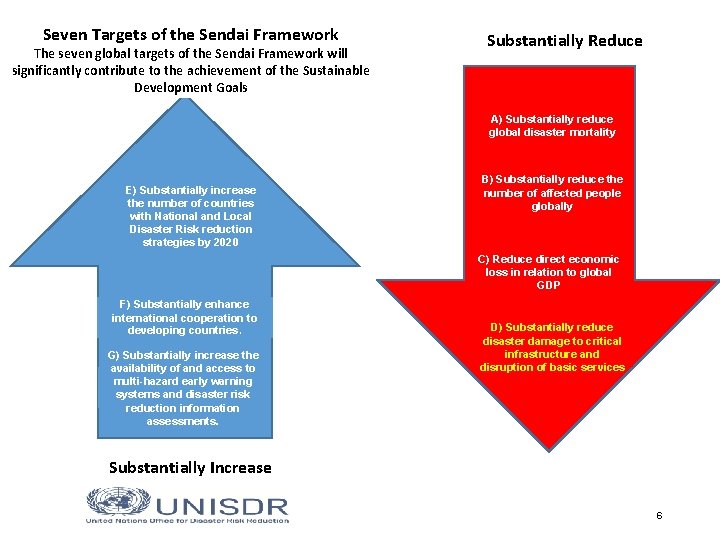
Seven Targets of the Sendai Framework The seven global targets of the Sendai Framework will significantly contribute to the achievement of the Sustainable Development Goals Substantially Reduce A) Substantially reduce global disaster mortality E) Substantially increase the number of countries with National and Local Disaster Risk reduction strategies by 2020 B) Substantially reduce the number of affected people globally C) Reduce direct economic loss in relation to global GDP F) Substantially enhance international cooperation to developing countries. G) Substantially increase the availability of and access to multi-hazard early warning systems and disaster risk reduction information assessments. D) Substantially reduce disaster damage to critical infrastructure and disruption of basic services Substantially Increase 6
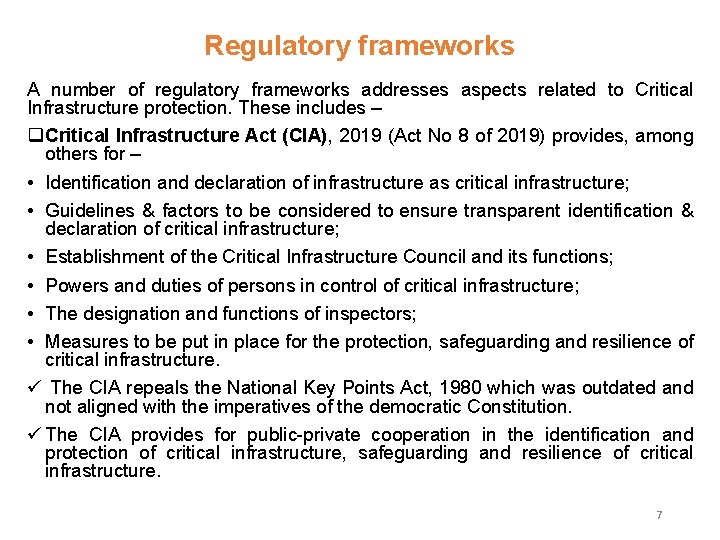
Regulatory frameworks A number of regulatory frameworks addresses aspects related to Critical Infrastructure protection. These includes – q Critical Infrastructure Act (CIA), 2019 (Act No 8 of 2019) provides, among others for – • Identification and declaration of infrastructure as critical infrastructure; • Guidelines & factors to be considered to ensure transparent identification & declaration of critical infrastructure; • Establishment of the Critical Infrastructure Council and its functions; • Powers and duties of persons in control of critical infrastructure; • The designation and functions of inspectors; • Measures to be put in place for the protection, safeguarding and resilience of critical infrastructure. ü The CIA repeals the National Key Points Act, 1980 which was outdated and not aligned with the imperatives of the democratic Constitution. ü The CIA provides for public-private cooperation in the identification and protection of critical infrastructure, safeguarding and resilience of critical infrastructure. 7
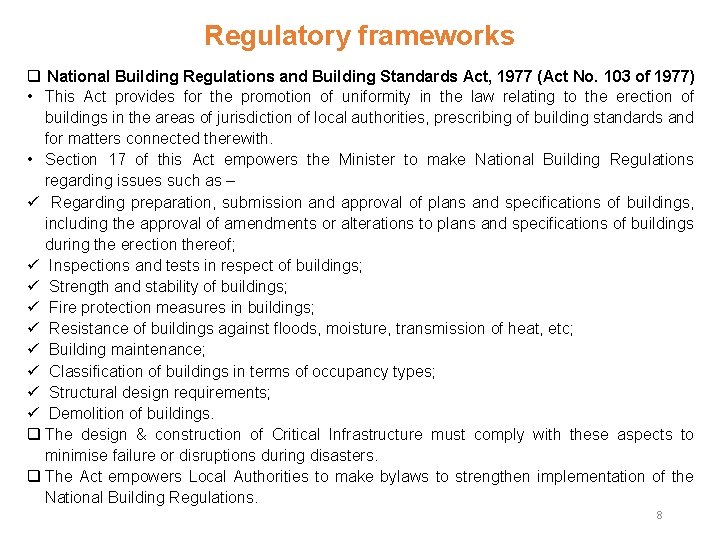
Regulatory frameworks q National Building Regulations and Building Standards Act, 1977 (Act No. 103 of 1977) • This Act provides for the promotion of uniformity in the law relating to the erection of buildings in the areas of jurisdiction of local authorities, prescribing of building standards and for matters connected therewith. • Section 17 of this Act empowers the Minister to make National Building Regulations regarding issues such as – ü Regarding preparation, submission and approval of plans and specifications of buildings, including the approval of amendments or alterations to plans and specifications of buildings during the erection thereof; ü Inspections and tests in respect of buildings; ü Strength and stability of buildings; ü Fire protection measures in buildings; ü Resistance of buildings against floods, moisture, transmission of heat, etc; ü Building maintenance; ü Classification of buildings in terms of occupancy types; ü Structural design requirements; ü Demolition of buildings. q The design & construction of Critical Infrastructure must comply with these aspects to minimise failure or disruptions during disasters. q The Act empowers Local Authorities to make bylaws to strengthen implementation of the National Building Regulations. 8
An overview of disaster risks of RSA q SA shares boundaries with six countries, i. e. Namibia, Botswana, Zimbabwe, Mozambique, Kingdom of e. Swatini and the Kingdom of Lesotho exposing the country to significant trans-boundary disaster risks. q SA is exposed to a wide range of hazards, including drought, flooding, cyclones and severe storms, fires incl building fires, informal settlement and veldfires, industrial accidents, mining-induced earthquakes and sinkholes, transportation accidents, spillages of hazardous waste, epidemic outbreaks, etc that can trigger widespread hardship and devastation. q A study by the IFRC (2011), revealed that most frequently occurring disasters are as a result of impacts of these hazards: floods, droughts and wildfires (in order of frequency). 9
Key Drivers of Disaster risks in RSA Urbanisation § Globally, humanity is increasingly moving towards an urban model of living. § Consistent with this global trends, SA has also experienced rapid urbanisation with towns and cities presently estimated to be home to almost 68% of the national population, generating close to 85% of the country’s economic activities and characterised by alarmingly high concentrations of poverty. § Urbanisation is also associated with an increase in Informal Settlements (ISs). ISs present major challenges to municipalities. These includes location of settlements in flood prone areas, lack of access for emergency responders, lack of critical infrastructure such as firefighting hydrants, generalised lack of basic services such as sanitation, water, electricity, sustainable housing, solid waste management, etc. § High prevalence of poverty in ISs means that these communities have the least capacity to anticipate, resist and recover from the impacts of these hazards further compounds vulnerability to disasters. 10
Key Drivers of Disaster risks in RSA Climate change § Intergovernmental Panel on Climate Change (IPCC) in its 2014 Fifth Assessment Report made these observations about Climate Change (CC)– ü In recent decades, changes in climate have caused impacts on natural and human systems on all continents and across the oceans; ü Differences in vulnerability and exposure arise from non-climatic factors and from multidimensional inequalities often produced by uneven development processes; ü Climate-related hazards exacerbate other stressors, often with negative outcomes for livelihoods, especially for people living in poverty. § SA, characterised as semi-arid, faces significant threats of increased drought and increasing frequency and intensity of flooding associated with CC. § CC will impact significantly on the three hydro-meteorological hazards faced by South Africa. This was evidenced by recent drought and flooding disasters. § SA must ensure integration of DRR and Climate Change Adaptation strategies in development planning programmes and initiatives. 11
Defining Critical Infrastructure q Many countries across the globe have used legislation to define Critical Infrastructure (CI). q Most countries define CI as those infrastructure assets …. That are vital to continued delivery & integrity of the essential services upon which a country relies, the loss or compromise of which would lead to severe economic or social consequences or loss of life. q Within the SA environment, CI is defined, by the Critical Infrastructure Act (CIA) as any infrastructure or infrastructure complex which is declared as such in terms of provisions of Section 20 of this Act. q The CIA defines infrastructure as any building, centre, establishment, facility, installation, premises or systems needed for the functioning of society, government or enterprises of the Republic including – • Consumer Installation as per Water Services Act, 1997; • Installation as per Maritime Zones Act, 1994; • Major Hazardous Installation as per Occupational Health and Safety Act, 1993; • Nuclear installation as per National Nuclear Regulator Act, 1999; • Offshore installation as per the Marine Traffic Act, 1981; & • Any other installation as may be declared for purposes of the CIA. q Most countries regard energy, water, wastewater, gas, waste disposal, food, transport, including railway networks, telecommunications, health, schools, correctional centres, finance and banking as critical infrastructure sectors. q CI encompass functional sectors & essential services such as emergency services & health services. 12
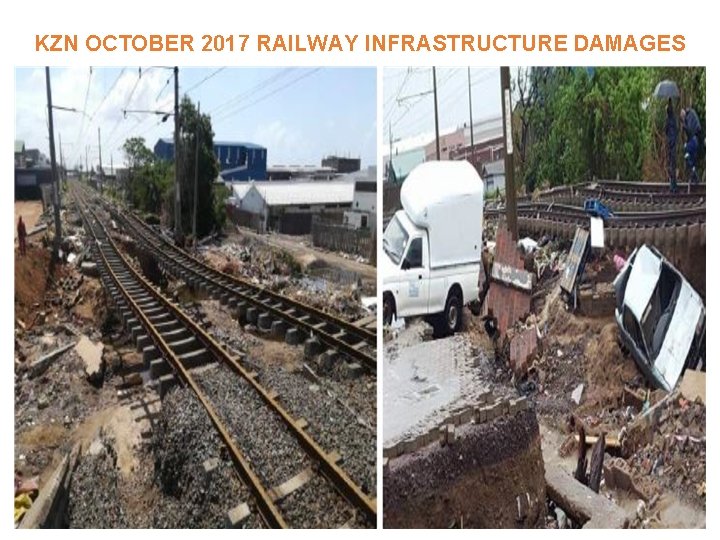
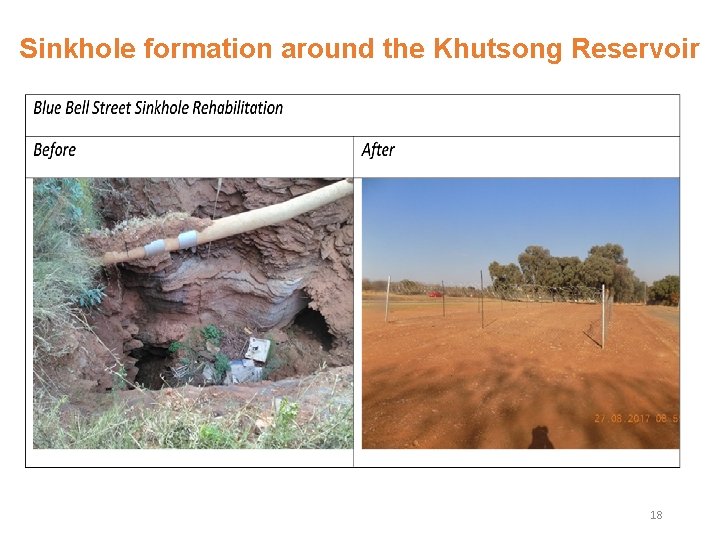
Impact of Disasters on Critical Infrastructure in SA q A number of recent disasters have demonstrated that many of our country’s critical infrastructure are vulnerable to disasters. q These disasters have also revealed that the bulk of our disaster recovery funding is allocated to repair, rehabilitate and reconstruct critical infrastructure. q Some notable disasters that impacted CIs include the Ekurhuleni 2015 Hailstorm, June 2017 Garden Route Disaster in the WC, October 2017 KZN disaster, April 2019 EC and KZN disasters, November 2019 KZN disaster. q Sinkholes in Merafong have also significantly damage a number of CIs in that specific area. q CIs that have been affected by these disasters include social facilities such as schools, hospitals, clinics, telecommunication facilities, water and sanitation, electricity, agricultural facilities, roads and transport infrastructure, housing, etc. q These disasters have caused hundreds of millions of Rands damage to CIs across the country. q The damage to CIs have also raised significant concerns about infrastructure maintenance in the country. 13
Impact of Disasters on Critical Infrastructure in SA q Munitoria Building Fire: • A municipal building in Pretoria burned down in 1997. The Fire took 4 days and 252 fire fighters to put out completely and was the biggest fire the country had ever seen at the time. • In the end, nothing could be salvaged. The damage was estimated to be R 353, 4 million. Thousands of public records were destroyed. The building was 44 years old, non-compliant with the National Building Regulations, SANS 10400 and known to be a fire hazard. There were no casualties as the fire started after hours. The building was demolished in 2013. q Bank of Lisbon Fire • A building which housed several Gauteng Provincial Departments burned down in September 2018, killing Three Firefighters and injuring several building occupants. Building was known to be non-compliant with National Building Regulations and known to be a fire hazard. Building was declared structurally unfit due to fire damage and was demolished during November 2019. > R 140 million will be spent on demolition and clearing the rubble. • These two fires demonstrates the vulnerability of critical infrastructure to hazards such as fires and the financial impacts of these incidents on the country’s fiscus. The incidents also reveal that poor building maintenance and non-compliance with applicable Regulations is costly both in human & financial terms. 14
Critical Infrastructure: Implications of Failure q Significant interruptions of services provided by CIs has considerable consequences for the country. q Failure of CI has implications for national security. q The electricity load shedding crisis experienced in RSA between October 2007 – February 2008 demonstrated the fragility of CI and the capacity of the problem to cascade to other sectors. These outages adversely impacted functioning of various CI components including mobile phones, banks, hospitals, etc. q The cascading effect of these outages revealed fundamental interdependencies or interlinkages of CI which must be considered as part of planning q Disruptions of CI may be brought about by accident, intentionally by hostile groups and by disasters. q The effects of CI failures are mostly pronounced in industrialized societies / cities due to heavy dependence on functioning of infrastructure services such as electricity or telecommunications technology which also facilitate the operation of e. g. transport, health systems or sewage treatment. 15
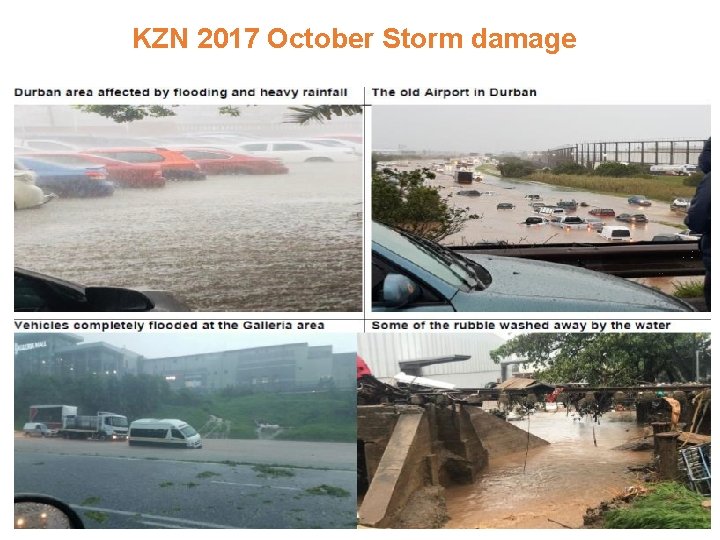
KZN 2017 October Storm damage 16
KZN OCTOBER 2017 RAILWAY INFRASTRUCTURE DAMAGES 17
Sinkhole formation around the Khutsong Reservoir 18
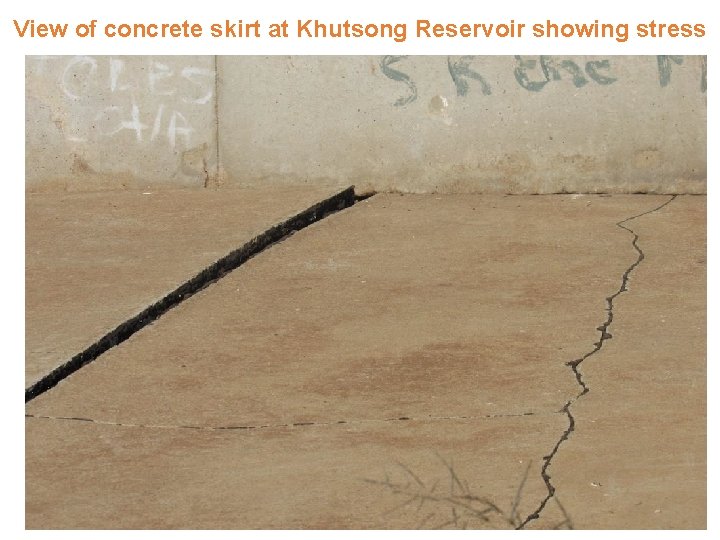
View of concrete skirt at Khutsong Reservoir showing stress 19
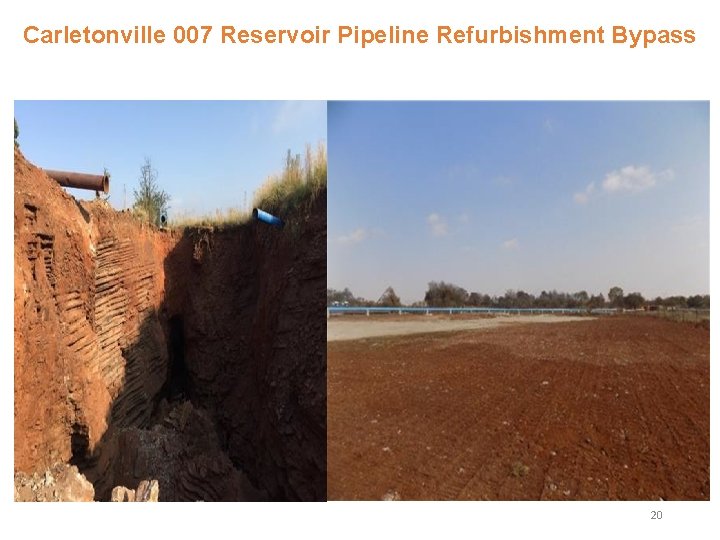
Carletonville 007 Reservoir Pipeline Refurbishment Bypass 20
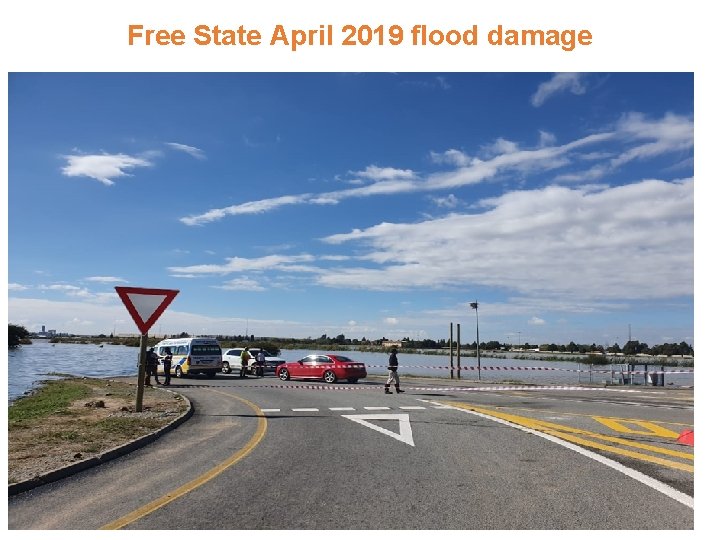
Free State April 2019 flood damage 21
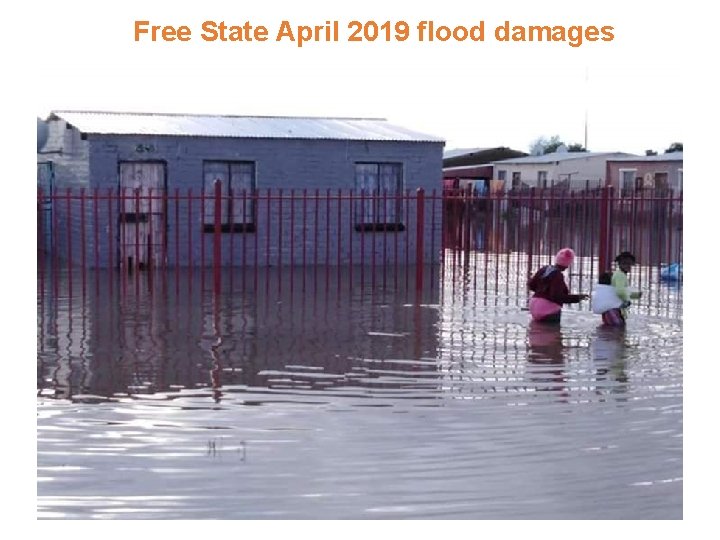
Free State April 2019 flood damages 22
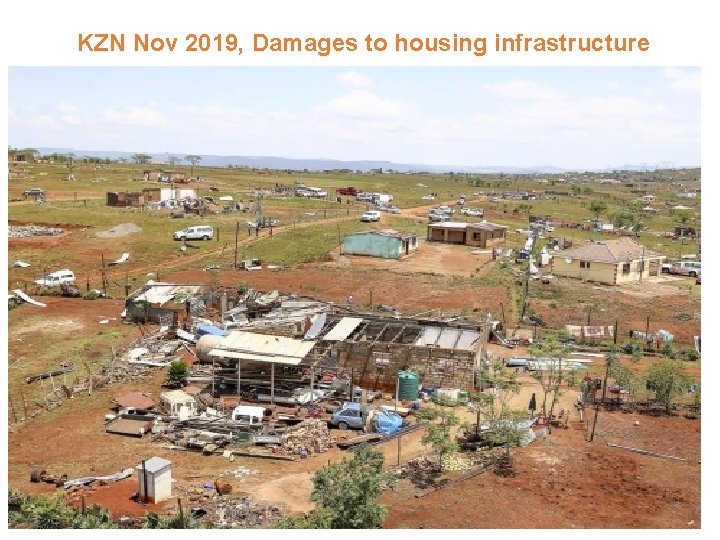
KZN Nov 2019, Damages to housing infrastructure 23
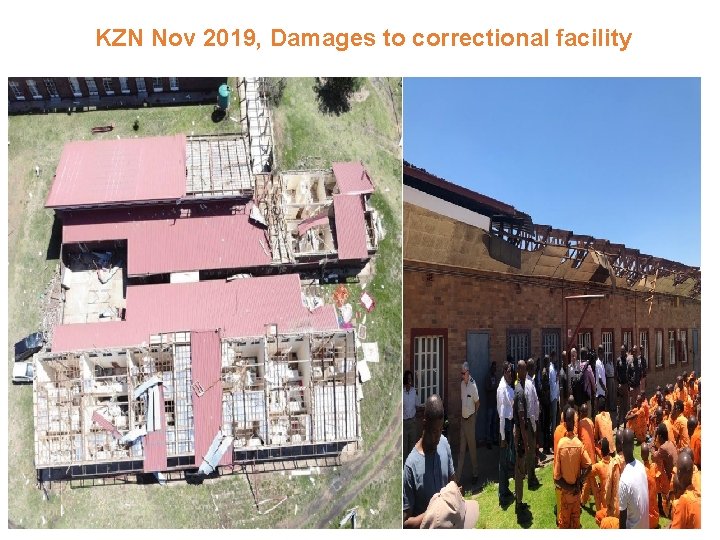
KZN Nov 2019, Damages to correctional facility 24
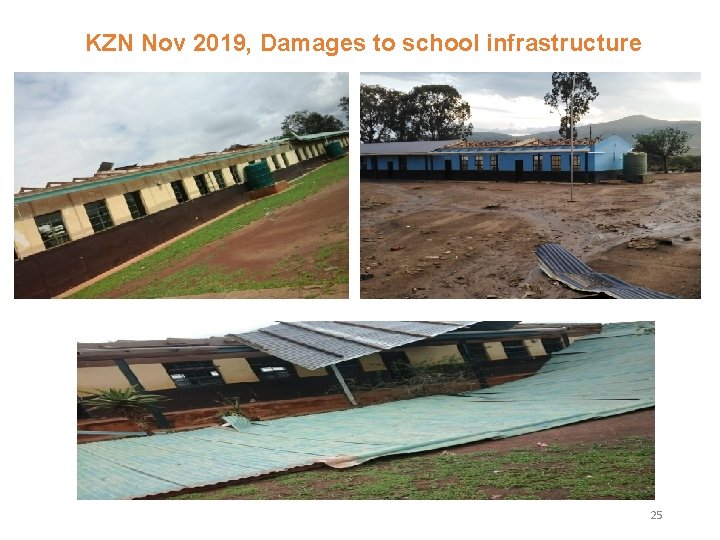
KZN Nov 2019, Damages to school infrastructure 25
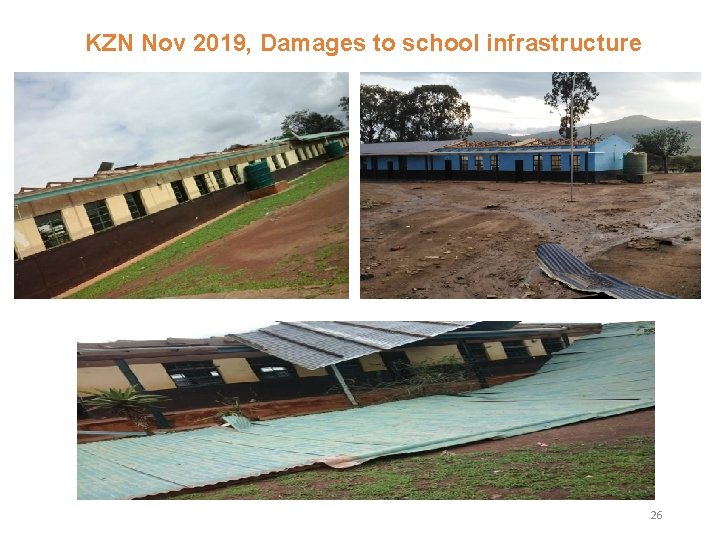
KZN Nov 2019, Damages to school infrastructure 26
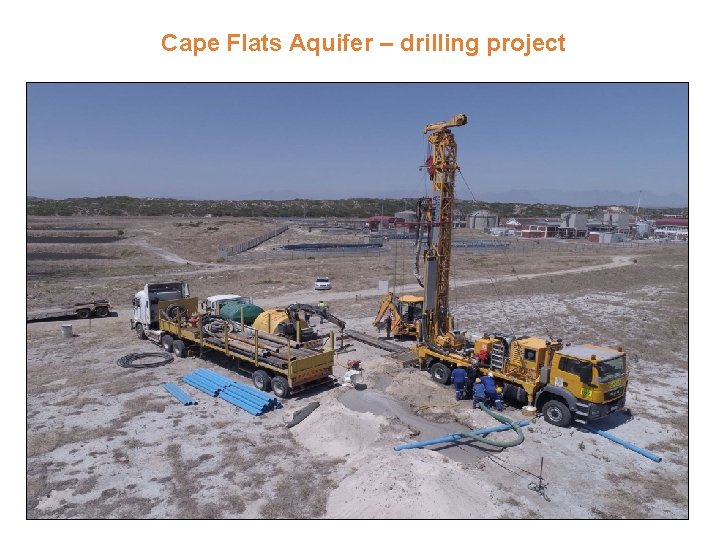
Cape Flats Aquifer – drilling project 27
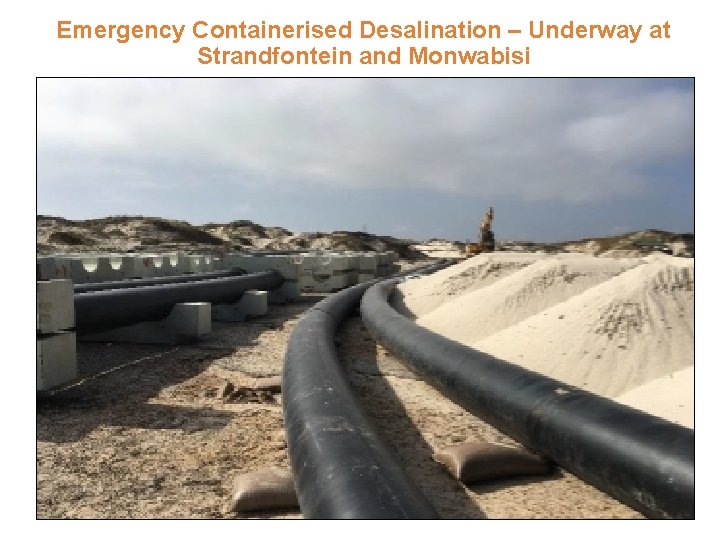
Emergency Containerised Desalination – Underway at Strandfontein and Monwabisi 28
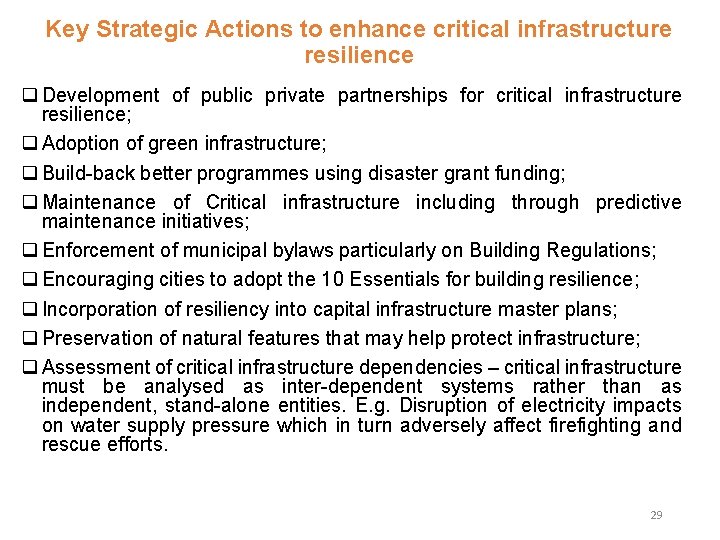
Key Strategic Actions to enhance critical infrastructure resilience q Development of public private partnerships for critical infrastructure resilience; q Adoption of green infrastructure; q Build-back better programmes using disaster grant funding; q Maintenance of Critical infrastructure including through predictive maintenance initiatives; q Enforcement of municipal bylaws particularly on Building Regulations; q Encouraging cities to adopt the 10 Essentials for building resilience; q Incorporation of resiliency into capital infrastructure master plans; q Preservation of natural features that may help protect infrastructure; q Assessment of critical infrastructure dependencies – critical infrastructure must be analysed as inter-dependent systems rather than as independent, stand-alone entities. E. g. Disruption of electricity impacts on water supply pressure which in turn adversely affect firefighting and rescue efforts. 29
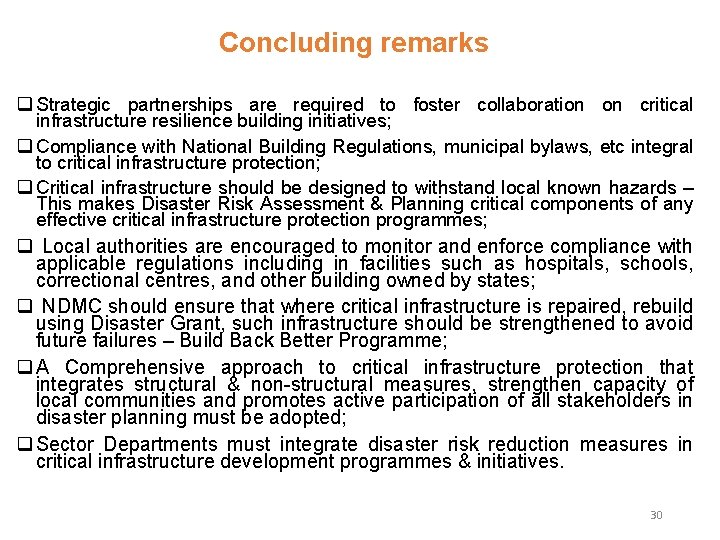
Concluding remarks q Strategic partnerships are required to foster collaboration on critical infrastructure resilience building initiatives; q Compliance with National Building Regulations, municipal bylaws, etc integral to critical infrastructure protection; q Critical infrastructure should be designed to withstand local known hazards – This makes Disaster Risk Assessment & Planning critical components of any effective critical infrastructure protection programmes; q Local authorities are encouraged to monitor and enforce compliance with applicable regulations including in facilities such as hospitals, schools, correctional centres, and other building owned by states; q NDMC should ensure that where critical infrastructure is repaired, rebuild using Disaster Grant, such infrastructure should be strengthened to avoid future failures – Build Back Better Programme; q A Comprehensive approach to critical infrastructure protection that integrates structural & non-structural measures, strengthen capacity of local communities and promotes active participation of all stakeholders in disaster planning must be adopted; q Sector Departments must integrate disaster risk reduction measures in critical infrastructure development programmes & initiatives. 30