
Overview of Small Animal Science Objectives Define the
Overview of Small Animal Science
Objectives Ø Define the terms ‘Zoology’ and ‘Zoonosis’ Ø Sort different small animal species into their designated taxonomic groups Ø Identify the different small animal categories that are used for this class Ø Analyze the different animal taxonomy groups
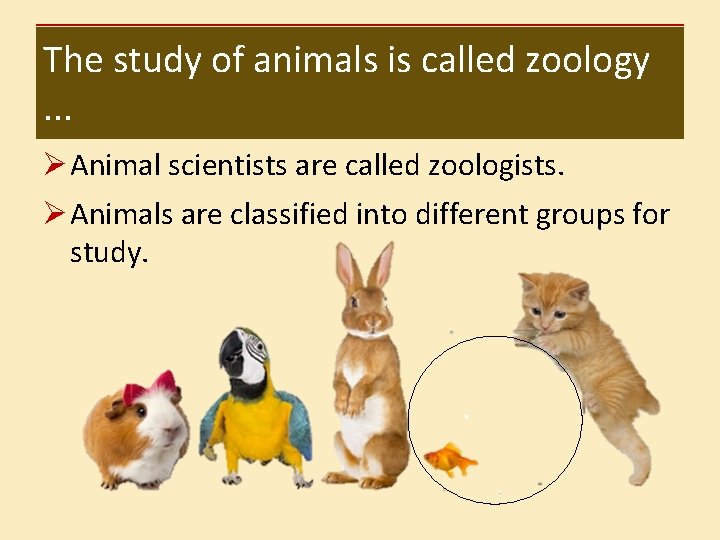
The study of animals is called zoology. . . Ø Animal scientists are called zoologists. Ø Animals are classified into different groups for study.
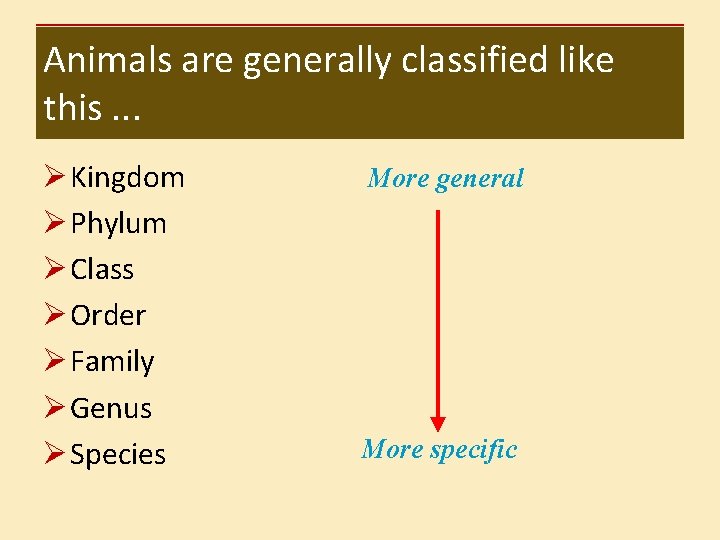
Animals are generally classified like this. . . Ø Kingdom Ø Phylum Ø Class Ø Order Ø Family Ø Genus Ø Species More general More specific
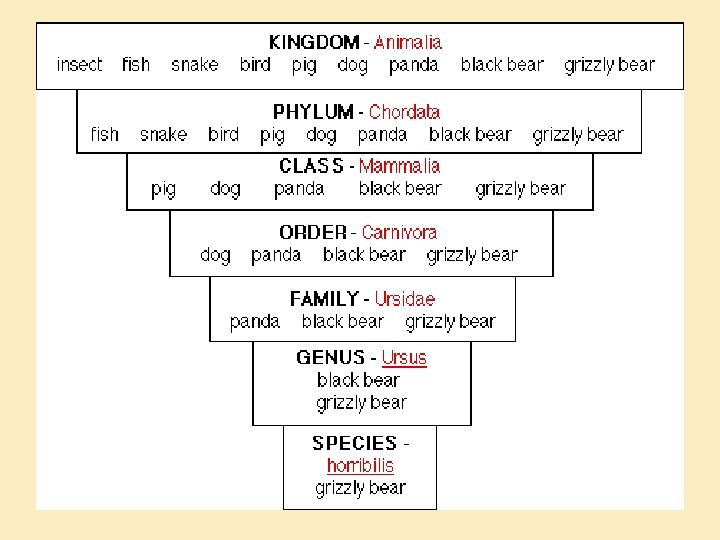
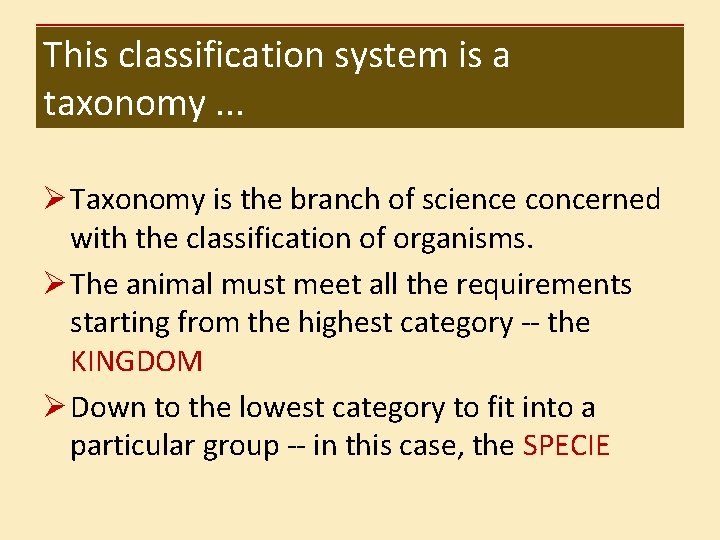
This classification system is a taxonomy. . . Ø Taxonomy is the branch of science concerned with the classification of organisms. Ø The animal must meet all the requirements starting from the highest category -- the KINGDOM Ø Down to the lowest category to fit into a particular group -- in this case, the SPECIE
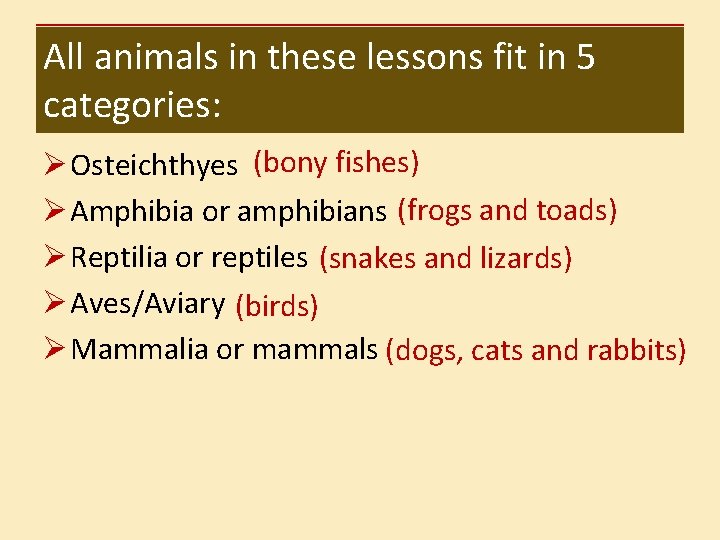
All animals in these lessons fit in 5 categories: Ø Osteichthyes (bony fishes) Ø Amphibia or amphibians (frogs and toads) Ø Reptilia or reptiles (snakes and lizards) Ø Aves/Aviary (birds) Ø Mammalia or mammals (dogs, cats and rabbits)
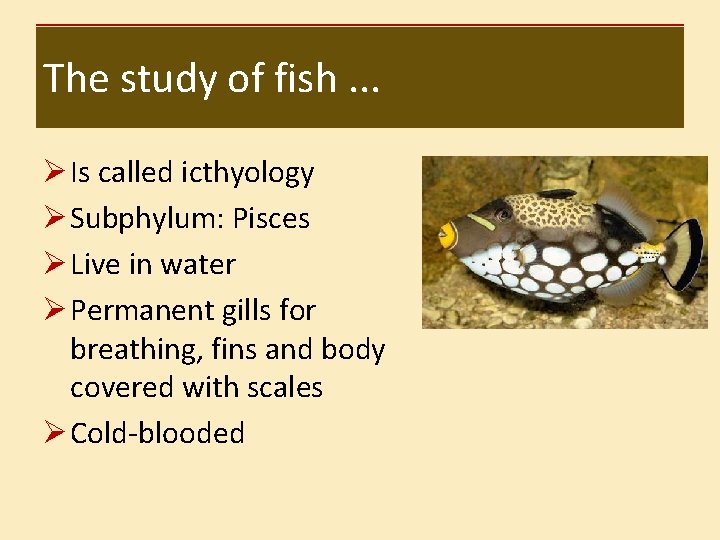
The study of fish. . . Ø Is called icthyology Ø Subphylum: Pisces Ø Live in water Ø Permanent gills for breathing, fins and body covered with scales Ø Cold-blooded
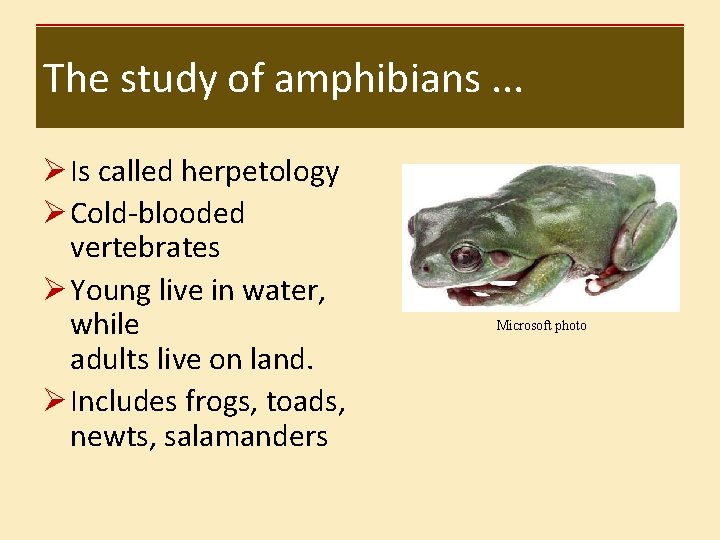
The study of amphibians. . . Ø Is called herpetology Ø Cold-blooded vertebrates Ø Young live in water, while adults live on land. Ø Includes frogs, toads, newts, salamanders Microsoft photo
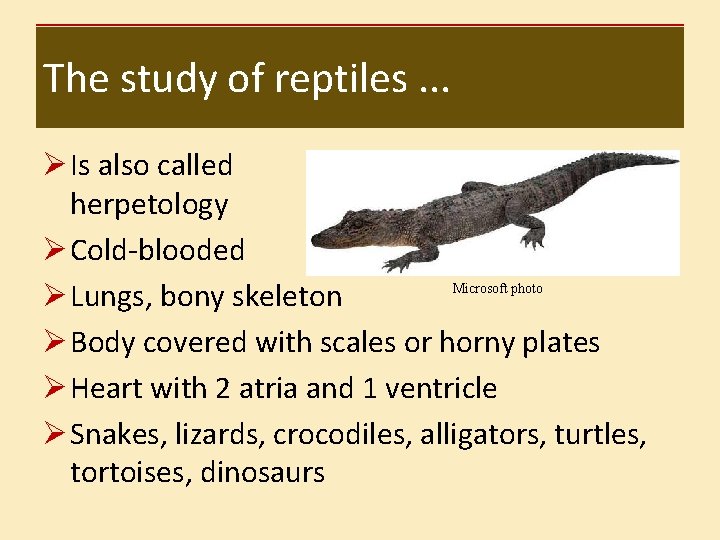
The study of reptiles. . . Ø Is also called herpetology Ø Cold-blooded Microsoft photo Ø Lungs, bony skeleton Ø Body covered with scales or horny plates Ø Heart with 2 atria and 1 ventricle Ø Snakes, lizards, crocodiles, alligators, turtles, tortoises, dinosaurs
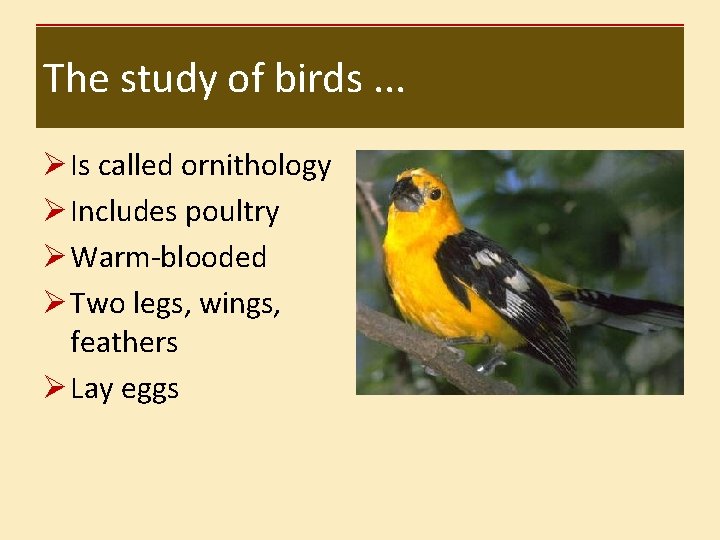
The study of birds. . . Ø Is called ornithology Ø Includes poultry Ø Warm-blooded Ø Two legs, wings, feathers Ø Lay eggs
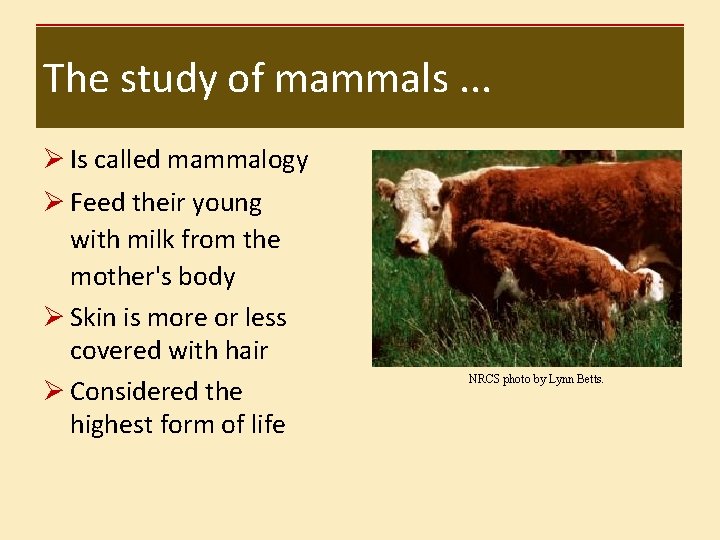
The study of mammals. . . Ø Is called mammalogy Ø Feed their young with milk from the mother's body Ø Skin is more or less covered with hair Ø Considered the highest form of life NRCS photo by Lynn Betts.
Examples of mammals. . . Ø Humans Ø Non-human primates Ø Dogs, cats, rabbits, mice, rats, guinea pigs, chinchillas, ferrets, cows, pigs, goats, sheep, horses Ø Marine mammals like dolphins, whales Ø Marsupials like kangaroos, possums Ø Flying mammals like bats
How are small animals used? Ø Companion animals and pets Ø Food or hide • Rabbits, mink • Frogs, alligators Ø Research • Nonhuman primates • Dogs, cats, rabbits • Rats, mice
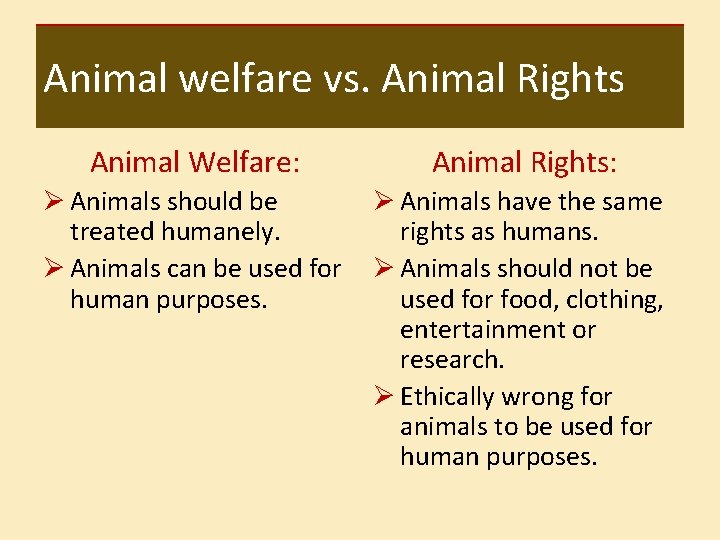
Animal welfare vs. Animal Rights Animal Welfare: Animal Rights: Ø Animals should be treated humanely. Ø Animals can be used for human purposes. Ø Animals have the same rights as humans. Ø Animals should not be used for food, clothing, entertainment or research. Ø Ethically wrong for animals to be used for human purposes.
Animal Welfare Act of 1966 Ø Regulates dealers and laboratories Ø Mandates standards for housing, handling, treatment, feeding and shelter of laboratory animals Ø Research institutions must have a review committee Ø Procedures for euthanasia
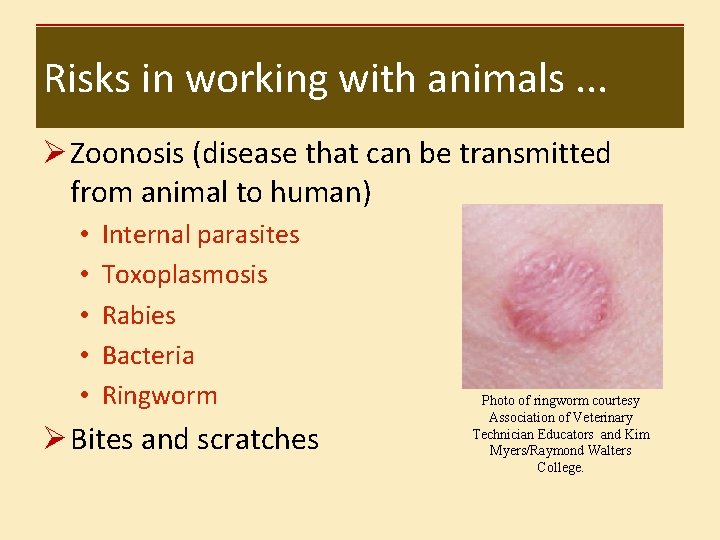
Risks in working with animals. . . Ø Zoonosis (disease that can be transmitted from animal to human) • • • Internal parasites Toxoplasmosis Rabies Bacteria Ringworm Ø Bites and scratches Photo of ringworm courtesy Association of Veterinary Technician Educators and Kim Myers/Raymond Walters College.
Overview of the industry: Ø Companion animal industry is big and growing bigger Ø Cats and dogs have largest share Ø Consumers spend a lot on their pets: • • Pet food (about 47% of spending) Health services Toys, collars, leashes, etc. Grooming, boarding, training, breeding, etc.
- Slides: 18