
Overview of Simulation Model Change Context Environmental Sustainability
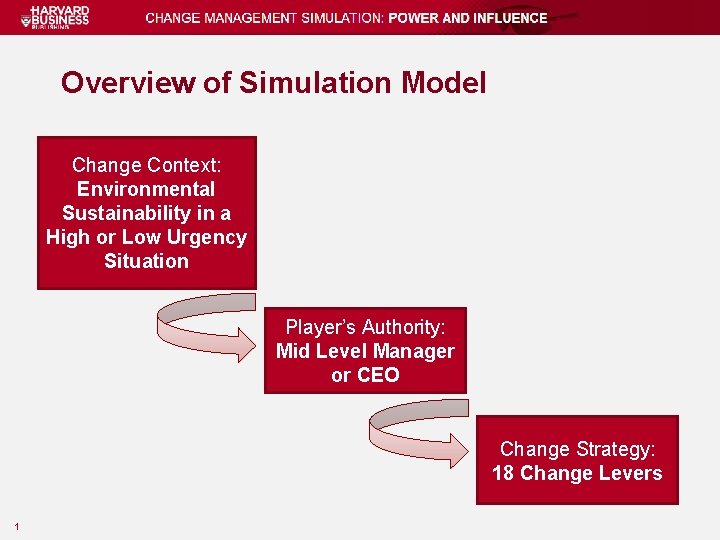
Overview of Simulation Model Change Context: Environmental Sustainability in a High or Low Urgency Situation Player’s Authority: Mid Level Manager or CEO Change Strategy: 18 Change Levers 1
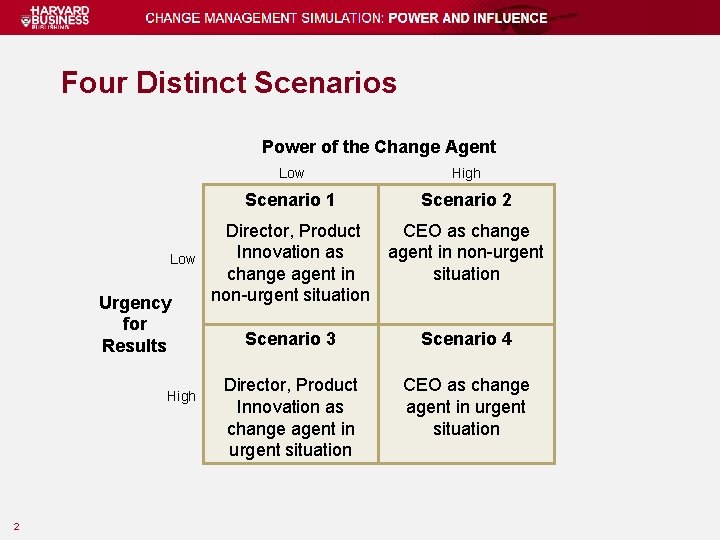
Four Distinct Scenarios Power of the Change Agent Low Urgency for Results High 2 Low High Scenario 1 Scenario 2 Director, Product CEO as change Innovation as agent in non-urgent change agent in situation non-urgent situation Scenario 3 Scenario 4 Director, Product Innovation as change agent in urgent situation CEO as change agent in urgent situation
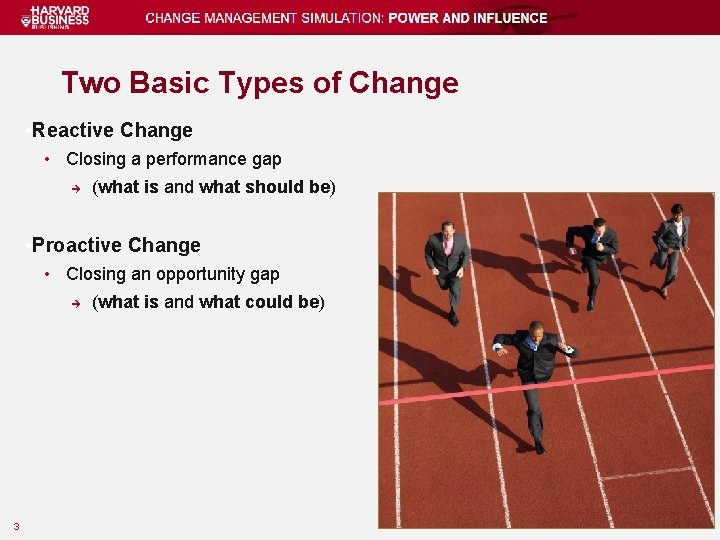
Two Basic Types of Change • Reactive Change • Closing a performance gap è (what is and what should be) • Proactive Change • Closing an opportunity gap è (what is and what could be) 3
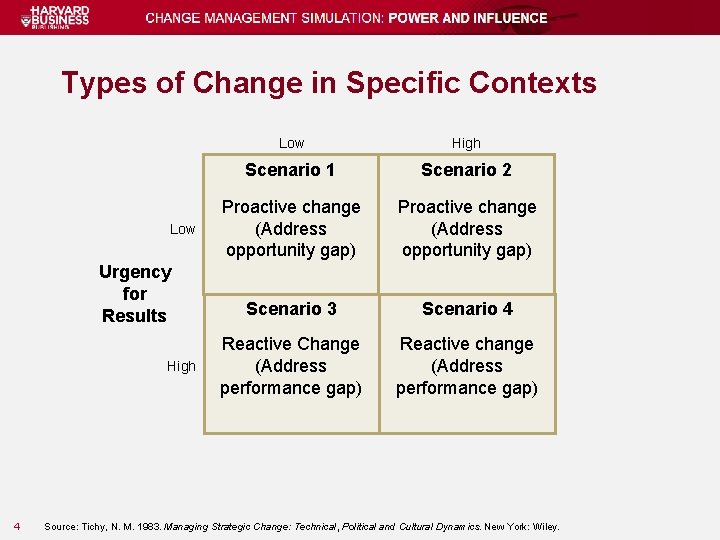
Types of Change in Specific Contexts Low Urgency for Results High 4 Low High Scenario 1 Scenario 2 Proactive change (Address opportunity gap) Scenario 3 Scenario 4 Reactive Change (Address performance gap) Reactive change (Address performance gap) Source: Tichy, N. M. 1983. Managing Strategic Change: Technical, Political and Cultural Dynamics. New York: Wiley.
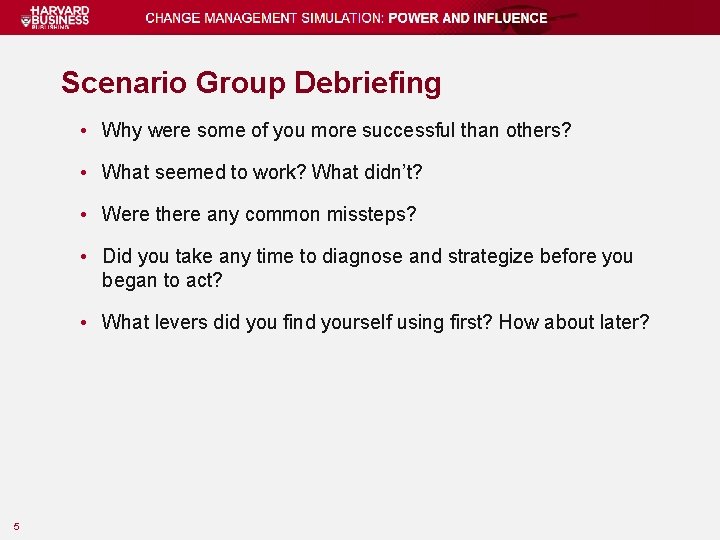
Scenario Group Debriefing • Why were some of you more successful than others? • What seemed to work? What didn’t? • Were there any common missteps? • Did you take any time to diagnose and strategize before you began to act? • What levers did you find yourself using first? How about later? 5
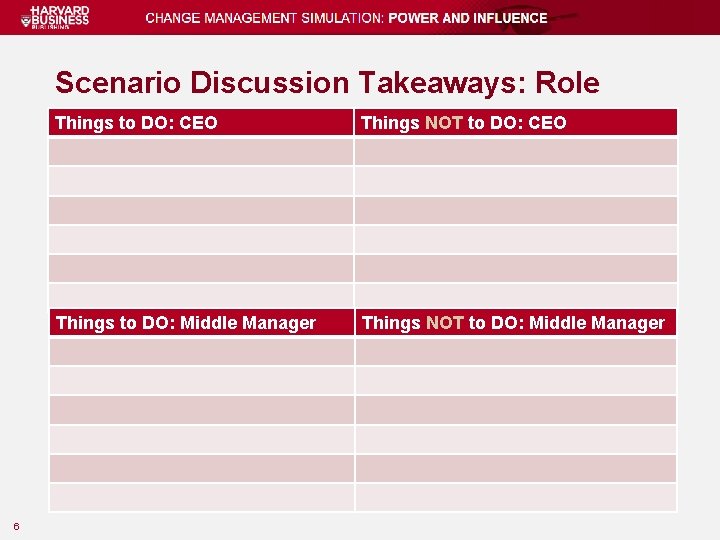
Scenario Discussion Takeaways: Role 6 Things to DO: CEO Things NOT to DO: CEO Things to DO: Middle Manager Things NOT to DO: Middle Manager
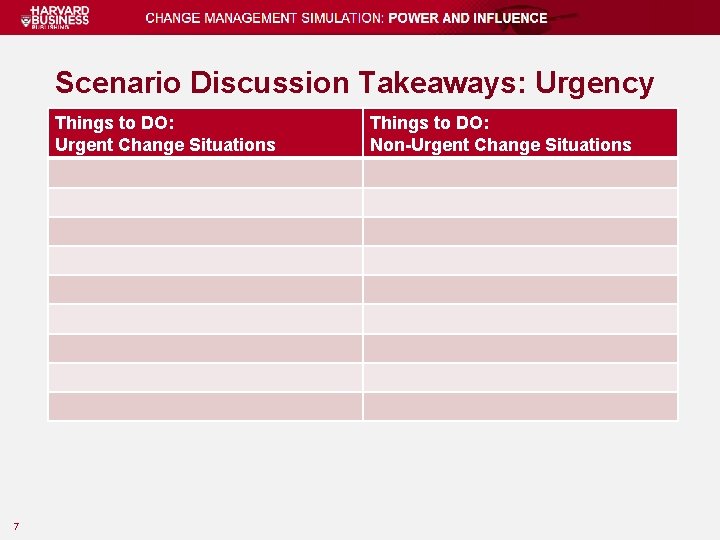
Scenario Discussion Takeaways: Urgency Things to DO: Urgent Change Situations 7 Things to DO: Non-Urgent Change Situations
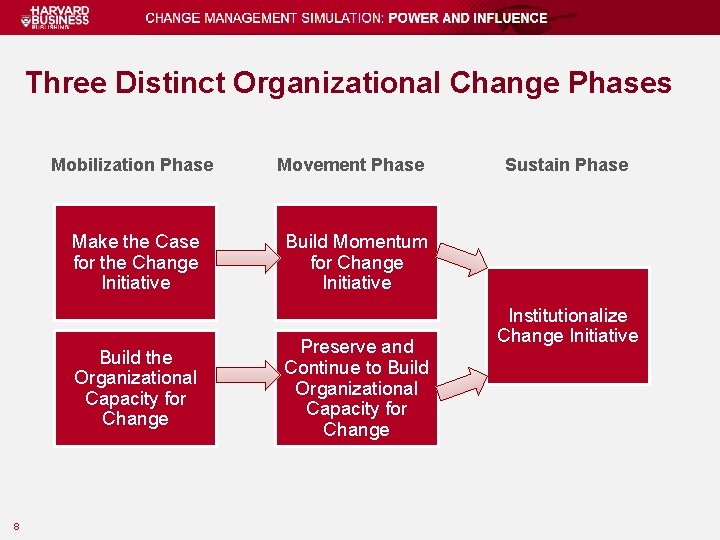
Three Distinct Organizational Change Phases Mobilization Phase Make the Case for the Change Initiative Build the Organizational Capacity for Change 8 Movement Phase Sustain Phase Build Momentum for Change Initiative Preserve and Continue to Build Organizational Capacity for Change Institutionalize Change Initiative
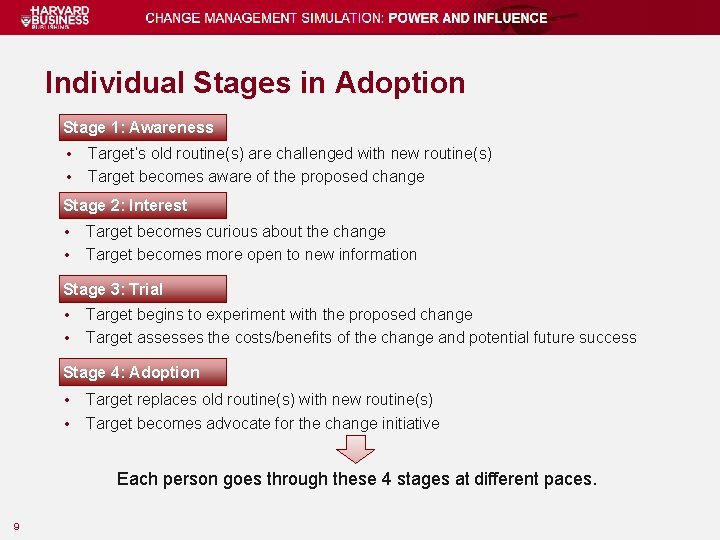
Individual Stages in Adoption Stage 1: Awareness • • Target’s old routine(s) are challenged with new routine(s) Target becomes aware of the proposed change Stage 2: Interest • • Target becomes curious about the change Target becomes more open to new information Stage 3: Trial • • Target begins to experiment with the proposed change Target assesses the costs/benefits of the change and potential future success Stage 4: Adoption • • Target replaces old routine(s) with new routine(s) Target becomes advocate for the change initiative Each person goes through these 4 stages at different paces. 9
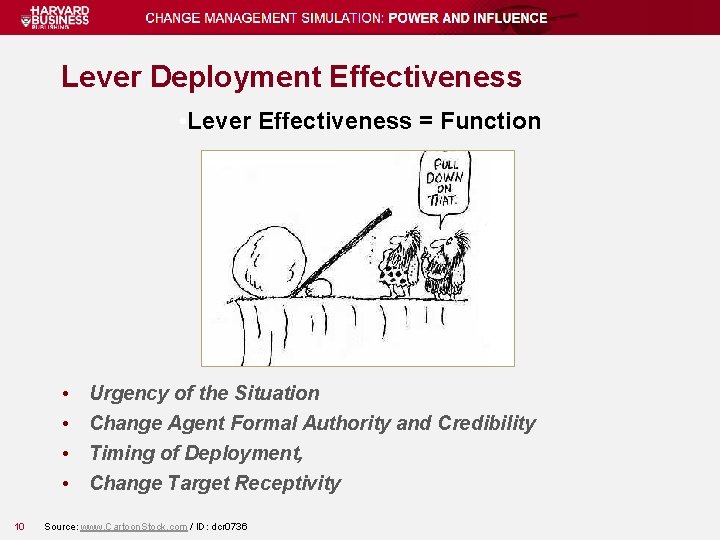
Lever Deployment Effectiveness • Lever Effectiveness = Function • • 10 Urgency of the Situation Change Agent Formal Authority and Credibility Timing of Deployment, Change Target Receptivity Source: www. Cartoon. Stock. com / ID: dcr 0736
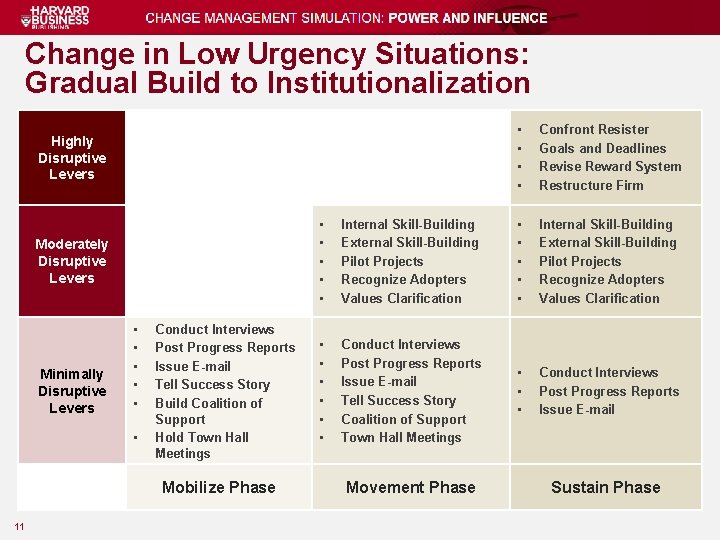
Change in Low Urgency Situations: Gradual Build to Institutionalization Highly Disruptive Levers Moderately Disruptive Levers Minimally Disruptive Levers • • • Conduct Interviews Post Progress Reports Issue E-mail Tell Success Story Build Coalition of Support Hold Town Hall Meetings Mobilize Phase 11 • • Confront Resister Goals and Deadlines Revise Reward System Restructure Firm • • • Internal Skill-Building External Skill-Building Pilot Projects Recognize Adopters Values Clarification • • • Conduct Interviews Post Progress Reports Issue E-mail Tell Success Story Coalition of Support Town Hall Meetings • • • Conduct Interviews Post Progress Reports Issue E-mail Movement Phase Sustain Phase
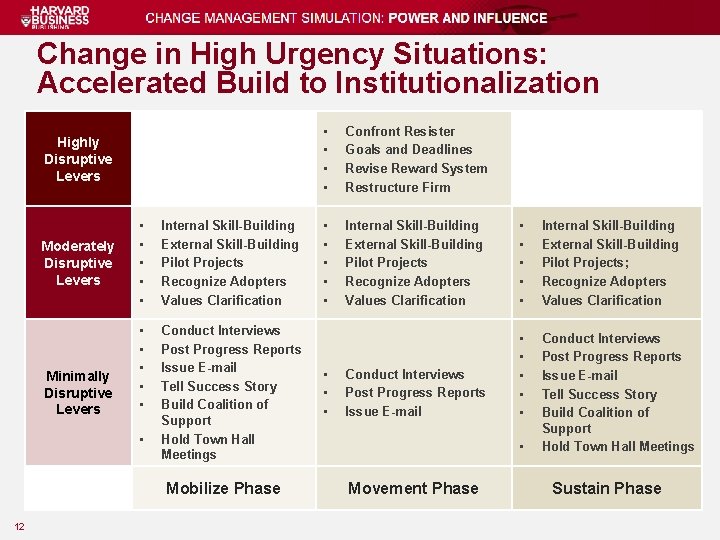
Change in High Urgency Situations: Accelerated Build to Institutionalization Highly Disruptive Levers Moderately Disruptive Levers Minimally Disruptive Levers • • • Internal Skill-Building External Skill-Building Pilot Projects Recognize Adopters Values Clarification • • • Conduct Interviews Post Progress Reports Issue E-mail Tell Success Story Build Coalition of Support Hold Town Hall Meetings • Mobilize Phase 12 • • Confront Resister Goals and Deadlines Revise Reward System Restructure Firm • • • Internal Skill-Building External Skill-Building Pilot Projects Recognize Adopters Values Clarification • • • Internal Skill-Building External Skill-Building Pilot Projects; Recognize Adopters Values Clarification Conduct Interviews Post Progress Reports Issue E-mail • • • Conduct Interviews Post Progress Reports Issue E-mail Tell Success Story Build Coalition of Support Hold Town Hall Meetings • • Movement Phase Sustain Phase
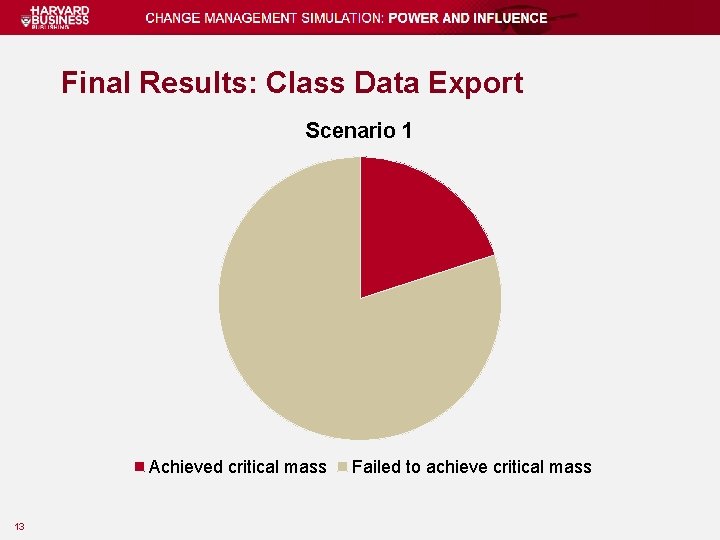
Final Results: Class Data Export Scenario 1 Achieved critical mass 13 Failed to achieve critical mass
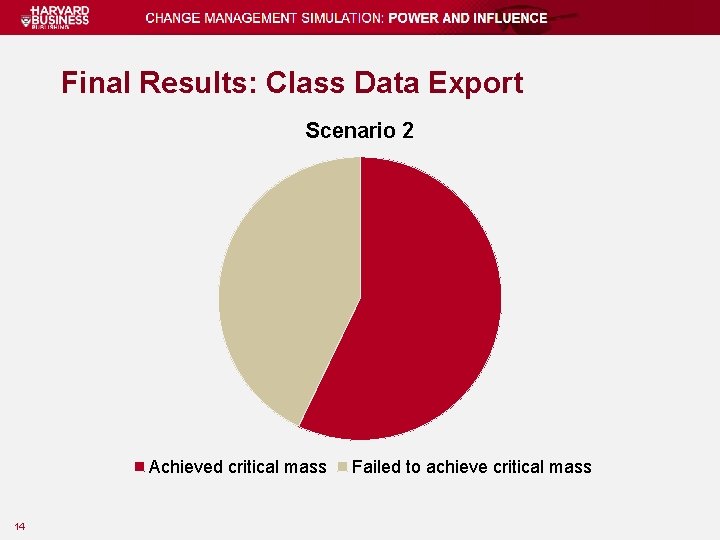
Final Results: Class Data Export Scenario 2 Achieved critical mass 14 Failed to achieve critical mass
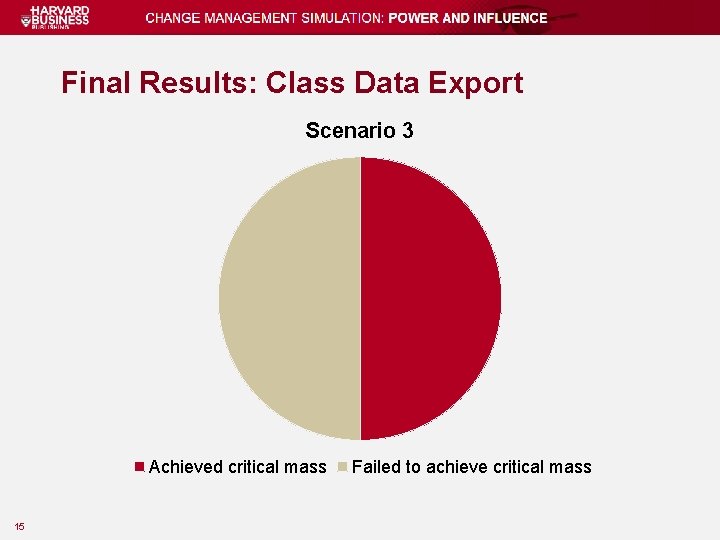
Final Results: Class Data Export Scenario 3 Achieved critical mass 15 Failed to achieve critical mass
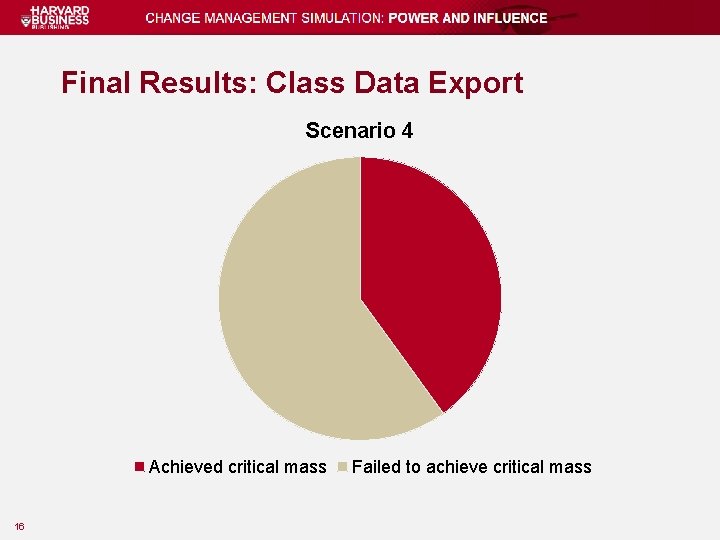
Final Results: Class Data Export Scenario 4 Achieved critical mass 16 Failed to achieve critical mass
- Slides: 16