
Overview of SCOs in the Member States Luca
Overview of SCOs in the Member States Luca Santin
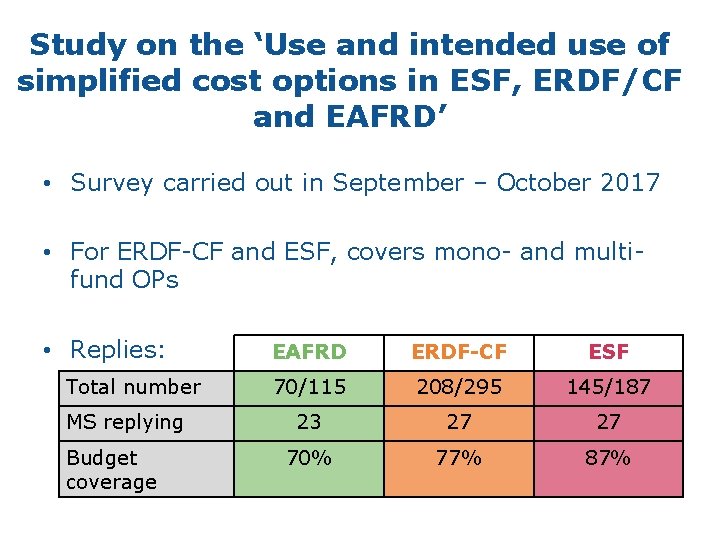
Study on the ‘Use and intended use of simplified cost options in ESF, ERDF/CF and EAFRD’ • Survey carried out in September – October 2017 • For ERDF-CF and ESF, covers mono- and multifund OPs • Replies: Total number MS replying Budget coverage EAFRD ERDF-CF ESF 70/115 208/295 145/187 23 27 27 70% 77% 87%
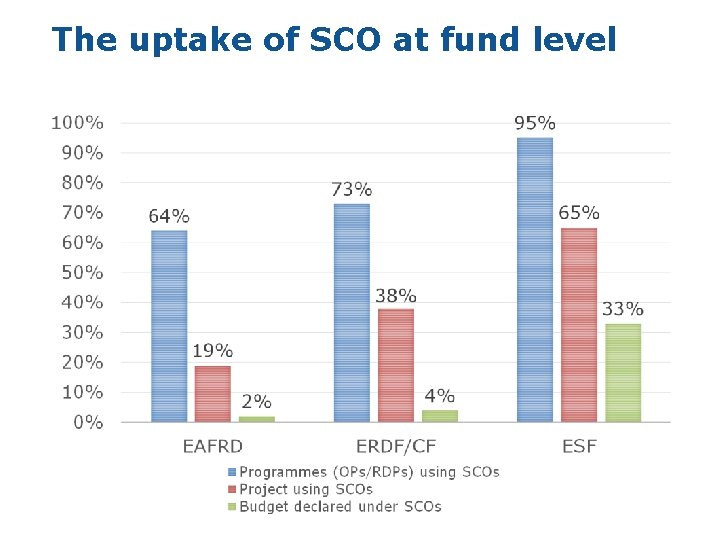
The uptake of SCO at fund level
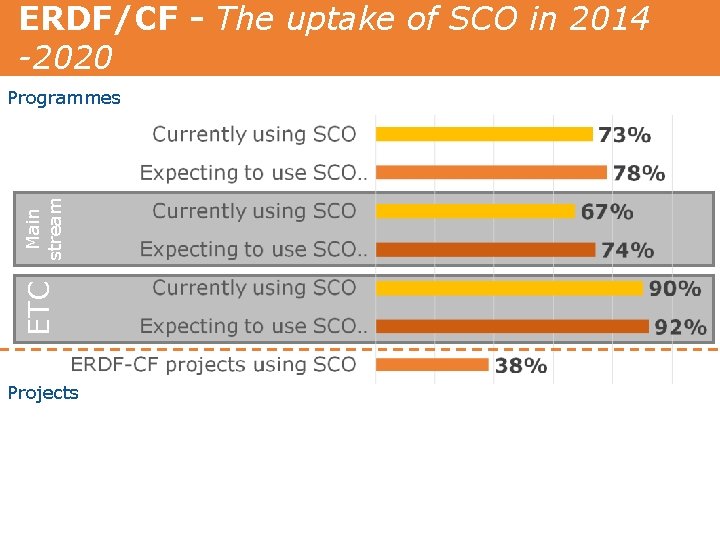
ERDF/CF - The uptake of SCO in 2014 -2020 ETC Main stream Programmes Projects
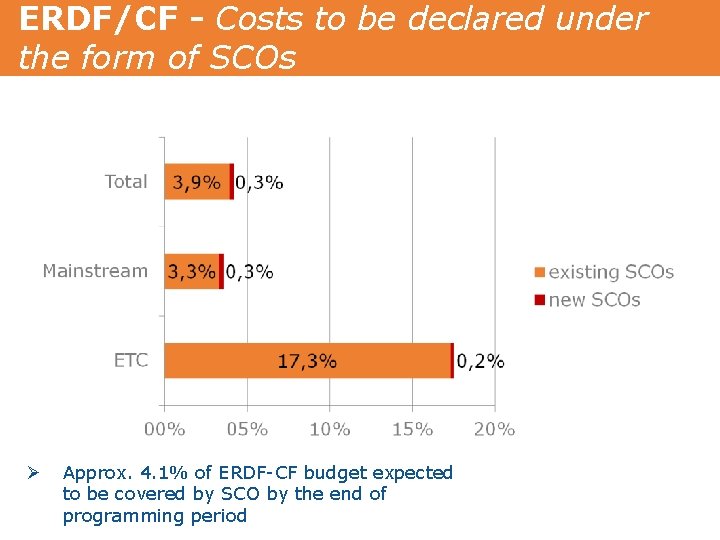
ERDF/CF - Costs to be declared under the form of SCOs Ø Approx. 4. 1% of ERDF-CF budget expected to be covered by SCO by the end of programming period
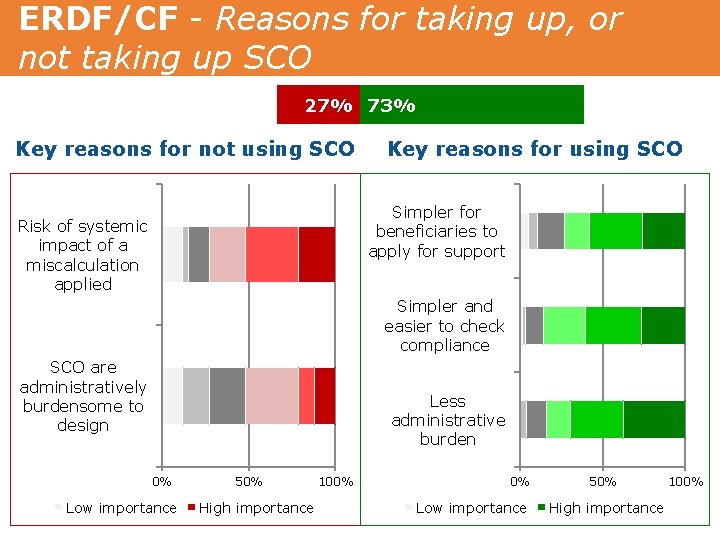
ERDF/CF - Reasons for taking up, or not taking up SCO 27% 73% Key reasons for not using SCO Key reasons for using SCO Simpler for beneficiaries to apply for support Risk of systemic impact of a miscalculation applied Simpler and easier to check compliance SCO are administratively burdensome to design Less administrative burden 0% Low importance 50% High importance 100%
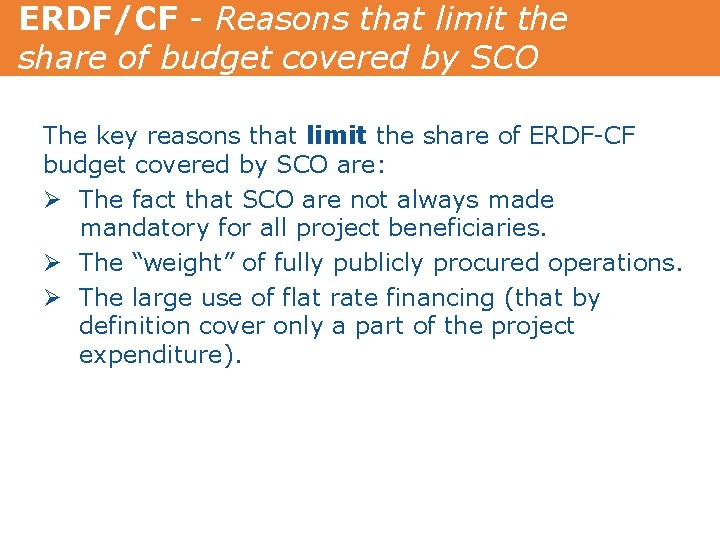
ERDF/CF - Reasons that limit the share of budget covered by SCO The key reasons that limit the share of ERDF-CF budget covered by SCO are: Ø The fact that SCO are not always made mandatory for all project beneficiaries. Ø The “weight” of fully publicly procured operations. Ø The large use of flat rate financing (that by definition cover only a part of the project expenditure).
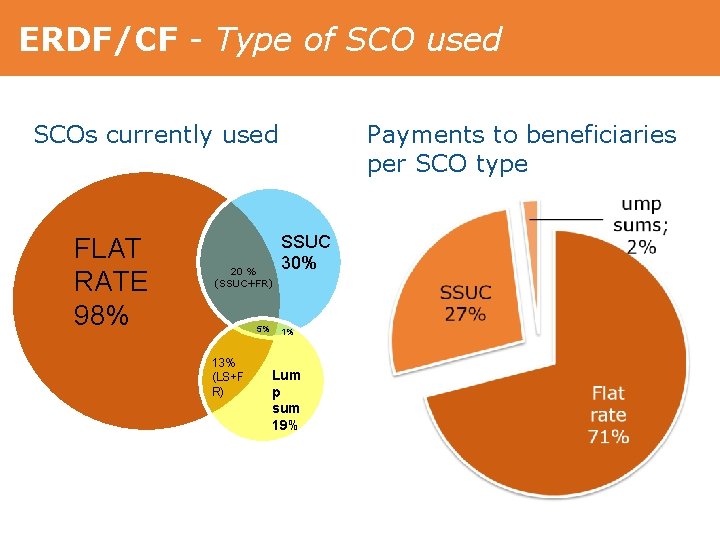
ERDF/CF - Type of SCO used SCOs currently used FLAT RATE 98% 20 % (SSUC+FR) 5% 13% (LS+F R) Payments to beneficiaries per SCO type SSUC 30% 1% Lum p sum 19%
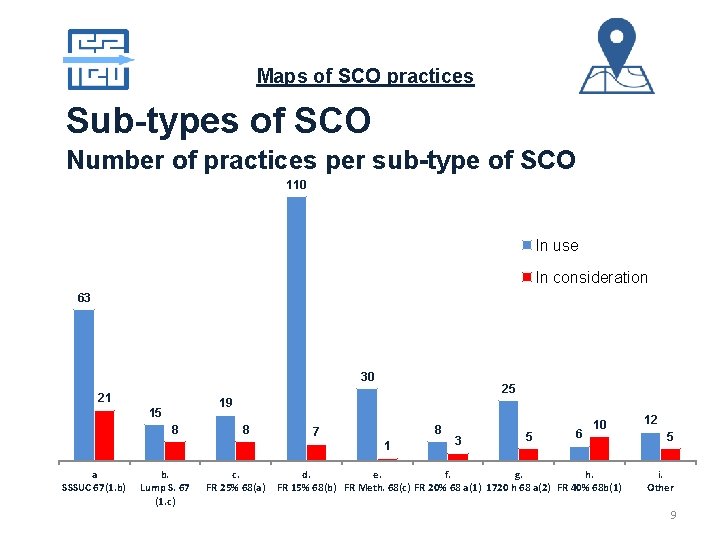
Maps of SCO practices Sub-types of SCO Number of practices per sub-type of SCO 110 In use In consideration 63 30 21 25 19 15 8 8 8 7 1 a SSSUC 67(1. b) b. Lump S. 67 (1. c) c. FR 25% 68(a) 3 5 6 10 d. e. f. g. h. FR 15% 68(b) FR Meth. 68(c) FR 20% 68 a(1) 1720 h 68 a(2) FR 40% 68 b(1) 12 5 i. Other 9
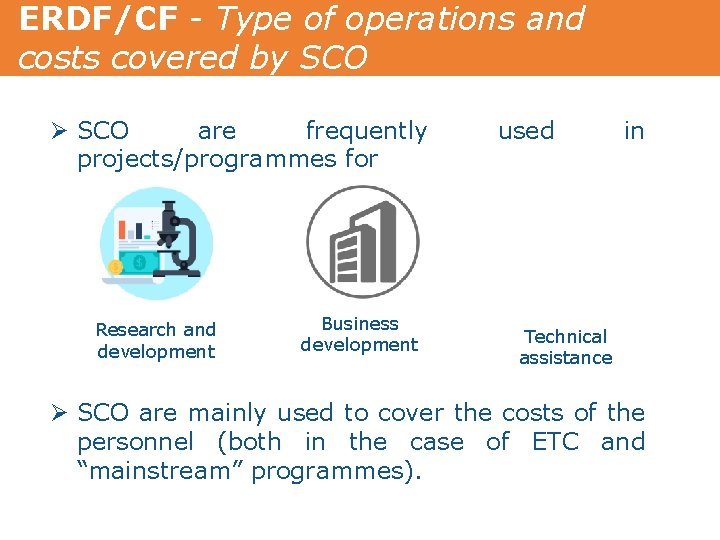
ERDF/CF - Type of operations and costs covered by SCO Ø SCO are frequently projects/programmes for Research and development Business development used in Technical assistance Ø SCO are mainly used to cover the costs of the personnel (both in the case of ETC and “mainstream” programmes).
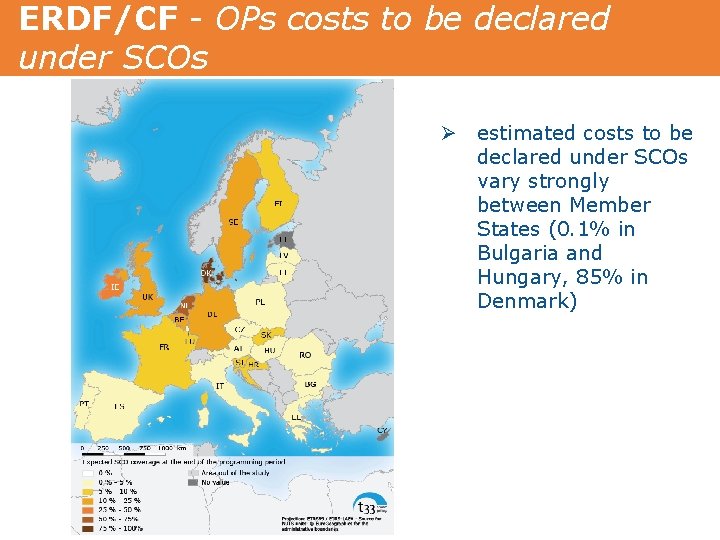
ERDF/CF - OPs costs to be declared under SCOs Ø estimated costs to be declared under SCOs vary strongly between Member States (0. 1% in Bulgaria and Hungary, 85% in Denmark)
Maps of SCO practices Types of beneficiaries § 40% of the Member States used SCO (at least one practice) to cover all types of beneficiaries § Types of beneficiaries more frequently covered • Public Institutions (national/local) • Universities/Higher education institutions • Research Centers • Private companies / SMEs • NGOs/civil society organisations 12
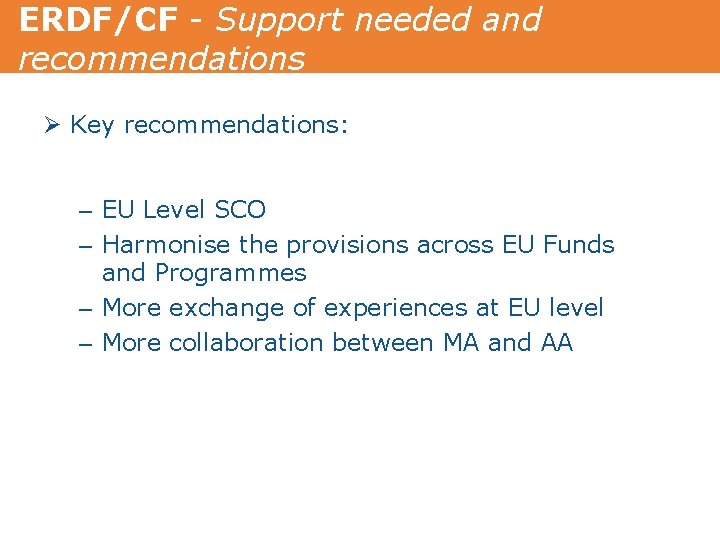
ERDF/CF - Support needed and recommendations Ø Key recommendations: – EU Level SCO – Harmonise the provisions across EU Funds and Programmes – More exchange of experiences at EU level – More collaboration between MA and AA
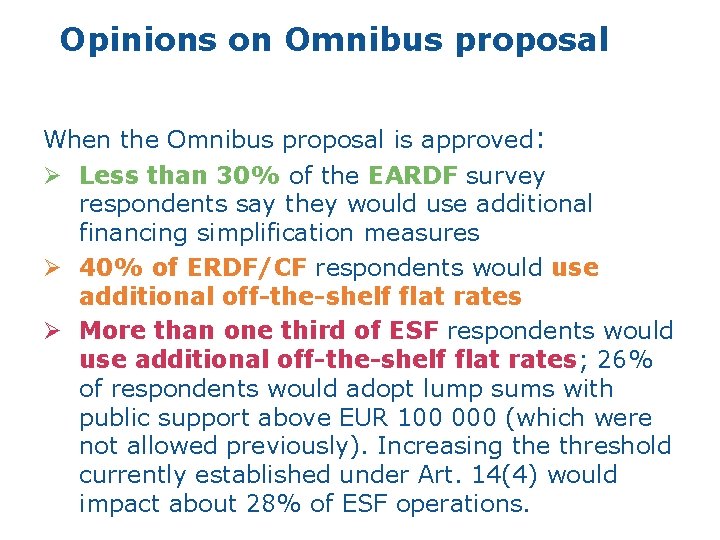
Opinions on Omnibus proposal When the Omnibus proposal is approved: Ø Less than 30% of the EARDF survey respondents say they would use additional financing simplification measures Ø 40% of ERDF/CF respondents would use additional off-the-shelf flat rates Ø More than one third of ESF respondents would use additional off-the-shelf flat rates; 26% of respondents would adopt lump sums with public support above EUR 100 000 (which were not allowed previously). Increasing the threshold currently established under Art. 14(4) would impact about 28% of ESF operations.
Thank you! Luca Santin Lucasantin. eu@gmail. com 15
- Slides: 15