
OVERVIEW OF PLANTS Ch 22 24 Plants are
- Slides: 13
OVERVIEW OF PLANTS Ch. 22 - 24
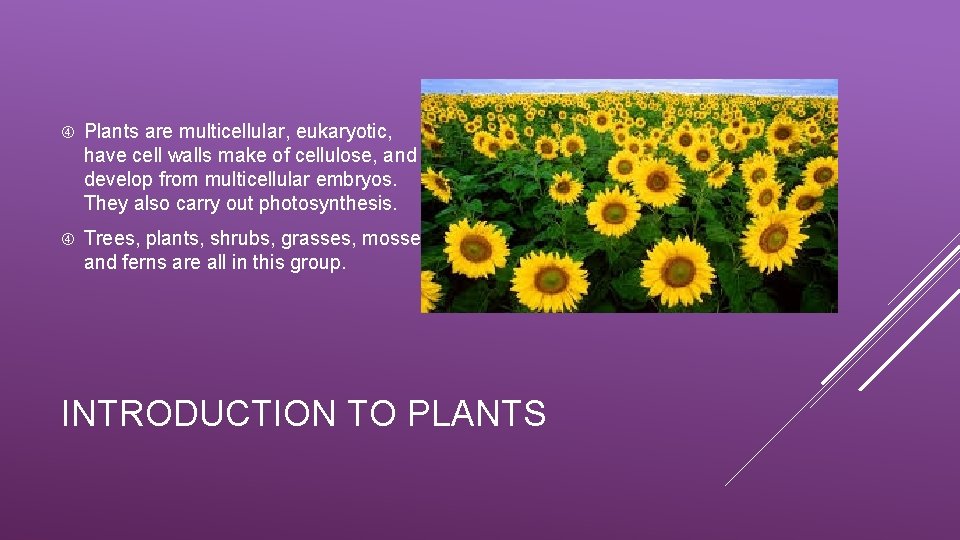
Plants are multicellular, eukaryotic, have cell walls make of cellulose, and develop from multicellular embryos. They also carry out photosynthesis. Trees, plants, shrubs, grasses, mosses, and ferns are all in this group. INTRODUCTION TO PLANTS
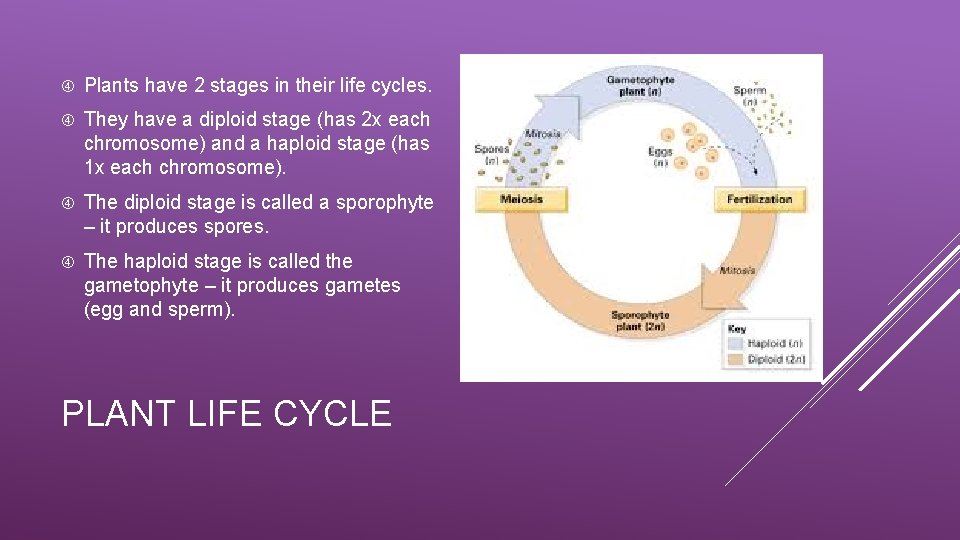
Plants have 2 stages in their life cycles. They have a diploid stage (has 2 x each chromosome) and a haploid stage (has 1 x each chromosome). The diploid stage is called a sporophyte – it produces spores. The haploid stage is called the gametophyte – it produces gametes (egg and sperm). PLANT LIFE CYCLE
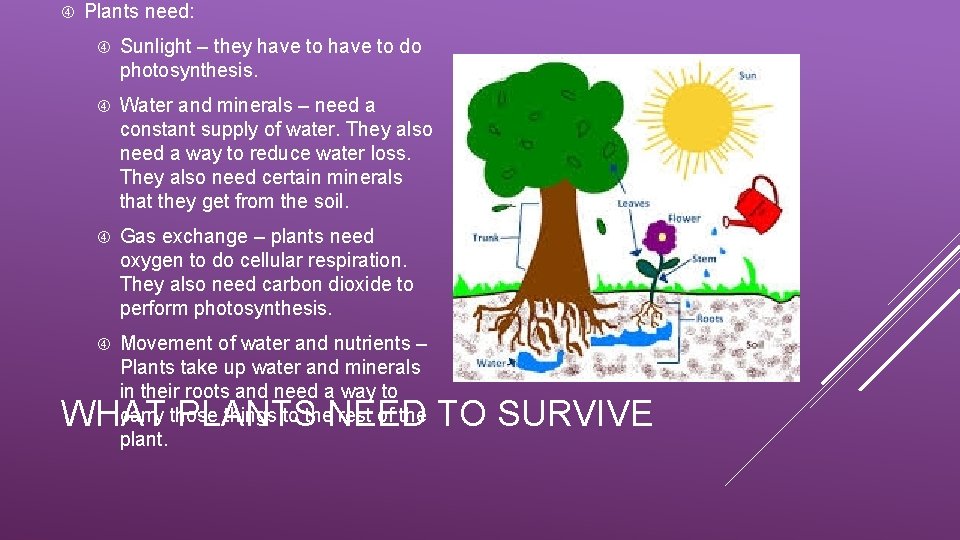
Plants need: Sunlight – they have to do photosynthesis. Water and minerals – need a constant supply of water. They also need a way to reduce water loss. They also need certain minerals that they get from the soil. Gas exchange – plants need oxygen to do cellular respiration. They also need carbon dioxide to perform photosynthesis. Movement of water and nutrients – Plants take up water and minerals in their roots and need a way to carry those things to the rest of the plant. WHAT PLANTS NEED TO SURVIVE
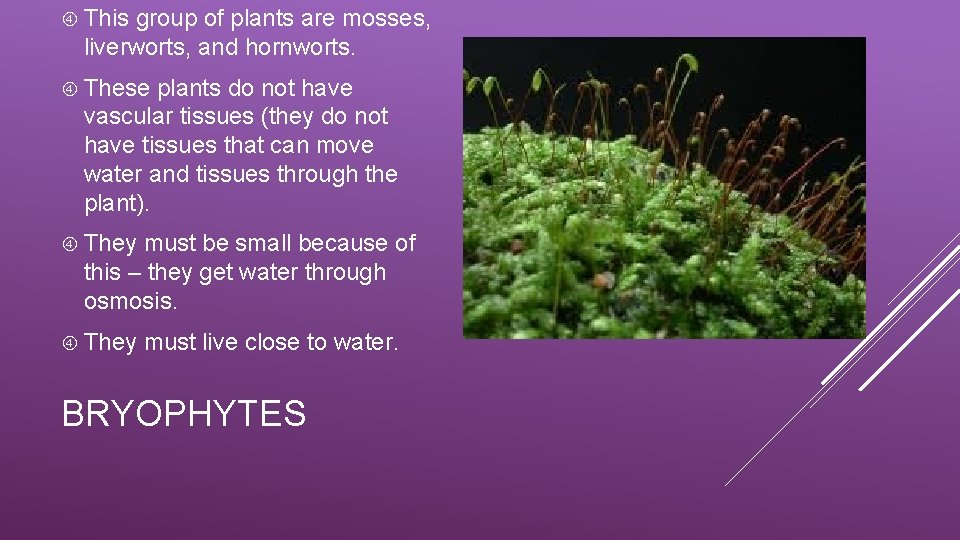
This group of plants are mosses, liverworts, and hornworts. These plants do not have vascular tissues (they do not have tissues that can move water and tissues through the plant). They must be small because of this – they get water through osmosis. They must live close to water. BRYOPHYTES
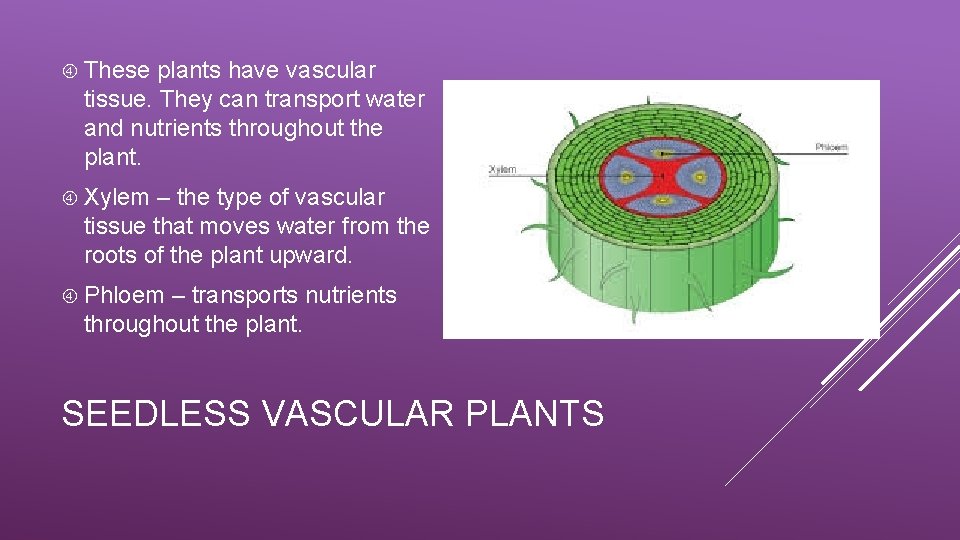
These plants have vascular tissue. They can transport water and nutrients throughout the plant. Xylem – the type of vascular tissue that moves water from the roots of the plant upward. Phloem – transports nutrients throughout the plant. SEEDLESS VASCULAR PLANTS
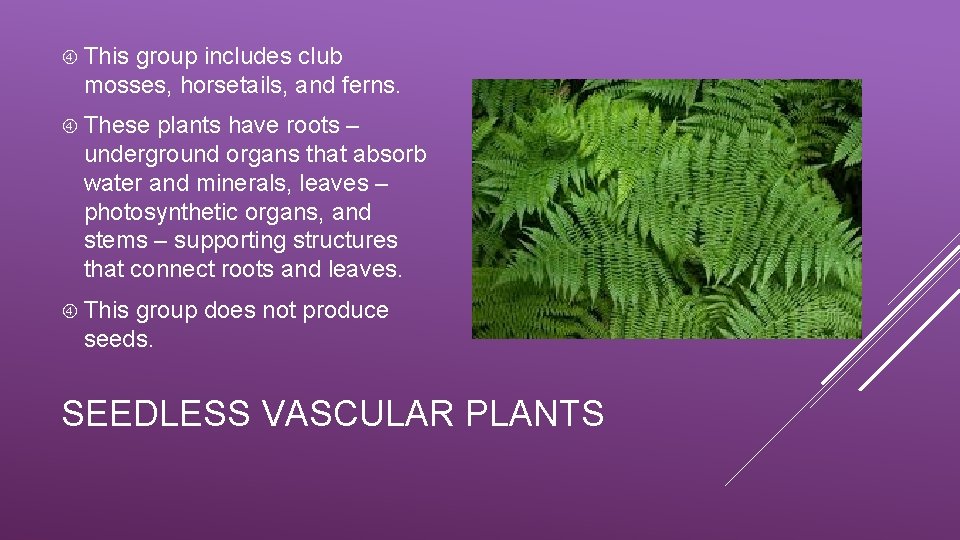
This group includes club mosses, horsetails, and ferns. These plants have roots – underground organs that absorb water and minerals, leaves – photosynthetic organs, and stems – supporting structures that connect roots and leaves. This group does not produce seeds. SEEDLESS VASCULAR PLANTS
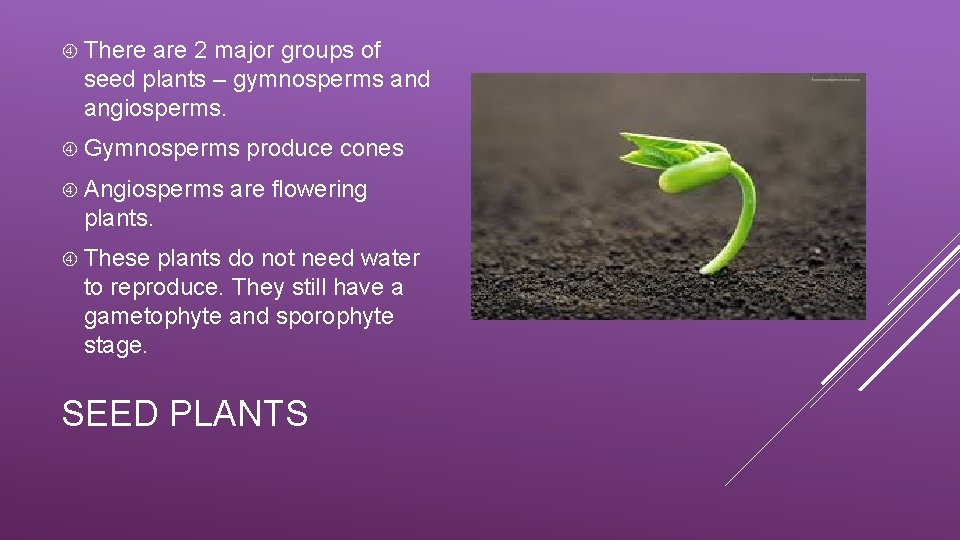
There are 2 major groups of seed plants – gymnosperms and angiosperms. Gymnosperms Angiosperms produce cones are flowering plants. These plants do not need water to reproduce. They still have a gametophyte and sporophyte stage. SEED PLANTS
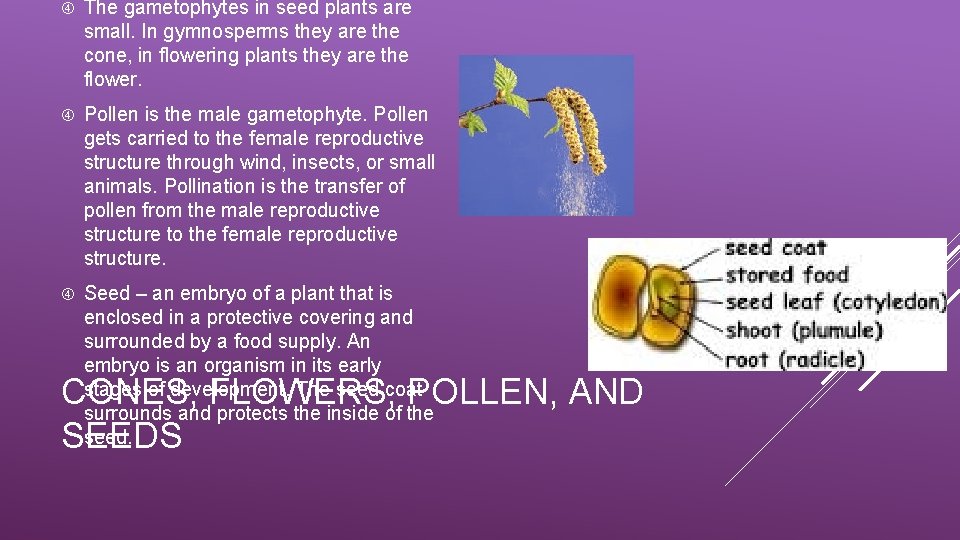
The gametophytes in seed plants are small. In gymnosperms they are the cone, in flowering plants they are the flower. Pollen is the male gametophyte. Pollen gets carried to the female reproductive structure through wind, insects, or small animals. Pollination is the transfer of pollen from the male reproductive structure to the female reproductive structure. Seed – an embryo of a plant that is enclosed in a protective covering and surrounded by a food supply. An embryo is an organism in its early stages of development. The seed coat surrounds and protects the inside of the seed. CONES, FLOWERS, POLLEN, AND SEEDS
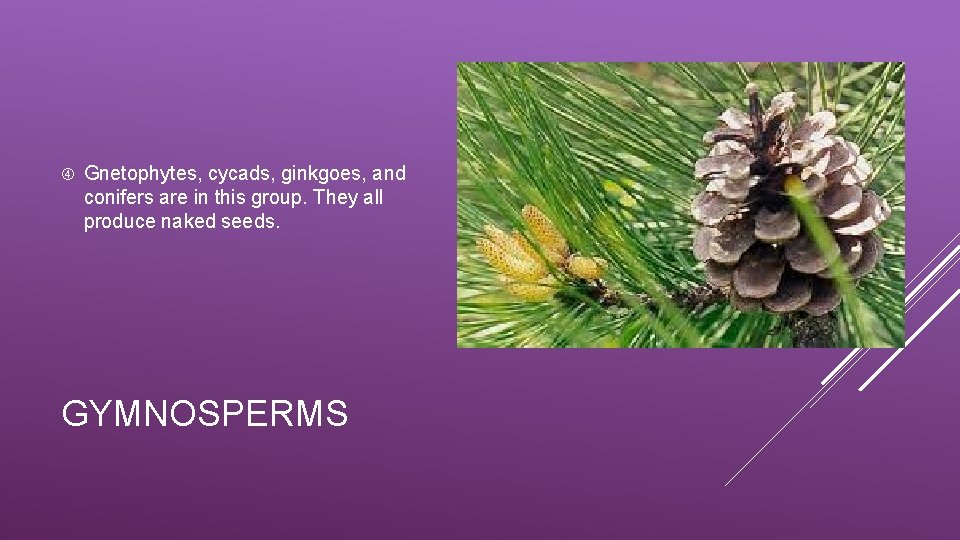
Gnetophytes, cycads, ginkgoes, and conifers are in this group. They all produce naked seeds. GYMNOSPERMS
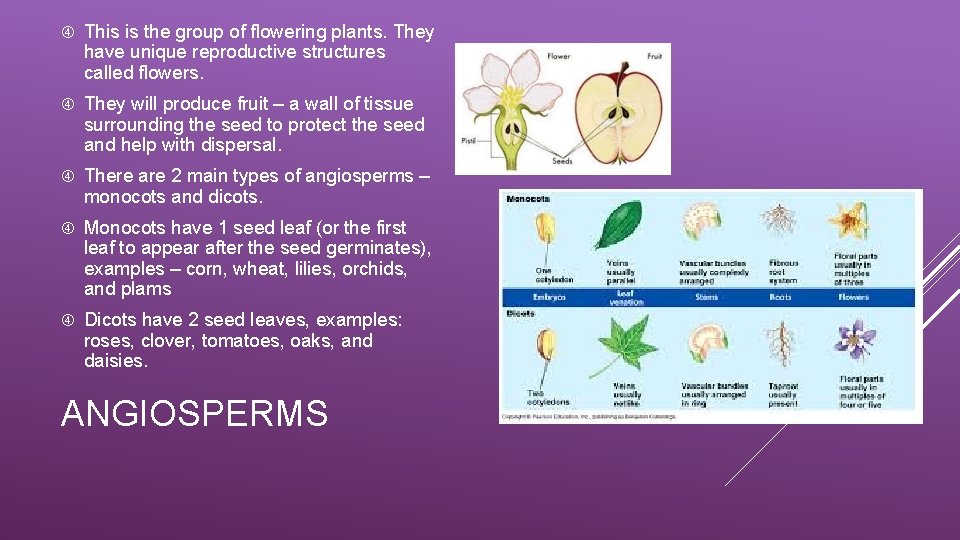
This is the group of flowering plants. They have unique reproductive structures called flowers. They will produce fruit – a wall of tissue surrounding the seed to protect the seed and help with dispersal. There are 2 main types of angiosperms – monocots and dicots. Monocots have 1 seed leaf (or the first leaf to appear after the seed germinates), examples – corn, wheat, lilies, orchids, and plams Dicots have 2 seed leaves, examples: roses, clover, tomatoes, oaks, and daisies. ANGIOSPERMS
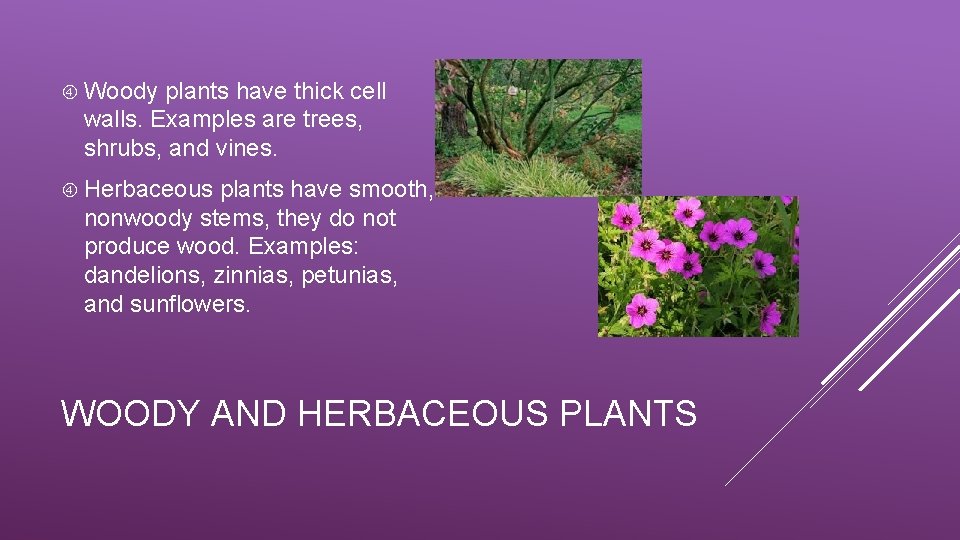
Woody plants have thick cell walls. Examples are trees, shrubs, and vines. Herbaceous plants have smooth, nonwoody stems, they do not produce wood. Examples: dandelions, zinnias, petunias, and sunflowers. WOODY AND HERBACEOUS PLANTS
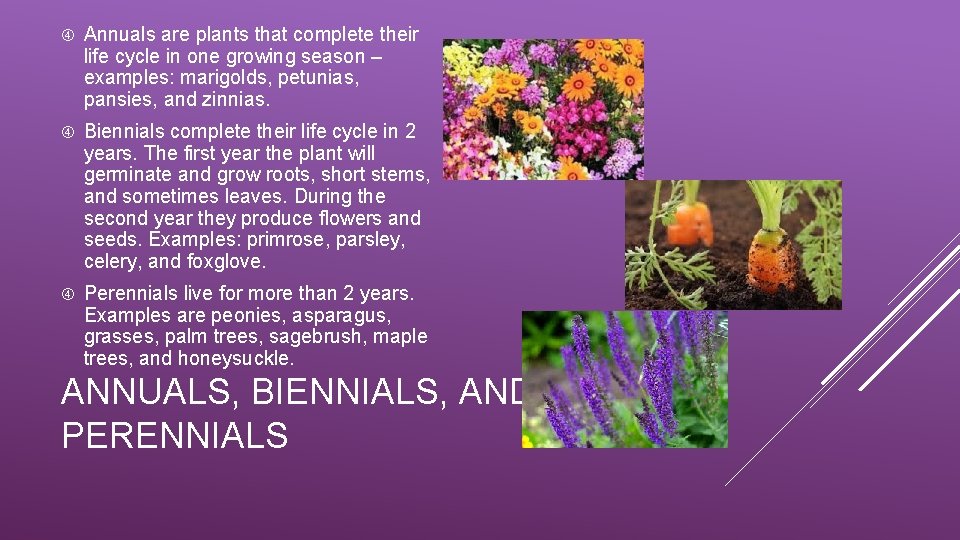
Annuals are plants that complete their life cycle in one growing season – examples: marigolds, petunias, pansies, and zinnias. Biennials complete their life cycle in 2 years. The first year the plant will germinate and grow roots, short stems, and sometimes leaves. During the second year they produce flowers and seeds. Examples: primrose, parsley, celery, and foxglove. Perennials live for more than 2 years. Examples are peonies, asparagus, grasses, palm trees, sagebrush, maple trees, and honeysuckle. ANNUALS, BIENNIALS, AND PERENNIALS