
OVERVIEW OF PLANTS 2 Plant Organs and Tissues

- Slides: 13
OVERVIEW OF PLANTS 2
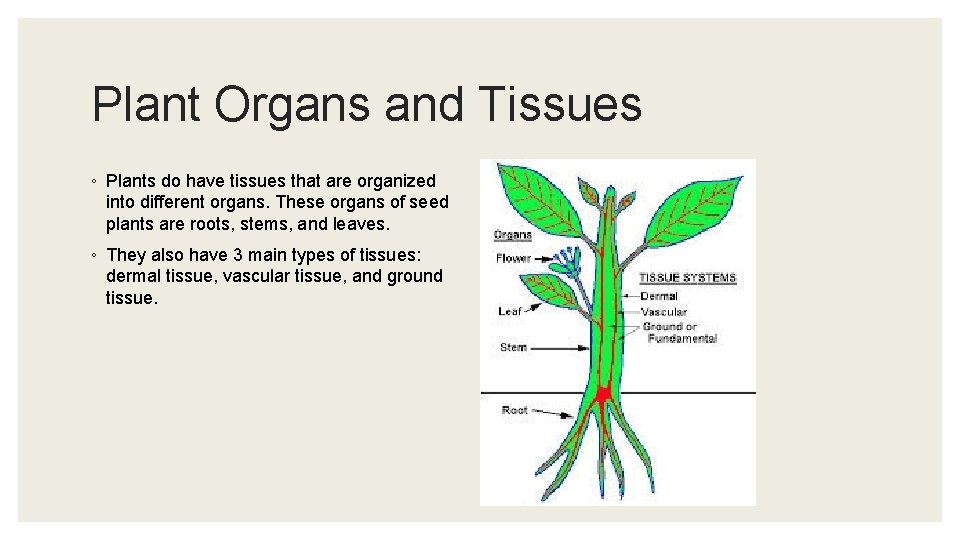
Plant Organs and Tissues ◦ Plants do have tissues that are organized into different organs. These organs of seed plants are roots, stems, and leaves. ◦ They also have 3 main types of tissues: dermal tissue, vascular tissue, and ground tissue.
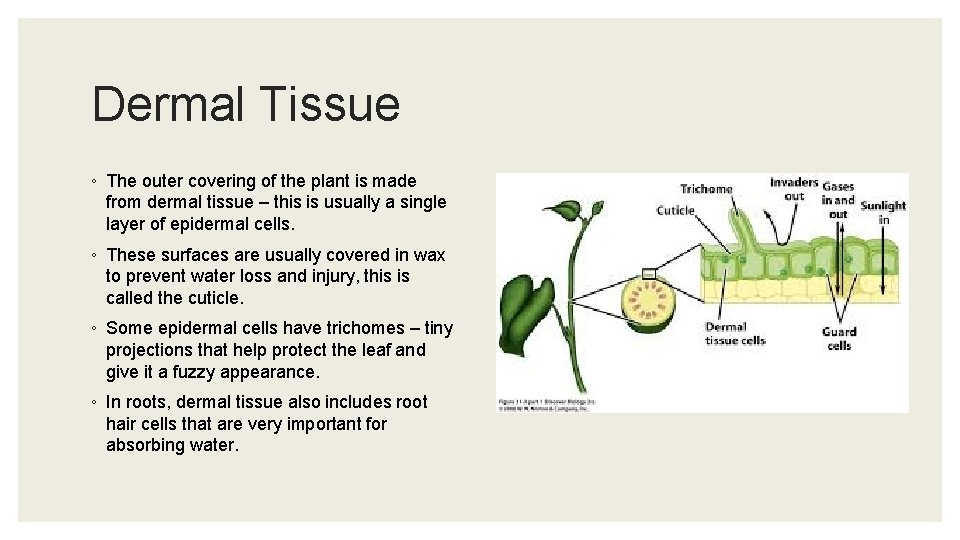
Dermal Tissue ◦ The outer covering of the plant is made from dermal tissue – this is usually a single layer of epidermal cells. ◦ These surfaces are usually covered in wax to prevent water loss and injury, this is called the cuticle. ◦ Some epidermal cells have trichomes – tiny projections that help protect the leaf and give it a fuzzy appearance. ◦ In roots, dermal tissue also includes root hair cells that are very important for absorbing water.
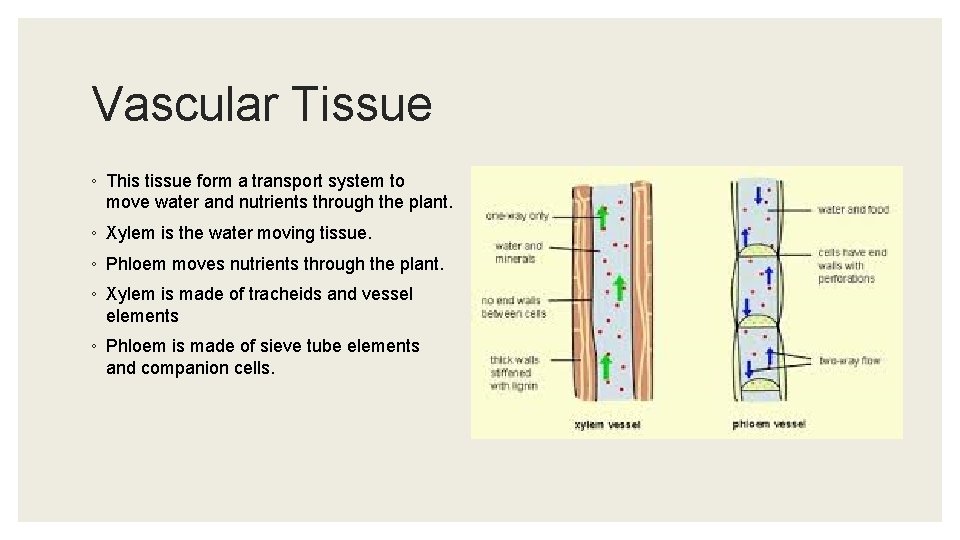
Vascular Tissue ◦ This tissue form a transport system to move water and nutrients through the plant. ◦ Xylem is the water moving tissue. ◦ Phloem moves nutrients through the plant. ◦ Xylem is made of tracheids and vessel elements ◦ Phloem is made of sieve tube elements and companion cells.
Ground Tissue ◦ This is made of cells between dermal and vascular tissues. Ground tissue is made of mostly parenchyma cells – these cells have a thin cell wall and large central vacuole. ◦ Some ground tissue is made of collenchyma cells that have a thick cells wall to support the plant and sclerenchyma cells that make ground tissue tough and strong.
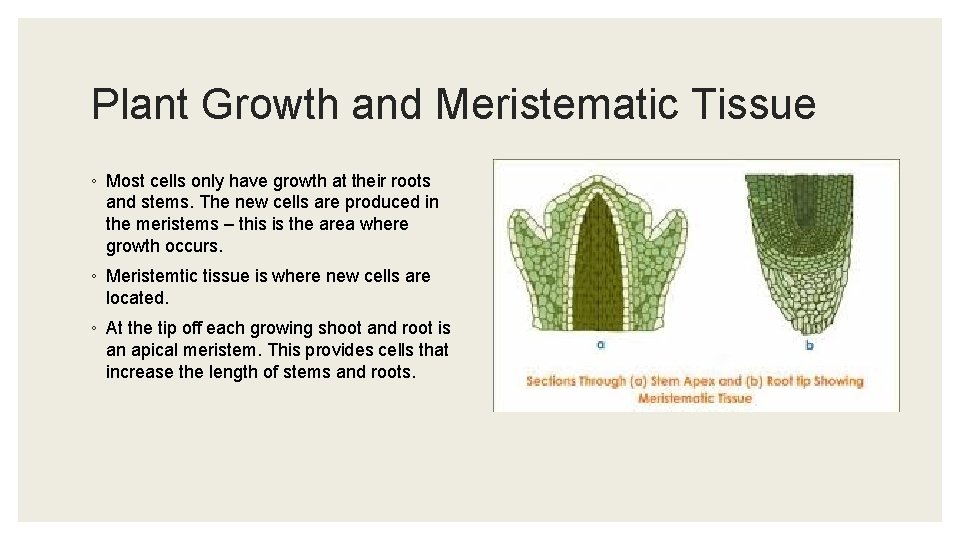
Plant Growth and Meristematic Tissue ◦ Most cells only have growth at their roots and stems. The new cells are produced in the meristems – this is the area where growth occurs. ◦ Meristemtic tissue is where new cells are located. ◦ At the tip off each growing shoot and root is an apical meristem. This provides cells that increase the length of stems and roots.
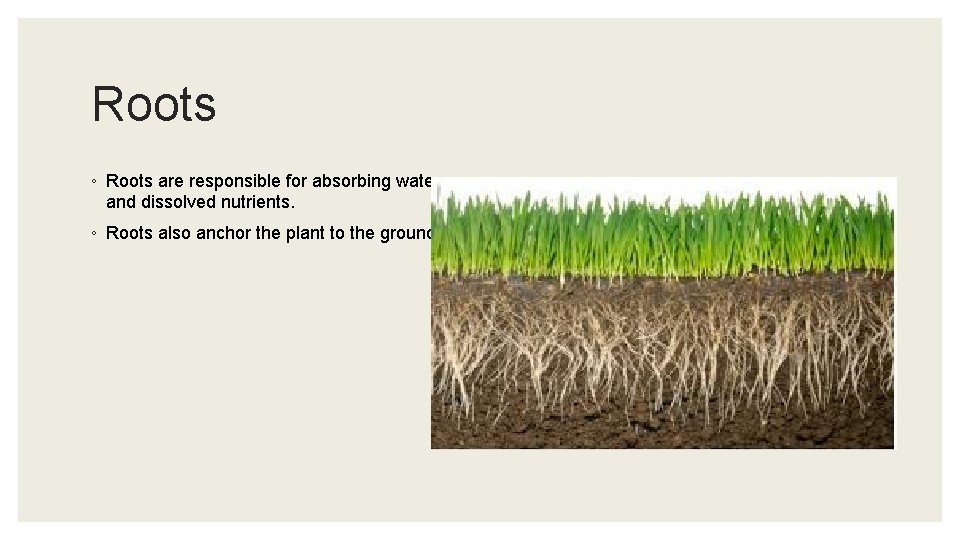
Roots ◦ Roots are responsible for absorbing water and dissolved nutrients. ◦ Roots also anchor the plant to the ground.
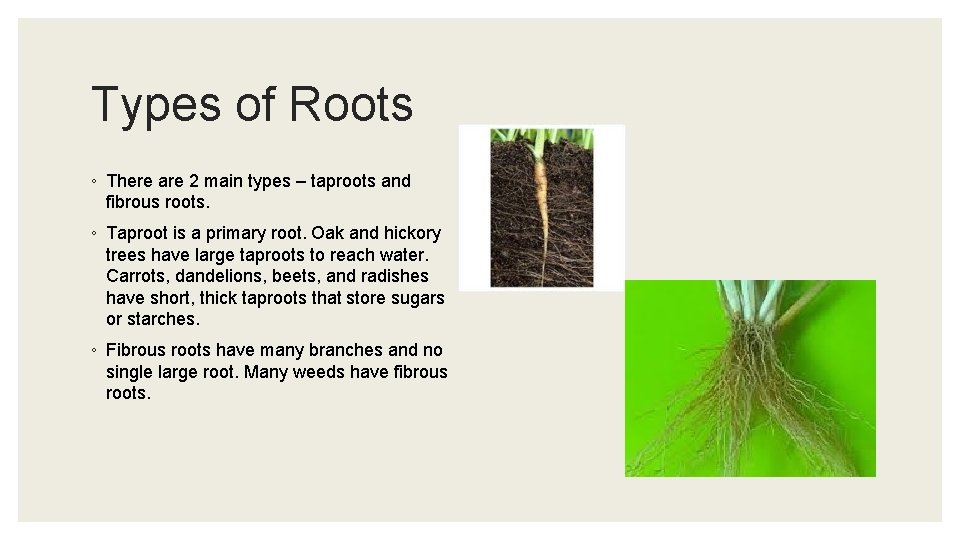
Types of Roots ◦ There are 2 main types – taproots and fibrous roots. ◦ Taproot is a primary root. Oak and hickory trees have large taproots to reach water. Carrots, dandelions, beets, and radishes have short, thick taproots that store sugars or starches. ◦ Fibrous roots have many branches and no single large root. Many weeds have fibrous roots.
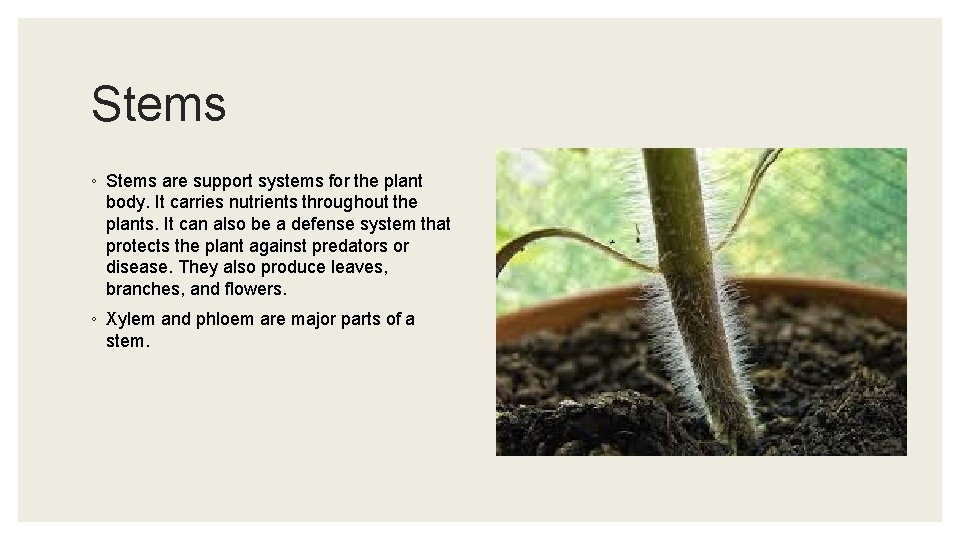
Stems ◦ Stems are support systems for the plant body. It carries nutrients throughout the plants. It can also be a defense system that protects the plant against predators or disease. They also produce leaves, branches, and flowers. ◦ Xylem and phloem are major parts of a stem.
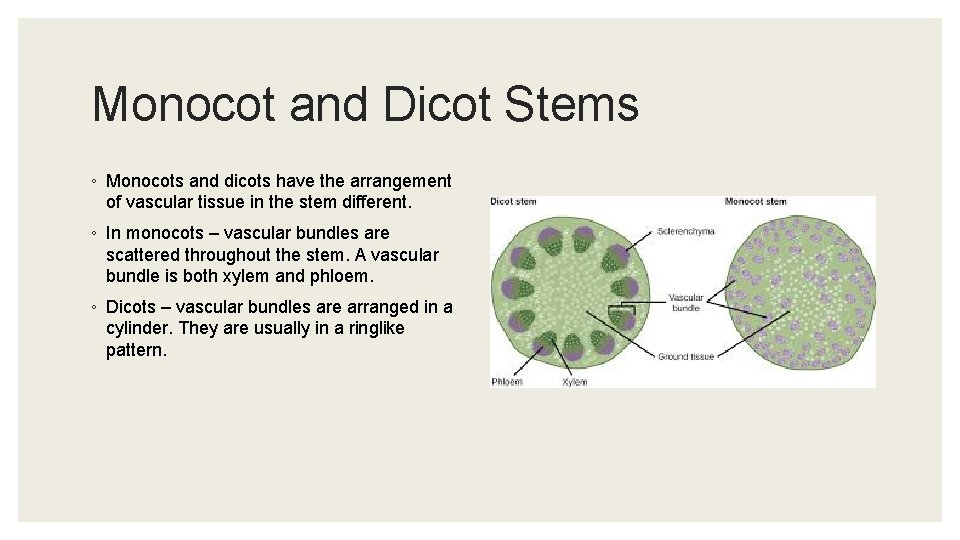
Monocot and Dicot Stems ◦ Monocots and dicots have the arrangement of vascular tissue in the stem different. ◦ In monocots – vascular bundles are scattered throughout the stem. A vascular bundle is both xylem and phloem. ◦ Dicots – vascular bundles are arranged in a cylinder. They are usually in a ringlike pattern.
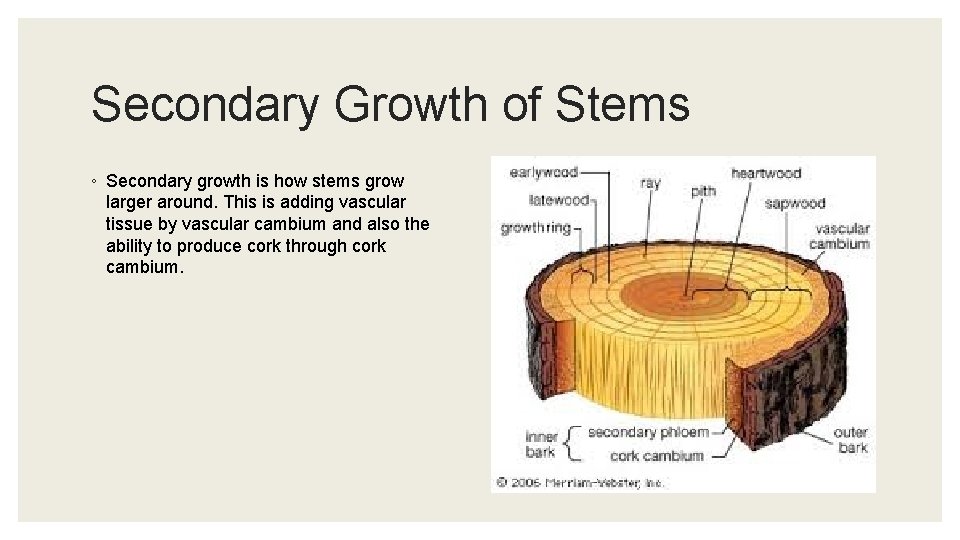
Secondary Growth of Stems ◦ Secondary growth is how stems grow larger around. This is adding vascular tissue by vascular cambium and also the ability to produce cork through cork cambium.
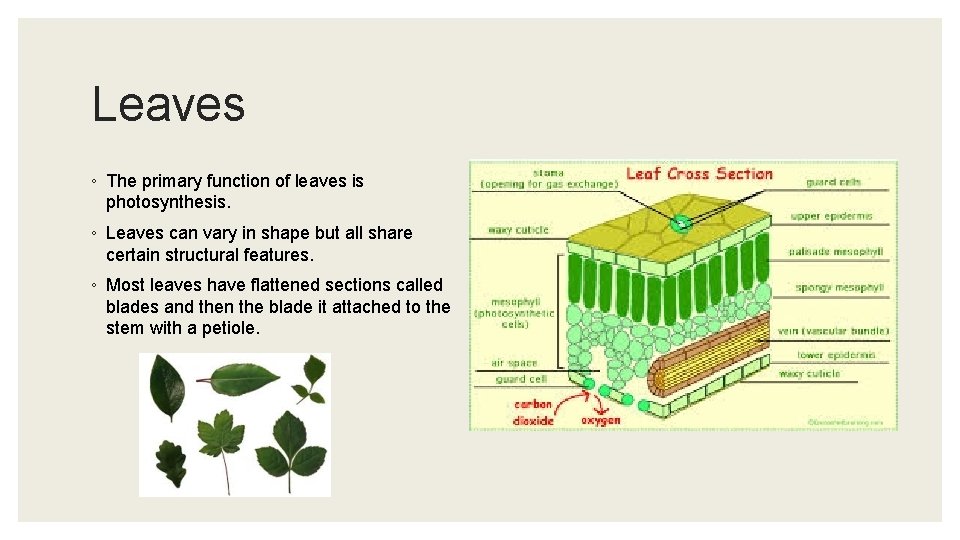
Leaves ◦ The primary function of leaves is photosynthesis. ◦ Leaves can vary in shape but all share certain structural features. ◦ Most leaves have flattened sections called blades and then the blade it attached to the stem with a petiole.
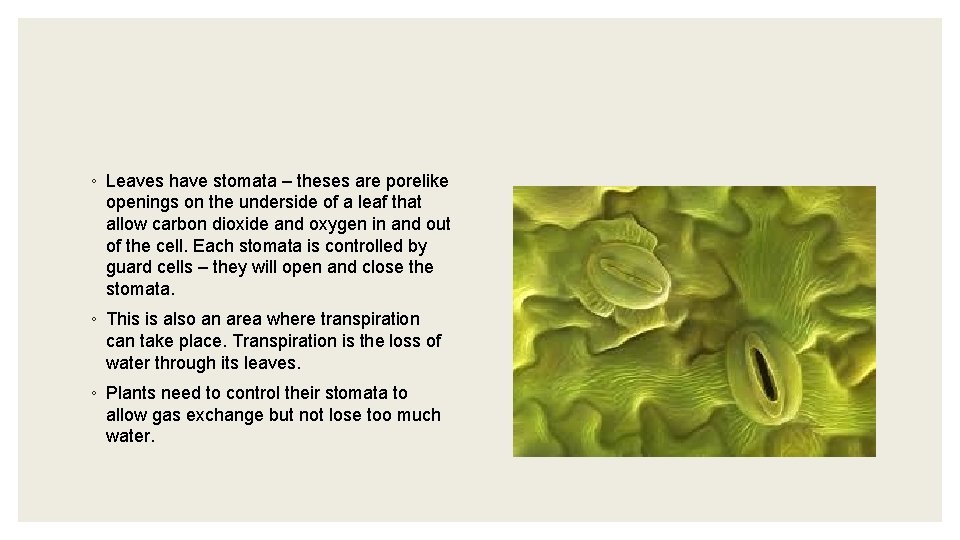
◦ Leaves have stomata – theses are porelike openings on the underside of a leaf that allow carbon dioxide and oxygen in and out of the cell. Each stomata is controlled by guard cells – they will open and close the stomata. ◦ This is also an area where transpiration can take place. Transpiration is the loss of water through its leaves. ◦ Plants need to control their stomata to allow gas exchange but not lose too much water.