
Overview of Photosynthesis Notes 9 Photosynthesis Process where
- Slides: 16
Overview of Photosynthesis Notes #9
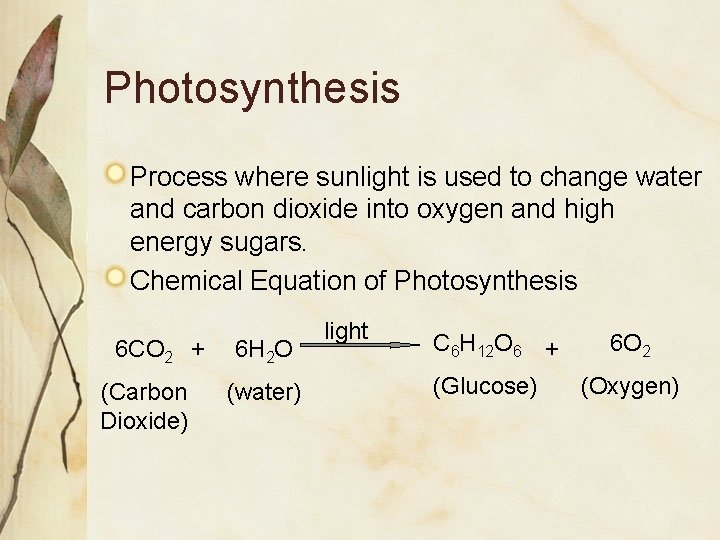
Photosynthesis Process where sunlight is used to change water and carbon dioxide into oxygen and high energy sugars. Chemical Equation of Photosynthesis 6 CO 2 + (Carbon Dioxide) 6 H 2 O (water) light C 6 H 12 O 6 + (Glucose) 6 O 2 (Oxygen)
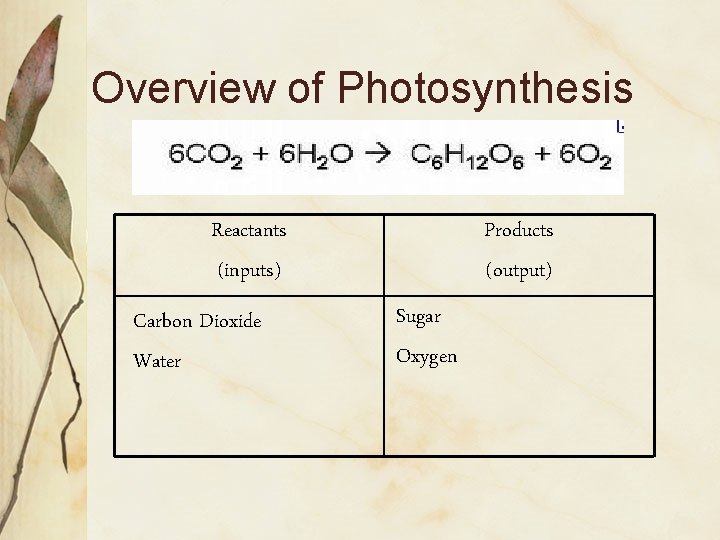
Overview of Photosynthesis Reactants (inputs) Carbon Dioxide Water Products (output) Sugar Oxygen
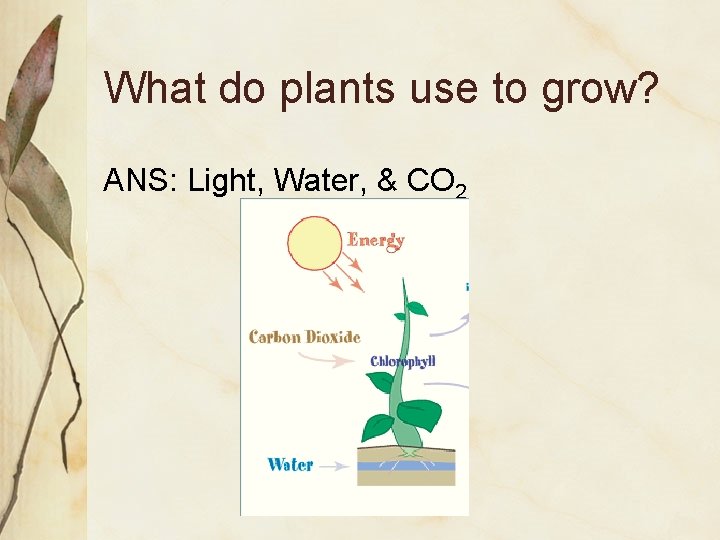
What do plants use to grow? ANS: Light, Water, & CO 2
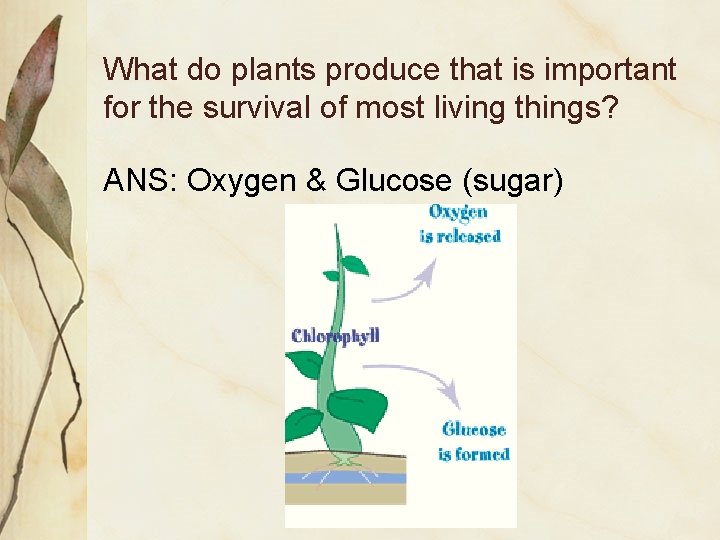
What do plants produce that is important for the survival of most living things? ANS: Oxygen & Glucose (sugar)
Where does photosynthesis take place? ANS: Chloroplasts -organelle found only in photosynthetic organisms -converts sunlight into sugars
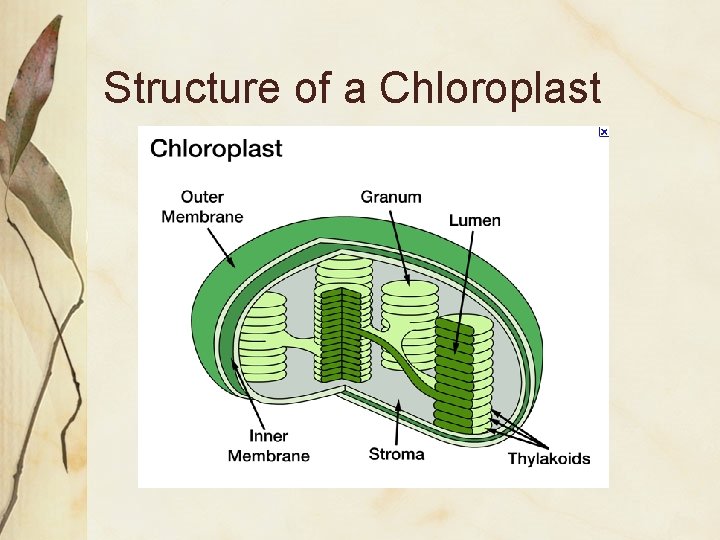
Structure of a Chloroplast
Components found within a chloroplast Thylakoid: sac-like structure that has special pigments (chlorophyll) to absorb sunlight Grana/granum: stack of Thylakoids Stroma: Gel-filled area inside of chloroplast
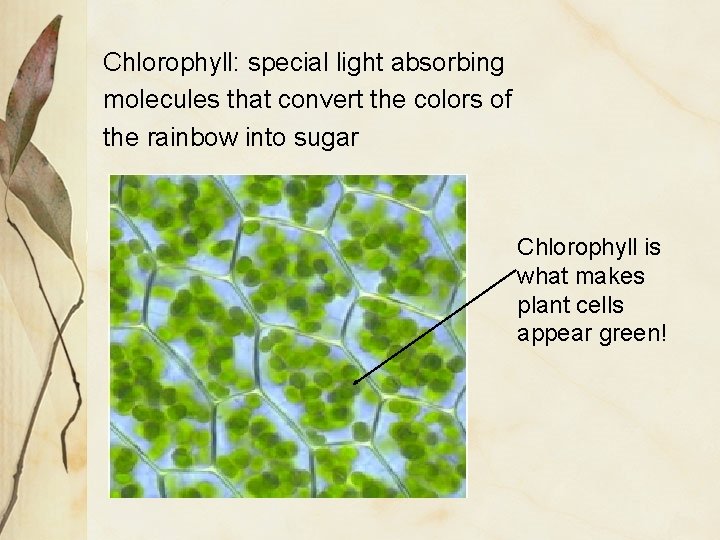
Chlorophyll: special light absorbing molecules that convert the colors of the rainbow into sugar Chlorophyll is what makes plant cells appear green!
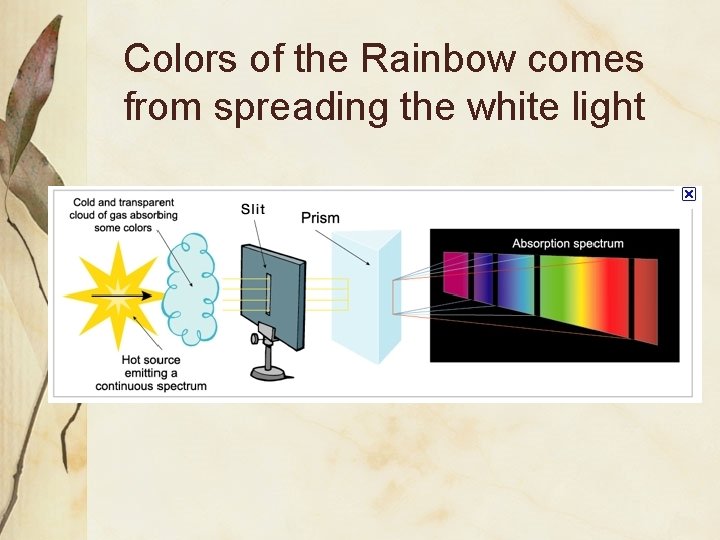
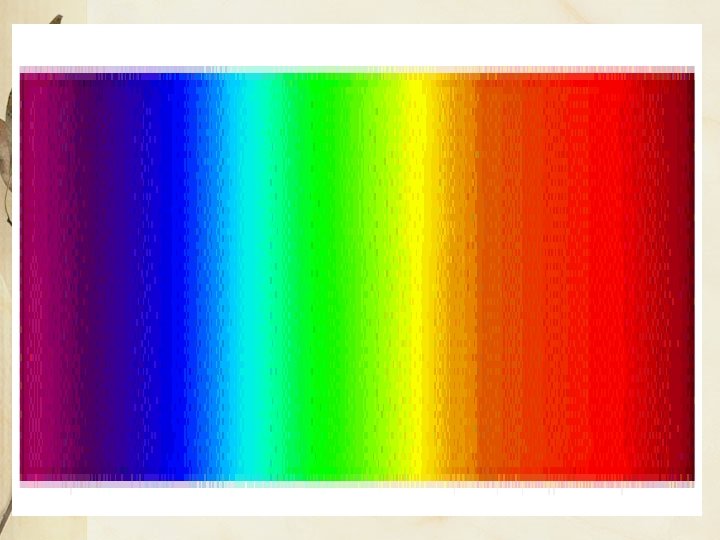
Colors of the Rainbow comes from spreading the white light
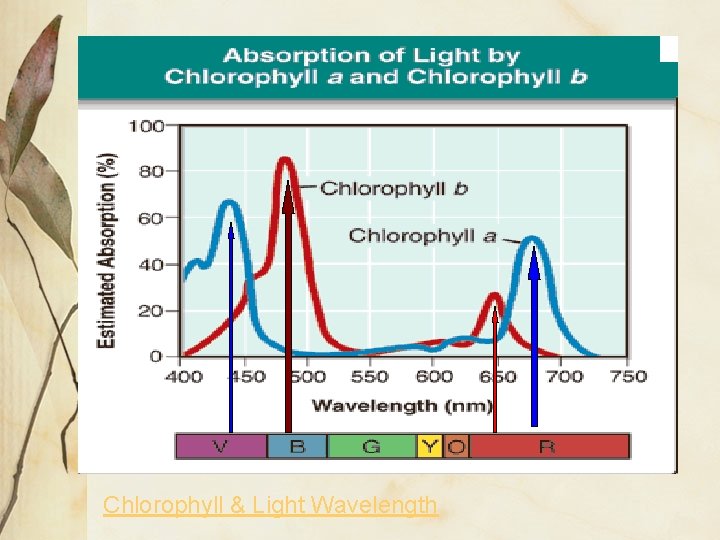
Chlorophyll & Light Wavelength
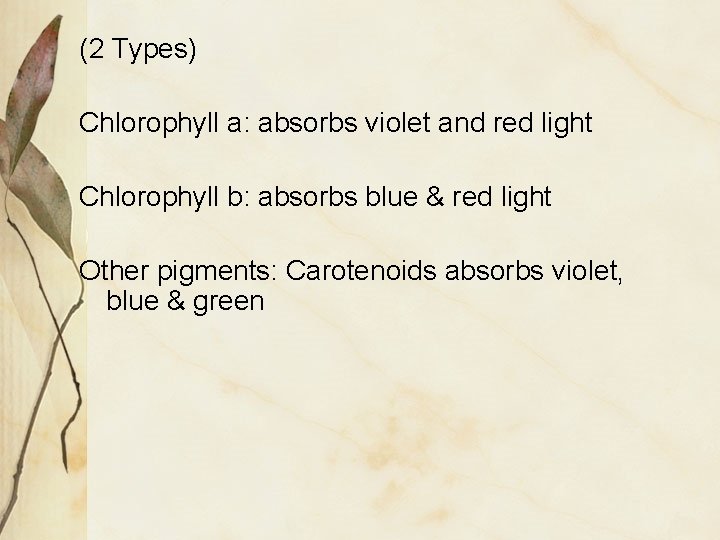
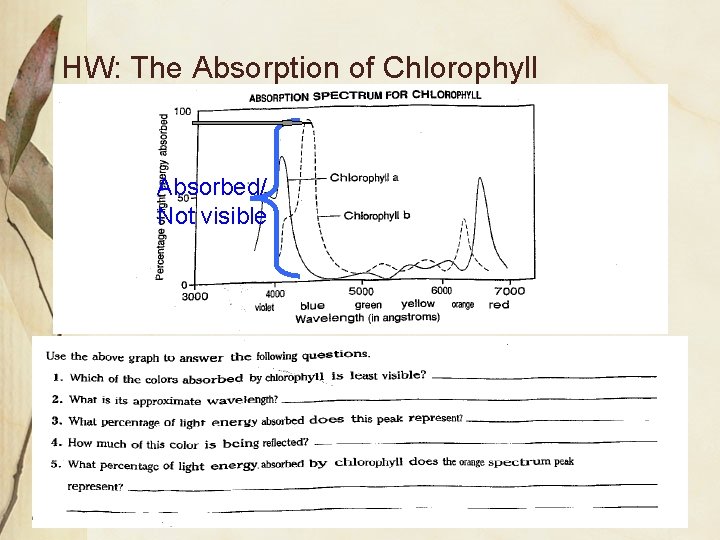
(2 Types) Chlorophyll a: absorbs violet and red light Chlorophyll b: absorbs blue & red light Other pigments: Carotenoids absorbs violet, blue & green
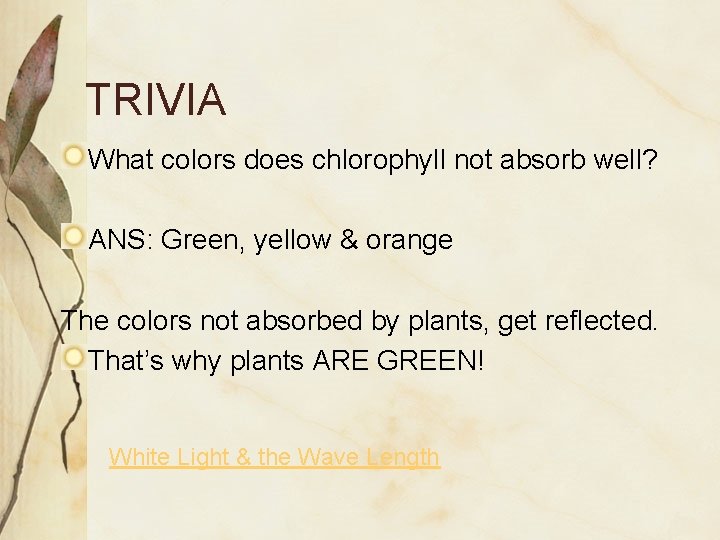
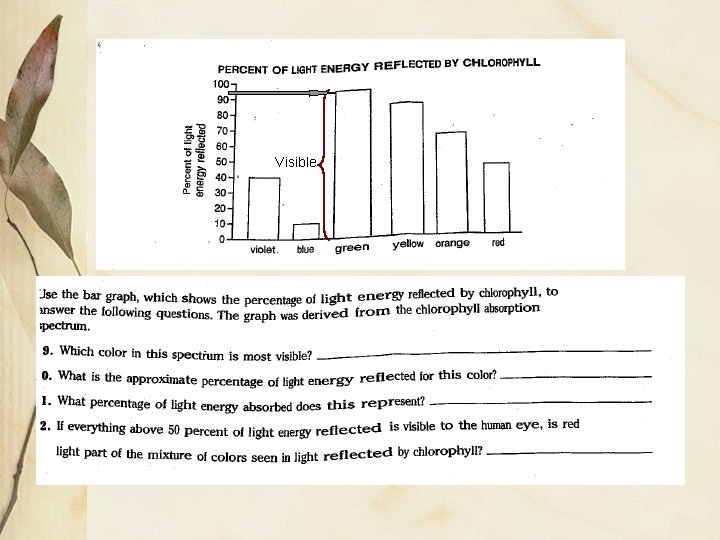
TRIVIA What colors does chlorophyll not absorb well? ANS: Green, yellow & orange The colors not absorbed by plants, get reflected. That’s why plants ARE GREEN! White Light & the Wave Length
HW: The Absorption of Chlorophyll Absorbed/ Not visible
Visible