
Overview of Period 1 Test structure Period 1
- Slides: 28
Overview of Period 1: Test structure: ● Period 1 is roughly 5% of the exam: ● You will NOT see an essay exclusively on this period ● You could see a topic that incorporates this period as part of a broader idea For example - Experiences of European countries in America Why was 1491 - 1607 chosen for the dates? ● 1491 = 1 year prior to European contact ● 1607 = first permanent English settlement - Jamestown ● Much of the focus of this period is on Native life PRIOR to contact, and
Period 1: 1491 - 1607 On a North American continent controlled by American Indians, contact among the peoples of Europe, the Americas, and West Africa created a new world.
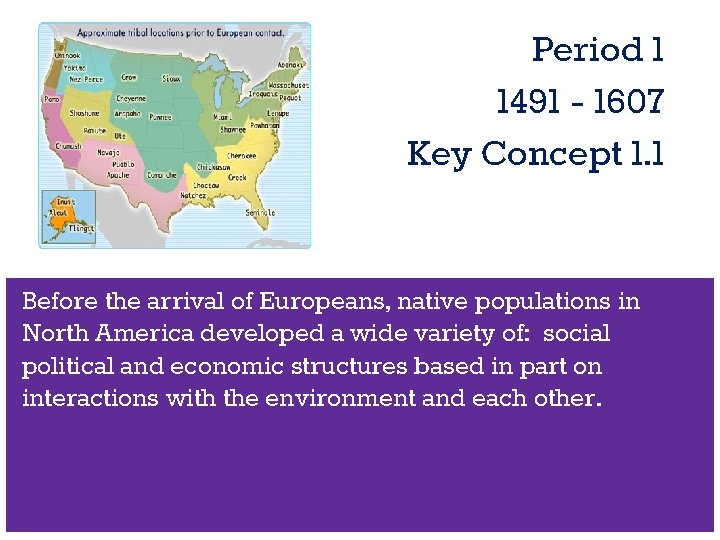
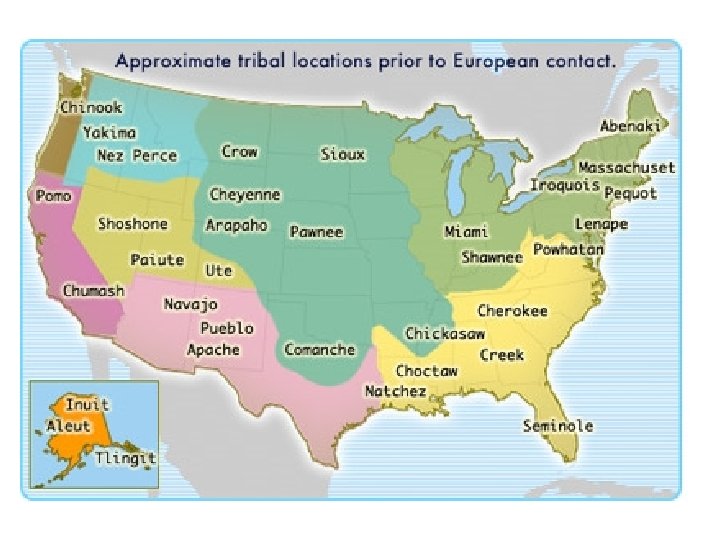
Period 1 1491 - 1607 Key Concept 1. 1 Before the arrival of Europeans, native populations in North America developed a wide variety of: social political and economic structures based in part on interactions with the environment and each other.
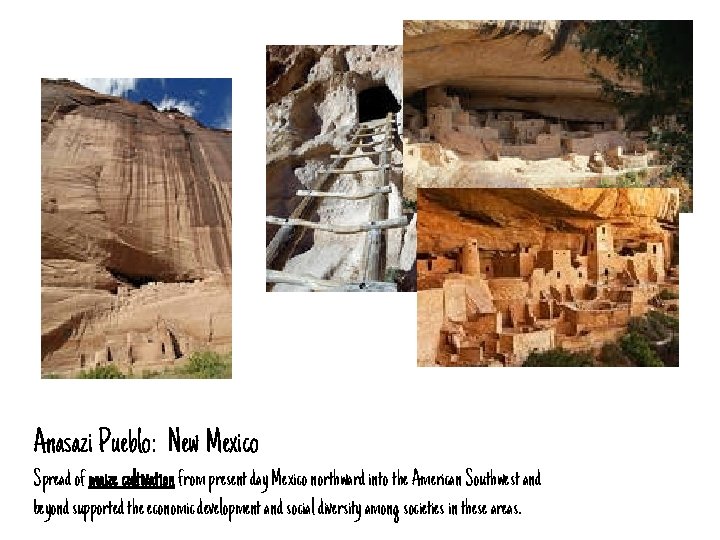
Anasazi Pueblo: New Mexico Spread of maize cultivation from present day Mexico northward into the American Southwest and beyond supported the economic development and social diversity among societies in these areas.
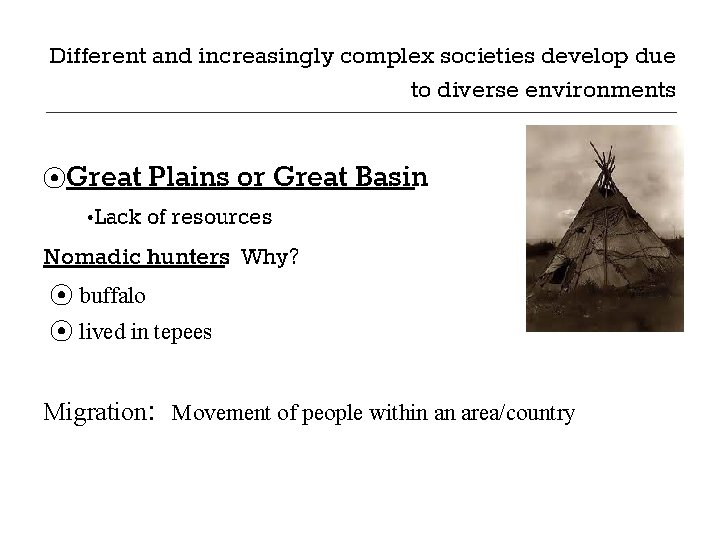
Different and increasingly complex societies develop due to diverse environments ⦿Great Plains or Great Basin • Lack of resources Nomadic hunters: Why? ⦿ buffalo ⦿ lived in tepees Migration: Movement of people within an area/country
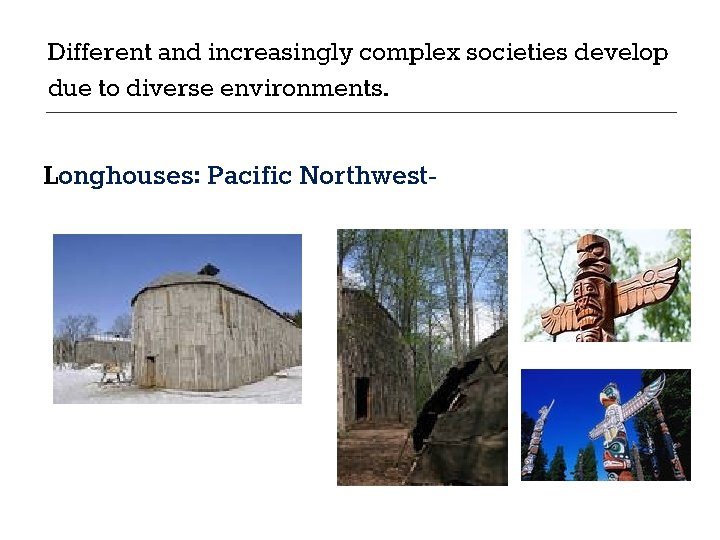
Different and increasingly complex societies develop due to diverse environments. Longhouses: Pacific Northwest-
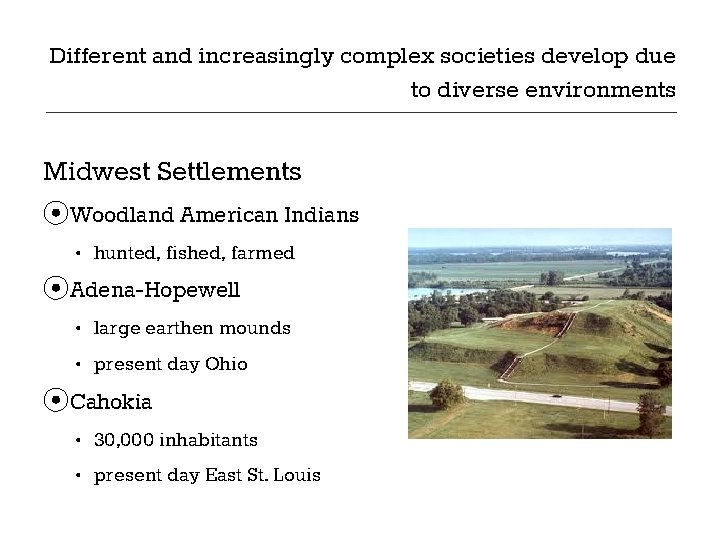
Different and increasingly complex societies develop due to diverse environments Midwest Settlements ⦿Woodland American Indians • hunted, fished, farmed ⦿Adena-Hopewell • large earthen mounds • present day Ohio ⦿Cahokia • 30, 000 inhabitants • present day East St. Louis
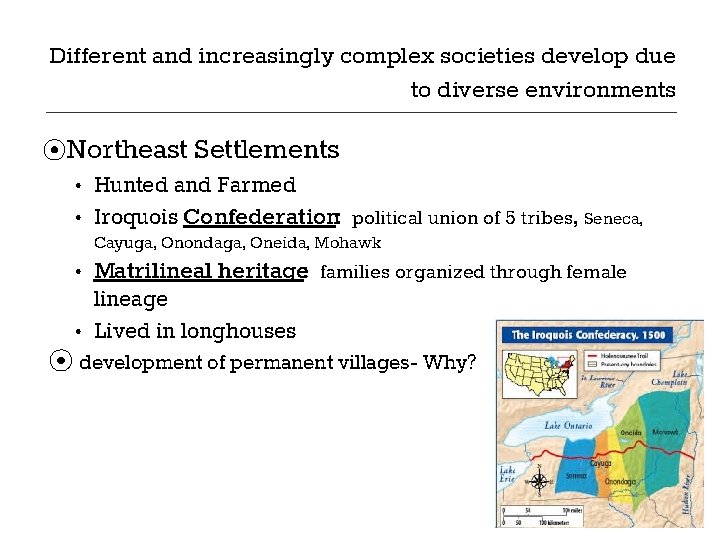
Different and increasingly complex societies develop due to diverse environments ⦿Northeast Settlements • Hunted and Farmed • Iroquois Confederation: political union of 5 tribes, Seneca, Cayuga, Onondaga, Oneida, Mohawk • Matrilineal heritage: families organized through female lineage • Lived in longhouses ⦿ development of permanent villages- Why?
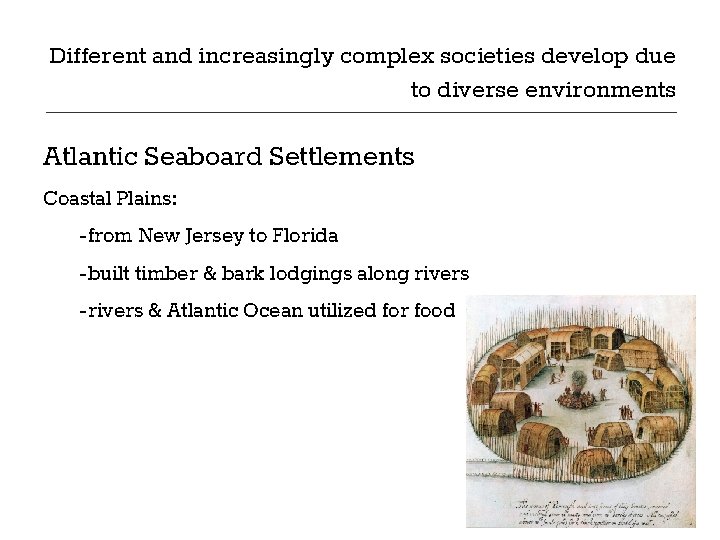
Different and increasingly complex societies develop due to diverse environments Atlantic Seaboard Settlements Coastal Plains: -from New Jersey to Florida -built timber & bark lodgings along rivers -rivers & Atlantic Ocean utilized for food
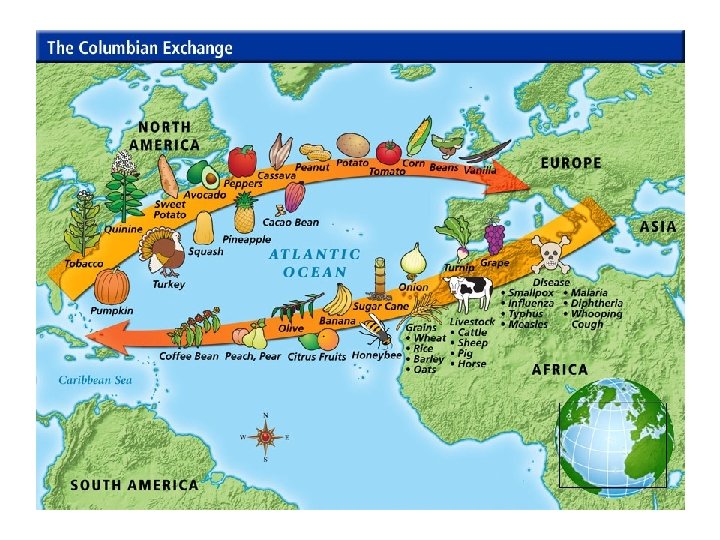
Period 1 1491 – 1607 Key Concept 1. 2 E European overseas expansion resulted in the: o. Columbian Exchange oa series of interactions and adaptations among societies across the Atlantic
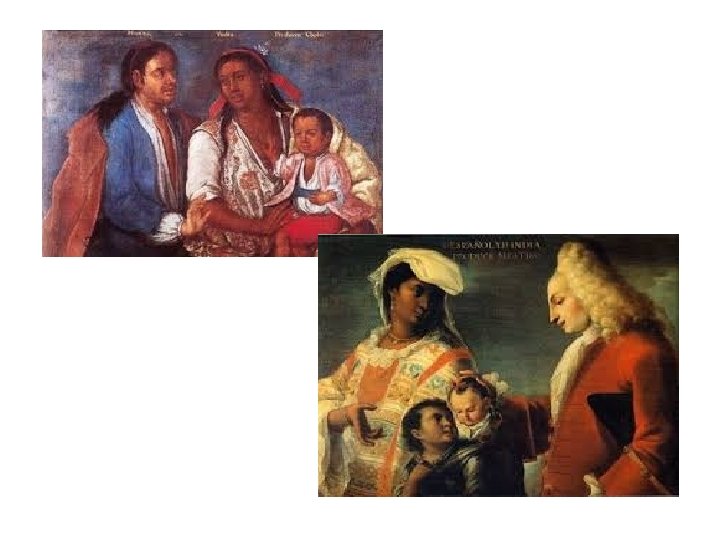
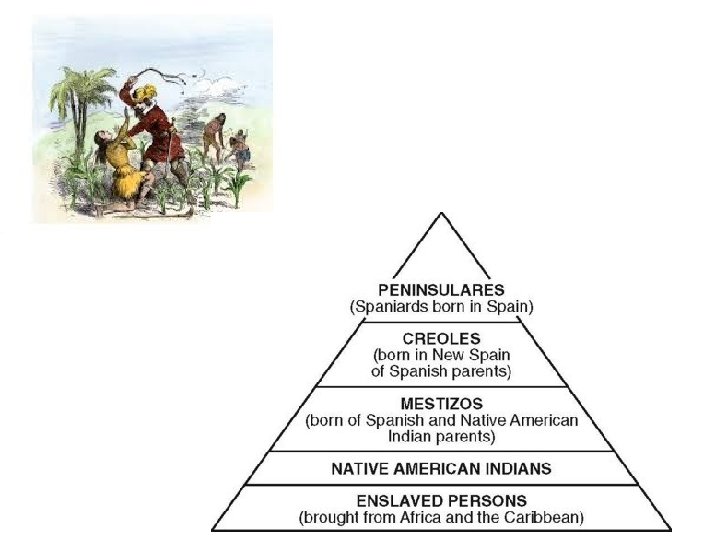
European arrival triggered extensive demographic and social change ⦿Widespread deadly epidemics • Smallpox, measles, influenza ⦿Racially mixed populations • Mestizo: (in Latin America) a man of mixed race, especially the offspring of a Spaniard an American Indian. • Mulatto: a person of mixed white and black ancestry, especially a person with one white and one black parent. ⦿Caste system: • based upon intermixture of Spanish settlers, Africans, and indigenous Native Americans
European arrival triggered extensive demographic and social change ⦿Spanish/Portuguese traders reached West Africa • trade for resources, slaves • Prince Henry the Navigator- Led Portuguese exploration of African Coast • Begin new age of racism ⦿New crops, livestock introduced to New World • Columbian Exchange • sugar cane, bluegrasses, pigs, horses, cows • the wheel, iron implements, guns
Columbian Exchange
European arrival triggered extensive demographic and social change Encomienda System: • Slave labor used in New World Spanish colonies • -Vast tracts of land • -The indigenous people living there were given to the Spanish lord/conquistador, who promises to uplift and Christianize them! • -Slavery by another name- often brutalized, exploited in sugar fields, silver mines
European expansion caused social/religious, political, and economic competition and promoted empire building. ⦿Causes of European expansion: • The 3 G’s: Gold, God, Glory ⦿New crops from the America’s fuel population growth • Columbian Exchange: beans, corn (maize), sweet/white potatoes, tomatoes, tobacco,
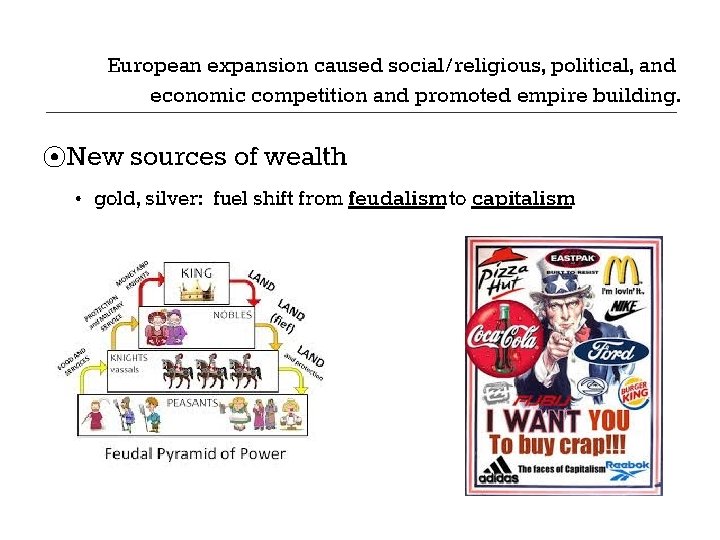
European expansion caused social/religious, political, and economic competition and promoted empire building. ⦿New sources of wealth • gold, silver: fuel shift from feudalism to capitalism
European expansion caused social/religious, political, and economic competition and promoted empire building. ⦿Improvements in technology and trade • weapons • bureaucracy, mechanical printing • amassing wealth/dominating people positively valued on Earth and towards salvation (Lies, p. 33) • nature of European Christianity, rationalized conquest, “the Requirement” (Lies, p. 34)
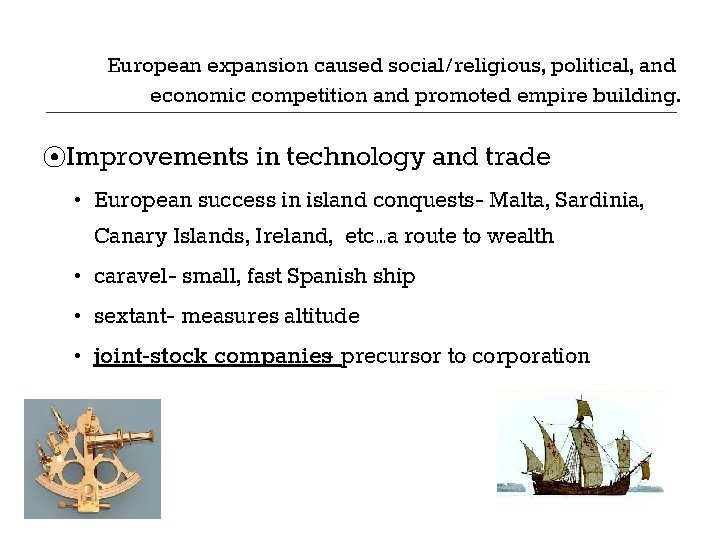
European expansion caused social/religious, political, and economic competition and promoted empire building. ⦿Improvements in technology and trade • European success in island conquests- Malta, Sardinia, Canary Islands, Ireland, etc…a route to wealth • caravel- small, fast Spanish ship • sextant- measures altitude • joint-stock companies- precursor to corporation
Period 1 1491 – 1607 Key Concept 1. 3 ● Contacts among American Indians, Africans, and Europeans challenged the worldviews of each group.
European expansion/contact dramatically altered European views of social, political, and economic relationships between white and nonwhite peoples. Contact with people different from themselves caused debates • comparisons of nature and degrees of civility • Juan de Sepúlveda, Bartoloméde Las Casas How should Native American’s be governed? ⦿ Sepulveda- as slaves, naturally Spanish are given authority “claiming that the Amerindians were "natural slaves" as defined by Aristotlein Book I of Politics” ⦿ Las Casas- governed as anyone else in Spain- “Las Casas thought they should be governed just like any other people in Spain, while Sepúlveda thought they should become slaves. ” ethnocentrism- Belief that one’s own culture and way of life is best, superior to all others. Common among all human cultures. • belief in white superiority evolves
European expansion/contact dramatically altered European views of social, political, and economic relationships between white and nonwhite peoples. Politically • challenged European ideas of government, social organization • “Lies”, pp. 57 -58 Religiously • challenged Europe’s uniformity • leads to Protestant Reformation established “ mission system” The mission system was a chain of • missions established by Franciscan monks in the Spanish Southwest and California that forced Indians to convert to Catholicism and work as agricultural laborers. • Presidio- fort & mission to protect selves and Christianize natives
Native peoples and Africans strove to maintain their political and cultural autonomy. ⦿Forms of resistance - Native Americans: • refused to plant food • abandoned towns near Spanish settlements • fled beyond mountains and rivers • suicide • shunned conception & childbirth • aborted • murdered their children • slave revolts
Native peoples and Africans strove to maintain their political and cultural autonomy. Forms of resistance: African Americans: • run to Native American communities Slave Revolts • New York City 1712 - 21 blacks executed over a slow fire 1712 Slave Revolt • Stono Rebellion 1739 - South Carolina, 21 whites and 44 blacks killed
Native peoples and Africans strove to maintain their political and cultural autonomy. Juan de Onate • Spanish conquistador • attempted to spread Catholicism among natives of New Mexico Acoma War - 1598 • 800 villagers, including men, women, and children killed • enslaved the remaining 500 • they amputated the left foot of every Acoma man over the age of twentyfive • females sent off to be slaves for twenty years Pope’s Rebellion -1680 • also known as the Pueblo Revolt • an uprising of Pueblo Indians against the Spanish colonizers in present day New Mexico • the Pueblo killed 400 Spanish and drove the remaining 2, 000 settlers out of the province
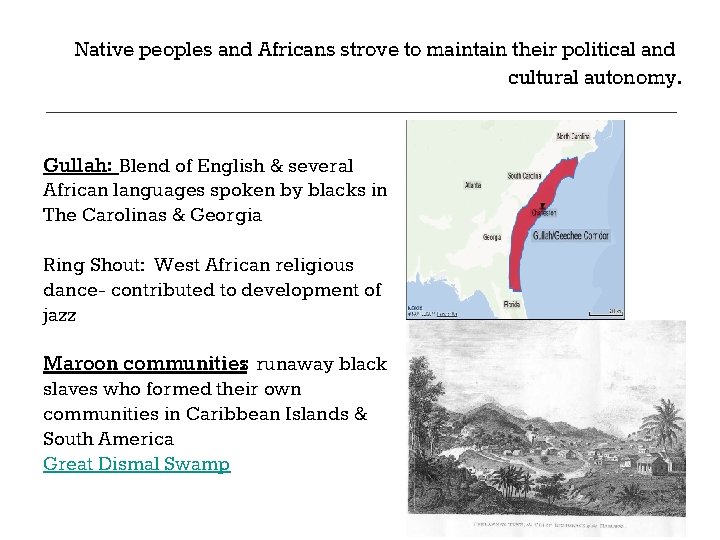
Native peoples and Africans strove to maintain their political and cultural autonomy. Gullah: Blend of English & several African languages spoken by blacks in The Carolinas & Georgia Ring Shout: West African religious dance- contributed to development of jazz Maroon communities: runaway black slaves who formed their own communities in Caribbean Islands & South America Great Dismal Swamp