
Overview of Open Contracting Open Contracting Data Standard

- Slides: 33
Overview of Open Contracting & Open Contracting Data Standard (OCDS) A presentation for Bauchi State Bureau of Public Procurement Presented by Mokuolu Adesina, MCIPS Senior E-Procurement Expert Nigeria Governors’ Forum Date: Thursday, 23 rd September, 2020 Venue: Virtual Meeting
Presentation Outline ❑Why OCDS? ❑Overview of Open Contracting ❑Open Contracting Global Principles ❑Open Contracting Data Standard (OCDS) ❑OCDS & e-Procurement ❑OCDS Adoption & Implementation ❑Nigeria Open Contracting Portal (NOCOPO) ❑OCDS Implementation Support Centre
Why NOCOPO with OCDS? ❑Section of the Public Procurement Law for the State: Bureau shall establish a single portal that shall serve as a primary and definitive source of all information on government procurement containing and displaying all public sector procurement information at all times
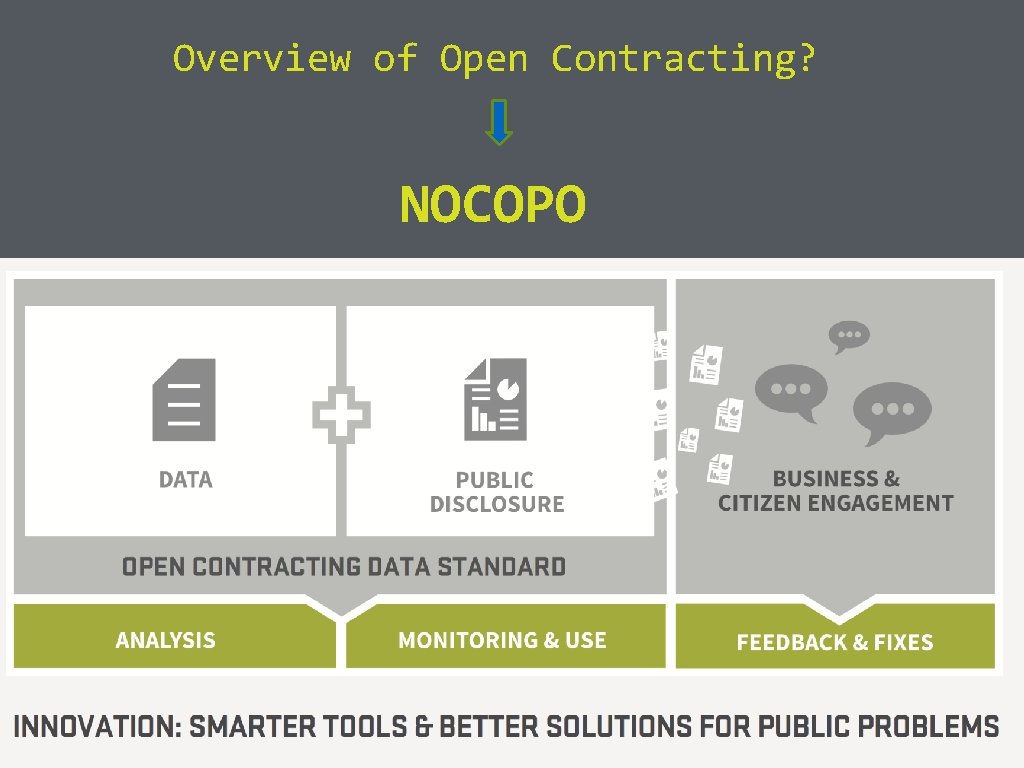
Overview of Open Contracting? NOCOPO
Open Contracting Global Principles
Overview • Governments shall require the timely, current, and routine publication of enough information about the formation, award, execution, performance, and completion of public contracts to enable the public, including media and civil society, to understand monitor as a safeguard against inefficient, ineffective, or corrupt use of public resources.
Affirmative Disclosure This would require affirmative disclosure of: (a) Contracts, including licenses, concessions, permits, grants or any other document exchanging public goods, assets, or resources (including all annexes, schedules and documents incorporated by reference) and any amendments thereto; (b) Related pre-studies, bid documents, performance evaluations, guarantees, and auditing reports.
Affirmative Disclosure (Cont’d. ) (c) Information concerning contract formation, including: ➢ The planning process of the procurement; ➢ The method of procurement or award and the justification thereof; ➢ The scope and specifications for each contract; ➢ The criteria for evaluation and selection; ➢ The bidders or participants in the process, their validation documents, and any procedural exemptions for which they qualify; ➢ Any conflicts of interest uncovered or debarments issued; ➢ The results of the evaluation, including the justification for the award; and ➢ The identity of the contract recipient and any statements of beneficial ownership provided;
Affirmative Disclosure (Cont’d. ) (d) Information related to performance and completion of public contracts, including information regarding subcontracting arrangements, such as: ➢ General ➢ ➢ ➢ schedules, including major milestones in execution, and any changes thereto; Status of implementation against milestones; Dates and amounts of stage payments made or received (against total amount) and the source of those payments; Service delivery and pricing; Arrangements for ending contracts; Final settlements and responsibilities; Risk assessments, including environmental and social impact assessments;
Affirmative Disclosure (Cont’d. ) ➢ ➢ ➢ Assessments of assets and liabilities of government related to the contract; Provisions in place to ensure appropriate management of ongoing risks and liabilities; and Appropriate financial information regarding revenues and expenditures, such as time and cost overruns, if any.
Participation, Monitoring, and Oversight 1. Governments shall recognize the right of the public to participate in the oversight of the formation, award, execution, performance, and completion of public contracts. 2. With regard to individual contracts of significant impact, contracting parties should craft strategies for citizen consultation and engagement in the management of the contract
Open Contracting Data Standard (OCDS)
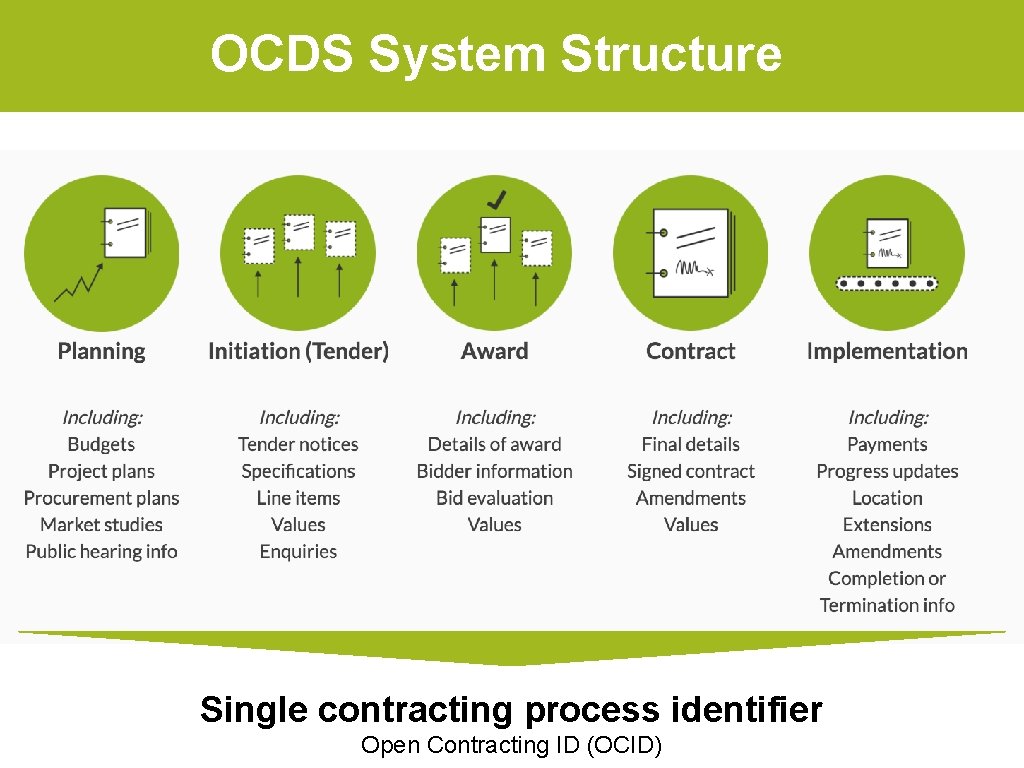
OCDS System Structure Single contracting process identifier Open Contracting ID (OCID)
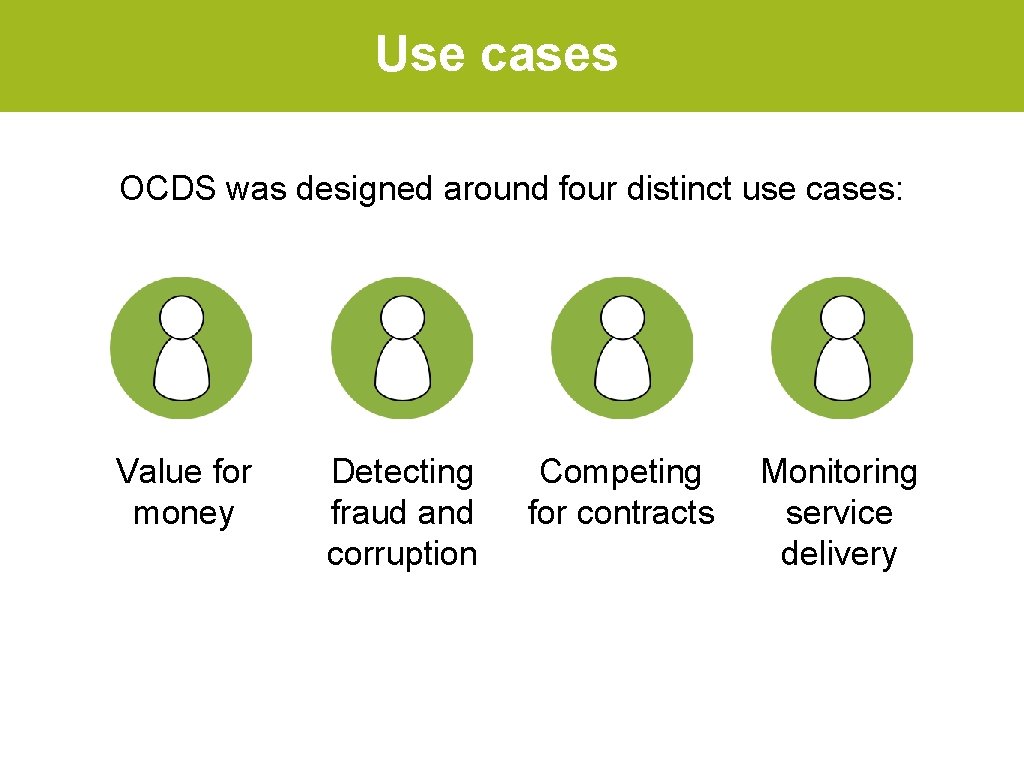
Use cases OCDS was designed around four distinct use cases: Value for money Detecting fraud and corruption Competing for contracts Monitoring service delivery
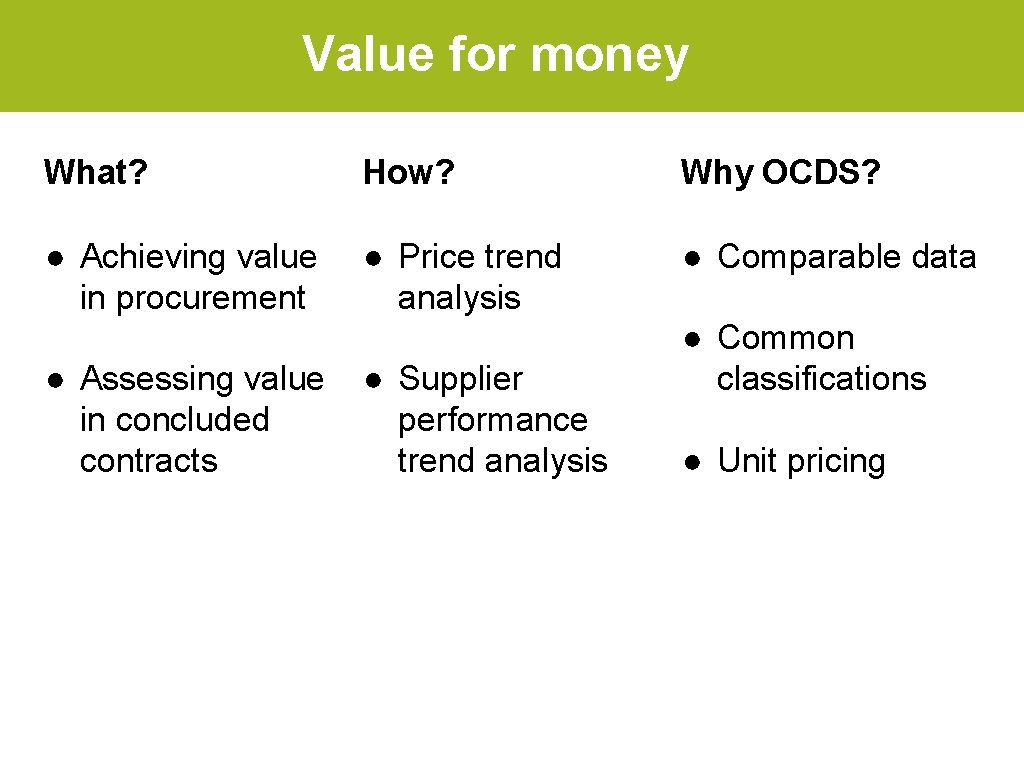
Value for money What? How? Why OCDS? ● Achieving value in procurement ● Price trend analysis ● Comparable data ● Assessing value in concluded contracts ● Supplier performance trend analysis ● Common classifications ● Unit pricing
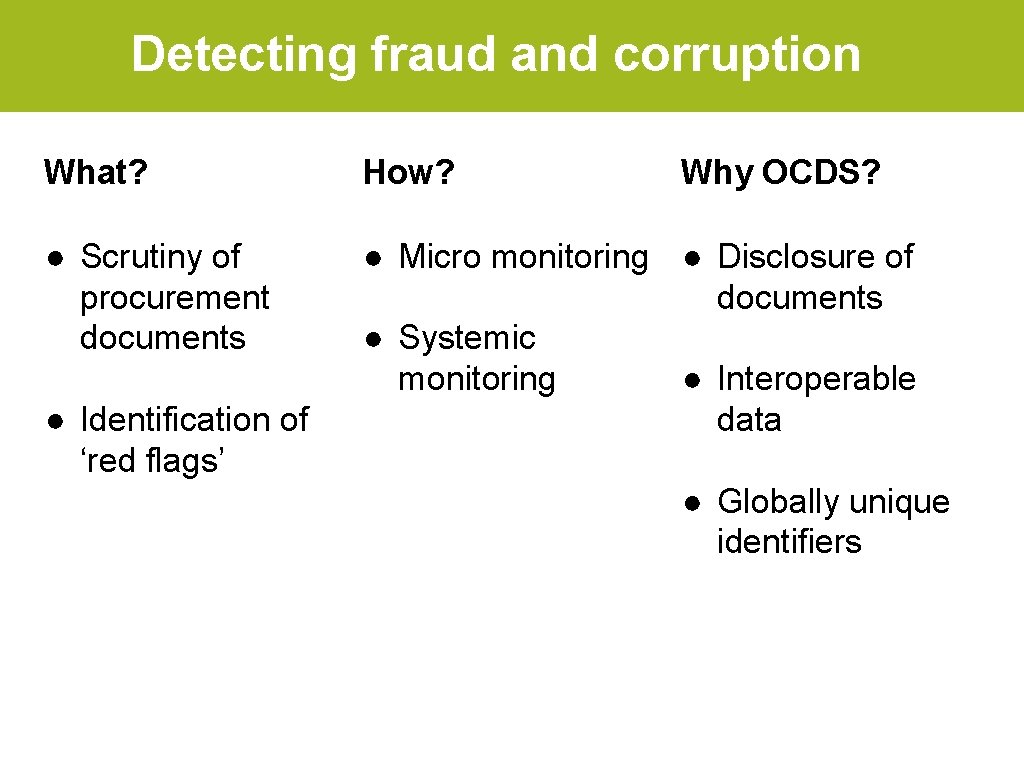
Detecting fraud and corruption What? How? ● Scrutiny of procurement documents ● Micro monitoring ● Disclosure of documents ● Systemic monitoring ● Interoperable data ● Identification of ‘red flags’ Why OCDS? ● Globally unique identifiers
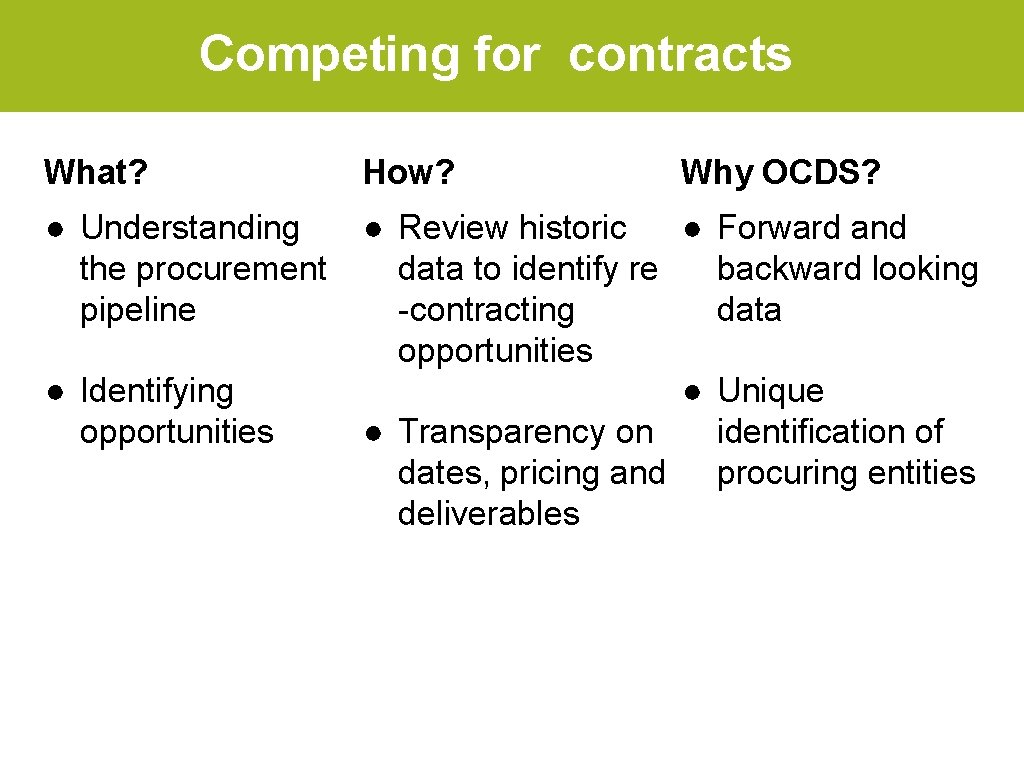
Competing for contracts What? How? ● Understanding the procurement pipeline ● Review historic ● Forward and data to identify re backward looking -contracting data opportunities ● Unique ● Transparency on identification of dates, pricing and procuring entities deliverables ● Identifying opportunities Why OCDS?
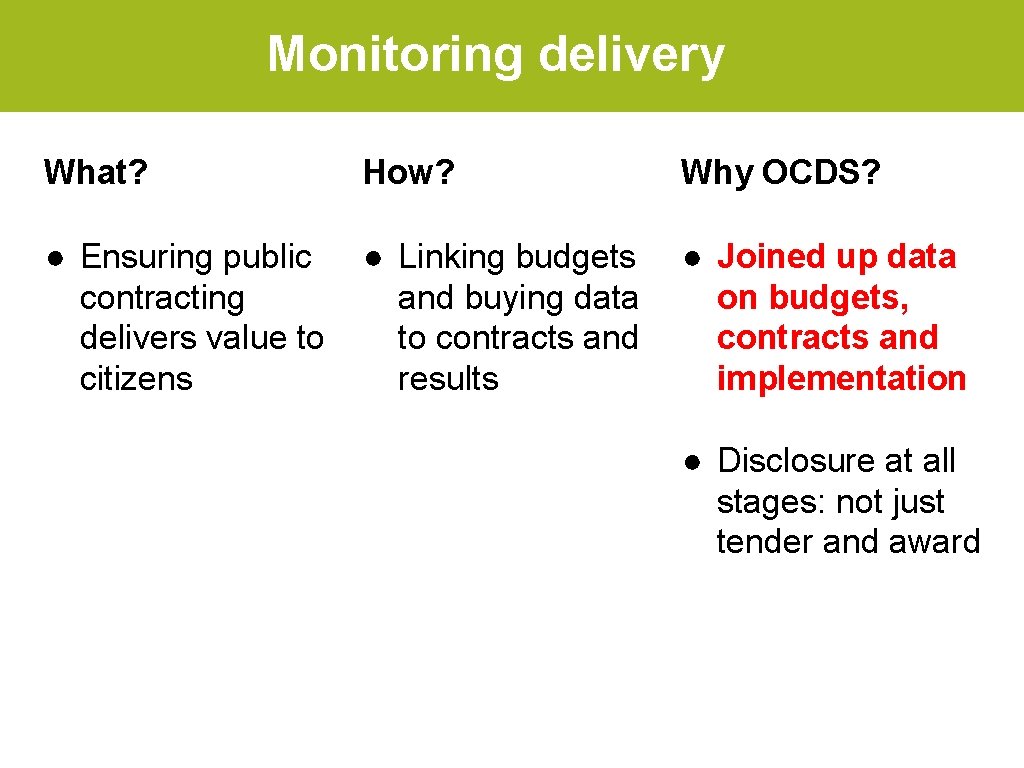
Monitoring delivery What? How? Why OCDS? ● Ensuring public contracting delivers value to citizens ● Linking budgets and buying data to contracts and results ● Joined up data on budgets, contracts and implementation ● Disclosure at all stages: not just tender and award
OCDS & e-Procurement
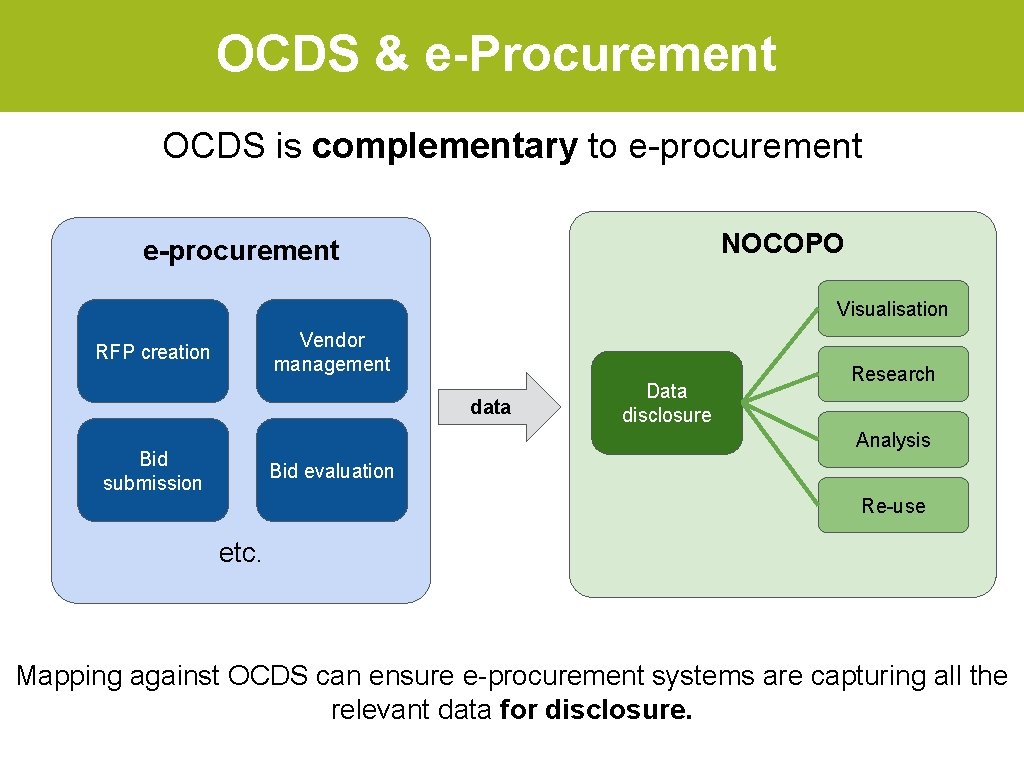
OCDS & e-Procurement OCDS is complementary to e-procurement NOCOPO e-procurement Visualisation Vendor management RFP creation data Data disclosure Research Analysis Bid submission Bid evaluation Re-use etc. Mapping against OCDS can ensure e-procurement systems are capturing all the relevant data for disclosure.
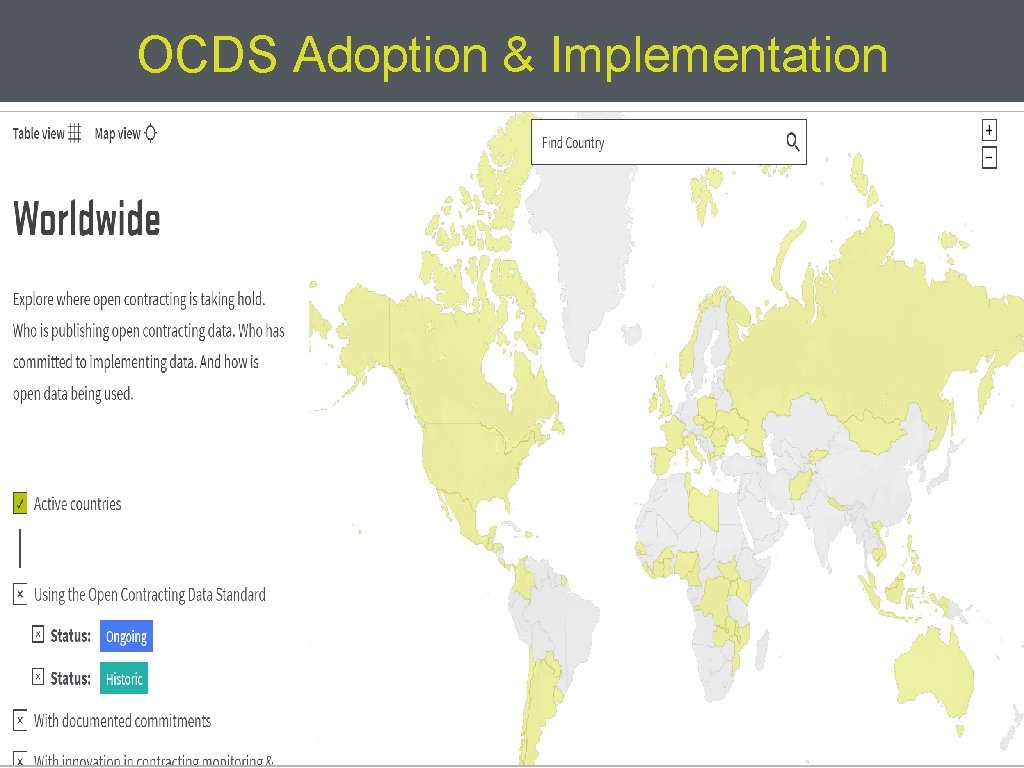
OCDS Adoption & Implementation
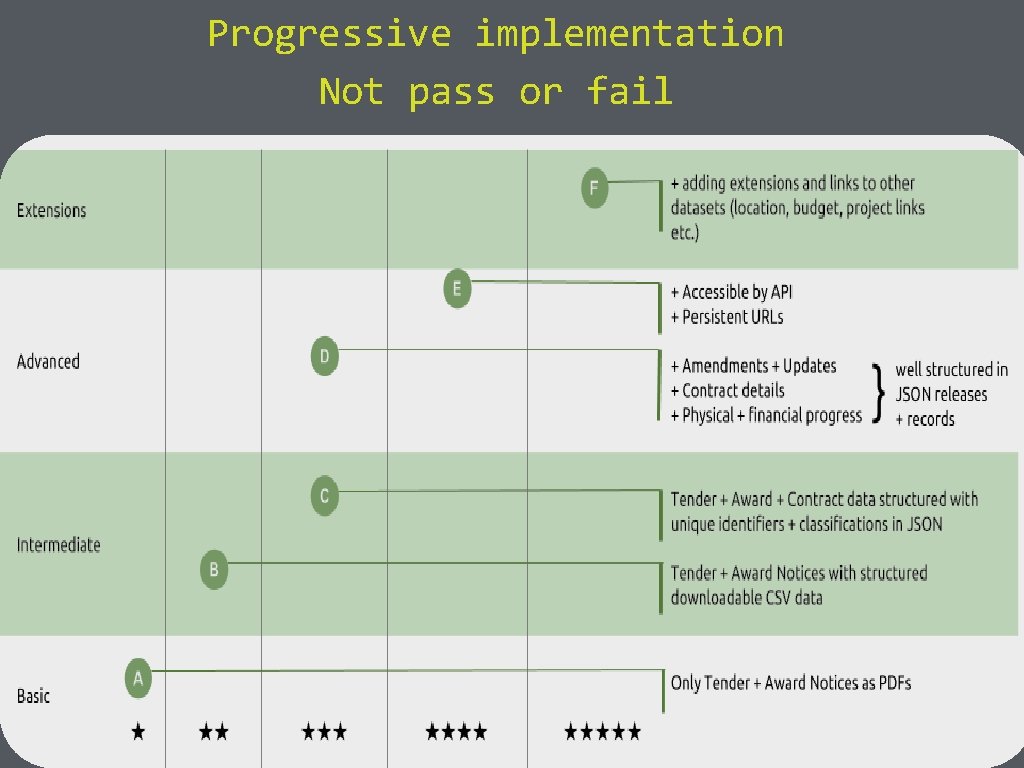
Progressive implementation Not pass or fail
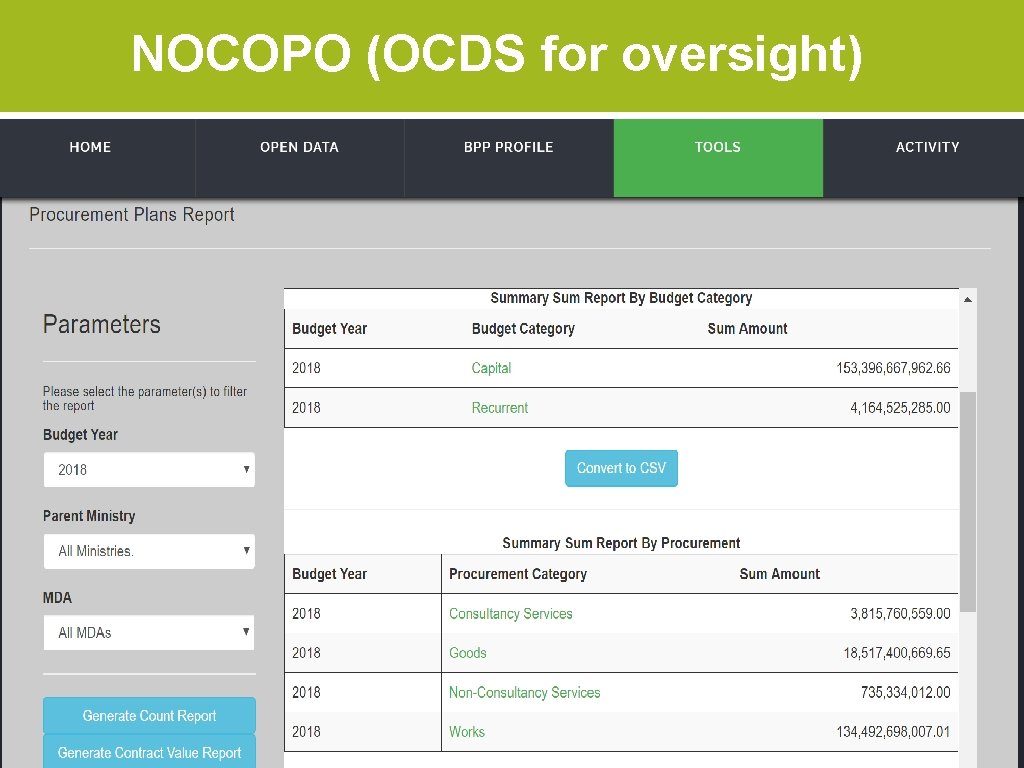
NOCOPO (OCDS for oversight)
Nigeria Open Contracting Portal (NOCOPO) nocopo. bpp. gov. ng An award winning OCDS portal
NOCOPO won global Government Innovation Award • The award is conferred as part of the Open Contracting Innovation Challenge, a competition (with 88 teams from 40 countries) run by the Open Contracting Partnership in USA and the Open Data Institute in UK, to recognize groundbreaking datadriven ideas for improving public procurement. • The Innovation Challenge honors original ideas for managing, analyzing, and monitoring how the government buys goods and services, as well as cutting-edge approaches to publishing what gets bought, when, from whom, and for how much
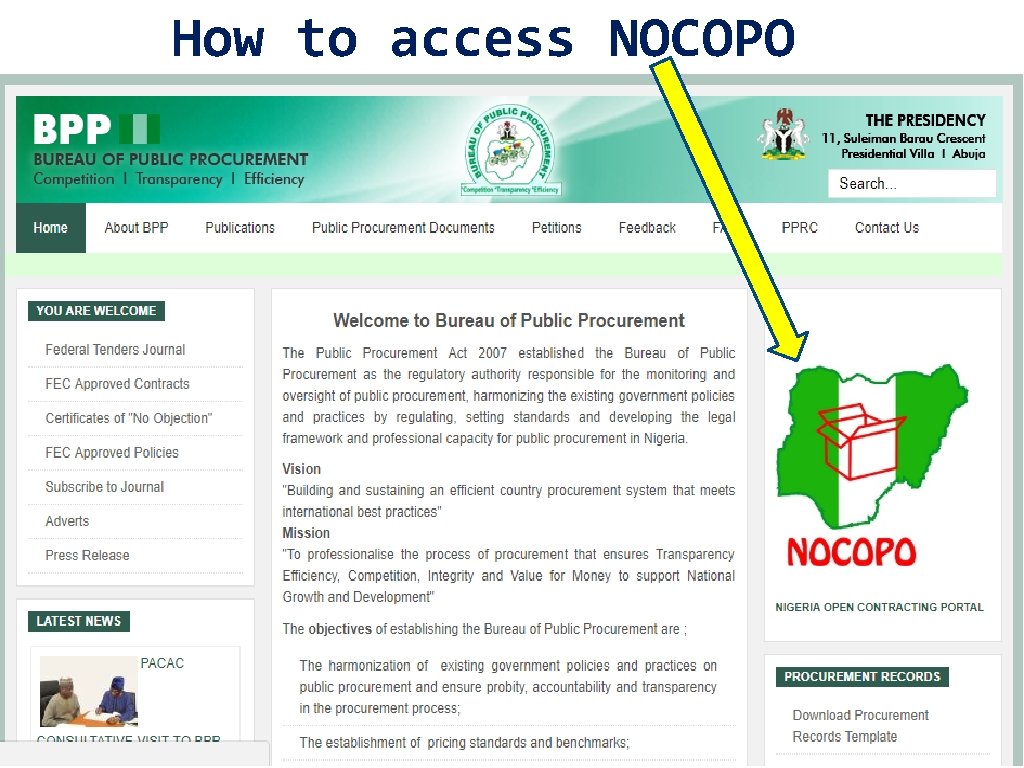
How to access NOCOPO
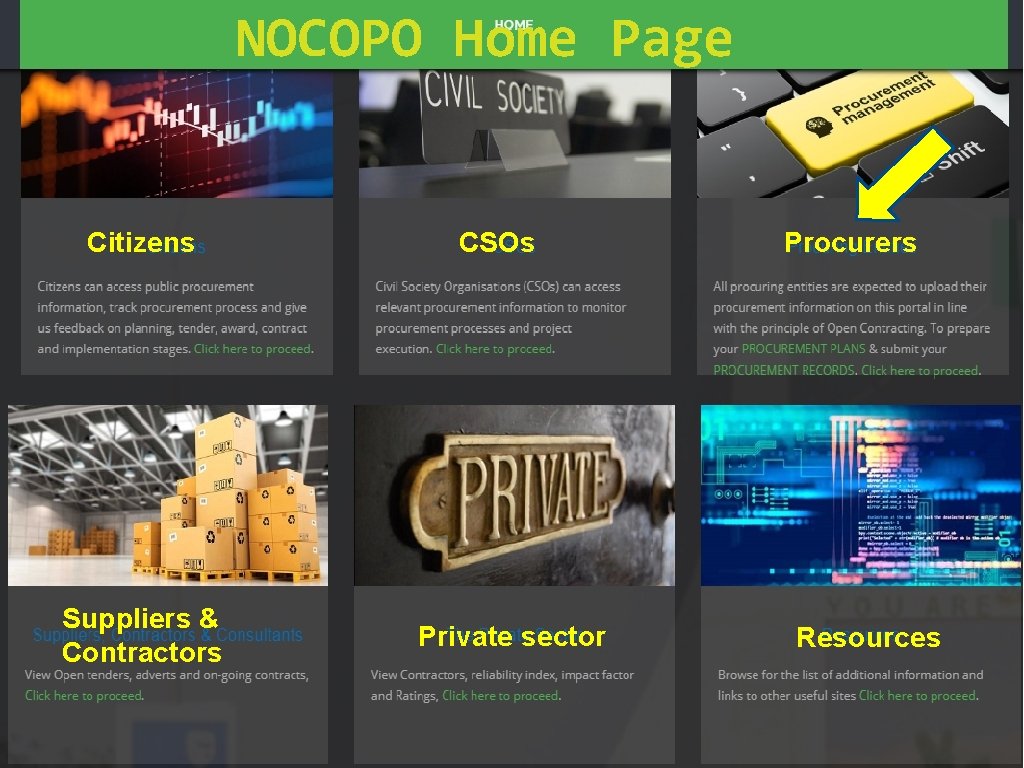
NOCOPO Home Page Citizens Suppliers & Contractors CSOs Private sector Procurers Resources
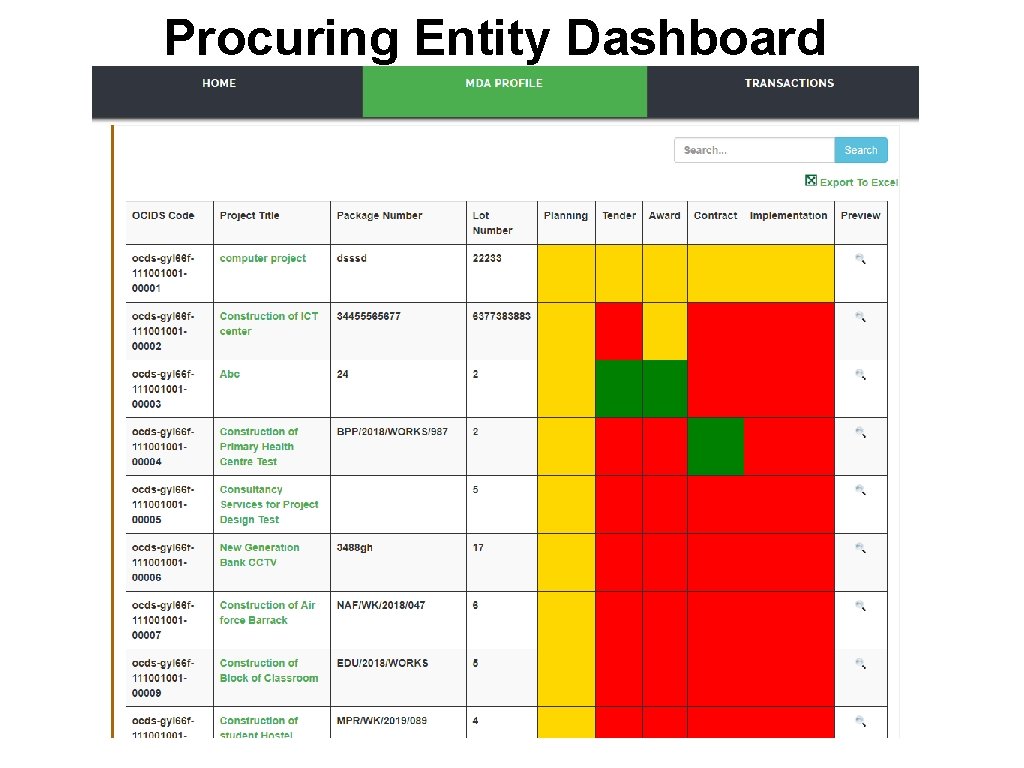
Procuring Entity Dashboard
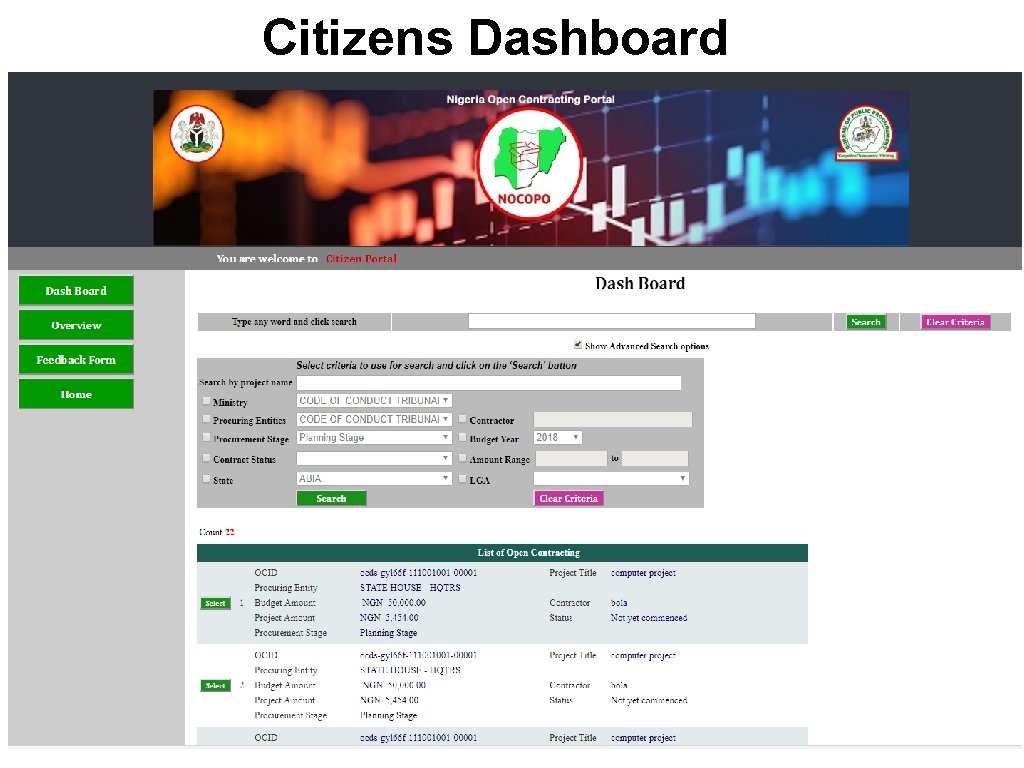
Citizens Dashboard
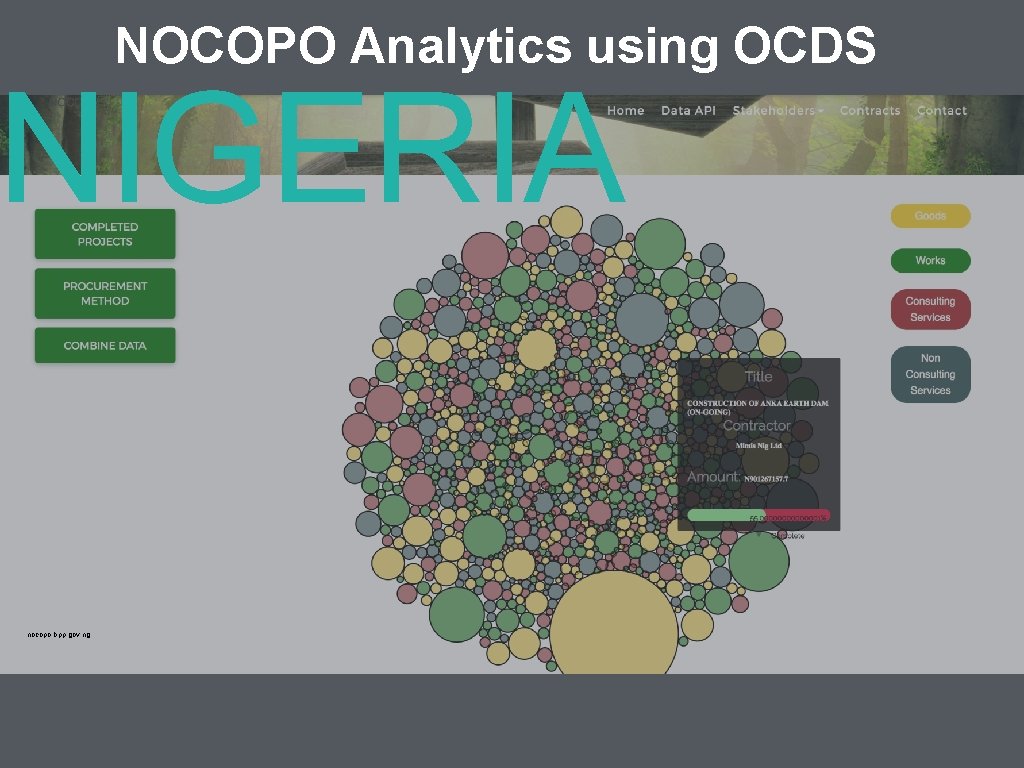
NOCOPO Analytics using OCDS NIGERIA nocopo. bpp. gov. ng
OCDS Support • Multi-stakeholder collaboration • Constructive engagement • User friendly data • Tool development & adaptation Innovation • Working across contracting chain • Institutional feedback mechanisms • Implementation Advisory & Technical Support
What Support Your State can access • OCDS Implementation Advisory & Technical Support • Creation of user friendly data • Analytics & Data use by Public Procurement Regulators • Development of Regulation for OCDS • Tool development & adaptation • Institutional feedback mechanisms • Training for stakeholders
Thank You Questions?