
Overview of Older Americans Title VI Nutrition Programs
- Slides: 18
Overview of Older Americans Title VI Nutrition Programs
The Older Americans Act • The Older Americans Act was first a law in 1965 • Nutrition Programs were first added in 1971 and Title VI programs followed in 1978 • The “Act” is divided in to separate chapters called “Titles” • Like in a book, each Title (chapter) deals with a different subject • Under each Title, there are separate sections called “Parts” • Under each Part, there are separate sections called “Sections”
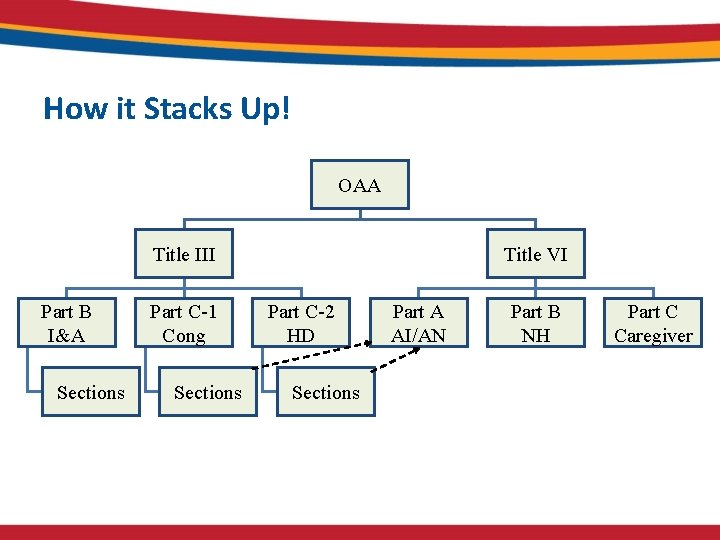
How it Stacks Up! OAA Title III Part B I&A Sections Part C-1 Cong Sections Title VI Part C-2 HD Sections Part A AI/AN Part B NH Part C Caregiver
Title VI • In order to get a grant for Title VI services (also known as “Part A” services for nutrition) tribes have to have at least 50 elders aged 60 and up • May determine the age of participation to count meals— 45+ • May determine which services are to be provided but required services are Congregate meals, Home delivered meals, and Information and Assistance
Title VI Rules • If you read the OAA, you won’t find much under Title VI • Programs are designed to follow the OAA Title III Programs and tribes will find most of the rules in that section of the OAA • If you can, ask you local Title III for copies of their standards and policy manuals, the rules are the same for both programs. • Look at the manual on line at https: //olderindians. acl. gov/ • Or look to your State’s standards for assistance
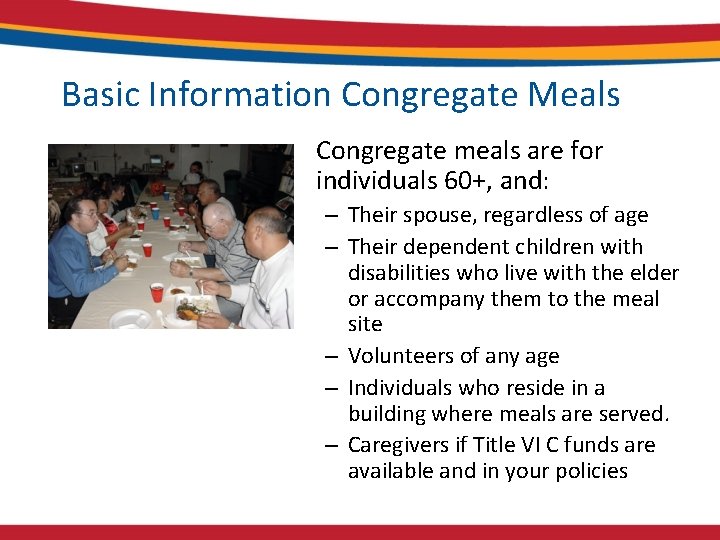
Basic Information Congregate Meals Congregate meals are for individuals 60+, and: – Their spouse, regardless of age – Their dependent children with disabilities who live with the elder or accompany them to the meal site – Volunteers of any age – Individuals who reside in a building where meals are served. – Caregivers if Title VI C funds are available and in your policies
Basic Information Home Delivered Meals • Home delivered meals are available to people age 60 and over or the age that the tribe has determined – Isolation, Homebound, and Frail • 2 ADL’s – Spouses regardless of age – Dependent Children who live with the elder – Caregivers if Title VI C funds are available
Activities of Daily Living • • Bathing Transferring Eating Toileting Walking Grooming Dressing Continence • If an Elder cannot do two of these without “substantial human assistance”, they are eligible for Home Delivered meals. • May also need supervision for safety and be eligible • Just because a meal is “delivered” doesn’t make it a home-delivered meal!
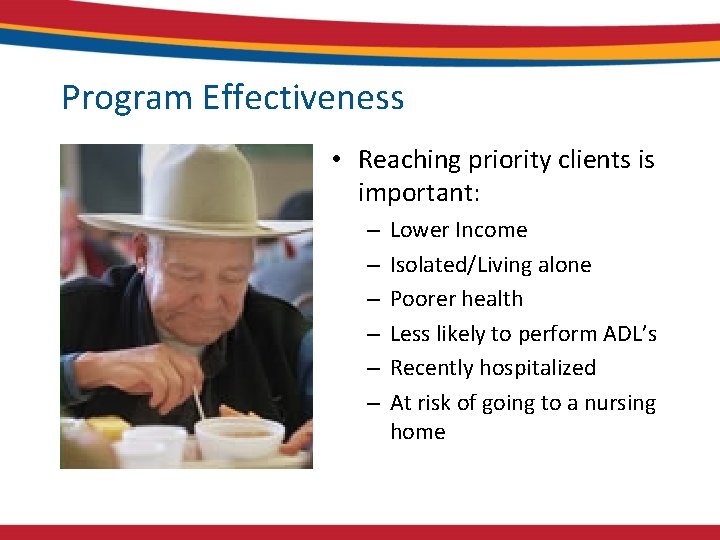
Program Effectiveness • Reaching priority clients is important: – – – Lower Income Isolated/Living alone Poorer health Less likely to perform ADL’s Recently hospitalized At risk of going to a nursing home
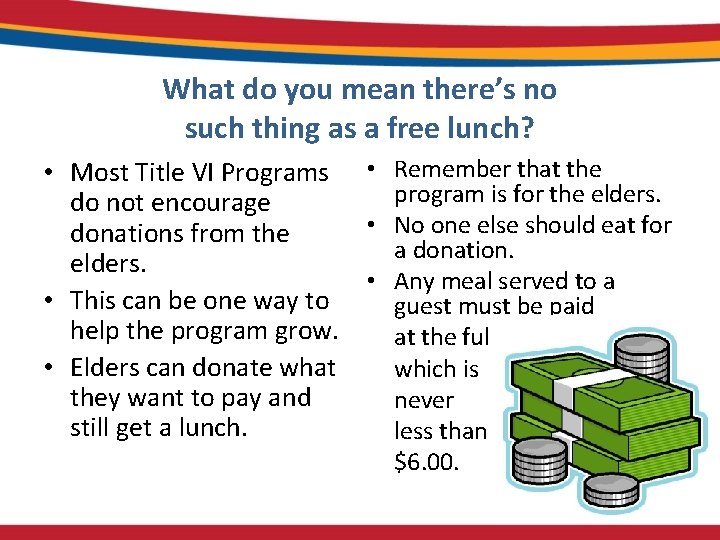
What do you mean there’s no such thing as a free lunch? • Most Title VI Programs • Remember that the program is for the elders. do not encourage • No one else should eat for donations from the a donation. elders. • Any meal served to a • This can be one way to guest must be paid help the program grow. at the full price, • Elders can donate what which is they want to pay and never still get a lunch. less than $6. 00.
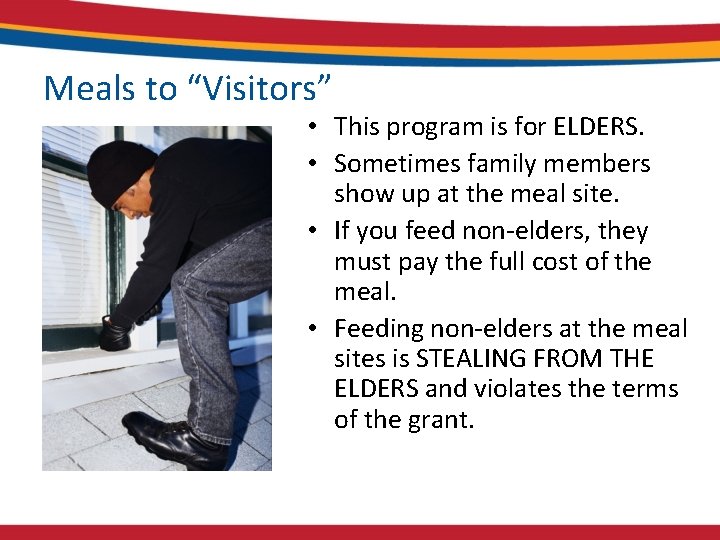
Meals to “Visitors” • This program is for ELDERS. • Sometimes family members show up at the meal site. • If you feed non-elders, they must pay the full cost of the meal. • Feeding non-elders at the meal sites is STEALING FROM THE ELDERS and violates the terms of the grant.
Volunteers and Staff • If you have enough food, meal program volunteers of any age can eat meals and you can count them in your meal counts for reimbursement. • All of these meals count for reimbursement along with elders meals. • Under 60 Guest meals DO NOT COUNT for NSIP. • Don’t forget to include special dinners…. birthday’s, celebrations, Elder Honor Day—just make sure the meal meets the requirements for the reimbursement.
Congregate and HD Meal Requirements • Reviewed by a Dietitian • Must provide 1/3 of the RDA (if one meal is served per day); 2/3 if two; 100% if three • Must follow the Dietary Guidelines – Low fat --High Fiber – High nutrient --Low salt; hi fiber • Must be foods that Elders like to eat! • If possible, provide special diets to Elders who need them. – If nothing else, sugar free desserts!
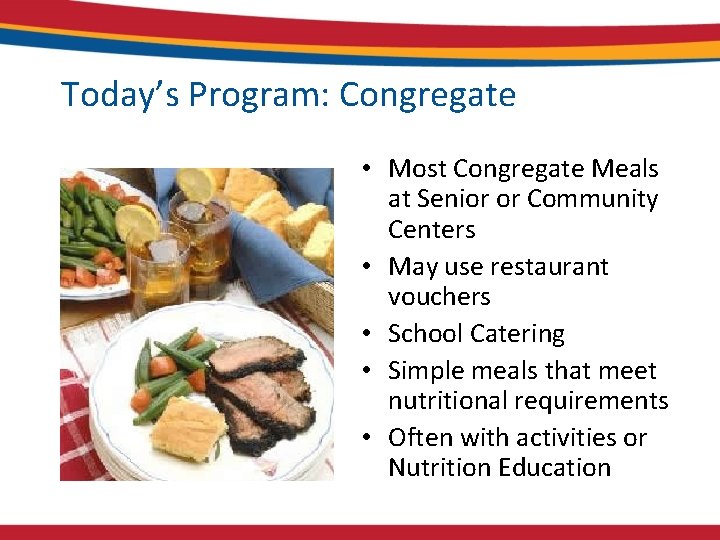
Today’s Program: Congregate • Most Congregate Meals at Senior or Community Centers • May use restaurant vouchers • School Catering • Simple meals that meet nutritional requirements • Often with activities or Nutrition Education
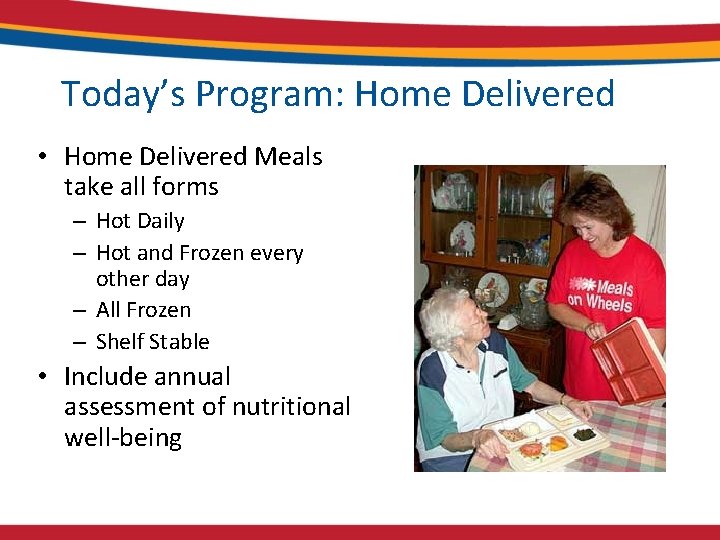
Today’s Program: Home Delivered • Home Delivered Meals take all forms – Hot Daily – Hot and Frozen every other day – All Frozen – Shelf Stable • Include annual assessment of nutritional well-being
We know the program is effective! • When compared to non • Elders report that meals -participating elders, are easy to access and clients eat well and help hunger much receive 2/3 of the better than the Basic recommended intake of Food Program (food specific nutrients. stamps). • Participants fared better • Provide gatekeeping than non participants. and entrance into service systems.
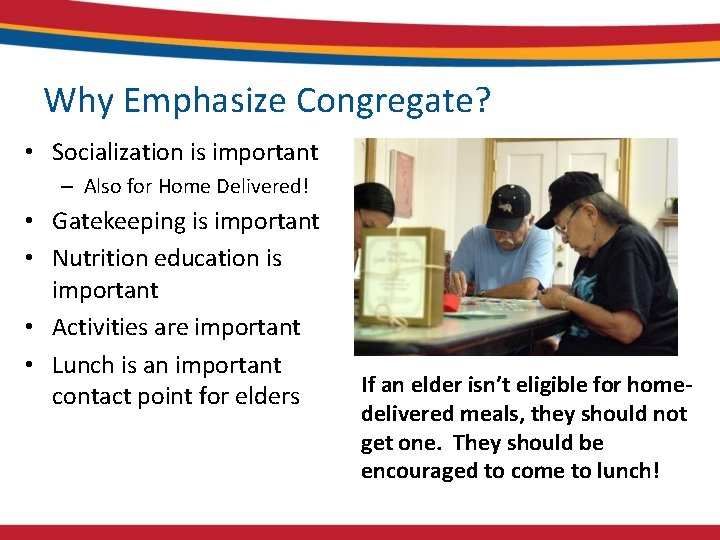
Why Emphasize Congregate? • Socialization is important – Also for Home Delivered! • Gatekeeping is important • Nutrition education is important • Activities are important • Lunch is an important contact point for elders If an elder isn’t eligible for homedelivered meals, they should not get one. They should be encouraged to come to lunch!
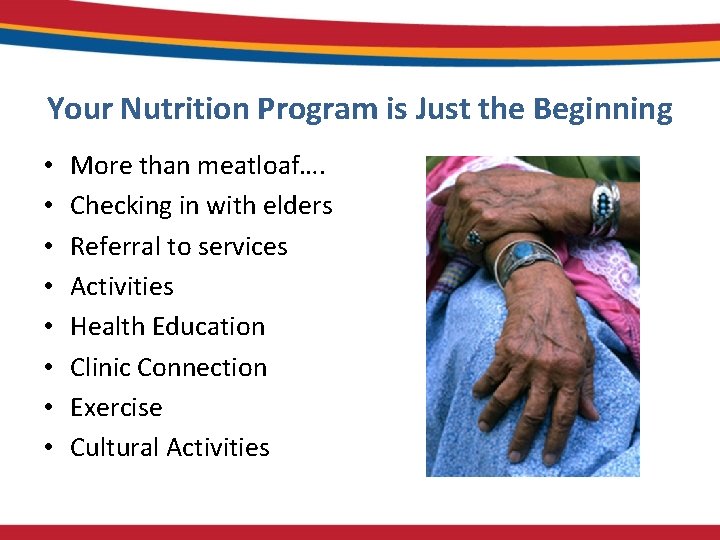
Your Nutrition Program is Just the Beginning • • More than meatloaf…. Checking in with elders Referral to services Activities Health Education Clinic Connection Exercise Cultural Activities