
Overview of NTSB Investigative Process Bob Beaton Ph
Overview of NTSB Investigative Process Bob Beaton, Ph. D. , CPE Chief, Human Performance & Survival Factors Office of Railroad, Pipeline and Hazardous Materials Investigations 07 -FEB-2017
History • Created in 1967 as an independent agency within the USDOT • Independent Safety Board Act of 1974 - Fully independent agency - Investigate transportation accidents - Determine probable cause - Develop safety recommendations • Rail Passenger Disaster Family Assistance Act of 2008 2
Statutory Requirement to Investigate Railroad Accidents Railroad accidents that involve: • Fatality • Substantial Property Damage • Passenger Train • Other accidents involving issues of a recurring nature 3
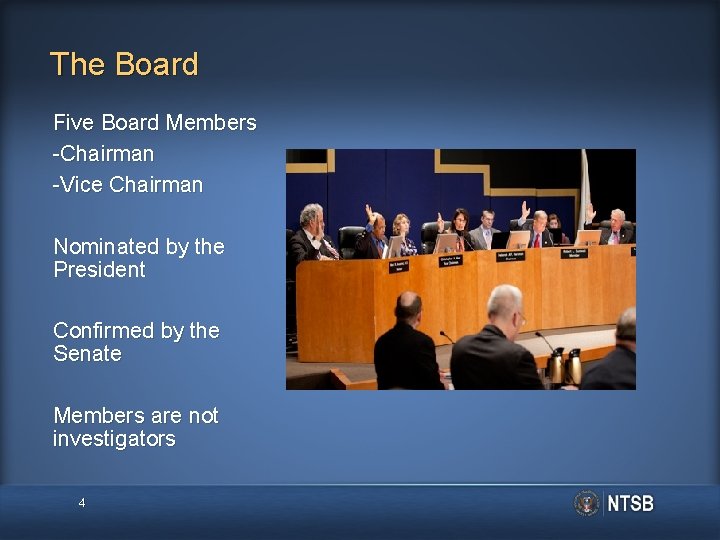
The Board Five Board Members -Chairman -Vice Chairman Nominated by the President Confirmed by the Senate Members are not investigators 4
The Board Three Members of the Board constitute a quorum No more than 3 Members can be of same Political Party 5
NTSB Mission Independently Advancing Transportation Safety 6 • Fact based investigations • Single focus is safety • Not liability or blame • Determine probable cause • Make safety recommendations
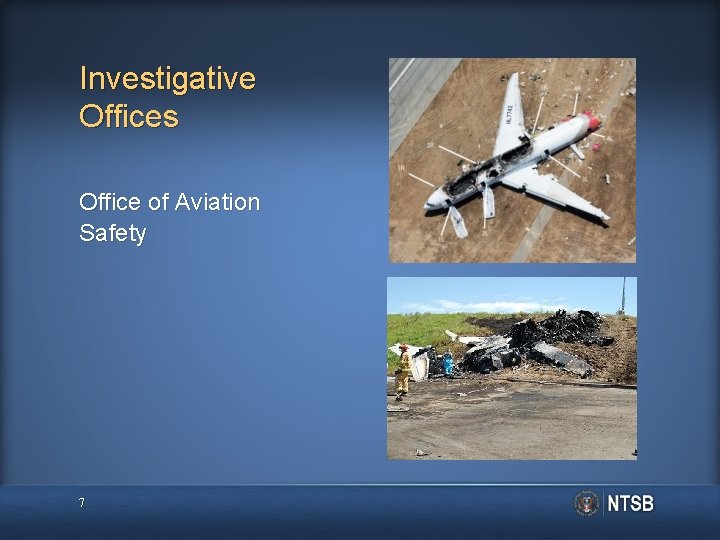
Investigative Offices Office of Aviation Safety 7
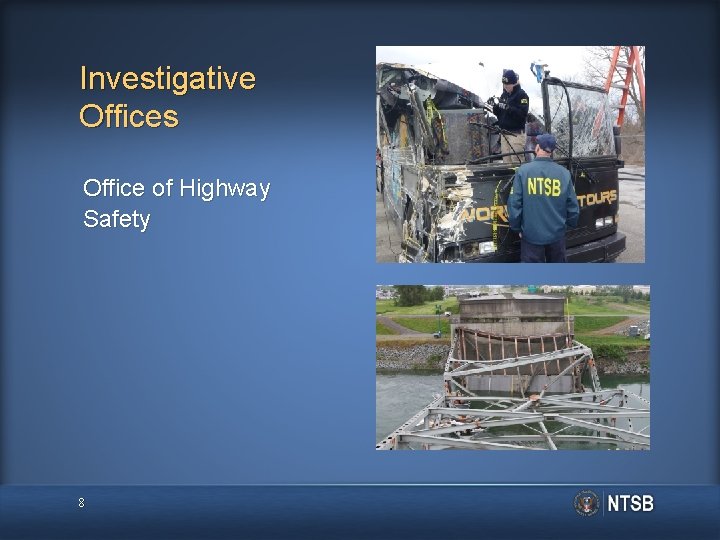
Investigative Offices Office of Highway Safety 8
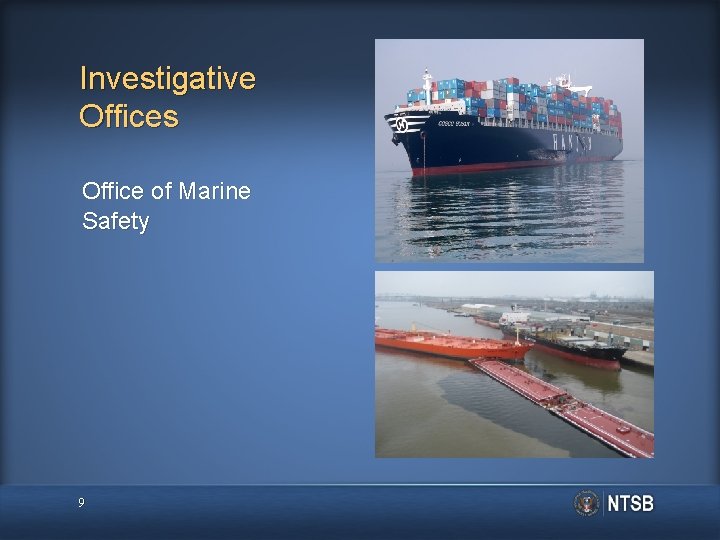
Investigative Offices Office of Marine Safety 9
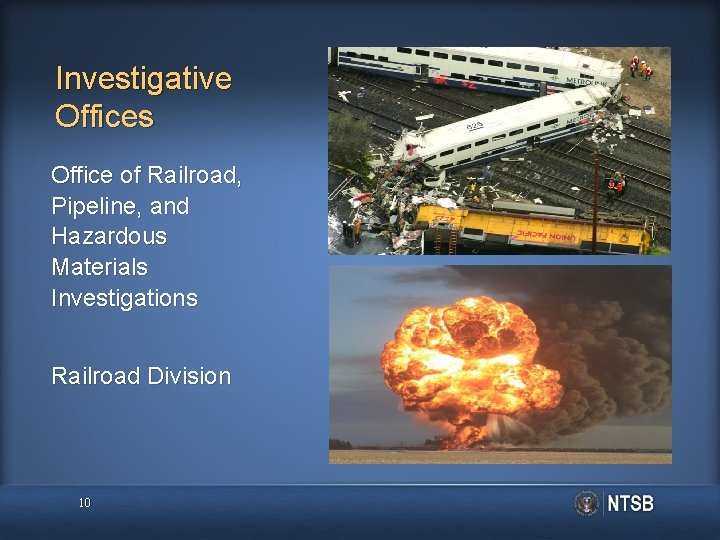
Investigative Offices Office of Railroad, Pipeline, and Hazardous Materials Investigations Railroad Division 10
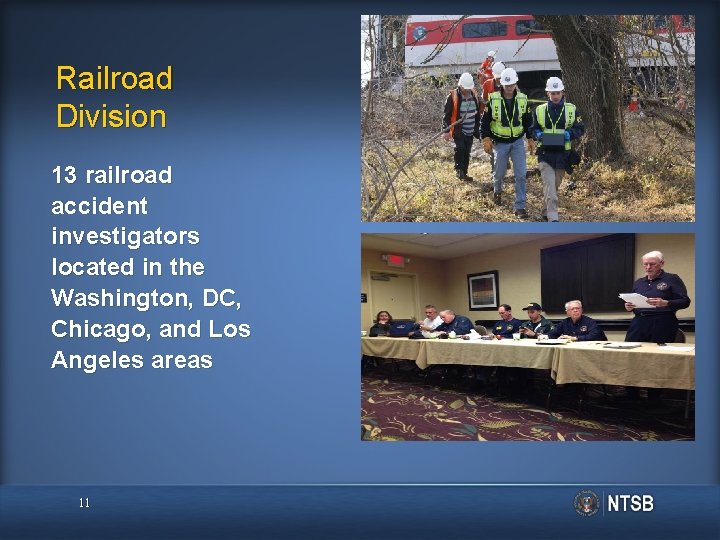
Railroad Division 13 railroad accident investigators located in the Washington, DC, Chicago, and Los Angeles areas 11
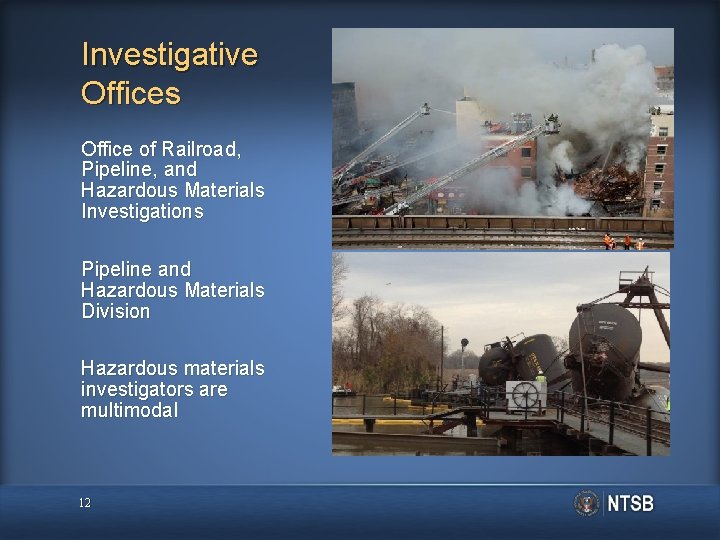
Investigative Offices Office of Railroad, Pipeline, and Hazardous Materials Investigations Pipeline and Hazardous Materials Division Hazardous materials investigators are multimodal 12
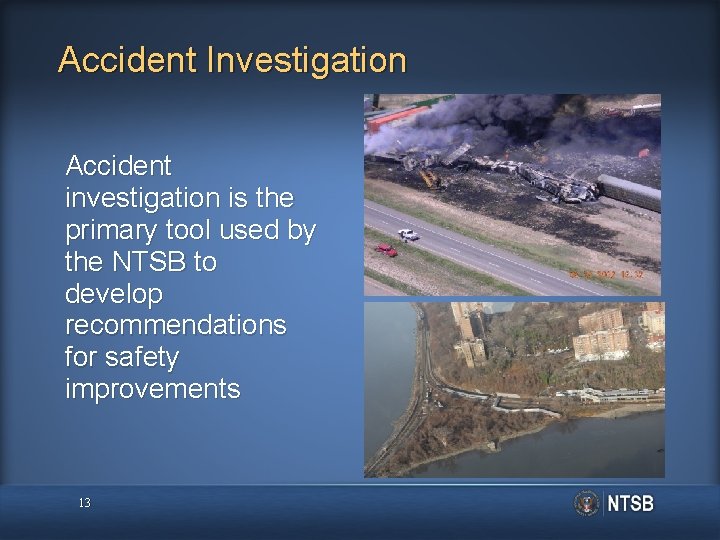
Accident Investigation Accident investigation is the primary tool used by the NTSB to develop recommendations for safety improvements 13
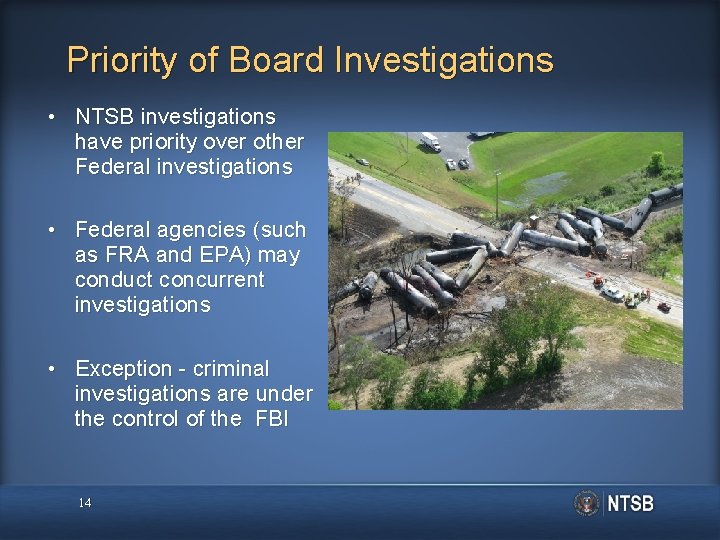
Priority of Board Investigations • NTSB investigations have priority over other Federal investigations • Federal agencies (such as FRA and EPA) may conduct concurrent investigations • Exception - criminal investigations are under the control of the FBI 14
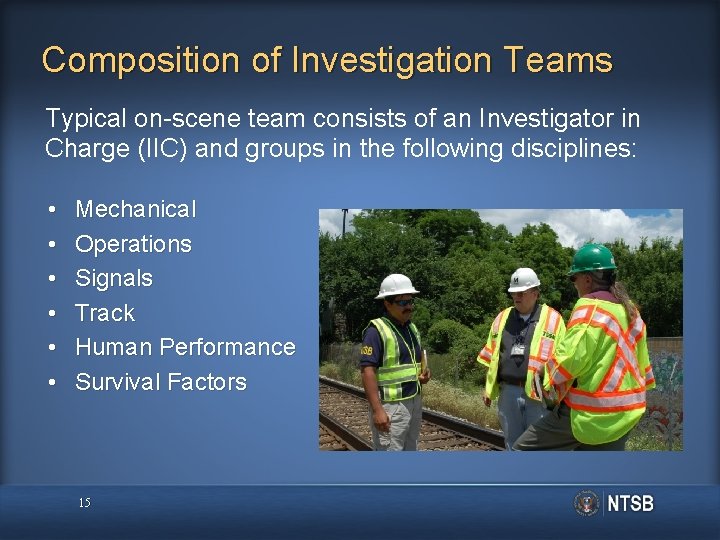
Composition of Investigation Teams Typical on-scene team consists of an Investigator in Charge (IIC) and groups in the following disciplines: • • • Mechanical Operations Signals Track Human Performance Survival Factors 15
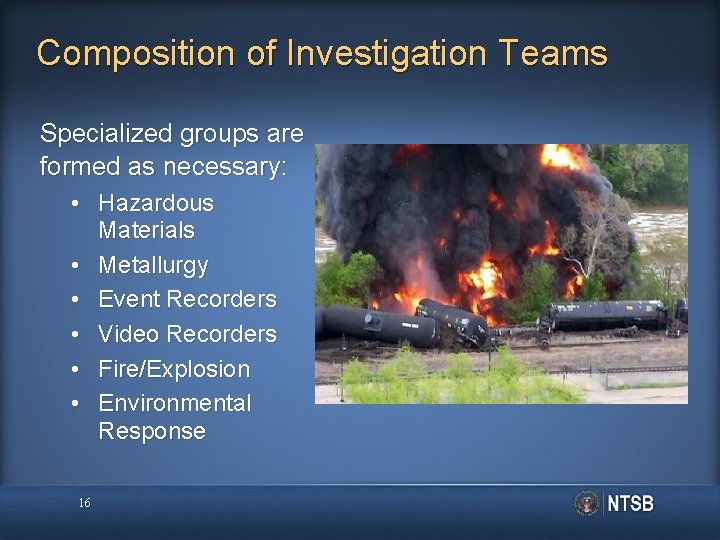
Composition of Investigation Teams Specialized groups are formed as necessary: • Hazardous Materials • Metallurgy • Event Recorders • Video Recorders • Fire/Explosion • Environmental Response 16
Other Supporting Staff The level of support varies with the complexity of the accident. The team may include: • • • 17 Board Member’s Special Assistant Media Relations – media liaison Government Affairs – elected officials TDA – family and other loved ones CIO – information systems General Counsel – legal matters
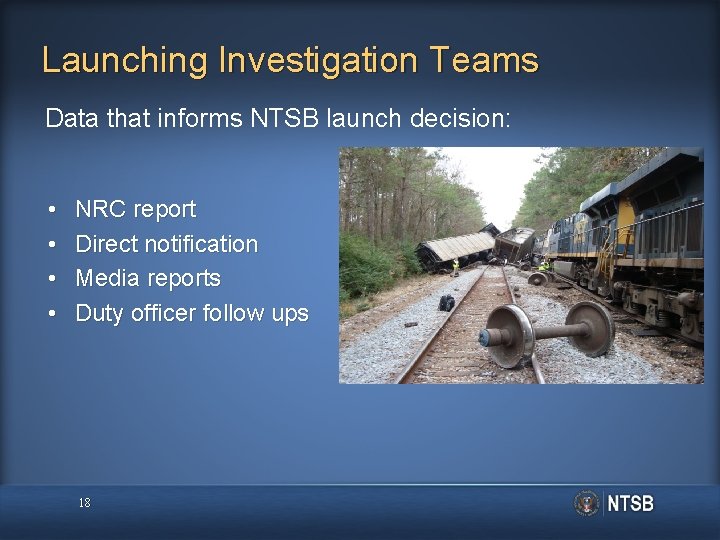
Launching Investigation Teams Data that informs NTSB launch decision: • • NRC report Direct notification Media reports Duty officer follow ups 18
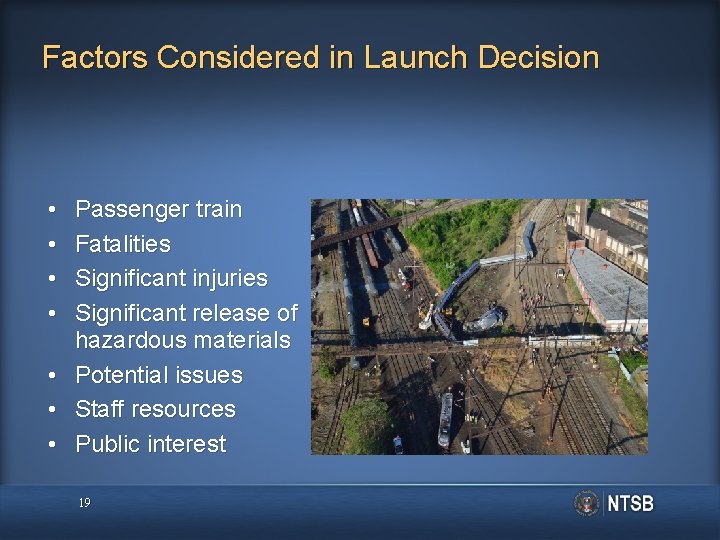
Factors Considered in Launch Decision • • Passenger train Fatalities Significant injuries Significant release of hazardous materials Potential issues Staff resources Public interest 19
Launch Decision • Duty officer and Chief(s) brief Director • Telecom with senior leadership and Chairman • Final decision is made • Investigative team is assembled • Member/no Member is determined • Support team is assembled • RR operator is informed 20
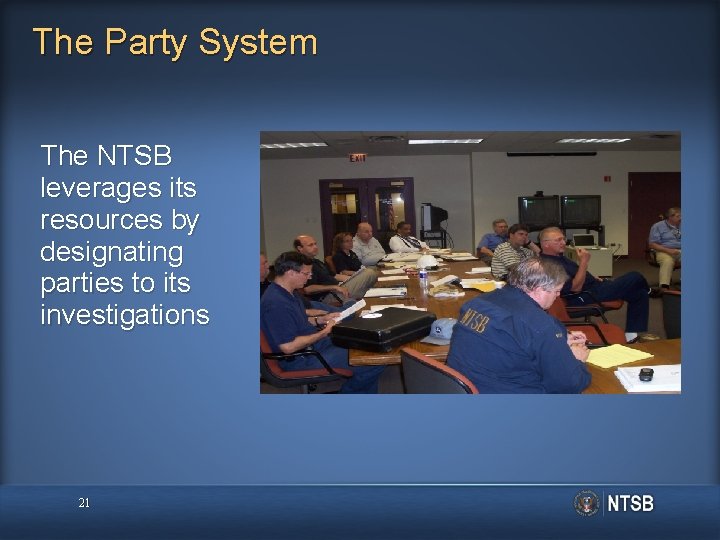
The Party System The NTSB leverages its resources by designating parties to its investigations 21
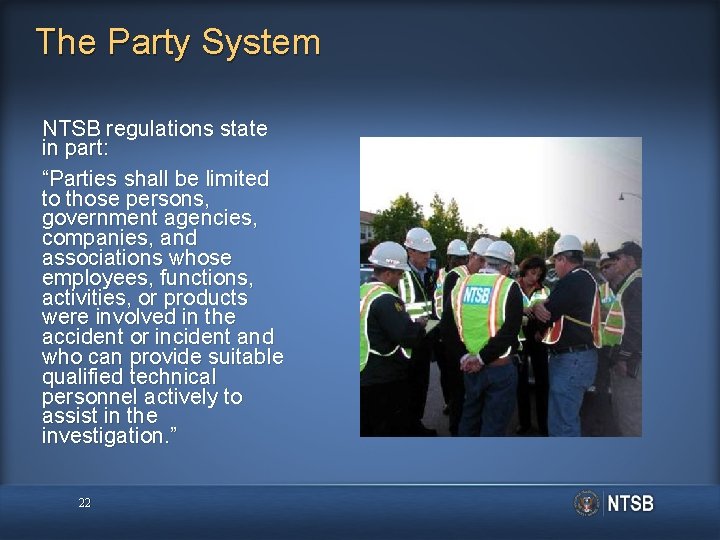
The Party System NTSB regulations state in part: “Parties shall be limited to those persons, government agencies, companies, and associations whose employees, functions, activities, or products were involved in the accident or incident and who can provide suitable qualified technical personnel actively to assist in the investigation. ” 22
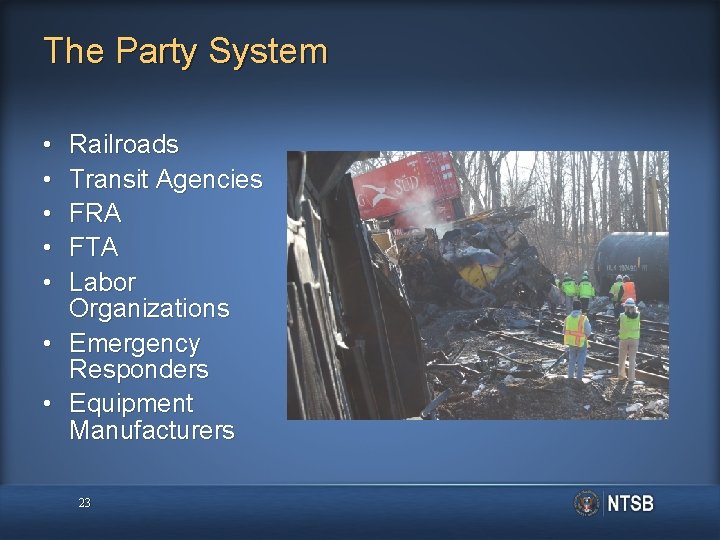
The Party System • • • Railroads Transit Agencies FRA FTA Labor Organizations • Emergency Responders • Equipment Manufacturers 23
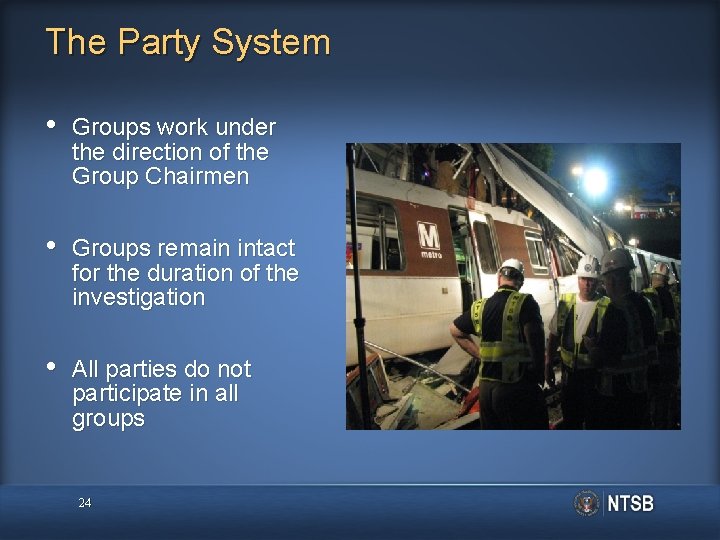
The Party System • Groups work under the direction of the Group Chairmen • Groups remain intact for the duration of the investigation • All parties do not participate in all groups 24
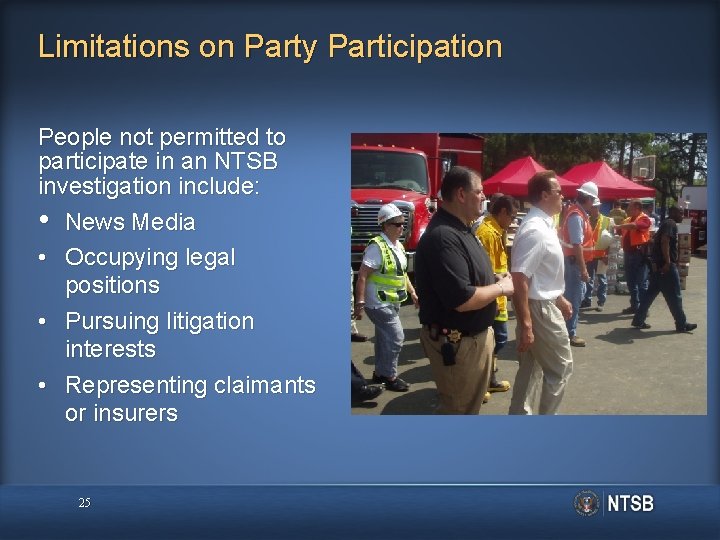
Limitations on Party Participation People not permitted to participate in an NTSB investigation include: • News Media • Occupying legal positions • Pursuing litigation interests • Representing claimants or insurers 25
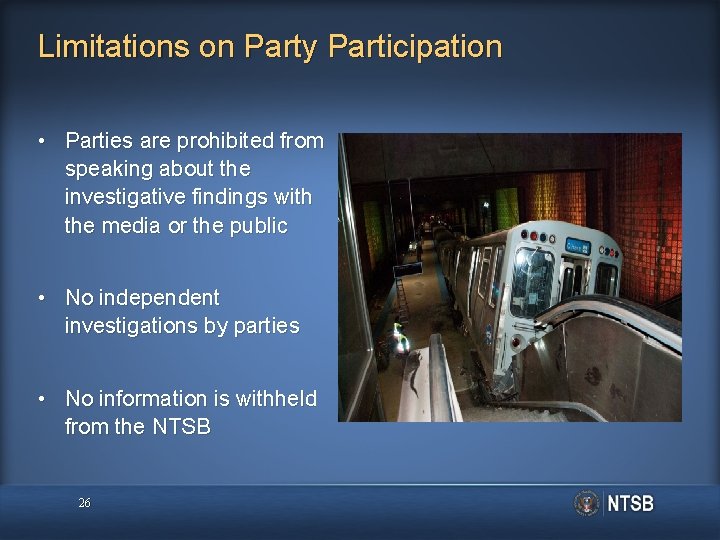
Limitations on Party Participation • Parties are prohibited from speaking about the investigative findings with the media or the public • No independent investigations by parties • No information is withheld from the NTSB 26
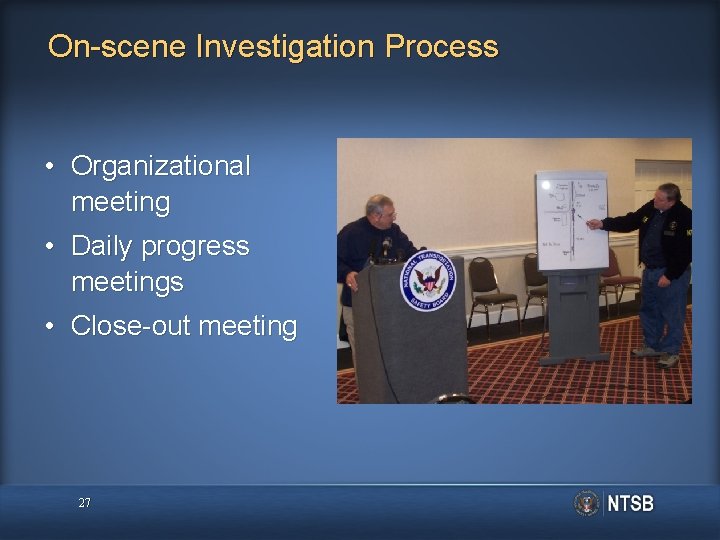
On-scene Investigation Process • Organizational meeting • Daily progress meetings • Close-out meeting 27
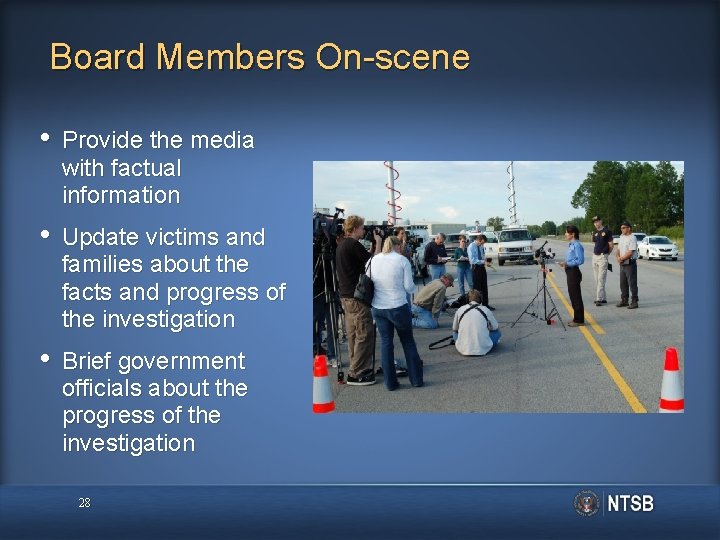
Board Members On-scene • Provide the media with factual information • Update victims and families about the facts and progress of the investigation • Brief government officials about the progress of the investigation 28
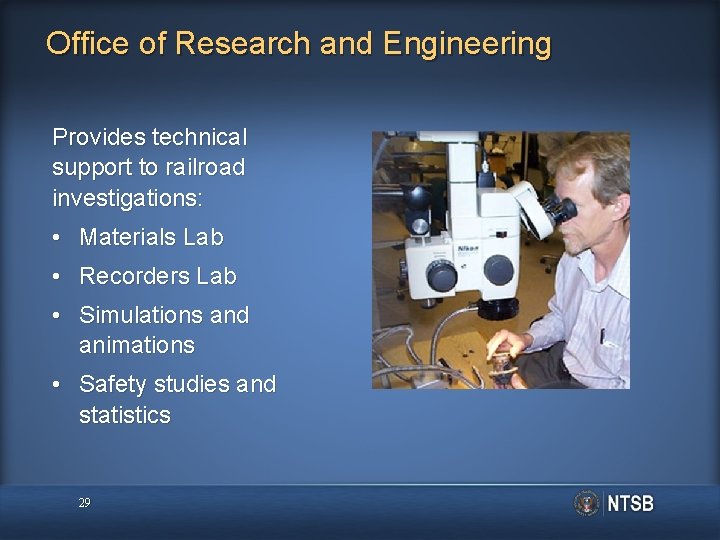
Office of Research and Engineering Provides technical support to railroad investigations: • Materials Lab • Recorders Lab • Simulations and animations • Safety studies and statistics 29
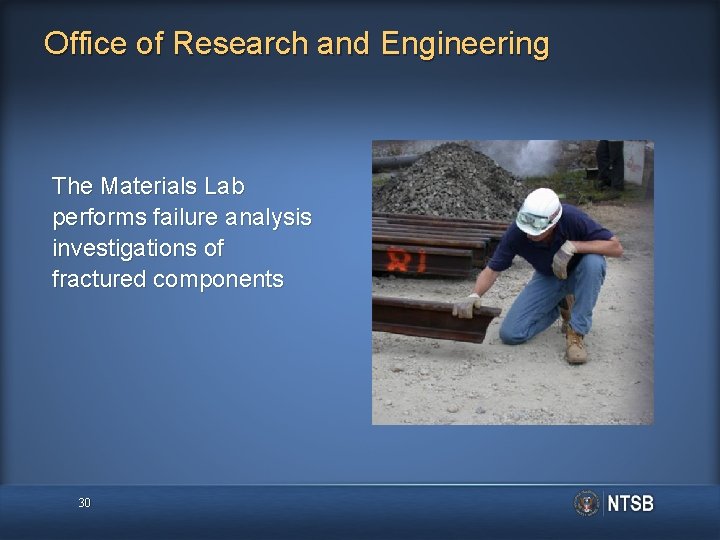
Office of Research and Engineering The Materials Lab performs failure analysis investigations of fractured components 30
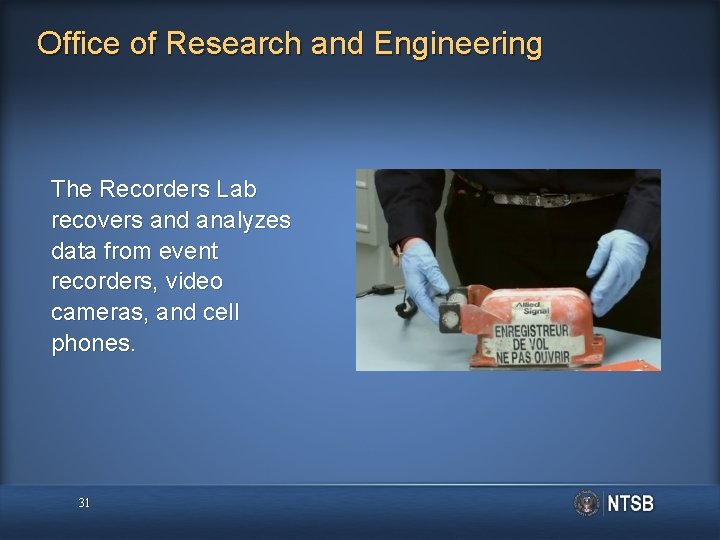
Office of Research and Engineering The Recorders Lab recovers and analyzes data from event recorders, video cameras, and cell phones. 31
Investigative Hearings • Are held in a public forum to gather additional facts about an accident • The Board Members serve as the Board of Inquiry • NTSB technical staff serve as the Technical Panel 32
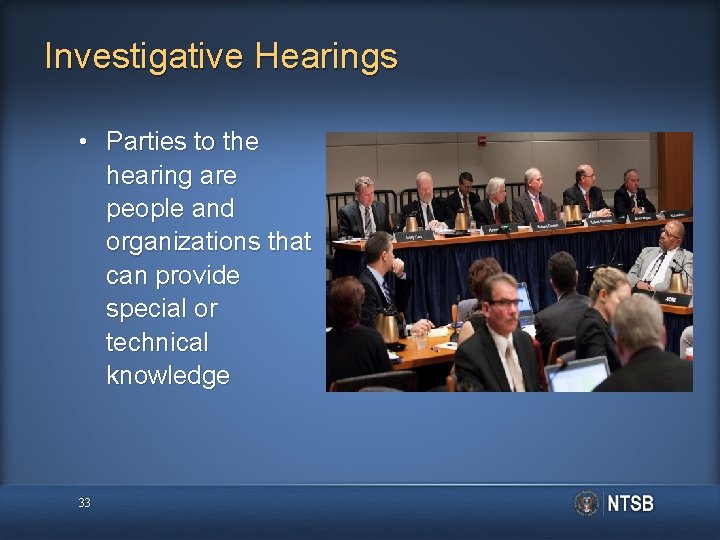
Investigative Hearings • Parties to the hearing are people and organizations that can provide special or technical knowledge 33
Final Accident Report • A draft report is prepared by the investigation staff • The report is generally adopted within 12 to 24 months after an accident • Some reports are presented to the Board at a public meeting • Board Members vote to adopt the report as presented or with modifications 34
Additional NTSB Reports Special Investigations • Focus on a specific safety issue • May involve multiple accidents • Determine the facts, conditions, and circumstances about the issue Safety Studies • Evaluate the effectiveness of government and industry transportation safety programs • Examine policy issues, system safety, and management effectiveness 35
Questions?
- Slides: 36