
Overview of MQiis Electronic Clinical Quality Measures e

- Slides: 15
Overview of MQii’s Electronic Clinical Quality Measures (e. CQMs) & Suggested Quality Indicators
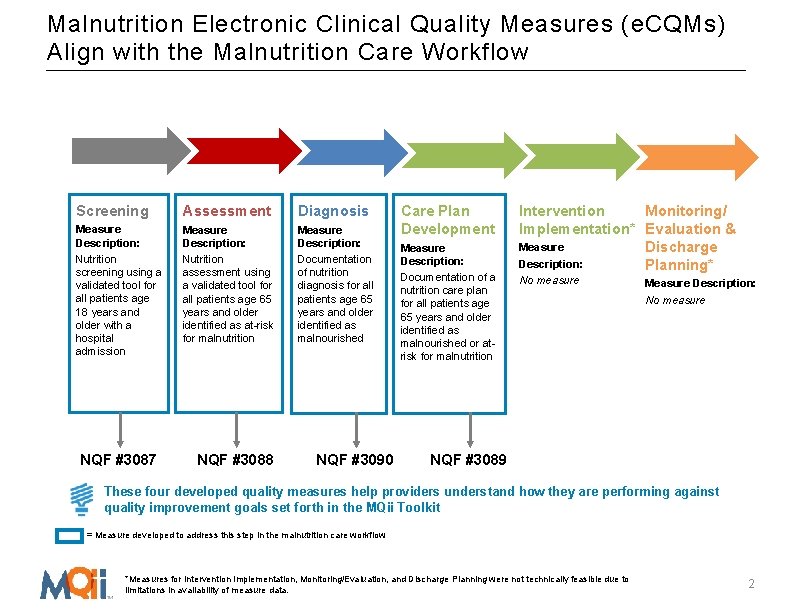
Malnutrition Electronic Clinical Quality Measures (e. CQMs) Align with the Malnutrition Care Workflow Screening Assessment Diagnosis Measure Description: Nutrition screening using a validated tool for all patients age 18 years and older with a hospital admission Measure Description: Nutrition assessment using a validated tool for all patients age 65 years and older identified as at-risk for malnutrition Measure Description: Documentation of nutrition diagnosis for all patients age 65 years and older identified as malnourished NQF #3087 NQF #3088 NQF #3090 Care Plan Development Measure Description: Documentation of a nutrition care plan for all patients age 65 years and older identified as malnourished or atrisk for malnutrition Intervention Monitoring/ Implementation* Evaluation & Measure Discharge Description: Planning* No measure Measure Description: No measure NQF #3089 These four developed quality measures help providers understand how they are performing against quality improvement goals set forth in the MQii Toolkit = Measure developed to address this step in the malnutrition care workflow *Measures for intervention implementation, monitoring/evaluation, and discharge planning were not technically feasible due to data. *Measures for Intervention Implementation, Monitoring/Evaluation, and Discharge Planning were not technically feasible due to limitations in availability of measure data. 2
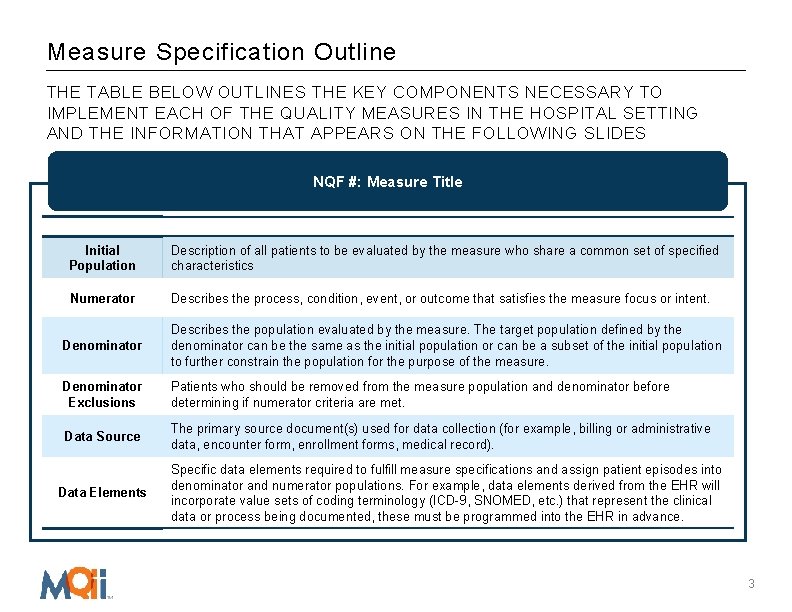
Measure Specification Outline THE TABLE BELOW OUTLINES THE KEY COMPONENTS NECESSARY TO IMPLEMENT EACH OF THE QUALITY MEASURES IN THE HOSPITAL SETTING AND THE INFORMATION THAT APPEARS ON THE FOLLOWING SLIDES NQF #: Measure Title Initial Population Description of all patients to be evaluated by the measure who share a common set of specified characteristics Numerator Describes the process, condition, event, or outcome that satisfies the measure focus or intent. Denominator Describes the population evaluated by the measure. The target population defined by the denominator can be the same as the initial population or can be a subset of the initial population to further constrain the population for the purpose of the measure. Denominator Exclusions Patients who should be removed from the measure population and denominator before determining if numerator criteria are met. Data Source The primary source document(s) used for data collection (for example, billing or administrative data, encounter form, enrollment forms, medical record). Data Elements Specific data elements required to fulfill measure specifications and assign patient episodes into denominator and numerator populations. For example, data elements derived from the EHR will incorporate value sets of coding terminology (ICD-9, SNOMED, etc. ) that represent the clinical data or process being documented, these must be programmed into the EHR in advance. 3
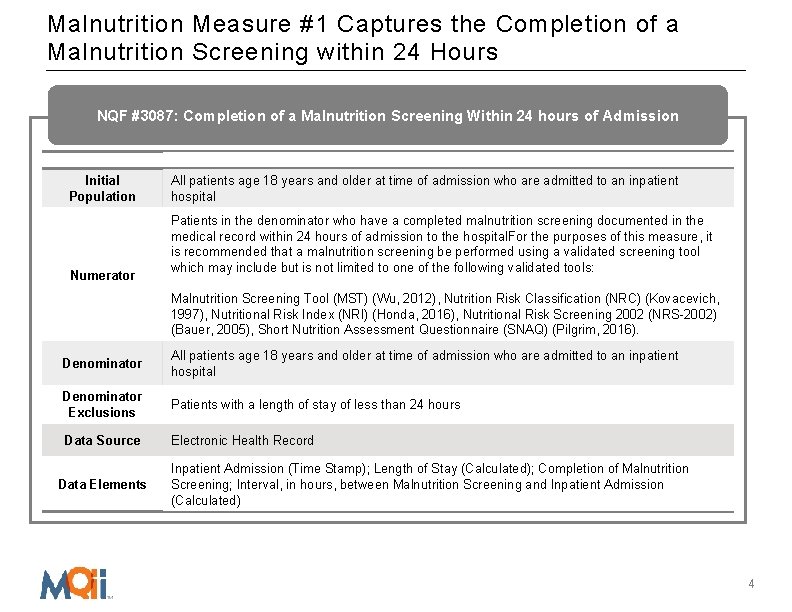
Malnutrition Measure #1 Captures the Completion of a Malnutrition Screening within 24 Hours NQF #3087: Completion of a Malnutrition Screening Within 24 hours of Admission Initial Population Numerator All patients age 18 years and older at time of admission who are admitted to an inpatient hospital Patients in the denominator who have a completed malnutrition screening documented in the medical record within 24 hours of admission to the hospital. For the purposes of this measure, it is recommended that a malnutrition screening be performed using a validated screening tool which may include but is not limited to one of the following validated tools: Malnutrition Screening Tool (MST) (Wu, 2012), Nutrition Risk Classification (NRC) (Kovacevich, 1997), Nutritional Risk Index (NRI) (Honda, 2016), Nutritional Risk Screening 2002 (NRS-2002) (Bauer, 2005), Short Nutrition Assessment Questionnaire (SNAQ) (Pilgrim, 2016). Denominator All patients age 18 years and older at time of admission who are admitted to an inpatient hospital Denominator Exclusions Patients with a length of stay of less than 24 hours Data Source Electronic Health Record Data Elements Inpatient Admission (Time Stamp); Length of Stay (Calculated); Completion of Malnutrition Screening; Interval, in hours, between Malnutrition Screening and Inpatient Admission (Calculated) 4
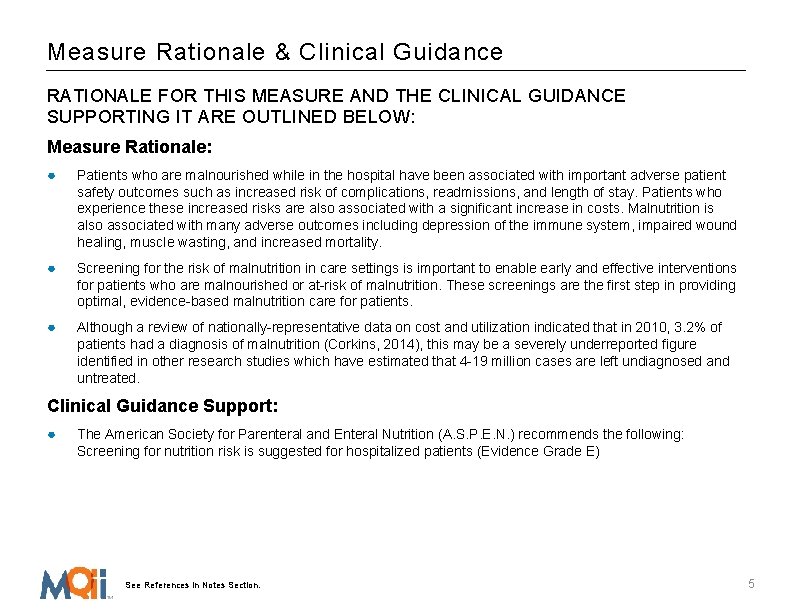
Measure Rationale & Clinical Guidance RATIONALE FOR THIS MEASURE AND THE CLINICAL GUIDANCE SUPPORTING IT ARE OUTLINED BELOW: Measure Rationale: ● Patients who are malnourished while in the hospital have been associated with important adverse patient safety outcomes such as increased risk of complications, readmissions, and length of stay. Patients who experience these increased risks are also associated with a significant increase in costs. Malnutrition is also associated with many adverse outcomes including depression of the immune system, impaired wound healing, muscle wasting, and increased mortality. ● Screening for the risk of malnutrition in care settings is important to enable early and effective interventions for patients who are malnourished or at-risk of malnutrition. These screenings are the first step in providing optimal, evidence-based malnutrition care for patients. ● Although a review of nationally-representative data on cost and utilization indicated that in 2010, 3. 2% of patients had a diagnosis of malnutrition (Corkins, 2014), this may be a severely underreported figure identified in other research studies which have estimated that 4 -19 million cases are left undiagnosed and untreated. Clinical Guidance Support: ● The American Society for Parenteral and Enteral Nutrition (A. S. P. E. N. ) recommends the following: Screening for nutrition risk is suggested for hospitalized patients (Evidence Grade E) See References in Notes Section. 5
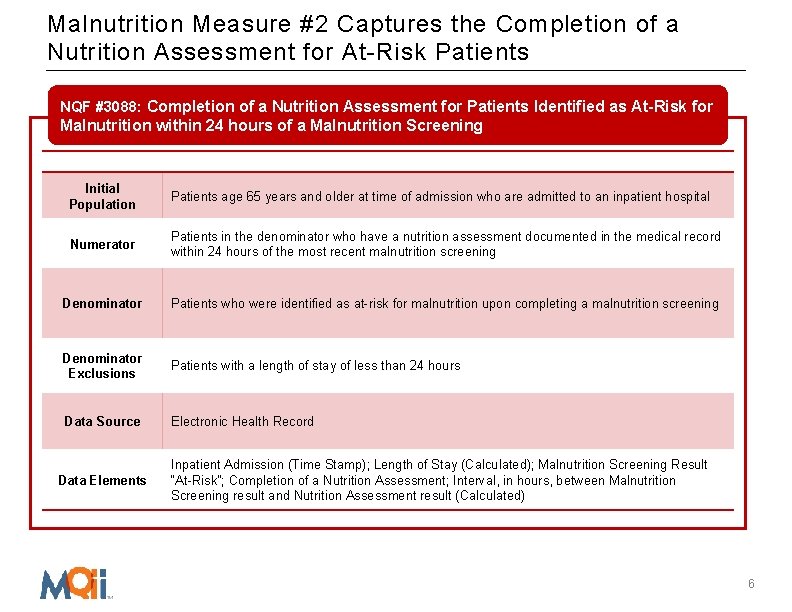
Malnutrition Measure #2 Captures the Completion of a Nutrition Assessment for At-Risk Patients NQF #3088: Completion of a Nutrition Assessment for Patients Identified as At-Risk for Malnutrition within 24 hours of a Malnutrition Screening Initial Population Patients age 65 years and older at time of admission who are admitted to an inpatient hospital Numerator Patients in the denominator who have a nutrition assessment documented in the medical record within 24 hours of the most recent malnutrition screening Denominator Patients who were identified as at-risk for malnutrition upon completing a malnutrition screening Denominator Exclusions Patients with a length of stay of less than 24 hours Data Source Electronic Health Record Data Elements Inpatient Admission (Time Stamp); Length of Stay (Calculated); Malnutrition Screening Result “At-Risk”; Completion of a Nutrition Assessment; Interval, in hours, between Malnutrition Screening result and Nutrition Assessment result (Calculated) 6
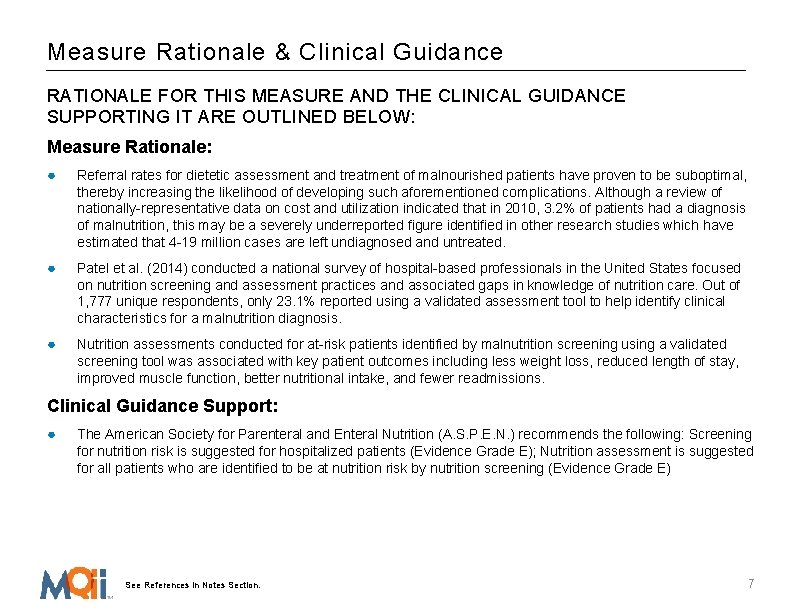
Measure Rationale & Clinical Guidance RATIONALE FOR THIS MEASURE AND THE CLINICAL GUIDANCE SUPPORTING IT ARE OUTLINED BELOW: Measure Rationale: ● Referral rates for dietetic assessment and treatment of malnourished patients have proven to be suboptimal, thereby increasing the likelihood of developing such aforementioned complications. Although a review of nationally-representative data on cost and utilization indicated that in 2010, 3. 2% of patients had a diagnosis of malnutrition, this may be a severely underreported figure identified in other research studies which have estimated that 4 -19 million cases are left undiagnosed and untreated. ● Patel et al. (2014) conducted a national survey of hospital-based professionals in the United States focused on nutrition screening and assessment practices and associated gaps in knowledge of nutrition care. Out of 1, 777 unique respondents, only 23. 1% reported using a validated assessment tool to help identify clinical characteristics for a malnutrition diagnosis. ● Nutrition assessments conducted for at-risk patients identified by malnutrition screening using a validated screening tool was associated with key patient outcomes including less weight loss, reduced length of stay, improved muscle function, better nutritional intake, and fewer readmissions. Clinical Guidance Support: ● The American Society for Parenteral and Enteral Nutrition (A. S. P. E. N. ) recommends the following: Screening for nutrition risk is suggested for hospitalized patients (Evidence Grade E); Nutrition assessment is suggested for all patients who are identified to be at nutrition risk by nutrition screening (Evidence Grade E) See References in Notes Section. 7
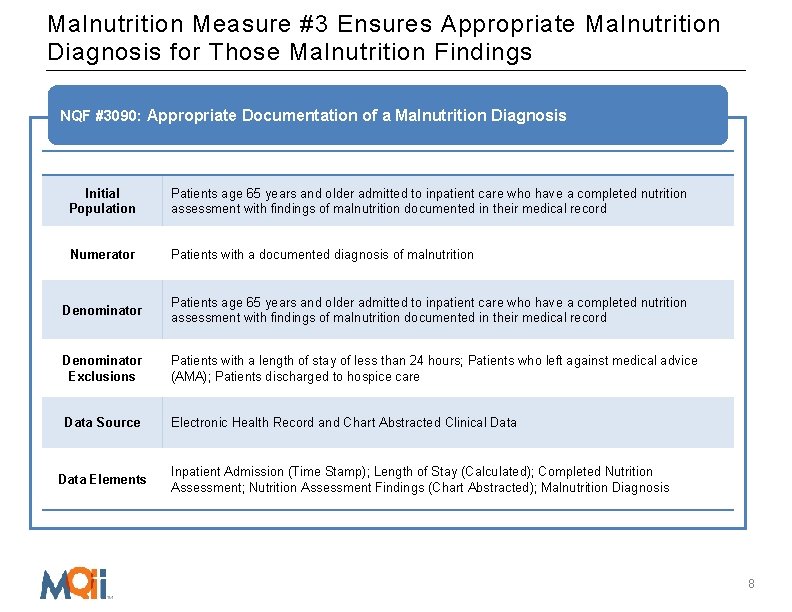
Malnutrition Measure #3 Ensures Appropriate Malnutrition Diagnosis for Those Malnutrition Findings NQF #3090: Appropriate Documentation of a Malnutrition Diagnosis Initial Population Patients age 65 years and older admitted to inpatient care who have a completed nutrition assessment with findings of malnutrition documented in their medical record Numerator Patients with a documented diagnosis of malnutrition Denominator Patients age 65 years and older admitted to inpatient care who have a completed nutrition assessment with findings of malnutrition documented in their medical record Denominator Exclusions Patients with a length of stay of less than 24 hours; Patients who left against medical advice (AMA); Patients discharged to hospice care Data Source Electronic Health Record and Chart Abstracted Clinical Data Elements Inpatient Admission (Time Stamp); Length of Stay (Calculated); Completed Nutrition Assessment; Nutrition Assessment Findings (Chart Abstracted); Malnutrition Diagnosis 8
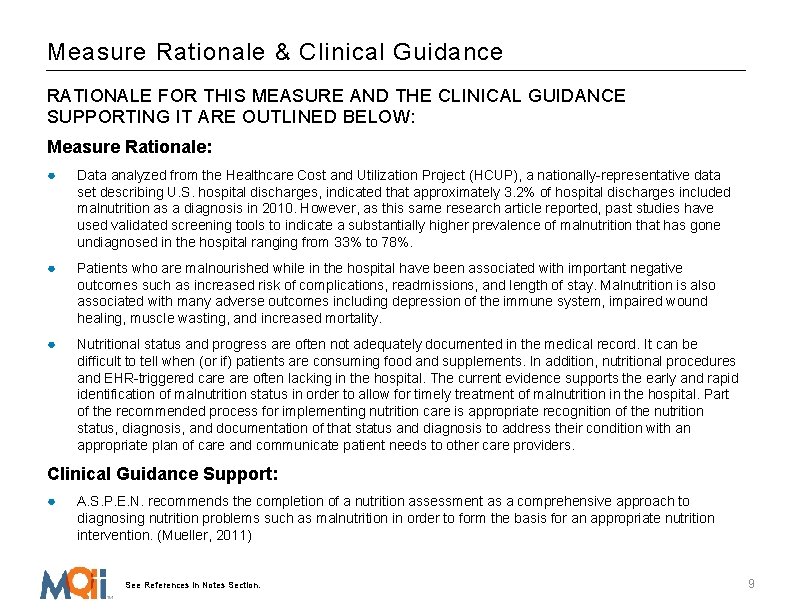
Measure Rationale & Clinical Guidance RATIONALE FOR THIS MEASURE AND THE CLINICAL GUIDANCE SUPPORTING IT ARE OUTLINED BELOW: Measure Rationale: ● Data analyzed from the Healthcare Cost and Utilization Project (HCUP), a nationally-representative data set describing U. S. hospital discharges, indicated that approximately 3. 2% of hospital discharges included malnutrition as a diagnosis in 2010. However, as this same research article reported, past studies have used validated screening tools to indicate a substantially higher prevalence of malnutrition that has gone undiagnosed in the hospital ranging from 33% to 78%. ● Patients who are malnourished while in the hospital have been associated with important negative outcomes such as increased risk of complications, readmissions, and length of stay. Malnutrition is also associated with many adverse outcomes including depression of the immune system, impaired wound healing, muscle wasting, and increased mortality. ● Nutritional status and progress are often not adequately documented in the medical record. It can be difficult to tell when (or if) patients are consuming food and supplements. In addition, nutritional procedures and EHR-triggered care often lacking in the hospital. The current evidence supports the early and rapid identification of malnutrition status in order to allow for timely treatment of malnutrition in the hospital. Part of the recommended process for implementing nutrition care is appropriate recognition of the nutrition status, diagnosis, and documentation of that status and diagnosis to address their condition with an appropriate plan of care and communicate patient needs to other care providers. Clinical Guidance Support: ● A. S. P. E. N. recommends the completion of a nutrition assessment as a comprehensive approach to diagnosing nutrition problems such as malnutrition in order to form the basis for an appropriate nutrition intervention. (Mueller, 2011) See References in Notes Section. 9
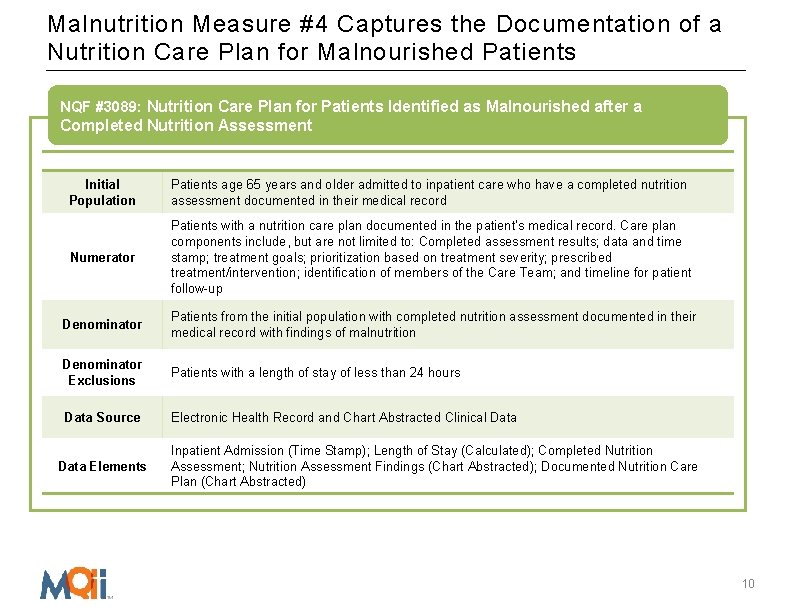
Malnutrition Measure #4 Captures the Documentation of a Nutrition Care Plan for Malnourished Patients NQF #3089: Nutrition Care Plan for Patients Identified as Malnourished after a Completed Nutrition Assessment Initial Population Patients age 65 years and older admitted to inpatient care who have a completed nutrition assessment documented in their medical record Numerator Patients with a nutrition care plan documented in the patient's medical record. Care plan components include, but are not limited to: Completed assessment results; data and time stamp; treatment goals; prioritization based on treatment severity; prescribed treatment/intervention; identification of members of the Care Team; and timeline for patient follow-up Denominator Patients from the initial population with completed nutrition assessment documented in their medical record with findings of malnutrition Denominator Exclusions Patients with a length of stay of less than 24 hours Data Source Electronic Health Record and Chart Abstracted Clinical Data Elements Inpatient Admission (Time Stamp); Length of Stay (Calculated); Completed Nutrition Assessment; Nutrition Assessment Findings (Chart Abstracted); Documented Nutrition Care Plan (Chart Abstracted) 10
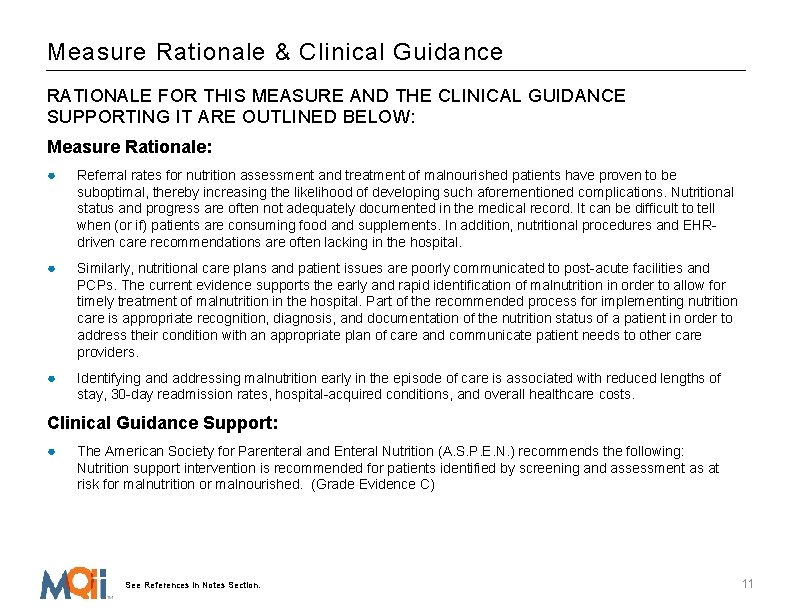
Measure Rationale & Clinical Guidance RATIONALE FOR THIS MEASURE AND THE CLINICAL GUIDANCE SUPPORTING IT ARE OUTLINED BELOW: Measure Rationale: ● Referral rates for nutrition assessment and treatment of malnourished patients have proven to be suboptimal, thereby increasing the likelihood of developing such aforementioned complications. Nutritional status and progress are often not adequately documented in the medical record. It can be difficult to tell when (or if) patients are consuming food and supplements. In addition, nutritional procedures and EHRdriven care recommendations are often lacking in the hospital. ● Similarly, nutritional care plans and patient issues are poorly communicated to post-acute facilities and PCPs. The current evidence supports the early and rapid identification of malnutrition in order to allow for timely treatment of malnutrition in the hospital. Part of the recommended process for implementing nutrition care is appropriate recognition, diagnosis, and documentation of the nutrition status of a patient in order to address their condition with an appropriate plan of care and communicate patient needs to other care providers. ● Identifying and addressing malnutrition early in the episode of care is associated with reduced lengths of stay, 30 -day readmission rates, hospital-acquired conditions, and overall healthcare costs. Clinical Guidance Support: ● The American Society for Parenteral and Enteral Nutrition (A. S. P. E. N. ) recommends the following: Nutrition support intervention is recommended for patients identified by screening and assessment as at risk for malnutrition or malnourished. (Grade Evidence C) See References in Notes Section. 11
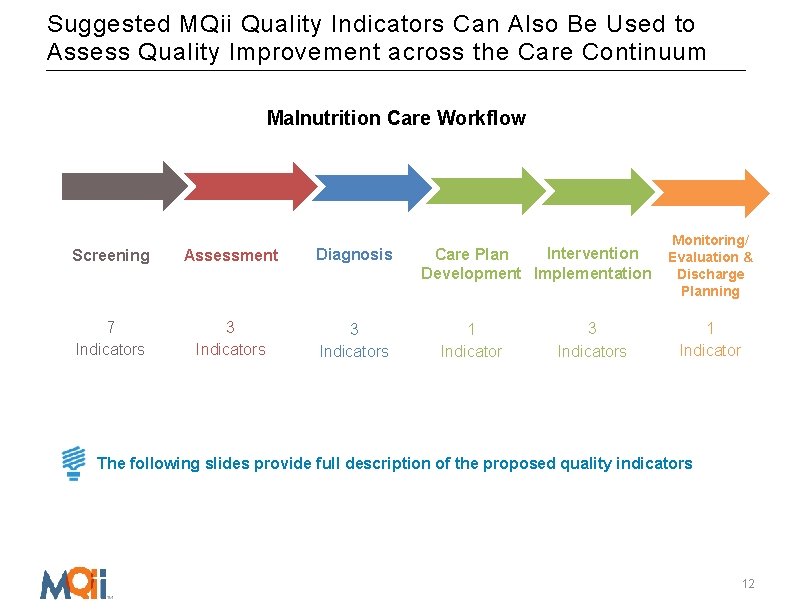
Suggested MQii Quality Indicators Can Also Be Used to Assess Quality Improvement across the Care Continuum Malnutrition Care Workflow Screening Assessment Diagnosis 7 Indicators 3 Indicators Intervention Care Plan Development Implementation 1 Indicator 3 Indicators Monitoring/ Evaluation & Discharge Planning 1 Indicator The following slides provide full description of the proposed quality indicators 12
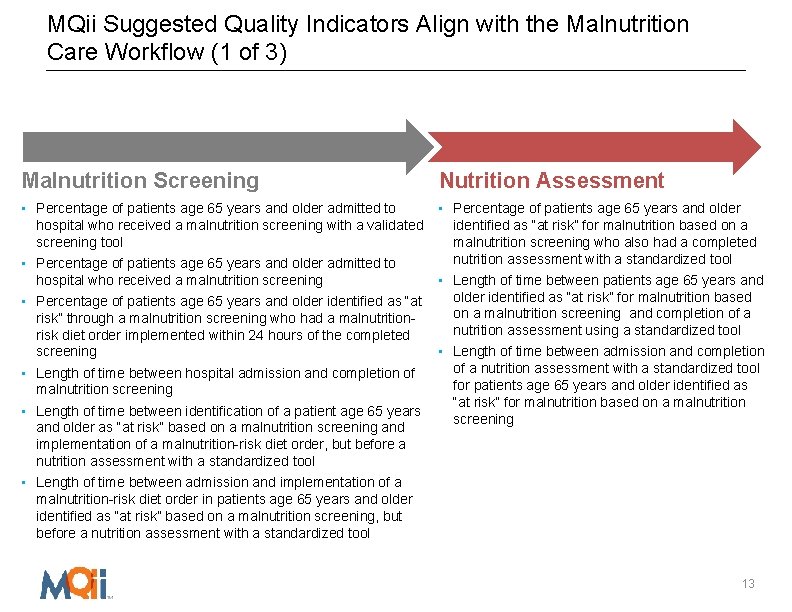
MQii Suggested Quality Indicators Align with the Malnutrition Care Workflow (1 of 3) Malnutrition Screening Nutrition Assessment • Percentage of patients age 65 years and older admitted to • Percentage of patients age 65 years and older hospital who received a malnutrition screening with a validated screening tool • Percentage of patients age 65 years and older admitted to hospital who received a malnutrition screening • Percentage of patients age 65 years and older identified as “at risk” through a malnutrition screening who had a malnutritionrisk diet order implemented within 24 hours of the completed screening • Length of time between hospital admission and completion of malnutrition screening • Length of time between identification of a patient age 65 years and older as “at risk” based on a malnutrition screening and implementation of a malnutrition-risk diet order, but before a nutrition assessment with a standardized tool identified as “at risk” for malnutrition based on a malnutrition screening who also had a completed nutrition assessment with a standardized tool • Length of time between patients age 65 years and older identified as “at risk” for malnutrition based on a malnutrition screening and completion of a nutrition assessment using a standardized tool • Length of time between admission and completion of a nutrition assessment with a standardized tool for patients age 65 years and older identified as “at risk” for malnutrition based on a malnutrition screening • Length of time between admission and implementation of a malnutrition-risk diet order in patients age 65 years and older identified as “at risk” based on a malnutrition screening, but before a nutrition assessment with a standardized tool 13
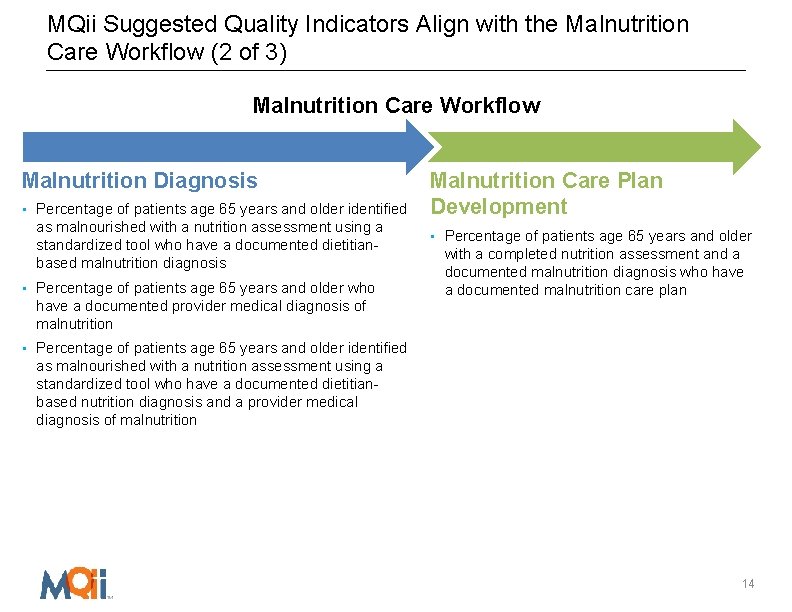
MQii Suggested Quality Indicators Align with the Malnutrition Care Workflow (2 of 3) Malnutrition Care Workflow Malnutrition Diagnosis • Percentage of patients age 65 years and older identified as malnourished with a nutrition assessment using a standardized tool who have a documented dietitianbased malnutrition diagnosis • Percentage of patients age 65 years and older who have a documented provider medical diagnosis of malnutrition Malnutrition Care Plan Development • Percentage of patients age 65 years and older with a completed nutrition assessment and a documented malnutrition diagnosis who have a documented malnutrition care plan • Percentage of patients age 65 years and older identified as malnourished with a nutrition assessment using a standardized tool who have a documented dietitianbased nutrition diagnosis and a provider medical diagnosis of malnutrition 14
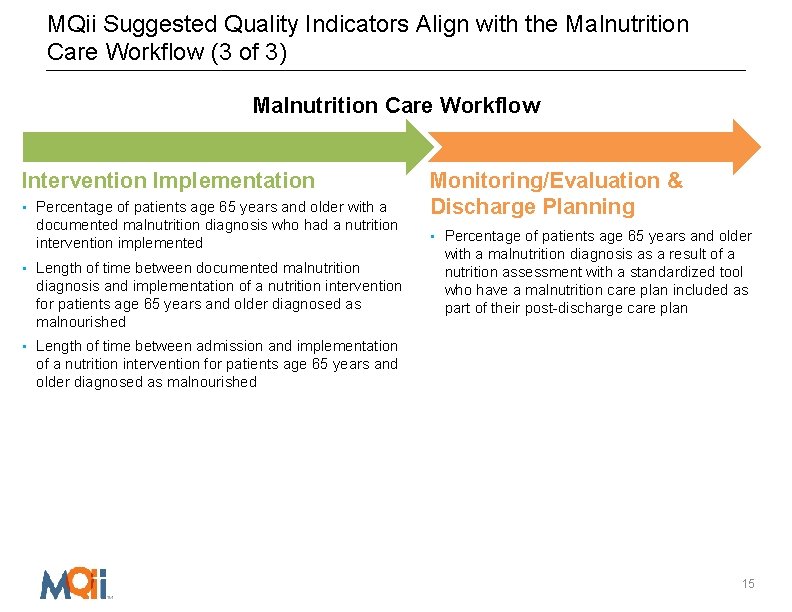
MQii Suggested Quality Indicators Align with the Malnutrition Care Workflow (3 of 3) Malnutrition Care Workflow Intervention Implementation • Percentage of patients age 65 years and older with a documented malnutrition diagnosis who had a nutrition intervention implemented • Length of time between documented malnutrition diagnosis and implementation of a nutrition intervention for patients age 65 years and older diagnosed as malnourished Monitoring/Evaluation & Discharge Planning • Percentage of patients age 65 years and older with a malnutrition diagnosis as a result of a nutrition assessment with a standardized tool who have a malnutrition care plan included as part of their post-discharge care plan • Length of time between admission and implementation of a nutrition intervention for patients age 65 years and older diagnosed as malnourished 15