
Overview of modelling methodologies for Mitigation Assessment VIRTUAL
- Slides: 30
Overview of modelling methodologies for Mitigation Assessment VIRTUAL TRAINING ON SELECTING THE MOST APPROPRIATE MODELLING TOOL TO ASSESS MITIGATION ACTIONS 30 -31 March 2021 Jyoti Prasad Painuly Senior Researcher, UNEP-DTU Partnership
Overview of modelling methodologies • Introduction and scope • Models classification • Modelling approaches • Selecting a model • Optimization models (Partial equilibrium family) • MARKAL and TIMES • ETSAP • Non-energy sectors
Introduction to modelling • GHG Mitigation Assessment- scope • Carbon dioxide (CO 2), methane (CH 4), nitrous oxide (N 2 O), hydrofluorocarbons (HFCs), perfluorocarbons (PFCs), sulfur hexafluoride (SF 6), and nitrogen trifluoride (NF 3 ) • HFCs and Ozone are covered by Montreal Protocol and its subsequent agreement such as the Kigali amendment to the Montreal Protocol • Mitigation modelling tools here are focussed on CO 2. Emissions from Agriculture (except fuel use in agri. machineries), Forestry (sink) and Land Use (AFOLU) sectors are excluded (only mentioned briefly) • CO 2 is primarily emitted during production and use of energy. Therefore, energy modelling tools that cover production as well use of energy are prime candidates among mitigation tools
Models Classification • Several ways to classify models • General and Specific Purposes of Energy Models • General Purposes- Forecasting, exploring future, backcasting • Specific Purposes: Energy demand models, energy supply models, appraisal models (to compare options) • The Model Structure: Internal Assumptions & External Assumptions • Degree of endogenization, coverage of sectors (non-energy)- impact energy of policy on entire economy, details of energy end uses, energy supply technologies • The Analytical Approach • Top-Down vs. Bottom-Up • Economic approach v/s engineering approach • Market behaviour and aggregated data v/s disaggregated data with sectoral (energy) focus etc. • Hybrid models • The Underlying Methodology • Econometric, general equilibrium (macro-economic and CGE models), optimization, simulation, accounting (spreadsheet), backcasting, and multi-criteria methodologies.
• Geographical Coverage: Global, Regional, National, Local, and Project level • Sectoral Coverage- energy sector for most bottom-up models • The Time Horizon: Short, Medium, and Long Term • Data Requirements • The Mathematical Approach
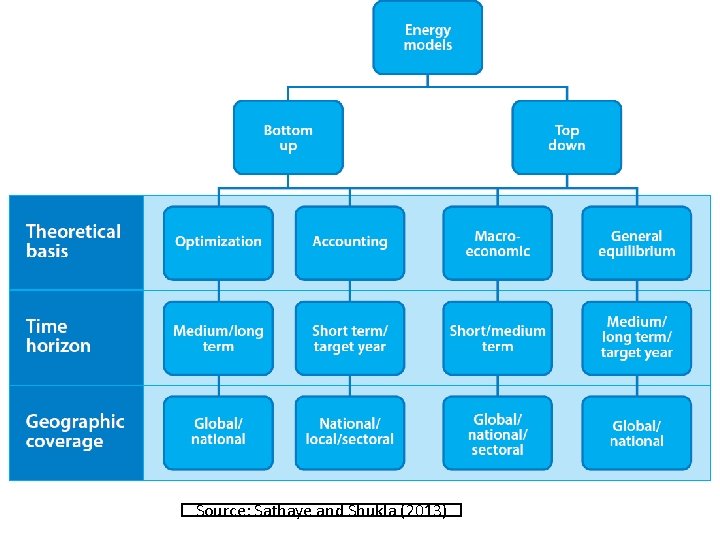
Source: Sathaye and Shukla (2013)
Analytical Approach • Top-Down Models • Highly aggregated economic models • Good to assess macroeconomic impact of energy and environmental policies, Eg. carbon tax, tradable quota etc. at national level • Difficult to factor-in impact of technology improvements in the production functions that models use • These type of models include input-output models, macroeconomic models, and CGE models. • Bottom-Up Models • In the model economy is represented at a disaggregated level (a sectoral level or below) with detailed characterization of technologies. • A high degree of detail regarding technology, such as its cost and efficiency, is included in bottom-up models (but it is not concerned with energy demand)
Optimization models • Have detailed representation of technologies both on supply and demand side (capital, operating cost and technical efficiency); different fuels • Typically, you calculate lowest cost of energy to meet the demand • Partial equilibrium approach is assumed (energy sector) and hence other sectors are not affected by changes in energy sector (no change in energy prices due to change in demand • Potential can be explored and scenarios made for technology related assumptions • Eg. MARKAL; modifications to allow trading between regions, add elasticity to link demand to energy prices
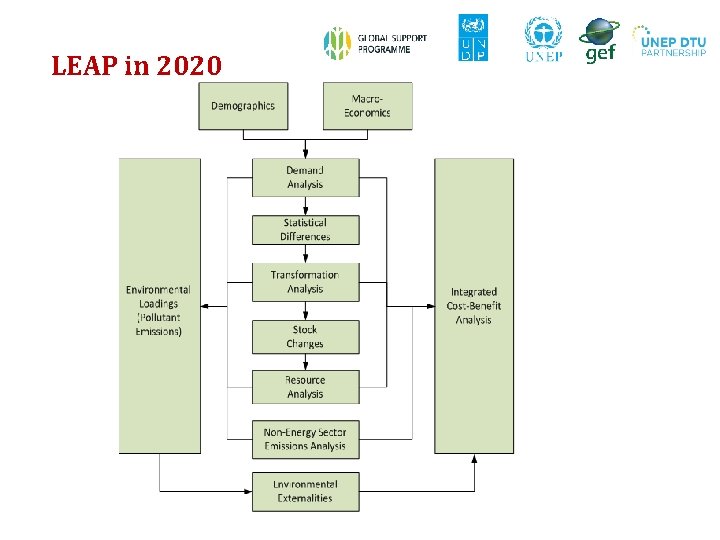
Accounting Framework Models • Account for flows of energy in a system based on simple engineering relationships (e. g. conservation of energy). • Evaluation and comparison of policies are largely performed externally by the analyst: the framework consists of a sophisticated calculator, database and reporting tool. • Accounting frameworks ensures physical consistency but not economic consistency. • The accounting models can include the environmental effects related to energy production, conversion and use by incorporating appropriate environmental co-efficients; • Simulations are run to understand the implications of certain policy interventions on some indicators (e. g. , CO 2 emissions). Hence, models are useful when using backcasting approaches. • Models are flexible and can be used to explore energy system at various levels- cities, states, countries, and regions. • Eg. LEAP, GACMO, PROSPECTS+ (Note: LEAP now has been modified and has soft linkages with NEMO (optimization model) and HAPIT III tool (health impact from indoor air pollution))
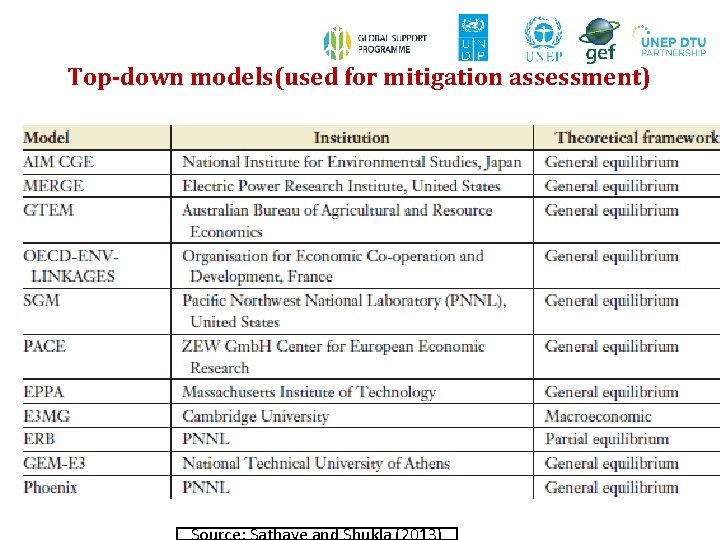
Macroeconomic Models • Macroeconomic models • It is a general term for models that operate at macro level • Includes input-output models, general equilibrium models, and other macroeconomic models (Global econometric models for example) Eg. E 3 MG (Global econometric model)
General Equilibrium Models • Computable general equilibrium models are used for GHG abatement analysis. • Computable : Solved numerically • General: Economy wide • Eg. GEM-E 3, AIM CGE, MERGE etc.
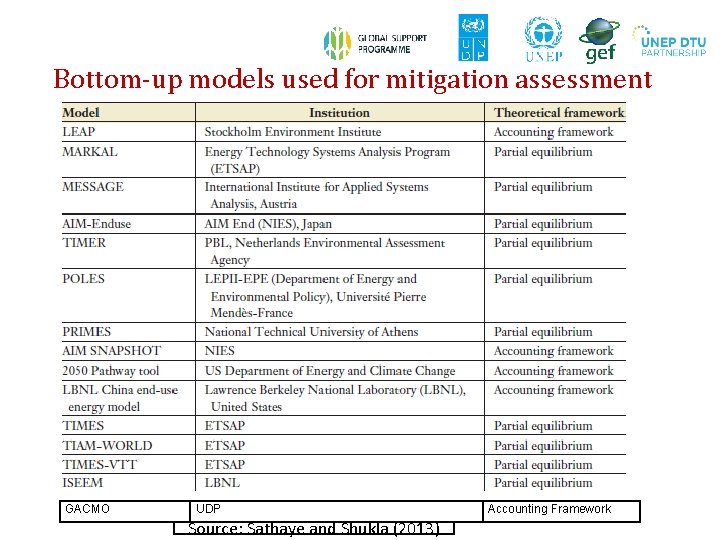
Bottom-up models used for mitigation assessment GACMO UDP Source: Sathaye and Shukla (2013) Accounting Framework
Top-down models(used for mitigation assessment) Source: Sathaye and Shukla (2013)
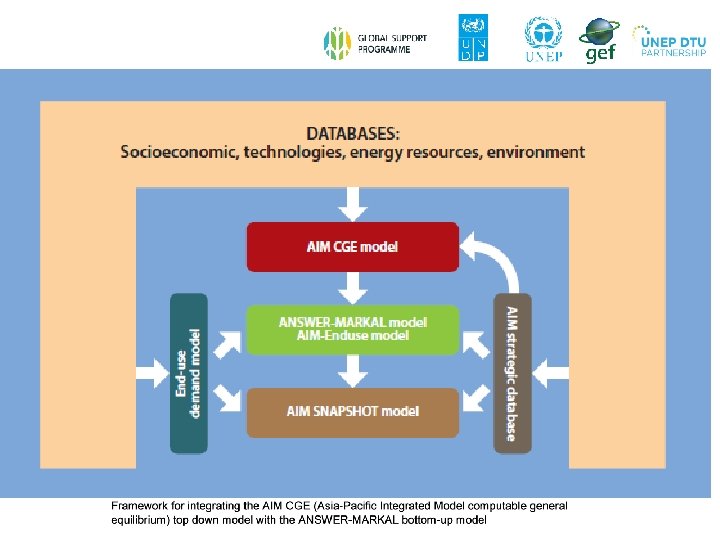
Hybrid Models • Top-down models are short on technological details, whereas bottom-up models lack macroeconomic consistency. T • Soft linking is done to run a given scenario on both topdown and bottom-up models (see Figure). • Brings macroeconomic consistency by making GDP growth comparable, e. g. , if a carbon tax leads to GDP loss (in macro model), energy demand can be adjusted accordingly when it is input in the bottom-up model. Eg. MARKAL-MACRO, Re. MIND etc.
Integrated Assessment Models • A combination of models (4) that incorporate; • The impacts of human activities on GHG emissions (from all sectors) • the implications of GHG emissions on atmospheric concentrations of GHG emissions • the implications of GHG concentrations on global temperatures and sea level, and • the impacts of these changes on ecosystems
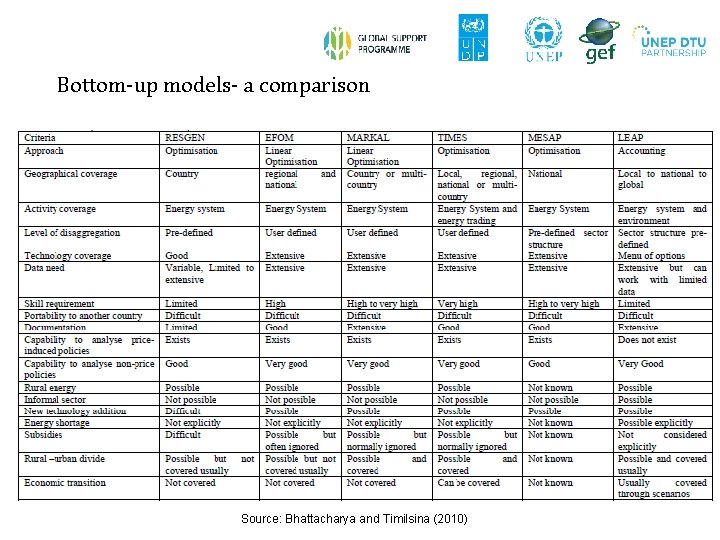
Bottom-up models- a comparison Source: Bhattacharya and Timilsina (2010)
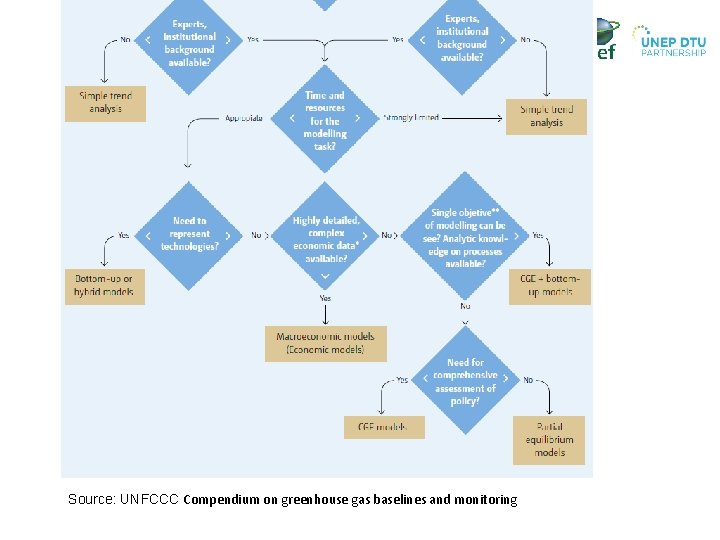
Source: UNFCCC Compendium on greenhouse gas baselines and monitoring
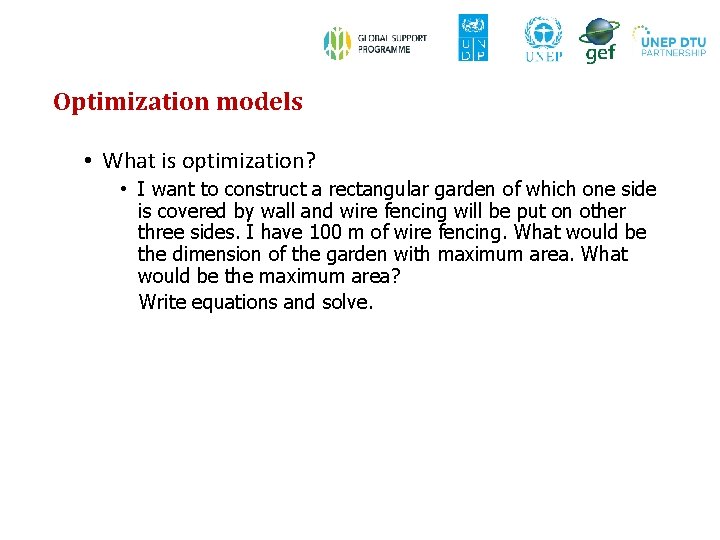
Optimization models • What is optimization? • I want to construct a rectangular garden of which one side is covered by wall and wire fencing will be put on other three sides. I have 100 m of wire fencing. What would be the dimension of the garden with maximum area. What would be the maximum area? Write equations and solve.
MARKAL or TIMES • The TIMES and the MARKAL both has same basic modelling approach- and use linear programming. • Both are technology explicit, dynamic partial equilibrium models of energy markets. • Both have similar multi-regional feature, which allows the modeller to construct geographically integrated (even global) instances. • MARKAL has fixed length time periods. However TIMES allows the user to define period lengths in a completely flexible way. • Data decoupling in TIMES greatly simplifies the maintenance of the model database and allows the user great flexibility in modifying the new definition of the planning horizon.
• ANSWER MARKAL • ANSWER TIMES • VEDA-TIMES (Reference energy system added. EU 27 Demo there) • TIAM-MACRO (Integrated Assessment model) • MACRO-MARKAL • Elastic MARKAL • TIMES- GTAP (softlink with computable general equilibrium model)
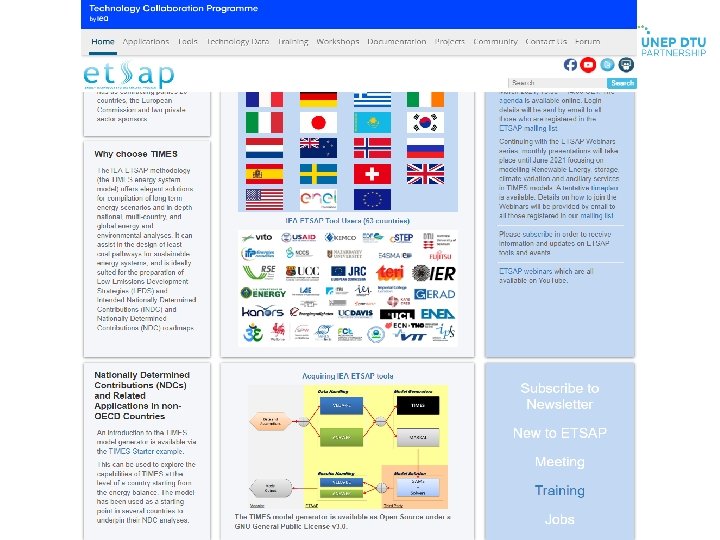
The Energy Technology Systems Analysis Program (ETSAP) • The Energy Technology Systems Analysis Program (ETSAP) is one of the longest running Technology Collaboration Programme of the International Energy Agency (IEA). ETSAP currently has as contracting parties 20 countries, the European Commission and two private sector sponsors. • It has been continually dedicated to the advancement of integrated energy system modelling platforms for more than 35 years. ETSAP promotes and supports the application of technical economic tools at the global, regional, national and local levels. It aims at preparing sustainable strategies for economic development, energy security, climate change mitigation and environment. The Contracting Parties conduct joint research and employ the ETSAP Tools to advise their national governments at the highest levels. • IEA-ETSAP partners meet twice a year to share knowledge, discuss the research agenda and carry-out a common program of work. The workshops are open to all interested parties, and any country can petition to become a contracting party of ETSAP. • As part of its outreach activities, ETSAP collaborates with many other research teams throughout the World, participates in various global forums (EMF 22, for example), and makes its Newsletter and its Workshop Proceedings available online to the public at large.
• The IEA-ETSAP community leads a major initiative for open source solutions for energy scenario modeling needs. It functions as a consortium of member country teams and invited teams that actively cooperate to establish, maintain, and expand a consistent multicountry energy/economy/environment/engineering (4 E) analytical capability. Its backbone consists of individual national teams in nearly 70 countries, and a common, comparable and combinable methodology, mainly based on the MARKAL/TIMES family of models, permitting the compilation of long term energy scenarios and in-depth national, multi-country, and global energy and environmental analyses.
• IEA-ETSAP offers training courses at the introductory, intermediate and advanced levels to introduce new users to its model generators and user interfaces. If you are interested, please post your intentions (with expectations) on the forum where groups of potential participants can form in different parts of the world. • Starting in 2017 ETSAP established the Tosato Grant which will provide financial support for trainees from less developed countries to attend ETSAP’s training courses and the ETSAP workshop. The allocation of funds will be decided by the O. A. and the Chair, based on requests submitted though the registration form below. • The next training is scheduled online on 26 -28 April 2021, 15: 00 - 20: 00 CET • ETSAP webinars which are all available on You. Tube.
TIMES- Country adoptions- China Represents China as a single region The demand for energy services is split in 30 sectors. Time horizon extends to 2050. The same base model is run in the three versions; technological optimum (least cost), partial equilibrium (MARKAL Elastic Demands) and general equilibrium (MARKAL-MACRO). • It has been used to evaluate the impact of different carbon mitigation policies on social welfare from MARKAL and MARKAL-ED, and on GDP, investment and consumption from MARKAL-MACRO TIMES_PT. • Tsinghua University, Beijing 100084, China • •
LEAP in 2020
Models for mitigation assessment in non-energy sectors • Models available for land use, land-use change and forestry (LULUCF). • • Individual tree growth models; Forest gap models; Bio-geographical models; Ecosystem process models; Terrestrial carbon-circulation models; Land-use change models; Spreadsheet models
Examples of models used in non-energy sectors • IMAGE (Integrated Model to Assess the Global Environment), developed at the National Institute for Public Health and the Environment (RIVM) in the Netherlands. For more information on IMAGE, visit the website http: //www. mnp. nl/en/themasites/image/index. htm • COMAP (Comprehensive Mitigation Assessment Process), a spreadsheet-based model developed by the Lawrence Berkeley Laboratory in the USA. • For more information on COMAP, visit the website http: //ies. lbl. gov/iespubs/iesgpubs. html • For more list of models refer the University of Kassel web-based Register of Ecological Models (REM), which is a useful resource for reviewing many of these tools. REM is available here: • <http: //eco. wiz. uni-kassel. de/ecobas. html>
Thank you