
Overview of MAPS detectors Fergus Wilson Rutherford Appleton
- Slides: 57
Overview of MAPS detectors Fergus Wilson Rutherford Appleton Laboratory (with lots of input and slides from Renato Turchetta and the RAL Sensor Design Group) Vertex 2015, Macha Lake, Czech Republic, 15 -19 Sep 2014
Outline q Introduction to Monolithic Active Pixel Sensors q Some non-HEP and commercial uses (and why they matter). q On-going and future HEP MAPS projects and detectors. q Overlapping presentations: q PXL at STAR: M. Szelenicak/M. Simko (poster) q ALICE ITS upgrade: F. Reidt q ATLAS pixels: J. Grosse-Knetter q HV-CMOS: D. Muenstermann q Workshop on CMOS Active Pixel Sensors for Particle Tracking (CPIX 14), Bonn, 15 -19 Sept q 3 days, 37 talks q I’ll do it all in 25 minutes… 16 -Sep-2014 Fergus Wilson, RAL/STFC 2
CMOS Monolithic Active Pixel Sensors • First invented in the 60’s but CCDs much better then. • Re-invented at the beginning of 90 s: JPL, IMEC, – – – Standard CMOS technology. All-in-one detector-connection-readout – Monolithic. Small size / greater integration. Low power consumption. Low noise. Radiation resistance. System-level cost. Increased functionality. Increased speed. Increased readout speed (parallel processing). Region of interest readout. Etc… 16 -Sep-2014 Fergus Wilson, RAL/STFC 3
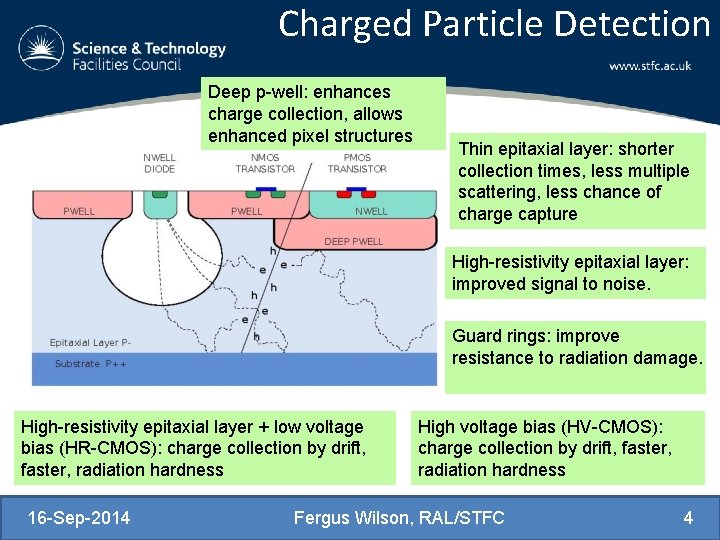
Charged Particle Detection Deep p-well: enhances charge collection, allows enhanced pixel structures Thin epitaxial layer: shorter collection times, less multiple scattering, less chance of charge capture High-resistivity epitaxial layer: improved signal to noise. Guard rings: improve resistance to radiation damage. High-resistivity epitaxial layer + low voltage bias (HR-CMOS): charge collection by drift, faster, radiation hardness 16 -Sep-2014 High voltage bias (HV-CMOS): charge collection by drift, faster, radiation hardness Fergus Wilson, RAL/STFC 4
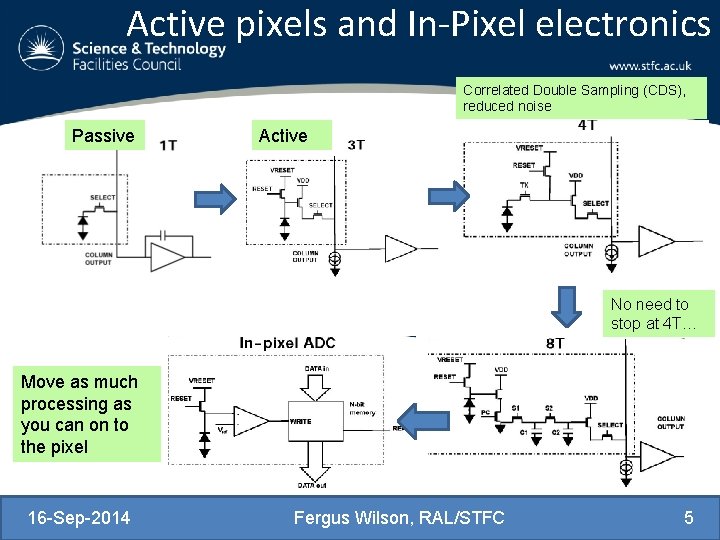
Active pixels and In-Pixel electronics Correlated Double Sampling (CDS), reduced noise Passive Active No need to stop at 4 T… Move as much processing as you can on to the pixel 16 -Sep-2014 Fergus Wilson, RAL/STFC 5
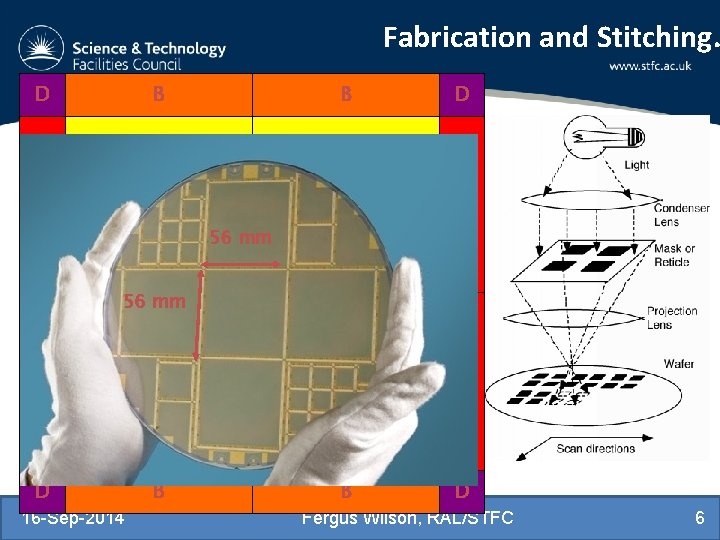
Fabrication and Stitching. D B B D Reticle size is just over 2 cm x 2 cm ‘stitching’ Reticle is subdivided in blocks C A A C 56 mm C A A C D B B D 16 -Sep-2014 Fergus Wilson, RAL/STFC 6
Beyond Particle Physics • MAPS have penetrated other science areas more quickly than particle physics. • Commercially attractive (high yields, low cost). • Many overlaps with particle physics requirements: – Radiation tolerance – Small and large pixels – High Speed – Quantum efficiency – High dynamic range – Low power - Cost - Reliability • But particle physics detectors want them all ! 16 -Sep-2014 Fergus Wilson, RAL/STFC 7
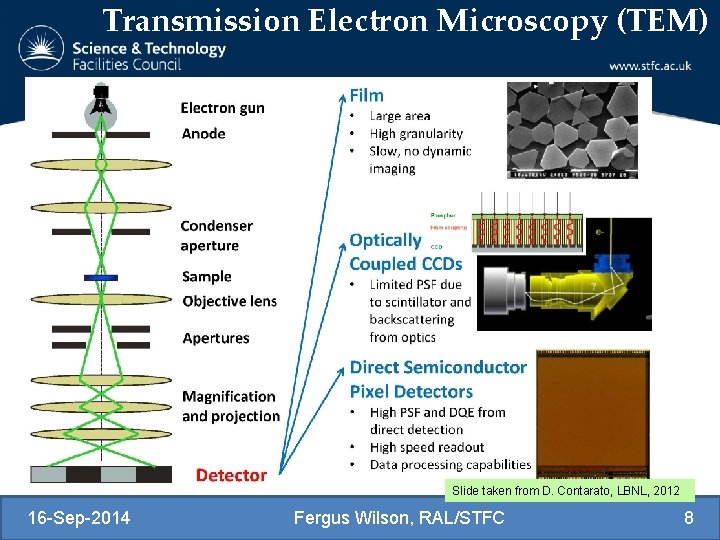
Transmission Electron Microscopy (TEM) Slide taken from D. Contarato, LBNL, 2012 16 -Sep-2014 Fergus Wilson, RAL/STFC 8
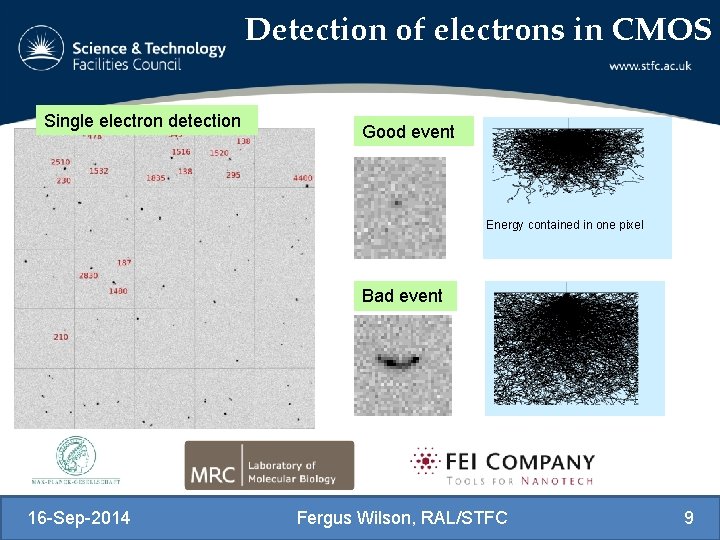
Detection of electrons in CMOS Single electron detection Good event Energy contained in one pixel Bad event 16 -Sep-2014 Fergus Wilson, RAL/STFC 9
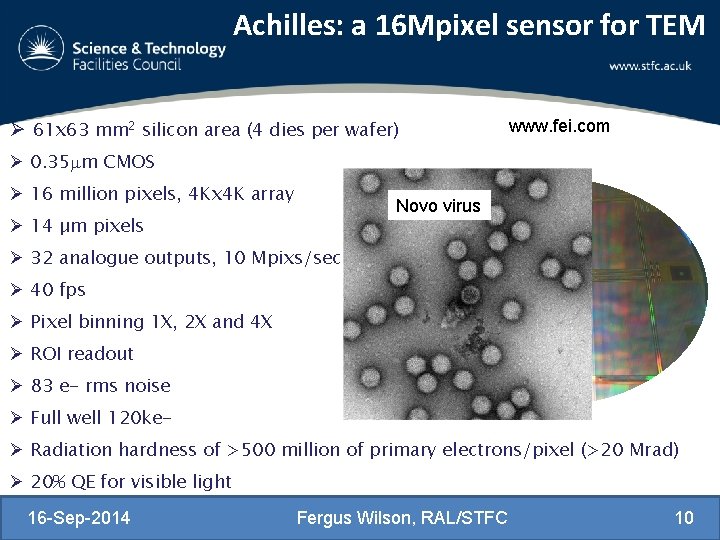
Achilles: a 16 Mpixel sensor for TEM Ø 61 x 63 mm 2 silicon area (4 dies per wafer) www. fei. com Ø 0. 35 m CMOS Ø 16 million pixels, 4 Kx 4 K array Novo virus Ø 14 µm pixels Ø 32 analogue outputs, 10 Mpixs/sec Ø 40 fps Ø Pixel binning 1 X, 2 X and 4 X Ø ROI readout Ø 83 e- rms noise Ø Full well 120 ke- Ø Radiation hardness of >500 million of primary electrons/pixel (>20 Mrad) Ø 20% QE for visible light 16 -Sep-2014 Fergus Wilson, RAL/STFC 10
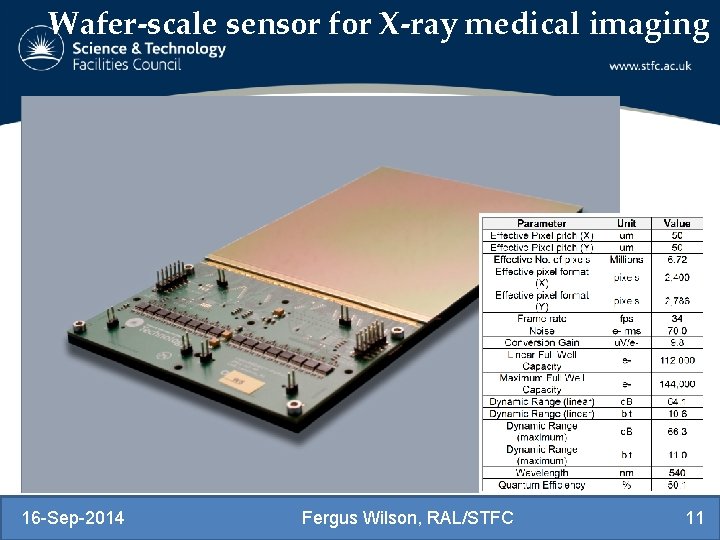
Wafer-scale sensor for X-ray medical imaging • Motivations – Extra-oral dental, mammography, chest imaging, security, … • Requirements – High yield (commodity item). – Radiation hard: – Very large sensors: • Wafer scale sensor. • One sensor per 8”/20 cm wafer • 3 -side buttable – 2 x N tilling • Lassena characteristics – – 6. 7 Mpixels; 30 fps; 50µm pixels; Low noise: 68 e. Large area: 3 -side buttable to cover any length with 28 cm width Binning x 2, x 4; Region-of Interest readout High dynamic range, multiple programmable integration times 16 -Sep-2014 Fergus Wilson, RAL/STFC 11
Photon Science - Percival Pixelated Energy Resolving CMOS Imager, Versatile and Large 16 -Sep-2014 Fergus Wilson, RAL/STFC 12
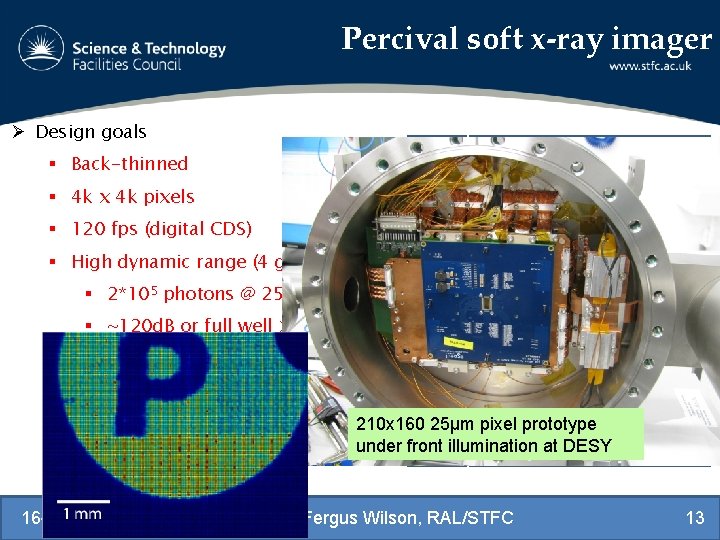
Percival soft x-ray imager § 4 k x 4 k pixels § 120 fps (digital CDS) § High dynamic range (4 gains per pixel) § 2*105 photons @ 250 e. V § ~120 d. B or full well >10 Me§ 12+1 bit ADC Pixel array 4 kx 4 k @25µm pitch) SPI and bias generator § Back-thinned Multi-level row control Ø Design goals 28, 000 ADCs (7 ADCs per column) § Digital I/O (LVDS) 210 x 160 25µm pixel prototype under front illumination at DESY Serialiser and LVDS I/O § 60 Gbit/sec continuous data rate § 15 bits per pixel (2 gain bits + 13 bits) 16 -Sep-2014 Fergus Wilson, RAL/STFC 13
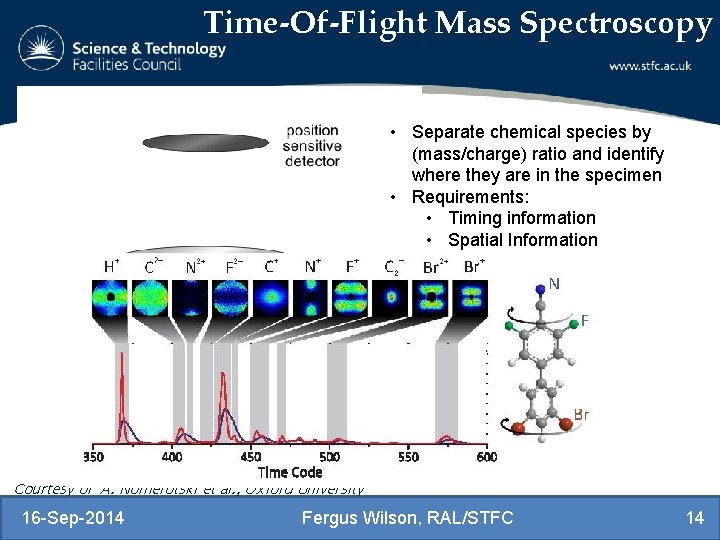
Time-Of-Flight Mass Spectroscopy • Separate chemical species by (mass/charge) ratio and identify where they are in the specimen • Requirements: • Timing information • Spatial Information Courtesy of A. Nomerotski et al. , Oxford University 16 -Sep-2014 Fergus Wilson, RAL/STFC 14
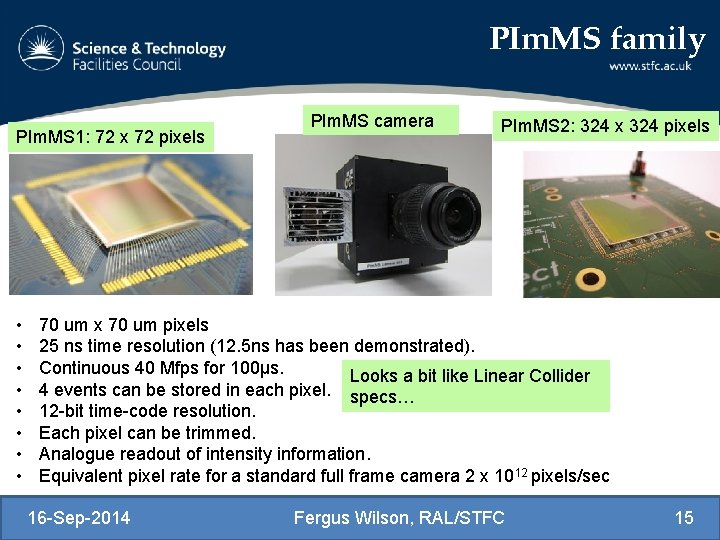
PIm. MS family PIm. MS 1: 72 x 72 pixels PIm. MS camera PIm. MS 2: 324 x 324 pixels )/ • • 70 um x 70 um pixels 25 ns time resolution (12. 5 ns has been demonstrated). Continuous 40 Mfps for 100µs. Looks a bit like Linear Collider 4 events can be stored in each pixel. specs… 12 -bit time-code resolution. Each pixel can be trimmed. Analogue readout of intensity information. Equivalent pixel rate for a standard full frame camera 2 x 1012 pixels/sec 16 -Sep-2014 Fergus Wilson, RAL/STFC 15
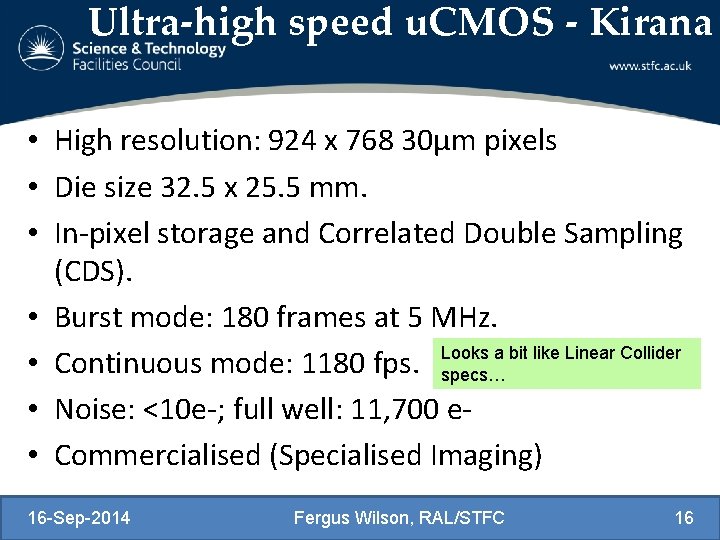
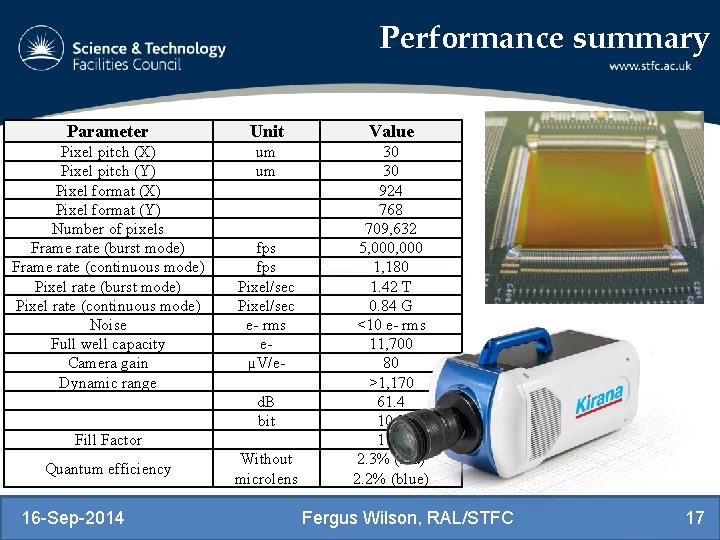
Ultra-high speed u. CMOS - Kirana • High resolution: 924 x 768 30µm pixels • Die size 32. 5 x 25. 5 mm. • In-pixel storage and Correlated Double Sampling (CDS). • Burst mode: 180 frames at 5 MHz. Looks a bit like Linear Collider • Continuous mode: 1180 fps. specs… • Noise: <10 e-; full well: 11, 700 e • Commercialised (Specialised Imaging) 16 -Sep-2014 Fergus Wilson, RAL/STFC 16
Performance summary Parameter Unit Value Pixel pitch (X) Pixel pitch (Y) Pixel format (X) Pixel format (Y) Number of pixels Frame rate (burst mode) Frame rate (continuous mode) Pixel rate (burst mode) Pixel rate (continuous mode) Noise Full well capacity Camera gain Dynamic range um um 30 30 924 768 709, 632 5, 000 1, 180 1. 42 T 0. 84 G <10 e- rms 11, 700 80 >1, 170 61. 4 10. 2 11% 2. 3% (red) 2. 2% (blue) fps Pixel/sec e- rms eµV/ed. B bit Fill Factor Quantum efficiency 16 -Sep-2014 Without microlens Fergus Wilson, RAL/STFC 17
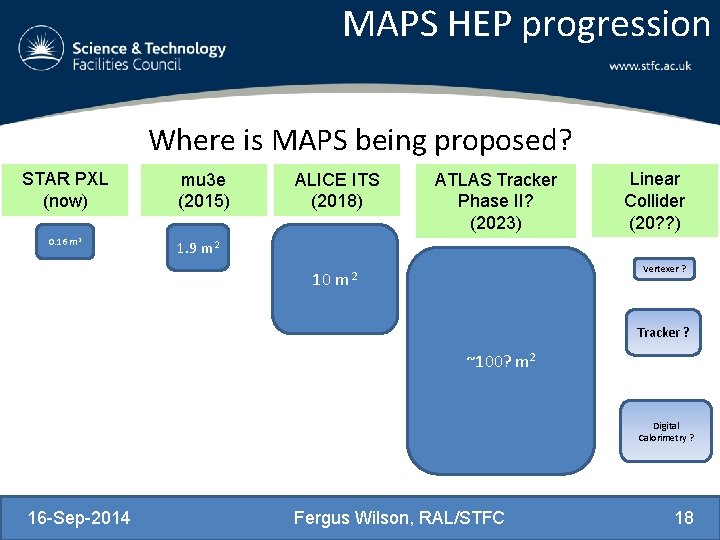
MAPS HEP progression Where is MAPS being proposed? STAR PXL (now) 0. 16 m 2 mu 3 e (2015) ALICE ITS (2018) ATLAS Tracker Phase II? (2023) Linear Collider (20? ? ) 1. 9 m 2 Vertexer ? 10 m 2 Tracker ? ~100? m 2 Digital Calorimetry ? 16 -Sep-2014 Fergus Wilson, RAL/STFC 18
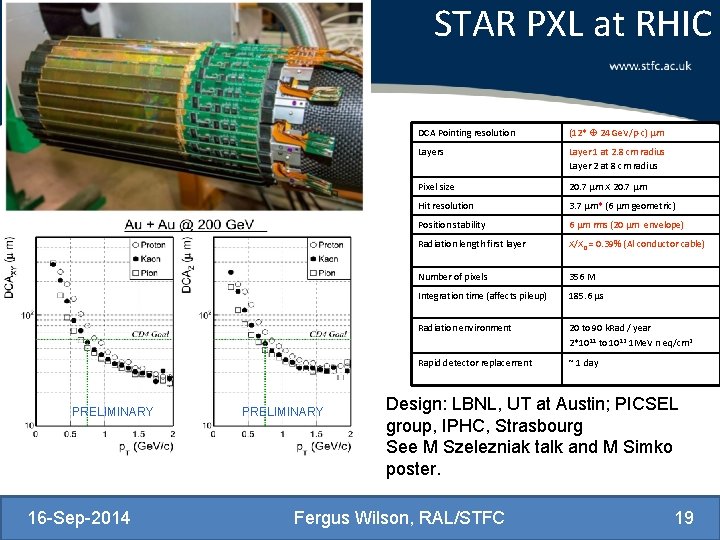
STAR PXL at RHIC PRELIMINARY 16 -Sep-2014 PRELIMINARY DCA Pointing resolution (12* 24 Ge. V/p c) m Layers Layer 1 at 2. 8 cm radius Layer 2 at 8 cm radius Pixel size 20. 7 m X 20. 7 m Hit resolution 3. 7 m* (6 m geometric) Position stability 6 m rms (20 m envelope) Radiation length first layer X/X 0 = 0. 39% (Al conductor cable) Number of pixels 356 M Integration time (affects pileup) 185. 6 s Radiation environment 20 to 90 k. Rad / year 2*1011 to 1012 1 Me. V n eq/cm 2 Rapid detector replacement ~ 1 day Design: LBNL, UT at Austin; PICSEL group, IPHC, Strasbourg See M Szelezniak talk and M Simko poster. Fergus Wilson, RAL/STFC 19
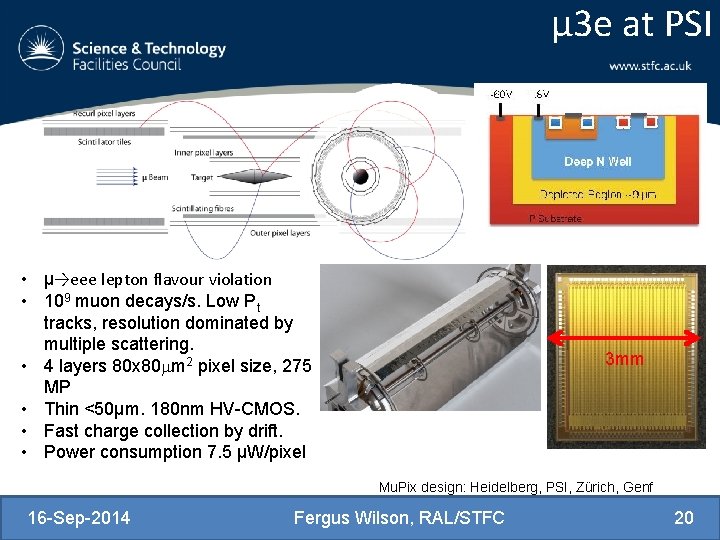
μ 3 e at PSI • µ→eee lepton flavour violation • 109 muon decays/s. Low Pt tracks, resolution dominated by multiple scattering. • 4 layers 80 x 80 m 2 pixel size, 275 MP • Thin <50µm. 180 nm HV-CMOS. • Fast charge collection by drift. • Power consumption 7. 5 µW/pixel 3 mm Mu. Pix design: Heidelberg, PSI, Zürich, Genf 16 -Sep-2014 Fergus Wilson, RAL/STFC 20
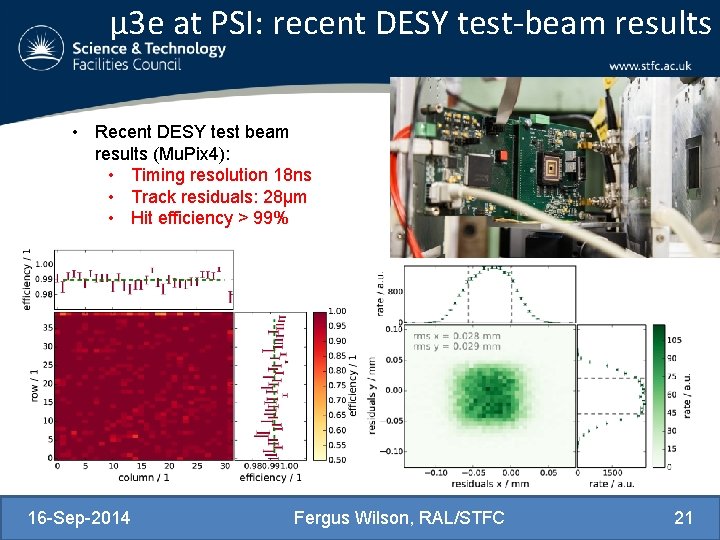
μ 3 e at PSI: recent DESY test-beam results • Recent DESY test beam results (Mu. Pix 4): • Timing resolution 18 ns • Track residuals: 28µm • Hit efficiency > 99% 16 -Sep-2014 Fergus Wilson, RAL/STFC 21
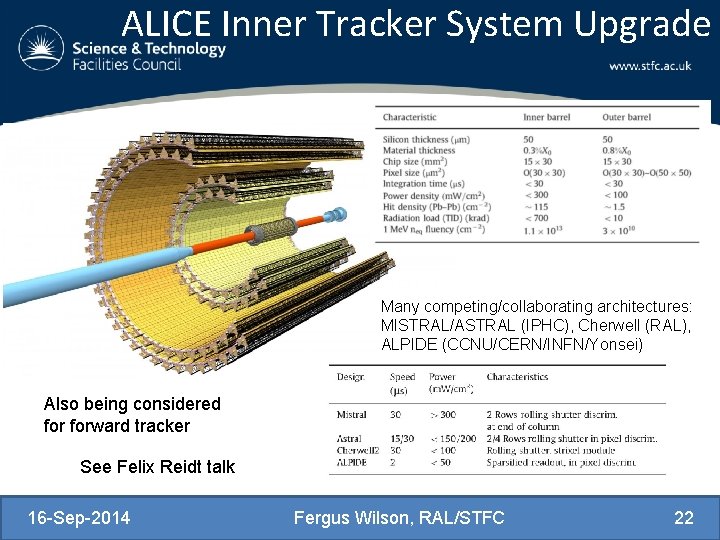
ALICE Inner Tracker System Upgrade Many competing/collaborating architectures: MISTRAL/ASTRAL (IPHC), Cherwell (RAL), ALPIDE (CCNU/CERN/INFN/Yonsei) Also being considered forward tracker See Felix Reidt talk 16 -Sep-2014 Fergus Wilson, RAL/STFC 22
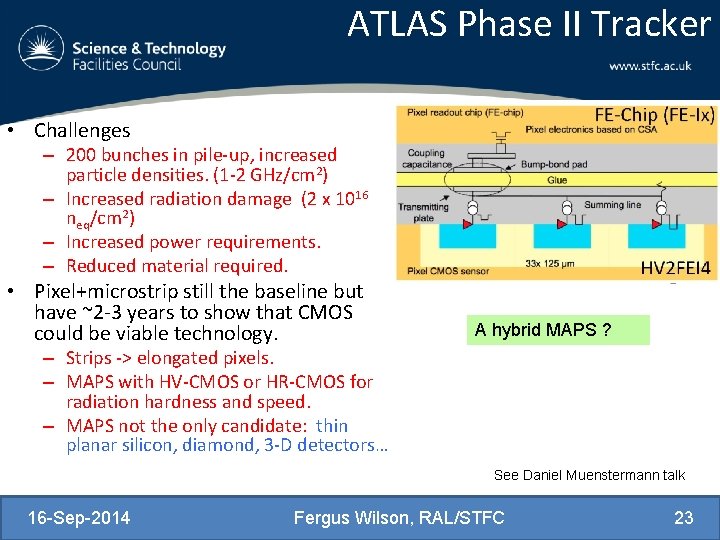
ATLAS Phase II Tracker • Challenges – 200 bunches in pile-up, increased particle densities. (1 -2 GHz/cm 2) – Increased radiation damage (2 x 10¹⁶ neq/cm 2) – Increased power requirements. – Reduced material required. • Pixel+microstrip still the baseline but have ~2 -3 years to show that CMOS could be viable technology. A hybrid MAPS ? – Strips -> elongated pixels. – MAPS with HV-CMOS or HR-CMOS for radiation hardness and speed. – MAPS not the only candidate: thin planar silicon, diamond, 3 -D detectors… See Daniel Muenstermann talk 16 -Sep-2014 Fergus Wilson, RAL/STFC 23
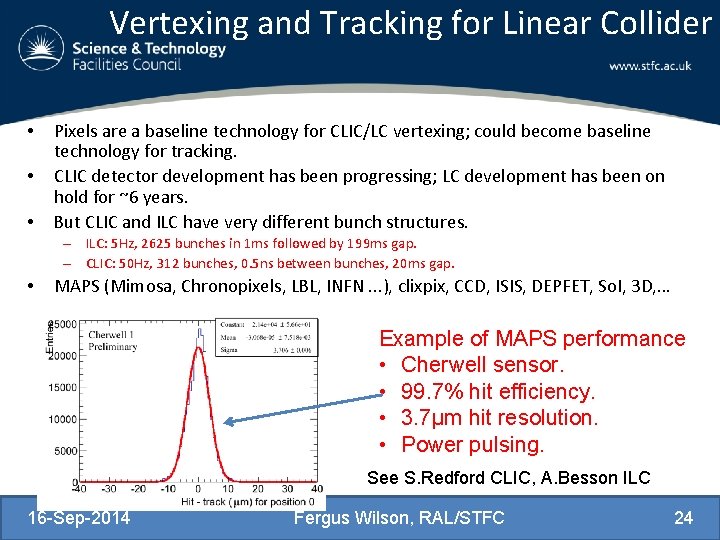
Vertexing and Tracking for Linear Collider • • • Pixels are a baseline technology for CLIC/LC vertexing; could become baseline technology for tracking. CLIC detector development has been progressing; LC development has been on hold for ~6 years. But CLIC and ILC have very different bunch structures. – ILC: 5 Hz, 2625 bunches in 1 ms followed by 199 ms gap. – CLIC: 50 Hz, 312 bunches, 0. 5 ns between bunches, 20 ms gap. • MAPS (Mimosa, Chronopixels, LBL, INFN. . . ), clixpix, CCD, ISIS, DEPFET, So. I, 3 D, … Example of MAPS performance • Cherwell sensor. • 99. 7% hit efficiency. • 3. 7μm hit resolution. • Power pulsing. See S. Redford CLIC, A. Besson ILC 16 -Sep-2014 Fergus Wilson, RAL/STFC 24
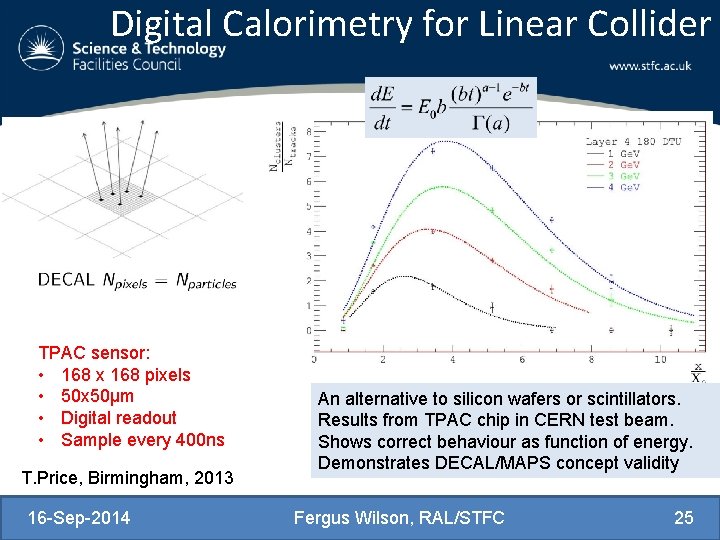
Digital Calorimetry for Linear Collider TPAC sensor: • 168 x 168 pixels • 50 x 50μm • Digital readout • Sample every 400 ns T. Price, Birmingham, 2013 16 -Sep-2014 An alternative to silicon wafers or scintillators. Results from TPAC chip in CERN test beam. Shows correct behaviour as function of energy. Demonstrates DECAL/MAPS concept validity Fergus Wilson, RAL/STFC 25
Conclusions. • MAPS are already commercially available. • MAPS have already penetrated non-HEP areas – Medical, photon science, space, X-rays, neutron, lasers, … • In HEP Capabilities proven at STAR. Soon to be used in μ 3 e vertex detector. Expect to see used in a tracker in ALICE ITS, Forward Tracker. Already seeing radiation hardness and speeds (not to mention power consumption, material thickness, cost, …) that are suitable for LHC phase II upgrades – MAPS an excellent candidate for LC/ILC vertex detectors and trackers. – – 16 -Sep-2014 Fergus Wilson, RAL/STFC 26
Backup 16 -Sep-2014 Fergus Wilson, RAL/STFC 27
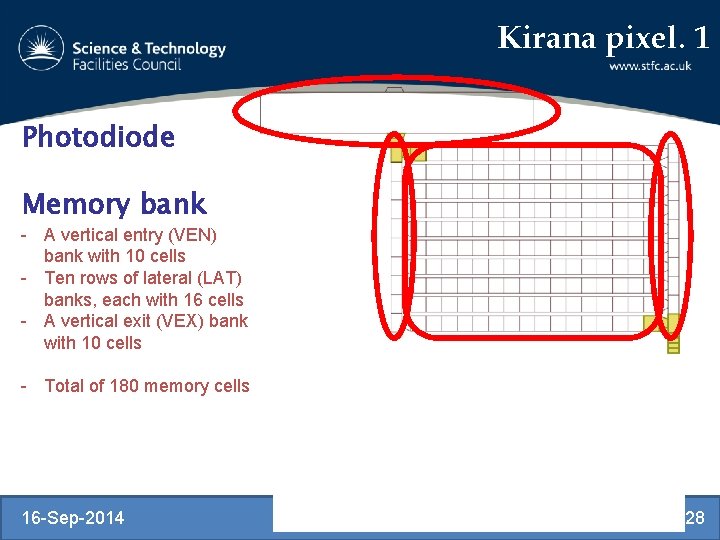
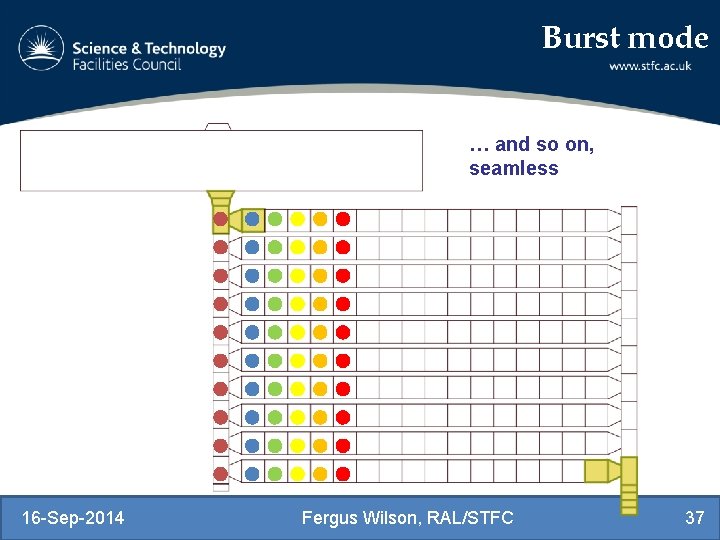
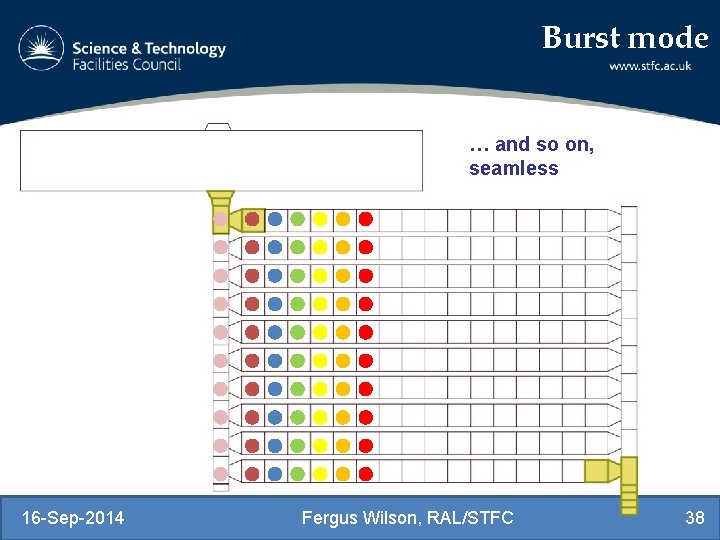
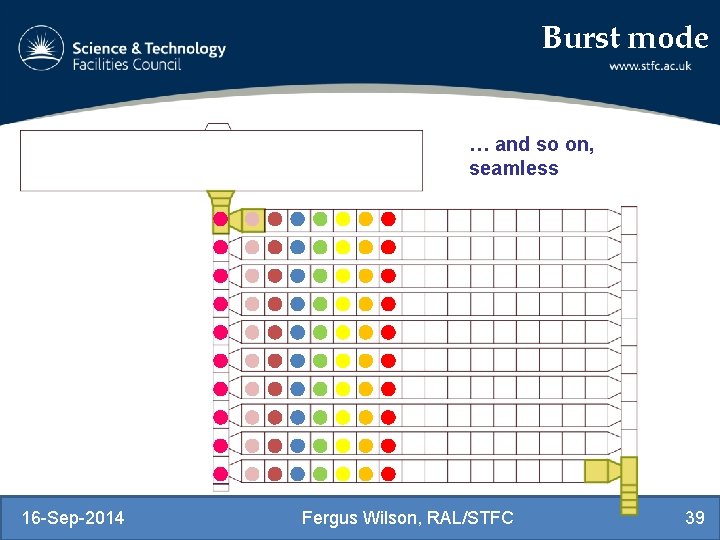
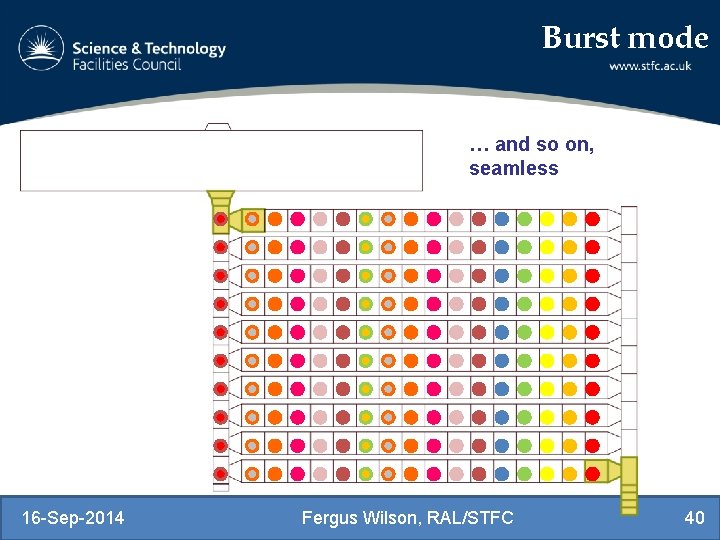
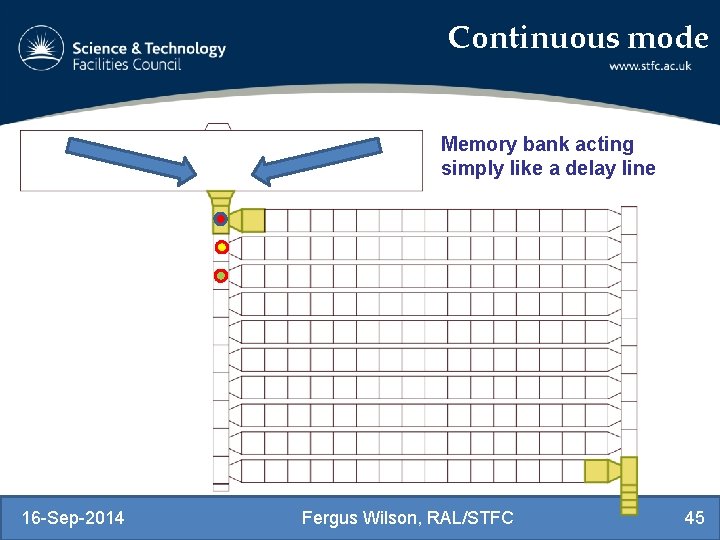
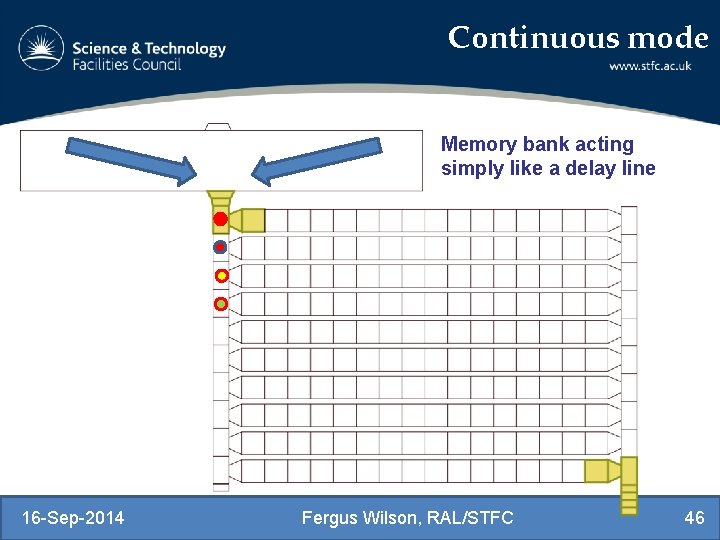
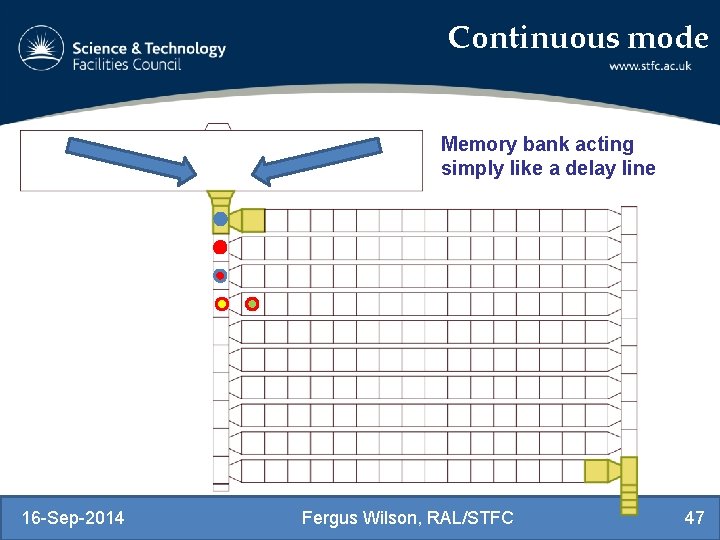
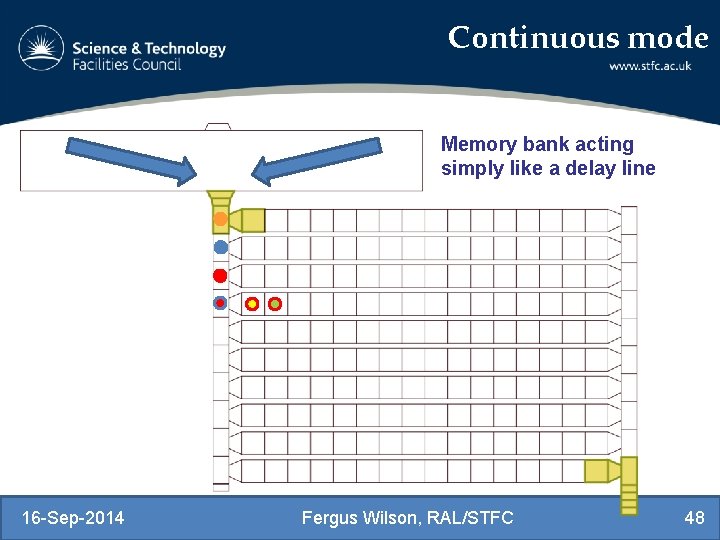
Kirana pixel. 1 Photodiode Memory bank - A vertical entry (VEN) bank with 10 cells - Ten rows of lateral (LAT) banks, each with 16 cells - A vertical exit (VEX) bank with 10 cells - Total of 180 memory cells 16 -Sep-2014 Fergus Wilson, RAL/STFC 28
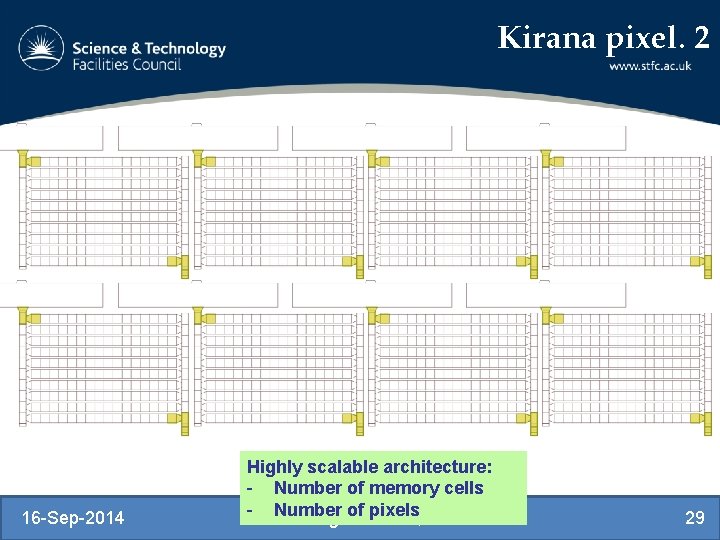
Kirana pixel. 2 16 -Sep-2014 Highly scalable architecture: - Number of memory cells - Number of. Wilson, pixels RAL/STFC Fergus 29
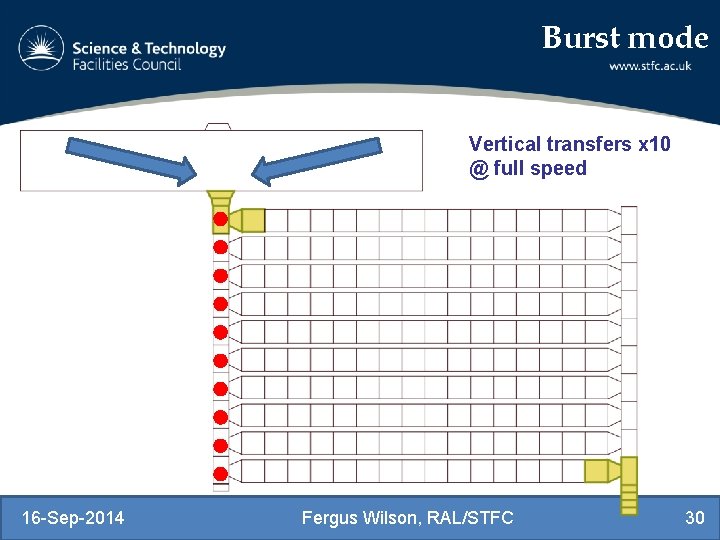
Burst mode Vertical transfers x 10 @ full speed 16 -Sep-2014 Fergus Wilson, RAL/STFC 30
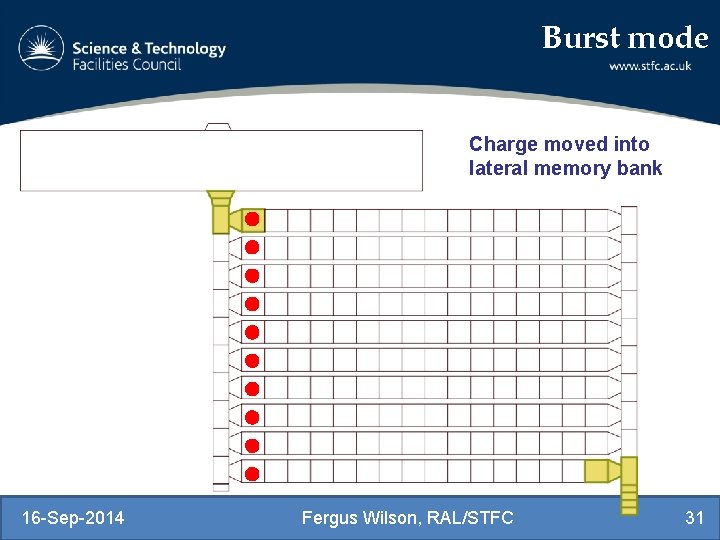
Burst mode Charge moved into lateral memory bank 16 -Sep-2014 Fergus Wilson, RAL/STFC 31
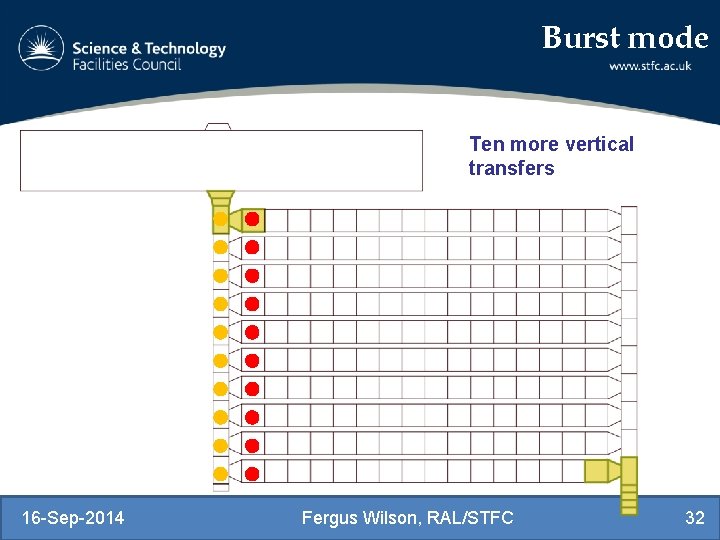
Burst mode Ten more vertical transfers 16 -Sep-2014 Fergus Wilson, RAL/STFC 32
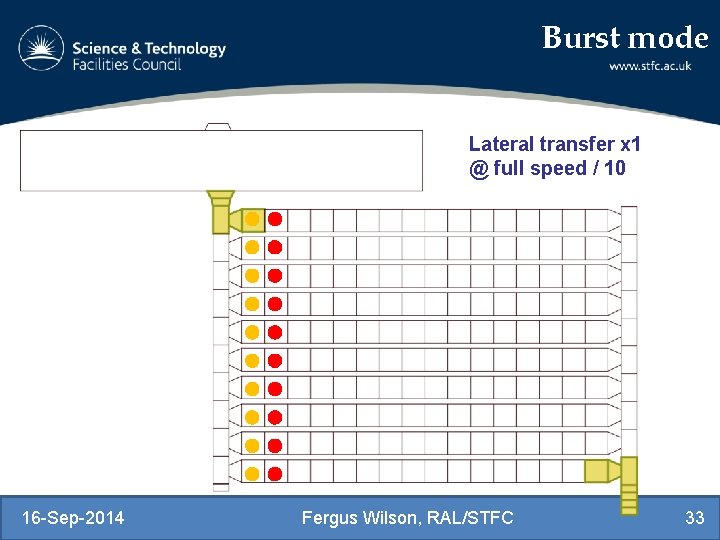
Burst mode Lateral transfer x 1 @ full speed / 10 16 -Sep-2014 Fergus Wilson, RAL/STFC 33
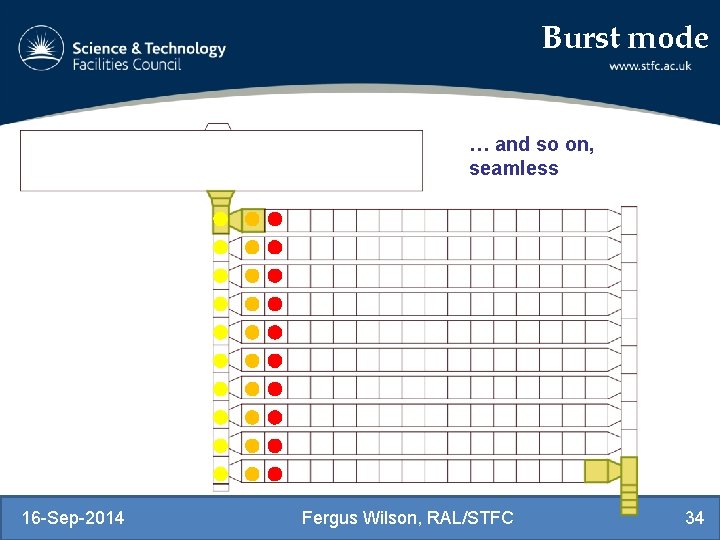
Burst mode … and so on, seamless 16 -Sep-2014 Fergus Wilson, RAL/STFC 34
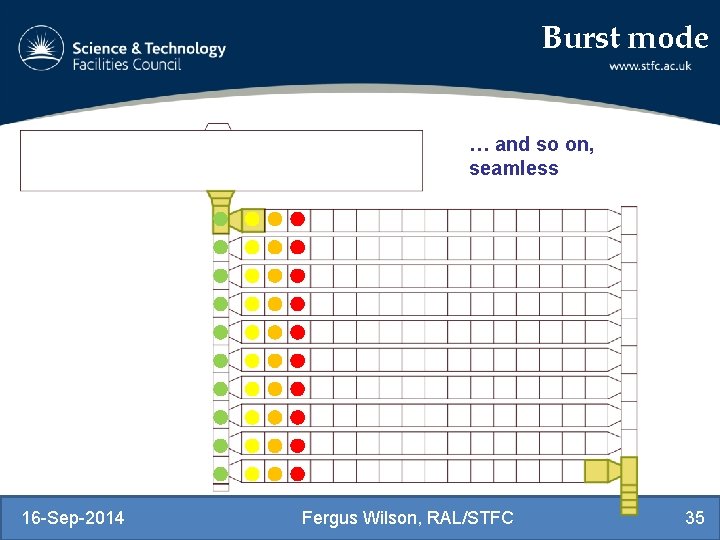
Burst mode … and so on, seamless 16 -Sep-2014 Fergus Wilson, RAL/STFC 35
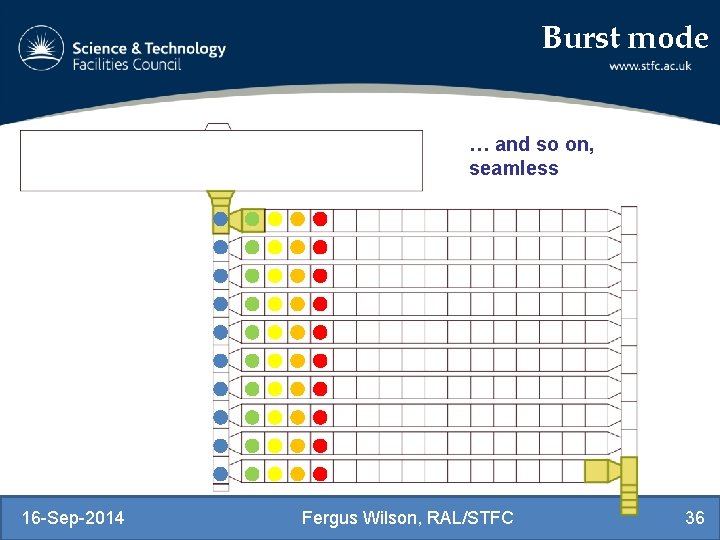
Burst mode … and so on, seamless 16 -Sep-2014 Fergus Wilson, RAL/STFC 36
Burst mode … and so on, seamless 16 -Sep-2014 Fergus Wilson, RAL/STFC 37
Burst mode … and so on, seamless 16 -Sep-2014 Fergus Wilson, RAL/STFC 38
Burst mode … and so on, seamless 16 -Sep-2014 Fergus Wilson, RAL/STFC 39
Burst mode … and so on, seamless 16 -Sep-2014 Fergus Wilson, RAL/STFC 40
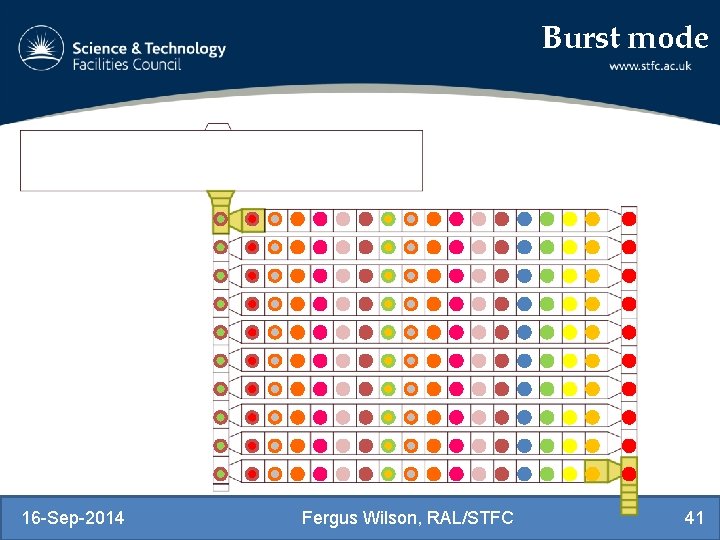
Burst mode 16 -Sep-2014 Fergus Wilson, RAL/STFC 41
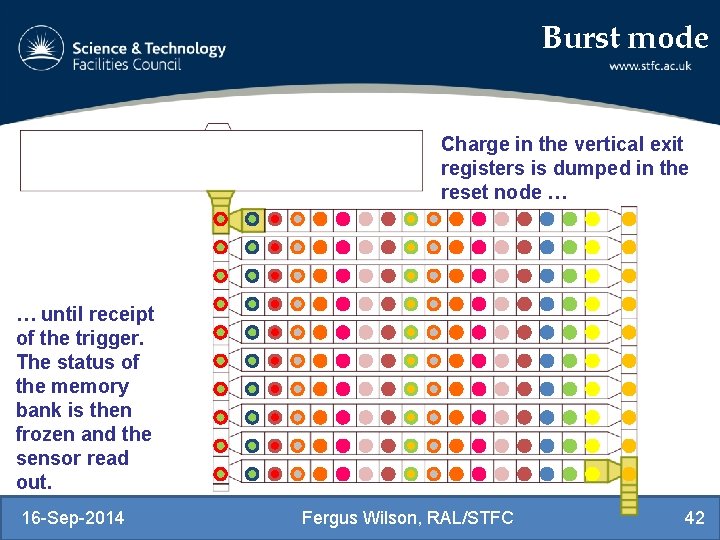
Burst mode Charge in the vertical exit registers is dumped in the reset node … … until receipt of the trigger. The status of the memory bank is then frozen and the sensor read out. 16 -Sep-2014 Fergus Wilson, RAL/STFC 42
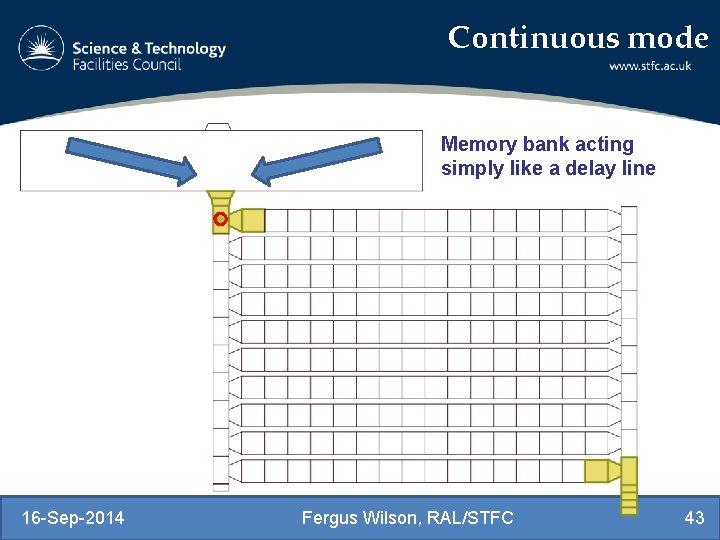
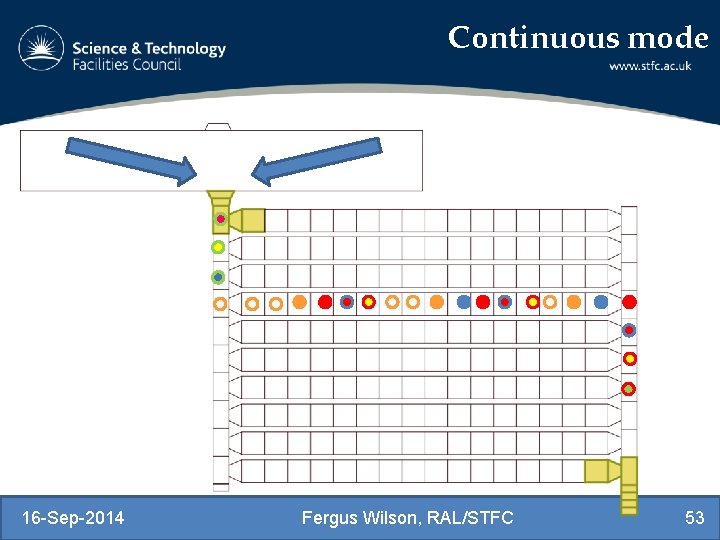
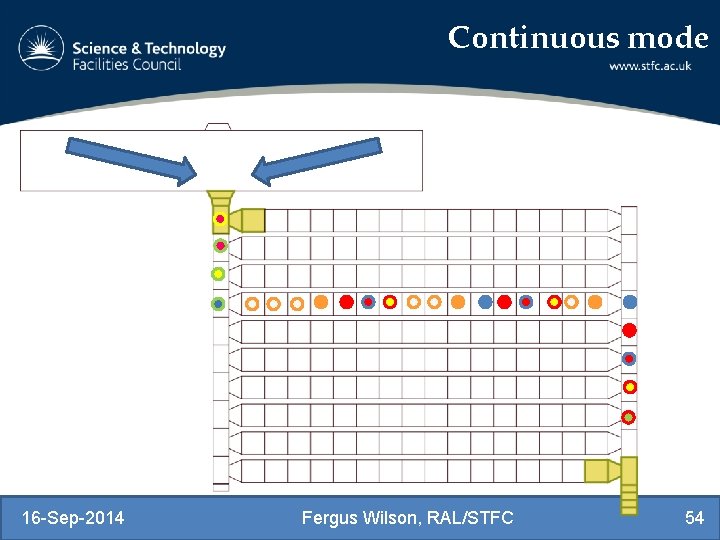
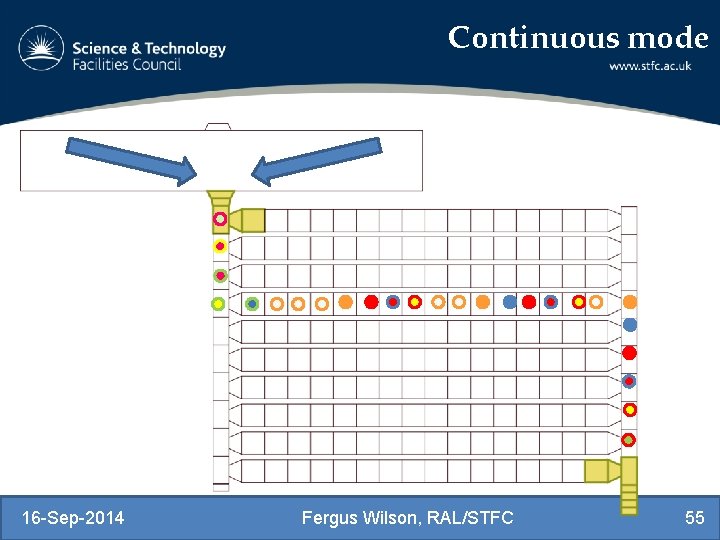
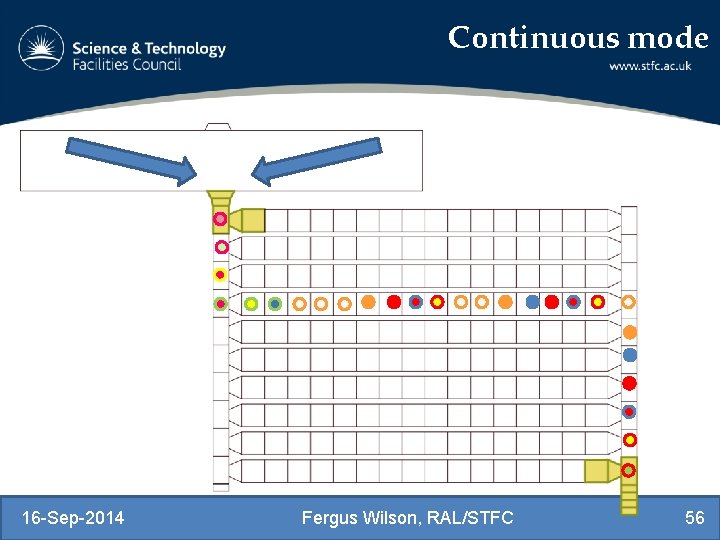
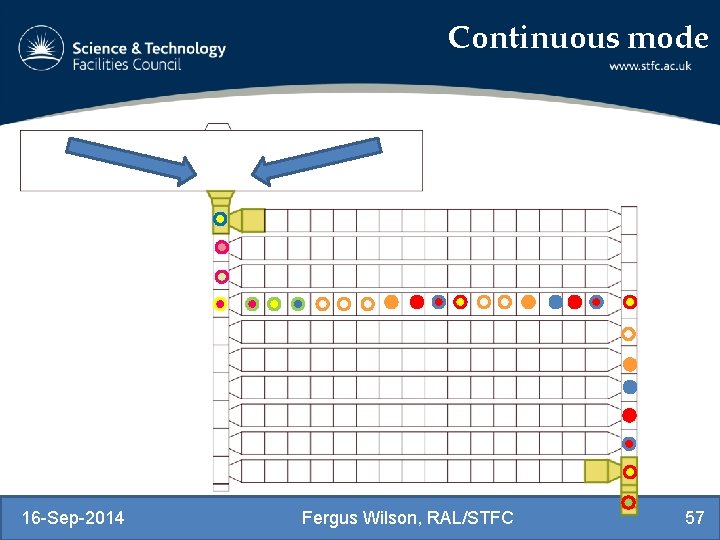
Continuous mode Memory bank acting simply like a delay line 16 -Sep-2014 Fergus Wilson, RAL/STFC 43
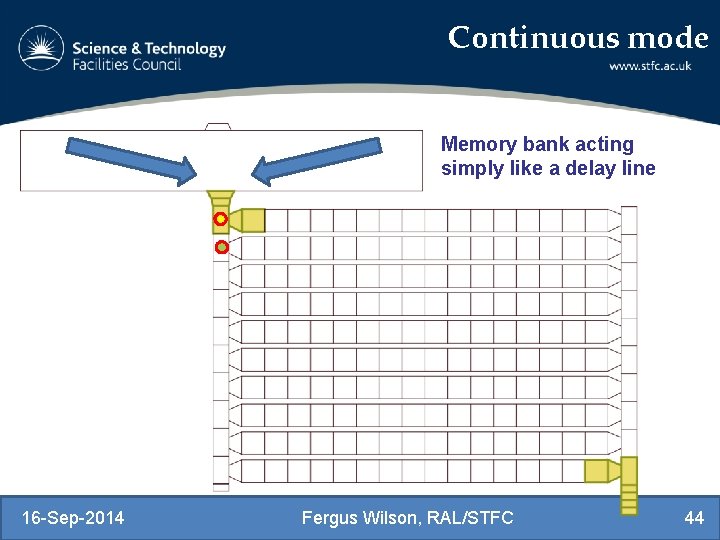
Continuous mode Memory bank acting simply like a delay line 16 -Sep-2014 Fergus Wilson, RAL/STFC 44
Continuous mode Memory bank acting simply like a delay line 16 -Sep-2014 Fergus Wilson, RAL/STFC 45
Continuous mode Memory bank acting simply like a delay line 16 -Sep-2014 Fergus Wilson, RAL/STFC 46
Continuous mode Memory bank acting simply like a delay line 16 -Sep-2014 Fergus Wilson, RAL/STFC 47
Continuous mode Memory bank acting simply like a delay line 16 -Sep-2014 Fergus Wilson, RAL/STFC 48
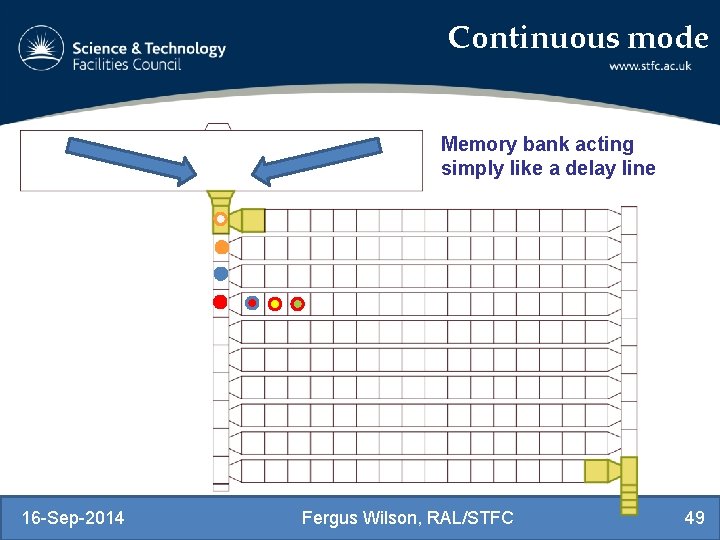
Continuous mode Memory bank acting simply like a delay line 16 -Sep-2014 Fergus Wilson, RAL/STFC 49
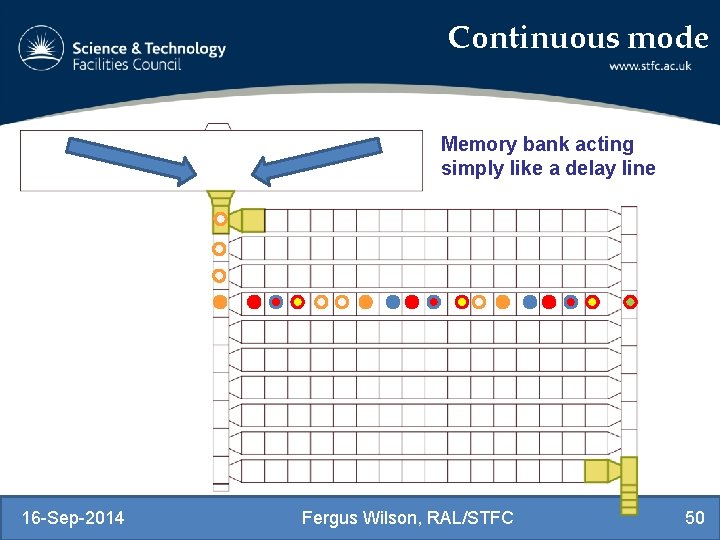
Continuous mode Memory bank acting simply like a delay line 16 -Sep-2014 Fergus Wilson, RAL/STFC 50
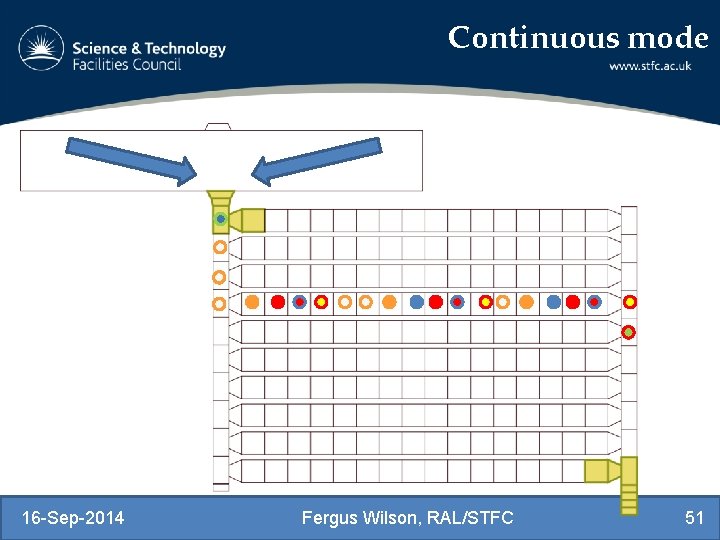
Continuous mode 16 -Sep-2014 Fergus Wilson, RAL/STFC 51
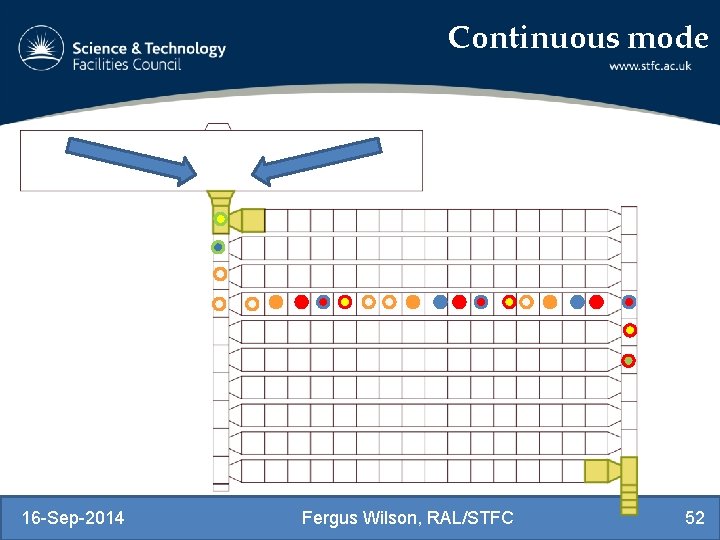
Continuous mode 16 -Sep-2014 Fergus Wilson, RAL/STFC 52
Continuous mode 16 -Sep-2014 Fergus Wilson, RAL/STFC 53
Continuous mode 16 -Sep-2014 Fergus Wilson, RAL/STFC 54
Continuous mode 16 -Sep-2014 Fergus Wilson, RAL/STFC 55
Continuous mode 16 -Sep-2014 Fergus Wilson, RAL/STFC 56
Continuous mode 16 -Sep-2014 Fergus Wilson, RAL/STFC 57