
OVERVIEW OF MANAGEMENT PRINCIPLES AND PRACTICE Nonprofit Management
- Slides: 9
OVERVIEW OF MANAGEMENT PRINCIPLES AND PRACTICE Nonprofit Management Principles and Practice College of Public and Community Service University of Massachusetts at Boston © 2010 William Holmes 1
STYLES OF MANAGEMENT § § § Top Down--directive Bottom Up--participatory Collaborative--teamwork Rule Based—employee manual Strategic—goal organized Laissez-faire—self-defined 2
TOP DOWN MANAGEMENT § § § Provides control Keeps administrators informed Consistent policies Risk of authoritarianism Risk of inconsistent behavior Promotes dependence on supervision 3
BOTTOM UP MANAGMENT § § § Consensus building Employee ownership of activity More employee job satisfaction Decision-making longer Optimal course may not be chosen Requires well-trained workforce 4
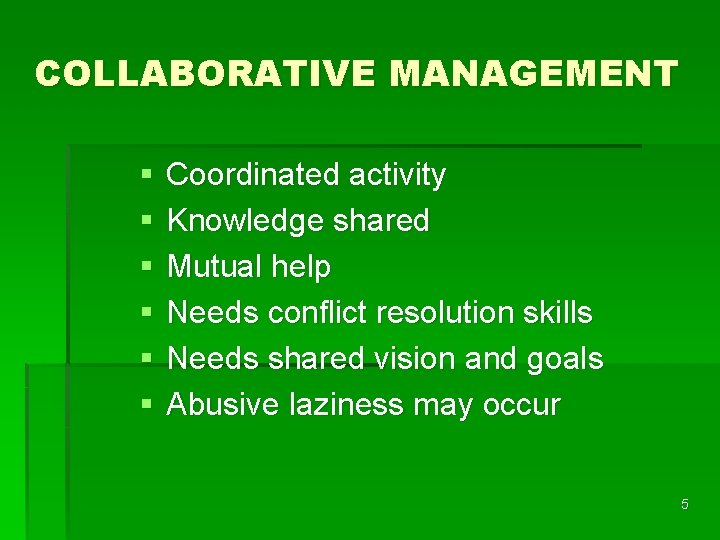
COLLABORATIVE MANAGEMENT § § § Coordinated activity Knowledge shared Mutual help Needs conflict resolution skills Needs shared vision and goals Abusive laziness may occur 5
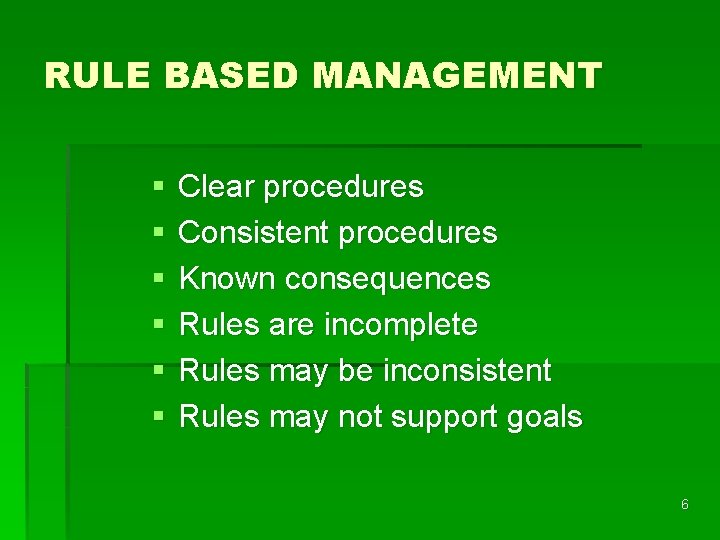
RULE BASED MANAGEMENT § § § Clear procedures Consistent procedures Known consequences Rules are incomplete Rules may be inconsistent Rules may not support goals 6
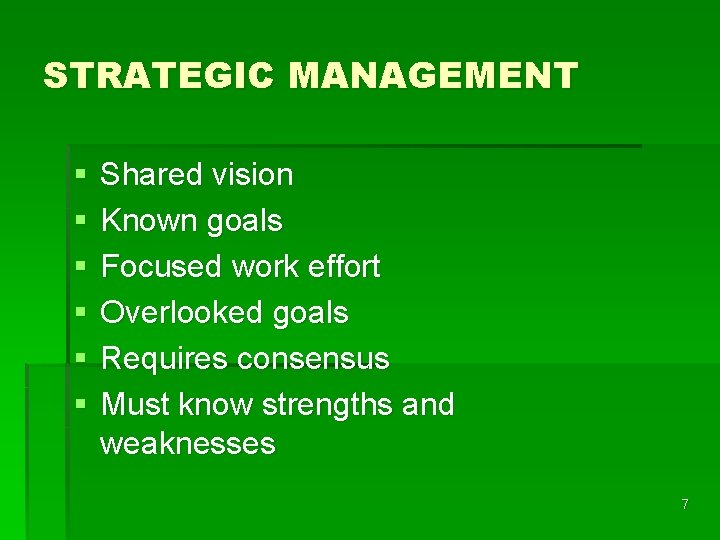
STRATEGIC MANAGEMENT § § § Shared vision Known goals Focused work effort Overlooked goals Requires consensus Must know strengths and weaknesses 7
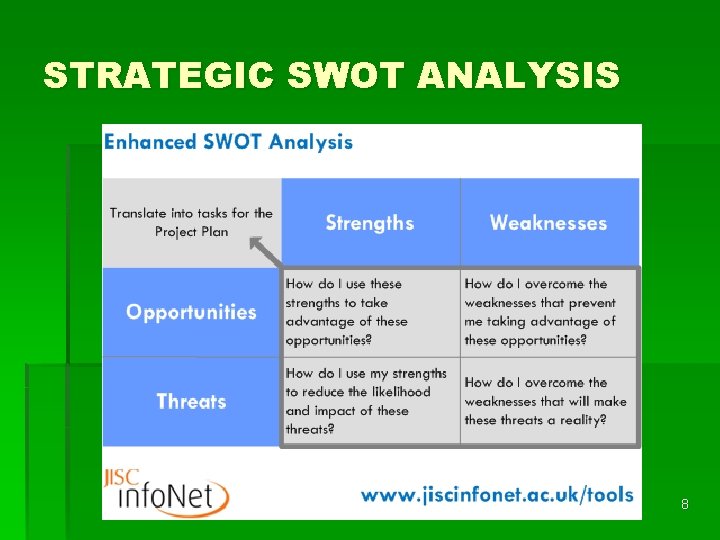
STRATEGIC SWOT ANALYSIS 8
LAISSEZ-FAIRE MANAGEMENT § § § Employees self-directed Employee ownership of activity Flexibility Uncoordinated activity Poor accountability Unfocussed activity 9