
Overview of Islam Around 600 AD a new
- Slides: 31
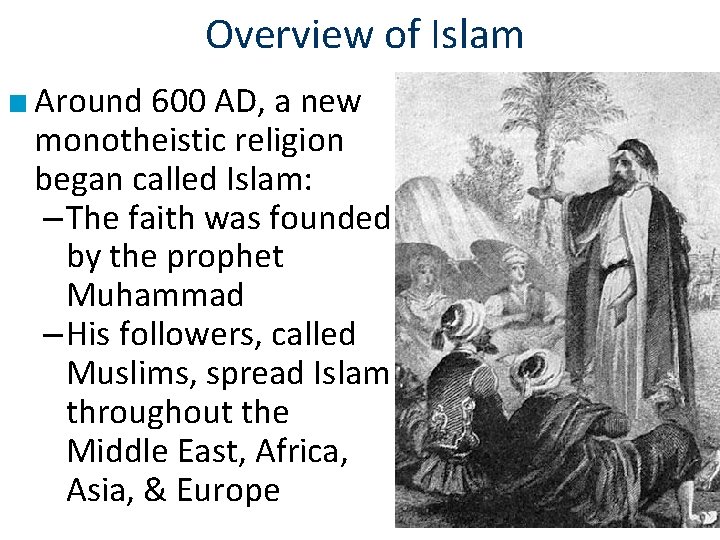
Overview of Islam ■ Around 600 AD, a new monotheistic religion began called Islam: – The faith was founded by the prophet Muhammad – His followers, called Muslims, spread Islam throughout the Middle East, Africa, Asia, & Europe
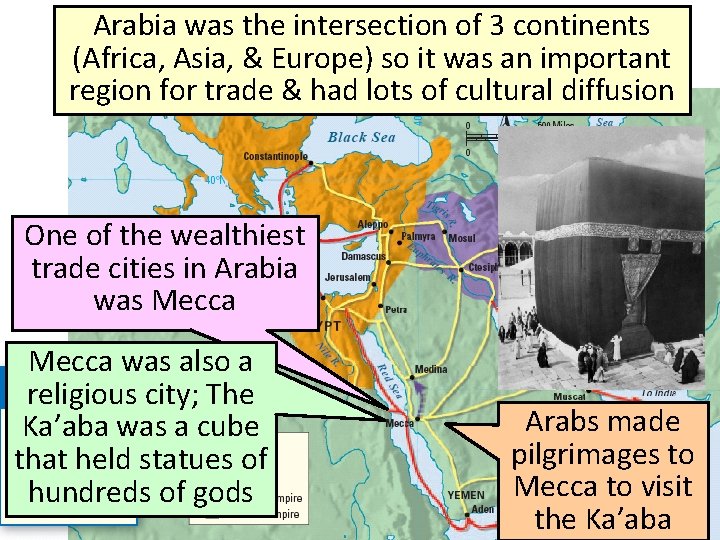
Arabia was the intersection of 3 continents Arabia, the Birthplace of Islam (Africa, Asia, & Europe) so it was an important region for trade & had lots of cultural diffusion One of the wealthiest trade cities in Arabia was Mecca was also a religious city; The Ka’aba was a cube that held statues of hundreds of gods Arabs made pilgrimages to Mecca to visit the Ka’aba
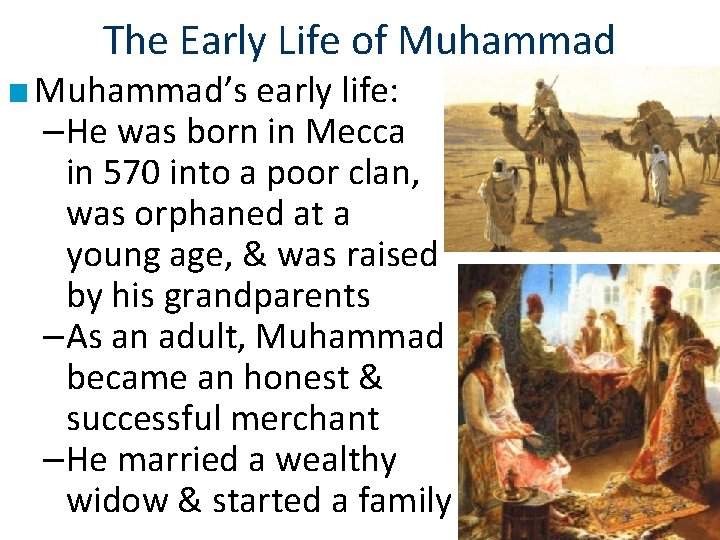
The Early Life of Muhammad ■ Muhammad’s early life: –He was born in Mecca in 570 into a poor clan, was orphaned at a young age, & was raised by his grandparents –As an adult, Muhammad became an honest & successful merchant –He married a wealthy widow & started a family
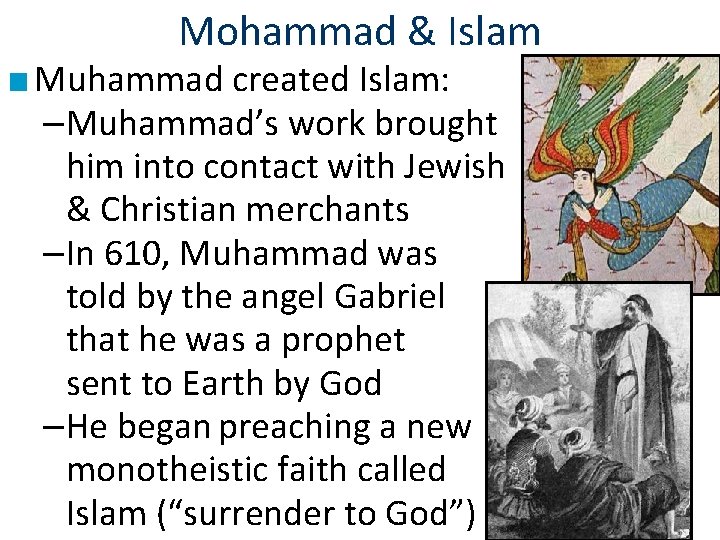
Mohammad & Islam ■ Muhammad created Islam: –Muhammad’s work brought him into contact with Jewish & Christian merchants –In 610, Muhammad was told by the angel Gabriel that he was a prophet sent to Earth by God –He began preaching a new monotheistic faith called Islam (“surrender to God”)
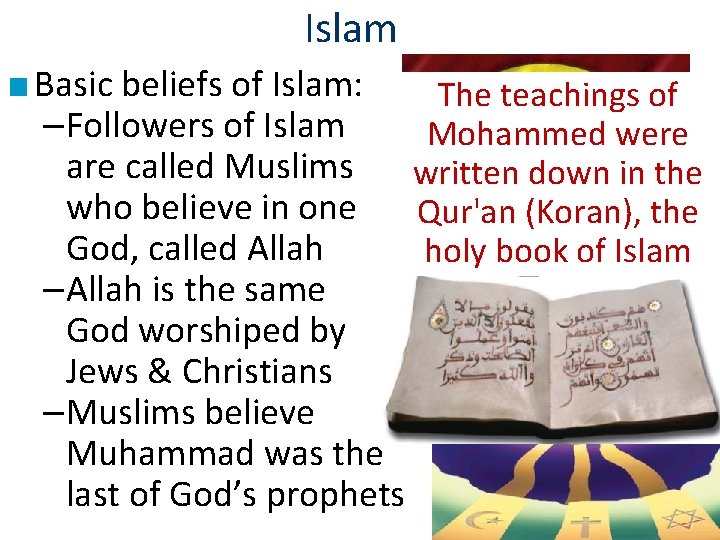
Islam ■ Basic beliefs of Islam: The teachings of –Followers of Islam Mohammed were are called Muslims written down in the who believe in one Qur'an (Koran), the God, called Allah holy book of Islam –Allah is the same God worshiped by Jews & Christians –Muslims believe Muhammad was the last of God’s prophets
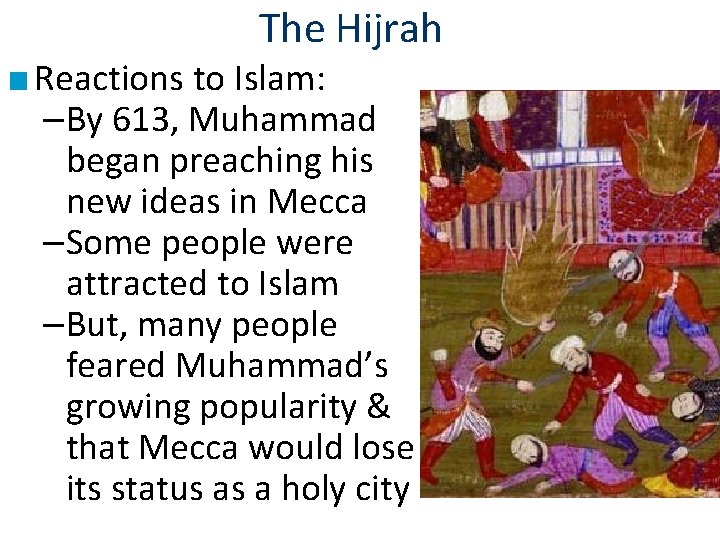
The Hijrah ■ Reactions to Islam: –By 613, Muhammad began preaching his new ideas in Mecca –Some people were attracted to Islam –But, many people feared Muhammad’s growing popularity & that Mecca would lose its status as a holy city
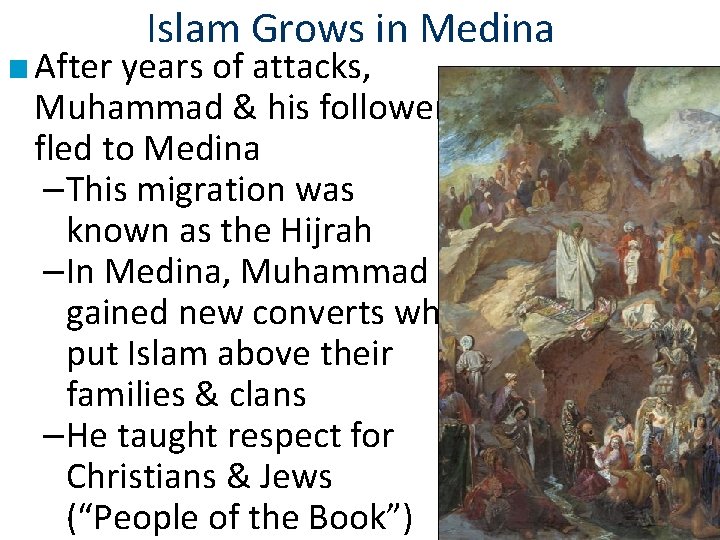
Islam Grows in Medina ■ After years of attacks, Muhammad & his followers fled to Medina –This migration was known as the Hijrah –In Medina, Muhammad gained new converts who put Islam above their families & clans –He taught respect for Christians & Jews (“People of the Book”)
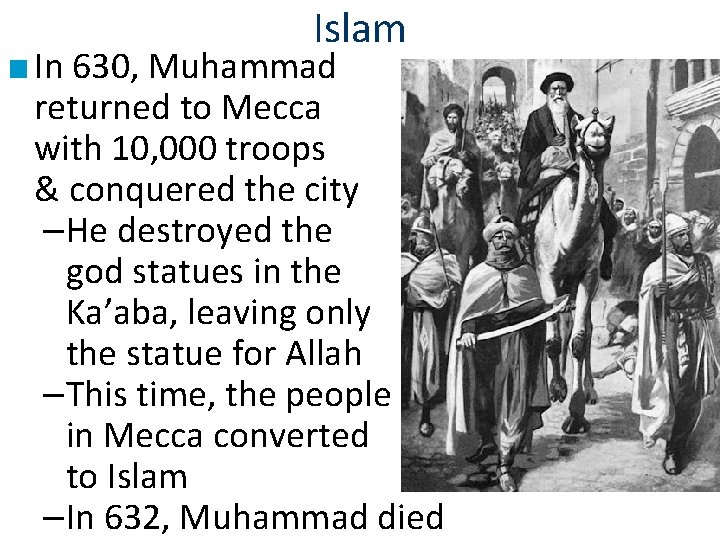
Islam ■ In 630, Muhammad returned to Mecca with 10, 000 troops & conquered the city –He destroyed the god statues in the Ka’aba, leaving only the statue for Allah –This time, the people in Mecca converted to Islam –In 632, Muhammad died
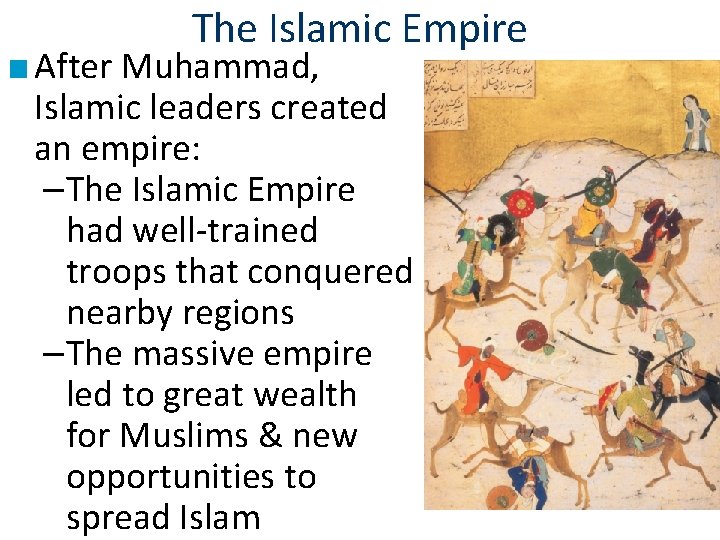
The Islamic Empire ■ After Muhammad, Islamic leaders created an empire: –The Islamic Empire had well-trained troops that conquered nearby regions –The massive empire led to great wealth for Muslims & new opportunities to spread Islam
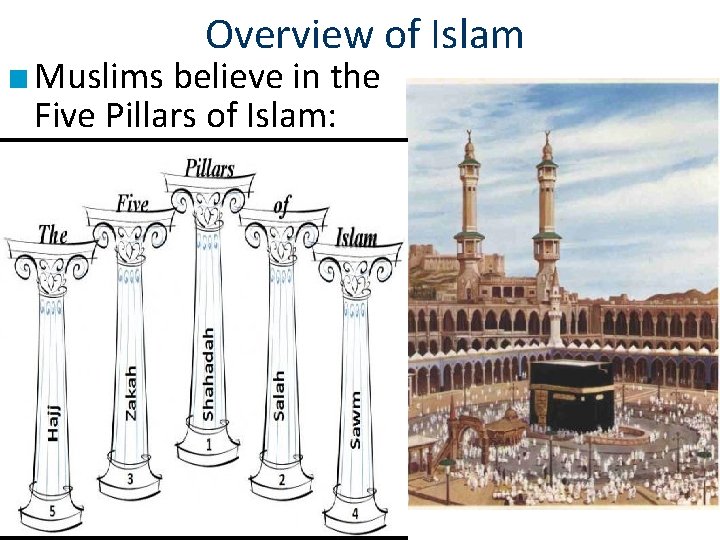
Overview of Islam ■ Muslims believe in the Five Pillars of Islam: –Faith: belief in one god, Allah & the prophet Muhammad –Prayer: 5 times per day towards Mecca –Alms: 2. 5% to charity –Fasting: During the month of Ramadan –Hajj: Pilgrimage to Mecca
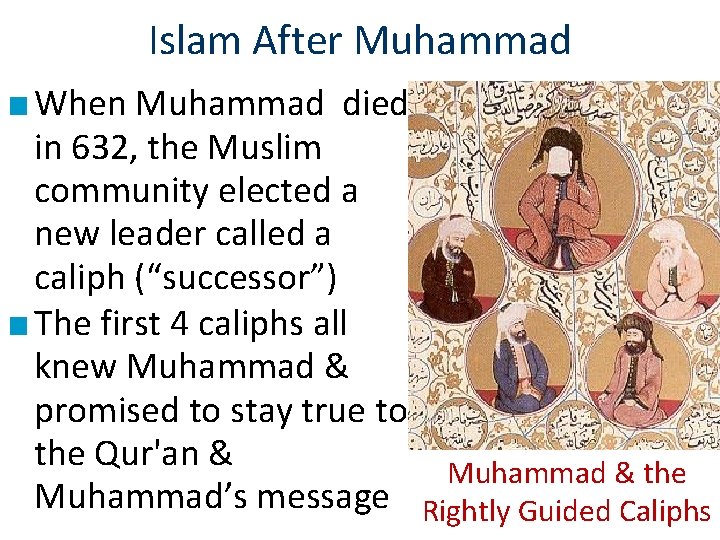
Islam After Muhammad ■ When Muhammad died in 632, the Muslim community elected a new leader called a caliph (“successor”) ■ The first 4 caliphs all knew Muhammad & promised to stay true to the Qur'an & Muhammad & the Muhammad’s message Rightly Guided Caliphs
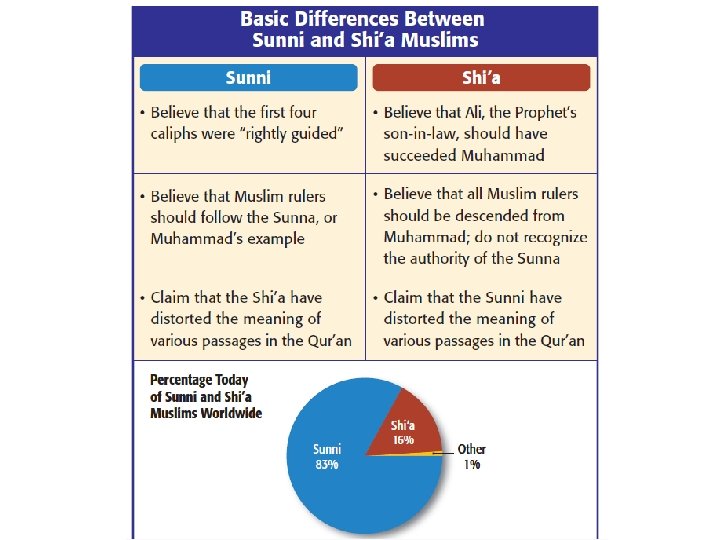
The Sunni-Shi’a Split Before the Umayyads, caliphs were elected members of Muhammad’s family ■ Shi’a Muslims ■ Sunni Muslims rejected the accepted the rule of Umayyads the Umayyads ■ The Shi’a believe ■ The Sunni believe that caliph must caliphs should follow come directly from Muhammad’s example, but don’t bloodline have to be relatives
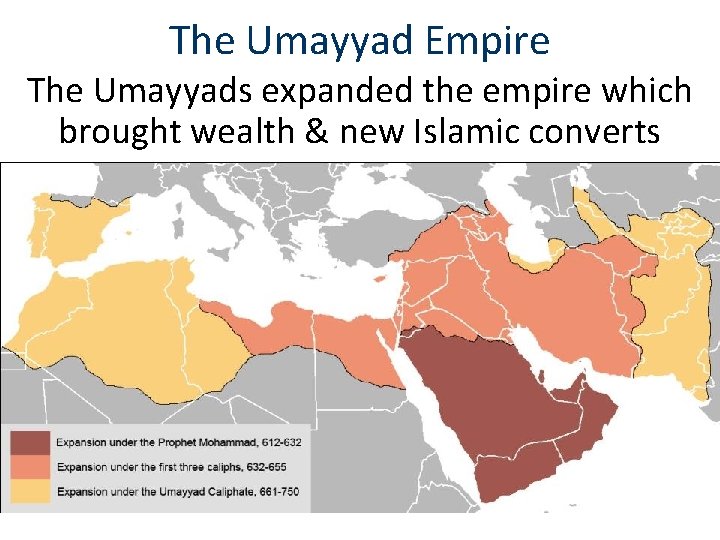
The Umayyad Empire The Umayyads expanded the empire which brought wealth & new Islamic converts
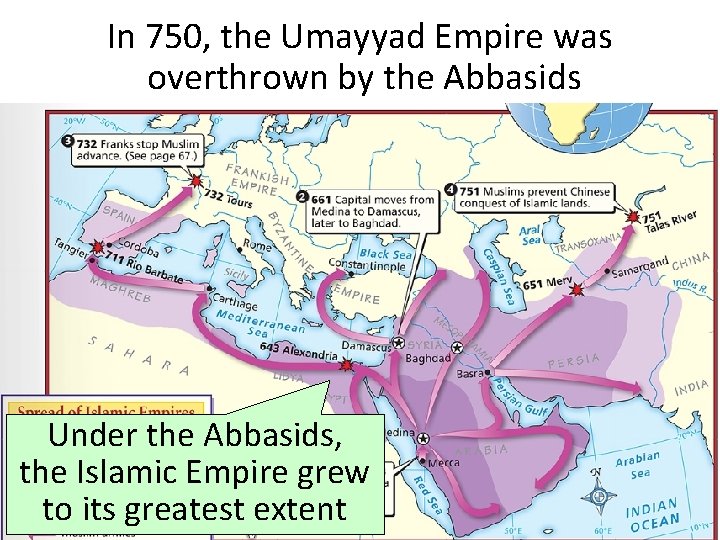
In 750, the Umayyad Empire was overthrown by the Abbasids Under the Abbasids, the Islamic Empire grew to its greatest extent
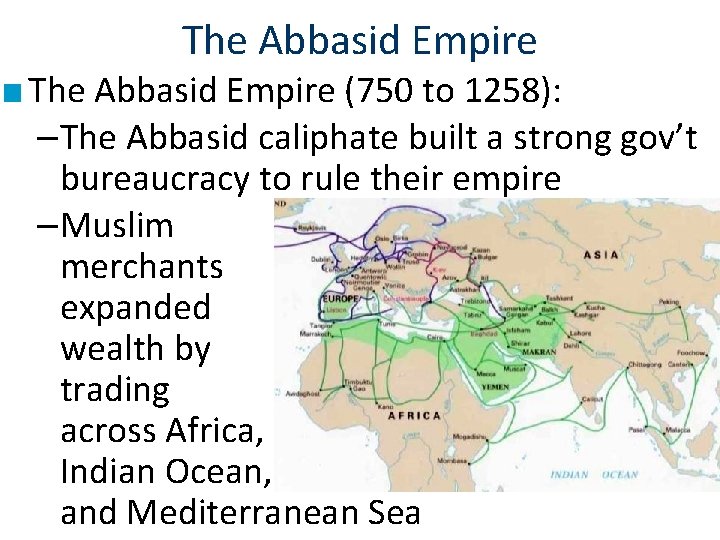
The Abbasid Empire ■ The Abbasid Empire (750 to 1258): –The Abbasid caliphate built a strong gov’t bureaucracy to rule their empire –Muslim merchants expanded wealth by trading across Africa, Indian Ocean, and Mediterranean Sea
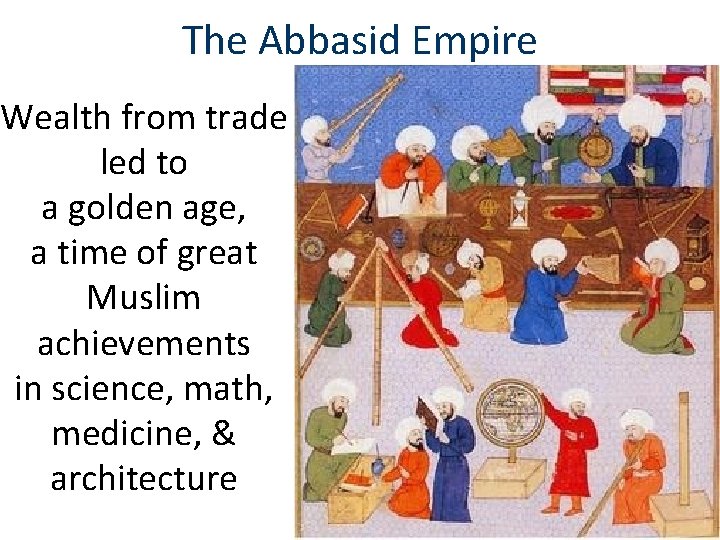
The Abbasid Empire Wealth from trade led to a golden age, a time of great Muslim achievements in science, math, medicine, & architecture
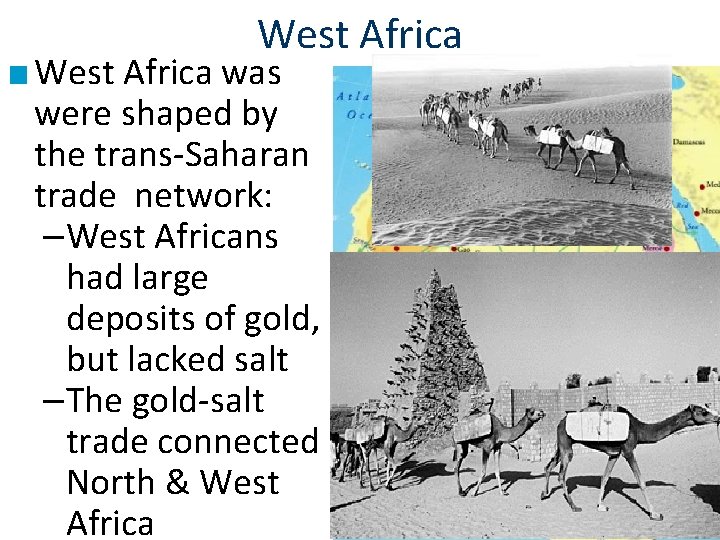
West Africa ■ West Africa was were shaped by the trans-Saharan trade network: –West Africans had large deposits of gold, but lacked salt –The gold-salt trade connected North & West Africa
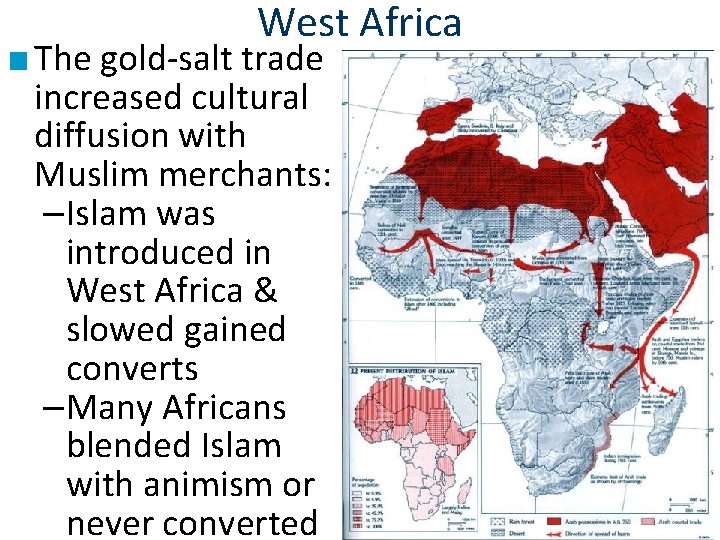
West Africa ■ The gold-salt trade increased cultural diffusion with Muslim merchants: –Islam was introduced in West Africa & slowed gained converts –Many Africans blended Islam with animism or never converted
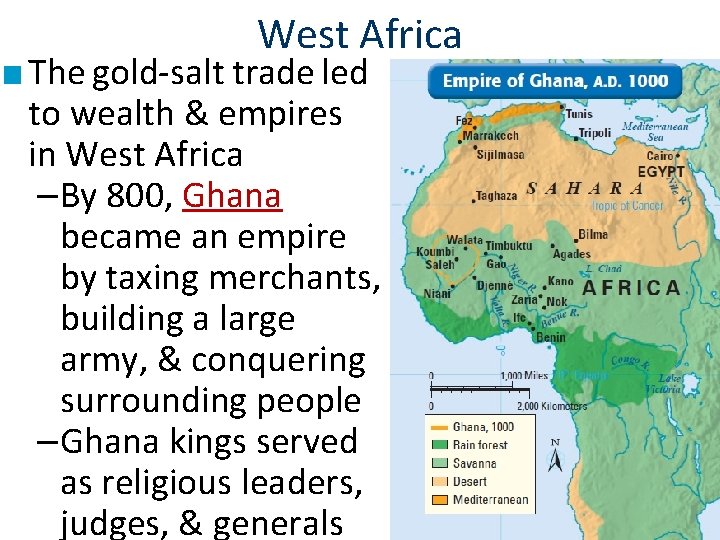
West Africa ■ The gold-salt trade led to wealth & empires in West Africa –By 800, Ghana became an empire by taxing merchants, building a large army, & conquering surrounding people –Ghana kings served as religious leaders, judges, & generals
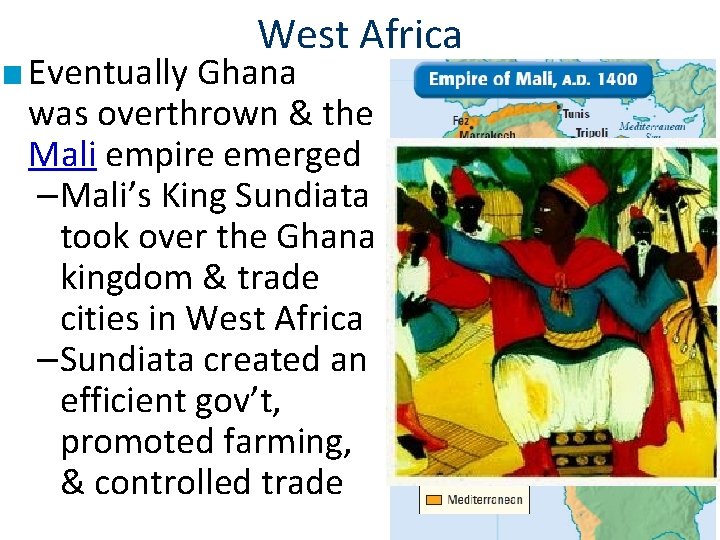
West Africa ■ Eventually Ghana was overthrown & the Mali empire emerged –Mali’s King Sundiata took over the Ghana kingdom & trade cities in West Africa –Sundiata created an efficient gov’t, promoted farming, & controlled trade
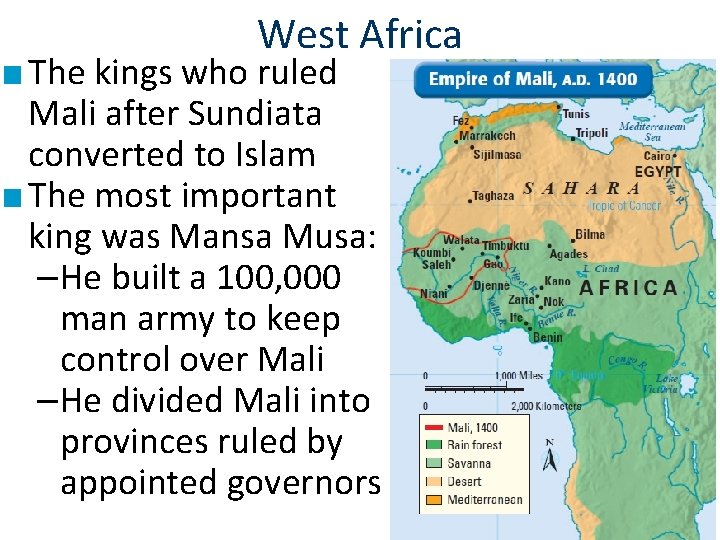
West Africa ■ The kings who ruled Mali after Sundiata converted to Islam ■ The most important king was Mansa Musa: –He built a 100, 000 man army to keep control over Mali –He divided Mali into provinces ruled by appointed governors
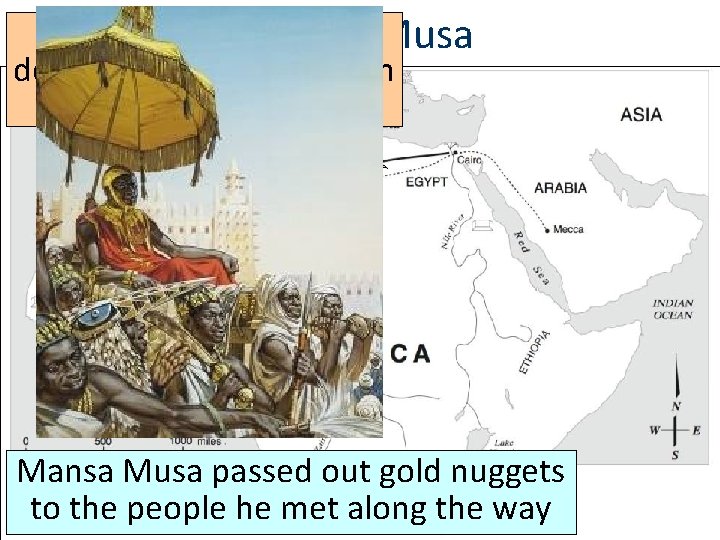
Mansa Musa. Mansa was a Musa devout Muslim & went on a hajj to Mecca in 1324 Mansa Musa passed out gold nuggets to the people he met along the way
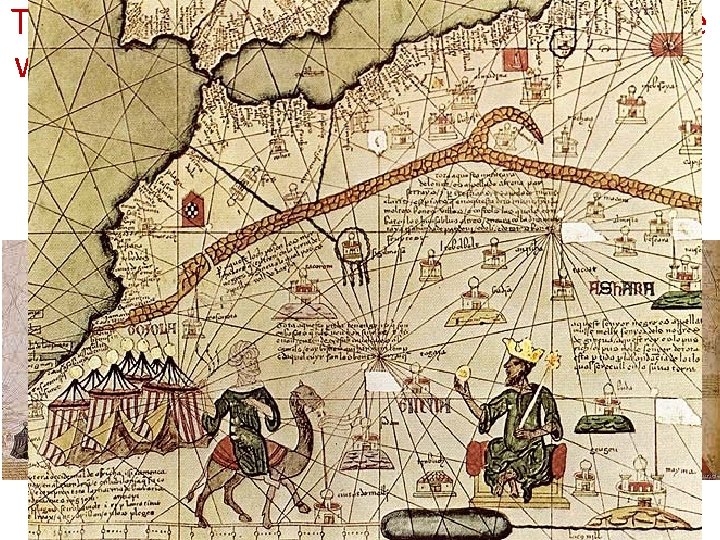
This is a European map of Africa. Very little was known about Africa below the Sahara, but Mansa Musa is on the map. Based on his image on the map, what did Europeans know about Mansa Musa?
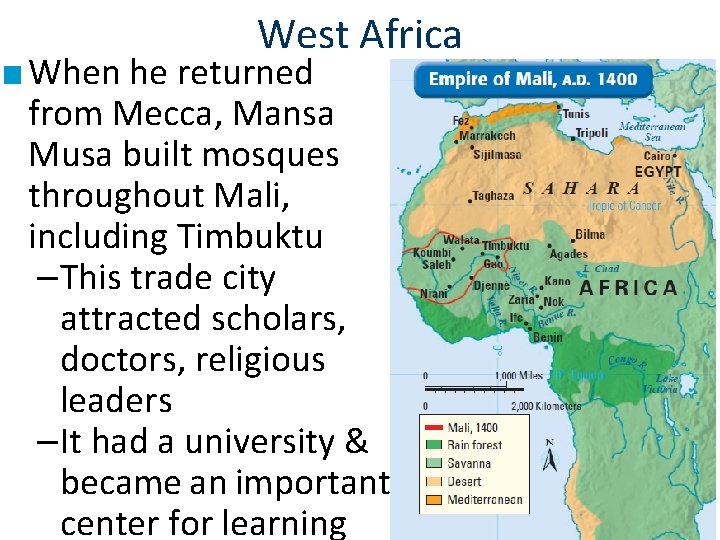
West Africa ■ When he returned from Mecca, Mansa Musa built mosques throughout Mali, including Timbuktu –This trade city attracted scholars, doctors, religious leaders –It had a university & became an important center for learning
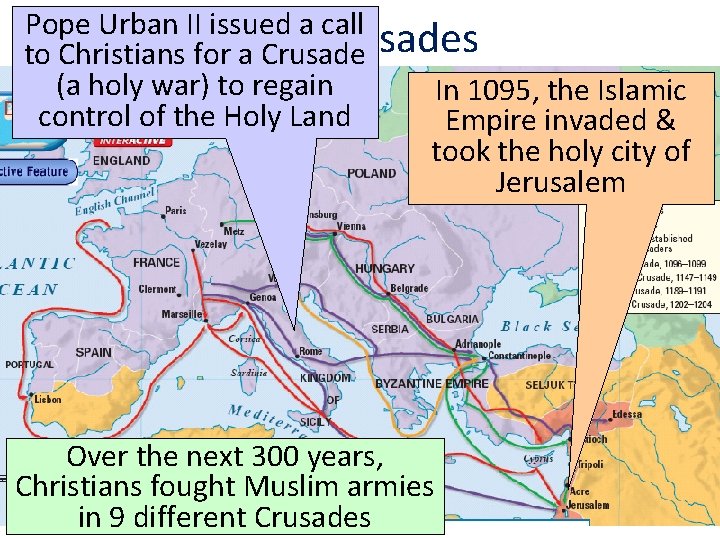
Pope Urban II issued a call The Crusades to Christians for a Crusade (a holy war) to regain In 1095, the Islamic control of the Holy Land Empire invaded & took the holy city of Jerusalem Over the next 300 years, Christians fought Muslim armies in 9 different Crusades
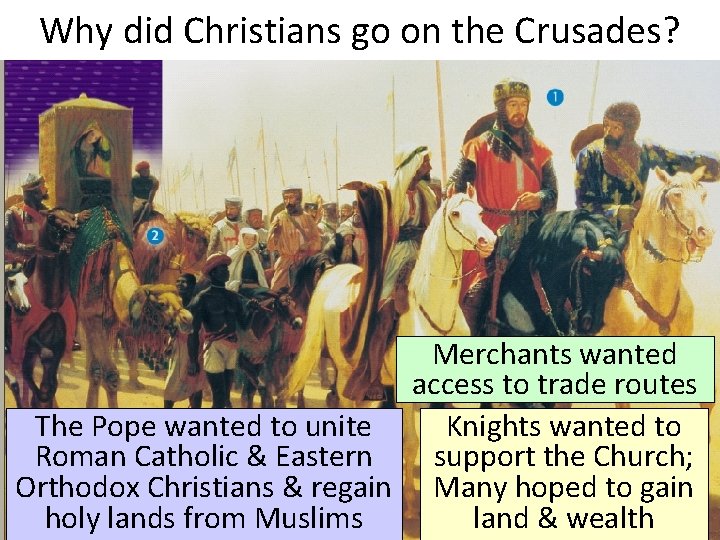
Why did Christians go on the Crusades? Merchants wanted access to trade routes The Pope wanted to unite Knights wanted to Roman Catholic & Eastern support the Church; Orthodox Christians & regain Many hoped to gain holy lands from Muslims land & wealth
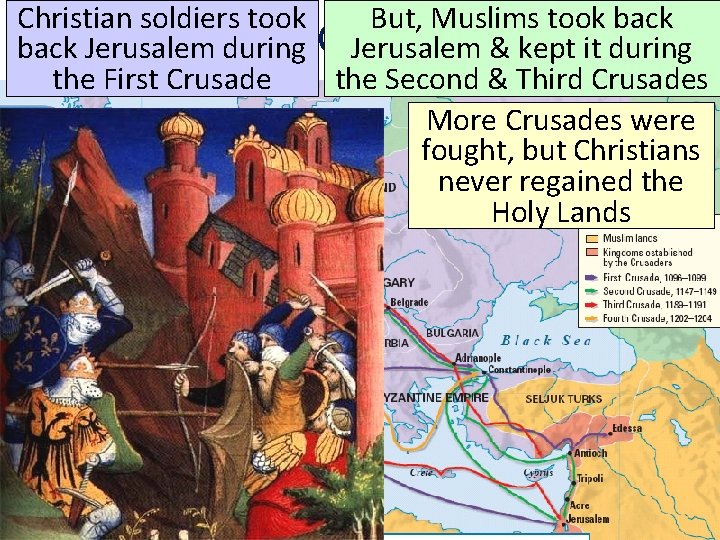
Christian soldiers took But, Muslims took back The Crusades back Jerusalem during Jerusalem & kept it during the First Crusade the Second & Third Crusades More Crusades were fought, but Christians never regained the Holy Lands
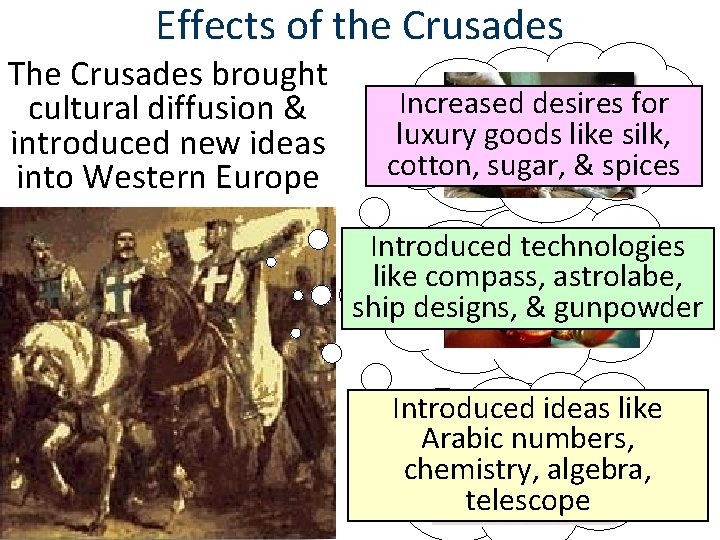
Effects of the Crusades The Crusades brought cultural diffusion & introduced new ideas into Western Europe Increased desires for luxury goods like silk, cotton, sugar, & spices Introduced technologies like compass, astrolabe, ship designs, & gunpowder Introduced ideas like Arabic numbers, chemistry, algebra, telescope
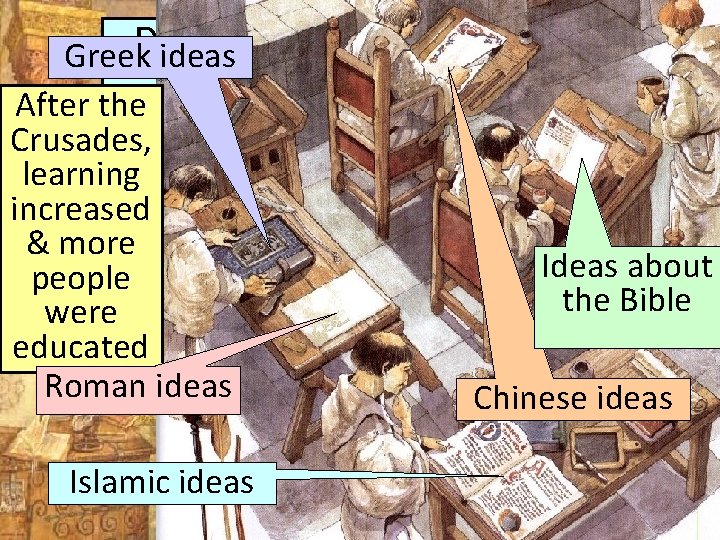
During the Middle Ages, only Greek ideas priests could read & write After the Crusades, learning increased & more people were educated Roman ideas Islamic ideas Ideas about the Bible Chinese ideas
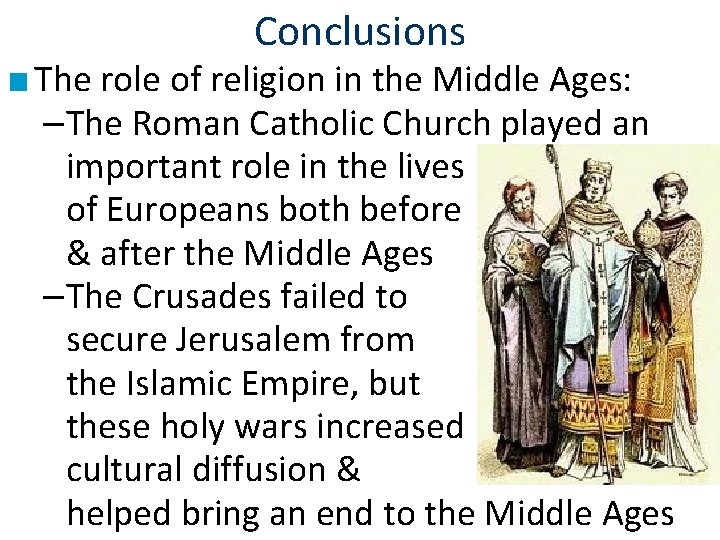
Conclusions ■ The role of religion in the Middle Ages: –The Roman Catholic Church played an important role in the lives of Europeans both before & after the Middle Ages –The Crusades failed to secure Jerusalem from the Islamic Empire, but these holy wars increased cultural diffusion & helped bring an end to the Middle Ages