
Overview of Groundwater Models of the Kitsap Peninsula

- Slides: 19
Overview of Groundwater Models of the Kitsap Peninsula and Bainbridge Island Summary of results presented by: Lonna Frans, U. S. Geological Survey Washington Water Science Center April 4, 2019
Typical Modeling Project Objectives n Characterize GW flow system and interaction with SW features n Construct a computerized flow model to assist water resource managers and stakeholders in the evaluation of management options n Generate model predictions of impacts for potential water use and climate scenarios
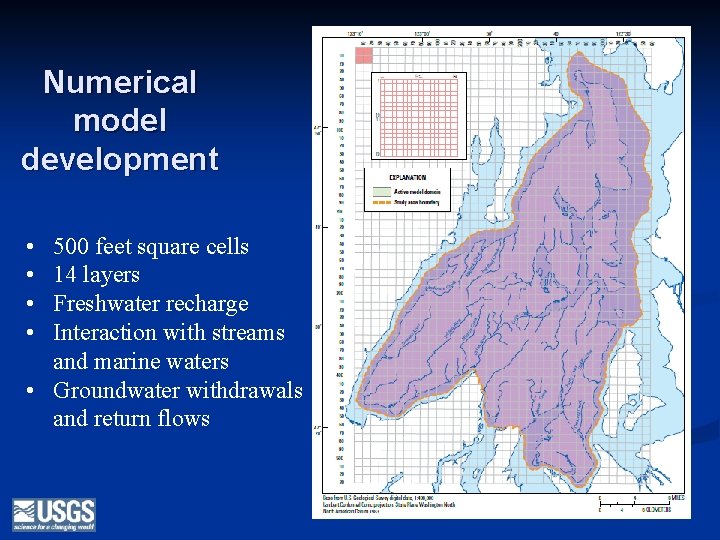
Numerical model development • • 500 feet square cells 14 layers Freshwater recharge Interaction with streams and marine waters • Groundwater withdrawals and return flows
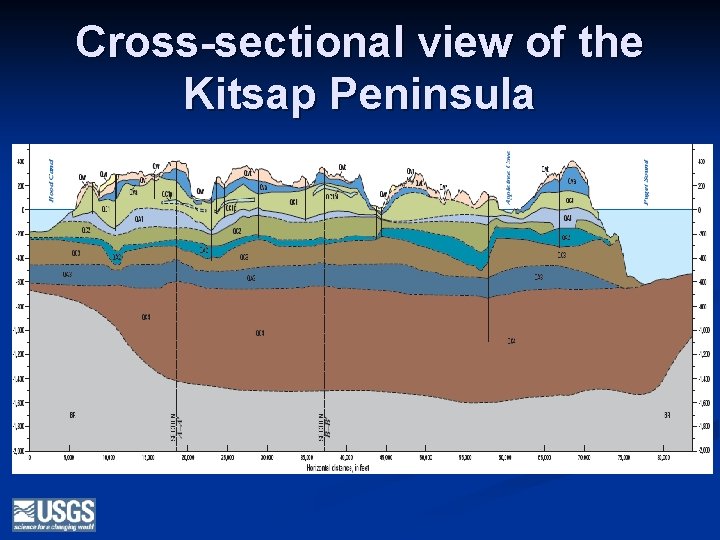
Cross-sectional view of the Kitsap Peninsula
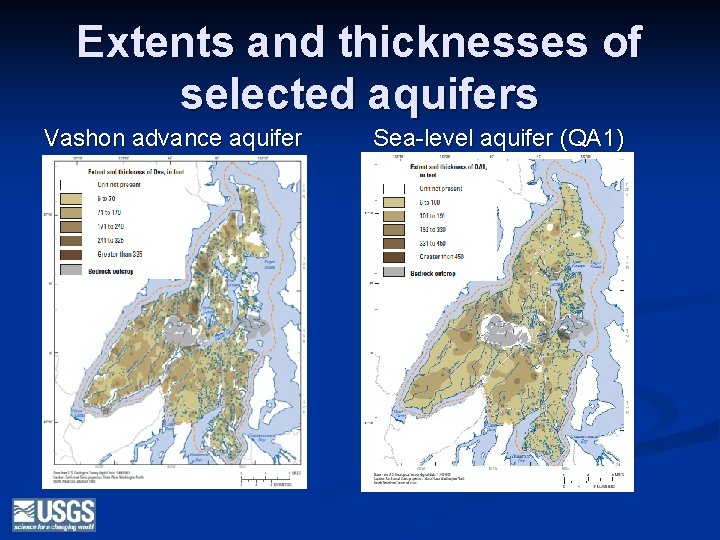
Extents and thicknesses of selected aquifers Vashon advance aquifer (Qva) Sea-level aquifer (QA 1)
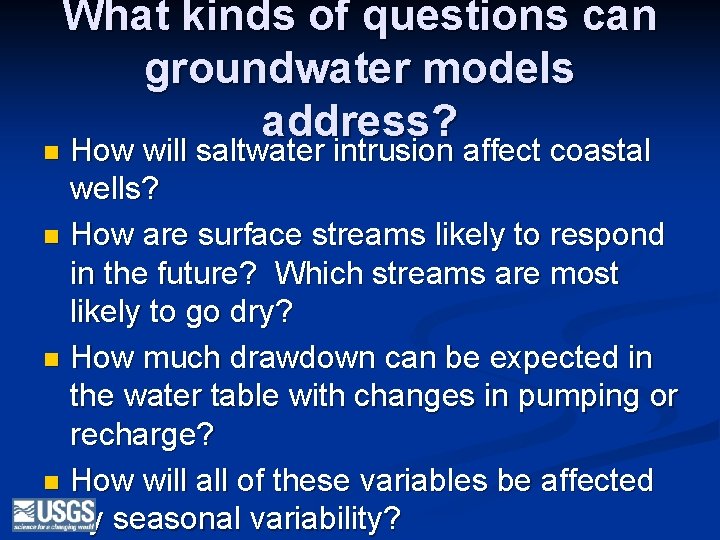
What kinds of questions can groundwater models address? How will saltwater intrusion affect coastal wells? n How are surface streams likely to respond in the future? Which streams are most likely to go dry? n How much drawdown can be expected in the water table with changes in pumping or recharge? n How will all of these variables be affected by seasonal variability? n
What kind of questions can the model not address? What will happen to my well? n What is the best growth scenario? n Where can we put new wells? n Which aquifers can we pump freely? n
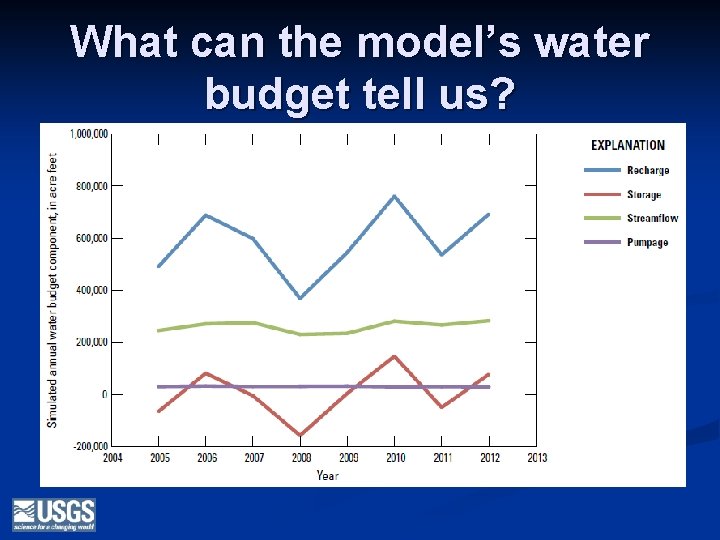
What can the model’s water budget tell us?
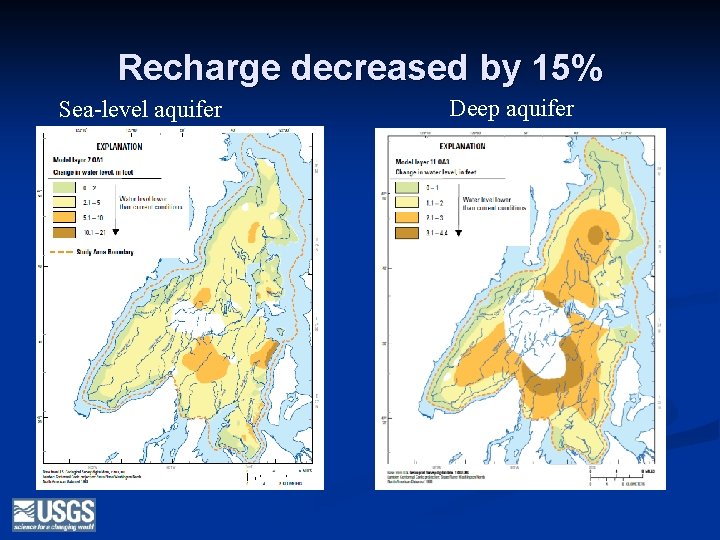
Recharge decreased by 15% Sea-level aquifer Deep aquifer
% change in streamflow Recharge decreased by 15%
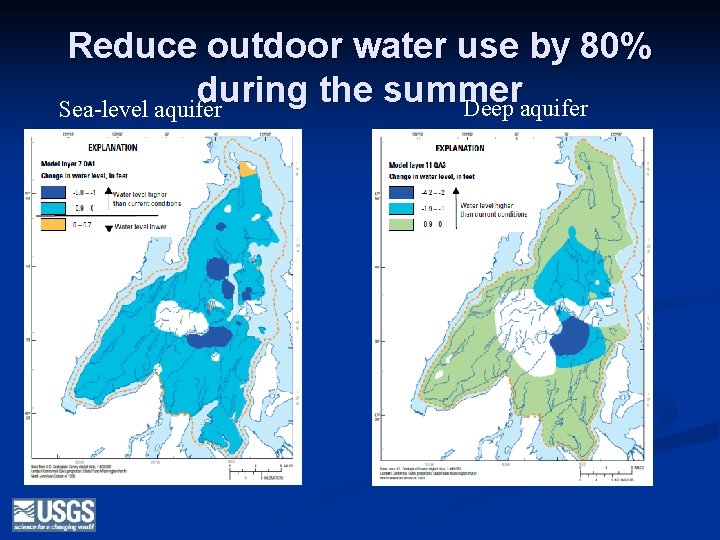
Reduce outdoor water use by 80% during the summer Deep aquifer Sea-level aquifer
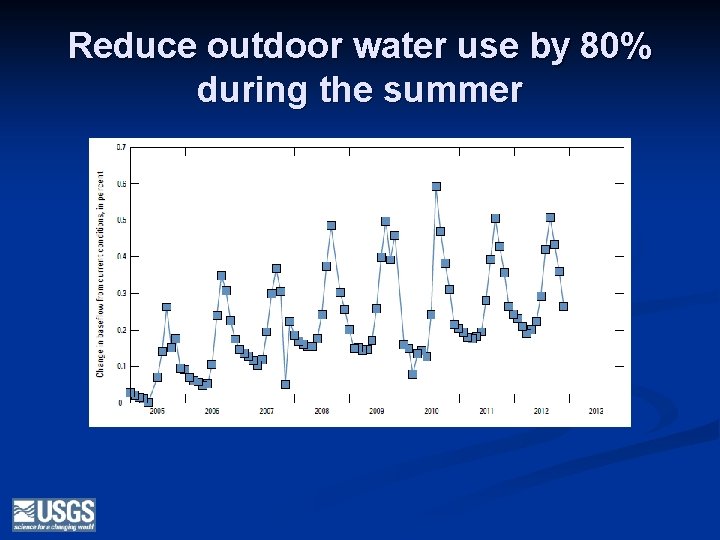
Reduce outdoor water use by 80% during the summer
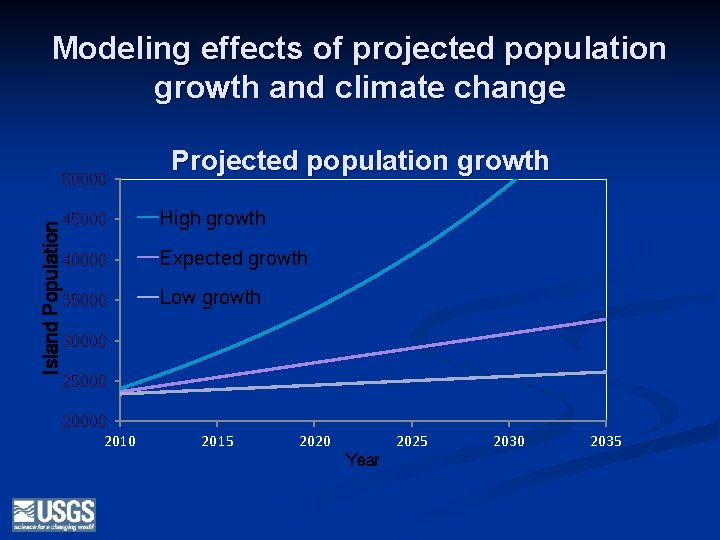
Modeling effects of projected population growth and climate change Island Population 50000 Projected population growth 45000 High growth 40000 Expected growth 35000 Low growth 30000 25000 2010 2015 2020 2025 Year 2030 2035
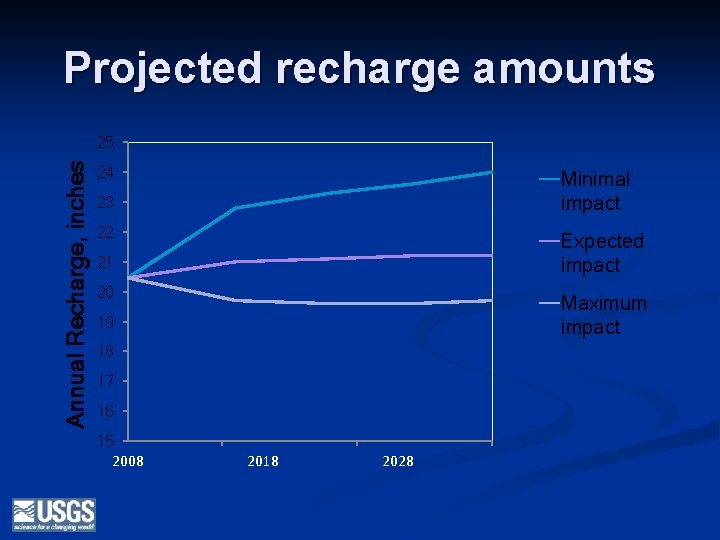
Projected recharge amounts Annual Recharge, inches 25 24 Minimal impact 23 22 Expected impact 21 20 Maximum impact 19 18 17 16 15 2008 2018 2028
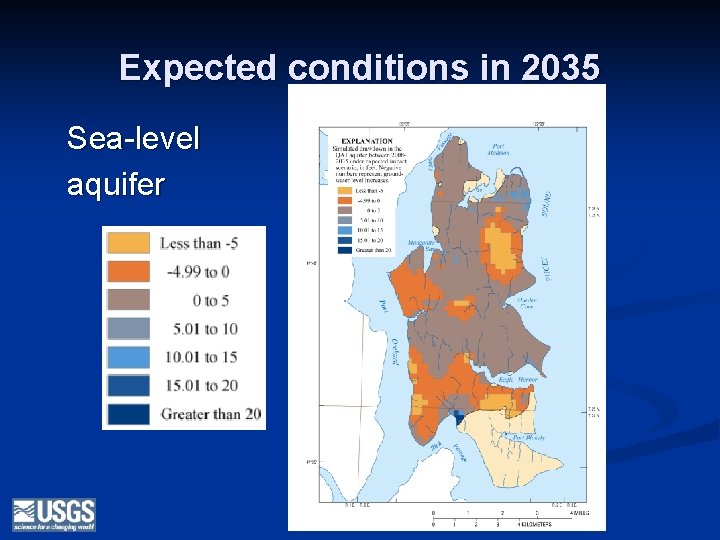
Expected conditions in 2035 Sea-level aquifer
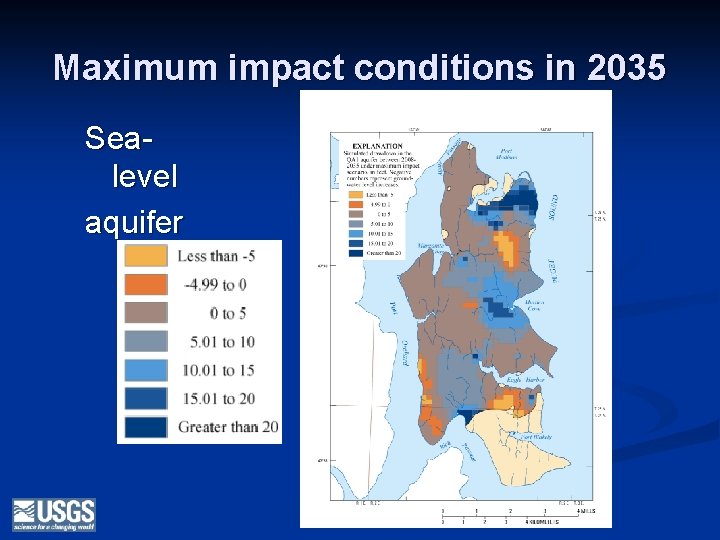
Maximum impact conditions in 2035 Sealevel aquifer
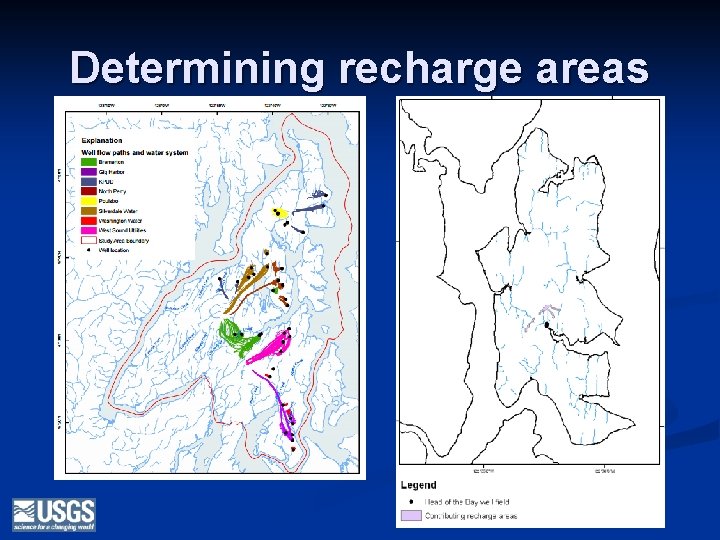
Determining recharge areas
Summary Models are useful tools to help make informed decisions about groundwater management n Recharge amounts have the largest impact on baseflow discharge and groundwater levels n Models can be used to assess effects of changes in pumping, land use, and climate n Models can be used to delineate recharge areas and travel times to wells n
Questions? Lonna Frans (253) 552 -1694 lmfrans@usgs. gov n