
Overview of Ghanas Science Technology and Innovation System
- Slides: 11
Overview of Ghana’s Science, Technology and Innovation System Presented by: Adelaide A. Asante Ministry of Environment, Science, Technology and Innovation
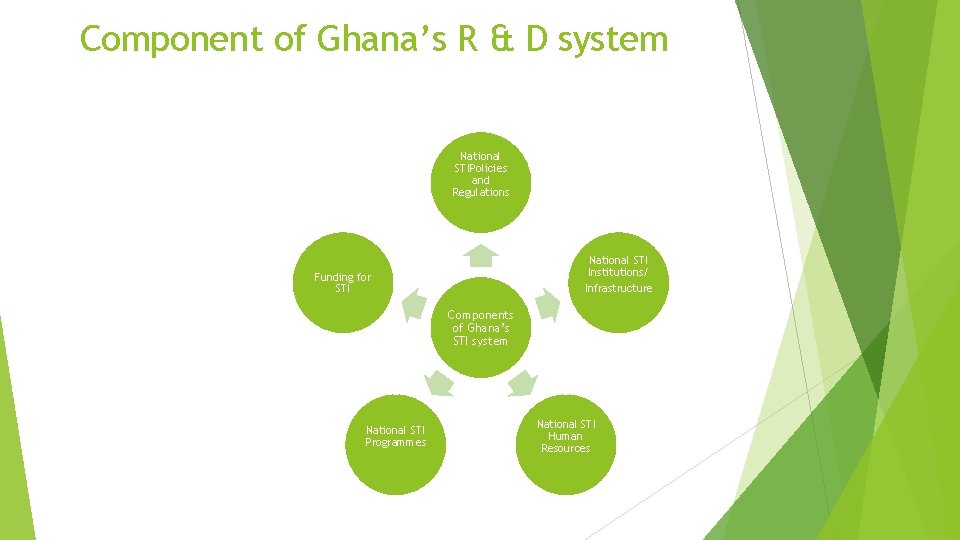
Component of Ghana’s R & D system National STIPolicies and Regulations National STI Institutions/ Infrastructure Funding for STI Components of Ghana’s STI system National STI Programmes National STI Human Resources
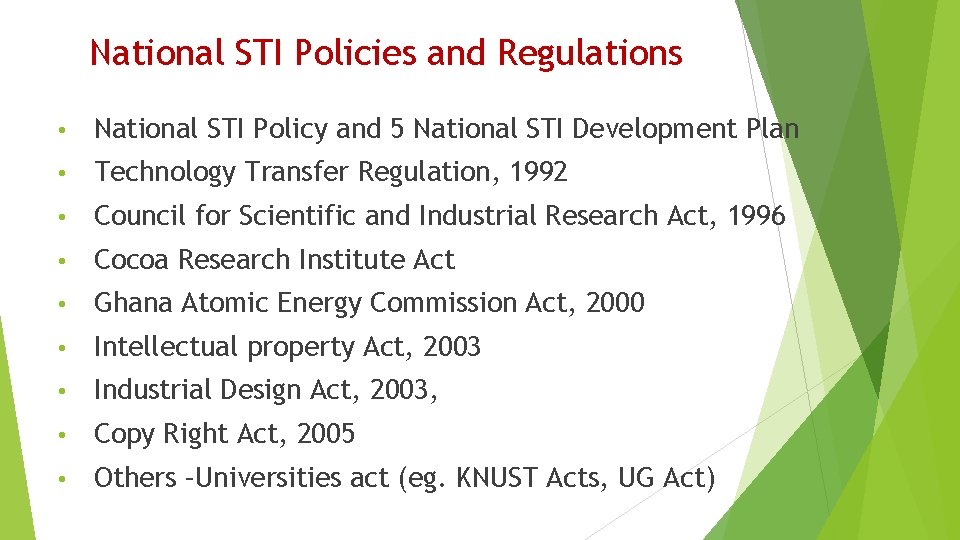
National STI Policies and Regulations • National STI Policy and 5 National STI Development Plan • Technology Transfer Regulation, 1992 • Council for Scientific and Industrial Research Act, 1996 • Cocoa Research Institute Act • Ghana Atomic Energy Commission Act, 2000 • Intellectual property Act, 2003 • Industrial Design Act, 2003, • Copy Right Act, 2005 • Others –Universities act (eg. KNUST Acts, UG Act)
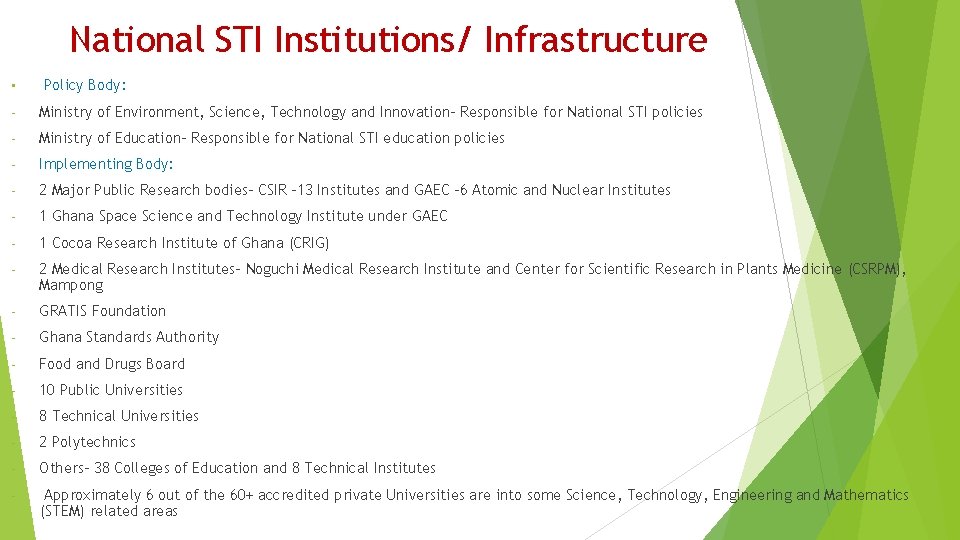
National STI Institutions/ Infrastructure • Policy Body: - Ministry of Environment, Science, Technology and Innovation- Responsible for National STI policies - Ministry of Education- Responsible for National STI education policies - Implementing Body: - 2 Major Public Research bodies- CSIR -13 Institutes and GAEC -6 Atomic and Nuclear Institutes - 1 Ghana Space Science and Technology Institute under GAEC - 1 Cocoa Research Institute of Ghana (CRIG) - 2 Medical Research Institutes- Noguchi Medical Research Institute and Center for Scientific Research in Plants Medicine (CSRPM), Mampong - GRATIS Foundation - Ghana Standards Authority - Food and Drugs Board - 10 Public Universities - 8 Technical Universities - 2 Polytechnics - Others- 38 Colleges of Education and 8 Technical Institutes - Approximately 6 out of the 60+ accredited private Universities are into some Science, Technology, Engineering and Mathematics (STEM) related areas
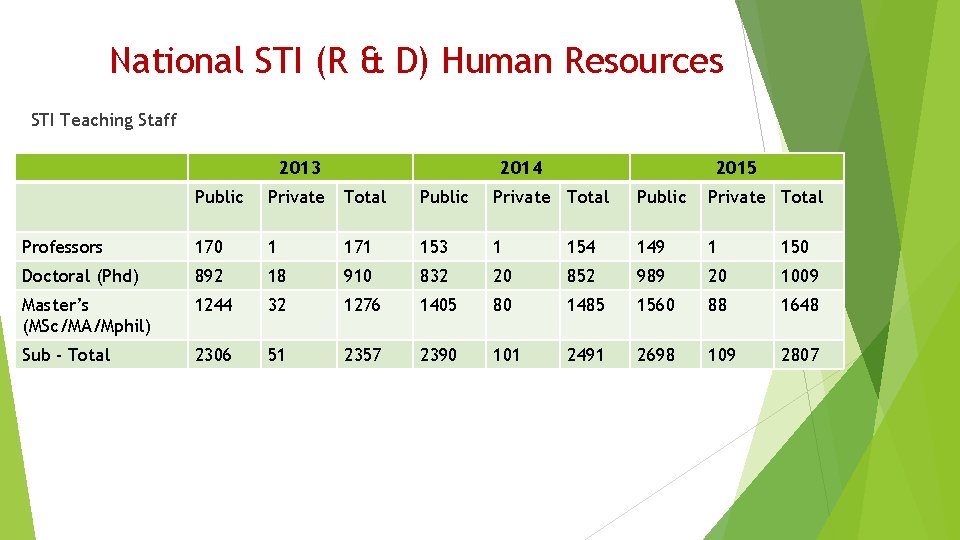
National STI (R & D) Human Resources STI Teaching Staff 2013 2014 2015 Public Private Total Professors 170 1 171 153 1 154 149 1 150 Doctoral (Phd) 892 18 910 832 20 852 989 20 1009 Master’s (MSc/MA/Mphil) 1244 32 1276 1405 80 1485 1560 88 1648 Sub - Total 2306 51 2357 2390 101 2491 2698 109 2807
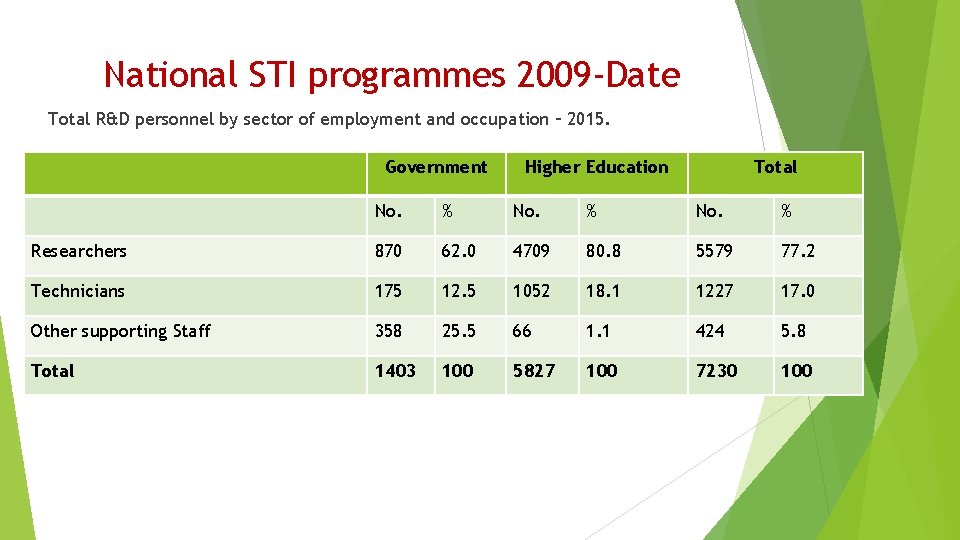
National STI programmes 2009 -Date Total R&D personnel by sector of employment and occupation – 2015. Government Higher Education Total No. % Researchers 870 62. 0 4709 80. 8 5579 77. 2 Technicians 175 12. 5 1052 18. 1 1227 17. 0 Other supporting Staff 358 25. 5 66 1. 1 424 5. 8 Total 1403 100 5827 100 7230 100
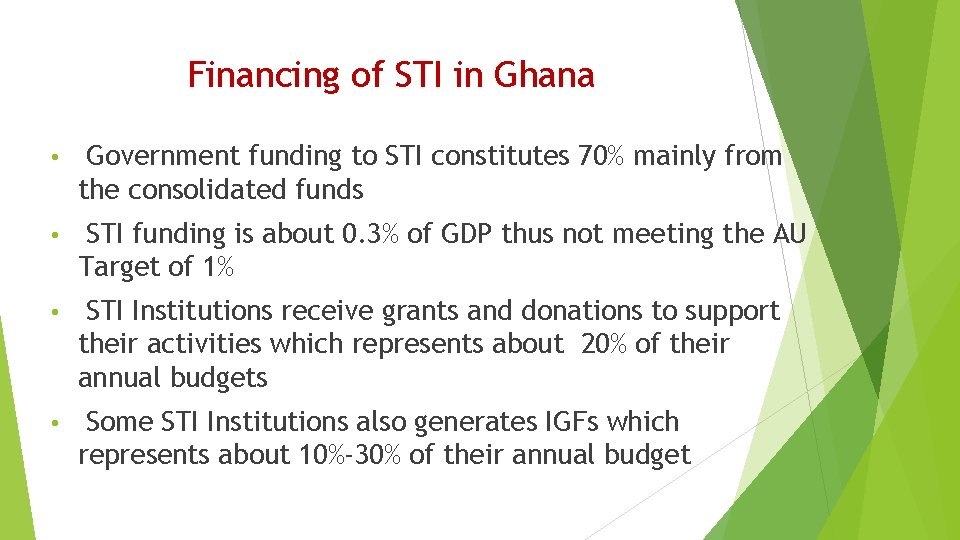
Financing of STI in Ghana • Government funding to STI constitutes 70% mainly from the consolidated funds • STI funding is about 0. 3% of GDP thus not meeting the AU Target of 1% • STI Institutions receive grants and donations to support their activities which represents about 20% of their annual budgets • Some STI Institutions also generates IGFs which represents about 10%-30% of their annual budget
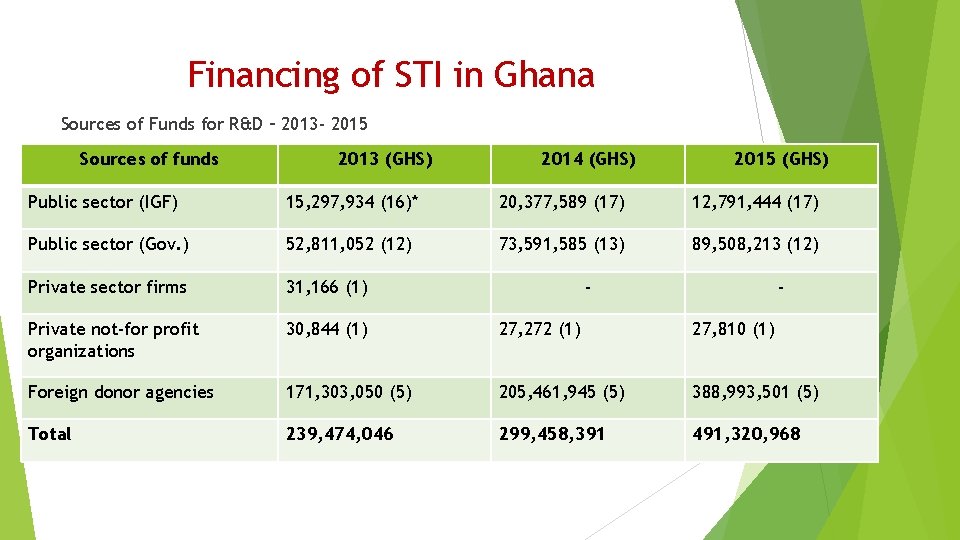
Financing of STI in Ghana Sources of Funds for R&D – 2013 - 2015 Sources of funds 2013 (GHS) 2014 (GHS) 2015 (GHS) Public sector (IGF) 15, 297, 934 (16)* 20, 377, 589 (17) 12, 791, 444 (17) Public sector (Gov. ) 52, 811, 052 (12) 73, 591, 585 (13) 89, 508, 213 (12) Private sector firms 31, 166 (1) Private not-for profit organizations 30, 844 (1) 27, 272 (1) 27, 810 (1) Foreign donor agencies 171, 303, 050 (5) 205, 461, 945 (5) 388, 993, 501 (5) Total 239, 474, 046 299, 458, 391 491, 320, 968 - -
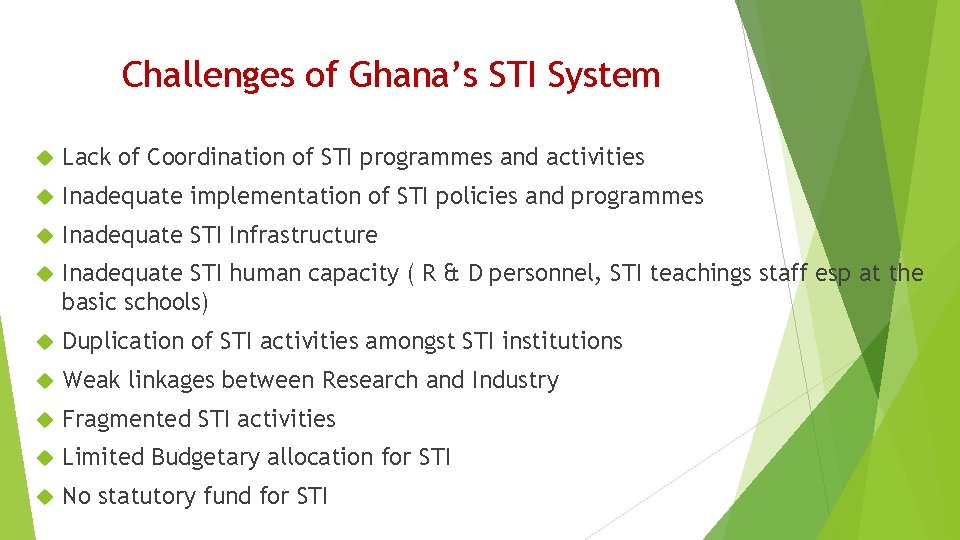
Challenges of Ghana’s STI System Lack of Coordination of STI programmes and activities Inadequate implementation of STI policies and programmes Inadequate STI Infrastructure Inadequate STI human capacity ( R & D personnel, STI teachings staff esp at the basic schools) Duplication of STI activities amongst STI institutions Weak linkages between Research and Industry Fragmented STI activities Limited Budgetary allocation for STI No statutory fund for STI
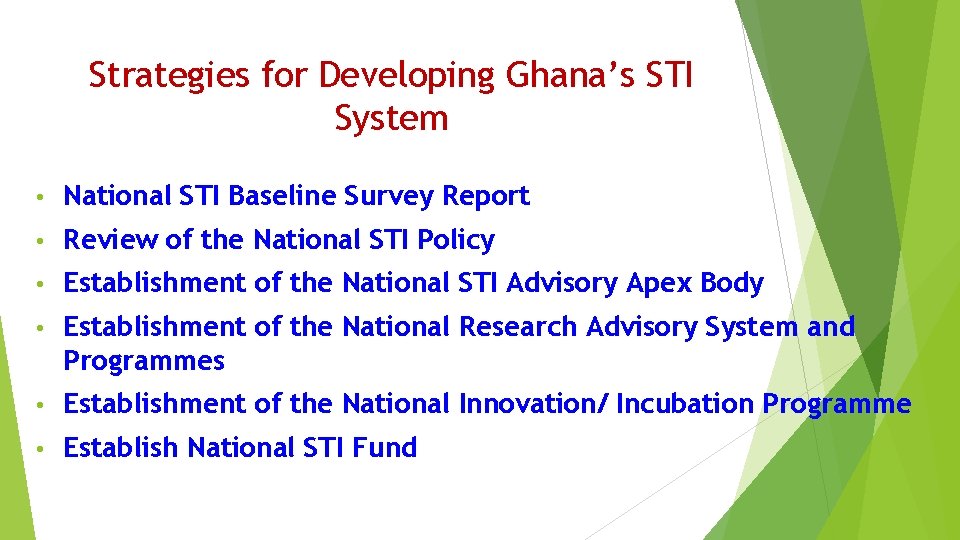
Strategies for Developing Ghana’s STI System • National STI Baseline Survey Report • Review of the National STI Policy • Establishment of the National STI Advisory Apex Body • Establishment of the National Research Advisory System and Programmes • Establishment of the National Innovation/ Incubation Programme • Establish National STI Fund
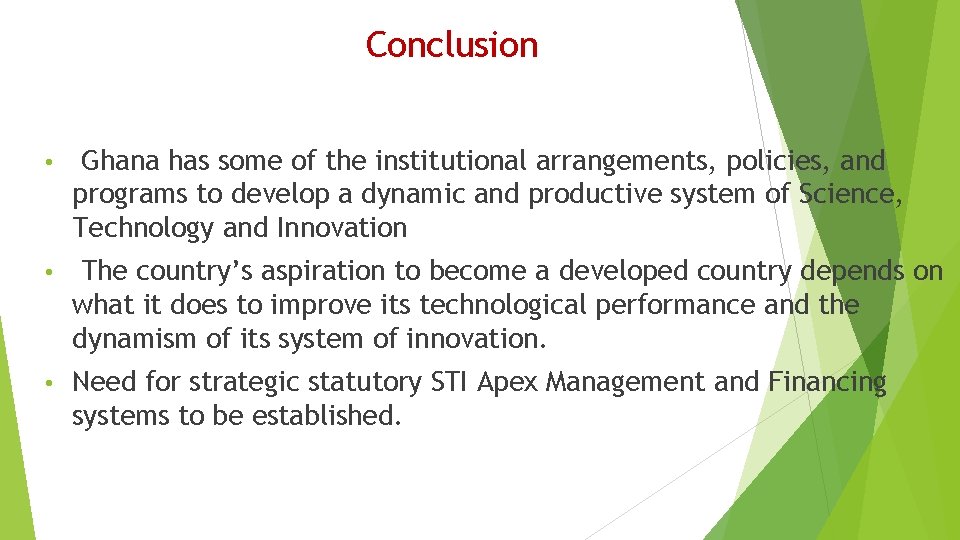
Conclusion • Ghana has some of the institutional arrangements, policies, and programs to develop a dynamic and productive system of Science, Technology and Innovation • The country’s aspiration to become a developed country depends on what it does to improve its technological performance and the dynamism of its system of innovation. • Need for strategic statutory STI Apex Management and Financing systems to be established.