
Overview of Extension Methods and Tools Global Forum
Overview of Extension Methods and Tools Global Forum for Rural Advisory Services (GFRAS) Part of the New Extensionist Learning Kit
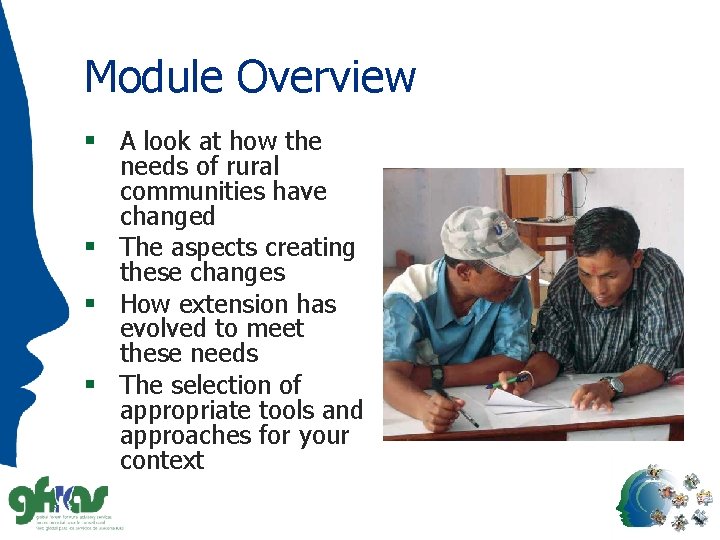
Module Overview § A look at how the needs of rural communities have changed § The aspects creating these changes § How extension has evolved to meet these needs § The selection of appropriate tools and approaches for your context
Study unit 1 Innovation and development in extension
Overview § Study unit 1 is about: • • • The role of extension in stimulating change The disciplines that have contributed to extension as a science The use of research and scientific journals to improve extension services Extension as a profession Codes of conduct in improving extension professionalism
Critical role of extension § Addressing the difficulties faced by rural communities • Social, economic and ecological difficulties § Developing extension services within the AIS • • Promoting participatory research and extension practices Focusing on a multidisciplinary approach
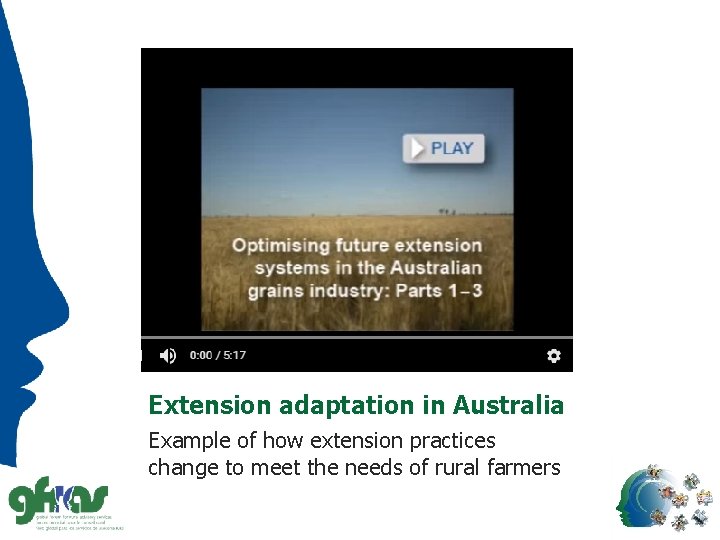
Extension adaptation in Australia Example of how extension practices change to meet the needs of rural farmers
Extension in the public sector Decentralisation Privatisation § The transfer of power, resources and ownership from the functions away from public sector to the a centralised private sector authority to scattered § Establishment of or private entities independent § Government retains a extension providers degree of control of such as NGOs services
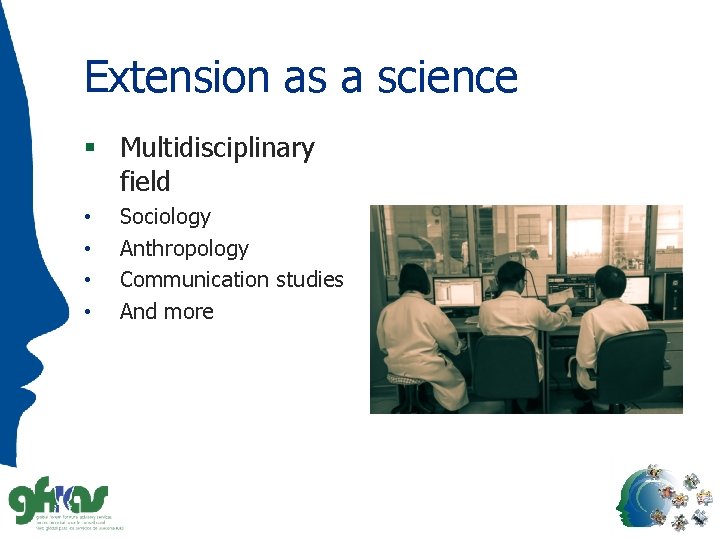
Extension as a science § Multidisciplinary field • • Sociology Anthropology Communication studies And more
Scientific journals § Acts as a verified body of literature • Forms the basis of most academic knowledge within a field § Allows practitioners to share information § Peer reviewed § Constantly updated and kept relevant

Extension as a profession § Creates a profession § Practitioners with a common body of knowledge and a code of conduct § Ensures the quality of practitioners and training programmes § Improves public confidence in the field
Personal professionalism How to improve the professional image of extension at an individual level

Code of conduct § Ensures ethical behaviour in a field by establishing best practice guidelines for practitioners • • Examples can be seen in the oaths sworn by doctors to act in the best interest of their patients This helps instil public confidence in practitioners
Professional associations § Functions of professional associations: • • • Standardised training based on accepted bodies of knowledge A code of conduct established for practitioners and educational institutes Continuous professional development
Study unit 2 Major extension approaches and tools
Overview § Study unit 2 is about: • • How changing rural conditions lead to the development and promotion of different approaches Features of major extension approaches How reforms have affected extension services Privatisation and decentralisation of extension services Pluralistic, market-led and orientated services Features of major extension tools Evaluating which approaches are relevant for your specific context Selecting tools appropriate to your programme goals and local conditions
Evolution and features § Change brought on due to shifting world views and paradigms • • World views: System of values and beliefs that affect how individuals see the world Paradigms: Models and frameworks for ideas
Evolution of extension approaches § Transfer-of-technology approach • • Early extension approach Linear transfer of technology and information from research to farmers Focused on production Mostly replaced with modern systems based Farming Systems Research/Extension model
Evolution of extension approaches § Educational approach • • • Focused on increasing the educational capacity of rural farmers Non-formal learning Increased capacity allows for independent action by farmers
Evolution of extension approaches § Systems approach • • • Holistic approach that connects farming, research, marketing and management sectors Interdisciplinary approach Examples: FSR/E model: Updated technology-transfer-approach AIS system
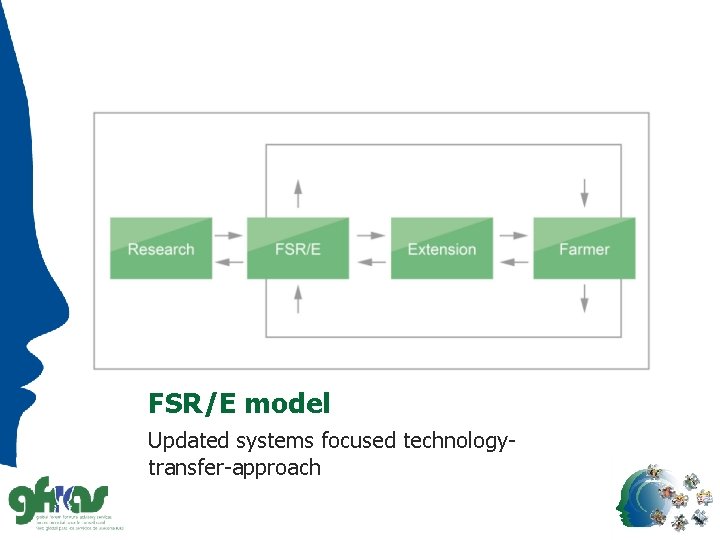
FSR/E model Updated systems focused technologytransfer-approach
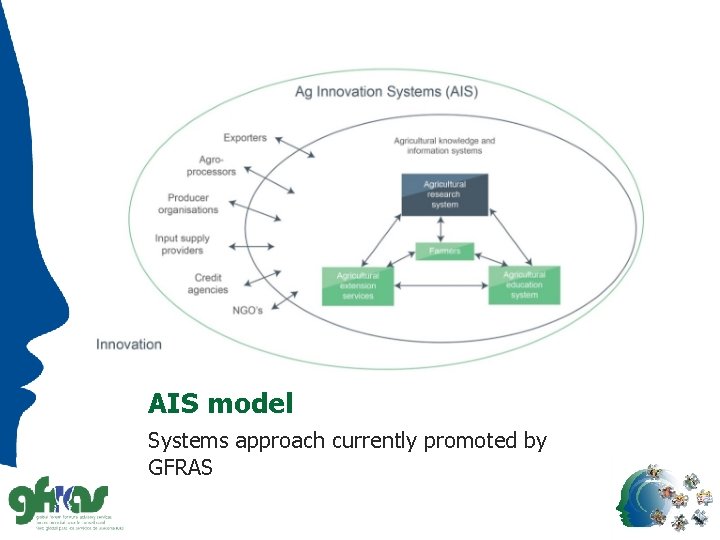
AIS model Systems approach currently promoted by GFRAS
Evolution of extension approaches § Commodity extension approach • • • Aimed at specific products or crops Normally not a holistic approach Often used by corporate extension providers
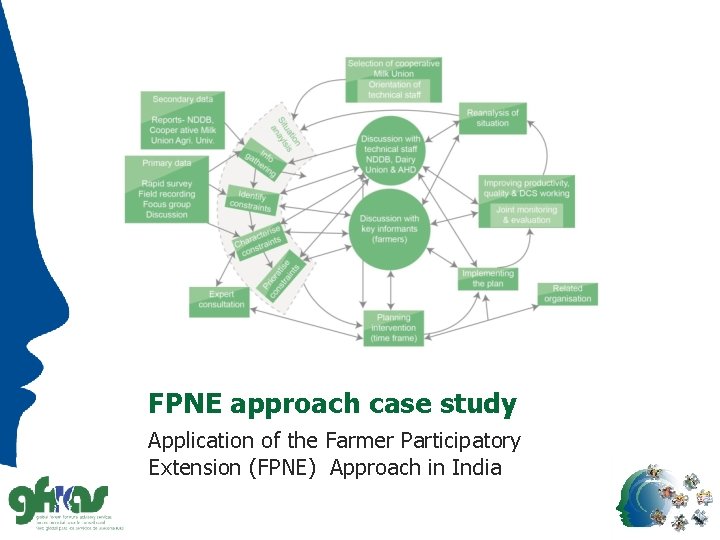
FPNE approach case study Application of the Farmer Participatory Extension (FPNE) Approach in India
Reforms in extension § Reforms • Changes that aim to improve institutions or processes § Deregulation • The removal of laws that ban or limit certain economic activities § Policy • A set of principles or rules guiding the behaviour of an organisation or group
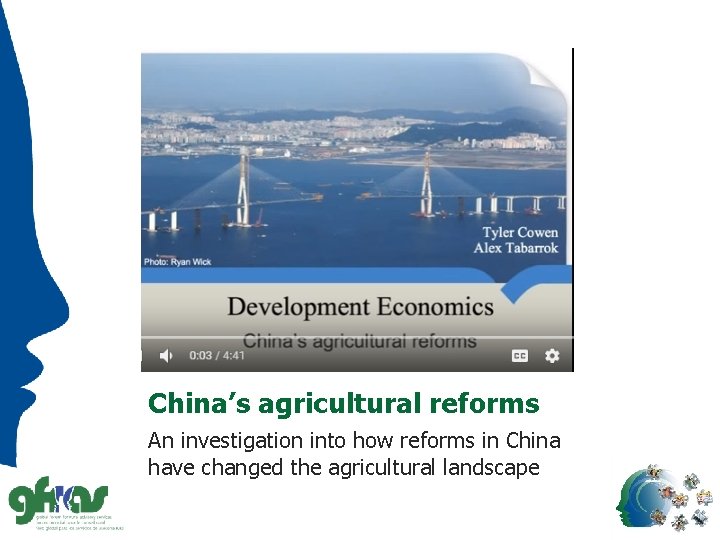
China’s agricultural reforms An investigation into how reforms in China have changed the agricultural landscape
Reforms in extension § Government reforms often associated with: • • • Decentralisation Privatisation and deregulation § Reforms in extension needed to ensure: • • • Pluralism among extension providers Development of approaches and tools specific to local context Open communication and information sharing to promote innovation
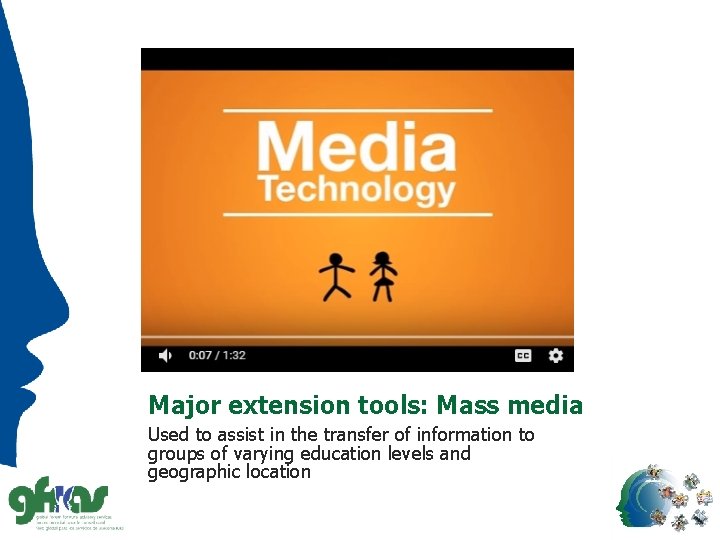
Major extension tools: Mass media Used to assist in the transfer of information to groups of varying education levels and geographic location
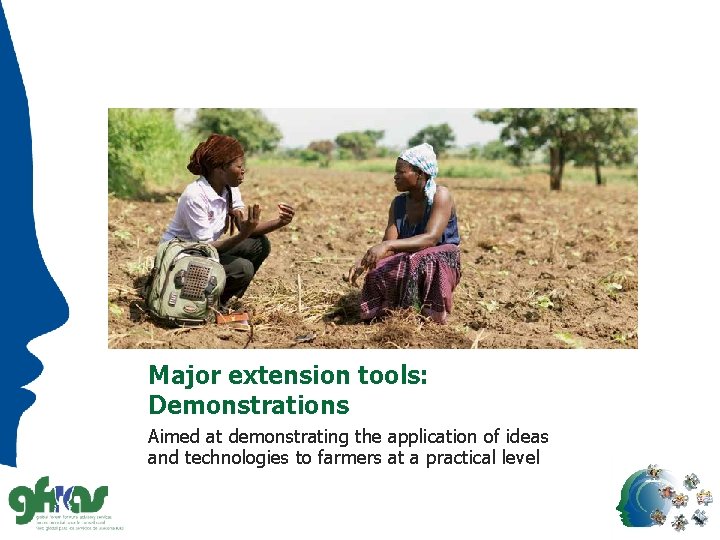
Major extension tools: Demonstrations Aimed at demonstrating the application of ideas and technologies to farmers at a practical level
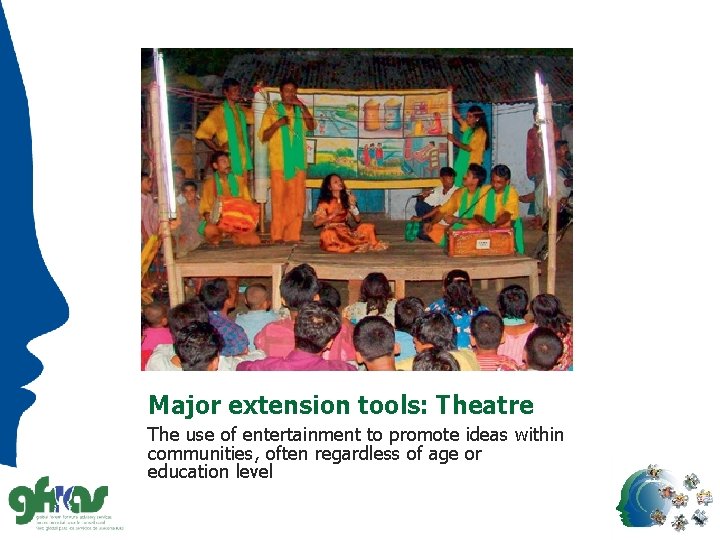
Major extension tools: Theatre The use of entertainment to promote ideas within communities, often regardless of age or education level
Additional extension tools Innovation platforms § Used to share ideas between key stakeholders in the community Farmer field schools § Experience-based educational programmes aimed at empowering farmers Innovation platforms § Experience-based educational workshops aimed at discussing problems and finding solutions
Selecting a tool and approach Initial selection criteria § Social capital • • The level of social relationships within a community and area Selection between group- or individual-based activities § Available resources • • Financial and natural resources Selection of tools and approaches within available budget
Selecting a tool and approach Initial selection criteria § Demographics • • • Gender and age Selection of tools and approaches that cater for the needs of younger and older members of the community Tools and approaches that bridge gender barriers § Educational level • • Will the information be understood? Can the message be better understood through the use of specific tools and approaches
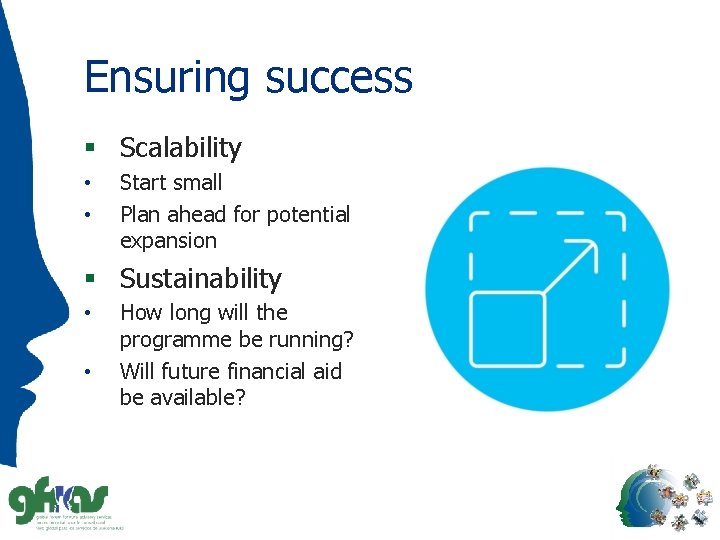
Ensuring success § Scalability • • Start small Plan ahead for potential expansion § Sustainability • • How long will the programme be running? Will future financial aid be available?

Ensuring project success Key considerations to determine the success of a project
Acknowledgements This module was made possible through the support of the Deutsche Gesellschaft fu r Internationale Zusammenarbeit (GIZ). The contents of this module are the responsibility of the authors and do not necessarily reflect the views of GIZ or their government. All work by Global Forum for Rural Advisory Services is licensed under a CC BY-NC 3. 0 Unported License.
- Slides: 35