
Overview of Curriculum and Portfolio Wayne Hamer Sept



- Slides: 59
Overview of Curriculum and Portfolio Wayne Hamer Sept 2019
Objectives • Overview of the new curricula • Adult only • PEM only • Adult and PEM • Highlight the changes in v 2019 • Overview of the e. P • Different sections • Some tips on use
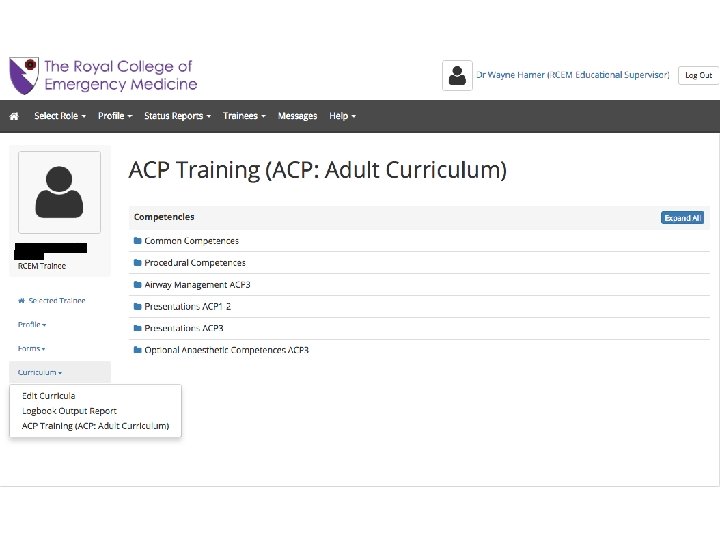
Curriculum 2017 v 2019 • Adapted from ACCS curriculum • Expected level of credentialing is ST 3 • Divided in 3 years of evidence gathering, MSc for first 2 years, finish in year 3 • Adult only, PEM only or combined adult and PEM • Core Competences • Major Presentations • Acute Presentations (and additional acute) • Practical Procedures • Mandated consultant assessments
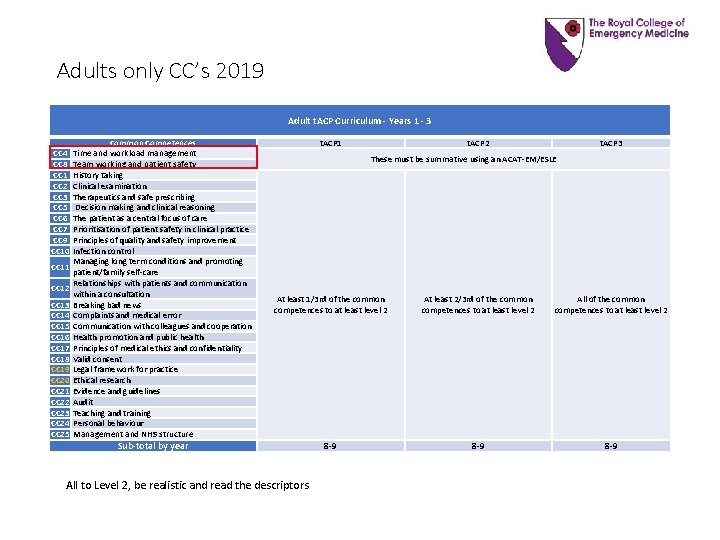
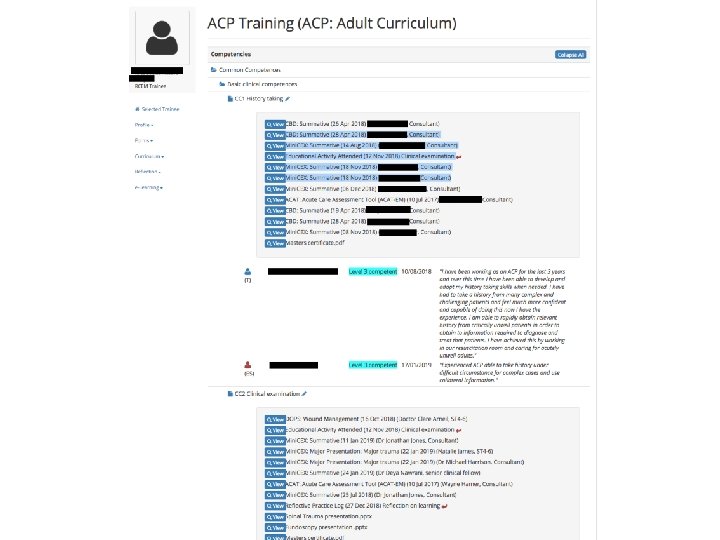
Adults only CC’s 2019 Adult t. ACP Curriculum - Years 1 - 3 CC 4 CC 8 CC 1 CC 2 CC 3 CC 5 CC 6 CC 7 CC 9 CC 10 CC 11 CC 12 CC 13 CC 14 CC 15 CC 16 CC 17 CC 18 CC 19 CC 20 CC 21 CC 22 CC 23 CC 24 CC 25 Common Competences Time and workload management Team working and patient safety History taking Clinical examination Therapeutics and safe prescribing Decision making and clinical reasoning The patient as a central focus of care Prioritisation of patient safety in clinical practice Principles of quality and safety improvement Infection control Managing long term conditions and promoting patient/family self-care Relationships with patients and communication within a consultation Breaking bad news Complaints and medical error Communication with colleagues and cooperation Health promotion and public health Principles of medical ethics and confidentiality Valid consent Legal framework for practice Ethical research Evidence and guidelines Audit Teaching and training Personal behaviour Management and NHS structure t. ACP 1 t. ACP 2 t. ACP 3 These must be summative using an ACAT-EM/ESLE At least 1/3 rd of the common competences to at least level 2 At least 2/3 rd of the common competences to at least level 2 All of the common competences to at least level 2 8 -9 8 -9 Sub-total by year All to Level 2, be realistic and read the descriptors
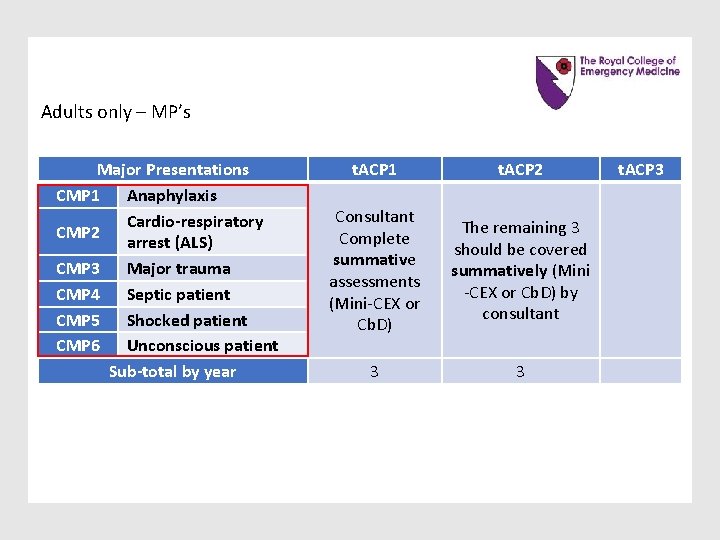
Adults only – MP’s Major Presentations CMP 1 Anaphylaxis Cardio-respiratory CMP 2 arrest (ALS) CMP 3 Major trauma CMP 4 Septic patient CMP 5 Shocked patient CMP 6 Unconscious patient Sub-total by year t. ACP 1 t. ACP 2 Consultant Complete summative assessments (Mini-CEX or Cb. D) The remaining 3 should be covered summatively (Mini -CEX or Cb. D) by consultant 3 3 t. ACP 3
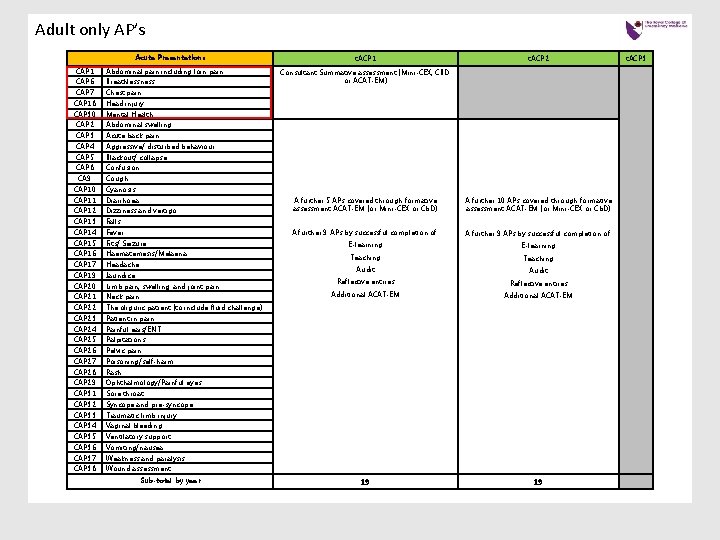
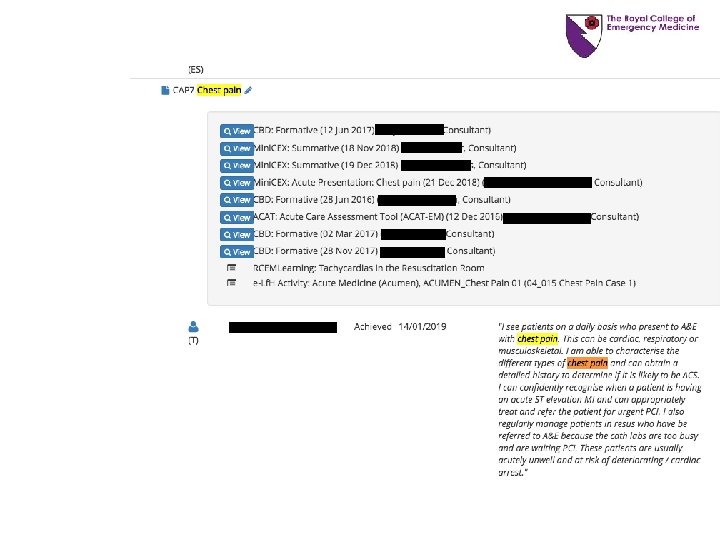
Adult only AP’s Acute Presentations CAP 1 Abdominal pain including loin pain CAP 6 Breathlessness CAP 7 Chest pain CAP 18 Head injury CAP 30 Mental Health CAP 2 Abdominal swelling CAP 3 Acute back pain CAP 4 Aggressive/ disturbed behaviour CAP 5 Blackout/ collapse CAP 8 Confusion CA 9 t. ACP 1 t. ACP 2 Consultant Summative assessment (Mini-CEX, CBD or ACAT-EM) Cough CAP 10 Cyanosis CAP 11 Diarrhoea CAP 12 Dizziness and vertigo CAP 13 Falls CAP 14 Fever CAP 15 Fits/ Seizure CAP 16 Haematemesis/Melaena CAP 17 Headache CAP 19 Jaundice CAP 20 Limb pain, swelling, and joint pain CAP 21 Neck pain CAP 22 The oliguric patient (to include fluid challenge) CAP 23 Patient in pain CAP 24 Painful ears/ENT CAP 25 Palpitations CAP 26 Pelvic pain CAP 27 Poisoning/self-harm CAP 28 Rash CAP 29 Ophthalmology/Painful eyes CAP 31 Sore throat CAP 32 Syncope and pre-syncope CAP 33 Traumatic limb injury CAP 34 Vaginal bleeding CAP 35 Ventilatory support CAP 36 Vomiting/nausea CAP 37 Weakness and paralysis CAP 38 Wound assessment Sub-total by year A further 5 APs covered through formative assessment ACAT-EM (or Mini-CEX or Cb. D) A further 10 APs covered through formative assessment ACAT-EM (or Mini-CEX or Cb. D) A further 9 APs by successful completion of: E-learning Teaching Audit Reflective entries Additional ACAT-EM 19 19 t. ACP 3
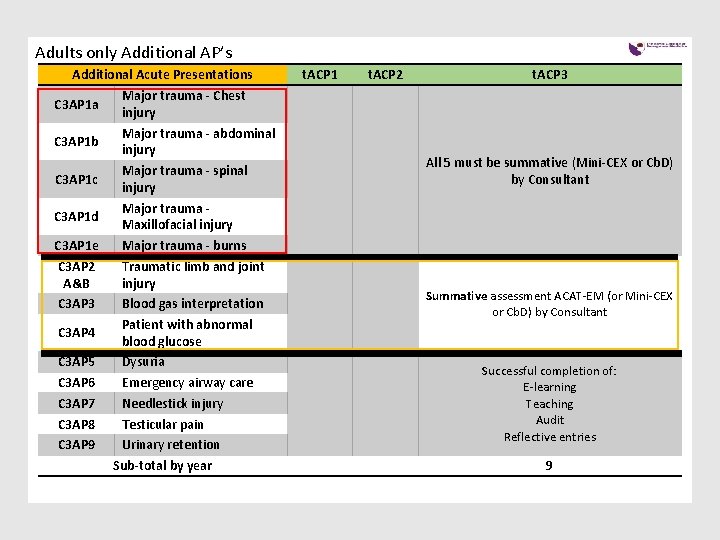
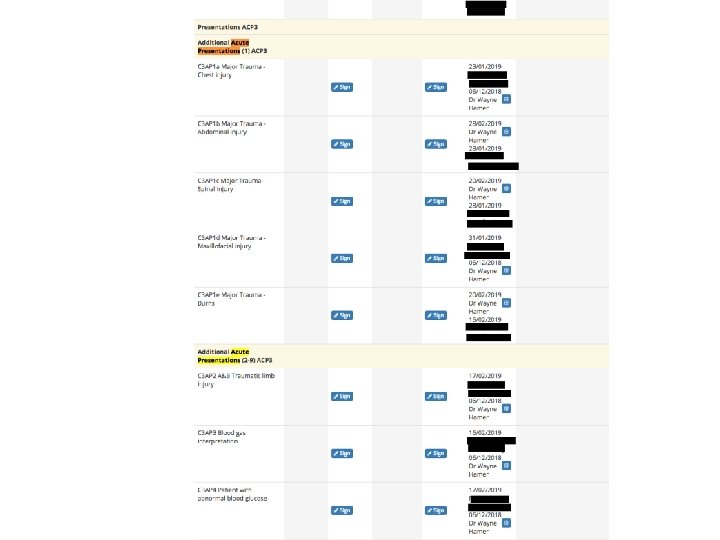
Adults only Additional AP’s Additional Acute Presentations Major trauma - Chest C 3 AP 1 a injury Major trauma - abdominal C 3 AP 1 b injury Major trauma - spinal C 3 AP 1 c injury Major trauma C 3 AP 1 d Maxillofacial injury C 3 AP 1 e Major trauma - burns C 3 AP 2 Traumatic limb and joint A&B injury C 3 AP 3 Blood gas interpretation Patient with abnormal C 3 AP 4 blood glucose C 3 AP 5 Dysuria C 3 AP 6 Emergency airway care C 3 AP 7 Needlestick injury C 3 AP 8 Testicular pain C 3 AP 9 Urinary retention Sub-total by year t. ACP 1 t. ACP 2 t. ACP 3 All 5 must be summative (Mini-CEX or Cb. D) by Consultant Summative assessment ACAT-EM (or Mini-CEX or Cb. D) by Consultant Successful completion of: E-learning Teaching Audit Reflective entries 9
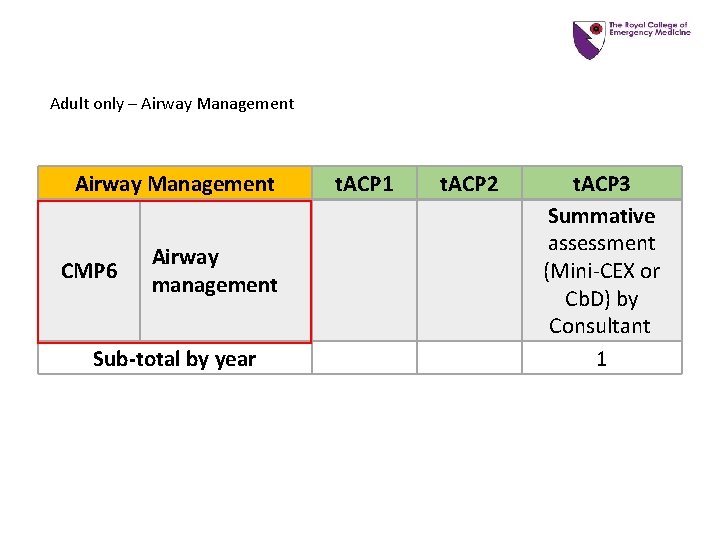
Adult only – Airway Management CMP 6 Airway management Sub-total by year t. ACP 1 t. ACP 2 t. ACP 3 Summative assessment (Mini-CEX or Cb. D) by Consultant 1
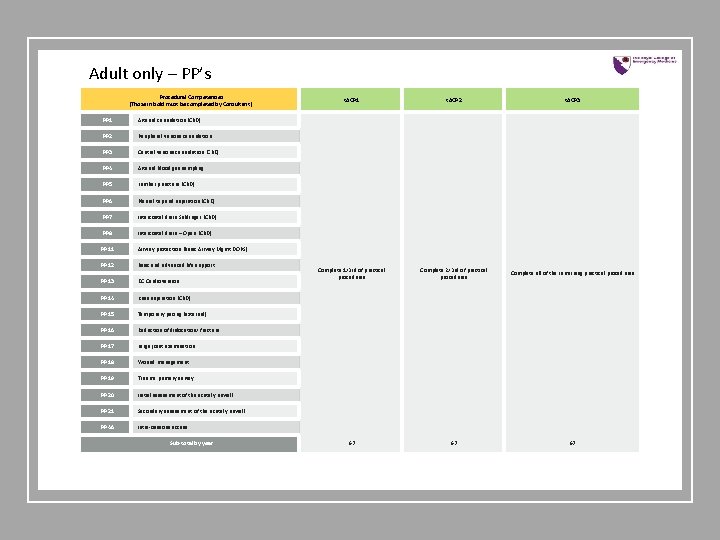
Adult only – PP’s Procedural Competencies (Those in bold must be completed by Consultant) PP 1 Arterial cannulation (Cb. D) PP 2 Peripheral venous cannulation PP 3 Central venous cannulation (Cb. D) PP 4 Arterial blood gas sampling PP 5 Lumbar puncture (Cb. D) PP 6 Pleural tap and aspiration (Cb. D) PP 7 Intercostal drain Seldinger (Cb. D) PP 8 Intercostal drain – Open (Cb. D) PP 11 Airway protection (Basic Airway Mgmt DOPS) PP 12 Basic and advanced life support PP 13 DC Cardioversion PP 14 Knee aspiration (Cb. D) PP 15 Temporary pacing (external) PP 16 Reduction of dislocation/ fracture PP 17 Large joint examination PP 18 Wound management PP 19 Trauma primary survey PP 20 Initial assessment of the acutely unwell PP 21 Secondary assessment of the acutely unwell PP 46 Intra-osseous access Sub-total by year t. ACP 1 t. ACP 2 t. ACP 3 Complete 1/3 rd of practical procedures Complete 2/3 rd of practical procedures Complete all of the remaining practical procedures 6 -7 6 -7
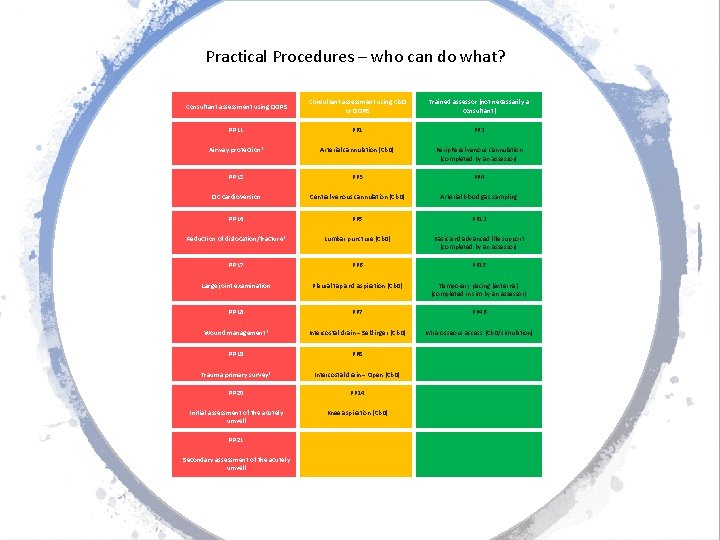
Practical Procedures – who can do what? Consultant assessment using DOPS Consultant assessment using Cb. D or DOPS Trained assessor (not necessarily a consultant) PP 11 PP 2 Airway protection* Arterial cannulation (Cb. D) Peripheral venous cannulation (completed by an assessor) PP 13 PP 4 DC cardioversion Central venous cannulation (Cb. D) Arterial blood gas sampling PP 16 PP 5 PP 12 Reduction of dislocation/fracture* Lumbar puncture (Cb. D) Basic and advanced life support (completed by an assessor) PP 17 PP 6 PP 15 Large joint examination Pleural tap and aspiration (Cb. D) Temporary pacing (external) (completed in sim by an assessor) PP 18 PP 7 PP 46 Wound management* Intercostal drain – Seldinger (Cb. D) Intra-osseous access (Cb. D/simulation) PP 19 PP 8 Trauma primary survey* Intercostal drain – Open (Cb. D) PP 20 PP 14 Initial assessment of the acutely unwell Knee aspiration (Cb. D) PP 21 Secondary assessment of the acutely unwell
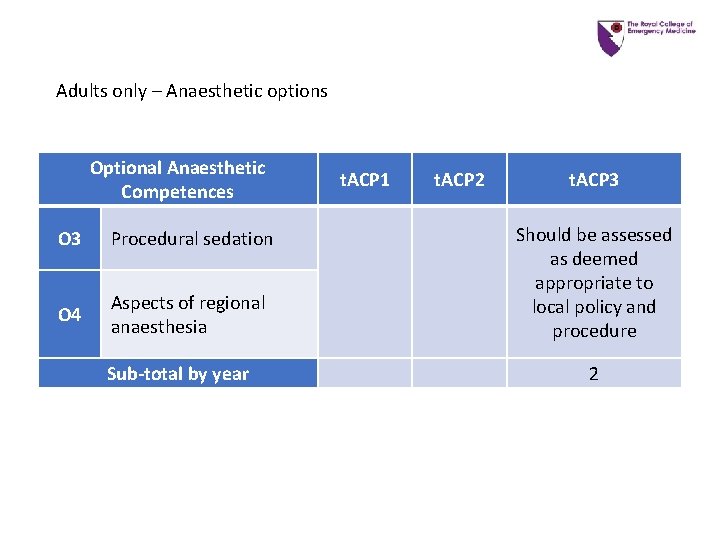
Adults only – Anaesthetic options Optional Anaesthetic Competences O 3 Procedural sedation O 4 Aspects of regional anaesthesia Sub-total by year t. ACP 1 t. ACP 2 t. ACP 3 Should be assessed as deemed appropriate to local policy and procedure 2
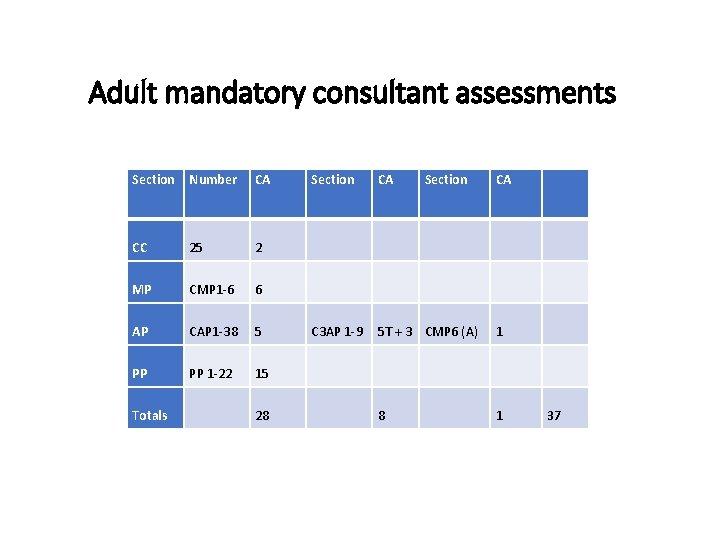
Adult mandatory consultant assessments Section Number CA CC 25 2 MP CMP 1 -6 6 AP CAP 1 -38 5 PP PP 1 -22 15 Totals 28 Section CA C 3 AP 1 -9 5 T + 3 CMP 6 (A) 1 8 1 37
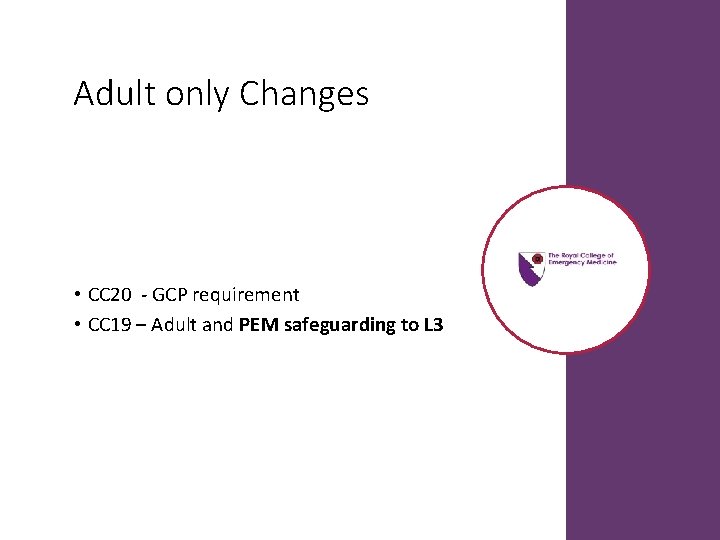
Adult only Changes • CC 20 - GCP requirement • CC 19 – Adult and PEM safeguarding to L 3
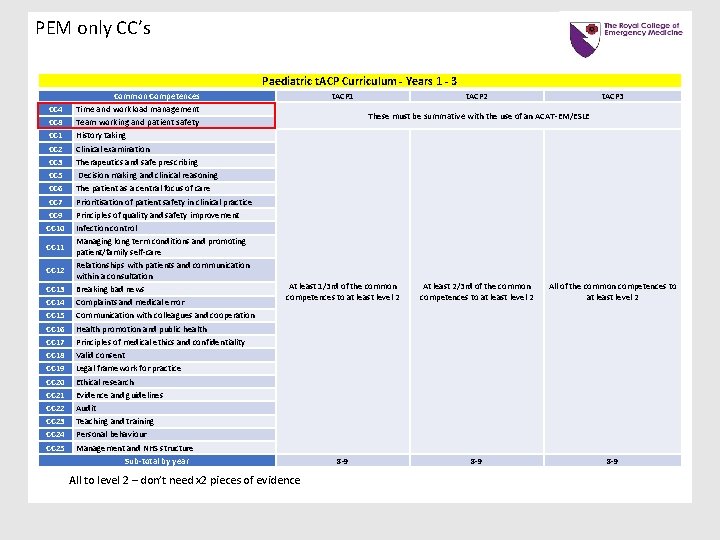
PEM only CC’s Paediatric t. ACP Curriculum - Years 1 - 3 CC 4 CC 8 CC 1 CC 2 CC 3 CC 5 CC 6 CC 7 CC 9 CC 10 CC 11 CC 12 CC 13 CC 14 CC 15 CC 16 CC 17 CC 18 CC 19 CC 20 CC 21 CC 22 CC 23 CC 24 CC 25 Common Competences Time and workload management Team working and patient safety History taking Clinical examination Therapeutics and safe prescribing Decision making and clinical reasoning The patient as a central focus of care Prioritisation of patient safety in clinical practice Principles of quality and safety improvement Infection control Managing long term conditions and promoting patient/family self-care Relationships with patients and communication within a consultation Breaking bad news Complaints and medical error Communication with colleagues and cooperation Health promotion and public health Principles of medical ethics and confidentiality Valid consent Legal framework for practice Ethical research Evidence and guidelines Audit Teaching and training Personal behaviour Management and NHS structure Sub-total by year t. ACP 1 t. ACP 2 t. ACP 3 These must be summative with the use of an ACAT-EM/ESLE At least 1/3 rd of the common competences to at least level 2 At least 2/3 rd of the common competences to at least level 2 All of the common competences to at least level 2 8 -9 8 -9 All to level 2 – don’t need x 2 pieces of evidence
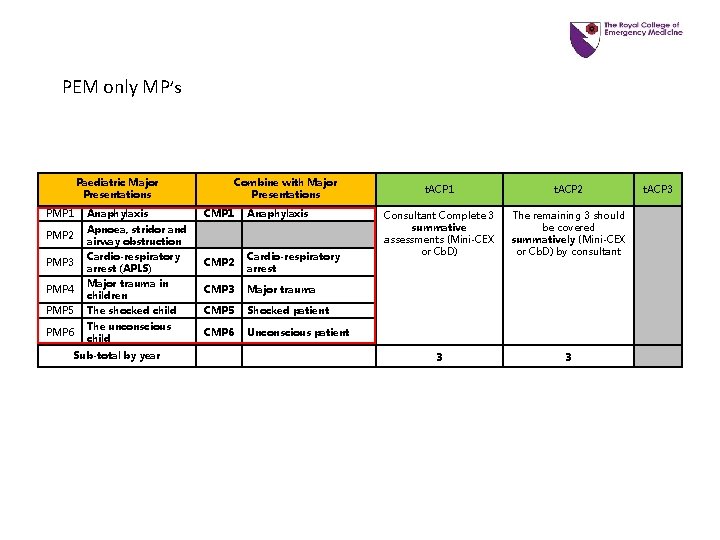
PEM only MP’s Paediatric Major Presentations PMP 1 Anaphylaxis PMP 2 Apnoea, stridor and airway obstruction PMP 3 Combine with Major Presentations CMP 1 Anaphylaxis Cardio-respiratory arrest (APLS) CMP 2 Cardio-respiratory arrest PMP 4 Major trauma in children CMP 3 Major trauma PMP 5 The shocked child CMP 5 Shocked patient PMP 6 The unconscious child CMP 6 Unconscious patient Sub-total by year t. ACP 1 t. ACP 2 Consultant Complete 3 summative assessments (Mini-CEX or Cb. D) The remaining 3 should be covered summatively (Mini-CEX or Cb. D) by consultant 3 3 t. ACP 3
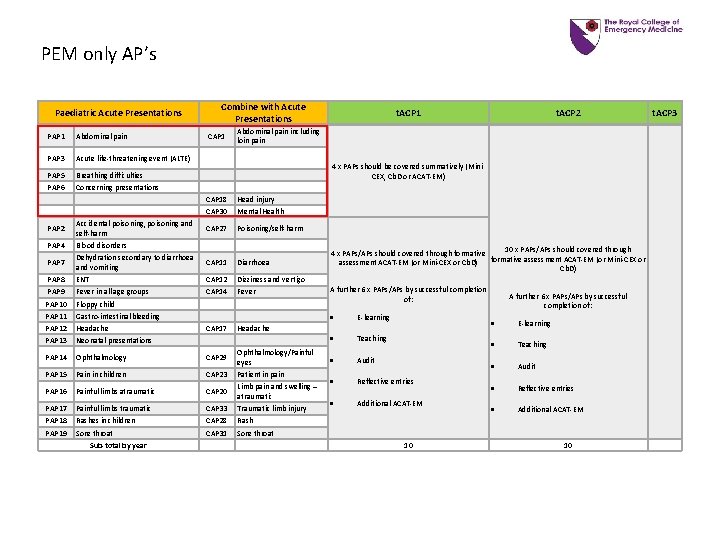
PEM only AP’s Paediatric Acute Presentations PAP 1 Abdominal pain PAP 3 Acute life-threatening event (ALTE) PAP 5 Breathing difficulties PAP 6 Concerning presentations Combine with Acute Presentations CAP 1 t. ACP 2 Abdominal pain including loin pain 4 x PAPs should be covered summatively (Mini. CEX, Cb. D or ACAT-EM) CAP 18 Head injury CAP 30 Mental Health CAP 27 Poisoning/self-harm PAP 2 Accidental poisoning, poisoning and self-harm PAP 4 Blood disorders PAP 7 Dehydration secondary to diarrhoea and vomiting CAP 11 Diarrhoea PAP 8 ENT CAP 12 Dizziness and vertigo PAP 9 Fever in all age groups CAP 14 Fever PAP 10 Floppy child PAP 11 Gastro-intestinal bleeding PAP 12 Headache CAP 17 Headache PAP 13 Neonatal presentations PAP 14 Ophthalmology CAP 29 Ophthalmology/Painful eyes PAP 15 Pain in children CAP 23 Patient in pain PAP 16 Painful limbs atraumatic CAP 20 Limb pain and swelling – atraumatic PAP 17 Painful limbs traumatic CAP 33 Traumatic limb injury PAP 18 Rashes in children CAP 28 Rash PAP 19 Sore throat CAP 31 Sore throat Sub-total by year t. ACP 1 10 x PAPs/APs should covered through 4 x PAPs/APs should covered through formative assessment ACAT-EM (or Mini-CEX or Cb. D) A further 6 x PAPs/APs by successful completion of: E-learning Teaching Audit Reflective entries Additional ACAT-EM 10 t. ACP 3
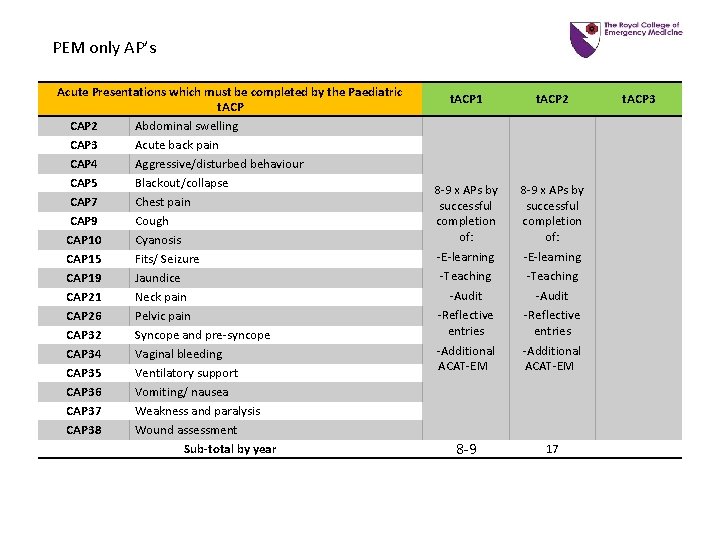
PEM only AP’s Acute Presentations which must be completed by the Paediatric t. ACP CAP 2 Abdominal swelling CAP 3 Acute back pain CAP 4 Aggressive/disturbed behaviour CAP 5 Blackout/collapse CAP 7 Chest pain CAP 9 Cough CAP 10 Cyanosis CAP 15 Fits/ Seizure CAP 19 Jaundice CAP 21 Neck pain CAP 26 Pelvic pain CAP 32 Syncope and pre-syncope CAP 34 Vaginal bleeding CAP 35 Ventilatory support CAP 36 Vomiting/ nausea CAP 37 Weakness and paralysis CAP 38 Wound assessment Sub-total by year t. ACP 1 t. ACP 2 8 -9 x APs by successful completion of: -E-learning -Teaching -Audit -Reflective entries -Additional ACAT-EM 8 -9 17 t. ACP 3
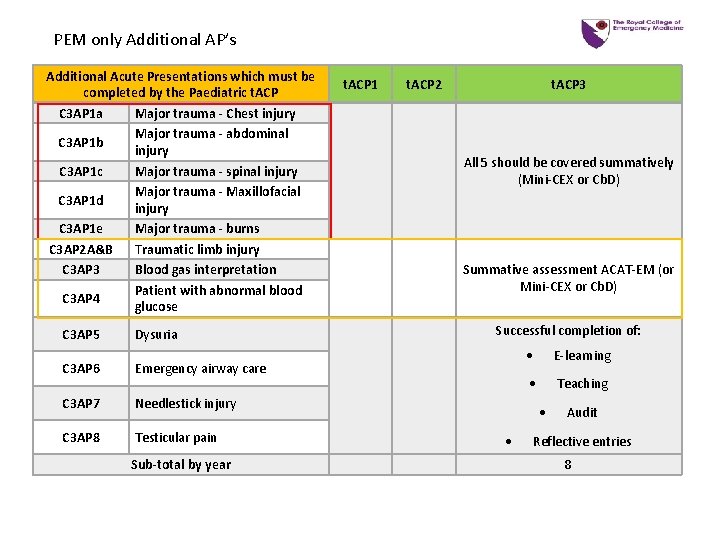
PEM only Additional AP’s Additional Acute Presentations which must be completed by the Paediatric t. ACP C 3 AP 1 a Major trauma - Chest injury Major trauma - abdominal C 3 AP 1 b injury C 3 AP 1 c Major trauma - spinal injury Major trauma - Maxillofacial C 3 AP 1 d injury C 3 AP 1 e Major trauma - burns C 3 AP 2 A&B Traumatic limb injury C 3 AP 3 Blood gas interpretation Patient with abnormal blood C 3 AP 4 glucose C 3 AP 5 Dysuria C 3 AP 6 Emergency airway care C 3 AP 7 Needlestick injury C 3 AP 8 Testicular pain Sub-total by year t. ACP 1 t. ACP 2 t. ACP 3 All 5 should be covered summatively (Mini-CEX or Cb. D) Summative assessment ACAT-EM (or Mini-CEX or Cb. D) Successful completion of: E-learning Teaching Audit Reflective entries 8
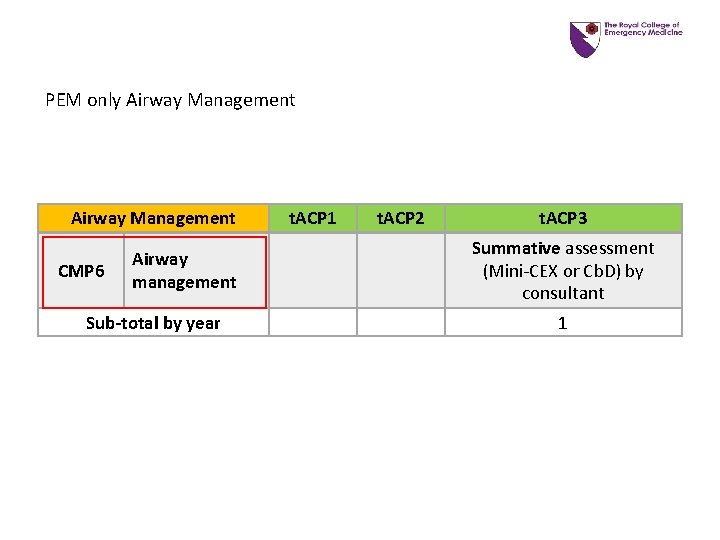
PEM only Airway Management CMP 6 Airway management Sub-total by year t. ACP 1 t. ACP 2 t. ACP 3 Summative assessment (Mini-CEX or Cb. D) by consultant 1
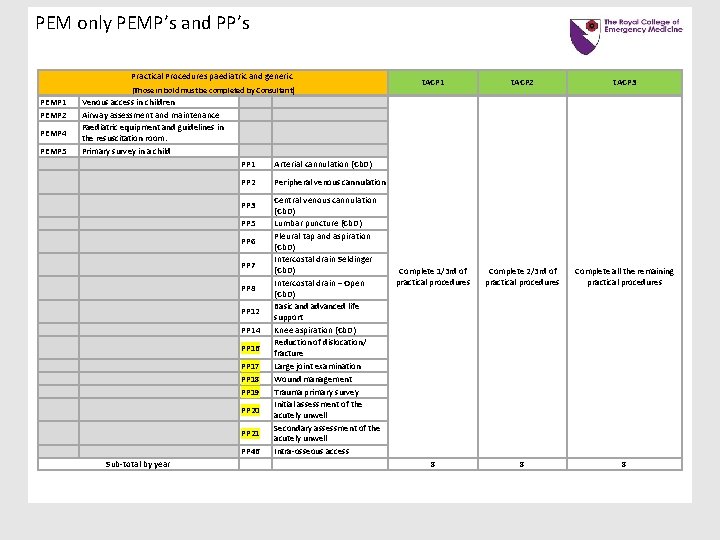
PEM only PEMP’s and PP’s Practical Procedures paediatric and generic (Those in bold must be completed by Consultant) PEMP 1 PEMP 2 PEMP 4 PEMP 5 t. ACP 1 t. ACP 2 t. ACP 3 Complete 1/3 rd of practical procedures Complete 2/3 rd of practical procedures Complete all the remaining practical procedures 8 8 8 Venous access in children Airway assessment and maintenance Paediatric equipment and guidelines in the resuscitation room. Primary survey in a child PP 1 Arterial cannulation (Cb. D) PP 2 Peripheral venous cannulation PP 3 PP 5 PP 6 PP 7 PP 8 PP 12 PP 14 PP 16 PP 17 PP 18 PP 19 PP 20 PP 21 PP 46 Sub-total by year Central venous cannulation (Cb. D) Lumbar puncture (Cb. D) Pleural tap and aspiration (Cb. D) Intercostal drain Seldinger (Cb. D) Intercostal drain – Open (Cb. D) Basic and advanced life support Knee aspiration (Cb. D) Reduction of dislocation/ fracture Large joint examination Wound management Trauma primary survey Initial assessment of the acutely unwell Secondary assessment of the acutely unwell Intra-osseous access
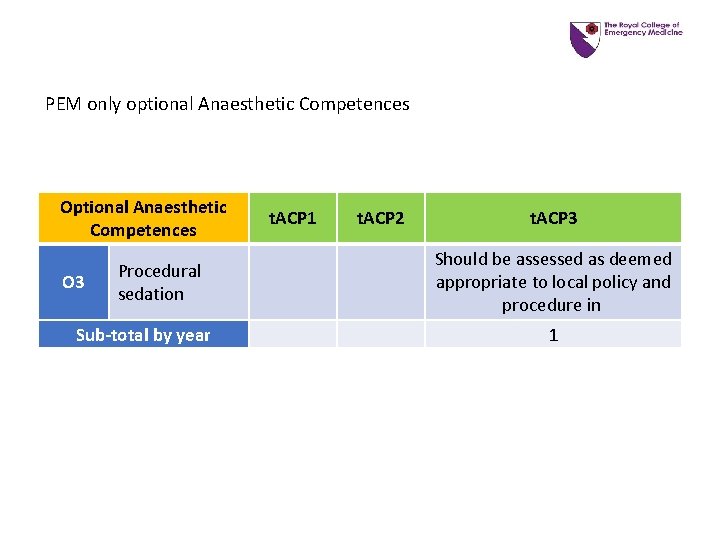
PEM only optional Anaesthetic Competences O 3 Procedural sedation Sub-total by year t. ACP 1 t. ACP 2 t. ACP 3 Should be assessed as deemed appropriate to local policy and procedure in 1
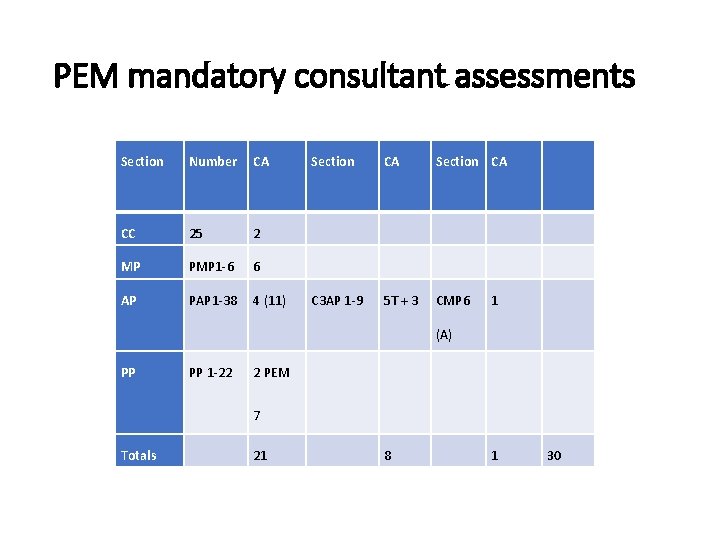
PEM mandatory consultant assessments Section Number CA CC 25 2 MP PMP 1 -6 6 AP PAP 1 -38 4 (11) Section CA C 3 AP 1 -9 5 T + 3 CMP 6 1 (A) PP PP 1 -22 2 PEM 7 Totals 21 8 1 30
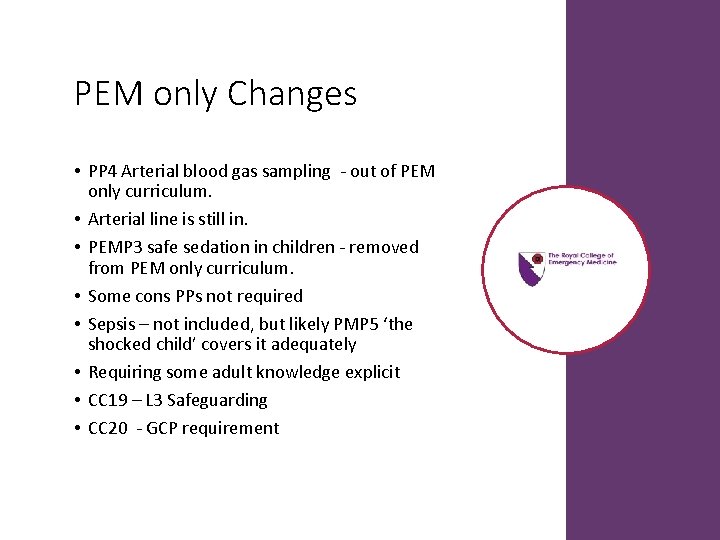
PEM only Changes • PP 4 Arterial blood gas sampling - out of PEM only curriculum. • Arterial line is still in. • PEMP 3 safe sedation in children - removed from PEM only curriculum. • Some cons PPs not required • Sepsis – not included, but likely PMP 5 ‘the shocked child’ covers it adequately • Requiring some adult knowledge explicit • CC 19 – L 3 Safeguarding • CC 20 - GCP requirement
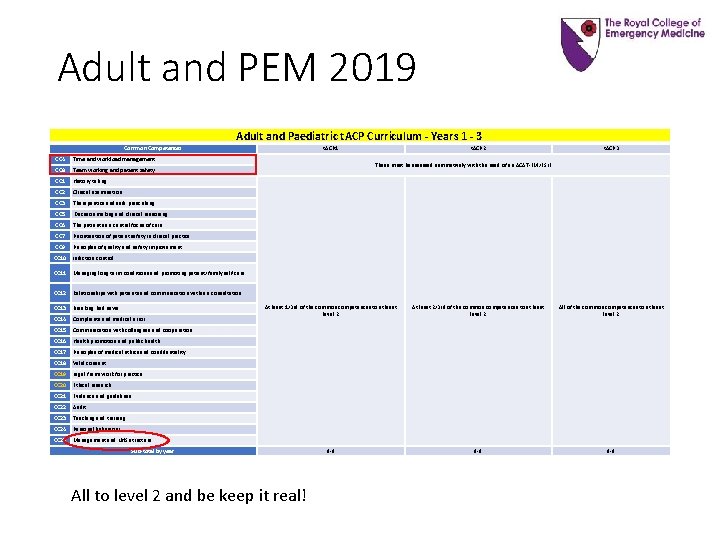
Adult and PEM 2019 Adult and Paediatric t. ACP Curriculum - Years 1 - 3 Common Competences CC 4 Time and workload management CC 8 Team working and patient safety CC 1 History taking CC 2 Clinical examination CC 3 Therapeutics and safe prescribing CC 5 Decision making and clinical reasoning CC 6 The patient as a central focus of care CC 7 Prioritisation of patient safety in clinical practice CC 9 Principles of quality and safety improvement CC 10 Infection control CC 11 Managing long term conditions and promoting patient/family self-care CC 12 Relationships with patients and communication within a consultation CC 13 Breaking bad news CC 14 Complaints and medical error CC 15 Communication with colleagues and cooperation CC 16 Health promotion and public health CC 17 Principles of medical ethics and confidentiality CC 18 Valid consent CC 19 Legal framework for practice CC 20 Ethical research CC 21 Evidence and guidelines CC 22 Audit CC 23 Teaching and training CC 24 Personal behaviour CC 25 Management and NHS structure t. ACP 1 t. ACP 2 t. ACP 3 These must be assessed summatively with the used of an ACAT-EM/ESLE At least 1/3 rd of the common competences to at least level 2 At least 2/3 rd of the common competences to at least level 2 All of the common competences to at least level 2 8 -9 8 -9 Sub-total by year All to level 2 and be keep it real!
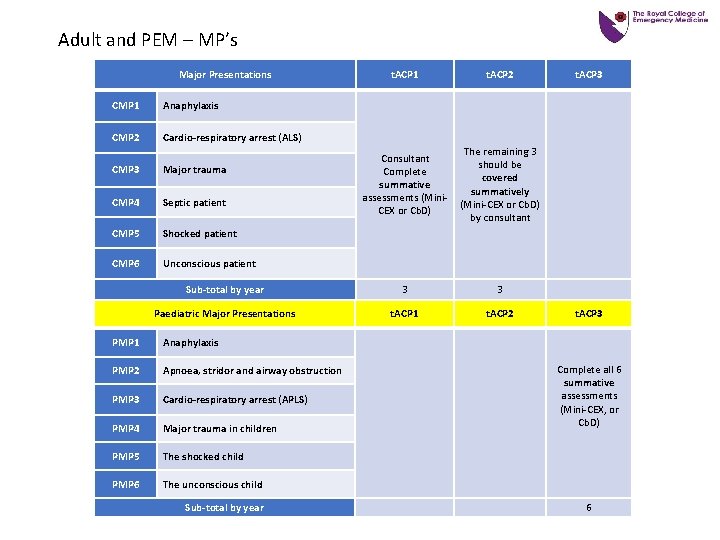
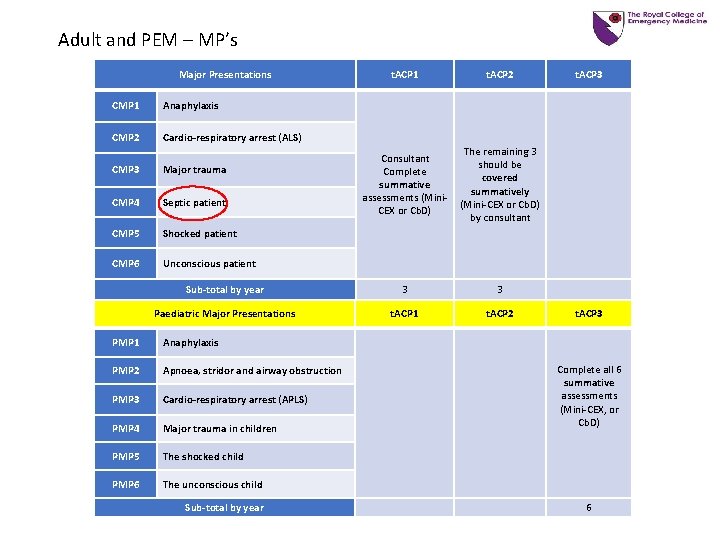
Adult and PEM – MP’s Major Presentations t. ACP 1 t. ACP 2 Consultant Complete summative assessments (Mini. CEX or Cb. D) The remaining 3 should be covered summatively (Mini-CEX or Cb. D) by consultant Sub-total by year 3 3 Paediatric Major Presentations t. ACP 1 t. ACP 2 CMP 1 Anaphylaxis CMP 2 Cardio-respiratory arrest (ALS) CMP 3 Major trauma CMP 4 Septic patient CMP 5 Shocked patient CMP 6 Unconscious patient PMP 1 Anaphylaxis PMP 2 Apnoea, stridor and airway obstruction PMP 3 Cardio-respiratory arrest (APLS) PMP 4 Major trauma in children PMP 5 The shocked child PMP 6 The unconscious child Sub-total by year t. ACP 3 Complete all 6 summative assessments (Mini-CEX, or Cb. D) 6
Adult and PEM – MP’s Major Presentations t. ACP 1 t. ACP 2 Consultant Complete summative assessments (Mini. CEX or Cb. D) The remaining 3 should be covered summatively (Mini-CEX or Cb. D) by consultant Sub-total by year 3 3 Paediatric Major Presentations t. ACP 1 t. ACP 2 CMP 1 Anaphylaxis CMP 2 Cardio-respiratory arrest (ALS) CMP 3 Major trauma CMP 4 Septic patient CMP 5 Shocked patient CMP 6 Unconscious patient PMP 1 Anaphylaxis PMP 2 Apnoea, stridor and airway obstruction PMP 3 Cardio-respiratory arrest (APLS) PMP 4 Major trauma in children PMP 5 The shocked child PMP 6 The unconscious child Sub-total by year t. ACP 3 Complete all 6 summative assessments (Mini-CEX, or Cb. D) 6
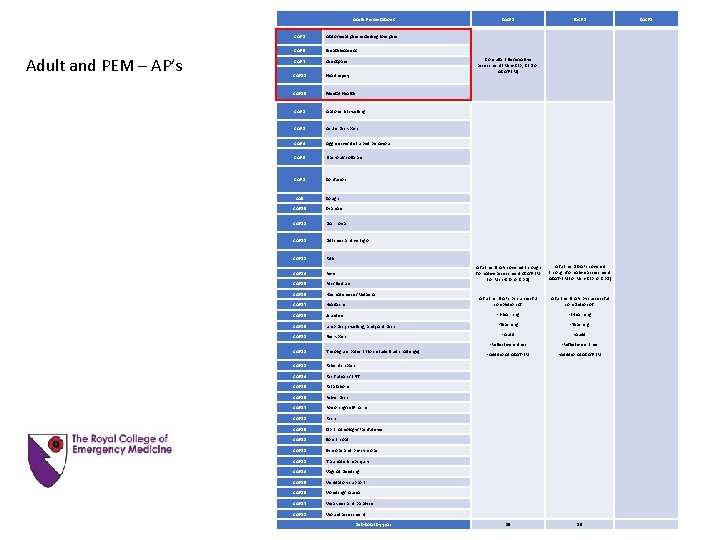
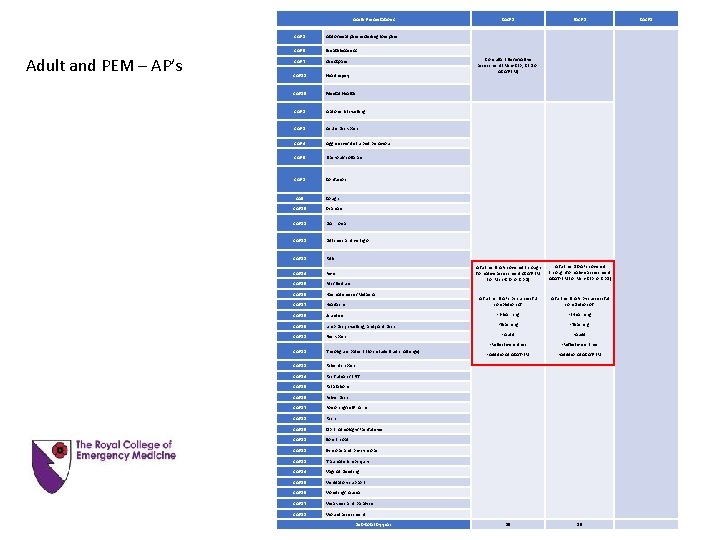
Acute Presentations Adult and PEM – AP’s CAP 1 Abdominal pain including loin pain CAP 6 Breathlessness CAP 7 Chest pain CAP 18 Head injury CAP 30 Mental Health CAP 2 Abdominal swelling CAP 3 Acute back pain CAP 4 Aggressive/ disturbed behaviour CAP 5 Blackout/ collapse CAP 8 Confusion CA 9 Cough t. ACP 1 t. ACP 2 Consultant Summative assessment (Mini-CEX, CBD or ACAT-EM) CAP 10 Cyanosis CAP 11 Diarrhoea CAP 12 Dizziness and vertigo CAP 13 Falls CAP 14 Fever CAP 15 Fits/ Seizure CAP 16 Haematemesis/Melaena CAP 17 A further 5 APs covered through formative assessment ACAT-EM (or Mini-CEX or Cb. D) A further 10 APs covered through formative assessment ACAT-EM (or Mini-CEX or Cb. D) Headache A further 9 APs by successful completion of: CAP 19 Jaundice -E-learning CAP 20 Limb pain, swelling, and joint pain -Teaching CAP 21 Neck pain CAP 22 The oliguric patient (to include fluid challenge) CAP 23 Patient in pain CAP 24 Painful ears/ENT CAP 25 Palpitations CAP 26 Pelvic pain CAP 27 Poisoning/self-harm CAP 28 Rash CAP 29 Ophthalmology/Painful eyes CAP 31 Sore throat CAP 32 Syncope and pre-syncope CAP 33 Traumatic limb injury CAP 34 Vaginal bleeding CAP 35 Ventilatory support CAP 36 Vomiting/nausea CAP 37 Weakness and paralysis CAP 38 Wound assessment Sub-total by year -Audit -Reflective entries -Additional ACAT-EM 19 19 t. ACP 3
Acute Presentations Adult and PEM – AP’s CAP 1 Abdominal pain including loin pain CAP 6 Breathlessness CAP 7 Chest pain CAP 18 Head injury CAP 30 Mental Health CAP 2 Abdominal swelling CAP 3 Acute back pain CAP 4 Aggressive/ disturbed behaviour CAP 5 Blackout/ collapse CAP 8 Confusion CA 9 Cough t. ACP 1 t. ACP 2 Consultant Summative assessment (Mini-CEX, CBD or ACAT-EM) CAP 10 Cyanosis CAP 11 Diarrhoea CAP 12 Dizziness and vertigo CAP 13 Falls CAP 14 Fever CAP 15 Fits/ Seizure CAP 16 Haematemesis/Melaena CAP 17 A further 5 APs covered through formative assessment ACAT-EM (or Mini-CEX or Cb. D) A further 10 APs covered through formative assessment ACAT-EM (or Mini-CEX or Cb. D) Headache A further 9 APs by successful completion of: CAP 19 Jaundice -E-learning CAP 20 Limb pain, swelling, and joint pain -Teaching CAP 21 Neck pain CAP 22 The oliguric patient (to include fluid challenge) CAP 23 Patient in pain CAP 24 Painful ears/ENT CAP 25 Palpitations CAP 26 Pelvic pain CAP 27 Poisoning/self-harm CAP 28 Rash CAP 29 Ophthalmology/Painful eyes CAP 31 Sore throat CAP 32 Syncope and pre-syncope CAP 33 Traumatic limb injury CAP 34 Vaginal bleeding CAP 35 Ventilatory support CAP 36 Vomiting/nausea CAP 37 Weakness and paralysis CAP 38 Wound assessment Sub-total by year -Audit -Reflective entries -Additional ACAT-EM 19 19 t. ACP 3
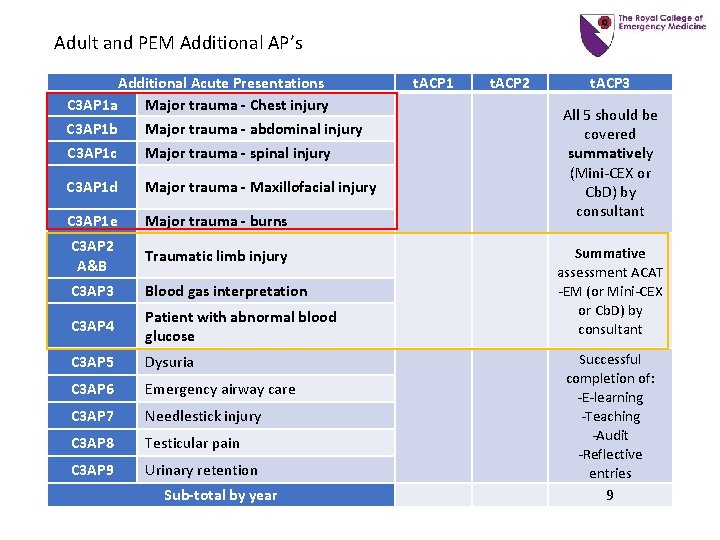
Adult and PEM Additional AP’s Additional Acute Presentations C 3 AP 1 a Major trauma - Chest injury C 3 AP 1 b Major trauma - abdominal injury C 3 AP 1 c Major trauma - spinal injury C 3 AP 1 d Major trauma - Maxillofacial injury C 3 AP 1 e Major trauma - burns C 3 AP 2 A&B Traumatic limb injury C 3 AP 3 Blood gas interpretation C 3 AP 4 Patient with abnormal blood glucose C 3 AP 5 Dysuria C 3 AP 6 Emergency airway care C 3 AP 7 Needlestick injury C 3 AP 8 Testicular pain C 3 AP 9 Urinary retention Sub-total by year t. ACP 1 t. ACP 2 t. ACP 3 All 5 should be covered summatively (Mini-CEX or Cb. D) by consultant Summative assessment ACAT -EM (or Mini-CEX or Cb. D) by consultant Successful completion of: -E-learning -Teaching -Audit -Reflective entries 9
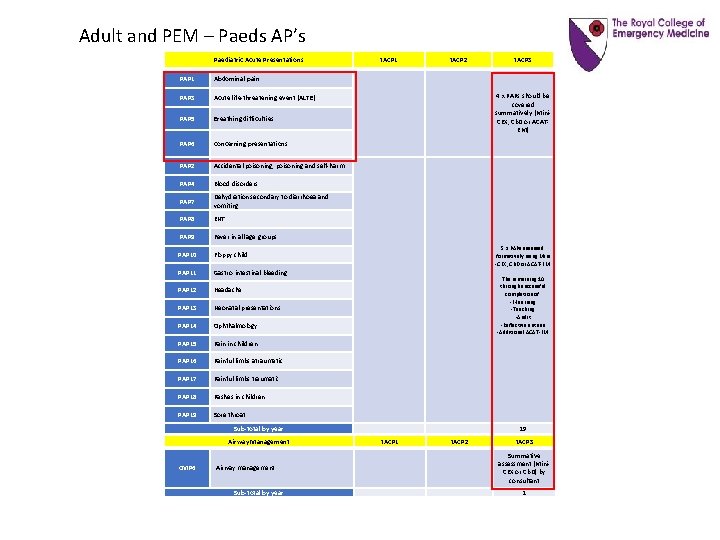
Adult and PEM – Paeds AP’s Paediatric Acute Presentations PAP 1 Abdominal pain PAP 3 Acute life-threatening event (ALTE) PAP 5 Breathing difficulties PAP 6 Concerning presentations PAP 2 Accidental poisoning, poisoning and self-harm PAP 4 Blood disorders PAP 7 Dehydration secondary to diarrhoea and vomiting PAP 8 ENT PAP 9 Fever in all age groups PAP 10 Floppy child PAP 11 Gastro-intestinal bleeding PAP 12 Headache PAP 13 Neonatal presentations PAP 14 Ophthalmology PAP 15 Pain in children PAP 16 Painful limbs atraumatic PAP 17 Painful limbs traumatic PAP 18 Rashes in children PAP 19 Sore throat t. ACP 1 t. ACP 2 4 x PAPs should be covered summatively (Mini. CEX, Cb. D or ACATEM) 5 x PAPs assessed formatively using Mini -CEX, Cb. D or ACAT-EM The remaining 10 through successful completion of: -E-learning -Teaching -Audit -Reflective entries -Additional ACAT-EM Sub-total by year Airway Management CMP 6 Airway management Sub-total by year t. ACP 3 19 t. ACP 1 t. ACP 2 t. ACP 3 Summative assessment (Mini. CEX or Cb. D) by consultant 1
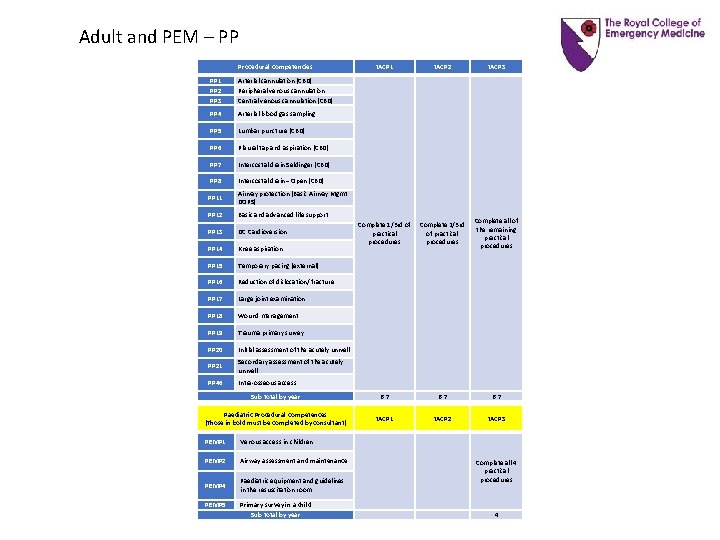
Adult and PEM – PP Procedural Competencies t. ACP 1 t. ACP 2 t. ACP 3 Complete 1/3 rd of practical procedures Complete 2/3 rd of practical procedures Complete all of the remaining practical procedures Sub-total by year 6 -7 6 -7 Paediatric Procedural Competences (Those in bold must be completed by consultant) t. ACP 1 t. ACP 2 t. ACP 3 PP 1 PP 2 PP 3 Arterial cannulation (CBD) Peripheral venous cannulation Central venous cannulation (CBD) PP 4 Arterial blood gas sampling PP 5 Lumbar puncture (CBD) PP 6 Pleural tap and aspiration (CBD) PP 7 Intercostal drain Seldinger (CBD) PP 8 Intercostal drain – Open (CBD) PP 11 Airway protection (Basic Airway Mgmt DOPS) PP 12 Basic and advanced life support PP 13 DC Cardioversion PP 14 Knee aspiration PP 15 Temporary pacing (external) PP 16 Reduction of dislocation/ fracture PP 17 Large joint examination PP 18 Wound management PP 19 Trauma primary survey PP 20 Initial assessment of the acutely unwell PP 21 Secondary assessment of the acutely unwell PP 46 Intra-osseous access PEMP 1 Venous access in children PEMP 2 Airway assessment and maintenance PEMP 4 Paediatric equipment and guidelines in the resuscitation room PEMP 5 Primary survey in a child Sub-total by year Complete all 4 practical procedures 4
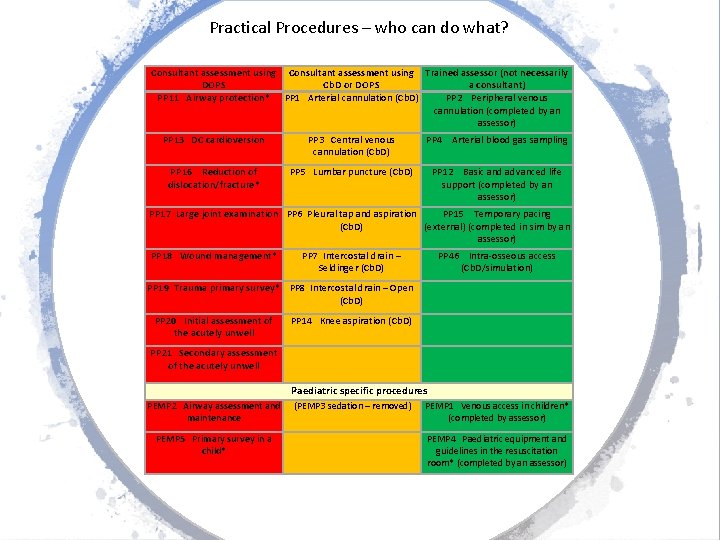
Practical Procedures – who can do what? Consultant assessment using Trained assessor (not necessarily DOPS Cb. D or DOPS a consultant) PP 11 Airway protection* PP 1 Arterial cannulation (Cb. D) PP 2 Peripheral venous cannulation (completed by an assessor) PP 13 DC cardioversion PP 3 Central venous cannulation (Cb. D) PP 4 Arterial blood gas sampling PP 16 Reduction of dislocation/fracture* PP 5 Lumbar puncture (Cb. D) PP 12 Basic and advanced life support (completed by an assessor) PP 17 Large joint examination PP 6 Pleural tap and aspiration PP 15 Temporary pacing (Cb. D) (external) (completed in sim by an assessor) PP 18 Wound management* PP 7 Intercostal drain – Seldinger (Cb. D) PP 46 Intra-osseous access (Cb. D/simulation) PP 19 Trauma primary survey* PP 8 Intercostal drain – Open (Cb. D) PP 20 Initial assessment of the acutely unwell PP 14 Knee aspiration (Cb. D) PP 21 Secondary assessment of the acutely unwell Paediatric specific procedures PEMP 2 Airway assessment and maintenance PEMP 5 Primary survey in a child* (PEMP 3 sedation – removed) PEMP 1 Venous access in children* (completed by assessor) PEMP 4 Paediatric equipment and guidelines in the resuscitation room* (completed by an assessor)
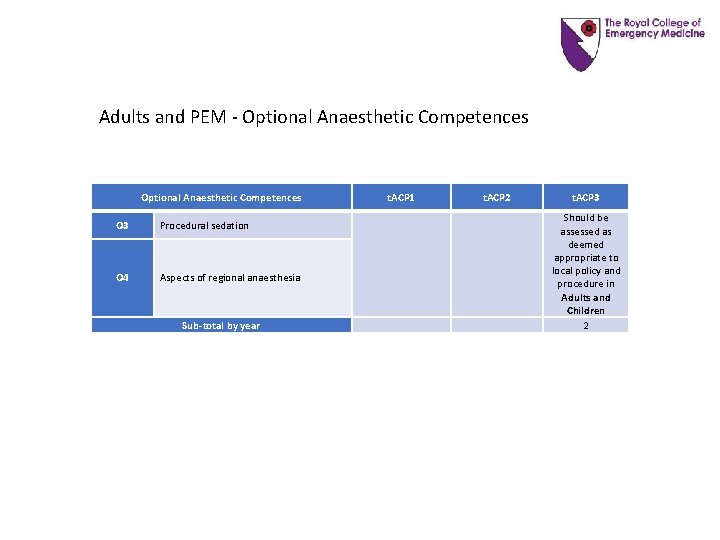
Adults and PEM - Optional Anaesthetic Competences O 3 Procedural sedation O 4 Aspects of regional anaesthesia Sub-total by year t. ACP 1 t. ACP 2 t. ACP 3 Should be assessed as deemed appropriate to local policy and procedure in Adults and Children 2
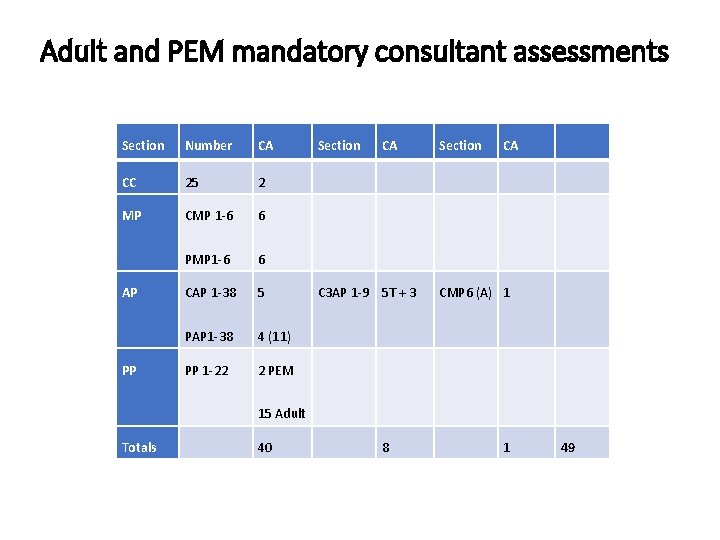
Adult and PEM mandatory consultant assessments Section Number CA CC 25 2 MP CMP 1 -6 6 PMP 1 -6 6 CAP 1 -38 5 PAP 1 -38 4 (11) PP 1 -22 2 PEM AP PP Section CA C 3 AP 1 -9 5 T + 3 Section CA CMP 6 (A) 1 15 Adult Totals 40 8 1 49
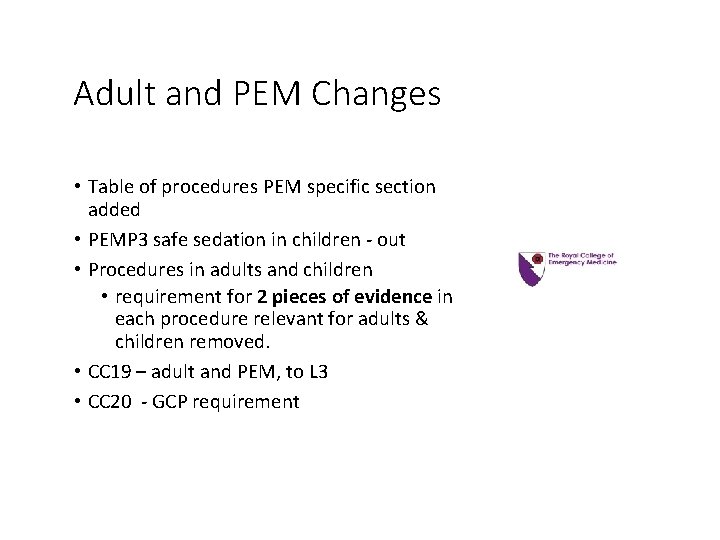
Adult and PEM Changes • Table of procedures PEM specific section added • PEMP 3 safe sedation in children - out • Procedures in adults and children • requirement for 2 pieces of evidence in each procedure relevant for adults & children removed. • CC 19 – adult and PEM, to L 3 • CC 20 - GCP requirement
Portfolio
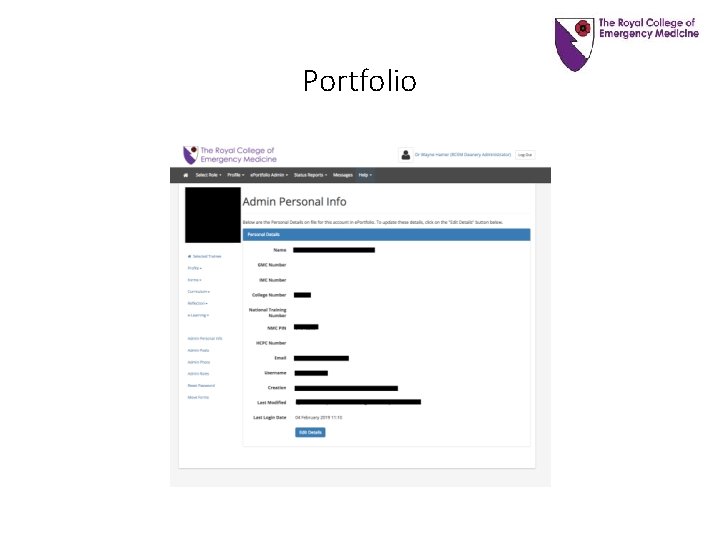
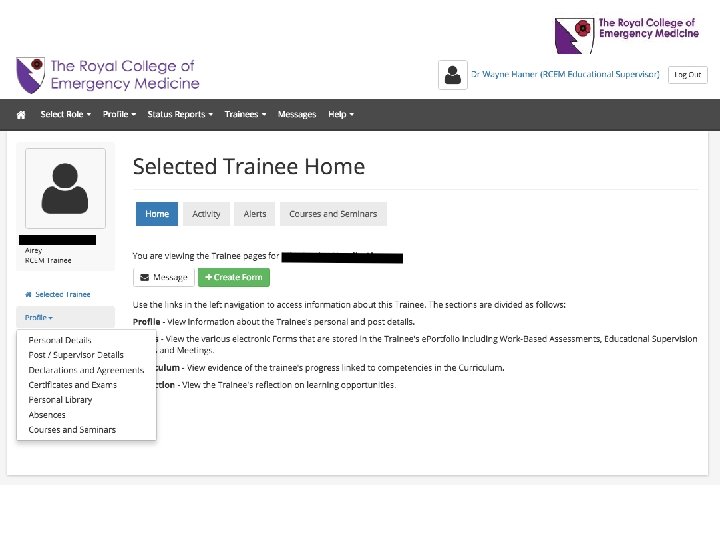
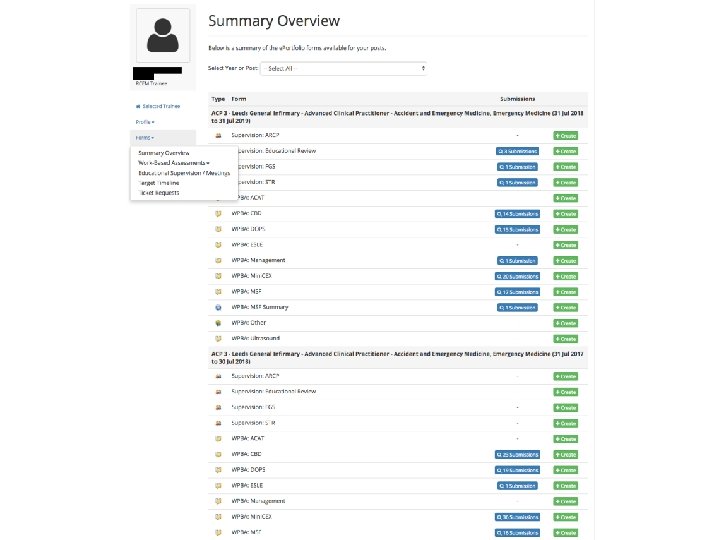
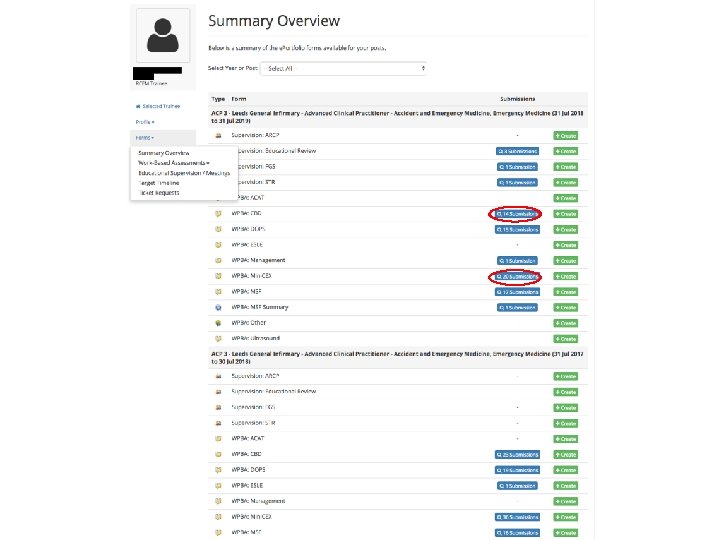
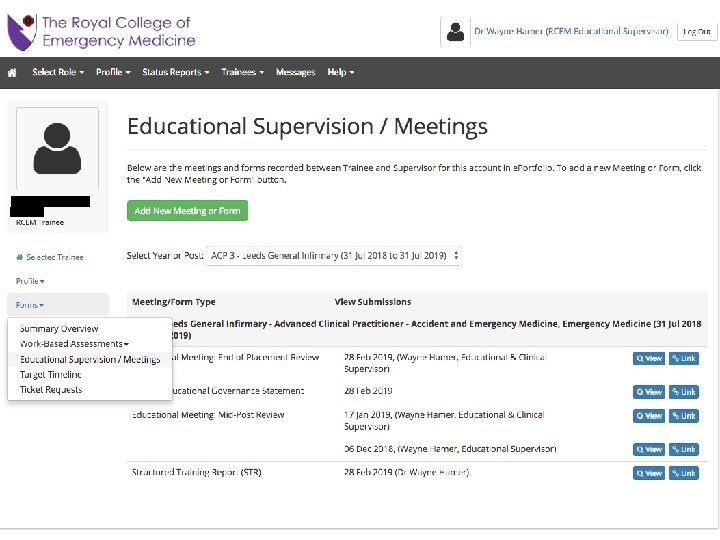
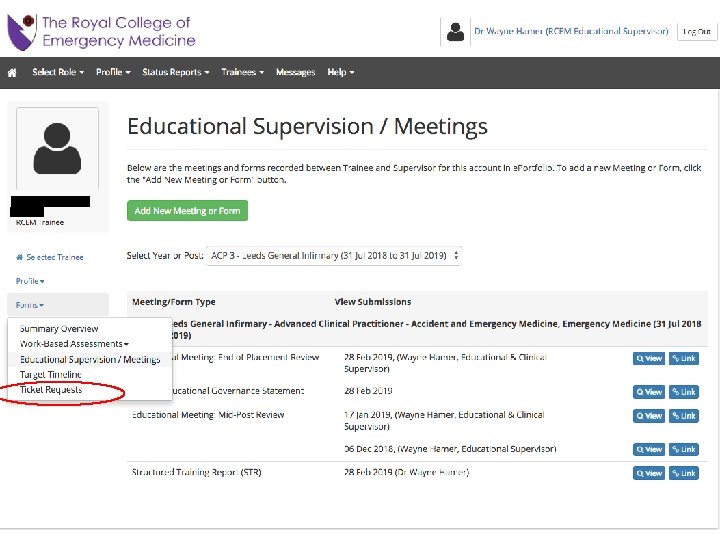
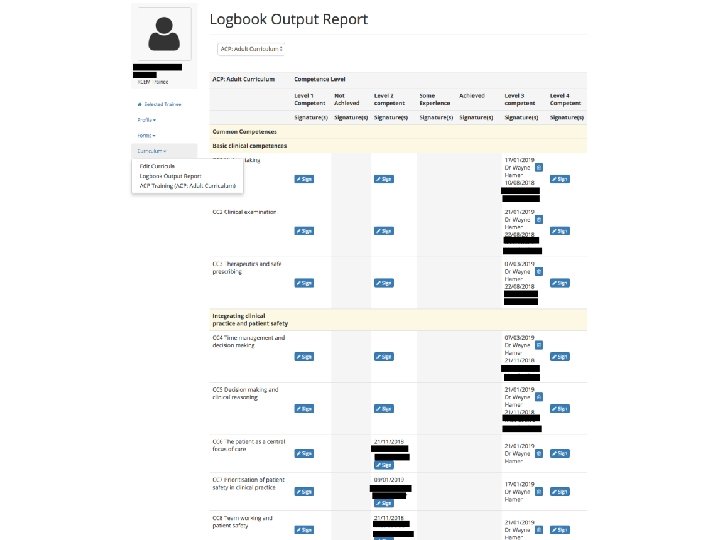
Portfolio - e. P • Start off gently with t. ACP • No prior exposure to e. P v many assessments in years 1&2 • Meet regularly and use e. P • Check activity and understanding • Document ES x 3 yr, and STR • FGS/yr • MSF/yr • Always use the up to date guidance on RCEM • X 3 Checklists and ‘advice’
Certificates and Exams Top tips: Should ideally be used for mandatory courses: § Life support § Safeguarding
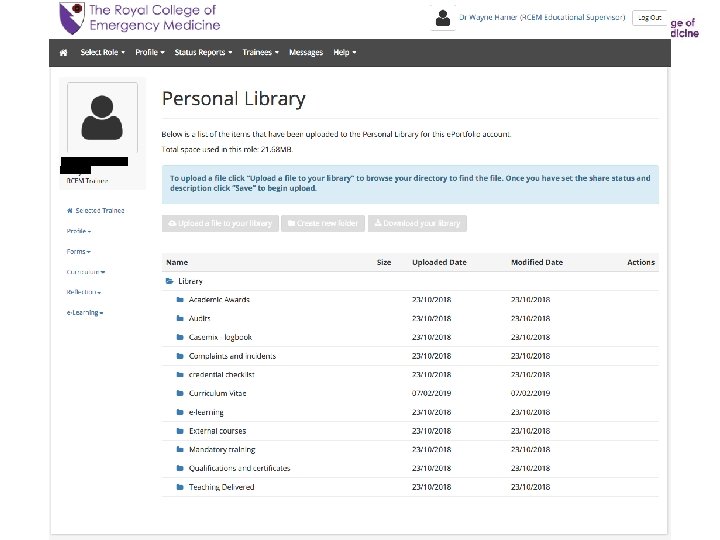
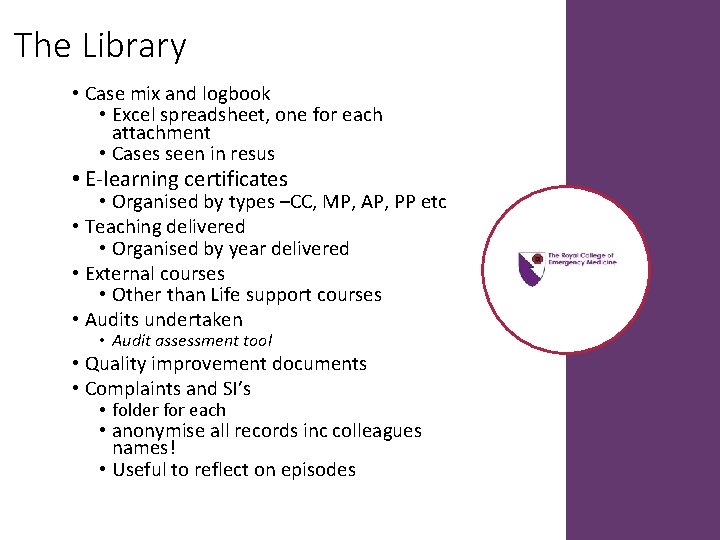
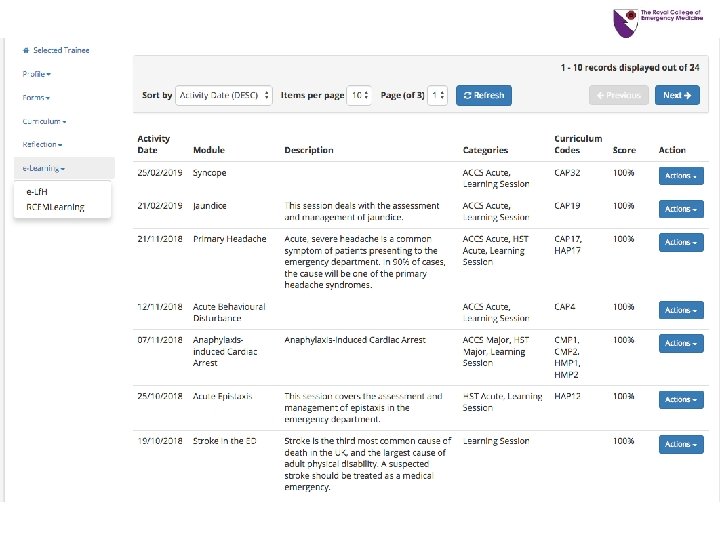
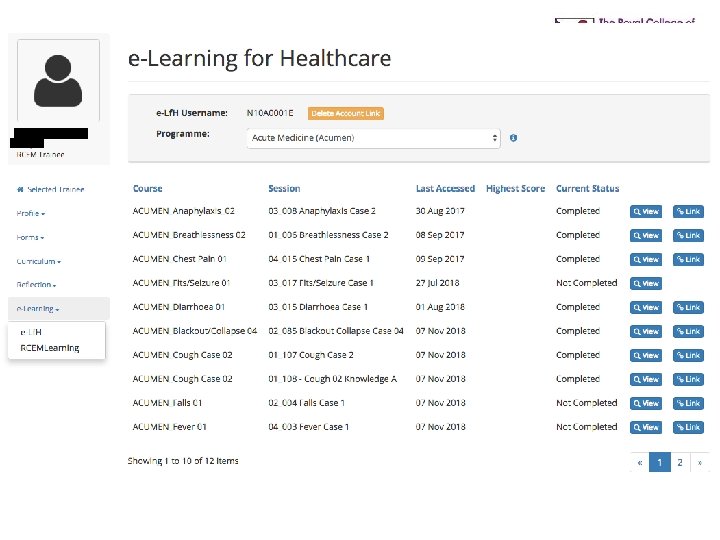
The Library • Case mix and logbook • Excel spreadsheet, one for each attachment • Cases seen in resus • E-learning certificates • Organised by types –CC, MP, AP, PP etc • Teaching delivered • Organised by year delivered • External courses • Other than Life support courses • Audits undertaken • Audit assessment tool • Quality improvement documents • Complaints and SI’s • folder for each • anonymise all records inc colleagues names! • Useful to reflect on episodes
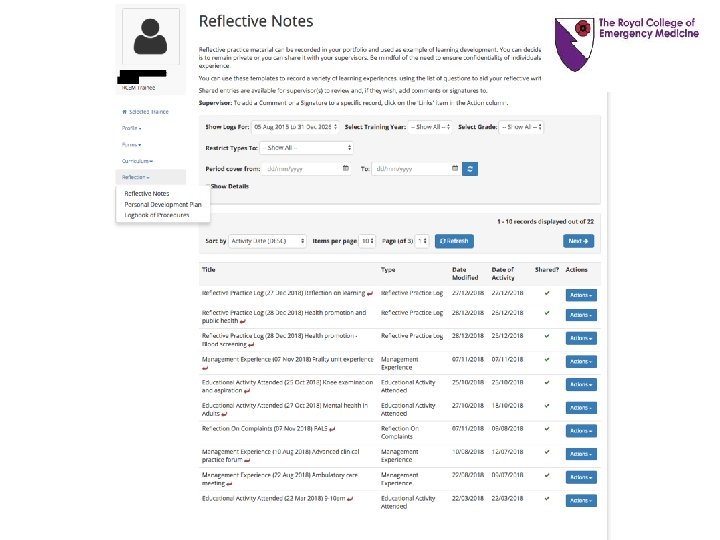
Reflection An important part of the portfolio • Incidents and near misses • Complaints • Clinical case • Learning events • Things they are proud of
Summary • Revised curricula 2019 • Adults & PEM, Adults only, PEM only • Cover changes, major change in PEM • Checklists for RCEM credentialing covered later • It takes time to become familiar with content • Use the guidance and checklist on RCEM website • Be aware this can change after credentialing • t. ACP will be judged on the advice at the time they applied • Don’t rush it, difficult conversations • Good luck!
Any questions?