
OVERVIEW OF CRIMEFIRE SCENE INVESTIGATION Overview With trending

- Slides: 33
OVERVIEW OF CRIME/FIRE SCENE INVESTIGATION
Overview With trending Crime occurring in our nation, it is important to identify, recognize and understand the potential threats against First Responder Professionals. Therefore it is important we understand that we may be involved in a Crime/Fire scene investigation without prior knowledge and may be required to preserve/collect evidence and testify in a court of law.
Purpose Learn the basics of Evidence Understand the importance Recognize the evidence Promote Situational Awareness both responding and on scene
Objectives • Explain Locard’s Exchange principle • List the three components of the evidence triangle • Differentiate between primary and secondary crime scenes • Identify common hazards associated with crime/fire scenes • Understand the purpose of a crime scene log • Know the different types of impression evidence • Explain the value of physical evidence in a criminal investigation • Identify the determinations that can be made from different types of physical evidence
Understanding the Scene Treat all Fire Scenes as an Arson unless direct evidence proves otherwise Don’t rely solely on dispatch response When responding/arriving to Medical Calls, be able to recognize indicators that may be present such as: sexual abuse, assault, controlled substances Accidents that may appear suspicious or not making sense to you may be an indicator that there is more to the situation
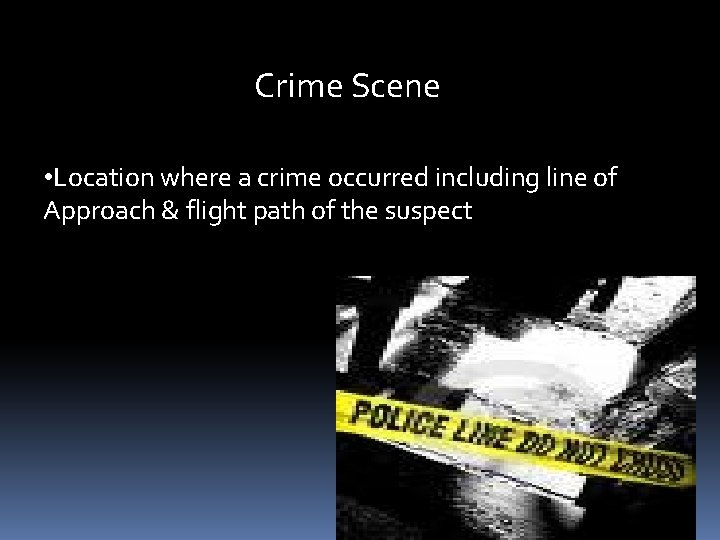
Crime Scene • Location where a crime occurred including line of Approach & flight path of the suspect
Types of Crime Scenes • Primary Scene -where original or first criminal act occurred • Secondary Scene - Any crime scene(s) associated with primary scene
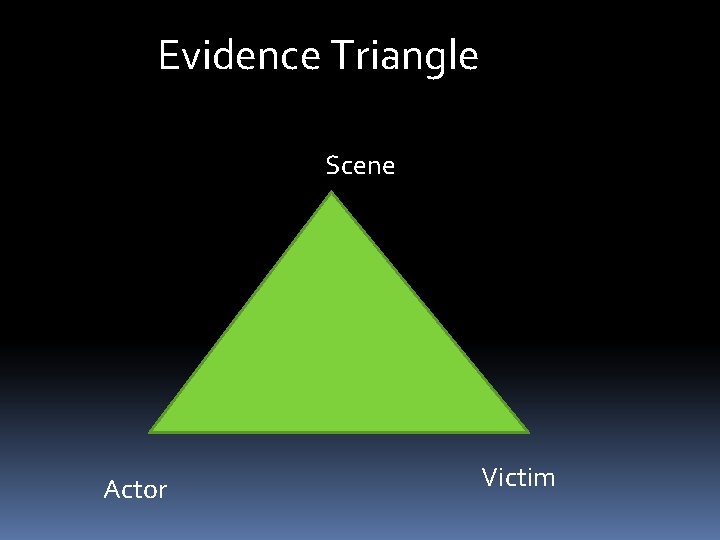
Evidence Triangle Scene Actor Victim
Locard’s Exchange Principle -When two objects come into contact, there is always a transfer of material from one to the other
Major Functions at Crime/Fire Scene • Overall coordination • Technical Services • Investigative Services
Overall Coordination • Performed by lead investigator or Incident Commander • Ensures continuous flow of info. Between team members • Evaluates potential safety issues • Allocates resources
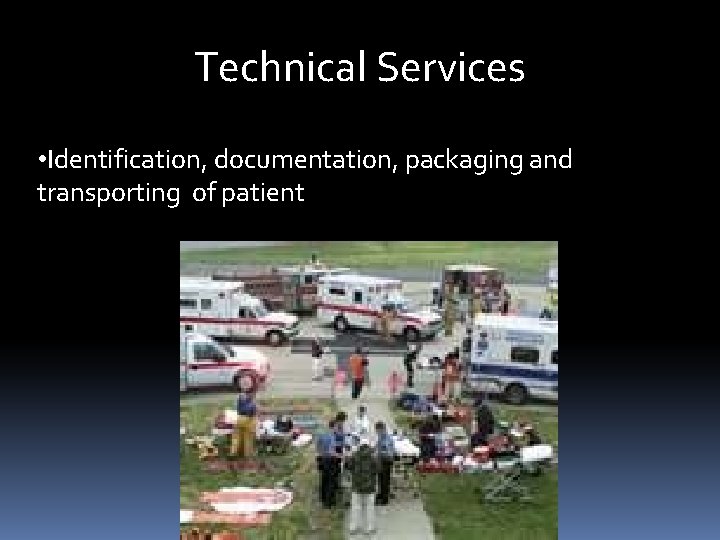
Technical Services • Identification, documentation, packaging and transporting of patient
Investigative Services • Includes a variety of investigative functions depending on nature of scene -Office of State Fire Marshal -Maryland State Police -Wicomico County Sheriff’s Office -Local Fire Dept.
General Crime/Fire Scene Procedures • Arrival & Approach • Secure & Protect Scene • Conduct a preliminary survey • Communicate with Superior/Outside agencies • Document the scene • Conduct final survey of scene • Release Scene
Arrival & Approach • Consider potential threats before you arrive/plan response • Upon arrival, determine nature of situation/stabilize scene • Is there a crime in progress/scene secure • Are there natural hazards that can inhibit or harm 1 st responders • Assist victim
Secure & Protect Scene • Preserve physical evidence • Only essential personnel allowed • Maintain a entry log • OIC to Control Access
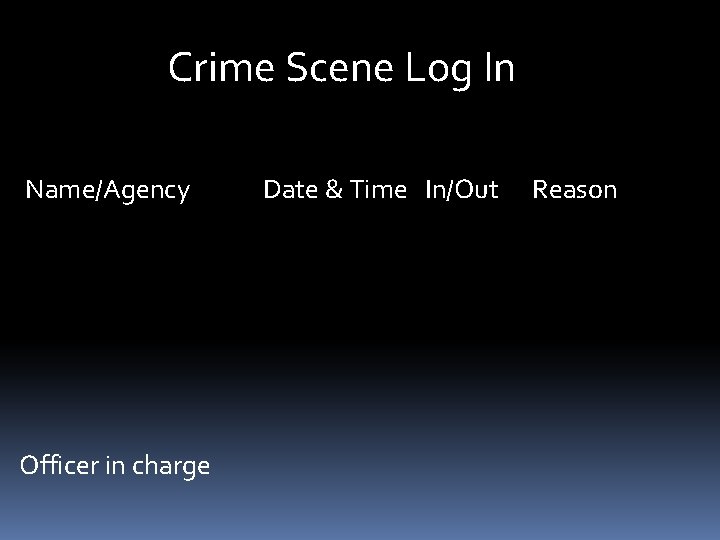
Crime Scene Log In Name/Agency Officer in charge Date & Time In/Out Reason
Cardinal Rule Of Scene Management • Never touch, change, or alter anything until it has been documented, identified and photographed -Fire Scene if suspicious or looks out of place -Accident Scene Fatal or near fatal -Crime Scene ( don’t move items near patient unless absolutely needed. ) **Unless potential exists the item of evidence will cause further harm or obstruction**
Communicate with Superiors/ Other agencies • Communicate findings & results of scene survey -Notify Officer In Charge ASAP -Notify police if needed -Contact ME if death involved
Hazards Associated With Crime Scenes
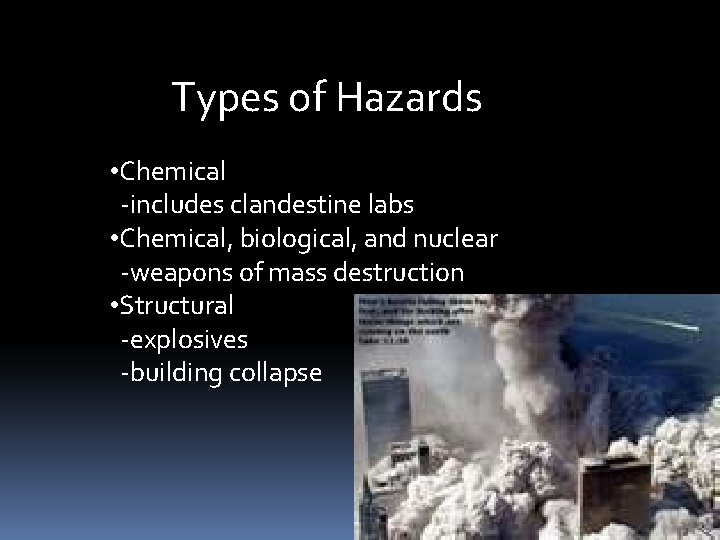
Types of Hazards • Chemical -includes clandestine labs • Chemical, biological, and nuclear -weapons of mass destruction • Structural -explosives -building collapse
Biohazards associated with Crime Scenes
Hepatitis B/C • Infectious disease of liver • Contracted same way as HIV • HIV can survive in dried blood at room temp up to 1 week • HIV vaccine available • HCV more serious than HIV • No preventive treatment
Forms and Types of Evidence Real Demonstrative Direct Circumstantial Physical Intangible Testimonial
Real Evidence Real evidence is Physical evidence Evidence you can actually touch Evidence that is able to be retrieved at the scene
Demonstrative Defined as : evidence that demonstrates the situation of the scene
Direct Evidence Defined as: The facts of the scene, Evidence directly related to the scene
Circumstantial Defined as : Inference (coincidence), more likely than not
Physical Evidence • Any tangible object that can establish a crime has been committed, or provide a link between the crime/ its victim, or the crime and its actor
Physical Evidence DNA Fluids Organic Fruits of the Crime
Value of Physical Evidence • Establish the elements of the crime • Provide Investigative leads • ID Suspect or link suspect to victim and or scene • Provide expert testimony in court • Exonerate the innocent • Induce a confession from suspect • 5% of Evidence is Physical
Testimonial Defined as: written or oral assertion offered as proof of truth in court. 95% of evidence is testimonial
Review Situational Awareness prior to and arrival on scene Recognize the evidence of a crime if present Documentation Understand Scene Management Understand the Hazards Know your resources Communication Understand the value of evidence Understand the importance of preservation Testimony