
Overview of Crafts in the Medieval Period What
- Slides: 10
Overview of Crafts in the Medieval Period
What we will learn today • Origin of centres of craft • Factors contributing to the development of crafts • The crafts that developed in the medieval period • Special reference to The Nataraj and Bidri ware
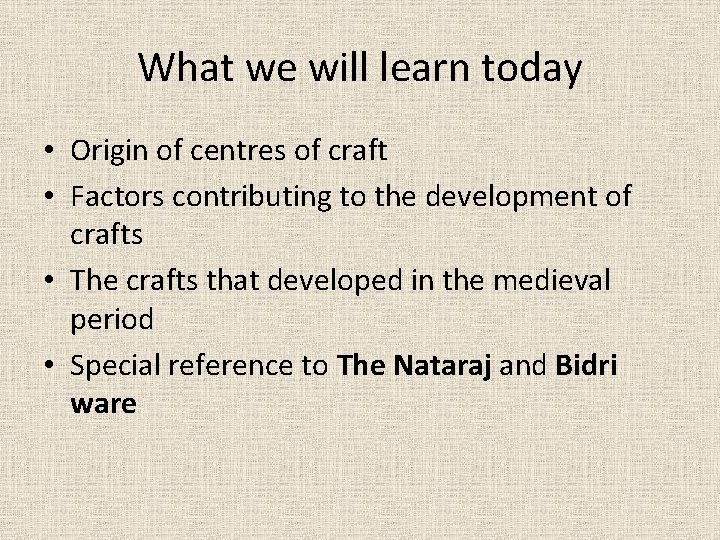
Origin of Centres • Variety of crafts were present in India since prehistoric times • During the Gupta period, art and craft was at its peak and it was referred to as the golden period • India’s art and craft developed further during the medieval period and specific craft centres emerged
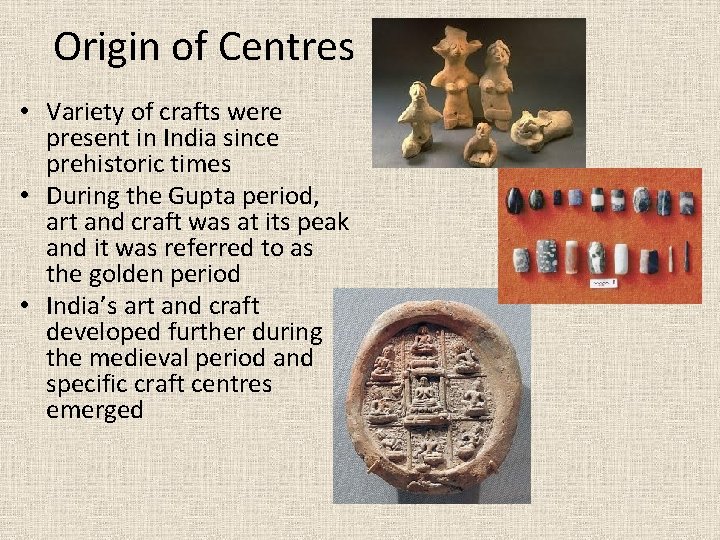
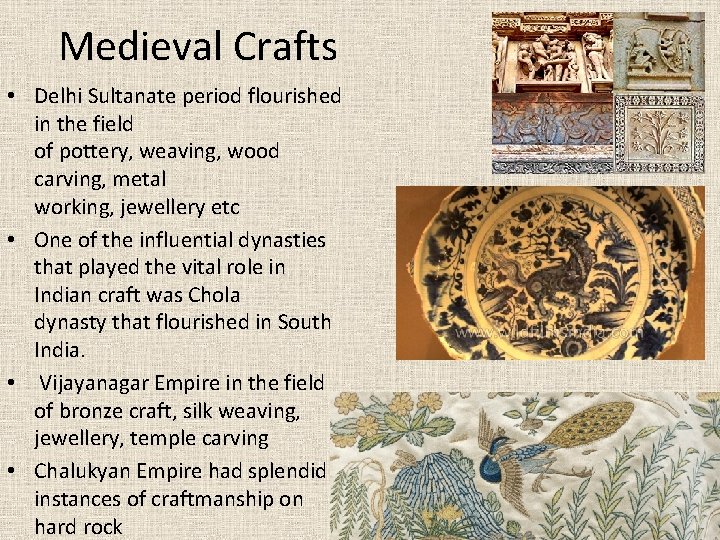
Medieval Crafts • Delhi Sultanate period flourished in the field of pottery, weaving, wood carving, metal working, jewellery etc • One of the influential dynasties that played the vital role in Indian craft was Chola dynasty that flourished in South India. • Vijayanagar Empire in the field of bronze craft, silk weaving, jewellery, temple carving • Chalukyan Empire had splendid instances of craftmanship on hard rock
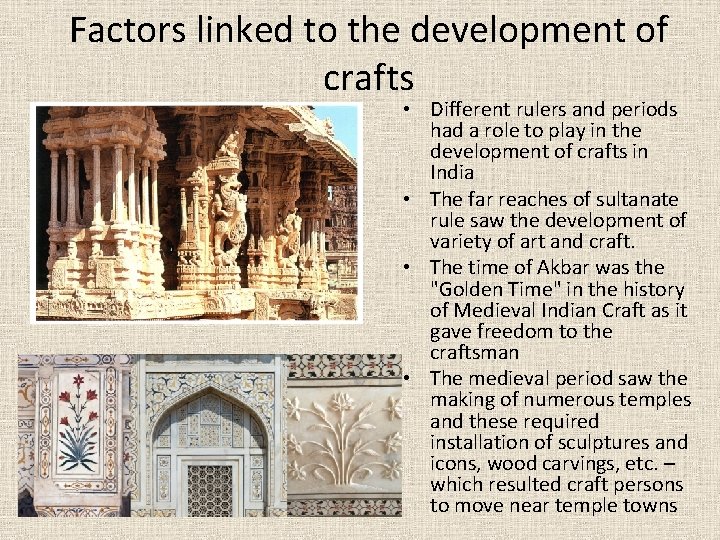
Factors linked to the development of crafts • Different rulers and periods had a role to play in the development of crafts in India • The far reaches of sultanate rule saw the development of variety of art and craft. • The time of Akbar was the "Golden Time" in the history of Medieval Indian Craft as it gave freedom to the craftsman • The medieval period saw the making of numerous temples and these required installation of sculptures and icons, wood carvings, etc. – which resulted craft persons to move near temple towns
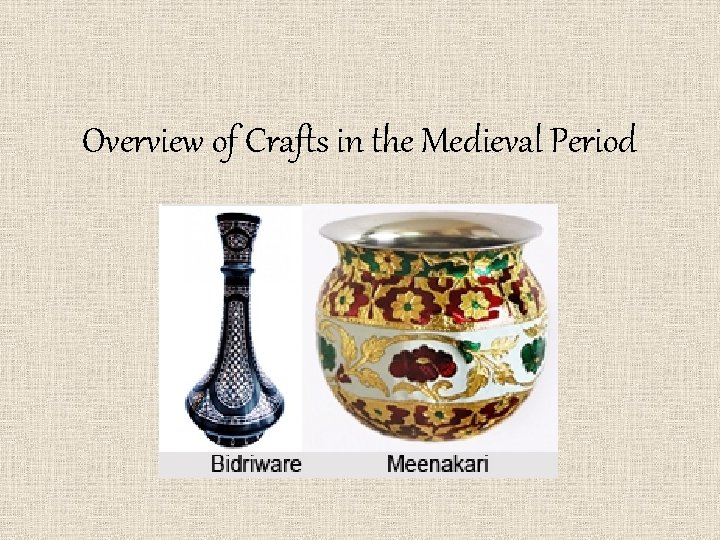
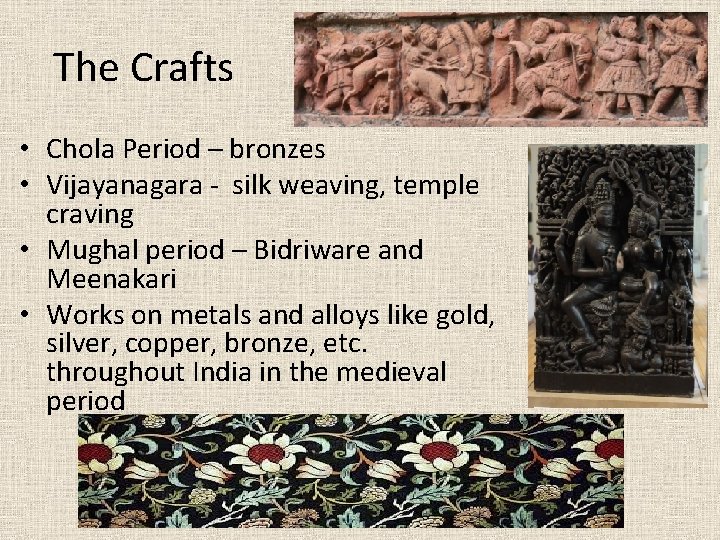
The Crafts • Chola Period – bronzes • Vijayanagara - silk weaving, temple craving • Mughal period – Bidriware and Meenakari • Works on metals and alloys like gold, silver, copper, bronze, etc. throughout India in the medieval period
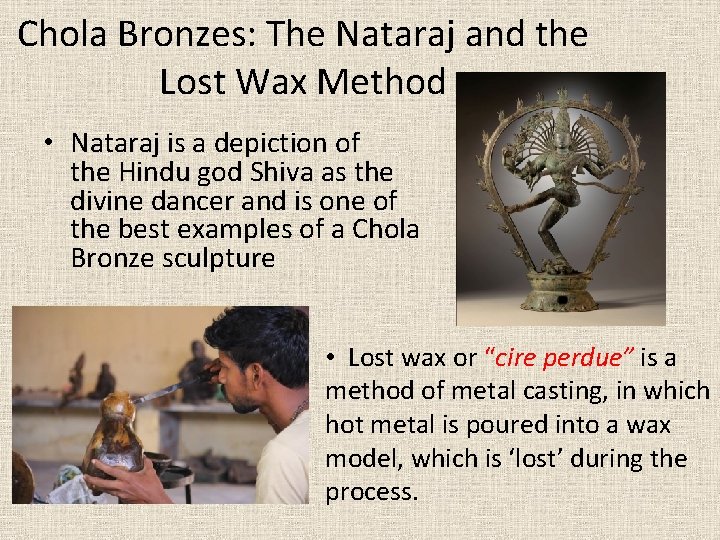
Chola Bronzes: The Nataraj and the Lost Wax Method • Nataraj is a depiction of the Hindu god Shiva as the divine dancer and is one of the best examples of a Chola Bronze sculpture • Lost wax or “cire perdue” is a method of metal casting, in which hot metal is poured into a wax model, which is ‘lost’ during the process.
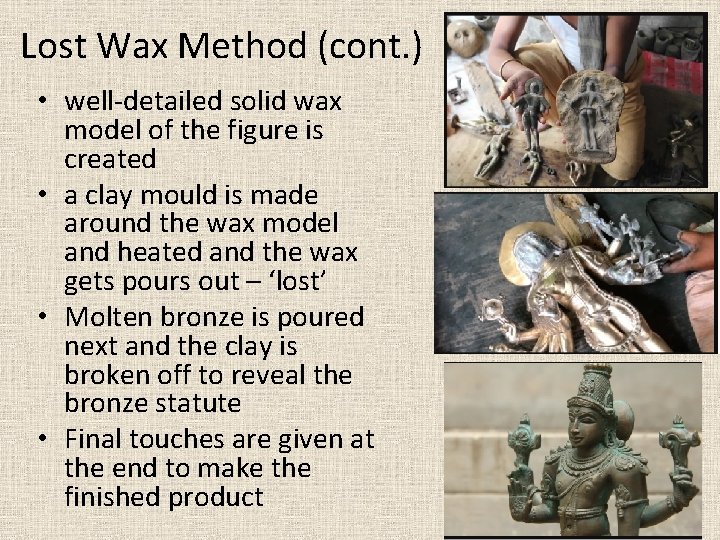
Lost Wax Method (cont. ) • well-detailed solid wax model of the figure is created • a clay mould is made around the wax model and heated and the wax gets pours out – ‘lost’ • Molten bronze is poured next and the clay is broken off to reveal the bronze statute • Final touches are given at the end to make the finished product
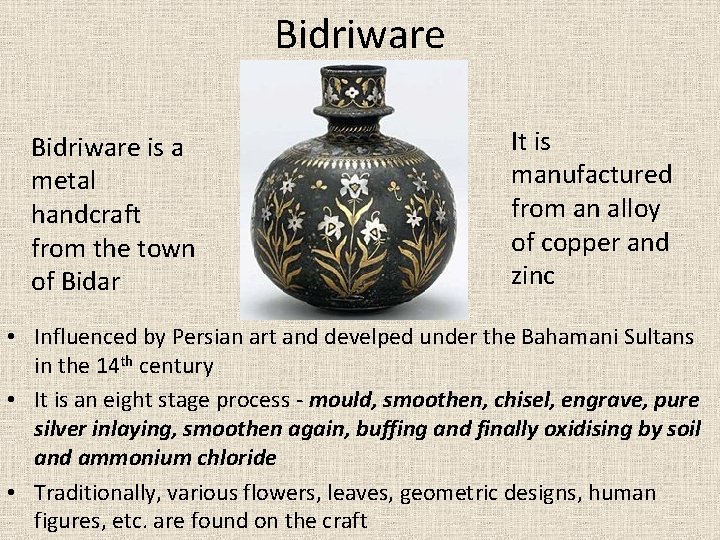
Bidriware is a metal handcraft from the town of Bidar It is manufactured from an alloy of copper and zinc • Influenced by Persian art and develped under the Bahamani Sultans in the 14 th century • It is an eight stage process - mould, smoothen, chisel, engrave, pure silver inlaying, smoothen again, buffing and finally oxidising by soil and ammonium chloride • Traditionally, various flowers, leaves, geometric designs, human figures, etc. are found on the craft
Conclusion • As the Mughal period started to decline, it saw the decline of craftsmen also. • However, textiles became even more refined due to the demand of the west – as Europeans had started coming to Indian shores for trade • The 18 th century witnessed major changes in craft forms and new centres were set up.