
Overview of Computer Vision CS 308 Data Structures


- Slides: 55
Overview of Computer Vision CS 308 Data Structures
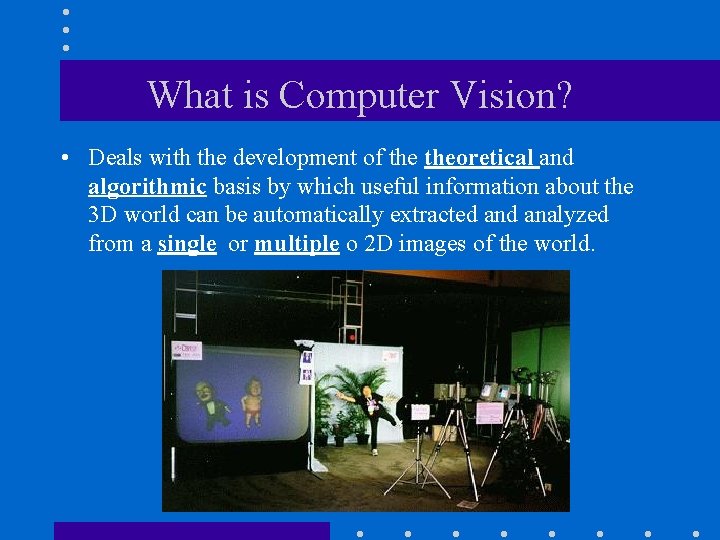
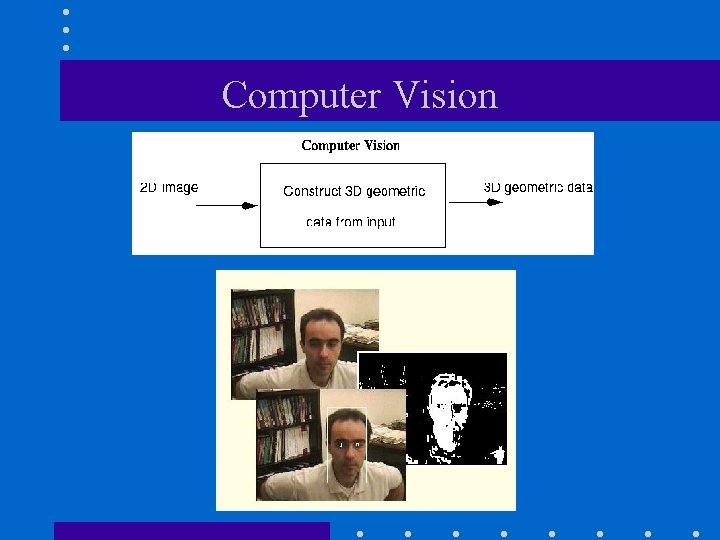
What is Computer Vision? • Deals with the development of theoretical and algorithmic basis by which useful information about the 3 D world can be automatically extracted analyzed from a single or multiple o 2 D images of the world.
Computer Vision, Also Known As. . . • Image Analysis • Scene Analysis • Image Understanding
Some Related Disciplines • • • Image Processing Computer Graphics Pattern Recognition Robotics Artificial Intelligence
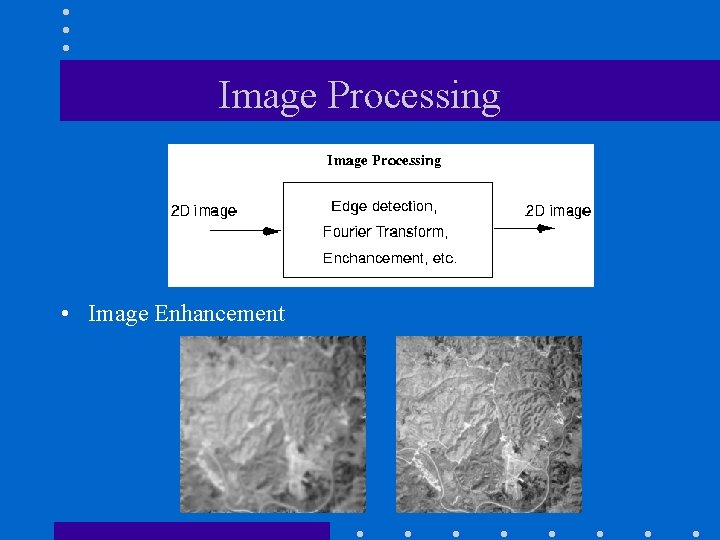
Image Processing • Image Enhancement
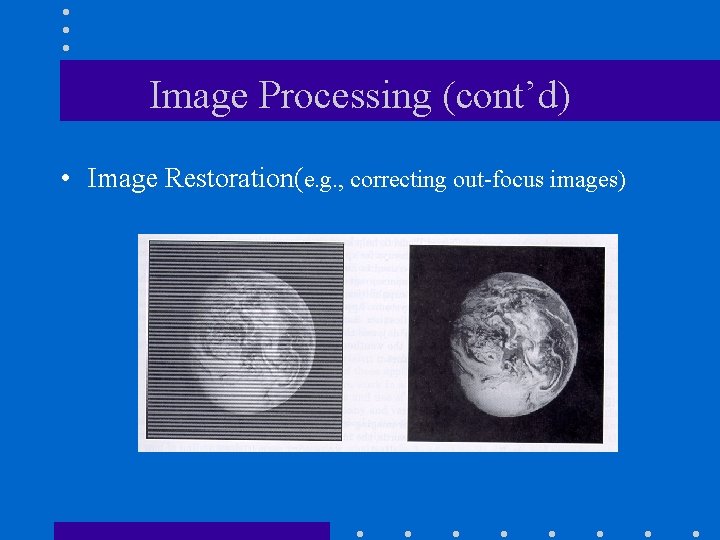
Image Processing (cont’d) • Image Restoration(e. g. , correcting out-focus images)
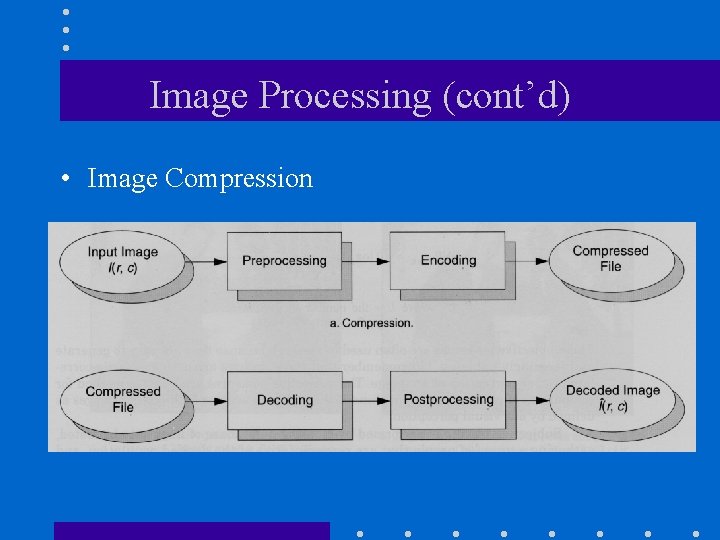
Image Processing (cont’d) • Image Compression
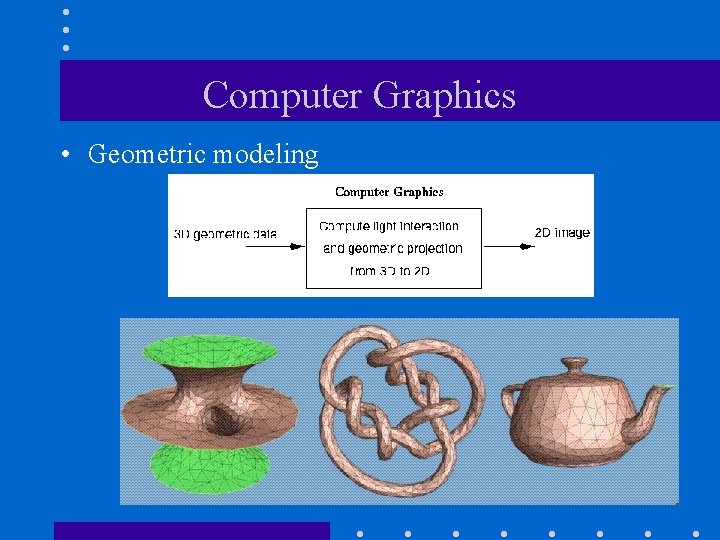
Computer Graphics • Geometric modeling
Computer Vision
Robotic Vision • Application of computer vision in robotics. • Some important applications include : – Autonomous robot navigation – Inspection and assembly
Pattern Recognition • Has a very long history (research work in this field started in the 60 s). • Concerned with the recognition and classification of 2 D objects mainly from 2 D images. • Many classic approaches only worked under very constrained views (not suitable for 3 D objects). • It has triggered much of the research which led to today’s field of computer vision. • Many pattern recognition principles are used extensively in computer vision.
Artificial Intelligence • Concerned with designing systems that are intelligent and with studying computational aspects of intelligence. • It is used to analyze scenes by computing a symbolic representation of the scene contents after the images have been processed to obtain features. • Many techniques from artificial intelligence play an important role in many aspects of computer vision. • Computer vision is considered a sub-field of artificial intelligence.
Why is Computer Vision Difficult? • It is a many-to-one mapping – A variety of surfaces with different material and geometrical properties, possibly under different lighting conditions, could lead to identical images – Inverse mapping has non unique solution (a lot of information is lost in the transformation from the 3 D world to the 2 D image) • It is computationally intensive • We do not understand the recognition problem
Practical Considerations • Impose constraints to recover the scene – Gather more data (images) – Make assumptions about the world • Computability and robustness – Is the solution computable using reasonable resources? – Is the solution robust? • Industrial computer vision systems work very well – Make strong assumptions about lighting conditions – Make strong assumptions about the position of objects – Make strong assumptions about the type of objects
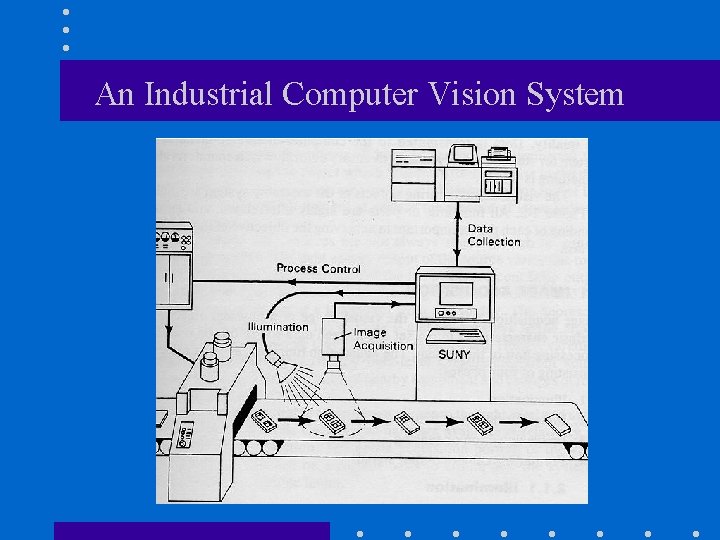
An Industrial Computer Vision System
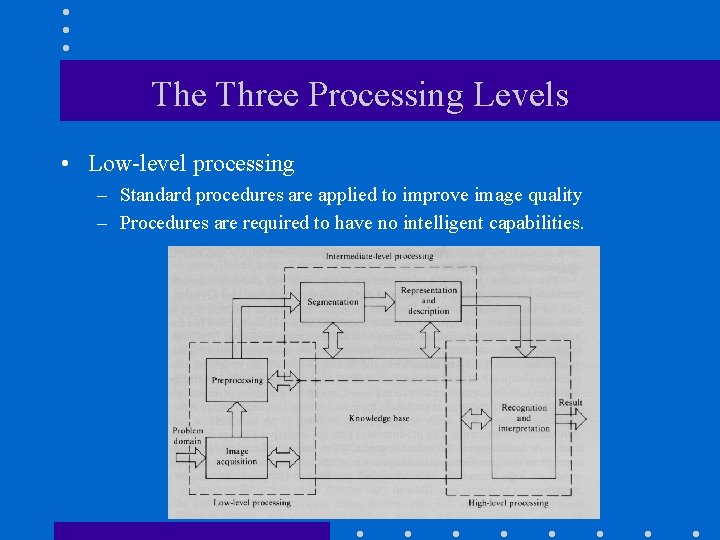
The Three Processing Levels • Low-level processing – Standard procedures are applied to improve image quality – Procedures are required to have no intelligent capabilities.
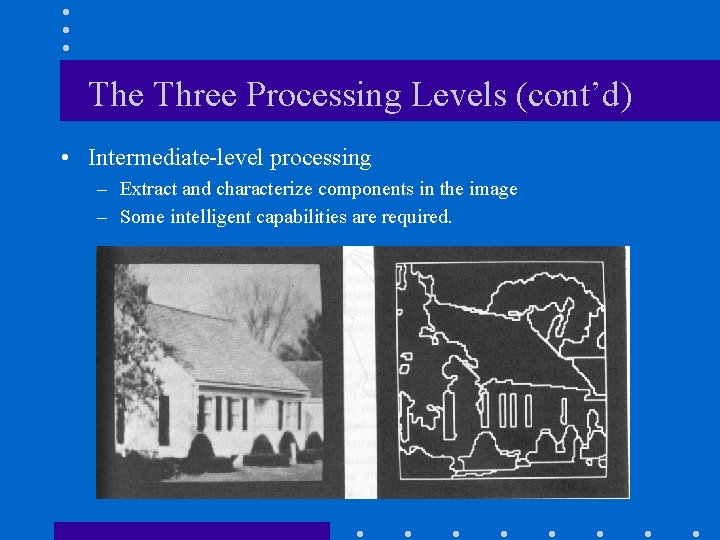
The Three Processing Levels (cont’d) • Intermediate-level processing – Extract and characterize components in the image – Some intelligent capabilities are required.
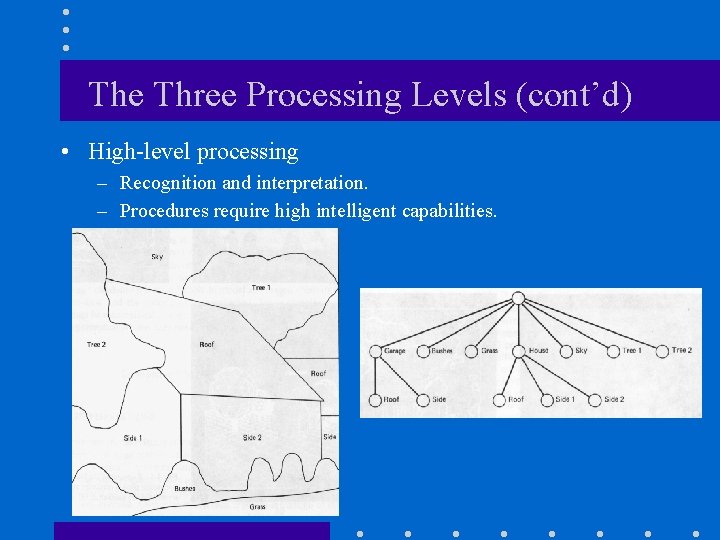
The Three Processing Levels (cont’d) • High-level processing – Recognition and interpretation. – Procedures require high intelligent capabilities.
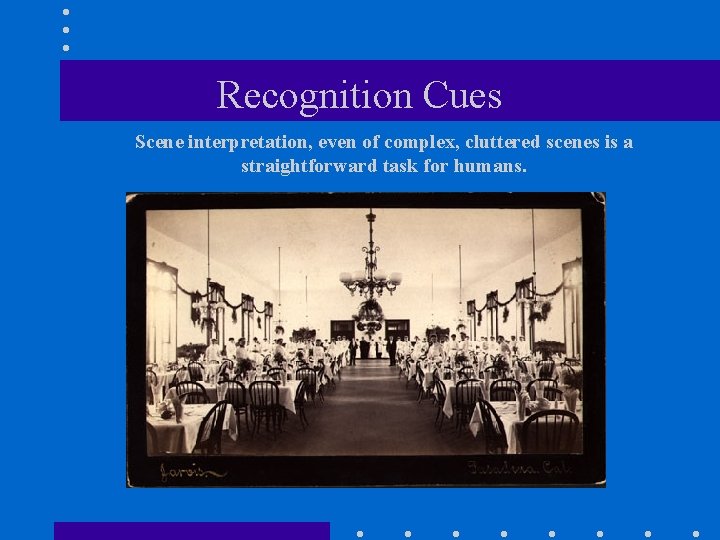
Recognition Cues Scene interpretation, even of complex, cluttered scenes is a straightforward task for humans.
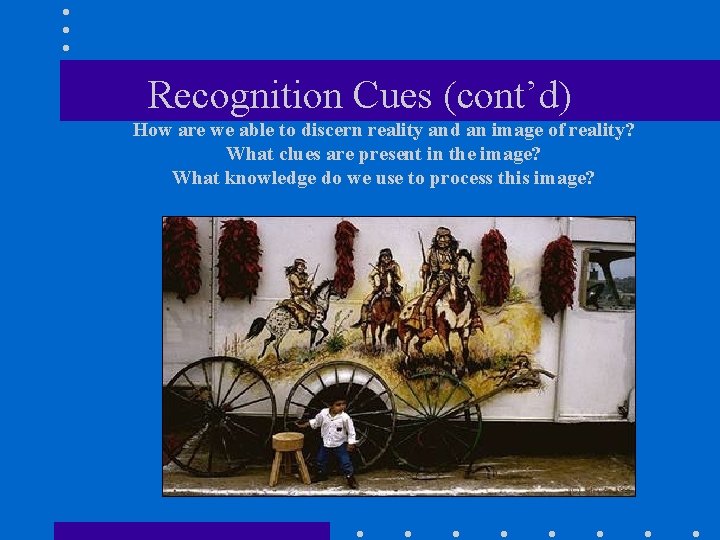
Recognition Cues (cont’d) How are we able to discern reality and an image of reality? What clues are present in the image? What knowledge do we use to process this image?
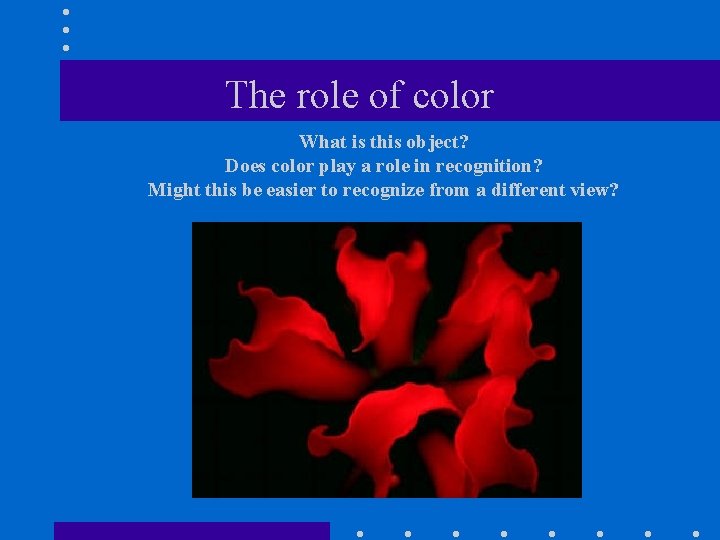
The role of color What is this object? Does color play a role in recognition? Might this be easier to recognize from a different view?
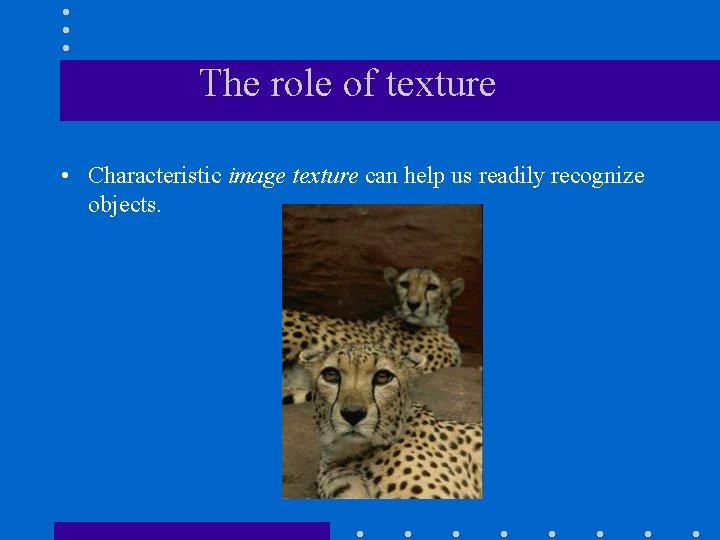
The role of texture • Characteristic image texture can help us readily recognize objects.
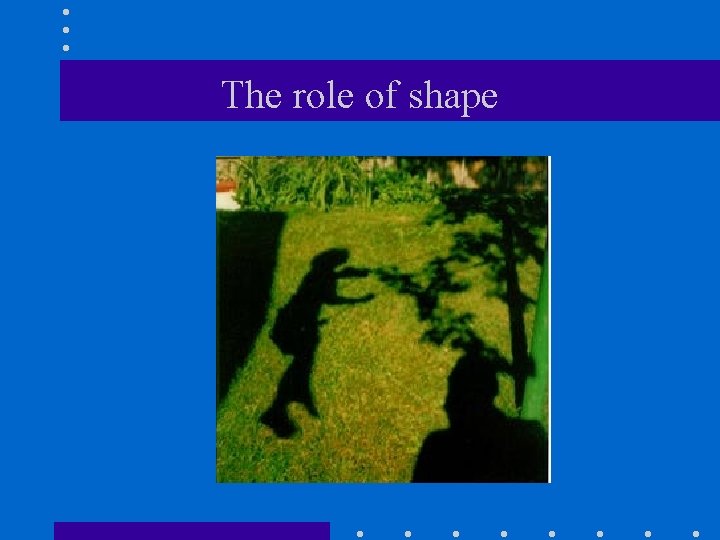
The role of shape
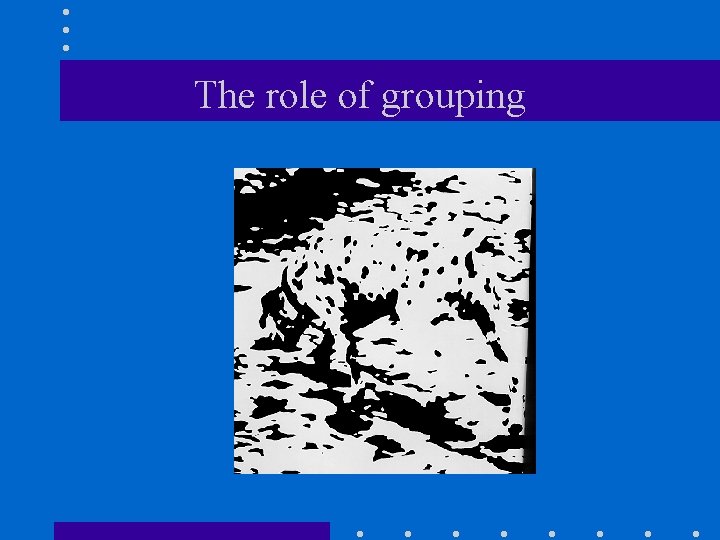
The role of grouping
Mathematics in Computer Vision • In the early days of computer vision, vision systems employed simple heuristic methods. • Today, the domain is heavily inclined towards theoretically, well -founded methods involving non-trivial mathematics. – – – – Calculus Linear Algebra Probabilities and Statistics Signal Processing Projective Geometry Computational Geometry Optimization Theory Control Theory
Computer Vision Applications • • Industrial inspection/quality control Surveillance and security Face recognition Gesture recognition Space applications Medical image analysis Autonomous vehicles Virtual reality and much more …. . .
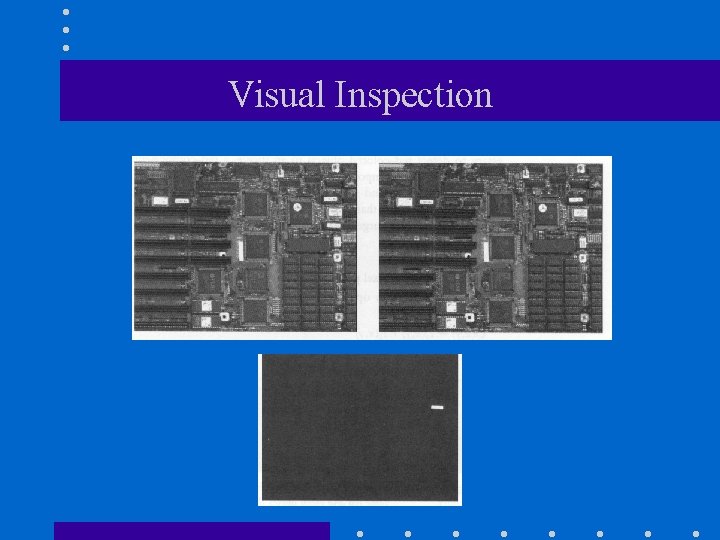
Visual Inspection
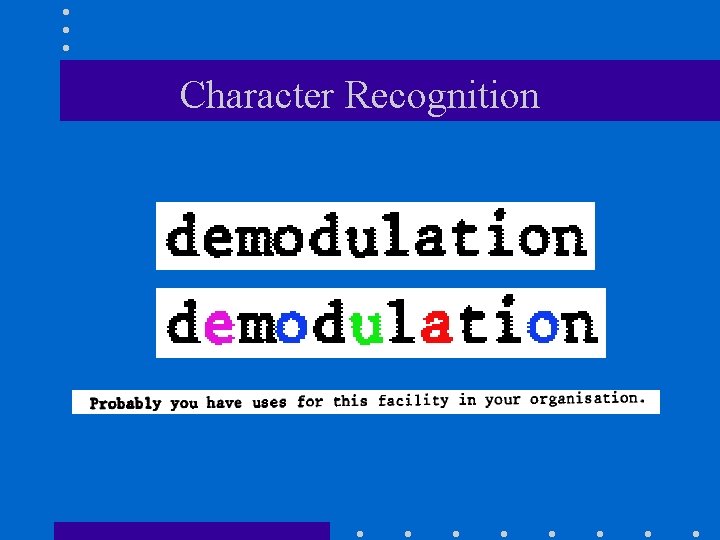
Character Recognition
Document Handling
Signature Verification
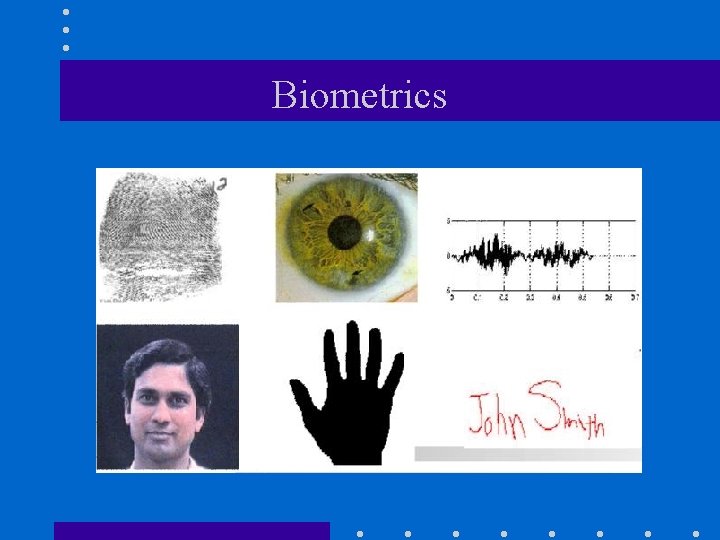
Biometrics
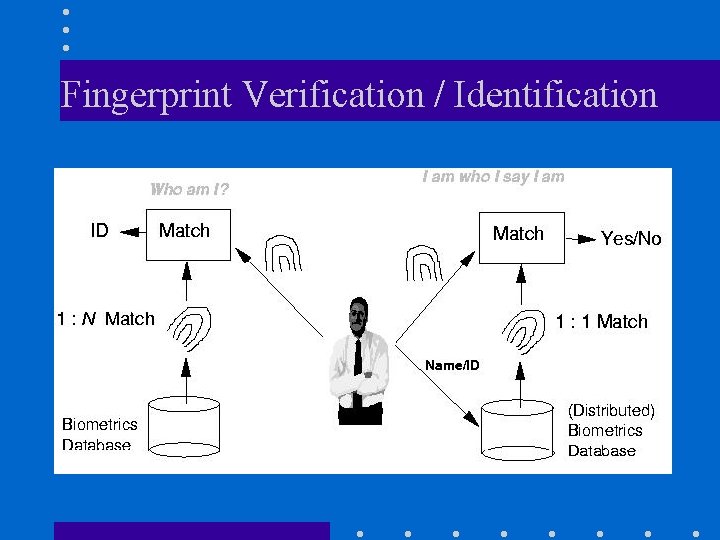
Fingerprint Verification / Identification
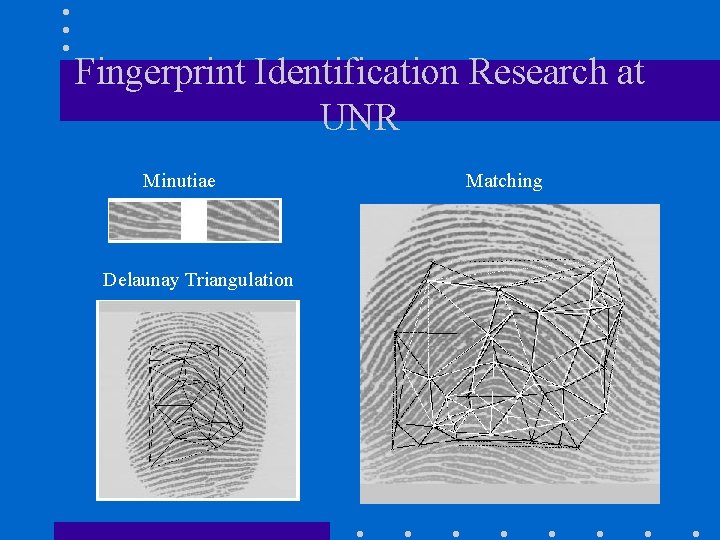
Fingerprint Identification Research at UNR Minutiae Delaunay Triangulation Matching
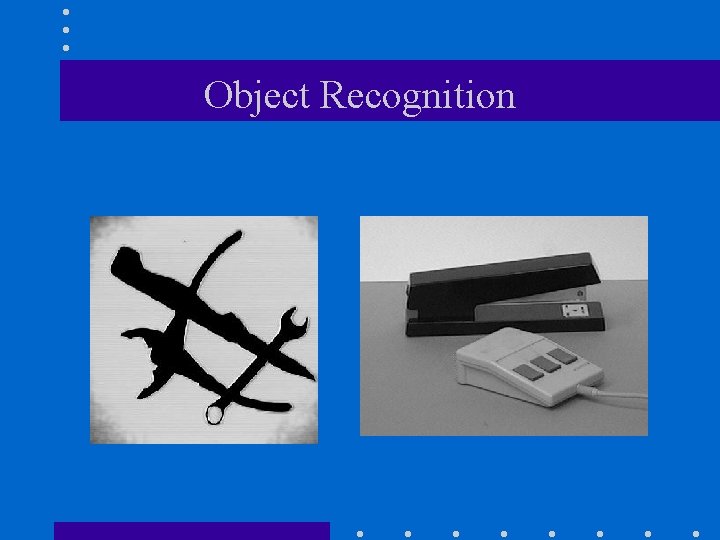
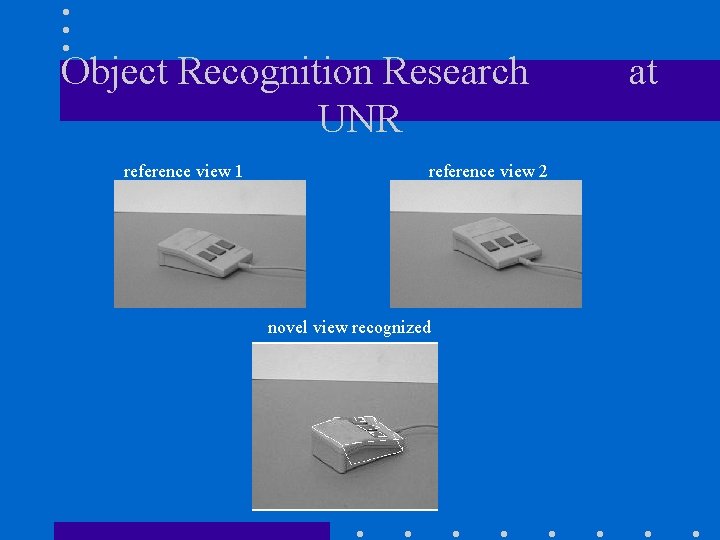
Object Recognition
Object Recognition Research UNR reference view 1 reference view 2 novel view recognized at
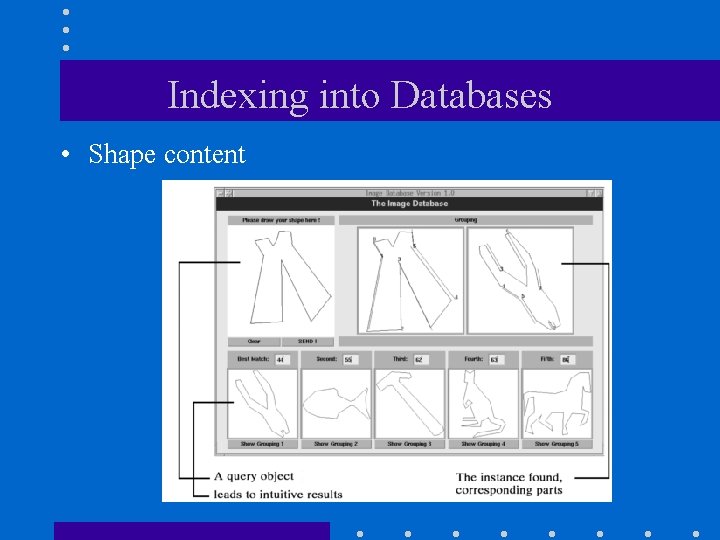
Indexing into Databases • Shape content
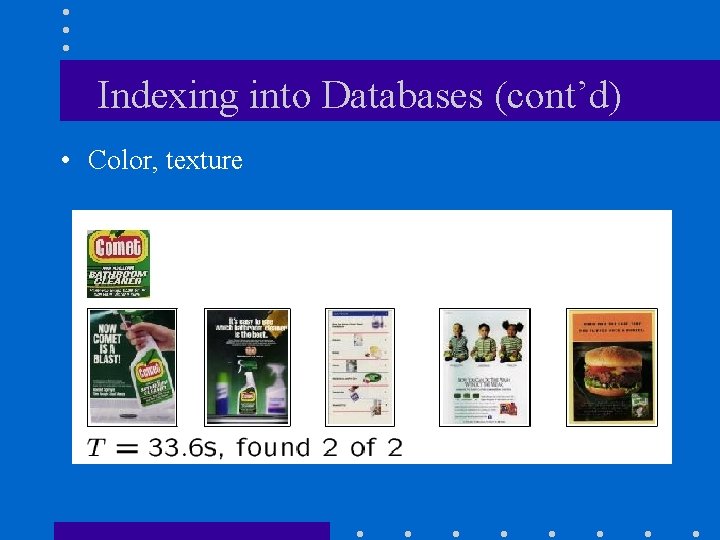
Indexing into Databases (cont’d) • Color, texture
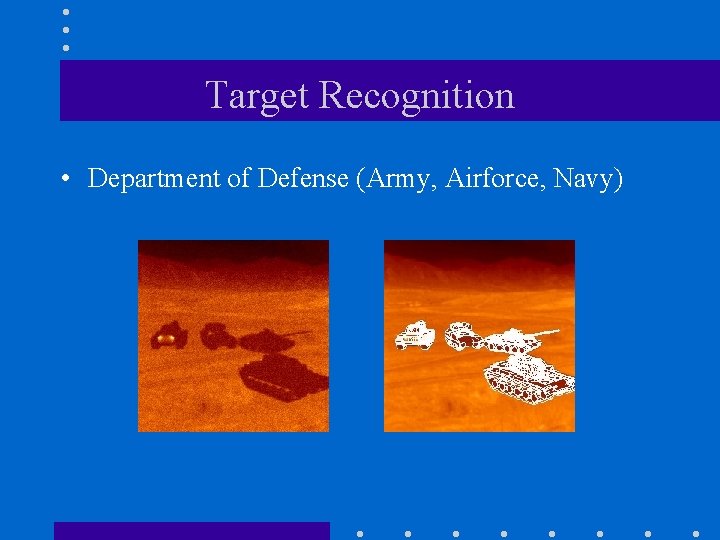
Target Recognition • Department of Defense (Army, Airforce, Navy)
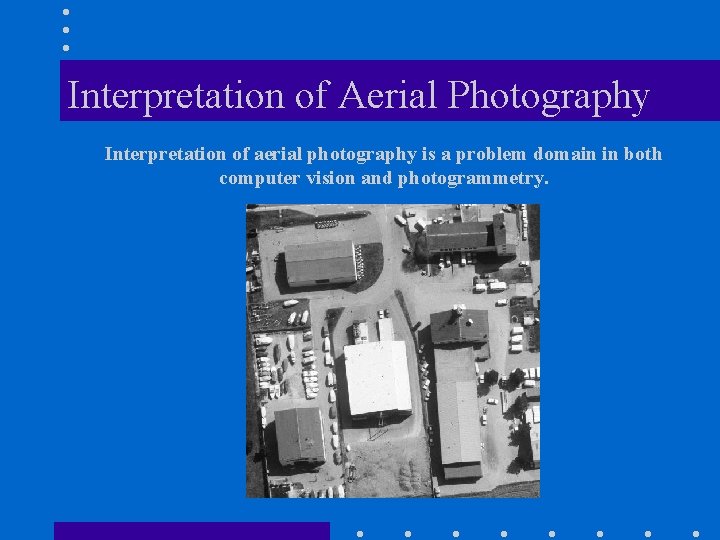
Interpretation of Aerial Photography Interpretation of aerial photography is a problem domain in both computer vision and photogrammetry.
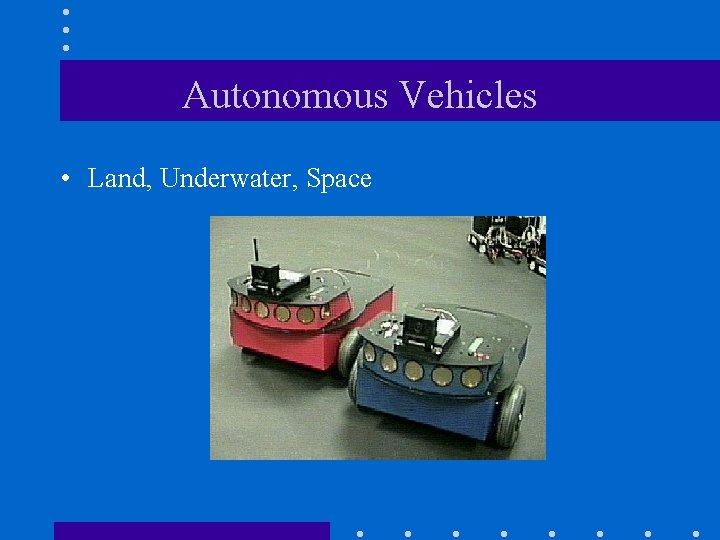
Autonomous Vehicles • Land, Underwater, Space
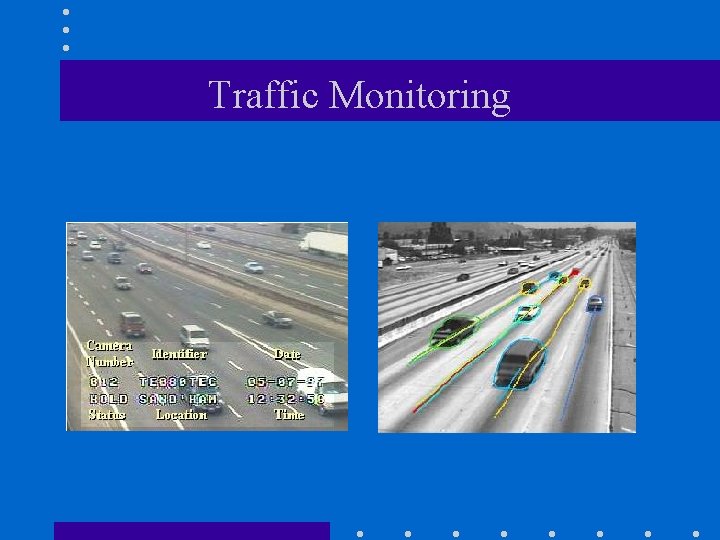
Traffic Monitoring
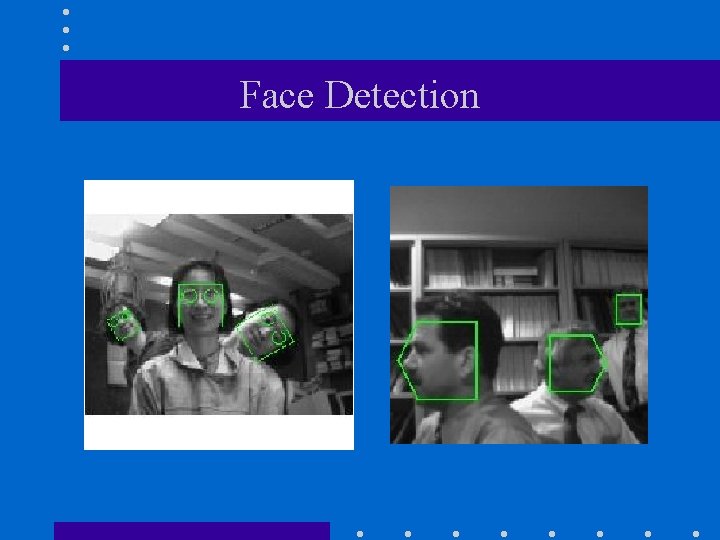
Face Detection
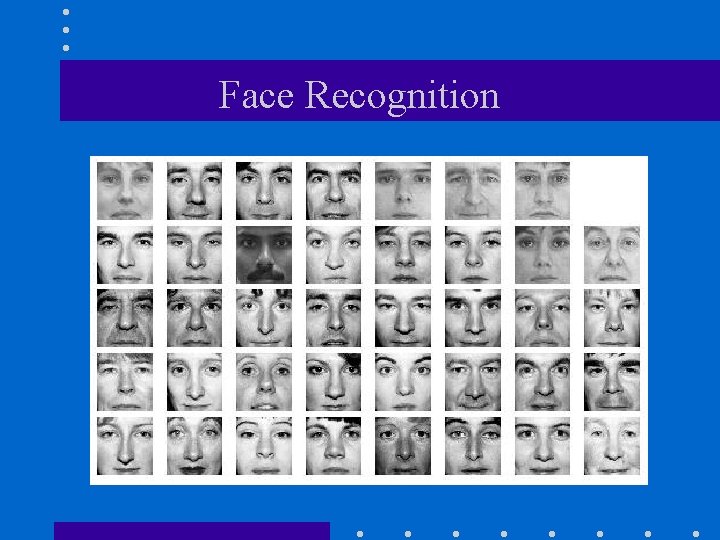
Face Recognition
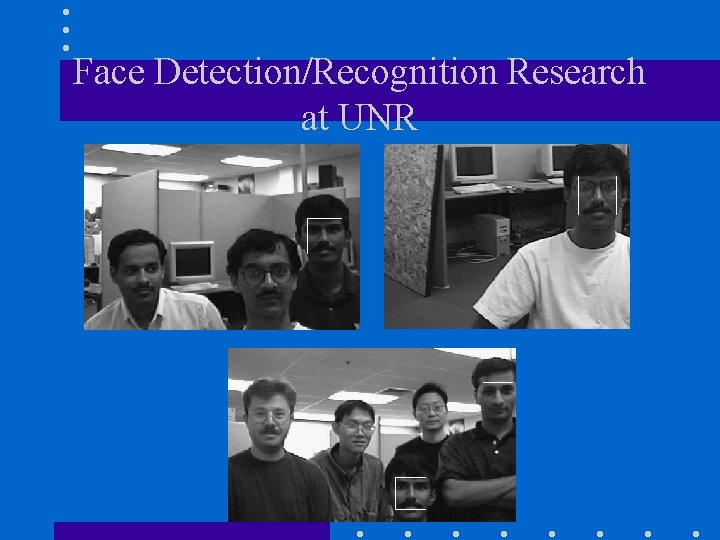
Face Detection/Recognition Research at UNR
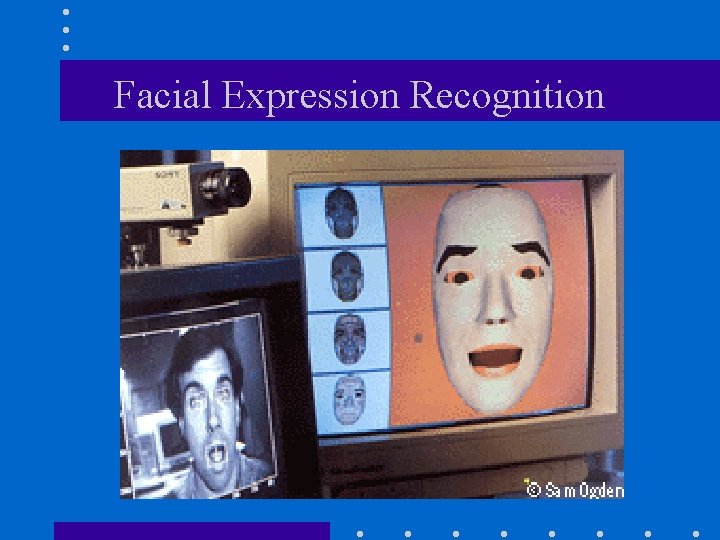
Facial Expression Recognition
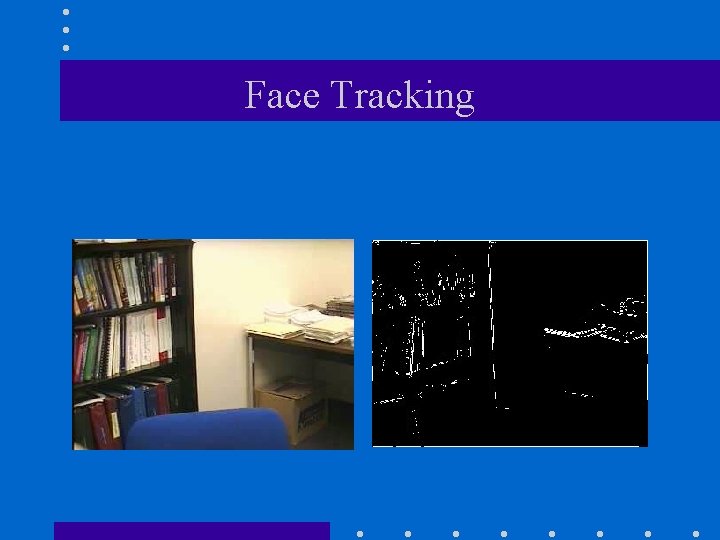
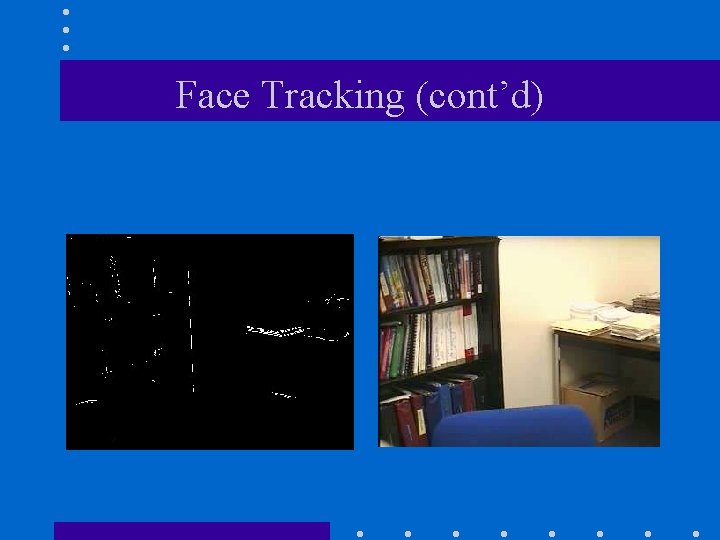
Face Tracking
Face Tracking (cont’d)
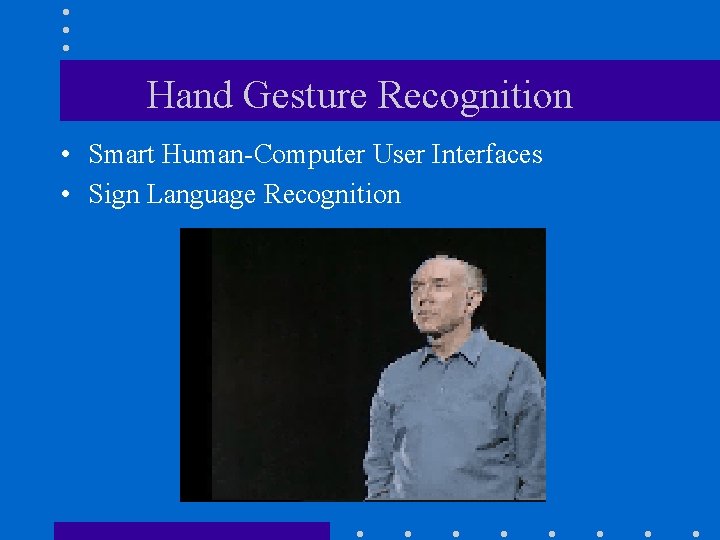
Hand Gesture Recognition • Smart Human-Computer User Interfaces • Sign Language Recognition
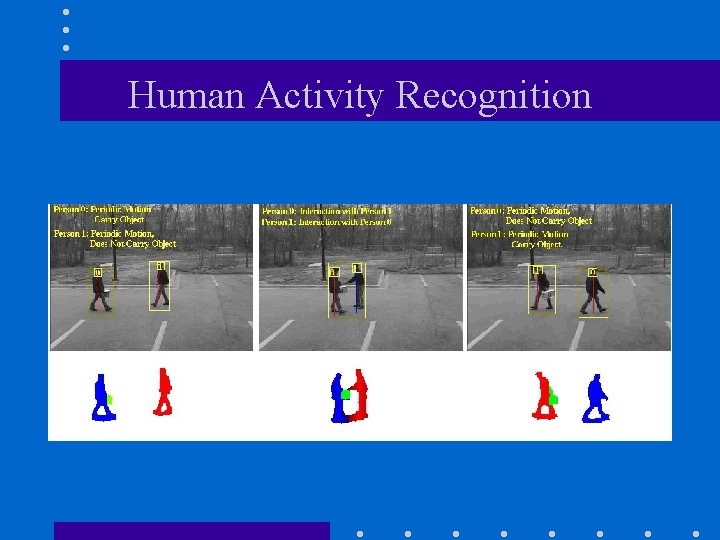
Human Activity Recognition
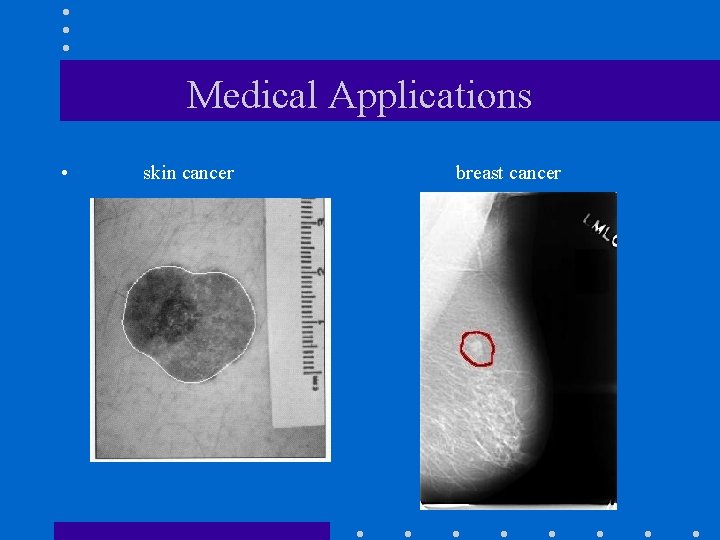
Medical Applications • skin cancer breast cancer
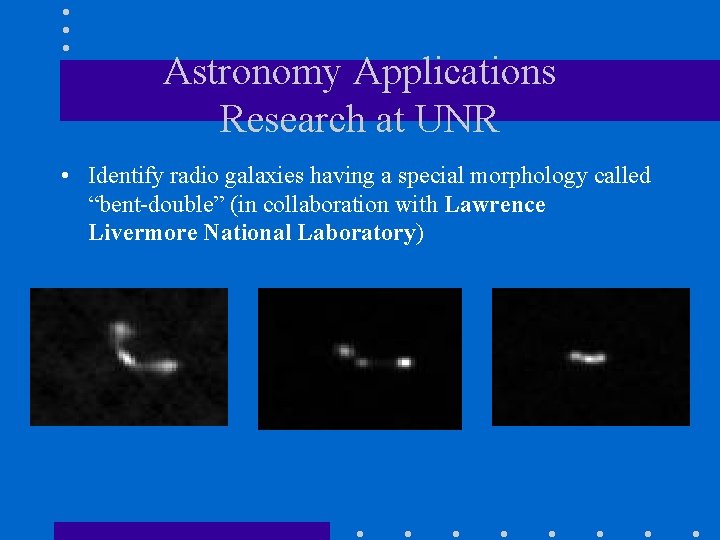
Astronomy Applications Research at UNR • Identify radio galaxies having a special morphology called “bent-double” (in collaboration with Lawrence Livermore National Laboratory)
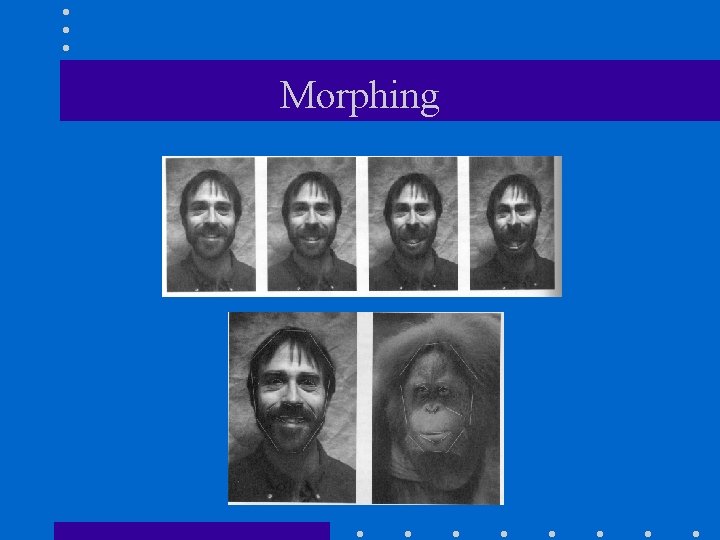
Morphing
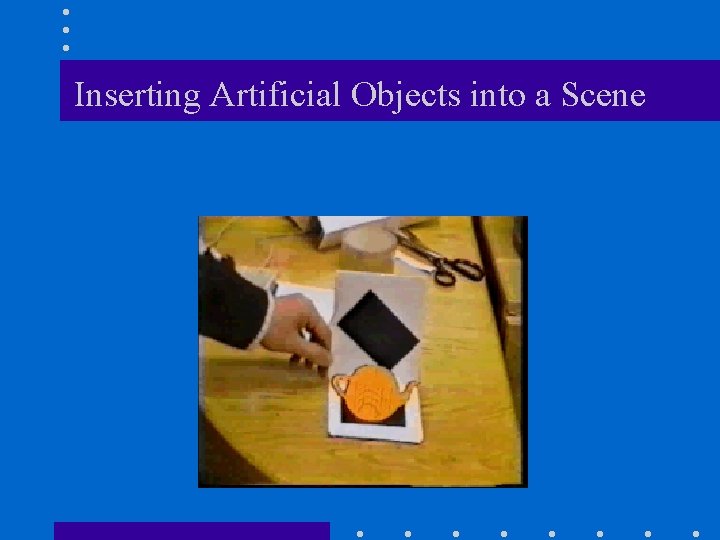
Inserting Artificial Objects into a Scene
Computer Vision and Related Courses at UNR • • CS 474/674 Image Processing and Interpretation CS 480/680 Computer Graphics CS 479/679 Pattern Recognition CS 476/676 Artificial Intelligence CS 773 A Machine Intelligence CS 791 Q Machine Learning CS 7 xx Neural Networks CS 7 xx Computer Vision
More information on Computer Vision • Computer Vision Home Page http: //www. cs. cmu. edu/afs/cs/project/cil/ftp/html/vision. html • Home Page http: //www. cs. unr. edu/CRCD • UNR Computer Vision Laboratory http: //www. cs. unr. edu/CVL