
Overview of Anatomy and Physiology Anatomy the study
- Slides: 14
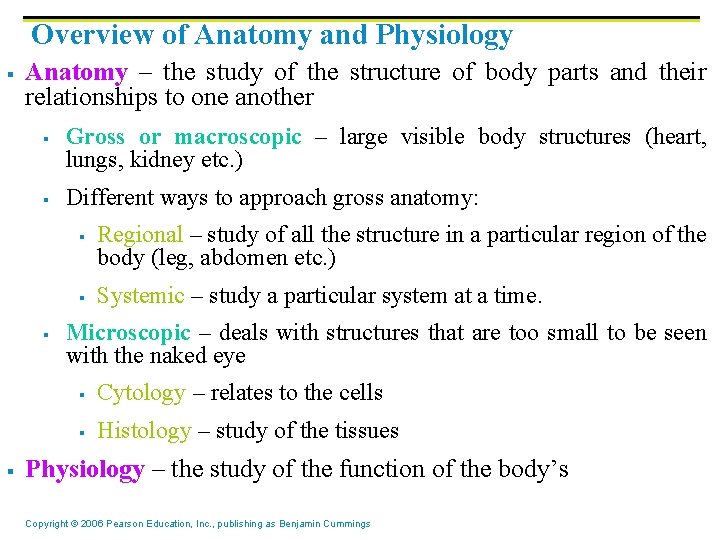
Overview of Anatomy and Physiology § Anatomy – the study of the structure of body parts and their relationships to one another § § Gross or macroscopic – large visible body structures (heart, lungs, kidney etc. ) Different ways to approach gross anatomy: § § Regional – study of all the structure in a particular region of the body (leg, abdomen etc. ) Systemic – study a particular system at a time. Microscopic – deals with structures that are too small to be seen with the naked eye § Cytology – relates to the cells § Histology – study of the tissues Physiology – the study of the function of the body’s Copyright © 2006 Pearson Education, Inc. , publishing as Benjamin Cummings
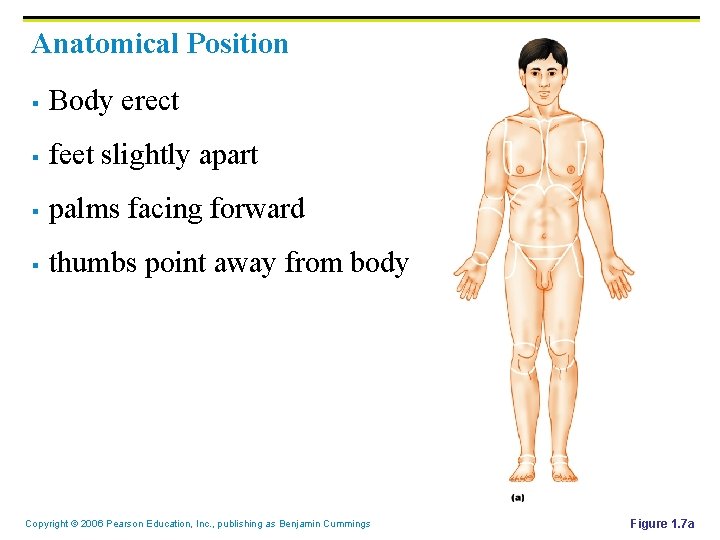
Anatomical Position § Body erect § feet slightly apart § palms facing forward § thumbs point away from body Copyright © 2006 Pearson Education, Inc. , publishing as Benjamin Cummings Figure 1. 7 a
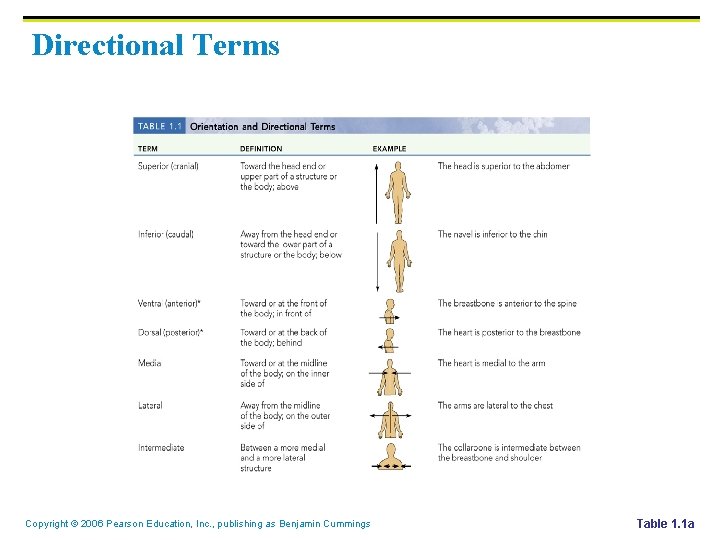
Directional Terms Copyright © 2006 Pearson Education, Inc. , publishing as Benjamin Cummings Table 1. 1 a
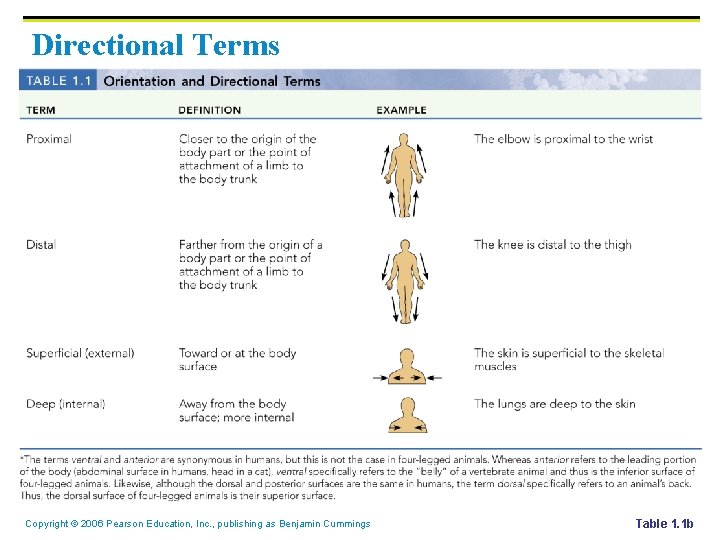
Directional Terms Copyright © 2006 Pearson Education, Inc. , publishing as Benjamin Cummings Table 1. 1 b
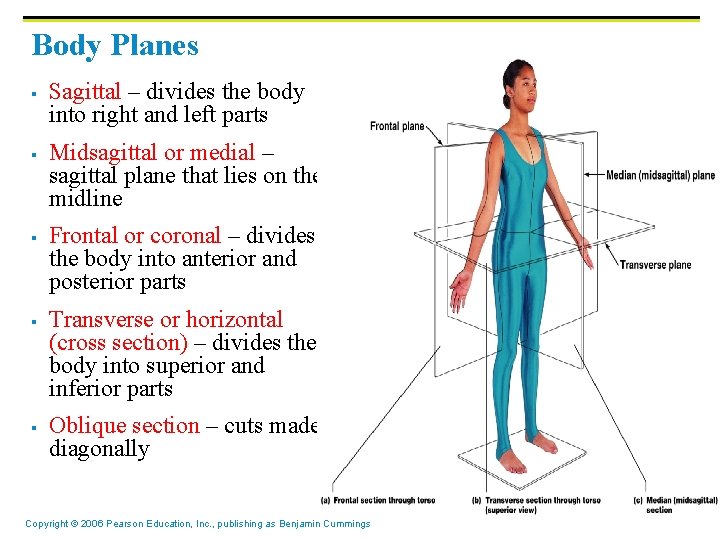
Body Planes § § § Sagittal – divides the body into right and left parts Midsagittal or medial – sagittal plane that lies on the midline Frontal or coronal – divides the body into anterior and posterior parts Transverse or horizontal (cross section) – divides the body into superior and inferior parts Oblique section – cuts made diagonally Copyright © 2006 Pearson Education, Inc. , publishing as Benjamin Cummings
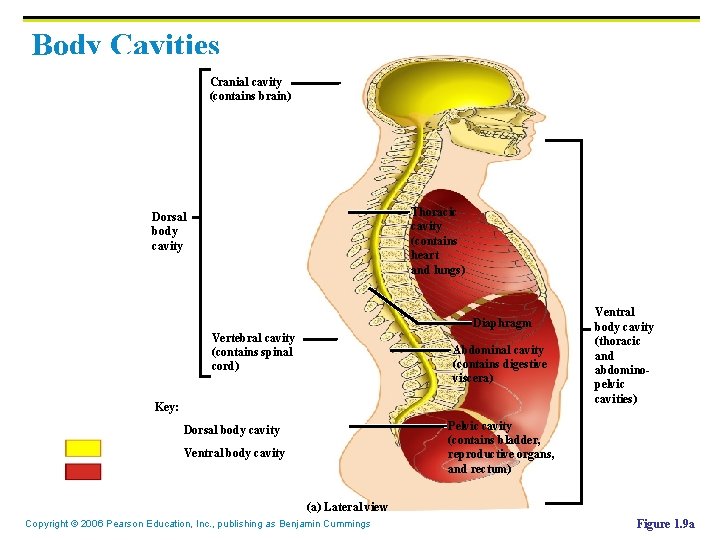
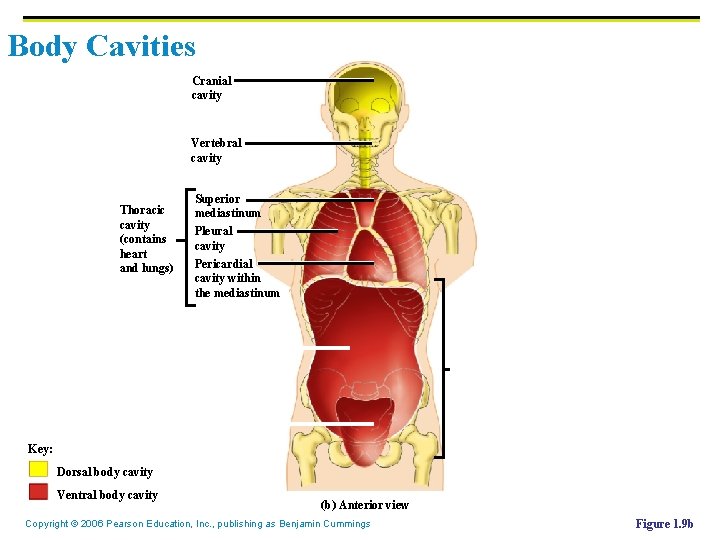
Body Cavities § Dorsal cavity protects the nervous system, and is divided into two subdivisions § § § Cranial cavity – within the skull; encases the brain Vertebral cavity – runs within the vertebral column; encases the spinal cord Ventral cavity houses the internal organs (viscera), and is divided into two subdivisions § Thoracic § Abdominopelvic Copyright © 2006 Pearson Education, Inc. , publishing as Benjamin Cummings
Body Cavities Cranial cavity (contains brain) Thoracic cavity (contains heart and lungs) Dorsal body cavity Diaphragm Vertebral cavity (contains spinal cord) Abdominal cavity (contains digestive viscera) Key: Ventral body cavity (thoracic and abdominopelvic cavities) Pelvic cavity (contains bladder, reproductive organs, and rectum) Dorsal body cavity Ventral body cavity (a) Lateral view Copyright © 2006 Pearson Education, Inc. , publishing as Benjamin Cummings Figure 1. 9 a
Body Cavities – thoracic cavity § Thoracic cavity is subdivided into two pleural cavities, the mediastinum, and the pericardial cavity § § § Pleural cavities – each houses a lung Mediastinum – contains the pericardial cavity; surrounds the remaining thoracic organs Pericardial cavity – encloses the heart Copyright © 2006 Pearson Education, Inc. , publishing as Benjamin Cummings
Body Cavities Cranial cavity Vertebral cavity Thoracic cavity (contains heart and lungs) Superior mediastinum Pleural cavity Pericardial cavity within the mediastinum Key: Dorsal body cavity Ventral body cavity (b) Anterior view Copyright © 2006 Pearson Education, Inc. , publishing as Benjamin Cummings Figure 1. 9 b
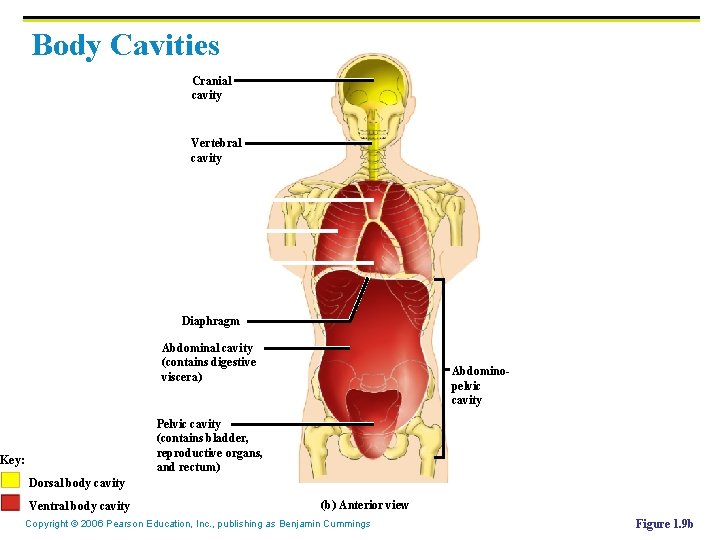
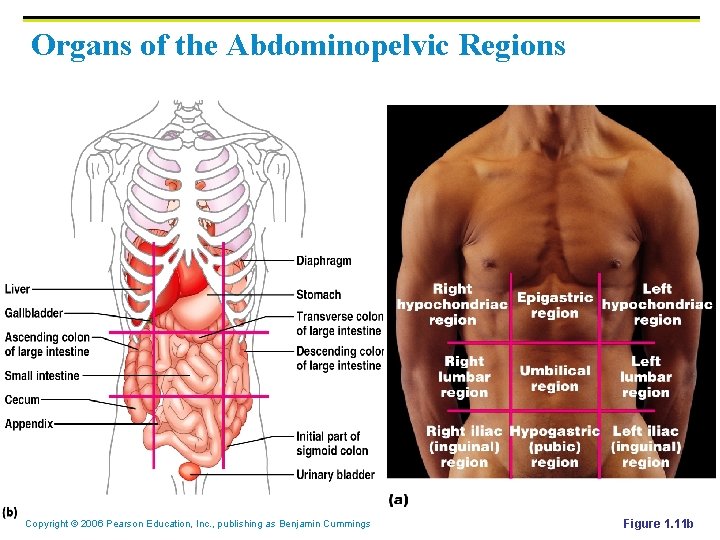
Body Cavities – abdominopelvic cavity § § The abdominopelvic cavity is separated from the superior thoracic cavity by the dome-shaped diaphragm It is composed of two subdivisions § § Abdominal cavity – contains the stomach, intestines, spleen, liver, and other organs Pelvic cavity – lies within the pelvis and contains the bladder, reproductive organs, and rectum Copyright © 2006 Pearson Education, Inc. , publishing as Benjamin Cummings
Body Cavities Cranial cavity Vertebral cavity Diaphragm Abdominal cavity (contains digestive viscera) Abdominopelvic cavity Pelvic cavity (contains bladder, reproductive organs, and rectum) Key: Dorsal body cavity Ventral body cavity (b) Anterior view Copyright © 2006 Pearson Education, Inc. , publishing as Benjamin Cummings Figure 1. 9 b
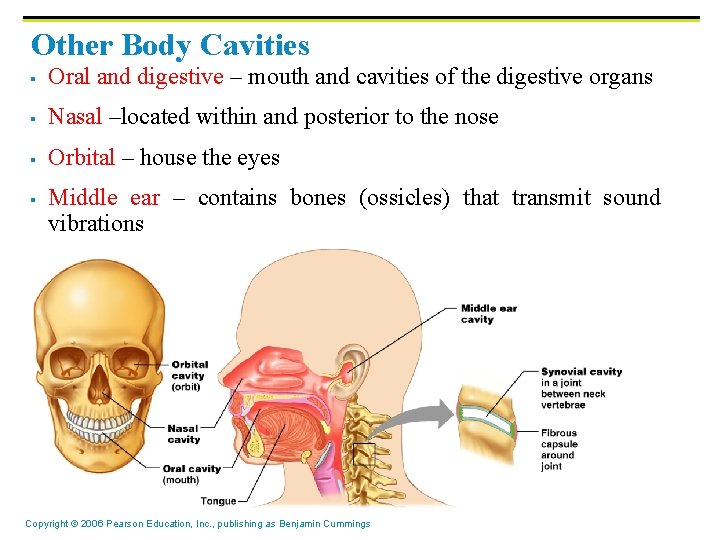
Other Body Cavities § Oral and digestive – mouth and cavities of the digestive organs § Nasal –located within and posterior to the nose § Orbital – house the eyes § § Middle ear – contains bones (ossicles) that transmit sound vibrations Synovial – joint cavities Copyright © 2006 Pearson Education, Inc. , publishing as Benjamin Cummings
Organs of the Abdominopelvic Regions Copyright © 2006 Pearson Education, Inc. , publishing as Benjamin Cummings Figure 1. 11 b
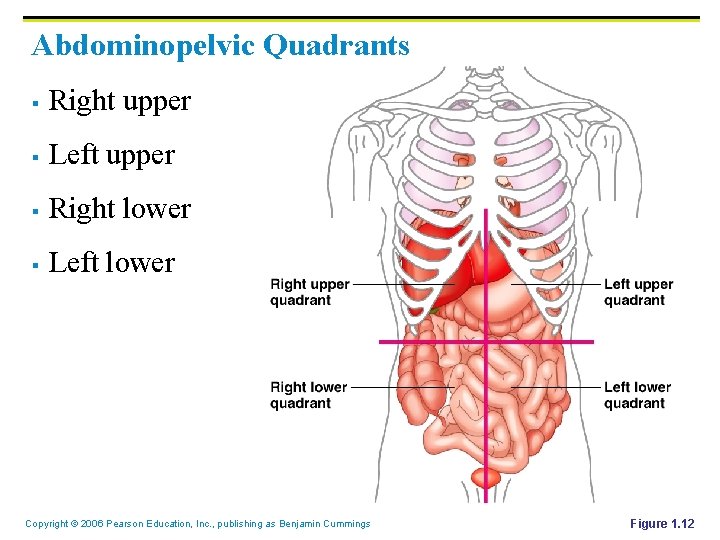
Abdominopelvic Quadrants § Right upper § Left upper § Right lower § Left lower Copyright © 2006 Pearson Education, Inc. , publishing as Benjamin Cummings Figure 1. 12