
Overview Np D algorithm Case Study Conclusion Detection


- Slides: 18
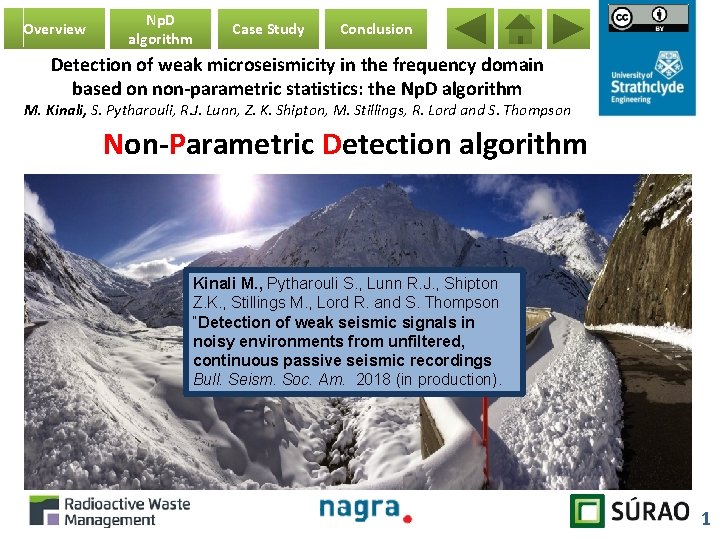
Overview Np. D algorithm Case Study Conclusion Detection of weak microseismicity in the frequency domain based on non-parametric statistics: the Np. D algorithm M. Kinali, S. Pytharouli, R. J. Lunn, Z. K. Shipton, M. Stillings, R. Lord and S. Thompson Non-Parametric Detection algorithm Kinali M. , Pytharouli S. , Lunn R. J. , Shipton Z. K. , Stillings M. , Lord R. and S. Thompson “Detection of weak seismic signals in noisy environments from unfiltered, continuous passive seismic recordings Bull. Seism. Soc. Am. 2018 (in production). 1
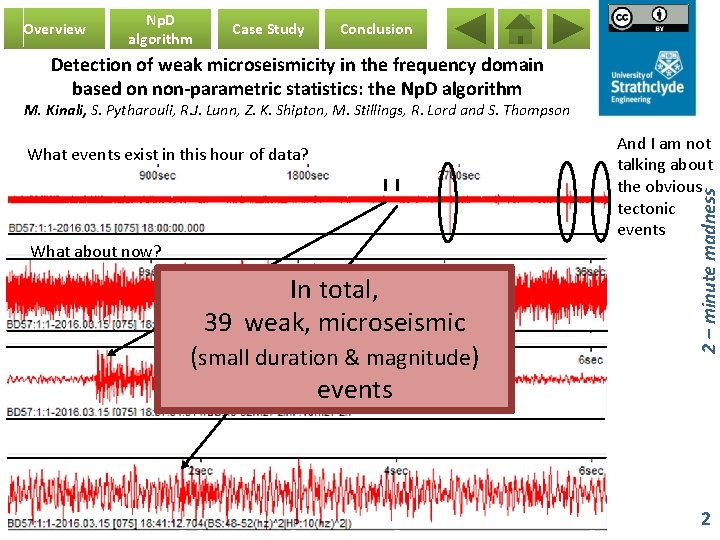
Overview Np. D algorithm Case Study Conclusion Detection of weak microseismicity in the frequency domain based on non-parametric statistics: the Np. D algorithm M. Kinali, S. Pytharouli, R. J. Lunn, Z. K. Shipton, M. Stillings, R. Lord and S. Thompson What about now? In total, 39 weak, microseismic (small duration & magnitude) events And I am not talking about the obvious tectonic events 2 – minute madness What events exist in this hour of data? 2
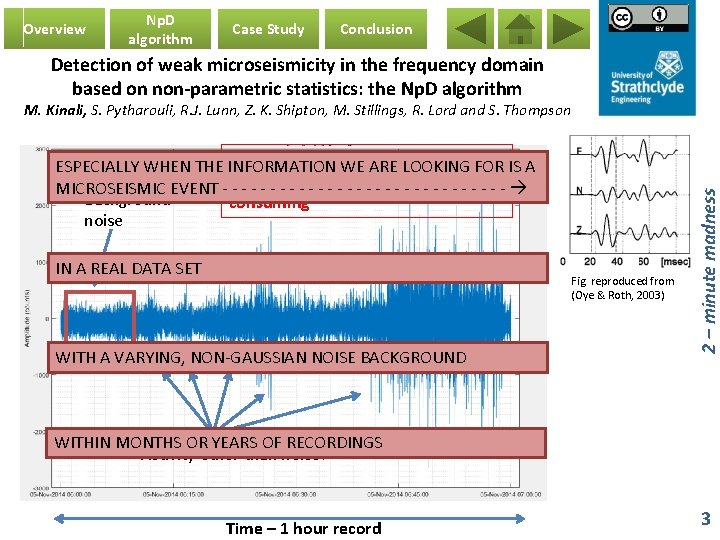
Overview Np. D algorithm Case Study Conclusion Detection of weak microseismicity in the frequency domain based on non-parametric statistics: the Np. D algorithm Visual inspection the. LOOKING complete. FOR IS A ESPECIALLY WHEN THE INFORMATION WEof. ARE MICROSEISMIC EVENT - data - - record - - -is- extremely - - - - -time ----- Background consuming noise IN A REAL DATA SET Fig. reproduced from (Oye & Roth, 2003) WITH A VARYING, NON-GAUSSIAN NOISE BACKGROUND 2 – minute madness M. Kinali, S. Pytharouli, R. J. Lunn, Z. K. Shipton, M. Stillings, R. Lord and S. Thompson WITHIN MONTHS OR YEARS OF RECORDINGS Activity other than noise? Time – 1 hour record 3
Overview Np. D algorithm Case Study Conclusion Detection of weak microseismicity in the frequency domain based on non-parametric statistics: the Np. D algorithm M. Kinali, S. Pytharouli, R. J. Lunn, Z. K. Shipton, M. Stillings, R. Lord and S. Thompson PICO Navigation The ‘Home’ Button takes you to the beginning of the presentation The left/right arrows take you to the next page 4
Overview Np. D algorithm Case Study Conclusion Overview Non-parametric Detection algorithm - Np. D Introduction of an automated detection tool : • for long, continuous passive seismic recordings • which works well with real (not synthetic) data • detects low SNR events in a non-stationary noise background • non-Gaussian background noise • pre-filtering not necessary • dynamic threshold adapting to the spatial and temporal data record characteristics • Frequency domain detector (Fourier decomposition with Welch (1967) modified periodogram method) 5
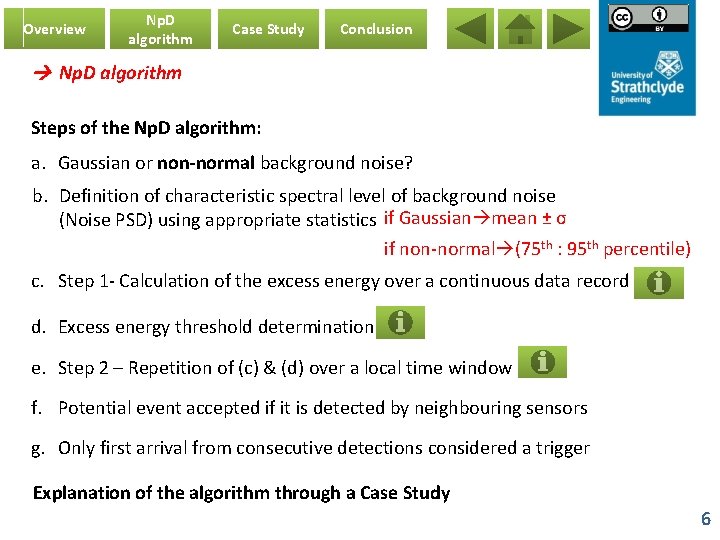
Overview Np. D algorithm Case Study Conclusion Np. D algorithm Steps of the Np. D algorithm: a. Gaussian or non-normal background noise? b. Definition of characteristic spectral level of background noise (Noise PSD) using appropriate statistics if Gaussian mean ± σ if non-normal (75 th : 95 th percentile) c. Step 1 - Calculation of the excess energy over a continuous data record d. Excess energy threshold determination e. Step 2 – Repetition of (c) & (d) over a local time window f. Potential event accepted if it is detected by neighbouring sensors g. Only first arrival from consecutive detections considered a trigger Explanation of the algorithm through a Case Study 6
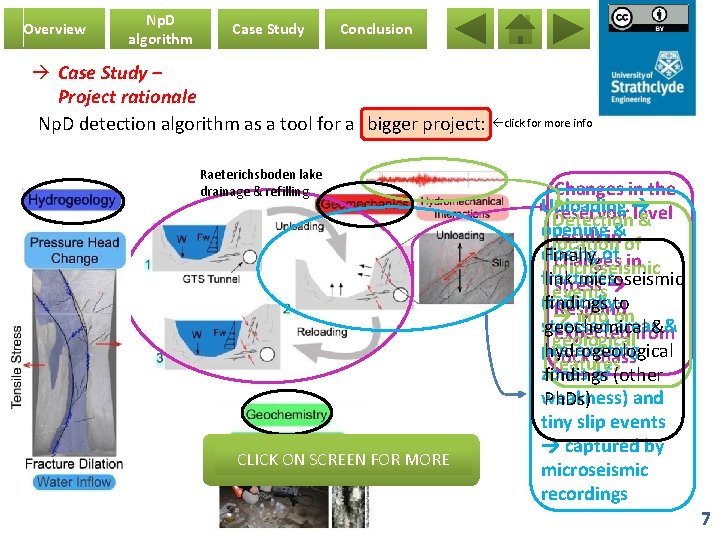
Overview Np. D algorithm Case Study Conclusion Case Study – Project rationale Np. D detection algorithm as a tool for a bigger project: Raeterichsboden lake drainage & refilling CLICK ON SCREEN FOR MORE click for more info Changes in the Unloading reservoir level Detection & opening & result in of location closing of in Finally, changes microseismic fractures link microseismic stress events (criticallyfindings to Respond info on stressed areas geochemical && expected from geological pre-existing hydrogeological rock mass features zones of (other findings weakness) and Ph. Ds) tiny slip events captured by microseismic recordings 7
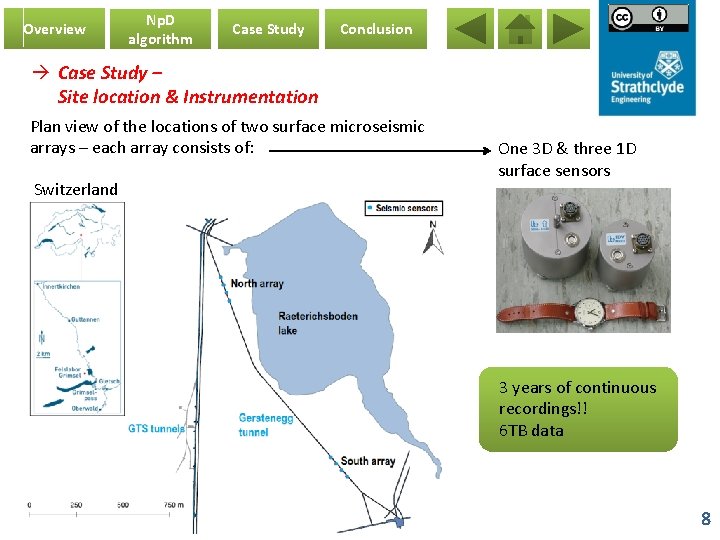
Overview Np. D algorithm Case Study Conclusion Case Study – Site location & Instrumentation Plan view of the locations of two surface microseismic arrays – each array consists of: Switzerland One 3 D & three 1 D surface sensors 3 years of continuous recordings!! 6 TB data 8
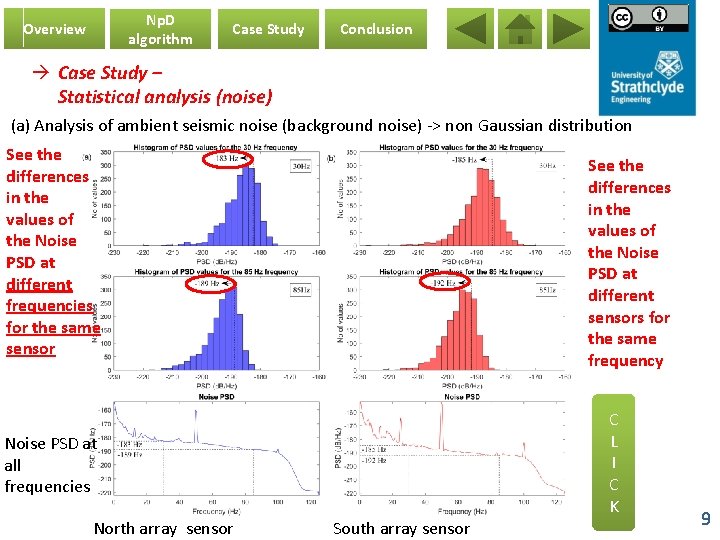
Np. D algorithm Overview Case Study Conclusion Case Study – Statistical analysis (noise) (a) Analysis of ambient seismic noise (background noise) -> non Gaussian distribution See the differences in the values of the Noise PSD at different frequencies for the same sensor See the differences in the values of the Noise PSD at different sensors for the same frequency C L I C K Noise PSD at all frequencies North array sensor South array sensor 9
Overview Np. D algorithm Case Study Conclusion Case Study – Statistical analysis (noise) (b) Analysis of ambient seismic noise (background noise) -> noise highly variant in both time and space Temporal variation Spatial variation 10
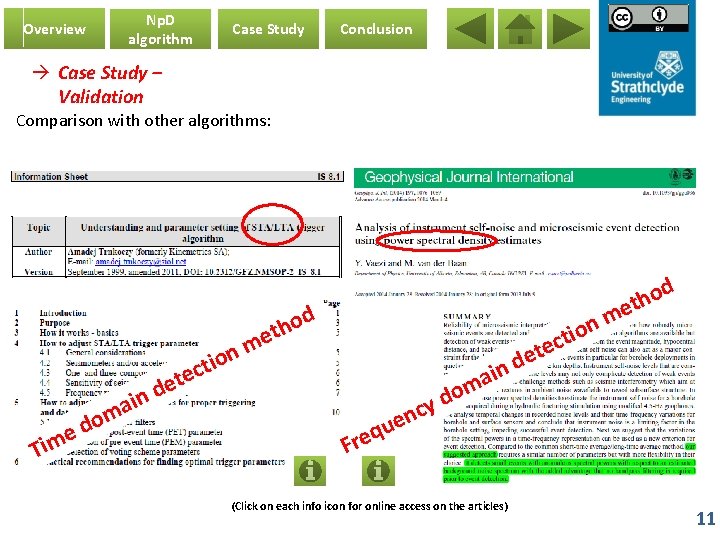
Np. D algorithm Overview Case Study Conclusion Case Study – Validation Comparison with other algorithms: od h t e d e Tim o in a m m n o cti e t e d in a m e t e d n o i t c od h t e m o d y c en u q e Fr (Click on each info icon for online access on the articles) 11
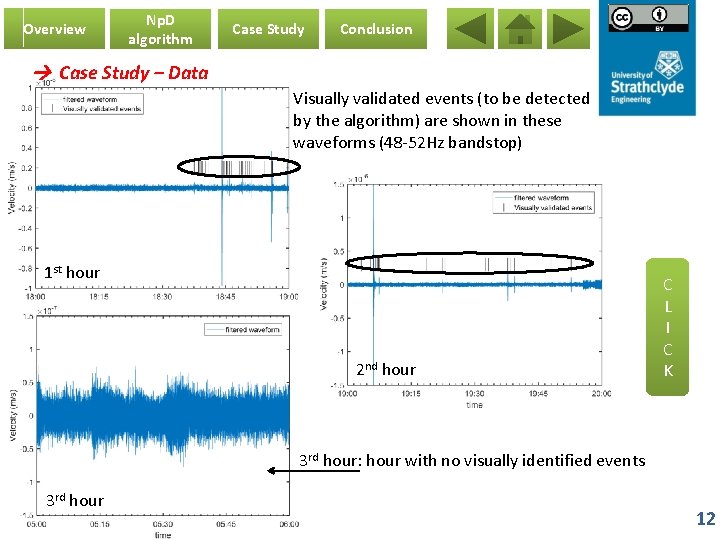
Overview Np. D algorithm Case Study Conclusion Case Study – Data Visually validated events (to be detected by the algorithm) are shown in these waveforms (48 -52 Hz bandstop) 1 st hour 2 nd hour C L I C K 3 rd hour: hour with no visually identified events 3 rd hour 12
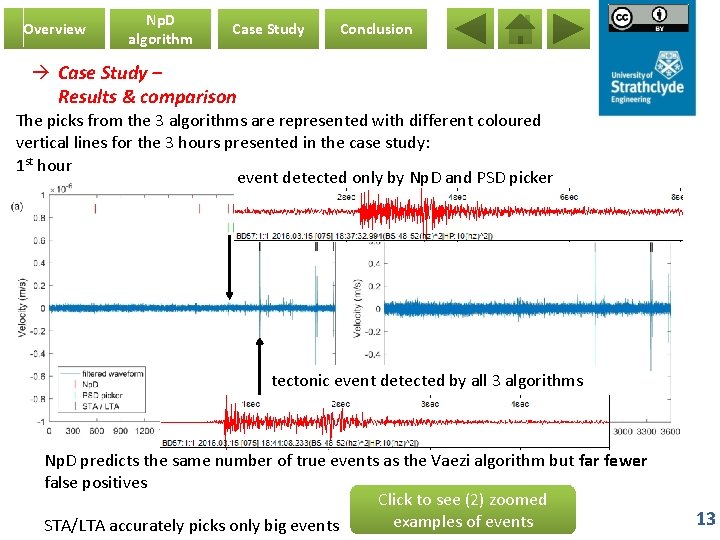
Overview Np. D algorithm Case Study Conclusion Case Study – Results & comparison The picks from the 3 algorithms are represented with different coloured vertical lines for the 3 hours presented in the case study: 1 st hour event detected only by Np. D and PSD picker tectonic event detected by all 3 algorithms Np. D predicts the same number of true events as the Vaezi algorithm but far fewer false positives Click to see (2) zoomed examples of events STA/LTA accurately picks only big events 13
Overview Np. D algorithm Case Study Conclusion Case Study – Results & comparison 2 nd hour If you want to see the input parameters of the algorithms press here 14
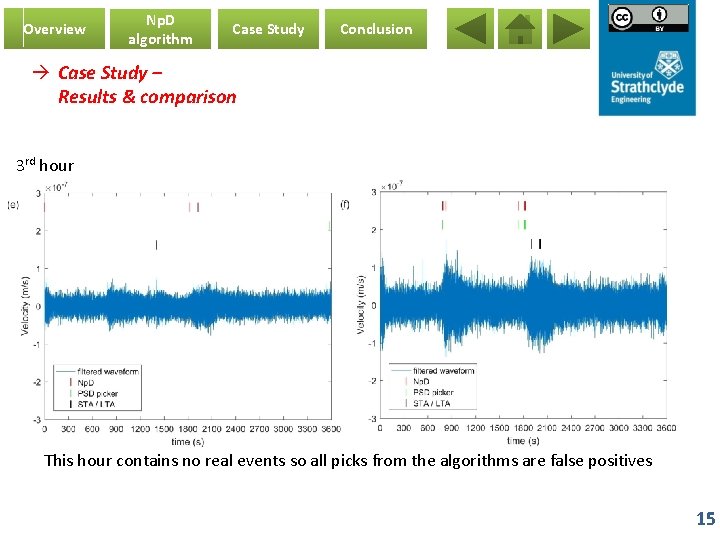
Overview Np. D algorithm Case Study Conclusion Case Study – Results & comparison 3 rd hour This hour contains no real events so all picks from the algorithms are false positives 15
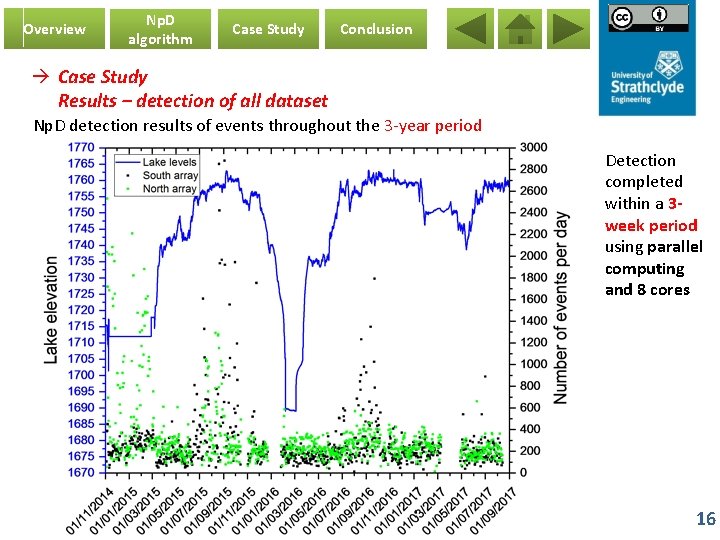
Overview Np. D algorithm Case Study Conclusion Case Study Results – detection of all dataset Np. D detection results of events throughout the 3 -year period Detection completed within a 3 week period using parallel computing and 8 cores 16
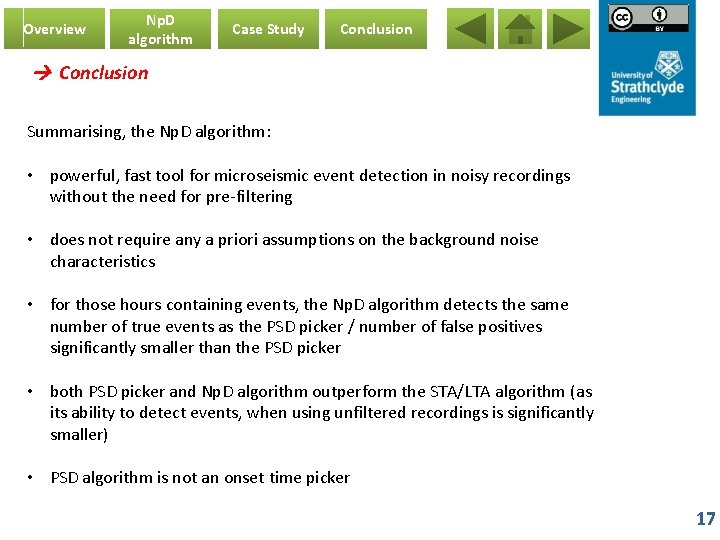
Overview Np. D algorithm Case Study Conclusion Summarising, the Np. D algorithm: • powerful, fast tool for microseismic event detection in noisy recordings without the need for pre-filtering • does not require any a priori assumptions on the background noise characteristics • for those hours containing events, the Np. D algorithm detects the same number of true events as the PSD picker / number of false positives significantly smaller than the PSD picker • both PSD picker and Np. D algorithm outperform the STA/LTA algorithm (as its ability to detect events, when using unfiltered recordings is significantly smaller) • PSD algorithm is not an onset time picker 17
Overview Np. D algorithm Case Study Conclusion Detection of weak microseismicity in the frequency domain based on non-parametric statistics: the Np. D algorithm M. Kinali, S. Pytharouli, R. J. Lunn, Z. K. Shipton, M. Stillings, R. Lord and S. Thompson Thank you for your time 18