
Overview Normal cell Injury Reversibly injured cell Irreversibly
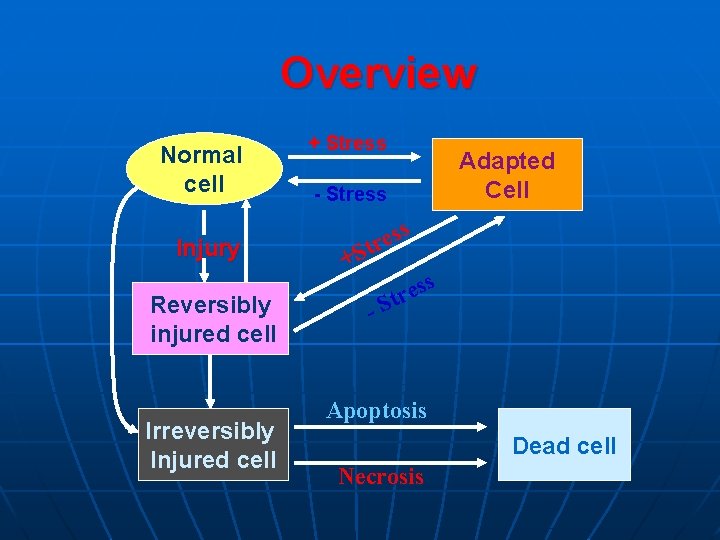
Overview Normal cell Injury Reversibly injured cell Irreversibly Injured cell + Stress Adapted Cell - Stress s + es r t S - ss e r St Apoptosis Dead cell Necrosis
LO n n n Define necrosis Enlist types of necrosis Identify morphological (gross and microscopic) features of different types of necrosis on image. Enlist three stages in loss of nucleus resulting in cell death Define apoptosis
(1) Definition: Localized death of cell or tissue occurring in the living body.
(2) Cell death is recognized by: ① Ultrastructural changes n n Margination or progressive loss of nuclear chromatin Focal rupture membrane of the nuclear Breakdown of the plasmalemma. Development of flocculent densities in mitochondria.

② Changes in the nucleus. n n n Pyknosis: condensation chromatin of chromatin shrinkage of the nucleus. of and Karyorrhexis: fragmentation of the nucleus. Karyolysis: dissolution of the nucleus.
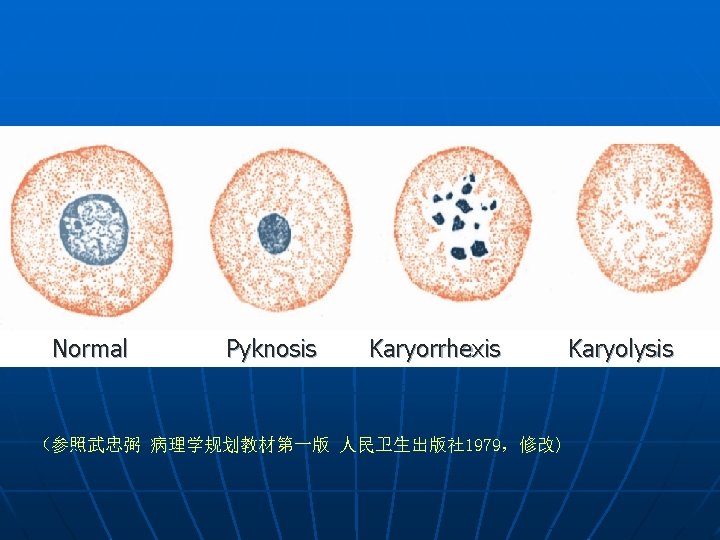
Normal Pyknosis Karyorrhexis (参照武忠弼 病理学规划教材第一版 人民卫生出版社 1979,修改) Karyolysis
③ Changes staining in cytoplasm n Opacification: denaturation of proteins lead to aggregation with resultant opacification of the cytoplasm. n Eosino 0. philia: exposure of basic amino groups results in increased affinity for acidic dyes such as
④ Biochemical changes n Release of K+ by dead cells. n Release of enzymes into the blood. e. g. increased plasma levels of creatine kinases, lactic dehydrogenase and aspartate aminotransferase. n Release of protein or protein breakdown products into the blood.
Morphology of Necrotic Cells n n n Increased Eosinophilia - loss of RNA (basophilia) - denatured cytoplasmic protein Nuclear Changes - Pyknosis - Karyorrhexis - Karyolysis Myelin figure – large, whorled phospholipid mass (phospholipid precipitate)
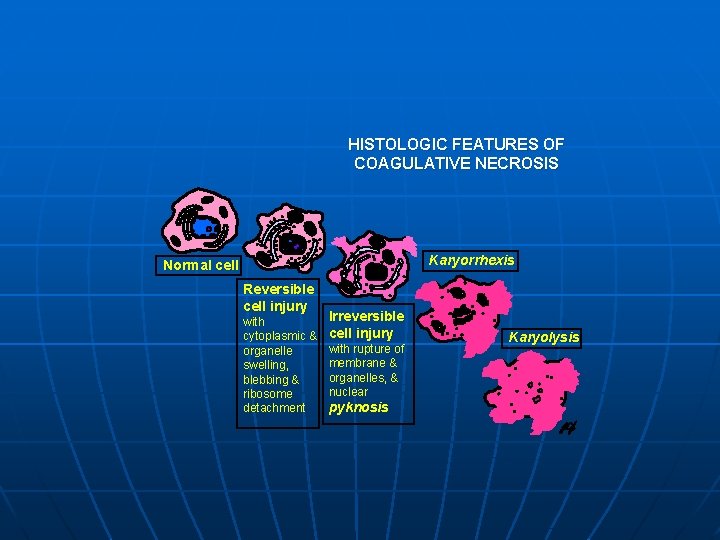
HISTOLOGIC FEATURES OF COAGULATIVE NECROSIS Karyorrhexis Normal cell Reversible cell injury with cytoplasmic & organelle swelling, blebbing & ribosome detachment Irreversible cell injury with rupture of membrane & organelles, & nuclear pyknosis Karyolysis
Morphologic pattern of Necrotic Cell mass n n n Coagulative necrosis special types of coagulative necrosis Liquefactive necrosis Caseous necrosis Fat necrosis Fibrinoid necrosis
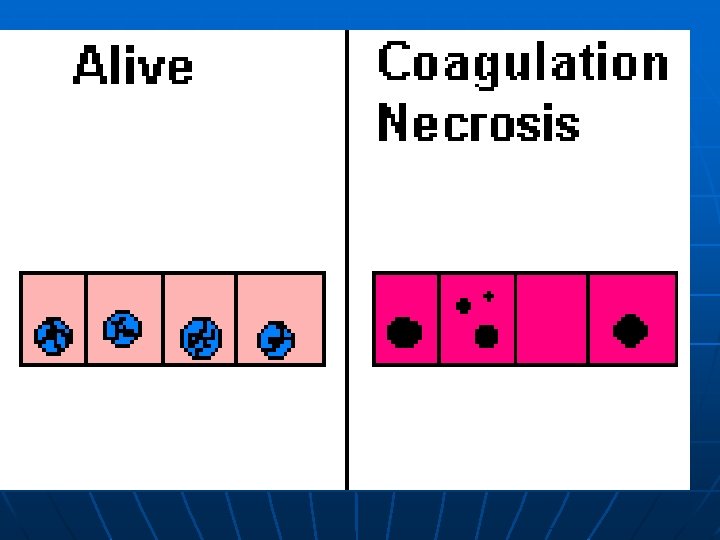
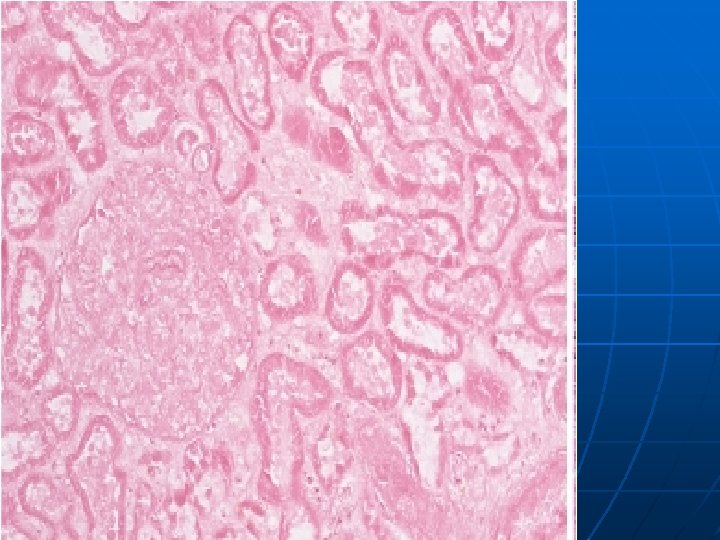
Types: ① Coagulative necrosis: Gross features: The necrosis area is swollen, firm and pale. LM: cell detail is lost, but architecture preserved. The dead cells retain their outline but only indistinctly. This type of necrosis is frequently caused by lack of blood supply and is exemplified well in infarcts of solid organs, e. g. heart, spleen, kidney.
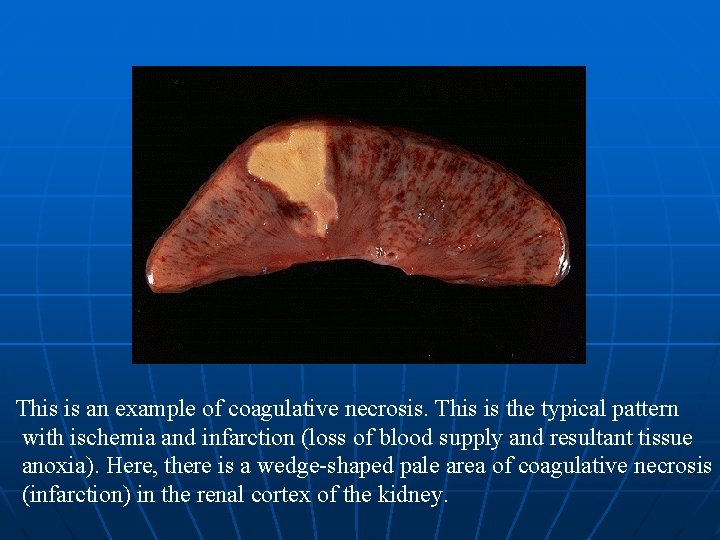
This is an example of coagulative necrosis. This is the typical pattern with ischemia and infarction (loss of blood supply and resultant tissue anoxia). Here, there is a wedge-shaped pale area of coagulative necrosis (infarction) in the renal cortex of the kidney.
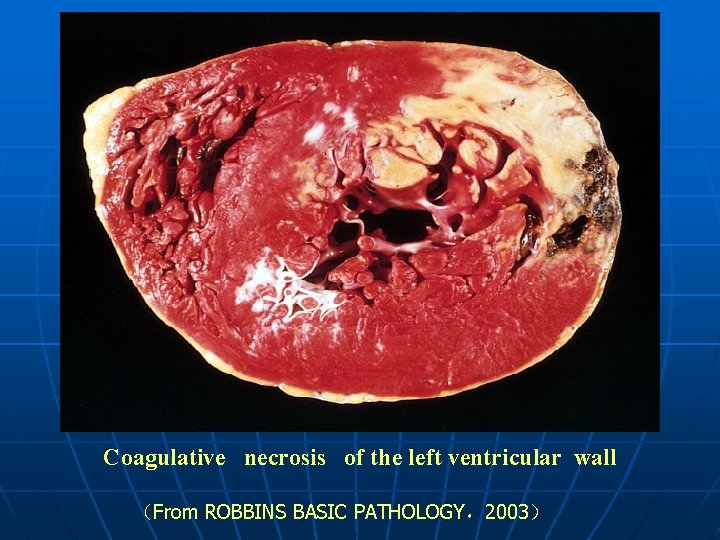
Coagulative necrosis of the left ventricular wall (From ROBBINS BASIC PATHOLOGY,2003)
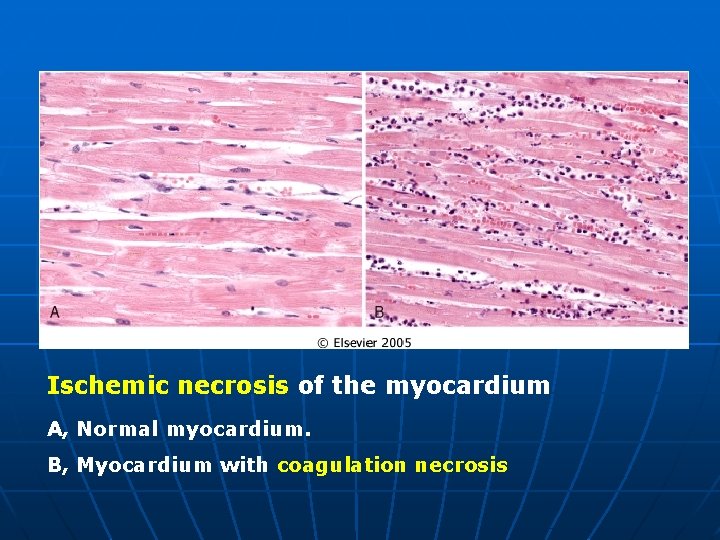
Ischemic necrosis of the myocardium A, Normal myocardium. B, Myocardium with coagulation necrosis

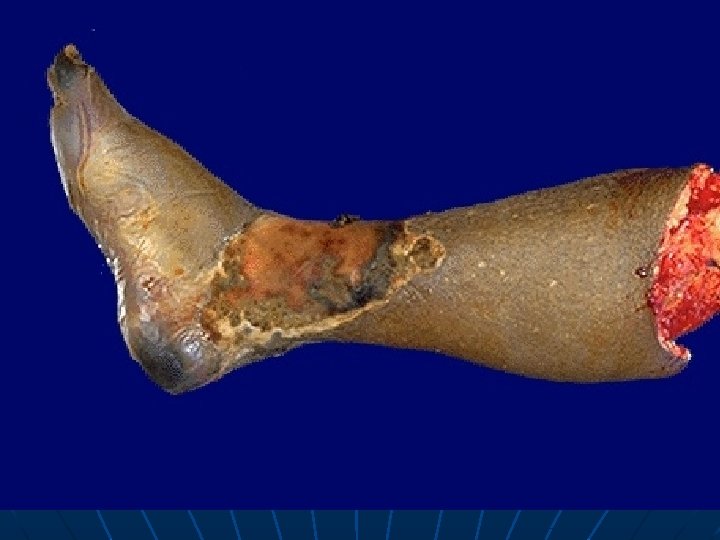
Special types of coagulative necrosis B. Gangrene Definition: necrosis of big tissue with superadded putrefaction, black, fousmelling appearance. Necrosis of big tissue green putrefactive black, Or organ or limb organisms infection appearance (black or green due to breakdown of haemoglobin)
Types of gangrene : a. Dry gangrene: Conditions: only occurs on the skin surface following arterial obstruction. It is particularly liable to affect the limbs, especially the toes. Character: mummification
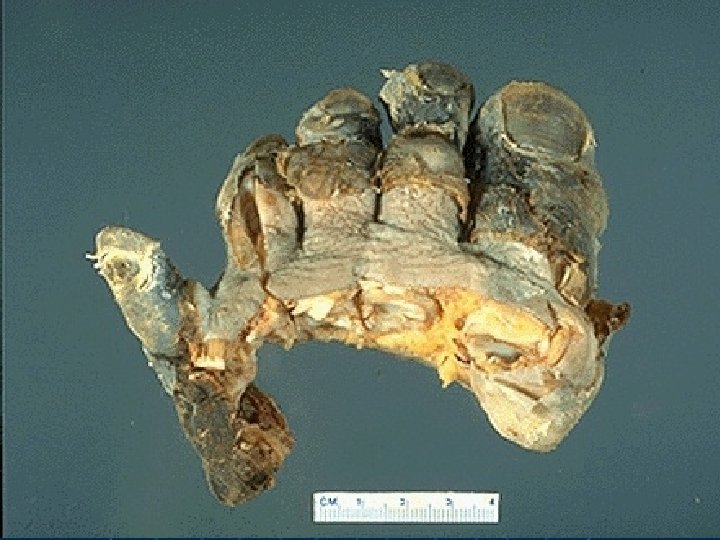
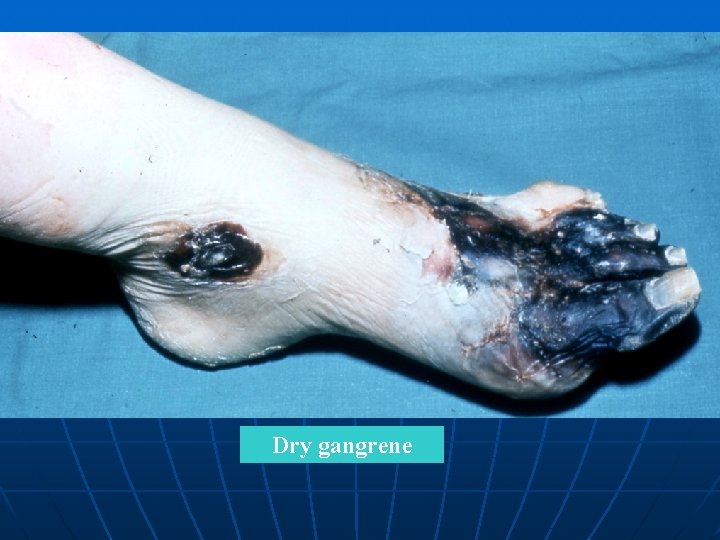
Dry gangrene
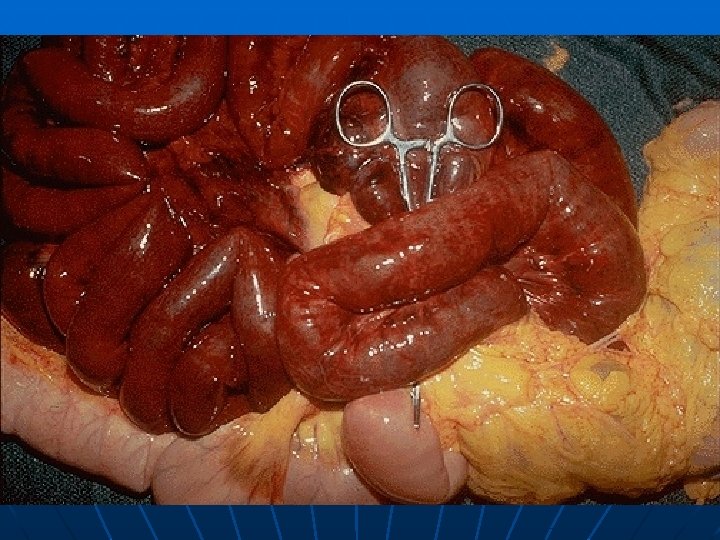
Types of gangrene : b. Wet gangrene: Conditions: Both arterial and venous obstruction; wet in environment; Character: wet swollen, foulsmelling, black or green. Commonly in small intestine, appendix, lung, and uterus, also in
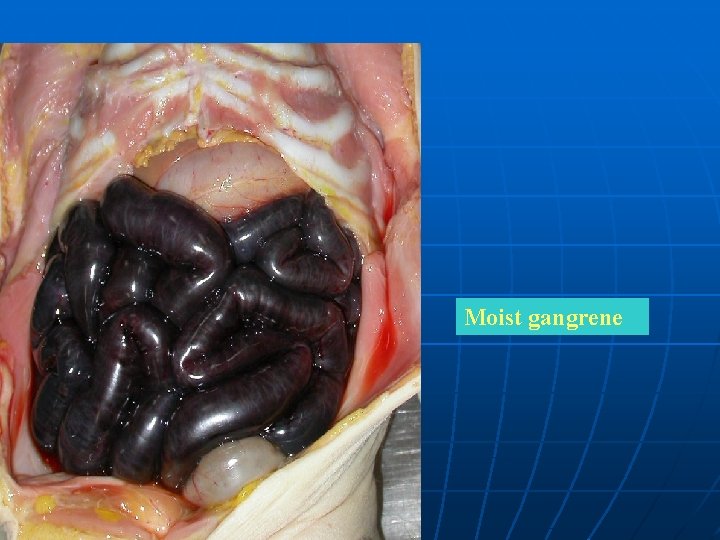
Moist gangrene

Types of gangrene : c. Gas gangrene: Conditions: deep contaminated wounds in which there is considerable muscle damaged by gas formation bacteria. Character: swollen obviously, gas bubbles formation. The infection rapidly spreads and there is associated severe toxaemia. Only occasionally in civilian practice but
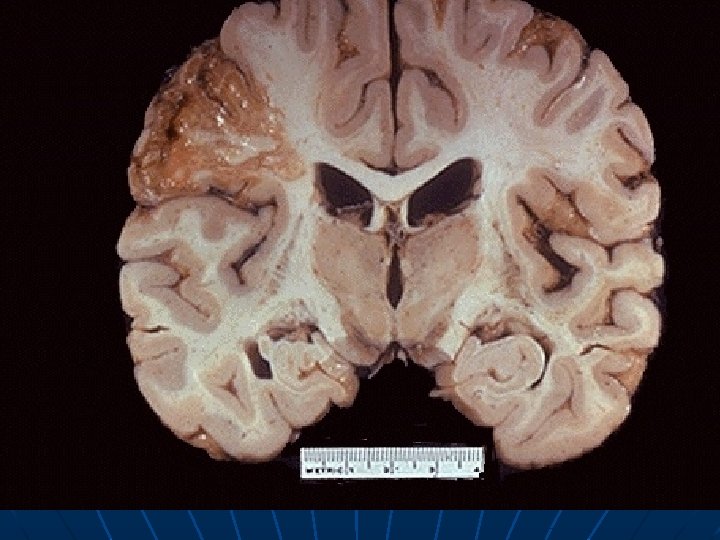
② Liquefactive necrosis: Soft and liquid grossly. Enzymes digest the cell and convert it to a formless proteinaceous mass. Ultimately, discharge of the contents forms a cystic space. i. e. central nervous system after ischemic injury; abscesses.
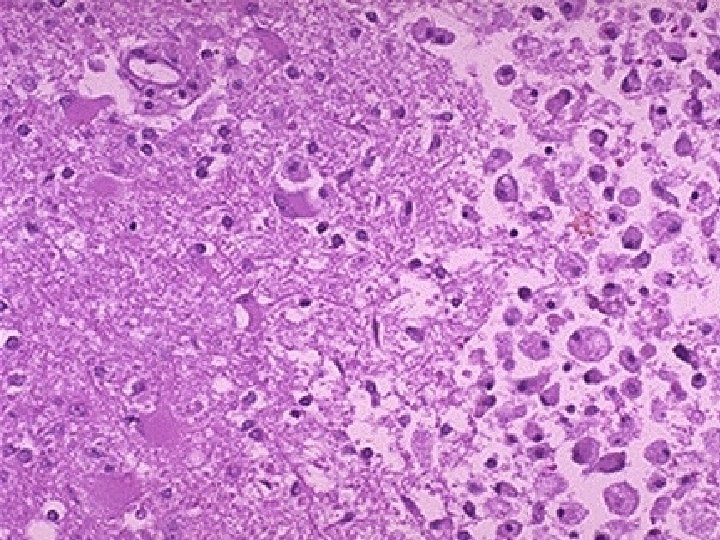
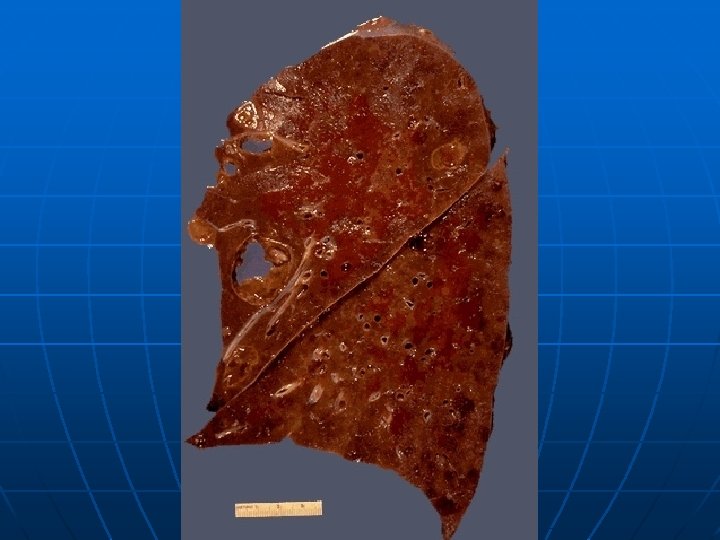

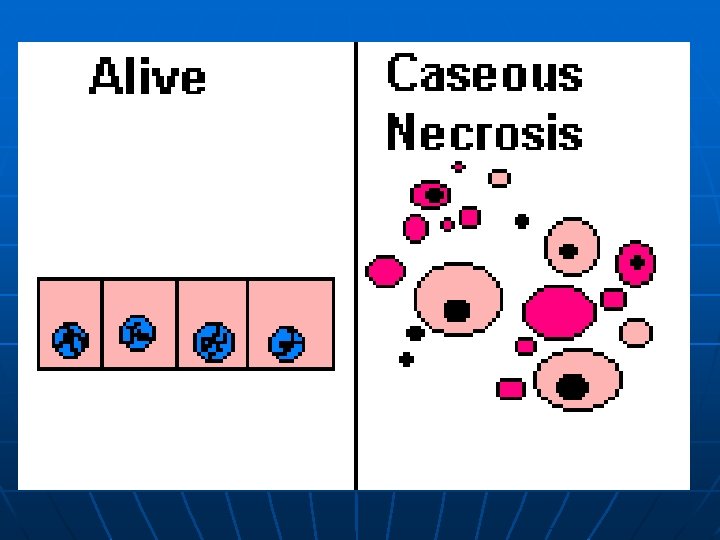
Morphologic Pattern of Necrosis n Caseous necrosis : gross appearance : microscopic – granulomatous inflammation
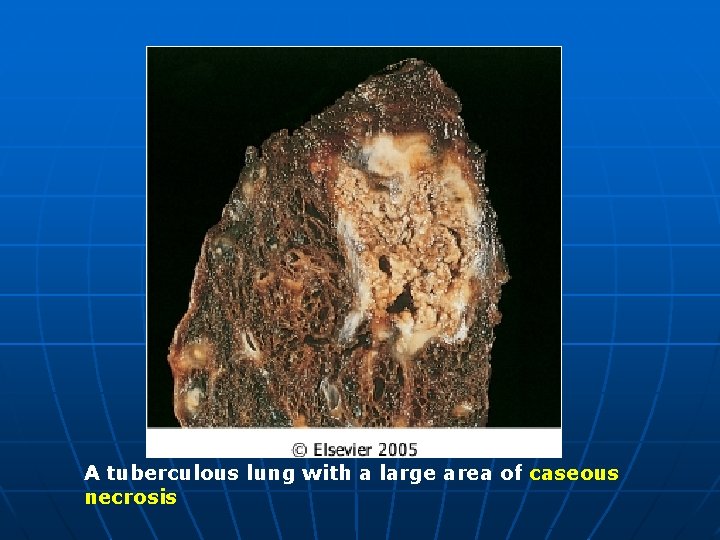
A tuberculous lung with a large area of caseous necrosis
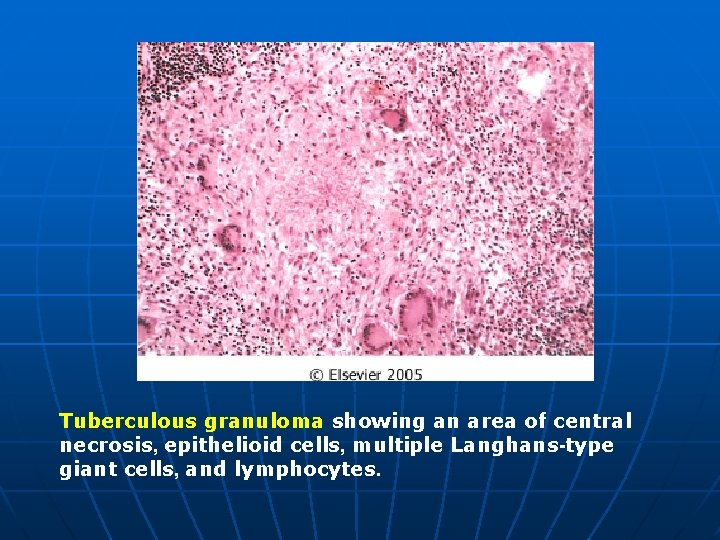
Tuberculous granuloma showing an area of central necrosis, epithelioid cells, multiple Langhans-type giant cells, and lymphocytes.

Special type: Fat necrosis: Grossly: Opaque and chalky LM: outline of necrotic fat cells filled with amorphous basophilic material (calcium soaps). i. e. Digestion of peritoneal fat by pancreatic enzymes in pancreatic inflammation.
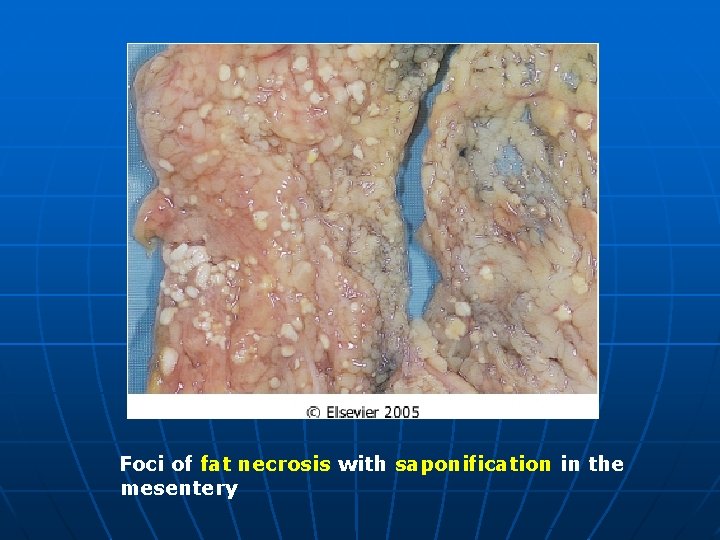
Foci of fat necrosis with saponification in the mesentery
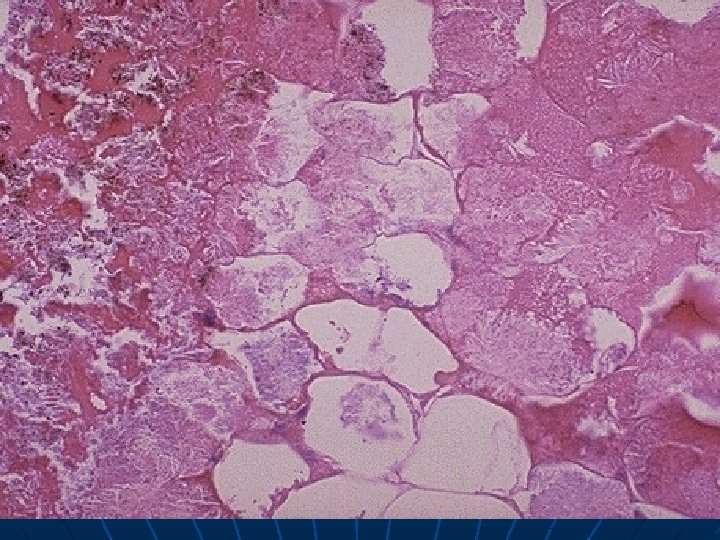
Fibrinoid necrosis: Definition: This is not a true degeneration but a strongly eosinophilic stain like fibrin. n Location: interstitial collagen and blood vessels (small artery and arteriole) n Nature: one kind of necrosis. n e. g. in allergic reactive diseases: active rheumatism, polyarteritis nodose. n in non-allergic reactive diseases: n
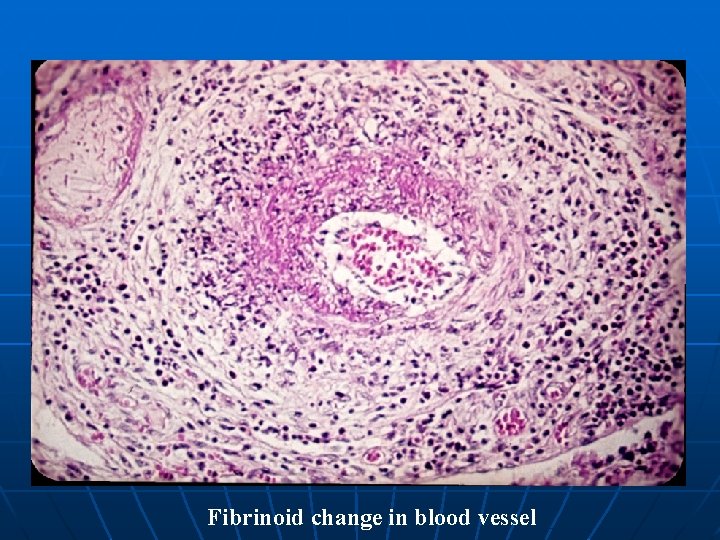
Fibrinoid change in blood vessel
(4) Consequences necrosis of ① Acute or chronic inflammation ② Immunological reactions to sub cellular components released by dead tissue or selfantigens altered by denaturation.
③ lysis and absorption ④ Isolation and discharge: ulceration and cavity formation ⑤ organization ⑥ encapsulation, calcification.
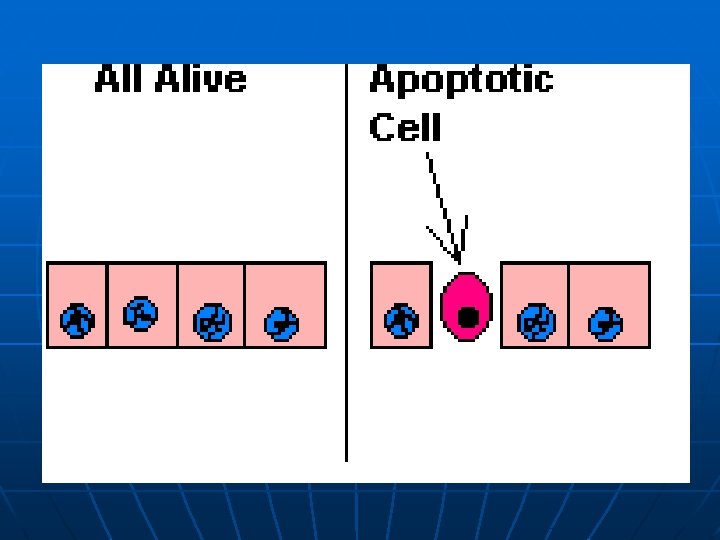
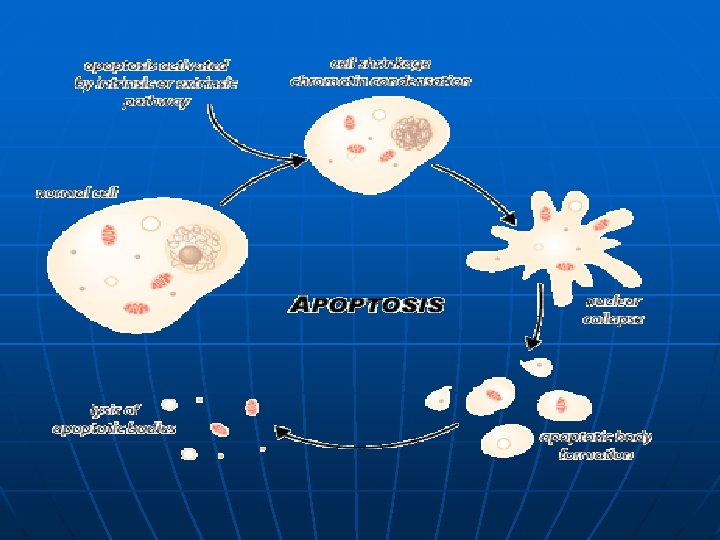
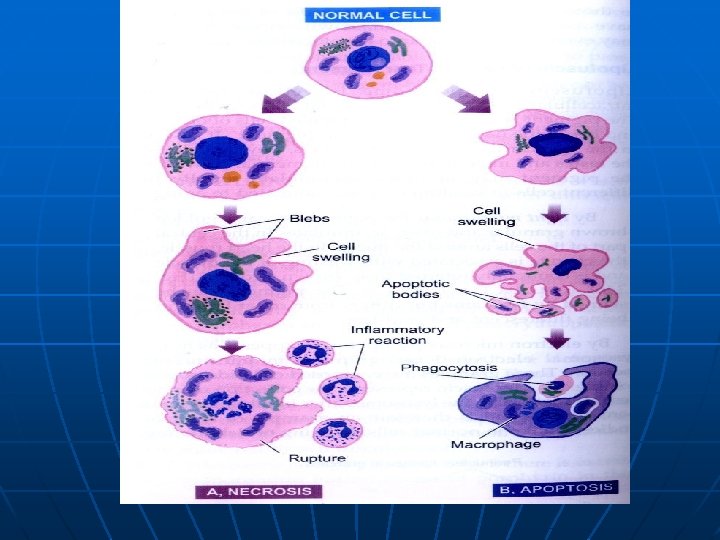
Apoptosis n n n Programmed cell death Physiologic pathologic

- Slides: 51