
Overview Introduction to base ten blocks Practice modeling
Overview • Introduction to base ten blocks • Practice modeling subtraction • Share practice from mini-problems – Problem planning groups – Grade level groups • Wrap up
Modeling the Standard Subtraction Algorithm The “modeler”: • Select a multi-digit subtraction problem with regrouping. • Tell your group whether you will be using a take-away or comparison interpretation of subtraction. • Model the subtraction -- talk through each step and carefully map between the materials and the written form. The “critics”: • Use the modeling checklist to make notes about the performance. • Provide comments and suggestions based on your observations. If your group finishes early, each person should try a new problem using the other interpretation of subtraction.
Qualities of Base Ten Blocks • • Grouping vs. trading? Language? Expense? Representing (overhead, written recording)? • Ease of use for kids? • Range of numbers that can be shown? • Other considerations?
Analyzing Common Student Errors • How might a student have gotten each incorrect answer? • What might each error tell you about a student’s understanding of place value? • What questions would you want to ask each student to probe his or her thinking?
Problem Planning Groups • What happened in your discussions? What went well? What didn’t go as well? • What were some productive moves you used and/or challenges you faced with regard to the following: – Creating a productive environment in which students were able to share and listen to each other – Supporting all students to engage with the problem and achieve your instructional goal – Keeping the work focused on important aspects of the mathematics
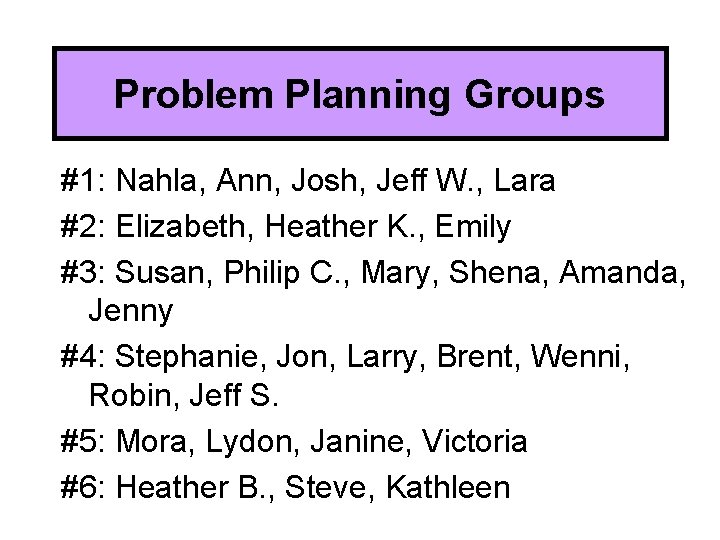
Problem Planning Groups #1: Nahla, Ann, Josh, Jeff W. , Lara #2: Elizabeth, Heather K. , Emily #3: Susan, Philip C. , Mary, Shena, Amanda, Jenny #4: Stephanie, Jon, Larry, Brent, Wenni, Robin, Jeff S. #5: Mora, Lydon, Janine, Victoria #6: Heather B. , Steve, Kathleen
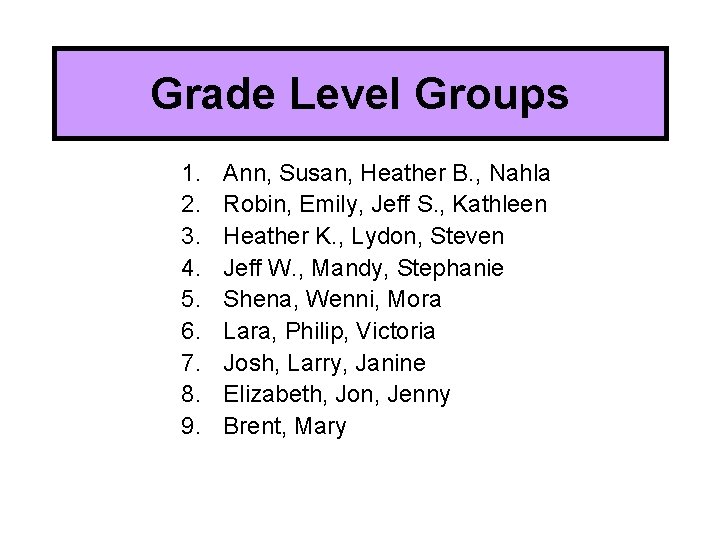
Grade Level Groups 1. 2. 3. 4. 5. 6. 7. 8. 9. Ann, Susan, Heather B. , Nahla Robin, Emily, Jeff S. , Kathleen Heather K. , Lydon, Steven Jeff W. , Mandy, Stephanie Shena, Wenni, Mora Lara, Philip, Victoria Josh, Larry, Janine Elizabeth, Jon, Jenny Brent, Mary
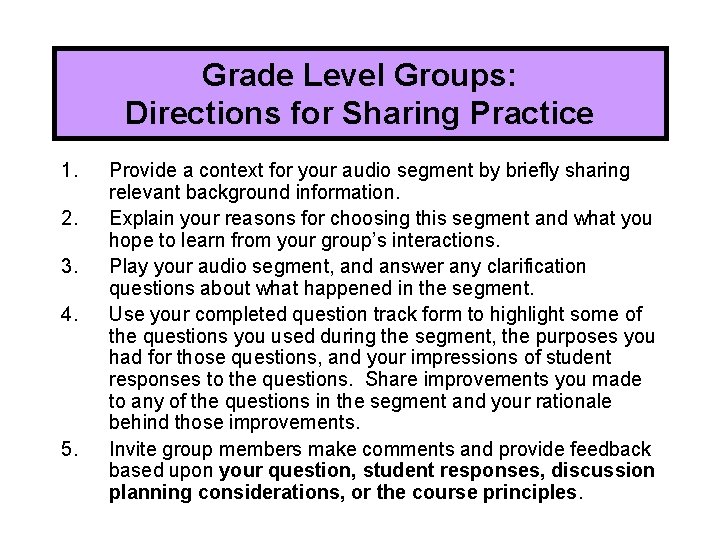
Grade Level Groups: Directions for Sharing Practice 1. 2. 3. 4. 5. Provide a context for your audio segment by briefly sharing relevant background information. Explain your reasons for choosing this segment and what you hope to learn from your group’s interactions. Play your audio segment, and answer any clarification questions about what happened in the segment. Use your completed question track form to highlight some of the questions you used during the segment, the purposes you had for those questions, and your impressions of student responses to the questions. Share improvements you made to any of the questions in the segment and your rationale behind those improvements. Invite group members make comments and provide feedback based upon your question, student responses, discussion planning considerations, or the course principles.
Learning From and Improving Practice • How could you improve or add to the techniques you use in discussions? – Record at least one thing you will try during the lesson you will teach near the end of the term. • Why is this something you want to improve or try? • How does it relate to purposes of questioning, discussion planning considerations, or the course principles?
Why did we do this today? • Completing a “cycle of practice” • Developing your skills at leading a discussion • Learning from practice and committing to improvements based on what you learn • Learning to talk about your own practice and provide feedback to others
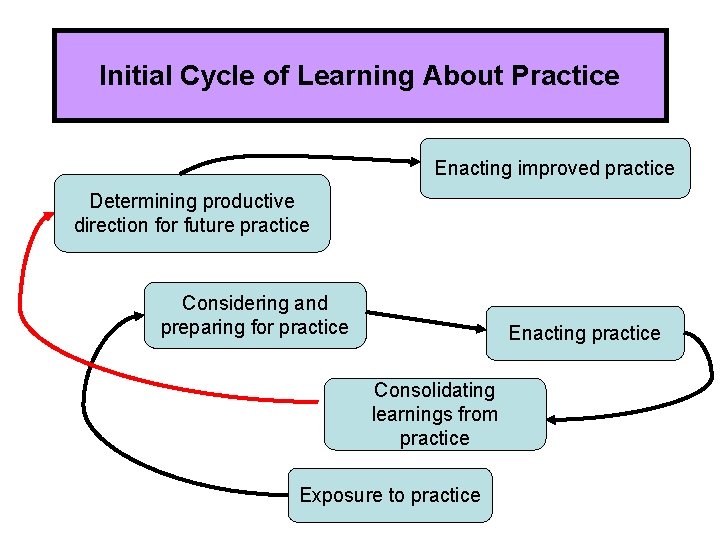
Initial Cycle of Learning About Practice Enacting improved practice Determining productive direction for future practice Considering and preparing for practice Enacting practice Consolidating learnings from practice Exposure to practice
Wrap Up • Assignments – Carefully read student thinking interview assignment. Select student with your CT and email this info before next class. – Write a reflection about what you have learned and plan to try from your work on the mini-problem. – Readings – Comment cards. What did you learn from conversations with your colleagues about the work of running a classroom mathematics discussion? Also comment on how our class “set up” for sharing supported or diminished your opportunity to learn about running
- Slides: 12