
Overview International Boundaries Geographical Regions Climate Natural Resources
Overview International Boundaries Geographical Regions Climate Natural Resources Content
OVER VIEW Continent: Asia Borders Total: 6, 774 km Region: South Asia, Subcontinent Afghanistan: 2, 430 km China: 523 km India: 2, 912 km Line of Control: 740 km Area: Ranked 36 th Total: 796, 095 km 2 Land: 97. 13% Water: 2. 87% Coastline: 1, 046 km Iran: 909 km Highest Point: K 2 Lowest Point: Arabian Sea
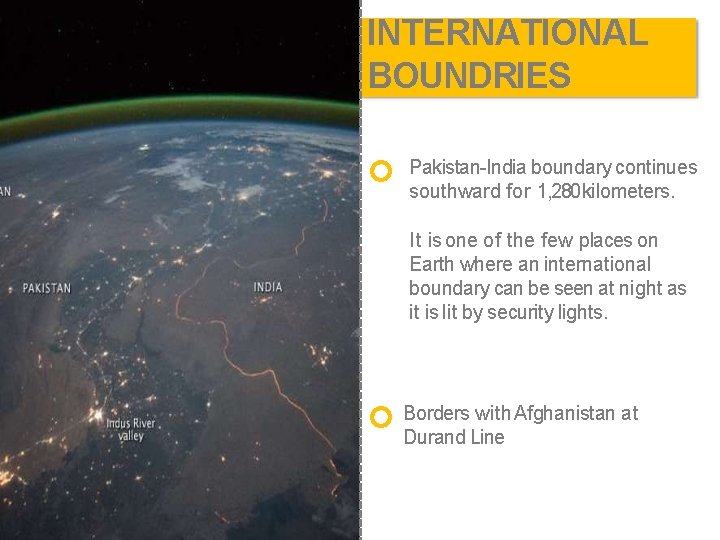
INTERNATIONAL BOUNDRIES Pakistan-India boundary continues southward for 1, 280 kilometers. It is one of the few places on Earth where an international boundary can be seen at night as it is lit by security lights. Borders with Afghanistan at Durand Line
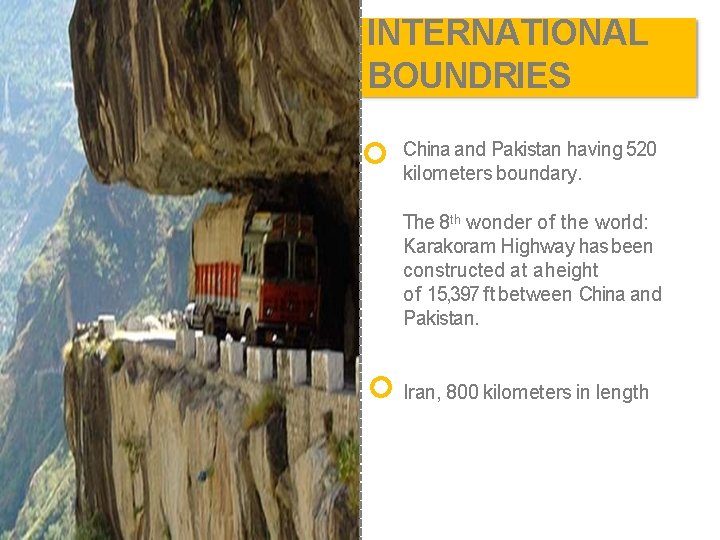
INTERNATIONAL BOUNDRIES China and Pakistan having 520 kilometers boundary. The 8 th wonder of the world: Karakoram Highway has been constructed at aheight of 15, 397 ft between China and Pakistan. Iran, 800 kilometers in length
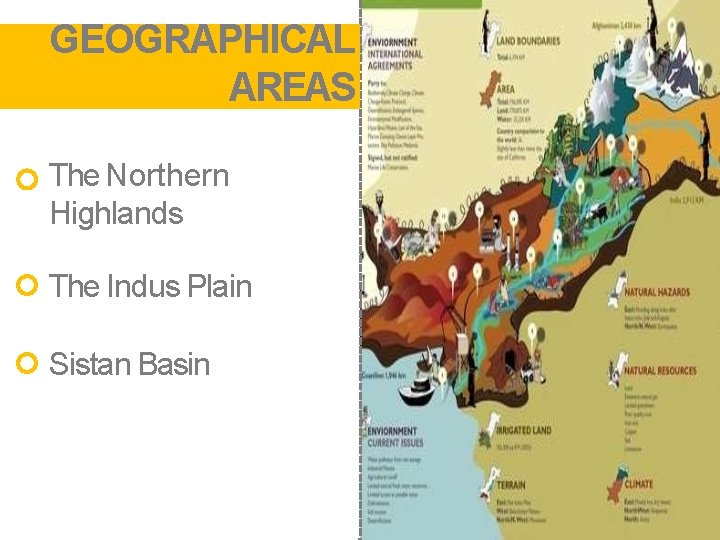
GEOGRAPHICAL AREAS The Northern Highlands The Indus Plain Sistan Basin
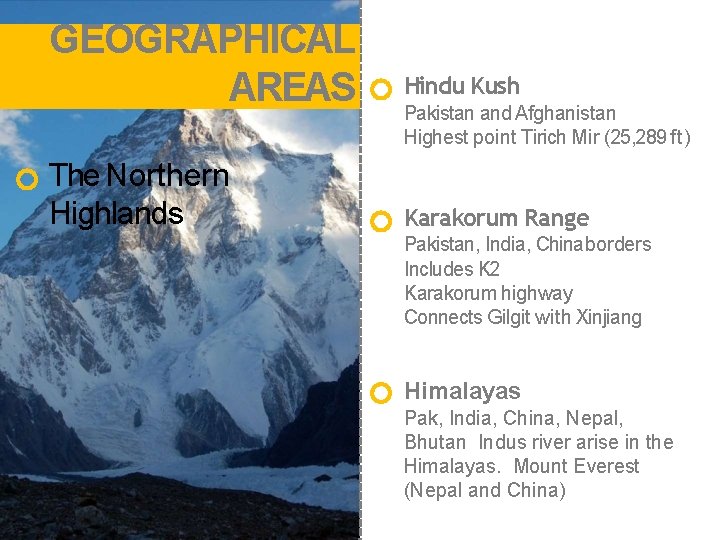
GEOGRAPHICAL AREAS Hindu Kush The Northern Highlands Karakorum Range Pakistan and Afghanistan Highest point Tirich Mir (25, 289 ft) Pakistan, India, China borders Includes K 2 Karakorum highway Connects Gilgit with Xinjiang Himalayas Pak, India, China, Nepal, Bhutan Indus river arise in the Himalayas. Mount Everest (Nepal and China)
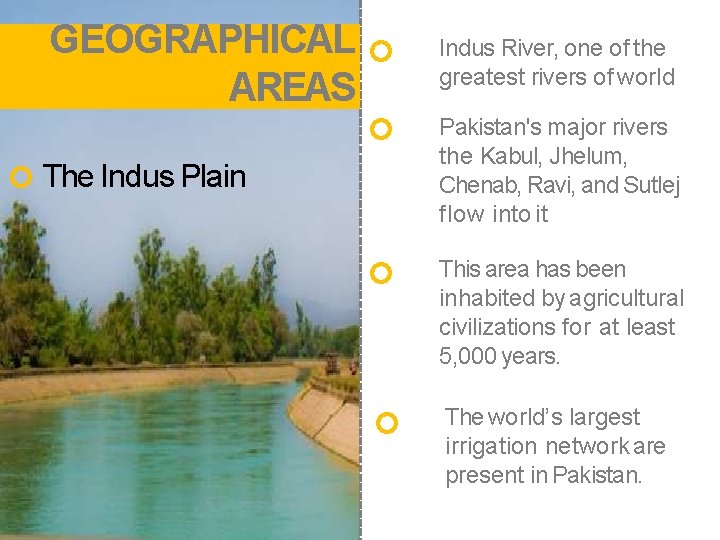
GEOGRAPHICAL AREAS Indus River, one of the greatest rivers of world The Indus Plain Pakistan's major rivers the Kabul, Jhelum, Chenab, Ravi, and Sutlej flow into it This area has been inhabited by agricultural civilizations for at least 5, 000 years. The world’s largest irrigation network are present in Pakistan.
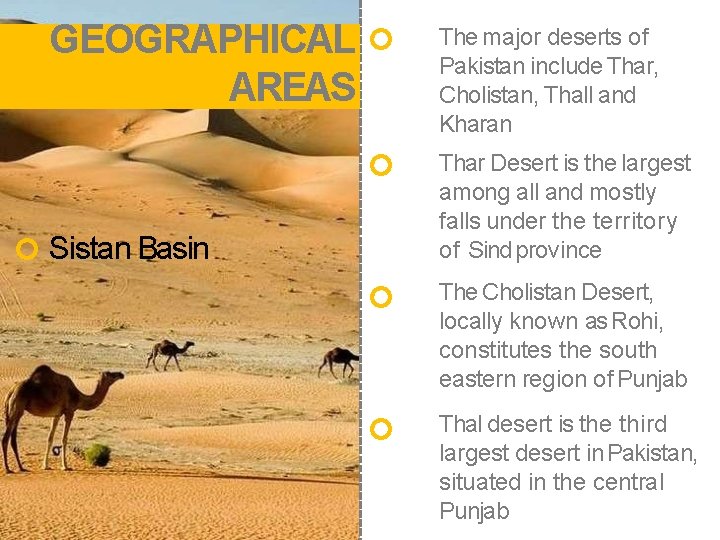
GEOGRAPHICAL AREAS Sistan Basin The major deserts of Pakistan include Thar, Cholistan, Thall and Kharan Thar Desert is the largest among all and mostly falls under the territory of Sind province The Cholistan Desert, locally known as Rohi, constitutes the south eastern region of Punjab Thal desert is the third largest desert in Pakistan, situated in the central Punjab
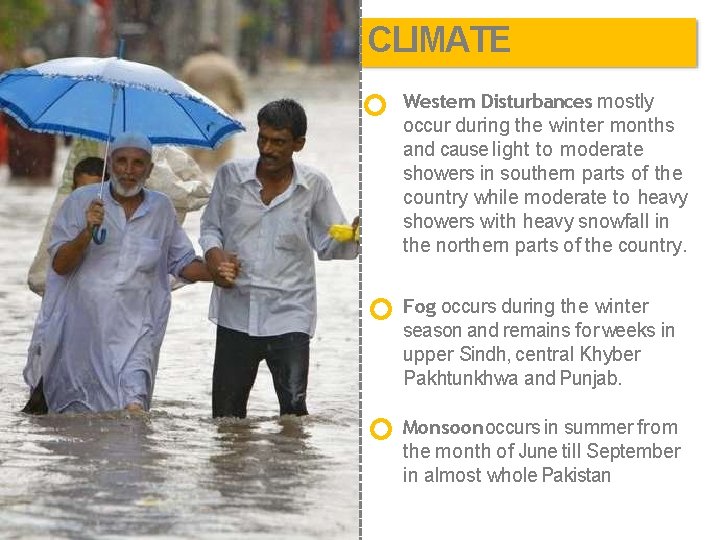
CLIMATE Western Disturbances mostly occur during the winter months and cause light to moderate showers in southern parts of the country while moderate to heavy showers with heavy snowfall in the northern parts of the country. Fog occurs during the winter season and remains for weeks in upper Sindh, central Khyber Pakhtunkhwa and Punjab. Monsoon occurs in summer from the month of June till September in almost whole Pakistan
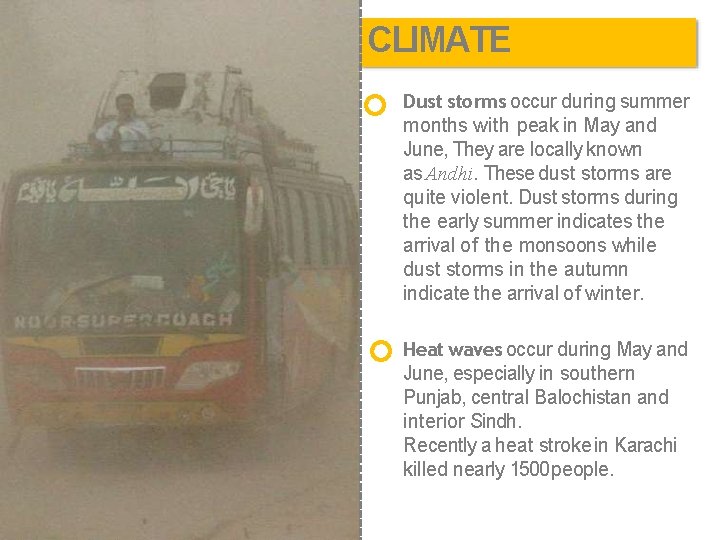
CLIMATE Dust storms occur during summer months with peak in May and June, They are locally known as Andhi. These dust storms are quite violent. Dust storms during the early summer indicates the arrival of the monsoons while dust storms in the autumn indicate the arrival of winter. Heat waves occur during May and June, especially in southern Punjab, central Balochistan and interior Sindh. Recently a heat stroke in Karachi killed nearly 1500 people.
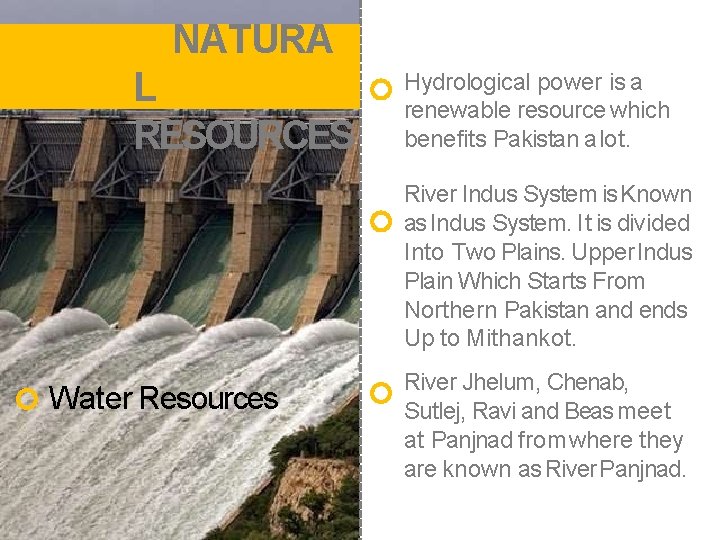
NATURA L RESOURCES Hydrological power is a renewable resource which benefits Pakistan a lot. River Indus System is Known as Indus System. It is divided Into Two Plains. Upper Indus Plain Which Starts From Northern Pakistan and ends Up to Mithankot. Water Resources River Jhelum, Chenab, Sutlej, Ravi and Beas meet at Panjnad from where they are known as River Panjnad.
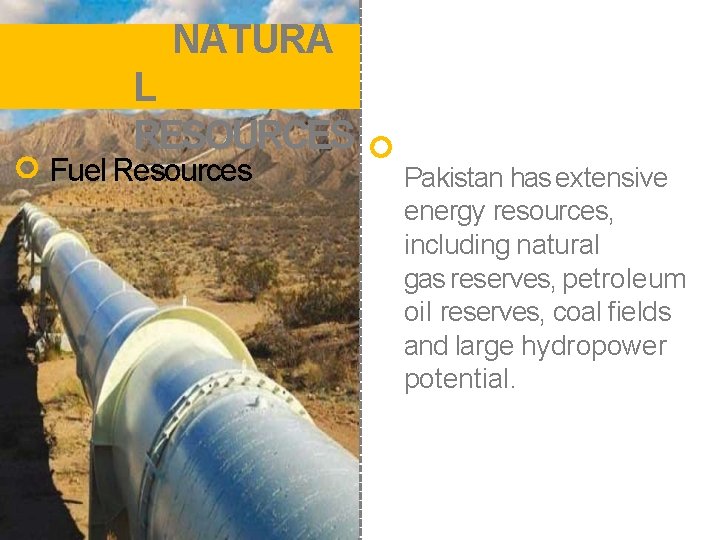
NATURA L RESOURCES Fuel Resources Pakistan has extensive energy resources, including natural gas reserves, petroleum oil reserves, coal fields and large hydropower potential.
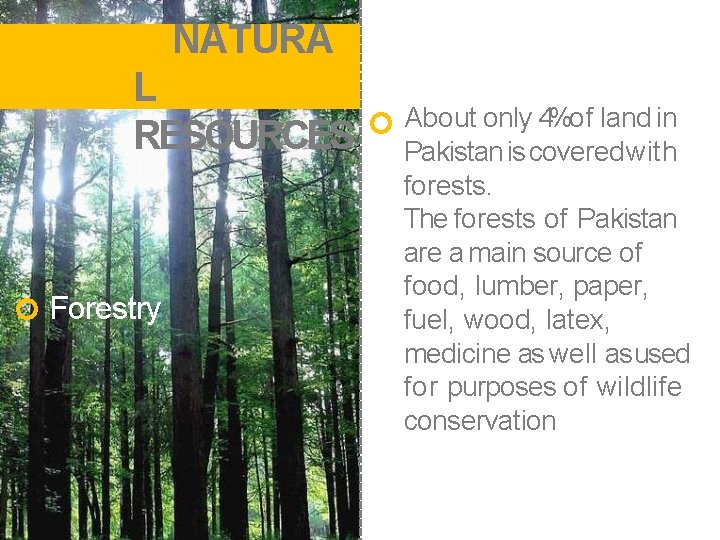
NATURA L RESOURCES Forestry About only 4%of land in Pakistan is covered with forests. The forests of Pakistan are a main source of food, lumber, paper, fuel, wood, latex, medicine as well as used for purposes of wildlife conservation
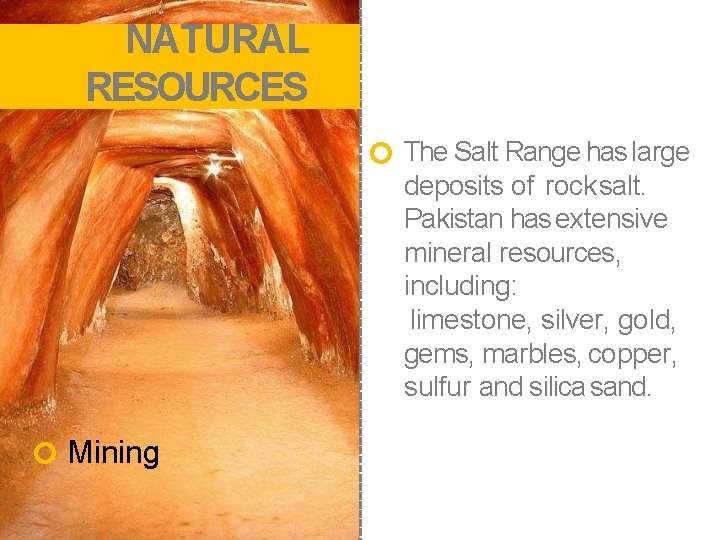
NATURAL RESOURCES The Salt Range has large deposits of rock salt. Pakistan has extensive mineral resources, including: limestone, silver, gold, gems, marbles, copper, sulfur and silica sand. Mining
- Slides: 14