
Overview Interactive Training Background and context n n
Overview Interactive Training
Background and context n n Community homes have replaced large segregated institutions. One of the aims was to improve people’s basic quality of life. Many people with intellectual disability depend on skilled support from staff for this to happen. In the 1980 s researchers developed an approach to help staff to deliver active support. Interactive Training 2
Active support is transacted. n Transaction is ‘a communication or activity between two or more people that influences and affects all of them’. n Interactive training is a personalised system of coaching that teaches staff how to transact active support. n Interactive Training 3
Active support research n The primary outcome is meaningful participation by clients in everyday activities. n The main predictors of client engagement are client ability and staff assistance. n Implementing active support is consistently associated with increases in client engagement. The structural components of active support reside in paper-based planning systems – these establish a context for increasing opportunities for client participation and control. The transactional component of active support is in the momentary interactions between clients and staff. What staff do really makes a difference. n n n Interactive Training 4

Development of interactive training n Interactive training developed from direct observation in small community homes: the belief that it was kinder to do things for a person than with a person – like a hotel § not enough forward planning § too little preparation, assistance, encouragement § issues to do with style. § Interactive Training 5

The logic of interactive training No two contexts (staff-client-activity) are the same. n If we coach each member of staff in specific skills needed to support particular clients, we should then see an increase in client engagement. n The problem of low engagement is a staff training issue. n Interactive Training 6
The interactive training model n n n n Two trainers work at home with clients and staff in a session that takes about two hours to complete. The focus of training is staff assistance. Trainers use ordinary activities at ordinary times of the day. Coaching is based on observation and feedback. Trainers adapt coaching methods to suit the staff-clientactivity. The whole staff team is trained within a short time. Outcomes are evaluated. Interactive Training 7
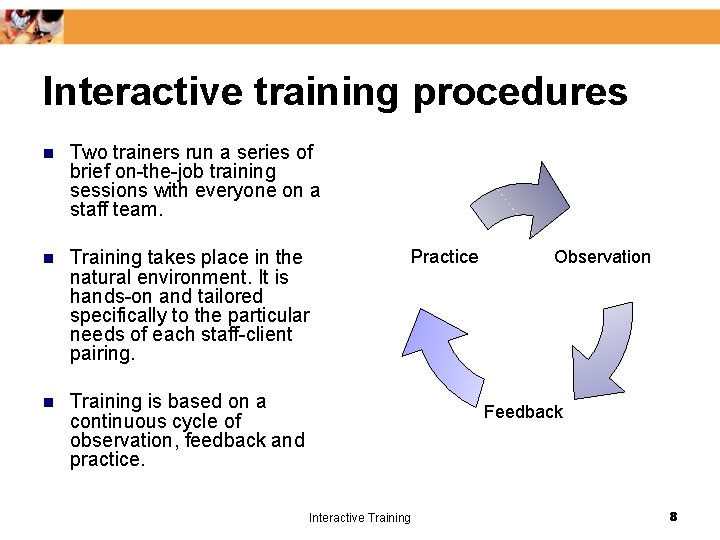
Interactive training procedures n Two trainers run a series of brief on-the-job training sessions with everyone on a staff team. n Training takes place in the natural environment. It is hands-on and tailored specifically to the particular needs of each staff-client pairing. n Training is based on a continuous cycle of observation, feedback and practice. Practice Observation Feedback Interactive Training 8
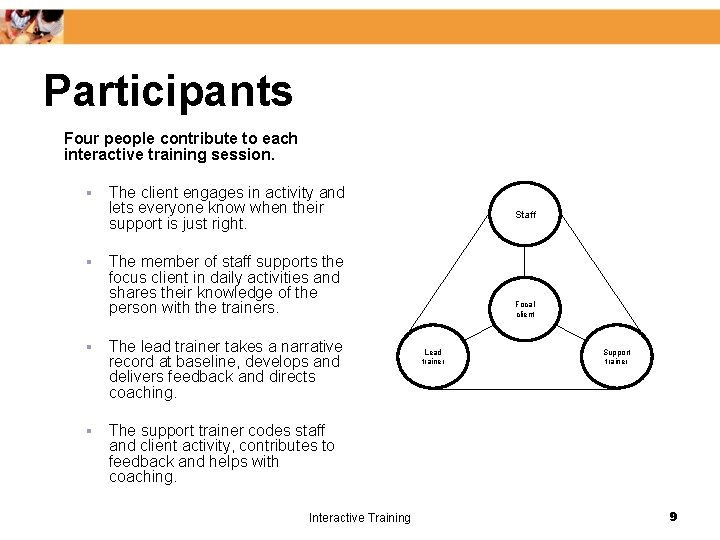
Participants Four people contribute to each interactive training session. § § The client engages in activity and lets everyone know when their support is just right. Staff The member of staff supports the focus client in daily activities and shares their knowledge of the person with the trainers. § The lead trainer takes a narrative record at baseline, develops and delivers feedback and directs coaching. § The support trainer codes staff and client activity, contributes to feedback and helps with coaching. Interactive Training Focal client Lead trainer Support trainer 9
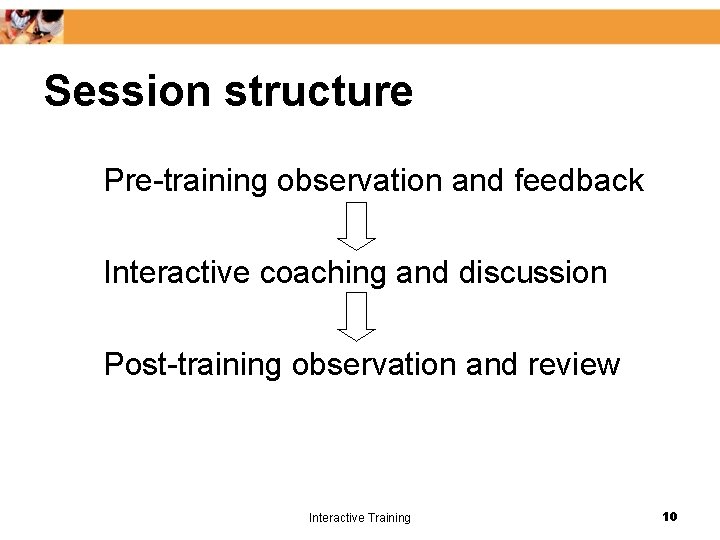
Session structure Pre-training observation and feedback Interactive coaching and discussion Post-training observation and review Interactive Training 10
What’s in a name? n Interactive describes process and outcomes. n Interactive involves ‘the communication or collaboration of people or things’. n Interaction is ‘communication between, or joint activity involving, two or more people [or] the combined or reciprocal action of two or more things that have an effect on each other and work together’. Interactive Training 11
Staff training § Skills are best learned: § § § The uptake of training is influenced by: § § § when and where they will be used when someone shows us what to do and gives us feedback. how many staff are trained how closely training opportunities are massed. Experiential learning models describe a four-stage process: § § concrete experiences reflection consolidation extension to new situations. Interactive Training 12
Evaluating staff training n All staff training should be evaluated. n We should evaluate training effectiveness, efficiency and acceptability to staff. n Effective training produces: observable change in staff behaviour § measurable change in client outcome § application beyond the immediate training situation. § Interactive Training 13

End of Overview Interactive Training
- Slides: 14