
Overview Homeostasis stability of the internal environment and
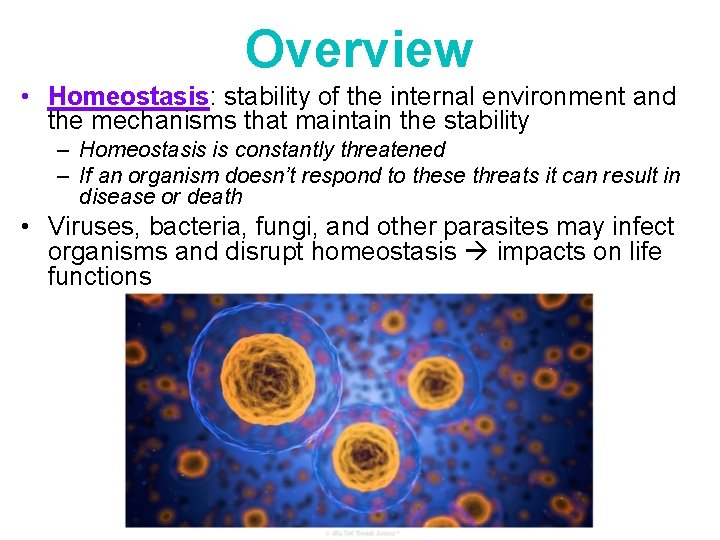
Overview • Homeostasis: stability of the internal environment and the mechanisms that maintain the stability – Homeostasis is constantly threatened – If an organism doesn’t respond to these threats it can result in disease or death • Viruses, bacteria, fungi, and other parasites may infect organisms and disrupt homeostasis impacts on life functions
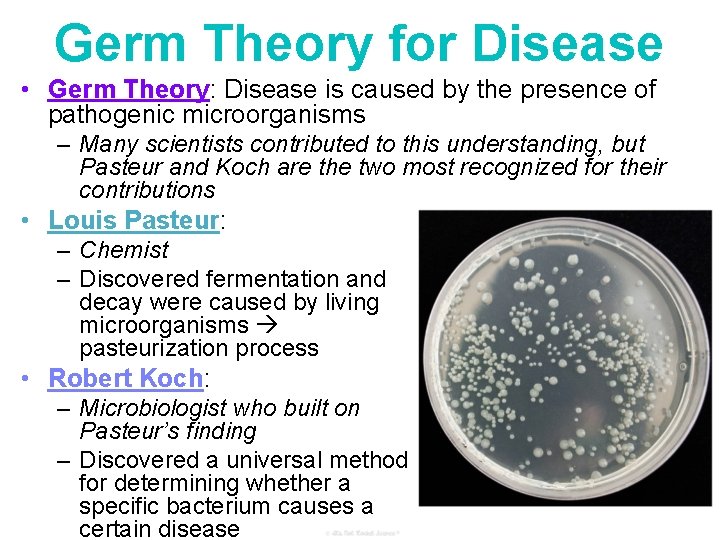
Germ Theory for Disease • Germ Theory: Disease is caused by the presence of pathogenic microorganisms – Many scientists contributed to this understanding, but Pasteur and Koch are the two most recognized for their contributions • Louis Pasteur: – Chemist – Discovered fermentation and decay were caused by living microorganisms pasteurization process • Robert Koch: – Microbiologist who built on Pasteur’s finding – Discovered a universal method for determining whether a specific bacterium causes a certain disease
Causes • Presence of disease-causing bacteria, viruses, or fungi – Remember viruses are not living things – they are intracellular parasites that can only reproduce using another cell • Hereditary factors – Genes you inherit from your parents • Environmental factors – Ex. Toxic substances, poor nutrition, unhealthy habits, exposure to mutagens, etc. – These can show up right away or have effects years down the road • Gene mutations uncontrolled cell division = cancer
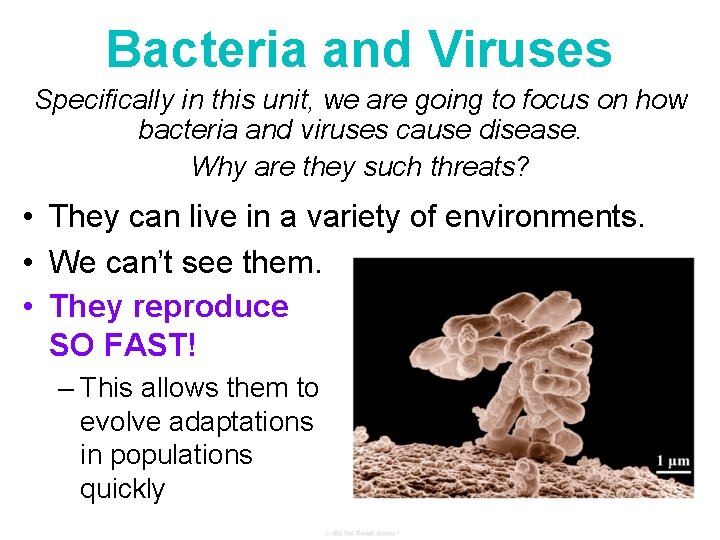
Bacteria and Viruses Specifically in this unit, we are going to focus on how bacteria and viruses cause disease. Why are they such threats? • They can live in a variety of environments. • We can’t see them. • They reproduce SO FAST! – This allows them to evolve adaptations in populations quickly
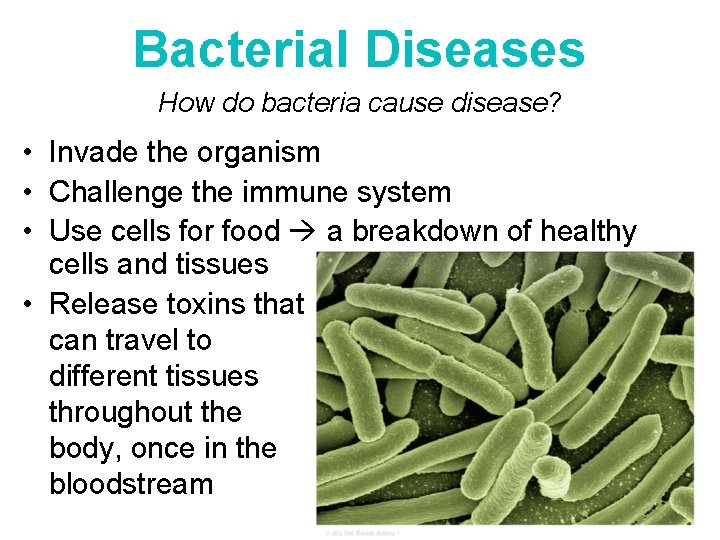
Bacterial Diseases How do bacteria cause disease? • Invade the organism • Challenge the immune system • Use cells for food a breakdown of healthy cells and tissues • Release toxins that can travel to different tissues throughout the body, once in the bloodstream
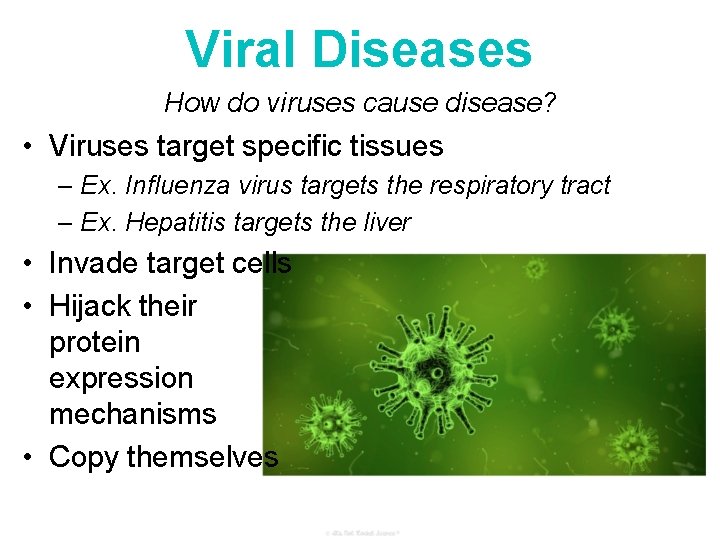
Viral Diseases How do viruses cause disease? • Viruses target specific tissues – Ex. Influenza virus targets the respiratory tract – Ex. Hepatitis targets the liver • Invade target cells • Hijack their protein expression mechanisms • Copy themselves
- Slides: 7