
Overview Design Principles Vision Performance Good Design Principles

- Slides: 20
Overview Design Principles Vision Performance
Good Design Principles Stick to a Schedule Keep It Simple Stupid (KISS) Have a contingency plan Can you explain it to an audience? Be Consistent Discuss team conventions
Modular Design Divide problems into chunks of work Individual chunks are simple Consistent interface between chunks Additional Benefits Enables efficient individual work Enables validity testing on each chunk
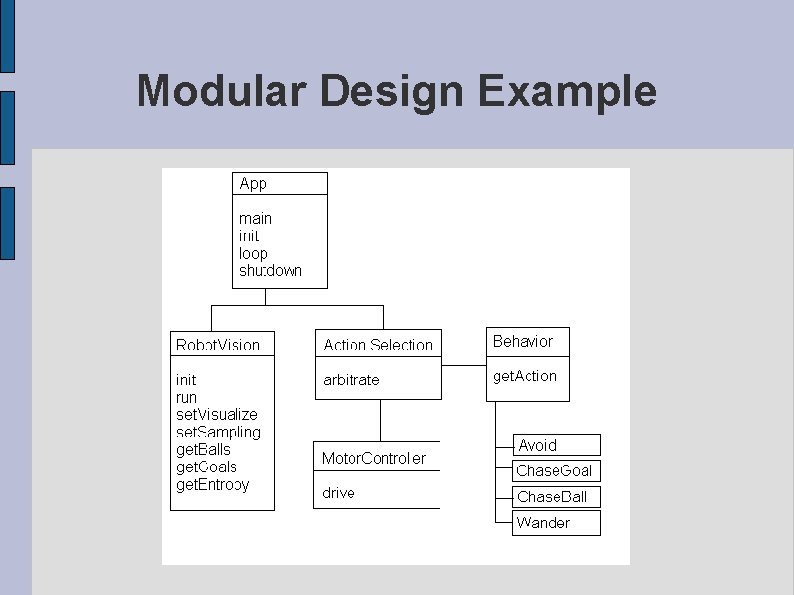
Modular Design Example
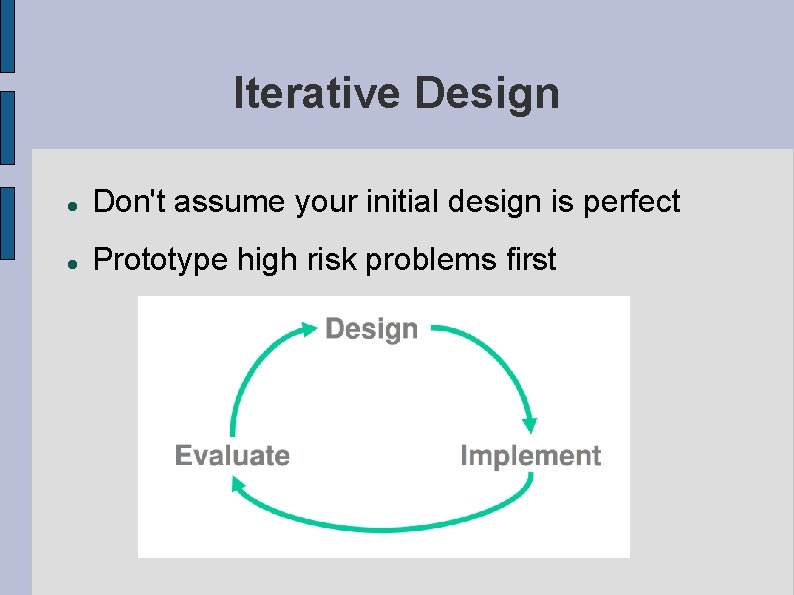
Iterative Design Don't assume your initial design is perfect Prototype high risk problems first
Testing Unit Testing Every module should have one System Tests Avert day-of-contest embarrassment with a complete test suite
Source Control Always Keep A Working Copy Keep teammates productive while you fix things Undo mysterious changes made during 6 am binge programming sessions
Source Control Exercise Get your robot online and on source control svn checkout svn+ssh: //athena. dialup. mit. edu/afs/athena. mit. e du/course/6/6. 186/2008/team-repos/team#/ repos Additional common operations: svn up svn ci man svn
Overview Design Principles Vision Performance
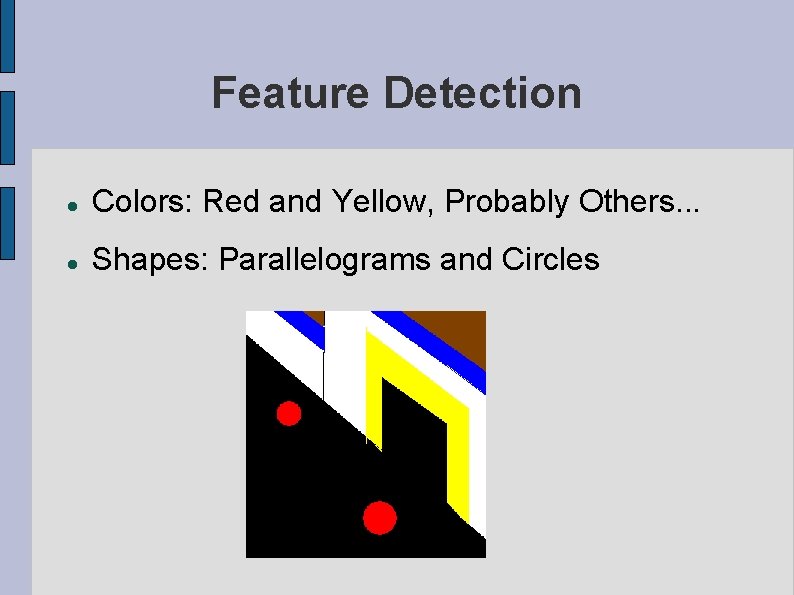
Feature Detection Colors: Red and Yellow, Probably Others. . . Shapes: Parallelograms and Circles
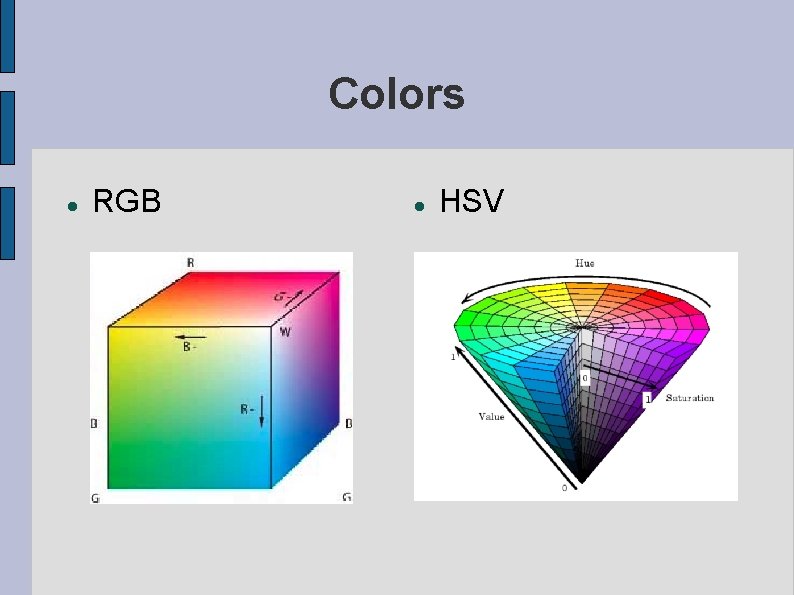
Colors RGB HSV
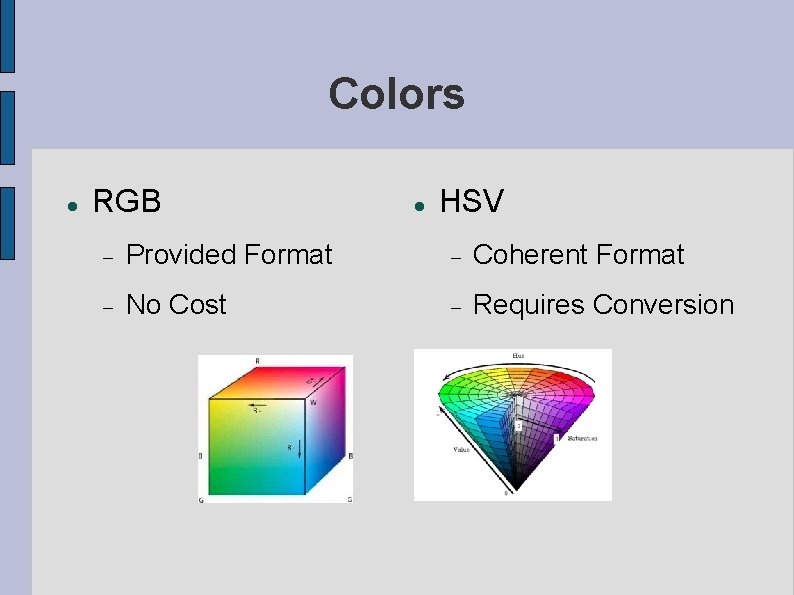
Colors RGB HSV Provided Format Coherent Format No Cost Requires Conversion
Shapes Lots of options Average points of same color Edge Detection RANSAC
Camera Calibration Lighting / White-Balance Lens Focus Caveat: Limited setup time at competition
Overview Design Principles Vision Performance
Software Performance CPU bottleneck: Image processing 160 x 120 = 19, 200 pixels to process every frame Minimize raw image passes Downsample Skip lines if your feature detection can handle it In Java, avoid get/set pattern for data arrays
Hardware Limitations Camera Capture Frequency Motor Slew Rate
Threading Enables multiple processes to run simultaneously Behind the scenes, the CPU only runs one process at a time, and switches frequently between them.
Threading Pros: Simplifies CPU Cons: Timesharing Context Switching Overhead Minimizes Non-CPU Concurrency Bugs Bottlenecks Single Processor
Threading Exercise Coilette's logic and dependencies: Wander (depends on IR and motors) Image processing (depends on Capture Rate) Other behaviors (depends on processed image) Action selection (depends on behaviors in order) Conclusion: Dependency chain prohibits useful threading