
Overview Comparison of Feeding Mechanisms in Various Fish
- Slides: 23
Overview & Comparison of Feeding Mechanisms in Various Fish Species Biology of Fishes October 18, 2012
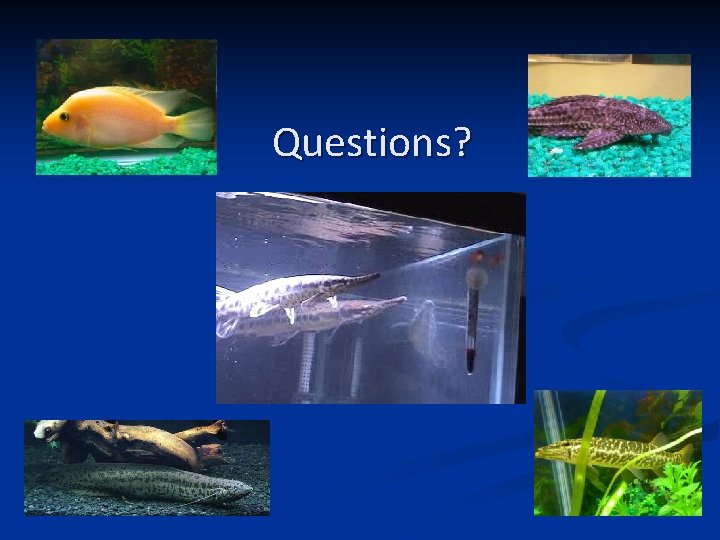
Fish Species n Hypostomus plecostomus (algae-eater) Teleostei, Loricariidae omnivore n Amphilophus citrinellus (red devil cichlid) Teleostei, Cichlidae carnivore n Lepisosteus osseus (longnose gar) Holostei, Lepisosteidae piscivore n Esox americanus vermiculatus (grass pickerel) Teleostei, Esocidae piscivore n Protopterus annectens (West African lungfish) Dipnoi, Protopteridae omnivore
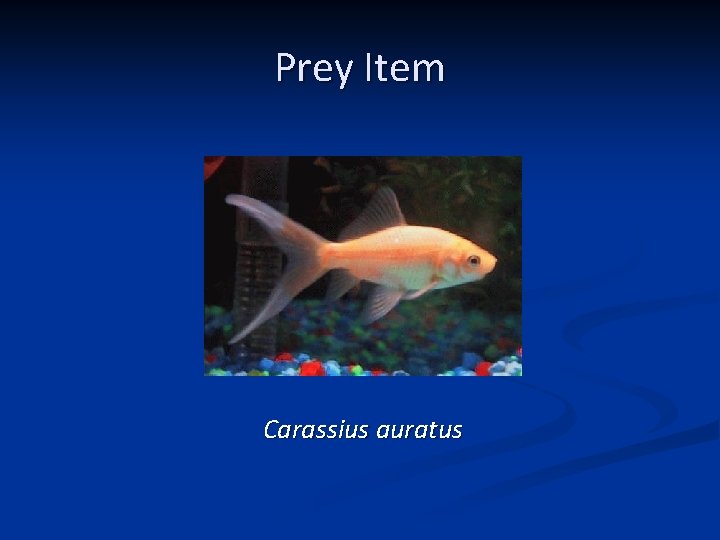
Prey Item Carassius auratus
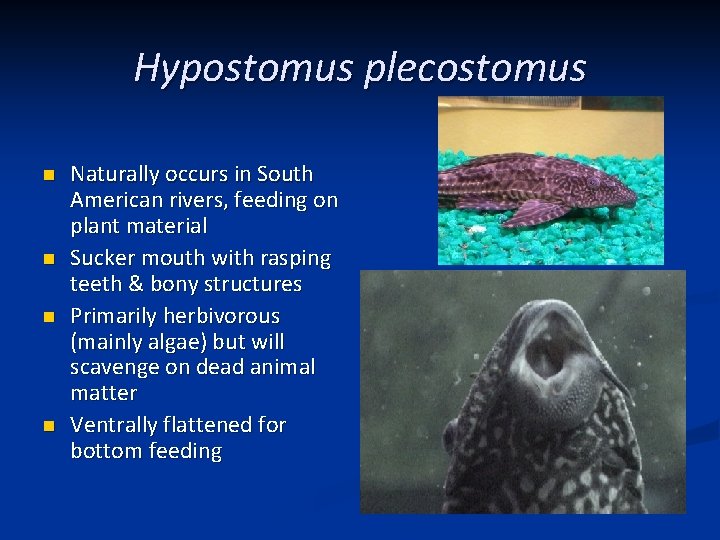
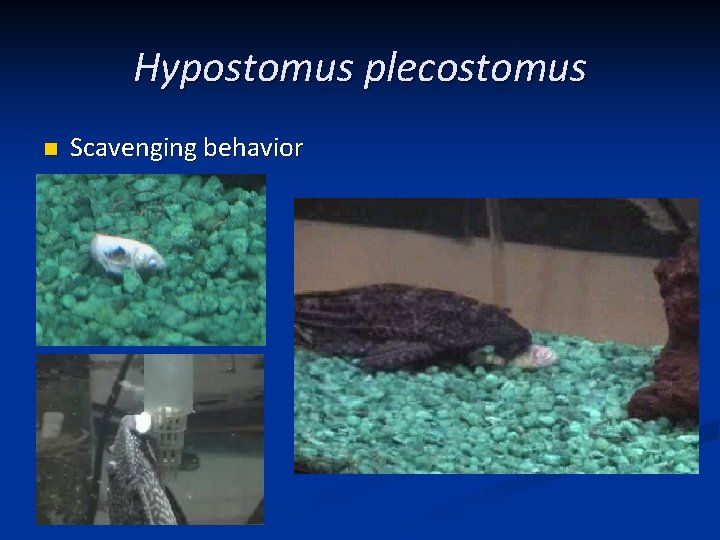
Hypostomus plecostomus n n Naturally occurs in South American rivers, feeding on plant material Sucker mouth with rasping teeth & bony structures Primarily herbivorous (mainly algae) but will scavenge on dead animal matter Ventrally flattened for bottom feeding
Hypostomus plecostomus n Scavenging behavior
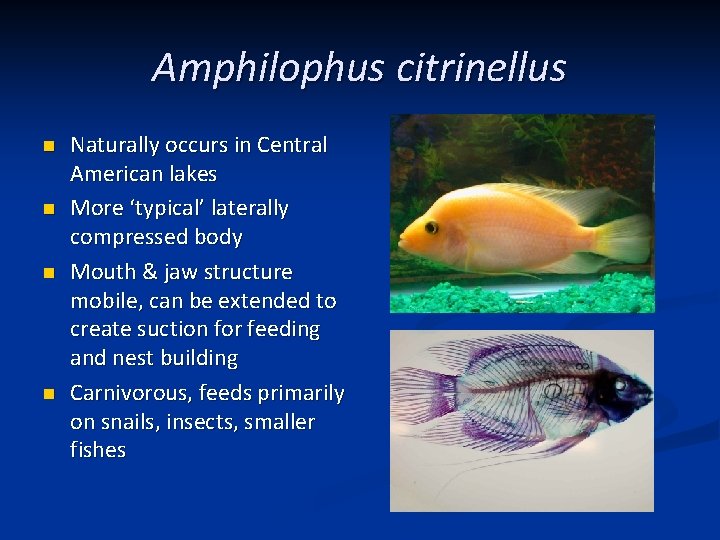
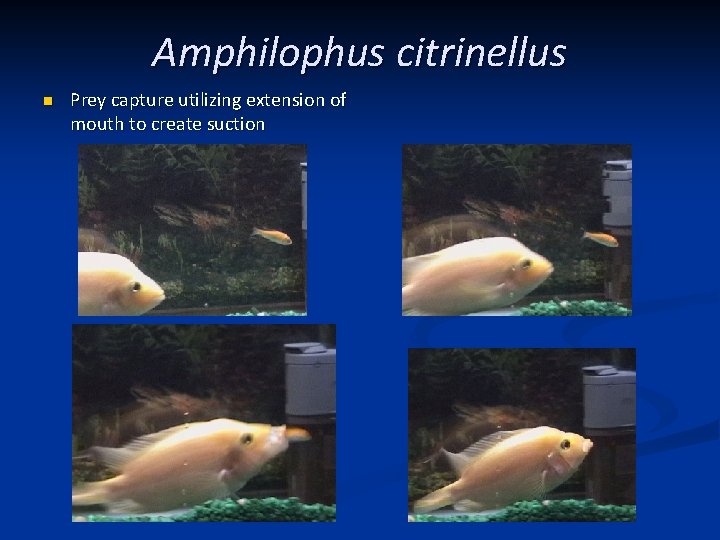
Amphilophus citrinellus n n Naturally occurs in Central American lakes More ‘typical’ laterally compressed body Mouth & jaw structure mobile, can be extended to create suction for feeding and nest building Carnivorous, feeds primarily on snails, insects, smaller fishes
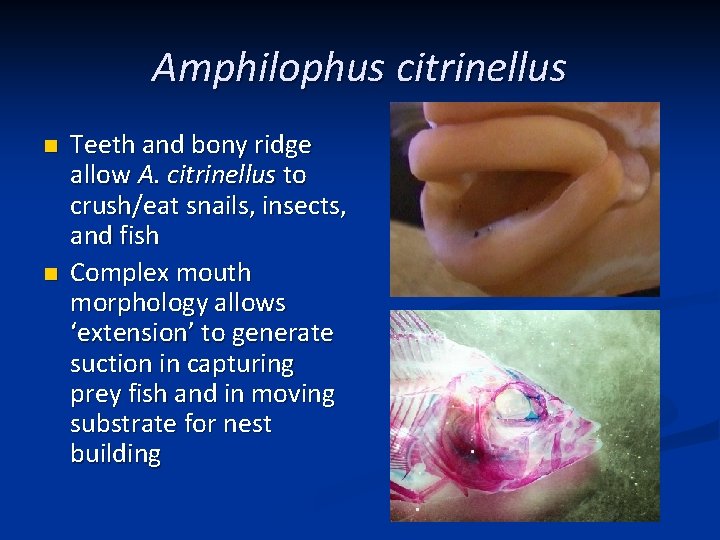
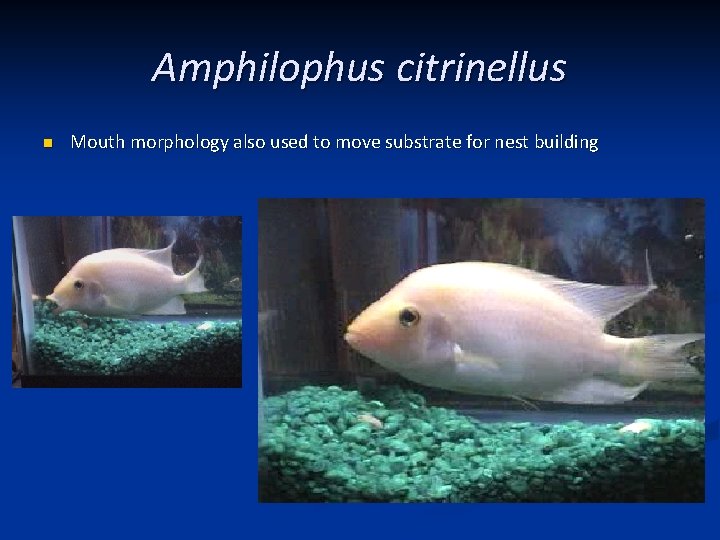
Amphilophus citrinellus n n Teeth and bony ridge allow A. citrinellus to crush/eat snails, insects, and fish Complex mouth morphology allows ‘extension’ to generate suction in capturing prey fish and in moving substrate for nest building
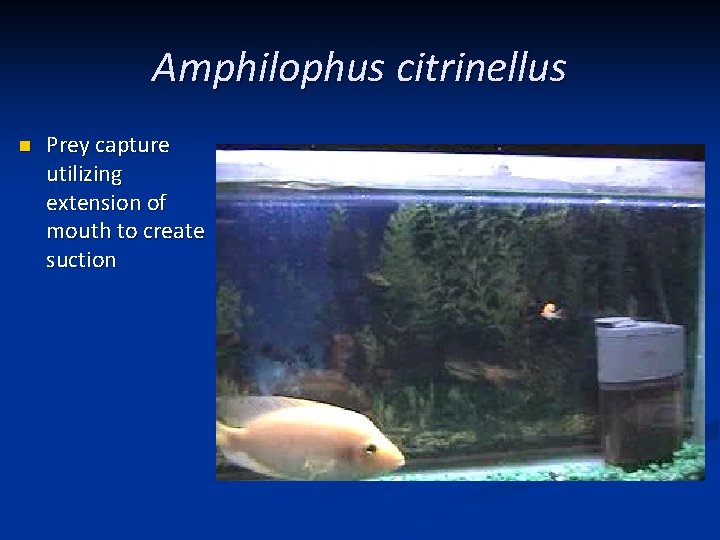
Amphilophus citrinellus n Prey capture utilizing extension of mouth to create suction
Amphilophus citrinellus n Prey capture utilizing extension of mouth to create suction
Amphilophus citrinellus n Mouth morphology also used to move substrate for nest building
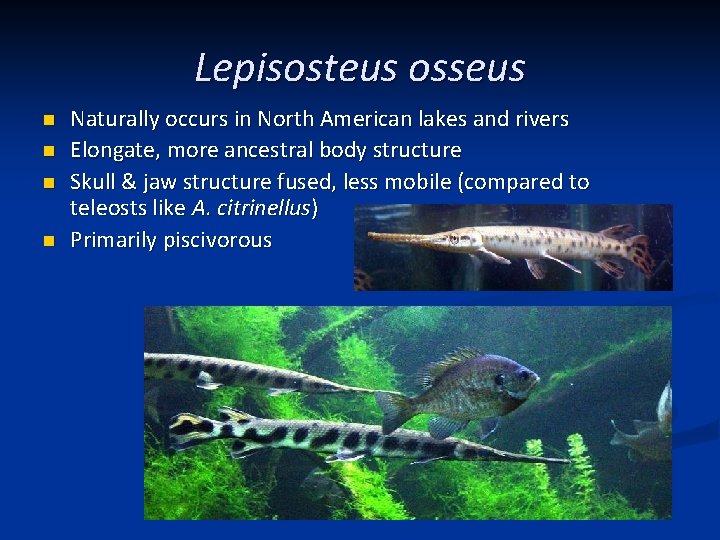
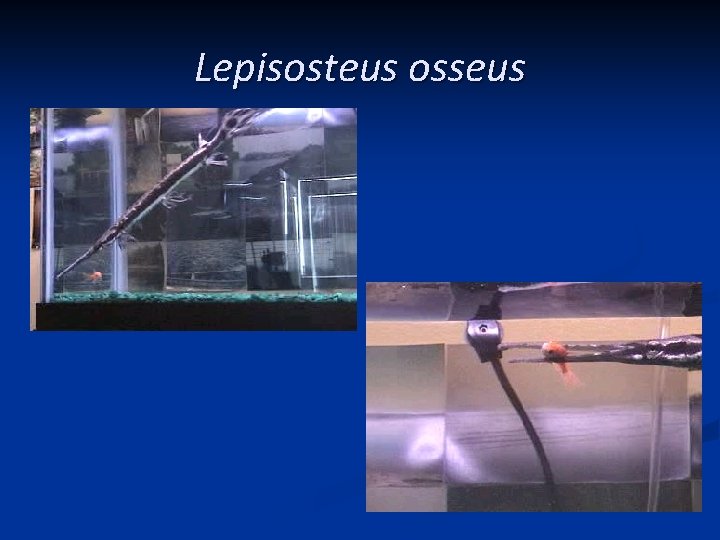
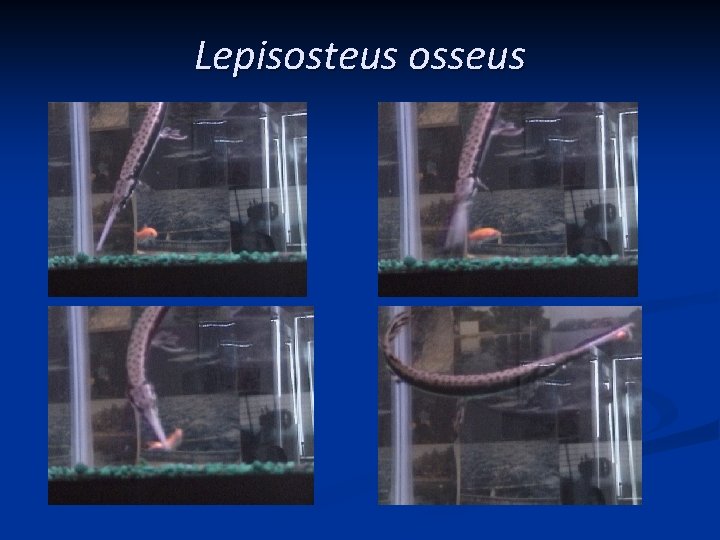
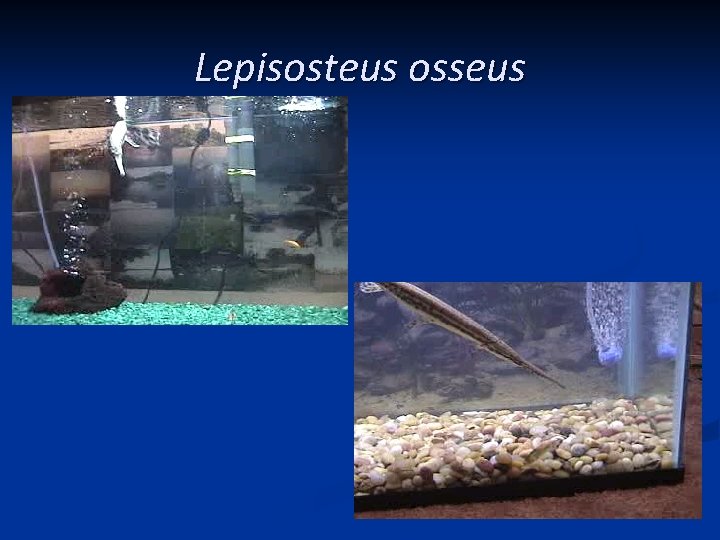
Lepisosteus osseus n n Naturally occurs in North American lakes and rivers Elongate, more ancestral body structure Skull & jaw structure fused, less mobile (compared to teleosts like A. citrinellus) Primarily piscivorous
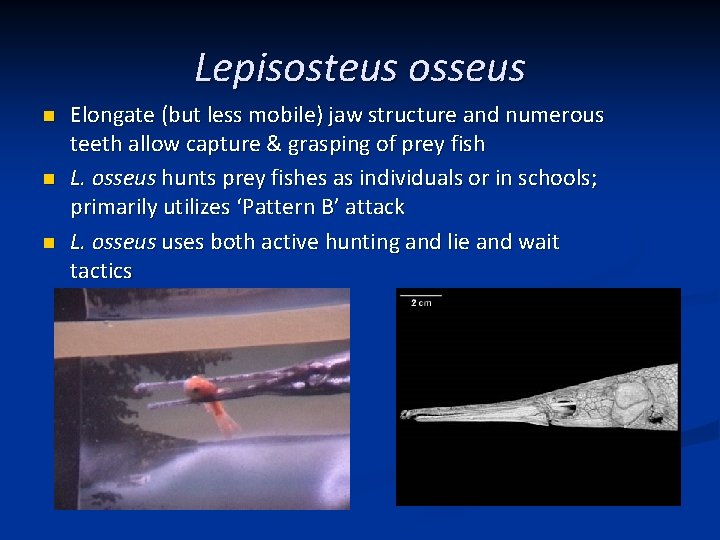
Lepisosteus osseus n n n Elongate (but less mobile) jaw structure and numerous teeth allow capture & grasping of prey fish L. osseus hunts prey fishes as individuals or in schools; primarily utilizes ‘Pattern B’ attack L. osseus uses both active hunting and lie and wait tactics
Lepisosteus osseus
Lepisosteus osseus
Lepisosteus osseus
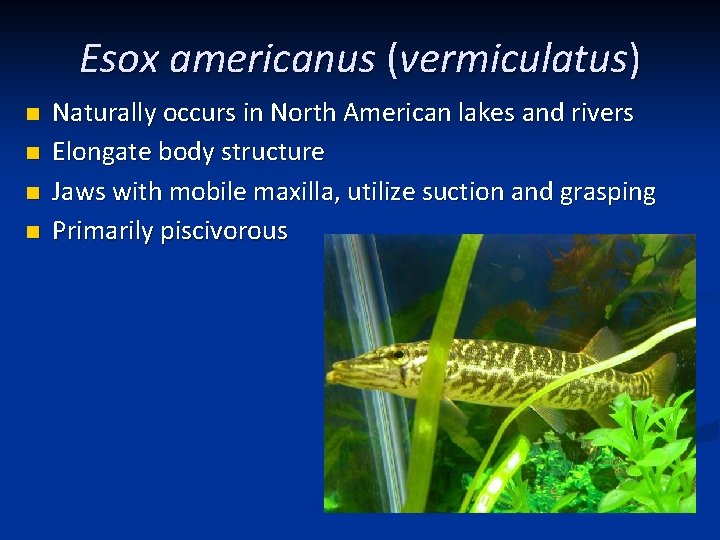
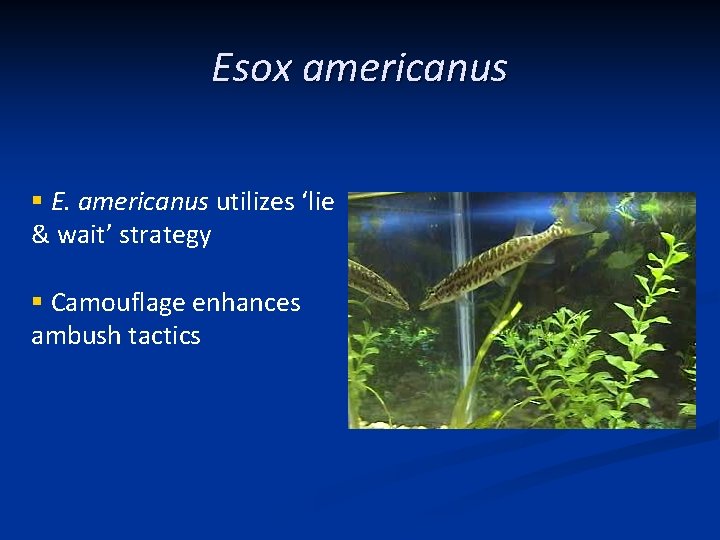
Esox americanus (vermiculatus) n n Naturally occurs in North American lakes and rivers Elongate body structure Jaws with mobile maxilla, utilize suction and grasping Primarily piscivorous
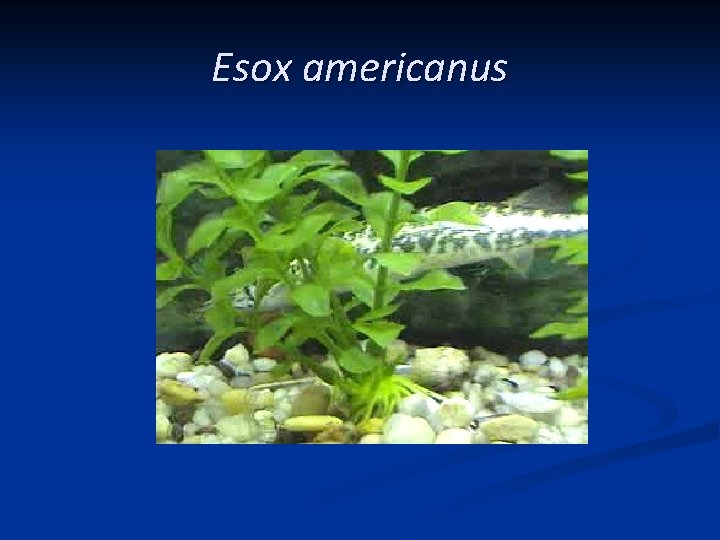
Esox americanus § E. americanus utilizes ‘lie & wait’ strategy § Camouflage enhances ambush tactics
Esox americanus
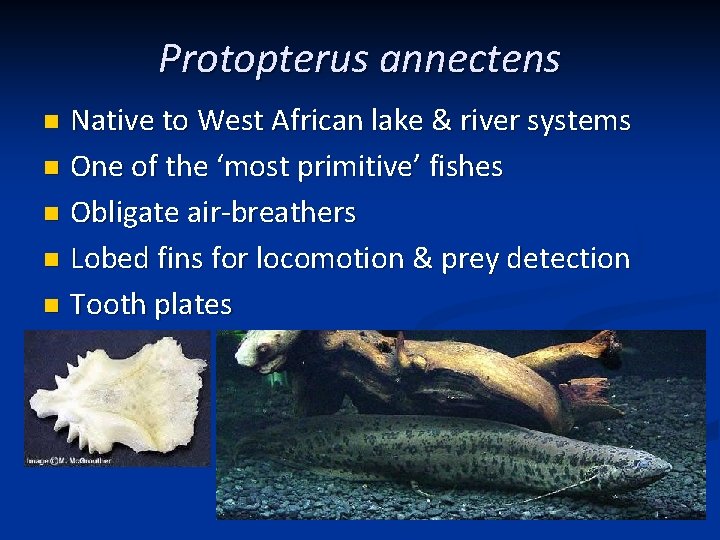
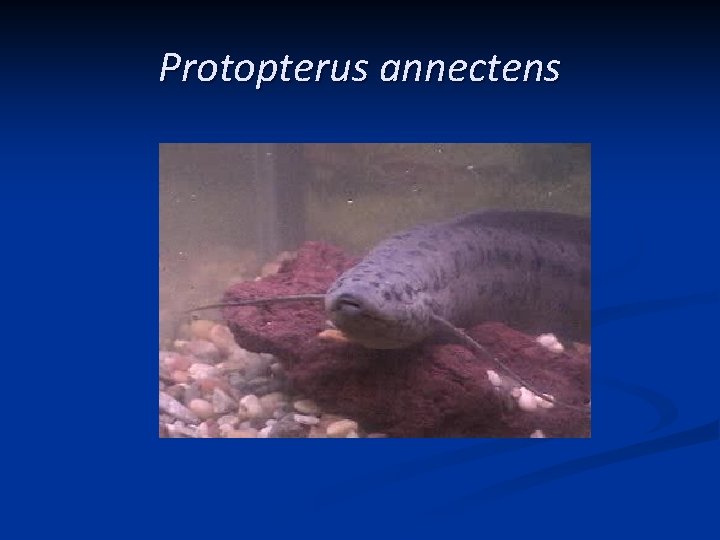
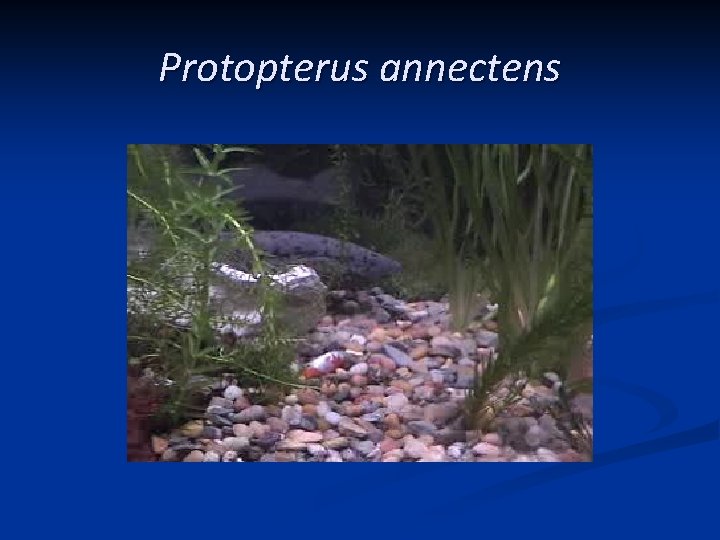
Protopterus annectens Native to West African lake & river systems n One of the ‘most primitive’ fishes n Obligate air-breathers n Lobed fins for locomotion & prey detection n Tooth plates n
Protopterus annectens
Protopterus annectens
Conclusions & Discussion n Fishes of various body types and mouth morphologies can utilize different tactics to consume the same type of prey n Which species utilize the different foraging patterns (time minimizing, energy maximizing)? n Which species’ tactics have the most handling time? n Does one type of feeding behavior seem more successful than the others (of the six species observed)?
Questions?