
Overview and history of NGSS This presentation uses
- Slides: 23
Overview and history of NGSS This presentation uses slides from NGSS 101 and NGSS 102 developed for the California Statewide NGSS Implementation. Content for these slides were contributed by CDE, CCSESA, CSP, CSTA, and the K 12 -Alliance/West. Ed. e 12 nc K- llia A
NATIONAL PROCESS FOR DEVELOPMENT
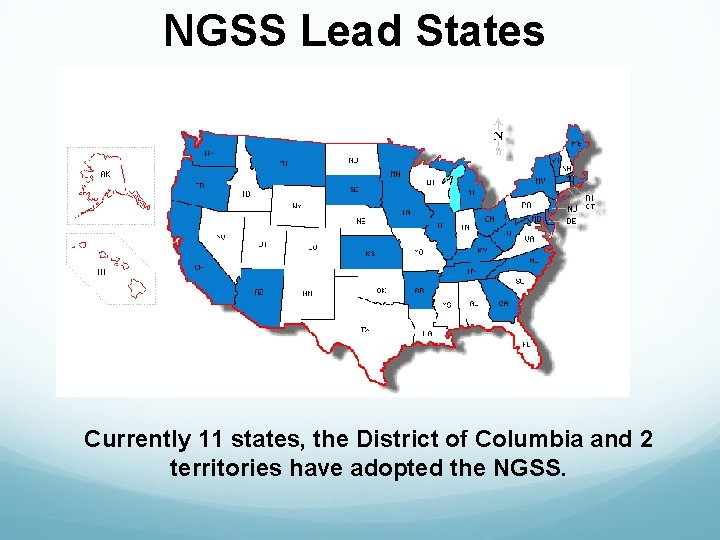
NGSS Lead States Currently 11 states, the District of Columbia and 2 territories have adopted the NGSS.
Lead NGSS Partners
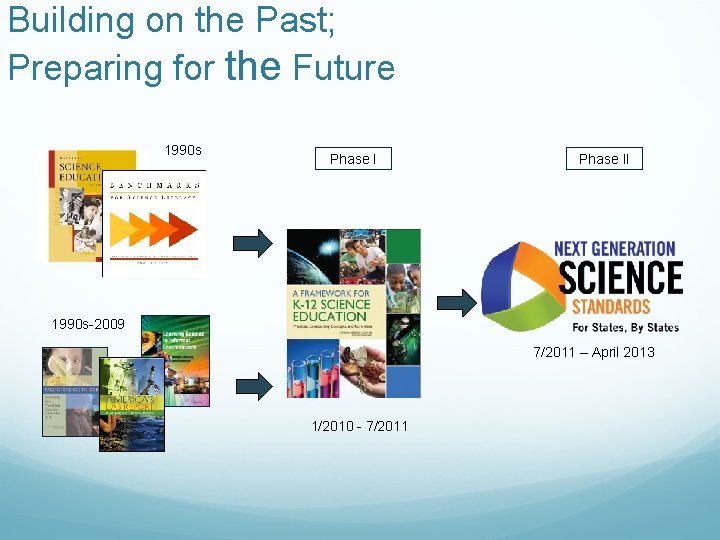
Building on the Past; Preparing for the Future 1990 s Phase II 1990 s-2009 7/2011 – April 2013 1/2010 - 7/2011
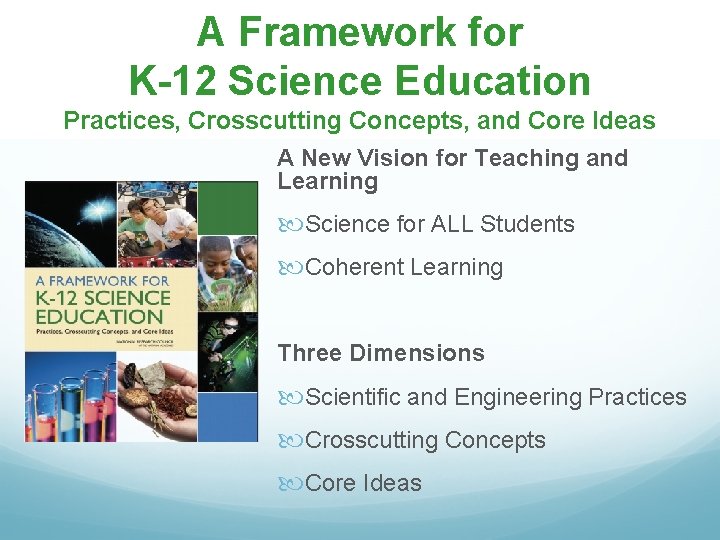
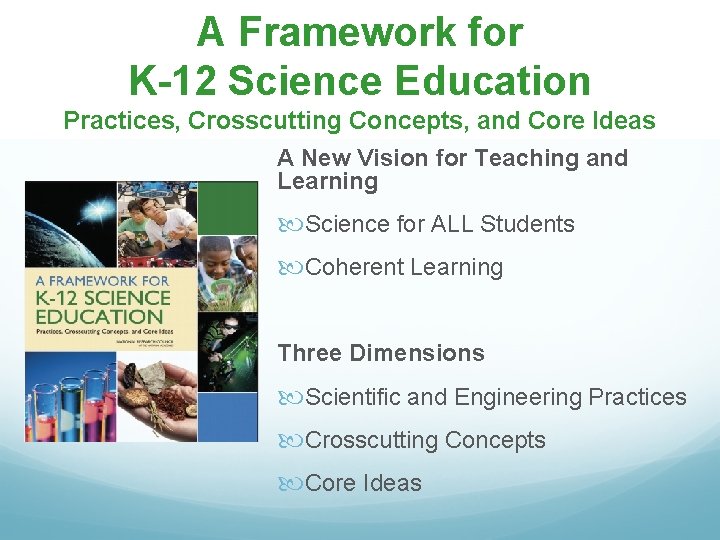
A Framework for K-12 Science Education Practices, Crosscutting Concepts, and Core Ideas A New Vision for Teaching and Learning Science for ALL Students Coherent Learning Three Dimensions Scientific and Engineering Practices Crosscutting Concepts Core Ideas
Goals for Science Education Educating all students in science and engineering. Providing the foundational knowledge for those who will become the scientists, engineers, technologists, and technicians of the future.
NGSS for California SRT: (80) + 1000 s input to national SEP: (27) + 3 public meetings + SRT recommendations to the Superintendent for adoption SBE: September 2013 -Adoption of the NGSS for CA SBE: November 2013 -Adoption of preferred integrated model for middle grades and request for discipline specific alternative model
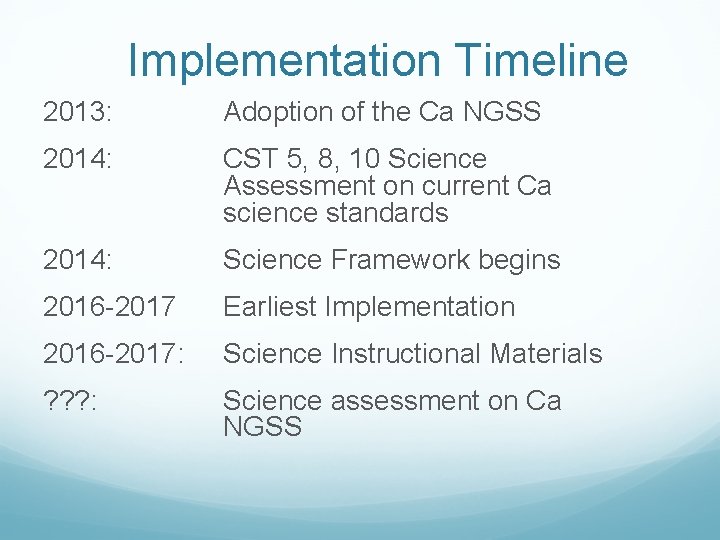
Implementation Timeline 2013: Adoption of the Ca NGSS 2014: CST 5, 8, 10 Science Assessment on current Ca science standards 2014: Science Framework begins 2016 -2017 Earliest Implementation 2016 -2017: Science Instructional Materials ? ? ? : Science assessment on Ca NGSS
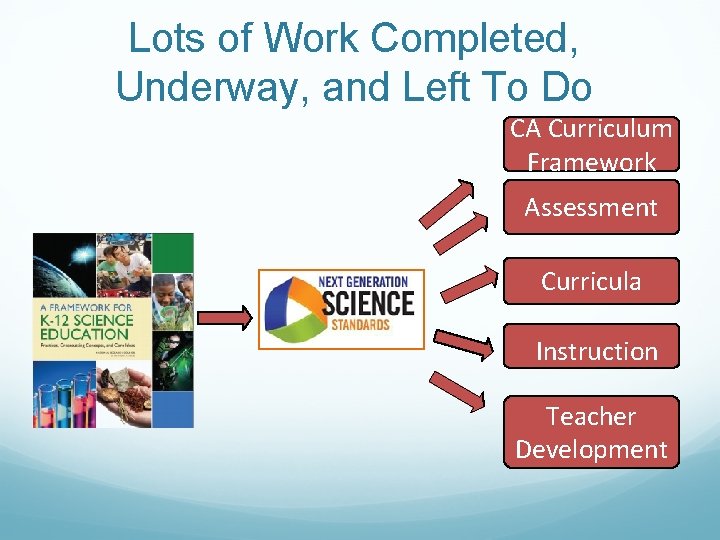
Lots of Work Completed, Underway, and Left To Do CA Curriculum Framework Assessment Curricula Instruction Teacher Development
A Framework for K-12 Science Education Practices, Crosscutting Concepts, and Core Ideas A New Vision for Teaching and Learning Science for ALL Students Coherent Learning Three Dimensions Scientific and Engineering Practices Crosscutting Concepts Core Ideas
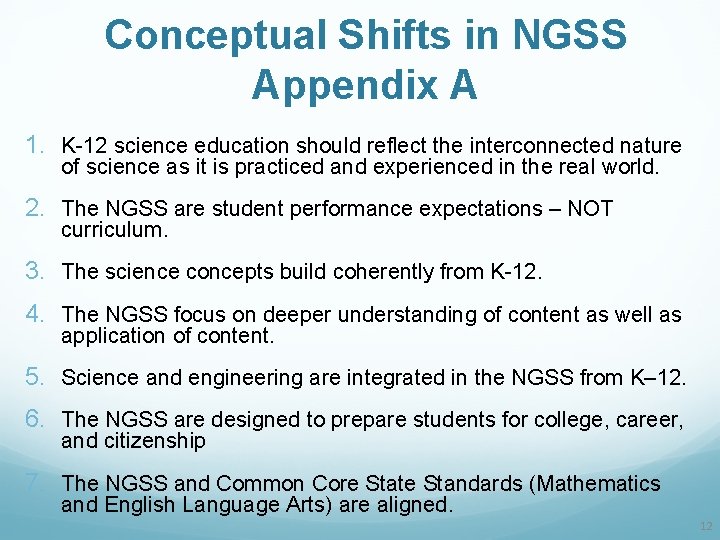
Conceptual Shifts in NGSS Appendix A 1. K-12 science education should reflect the interconnected nature of science as it is practiced and experienced in the real world. 2. The NGSS are student performance expectations – NOT curriculum. 3. The science concepts build coherently from K-12. 4. The NGSS focus on deeper understanding of content as well as application of content. 5. Science and engineering are integrated in the NGSS from K– 12. 6. The NGSS are designed to prepare students for college, career, and citizenship 7. The NGSS and Common Core State Standards (Mathematics and English Language Arts) are aligned. 12
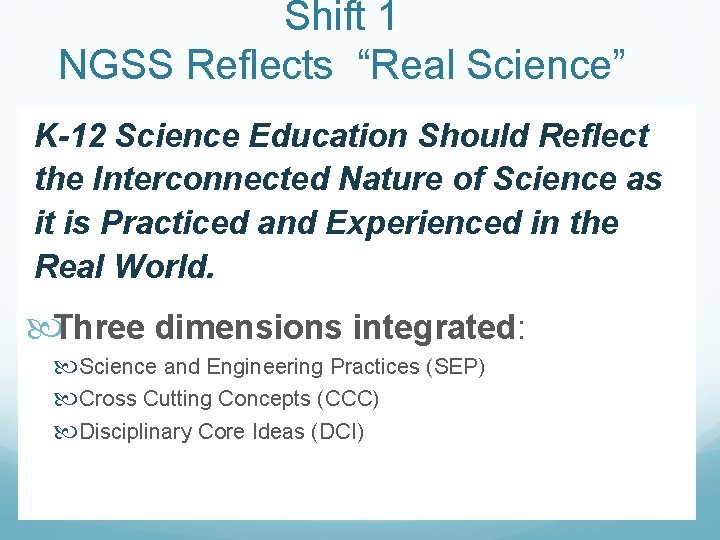
Shift 1 NGSS Reflects “Real Science” K-12 Science Education Should Reflect the Interconnected Nature of Science as it is Practiced and Experienced in the Real World. Three dimensions integrated: Science and Engineering Practices (SEP) Cross Cutting Concepts (CCC) Disciplinary Core Ideas (DCI)
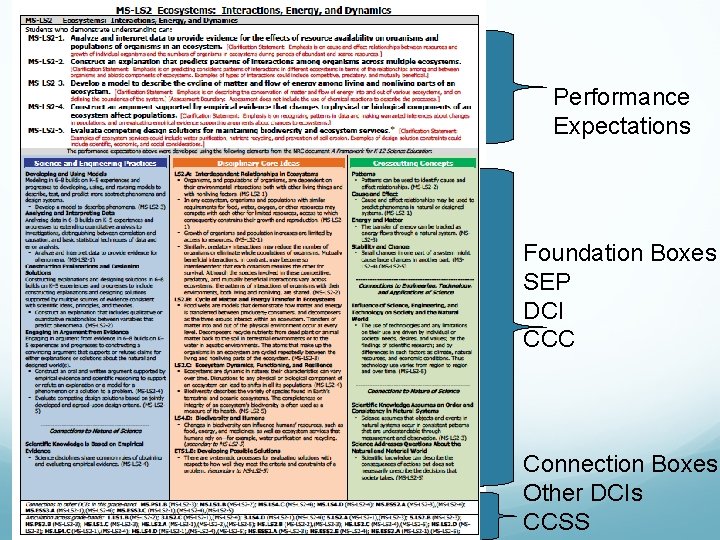
Performance Expectations Foundation Boxes SEP DCI CCC Connection Boxes Other DCIs CCSS
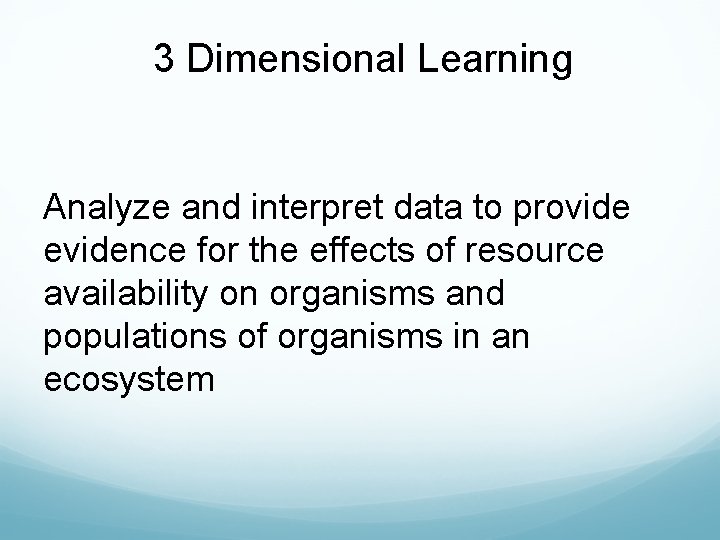
3 Dimensional Learning Analyze and interpret data to provide evidence for the effects of resource availability on organisms and populations of organisms in an ecosystem
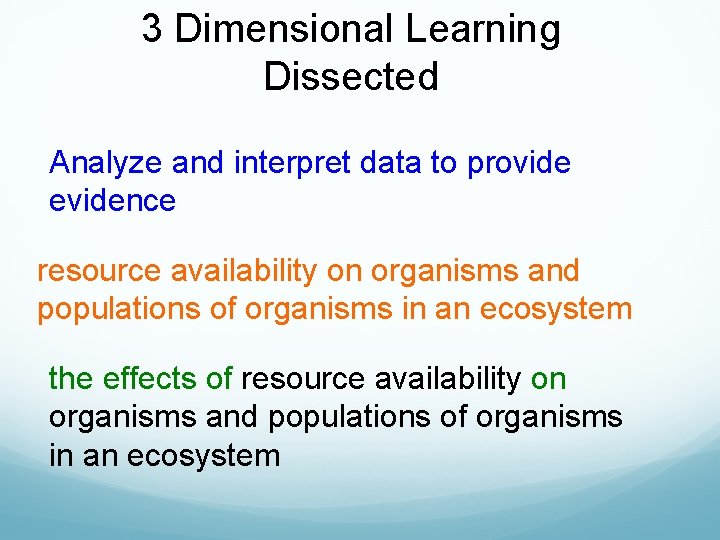
3 Dimensional Learning Dissected Analyze and interpret data to provide evidence resource availability on organisms and populations of organisms in an ecosystem the effects of resource availability on organisms and populations of organisms in an ecosystem
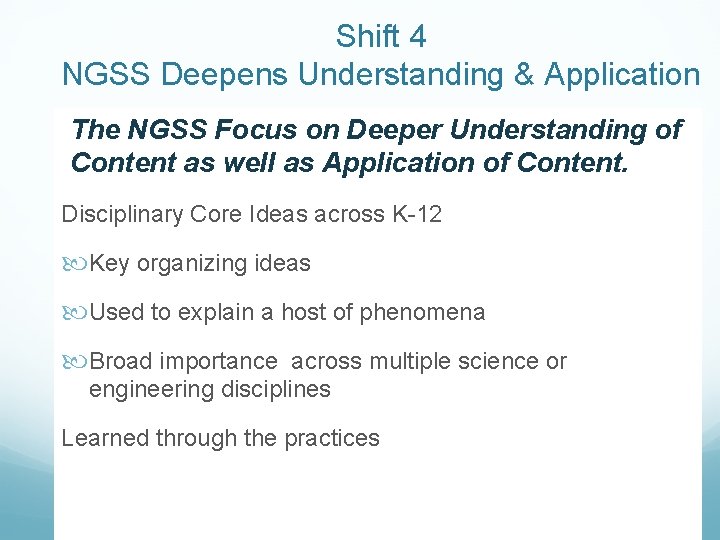
Shift 4 NGSS Deepens Understanding & Application The NGSS Focus on Deeper Understanding of Content as well as Application of Content. Disciplinary Core Ideas across K-12 Key organizing ideas Used to explain a host of phenomena Broad importance across multiple science or engineering disciplines Learned through the practices
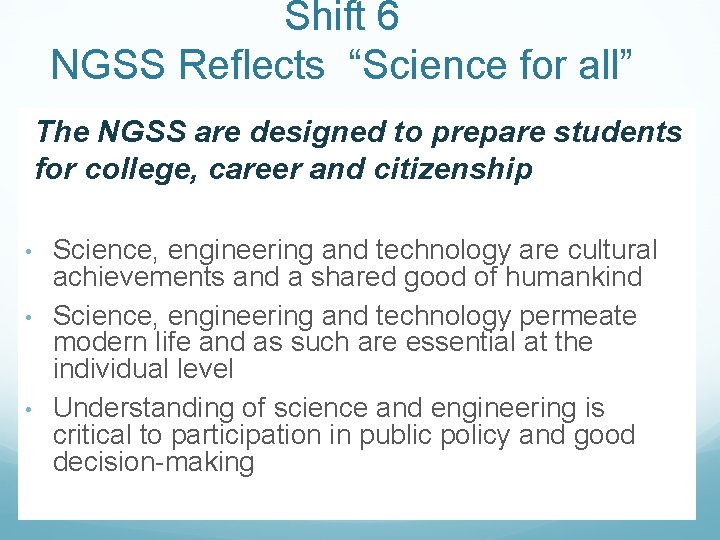
Shift 6 NGSS Reflects “Science for all” The NGSS are designed to prepare students for college, career and citizenship • • • Science, engineering and technology are cultural achievements and a shared good of humankind Science, engineering and technology permeate modern life and as such are essential at the individual level Understanding of science and engineering is critical to participation in public policy and good decision-making
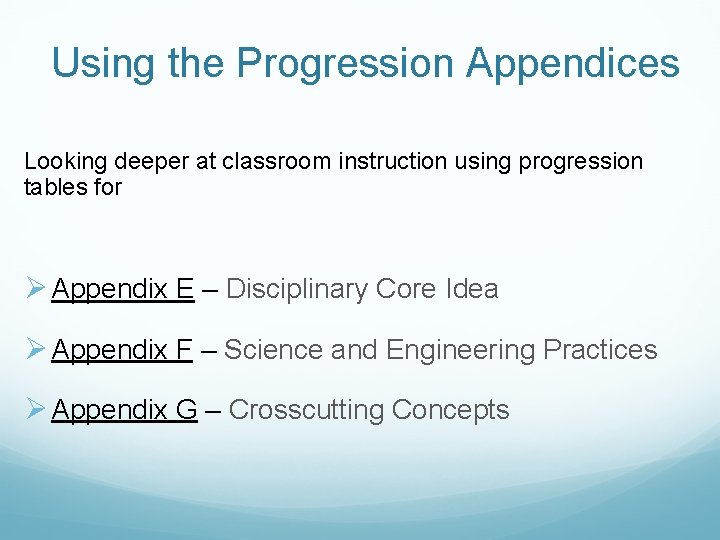
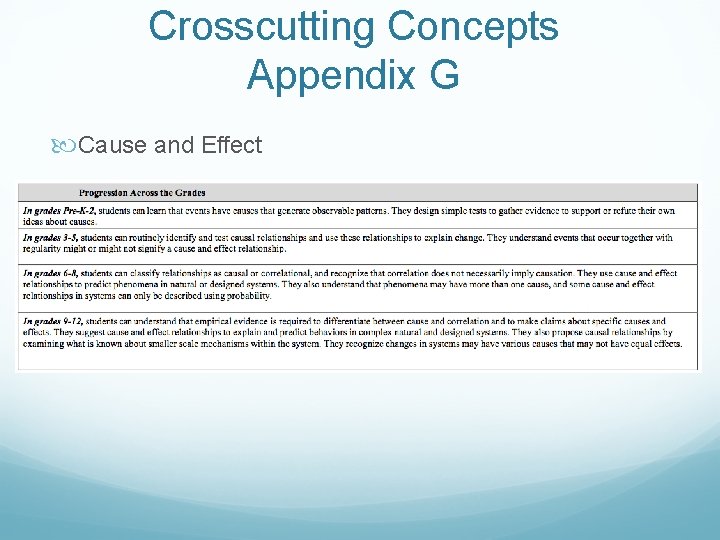
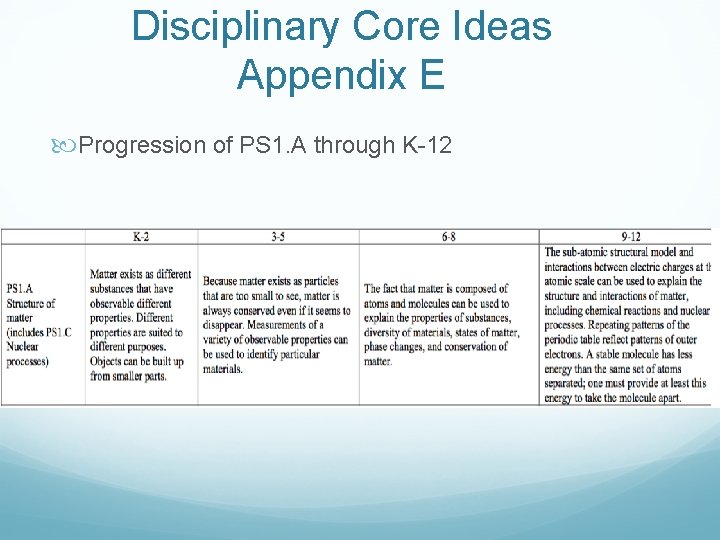
Using the Progression Appendices Looking deeper at classroom instruction using progression tables for Ø Appendix E – Disciplinary Core Idea Ø Appendix F – Science and Engineering Practices Ø Appendix G – Crosscutting Concepts
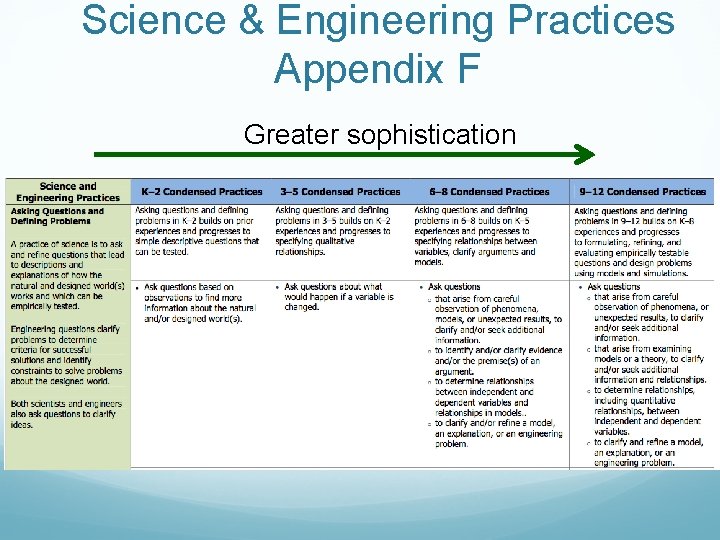
Science & Engineering Practices Appendix F Greater sophistication
Crosscutting Concepts Appendix G Cause and Effect
Disciplinary Core Ideas Appendix E Progression of PS 1. A through K-12
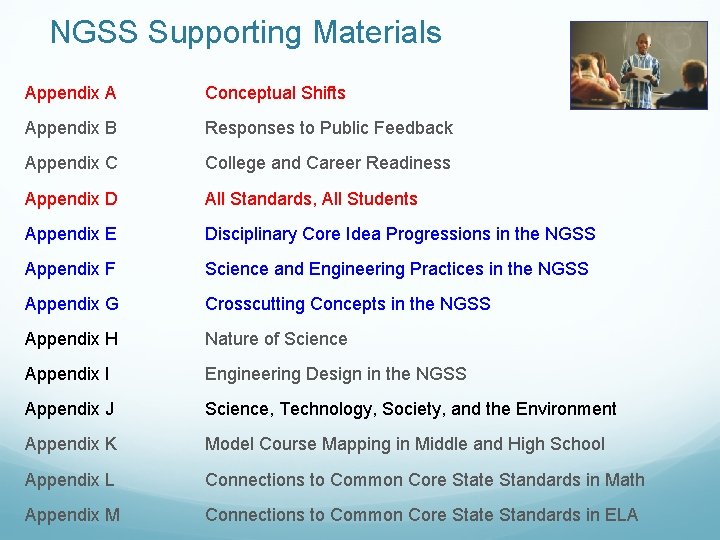
NGSS Supporting Materials Appendix A Conceptual Shifts Appendix B Responses to Public Feedback Appendix C College and Career Readiness Appendix D All Standards, All Students Appendix E Disciplinary Core Idea Progressions in the NGSS Appendix F Science and Engineering Practices in the NGSS Appendix G Crosscutting Concepts in the NGSS Appendix H Nature of Science Appendix I Engineering Design in the NGSS Appendix J Science, Technology, Society, and the Environment Appendix K Model Course Mapping in Middle and High School Appendix L Connections to Common Core State Standards in Math Appendix M Connections to Common Core State Standards in ELA