
Overcoming Hidden Hunger in Childrens first 1000 Days
- Slides: 40
Overcoming Hidden Hunger in Children’s first 1000 Days: Political Economy and Research Directions Joachim von Braun Center for Development Research (ZEF) Professor for Economic and Technological Change University of Bonn Opening key note to 2 nd International Congress on Hidden Hunger March 4, 2015 / Hohenheim, Germany
Agenda 1. The Range of Problems 2. Political Economy of (In-)action 3. Research Directions J. von Braun 2015
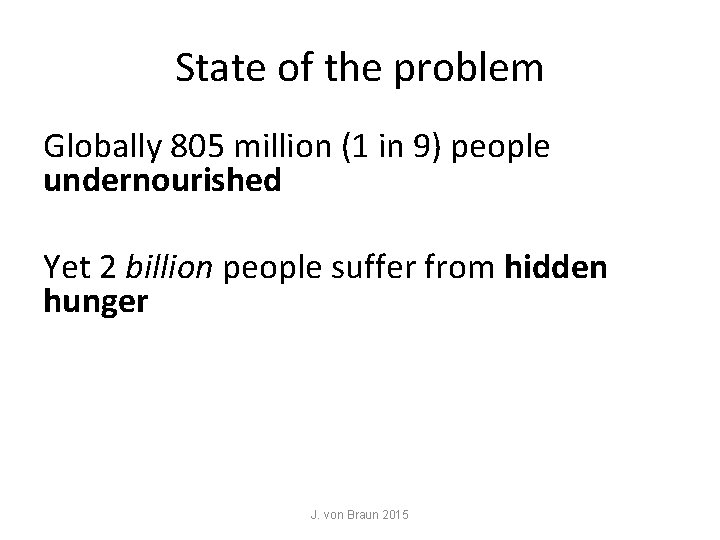
State of the problem Globally 805 million (1 in 9) people undernourished Yet 2 billion people suffer from hidden hunger J. von Braun 2015
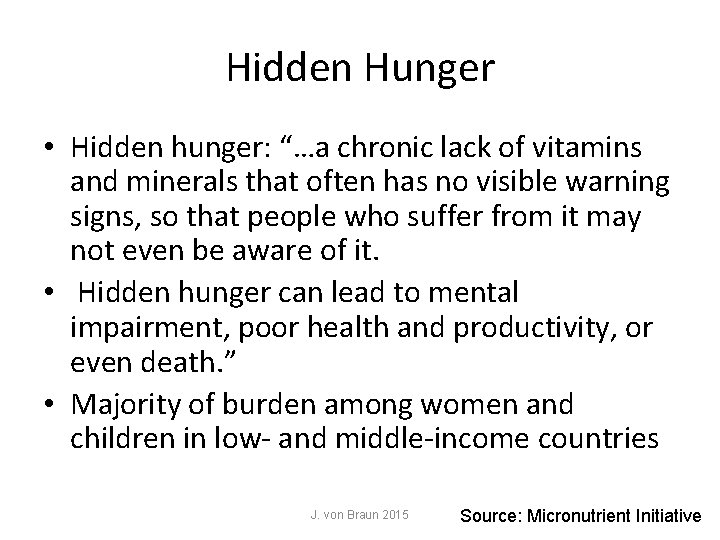
Hidden Hunger • Hidden hunger: “…a chronic lack of vitamins and minerals that often has no visible warning signs, so that people who suffer from it may not even be aware of it. • Hidden hunger can lead to mental impairment, poor health and productivity, or even death. ” • Majority of burden among women and children in low- and middle-income countries J. von Braun 2015 Source: Micronutrient Initiative
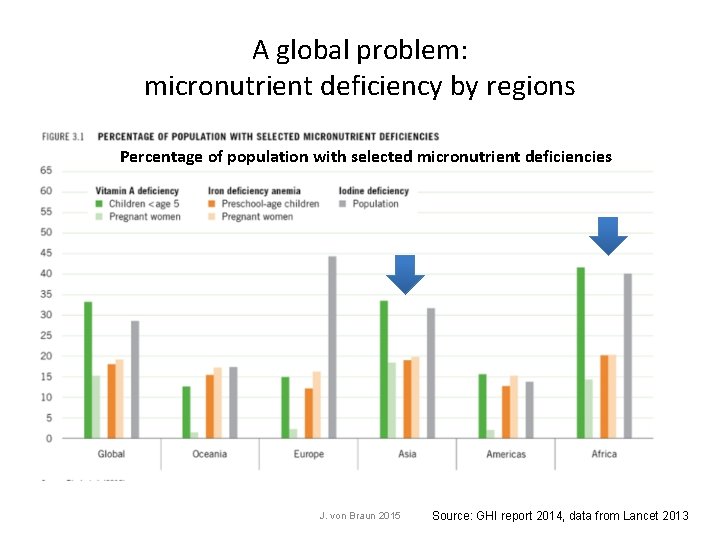
A global problem: micronutrient deficiency by regions Percentage of population with selected micronutrient deficiencies J. von Braun 2015 Source: GHI report 2014, data from Lancet 2013
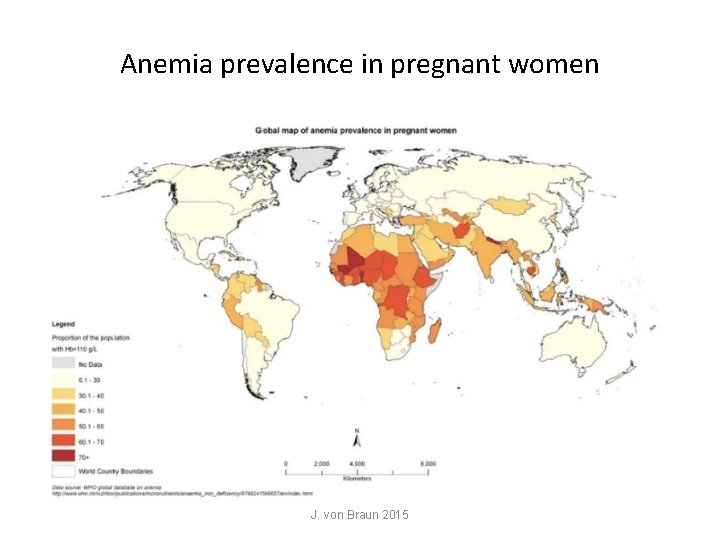
Anemia prevalence in pregnant women J. von Braun 2015
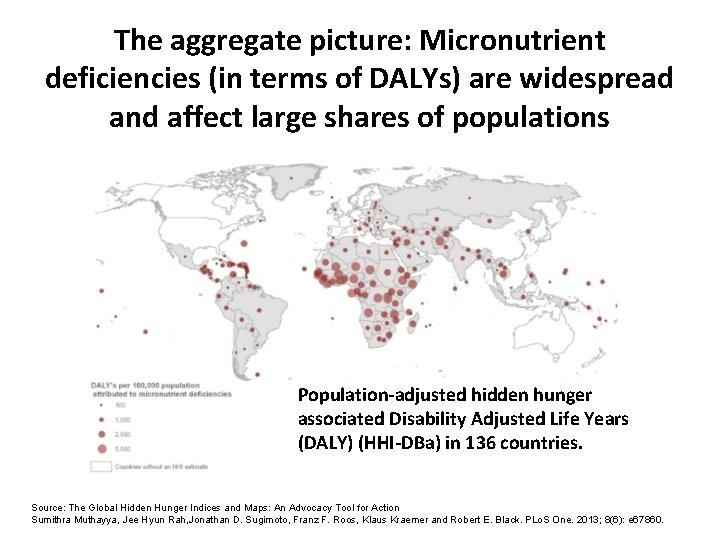
The aggregate picture: Micronutrient deficiencies (in terms of DALYs) are widespread and affect large shares of populations Population-adjusted hidden hunger associated Disability Adjusted Life Years (DALY) (HHI-DBa) in 136 countries. Source: The Global Hidden Hunger Indices and Maps: An Advocacy Tool for Action Sumithra Muthayya, Jee Hyun Rah, Jonathan D. Sugimoto, Franz F. Roos, Klaus Kraemer and Robert E. Black. PLo. S One. 2013; 8(6): e 67860.
Critical data gap: no sound time dependent MN deficiency information > poor metric for national and global monitoring of progress > when tracking progress is constrained this leads to low commitment to invest J. von Braun 2015 Must get to time series of these data! • Iodine (~1. 8 billion) – Reduced mental capacity, goiter • Iron (~1. 6 billion) – Impaired motor & cognitive development, increased maternal morbidity and mortality • Vitamin A (190 million preschool children; 19 million pregnant women) – Night blindness, higher risk of illness and death in children • Zinc (1. 2 billion) – Weakened immune system, stunting Source: Global Hunger Index Report 2014, p. 26
Data weaknesses matter for political positioning of MN-problems Capacity gaps and political concerns can pose barriers – Out of date or scarce data on nutrition trends and program effectiveness • Quality of surveys may be questioned • Slow analysis and dissemination Lack of “data” champions – Need evidence based consistent messages from organizations involved in nutrition (SUN, 1000 days, etc. ) on programming (more see Global Nutrition Report, IFPRI 2014) These data limitations weaken the position of nutrition in the SDGs J. von Braun 2015
The importance of the First 1, 000 Days The first 1, 000 days are the most critical period for adequate growth and development Poor maternal and child nutrition during this critical time seems often irreversible Improving the nutrition and health of women and children can have lasting effects for future generations United Nations : http: //www. un. org/en/issues/food/taskforce/pdf/UN_SUN_Fact. Sheet. pdf J. von Braun 2015
Agenda 1. The Range of Problems 2. Political Economy of (In-)action 3. Research Directions J. von Braun 2015
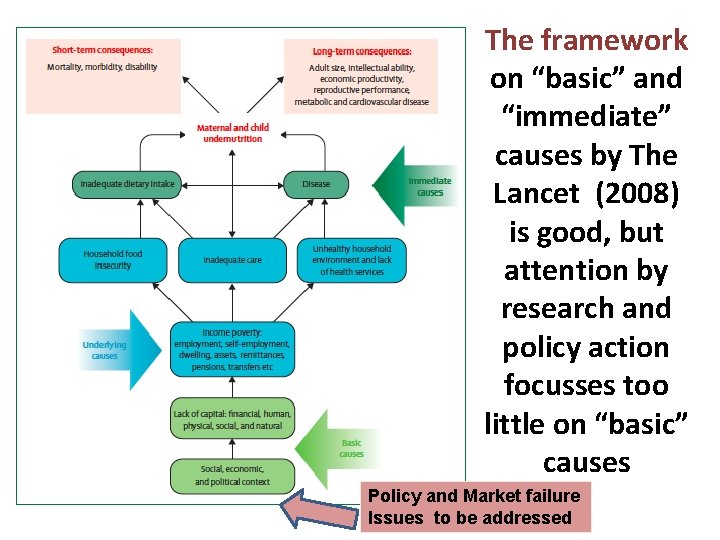
The framework on “basic” and “immediate” causes by The Lancet (2008) is good, but attention by research and policy action focusses too little on “basic” causes Policy and Market failure Issues to be addressed
What are the basic causes for the large MN problems? • • • Poor people are too poor to act The affected people do not know Goverments do not know how to Goverments do not have enough resources The MN problems are too complex to fix These are certainly part of the reasons, but not the fundamental reasons! J. von Braun 2015
The fundamental causes of persistent MN deficiencies • Policy / Government failures and • Market failures Unfortunately: both failures exist for reasons not easy to overcome J. von Braun 2015
Market failure and Policy/Government failure • Market failure is a problem which prevents the market from operating efficiently • Government failure is a systemic problem which prevents an efficient government solution to a problem • Government and market failures can be on both the demand side and the supply side. Ronald Coase (1935), Roland Mc. Kean (1965) J. von Braun 2015
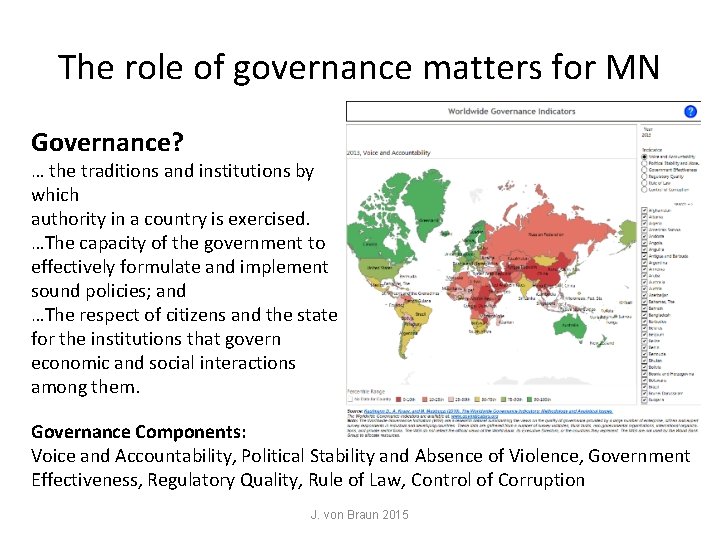
The role of governance matters for MN Governance? … the traditions and institutions by which authority in a country is exercised. …The capacity of the government to effectively formulate and implement sound policies; and …The respect of citizens and the state for the institutions that govern economic and social interactions among them. Governance Components: Voice and Accountability, Political Stability and Absence of Violence, Government Effectiveness, Regulatory Quality, Rule of Law, Control of Corruption J. von Braun 2015
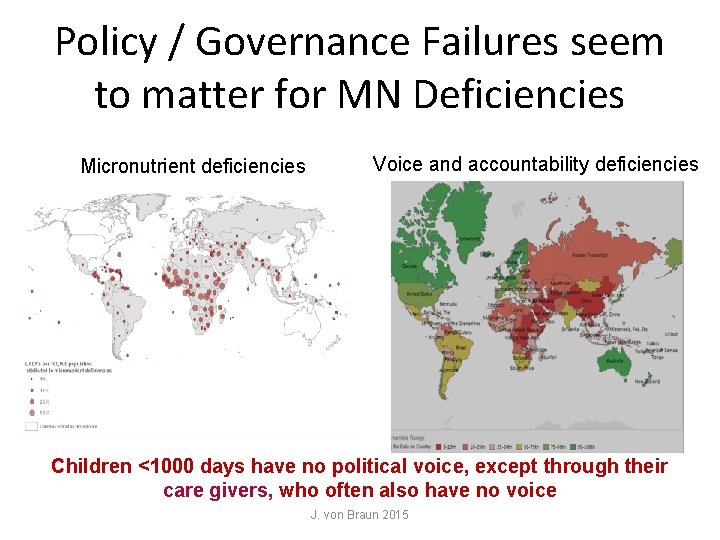
Policy / Governance Failures seem to matter for MN Deficiencies Micronutrient deficiencies Voice and accountability deficiencies Children <1000 days have no political voice, except through their care givers, who often also have no voice J. von Braun 2015
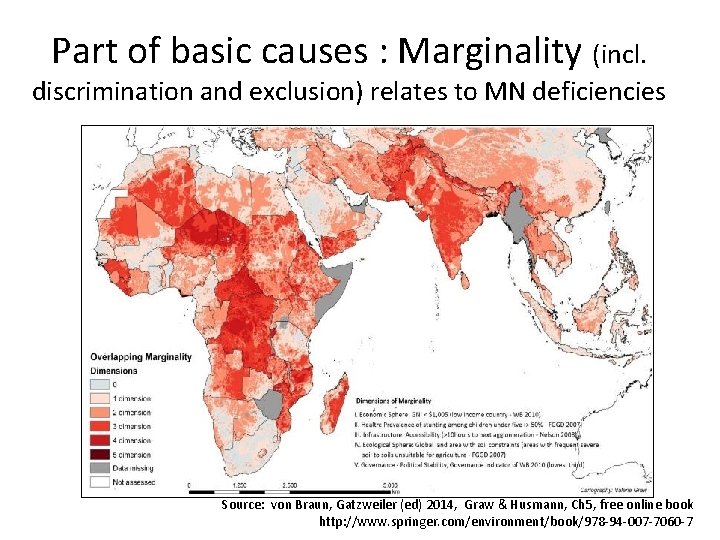
Part of basic causes : Marginality (incl. discrimination and exclusion) relates to MN deficiencies Source: von Braun, Gatzweiler (ed) 2014, Graw & Husmann, Ch 5, free online book http: //www. springer. com/environment/book/978 -94 -007 -7060 -7
Taboos and dogmas may neutralize will for policy action Who, what, and how? – Length of breastfeeding in different contexts – Complementary early childhood feeding – Fortification of which type (supplem. , industrial fortif. , bio-fortif. , healthy diet grown at home, GMOs fortification, etc. ) – Public sector only / private sector only Contentious debates keep public policy at low levels of engagement All these themes need more evidence based research J. von Braun 2015
Multiple policy failures lead to low supply and demand for public MN-services Public policy failure on supply (S) and demand (D) side SMNpolicy = DMNpolicy • lack of public policy incentives for MN Supply • Lack of incentive for quality and efficiency of public services for MN Supply • lack of MN deficiency affected political voice for MN services Demand Result: both S and D remain at low levels J. von Braun 2015
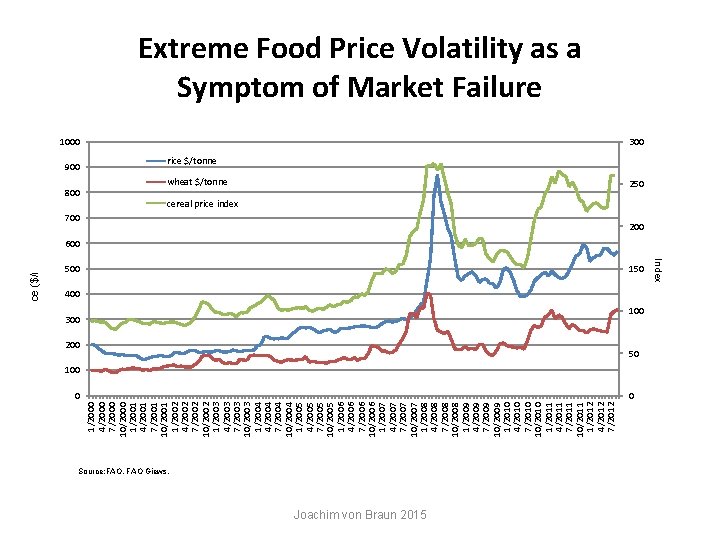
1000 900 800 wheat $/tonne 700 500 150 400 300 100 200 50 100 0 0 Source: FAO, FAO Giews. Joachim von Braun 2015 Index 1/2000 4/2000 7/2000 10/2000 1/2001 4/2001 7/2001 10/2001 1/2002 4/2002 7/2002 10/2002 1/2003 4/2003 7/2003 10/2003 1/2004 4/2004 7/2004 10/2004 1/2005 4/2005 7/2005 10/2005 1/2006 4/2006 7/2006 10/2006 1/2007 4/2007 7/2007 10/2007 1/2008 4/2008 7/2008 10/2008 1/2009 4/2009 7/2009 10/2009 1/2010 4/2010 7/2010 10/2010 1/2011 4/2011 7/2011 10/2011 1/2012 4/2012 7/2012 Price ($/mt) Extreme Food Price Volatility as a Symptom of Market Failure 300 rice $/tonne 250 cereal price index 200 600
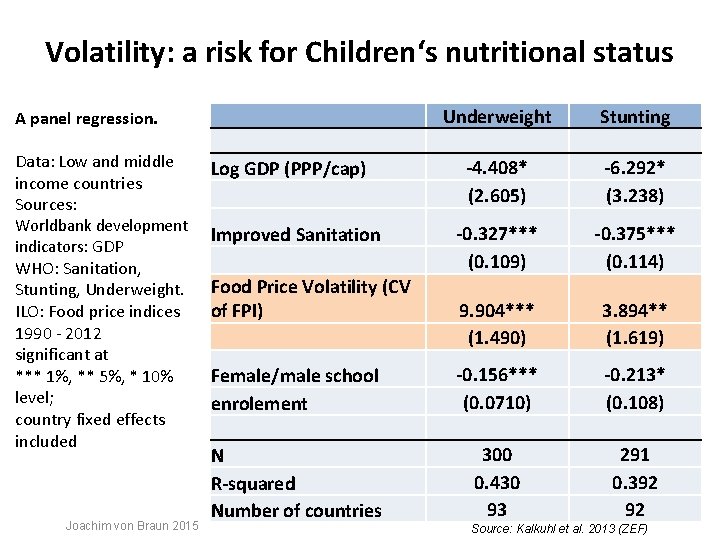
Volatility: a risk for Children‘s nutritional status Underweight Stunting -4. 408* (2. 605) -6. 292* (3. 238) -0. 327*** (0. 109) -0. 375*** (0. 114) 9. 904*** (1. 490) 3. 894** (1. 619) Female/male school enrolement -0. 156*** (0. 0710) -0. 213* (0. 108) N R-squared Number of countries 300 0. 430 93 291 0. 392 92 A panel regression. Data: Low and middle income countries Sources: Worldbank development indicators: GDP WHO: Sanitation, Stunting, Underweight. ILO: Food price indices 1990 - 2012 significant at *** 1%, ** 5%, * 10% level; country fixed effects included Joachim von Braun 2015 Log GDP (PPP/cap) Improved Sanitation Food Price Volatility (CV of FPI) Source: Kalkuhl et al. 2013 (ZEF)
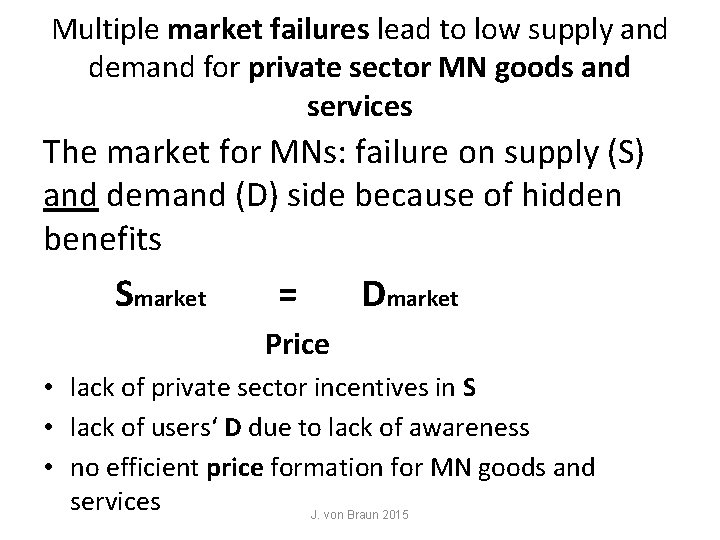
Multiple market failures lead to low supply and demand for private sector MN goods and services The market for MNs: failure on supply (S) and demand (D) side because of hidden benefits Smarket = Dmarket Price • lack of private sector incentives in S • lack of users‘ D due to lack of awareness • no efficient price formation for MN goods and services J. von Braun 2015
Yet: there is a market for supplementary nutrients, mostly trageting the rich A growing market for Vitamin C, D, Omega 3, multi-vitamin supplements, fortified products etc. • What regulations could make these markets effective to reach deficient population groups? • How can these markets be expanded to work pro poor? • What role for public information and labelling to enhance healthy user behavior? J. von Braun 2015
So what to do in view of this set of fundamental causes of systems failures? • • • Public Private Partnerships? Corporate Social Responsibility? Information campaigns? Multi-stakeholder initiatives? Policy dialogues for commitments (UN, G 8/20)? Donor funding? …have not made the big impact so far J. von Braun 2015
Political economy of stakeholders, ideas, and interests • Creation and sustaining of momentum – Incentivizing and delivering of horizontal coherence (multi -sectoral coordination) – Development of accountability to citizens – Enabling and incentivizing of positive contributions from the private sector • Conversion of momentum into results – Delivery of vertical coherence – The role of civil society and the private sector in delivery Gillespie, S. , Haddad, L. , Mannar, V. , Menon, P. , & Nisbett, N. (2013). The politics of reducing malnutrition: Building commitment and accelerating progress. LANCET, 382(9891), 552 -569. J. von Braun 2015
Pitfalls of Multi-stakeholder efforts • Hidden prioritization of own interests • Power play constraining inter-sectoral cooperation (e. g. public health / agriculture / water) • Lack of accountablity • Long ways to trust • Timid re scaling up • Low risk taking / high preference for conventional approaches • Free riding on positive results J. von Braun 2015
Scaling up Nutrition (SUN) • In recognition that direct interventions are not enough to prevent stunting, nutrition sensitive approaches incorporated into global advocacy • SUN framework action is driven by multi-sectoral platforms at high-level supporting both nutrition specific and nutrition sensitive The start of SUN was a positive change in national and international nutrition policy, but the end game of SUN needs to be different: Growing from SUN accountable nutrition agencies facilitating nutrition action at national and international levels J. von Braun 2015
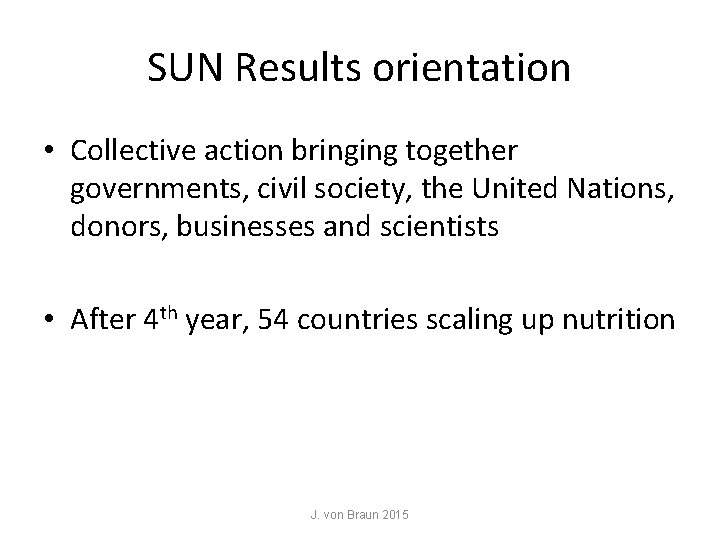
SUN Results orientation • Collective action bringing together governments, civil society, the United Nations, donors, businesses and scientists • After 4 th year, 54 countries scaling up nutrition J. von Braun 2015
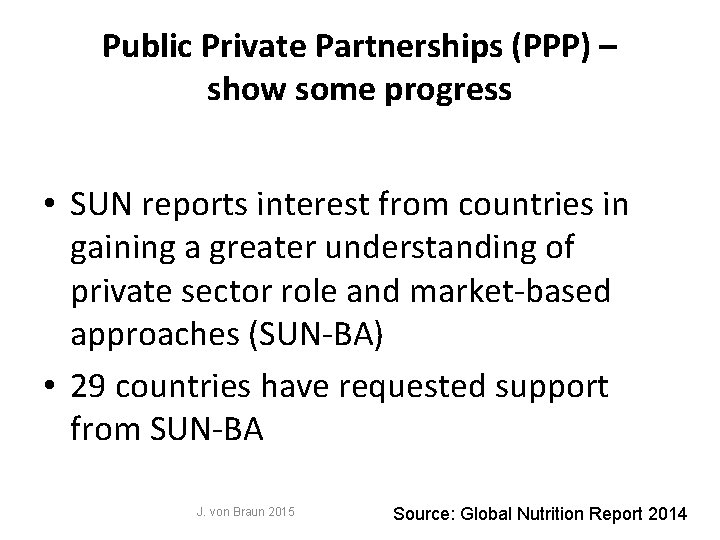
Public Private Partnerships (PPP) – show some progress • SUN reports interest from countries in gaining a greater understanding of private sector role and market-based approaches (SUN-BA) • 29 countries have requested support from SUN-BA J. von Braun 2015 Source: Global Nutrition Report 2014
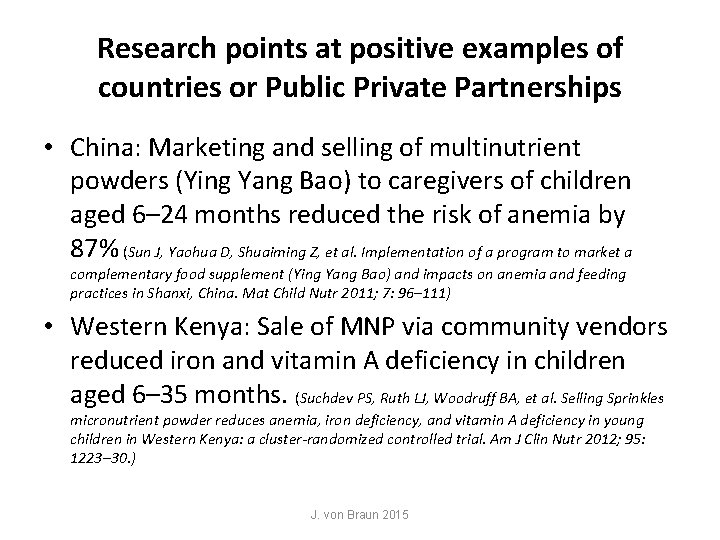
Research points at positive examples of countries or Public Private Partnerships • China: Marketing and selling of multinutrient powders (Ying Yang Bao) to caregivers of children aged 6– 24 months reduced the risk of anemia by 87% (Sun J, Yaohua D, Shuaiming Z, et al. Implementation of a program to market a complementary food supplement (Ying Yang Bao) and impacts on anemia and feeding practices in Shanxi, China. Mat Child Nutr 2011; 7: 96– 111) • Western Kenya: Sale of MNP via community vendors reduced iron and vitamin A deficiency in children aged 6– 35 months. (Suchdev PS, Ruth LJ, Woodruff BA, et al. Selling Sprinkles micronutrient powder reduces anemia, iron deficiency, and vitamin A deficiency in young children in Western Kenya: a cluster-randomized controlled trial. Am J Clin Nutr 2012; 95: 1223– 30. ) J. von Braun 2015
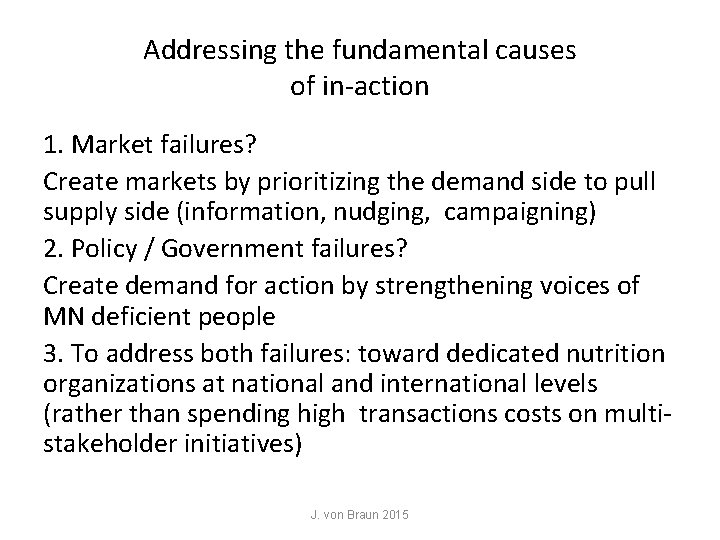
Addressing the fundamental causes of in-action 1. Market failures? Create markets by prioritizing the demand side to pull supply side (information, nudging, campaigning) 2. Policy / Government failures? Create demand for action by strengthening voices of MN deficient people 3. To address both failures: toward dedicated nutrition organizations at national and international levels (rather than spending high transactions costs on multistakeholder initiatives) J. von Braun 2015
Agenda 1. The Range of Problems 2. Political Economy of (In-)action 3. Research Directions J. von Braun 2015
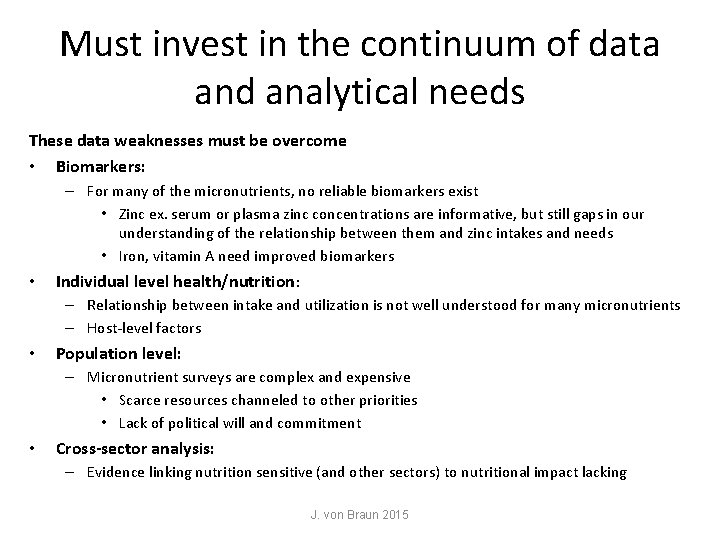
Must invest in the continuum of data and analytical needs These data weaknesses must be overcome • Biomarkers: – For many of the micronutrients, no reliable biomarkers exist • Zinc ex. serum or plasma zinc concentrations are informative, but still gaps in our understanding of the relationship between them and zinc intakes and needs • Iron, vitamin A need improved biomarkers • Individual level health/nutrition: – Relationship between intake and utilization is not well understood for many micronutrients – Host-level factors • Population level: – Micronutrient surveys are complex and expensive • Scarce resources channeled to other priorities • Lack of political will and commitment • Cross-sector analysis: – Evidence linking nutrition sensitive (and other sectors) to nutritional impact lacking J. von Braun 2015
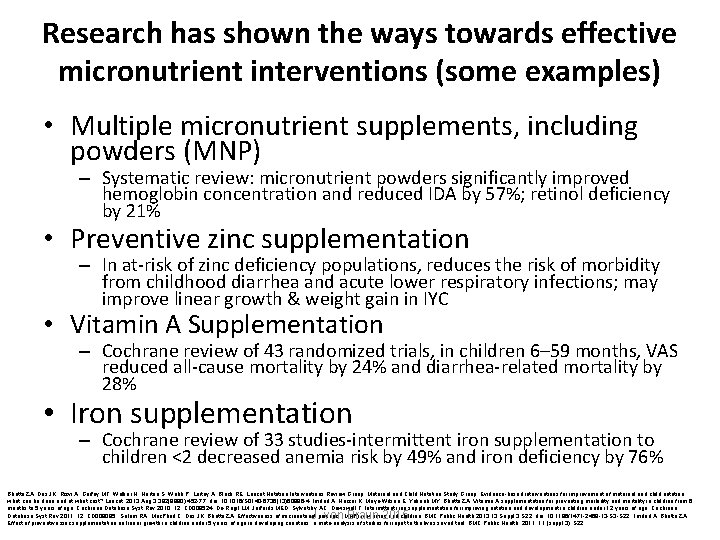
Research has shown the ways towards effective micronutrient interventions (some examples) • Multiple micronutrient supplements, including powders (MNP) – Systematic review: micronutrient powders significantly improved hemoglobin concentration and reduced IDA by 57%; retinol deficiency by 21% • Preventive zinc supplementation – In at-risk of zinc deficiency populations, reduces the risk of morbidity from childhood diarrhea and acute lower respiratory infections; may improve linear growth & weight gain in IYC • Vitamin A Supplementation – Cochrane review of 43 randomized trials, in children 6– 59 months, VAS reduced all-cause mortality by 24% and diarrhea-related mortality by 28% • Iron supplementation – Cochrane review of 33 studies-intermittent iron supplementation to children <2 decreased anemia risk by 49% and iron deficiency by 76% Bhutta ZA, Das JK, Rizvi A, Gaffey MF, Walker N, Horton S, Webb P, Lartey A, Black RE; Lancet Nutrition Interventions Review Group; Maternal and Child Nutrition Study Group. Evidence-based interventions for improvement of maternal and child nutrition: what can be done and at what cost? Lancet. 2013 Aug 3; 382(9890): 452 -77. doi: 10. 1016/S 0140 -6736(13)60996 -4; Imdad A, Herzer K, Mayo-Wilson E, Yakoob MY, Bhutta ZA. Vitamin A supplementation for preventing morbidity and mortality in children from 6 months to 5 years of age. Cochrane Database Syst Rev 2010; 12: CD 008524; De-Regil LM, Jefferds MED, Sylvetsky AC, Dowswell T. Intermittent iron supplementation for improving nutrition and development in children under 12 years of age. Cochrane Database Syst Rev 2011; 12: CD 009085. ; Salam RA, Mac. Phail C, Das JK, Bhutta ZA. Effectiveness of micronutrient powders (MNP) in women and children. BMC Public Health 2013; 13 Suppl 3: S 22. doi: 10. 1186/1471 -2458 -13 -S 22. ; Imdad A, Bhutta ZA. Effect of preventive zinc supplementation on linear growth in children under 5 years of age in developing countries: a meta-analysis of studies for input to the lives saved tool. BMC Public Health. 2011; 11 (suppl 3): S 22. J. von Braun 2015
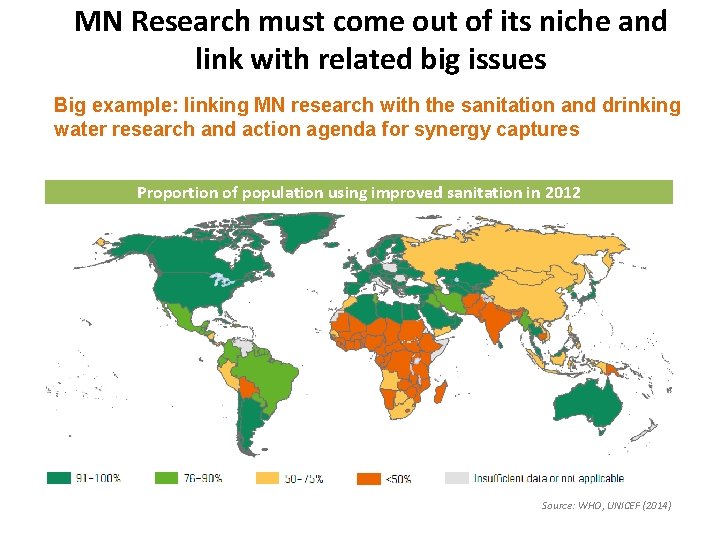
MN Research must come out of its niche and link with related big issues Big example: linking MN research with the sanitation and drinking water research and action agenda for synergy captures Proportion of population using improved sanitation in 2012 Source: WHO, UNICEF (2014)
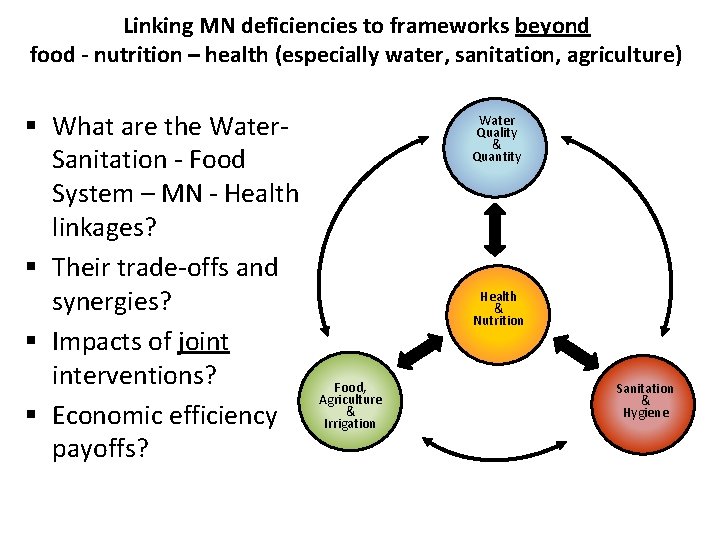
Linking MN deficiencies to frameworks beyond food - nutrition – health (especially water, sanitation, agriculture) § What are the Water. Sanitation - Food System – MN - Health linkages? § Their trade-offs and synergies? § Impacts of joint interventions? § Economic efficiency payoffs? Water Quality & Quantity Health & Nutrition Food, Agriculture & Irrigation Sanitation & Hygiene
Research: Coming to larger islands of consensus • Operational research on delivery, and implementation • On scale-up of interventions, and contextual analyses to achieve success at scale in various contexts • Beyond “enabling environments” (Lancet 2013) toward institutional and organizational innovations and political economy • Testing collaborative platforms to spearhead R&D to benefit both, public health and private business interests J. von Braun 2015
Research on First 1000 Days • Evidence base of what are best nutrition investments for First 1000 Days needs strengthening, incl. focus on mothers • Synergies between investments in health and sanitation environments versus direct micronutrient actions needs research attention • Nutrition governance needs hard research, not just following believes that some form of alliances is most effective and efficient for nutrition progress J. von Braun 2015
Addressing the fundamental causes Fundamental are policy failures and market failures. 1. they need to be addressed frontally in intergovernmental fora (UN, G 7/20) and by 2. strengthening of demand for public MN goods and services, and driving that demand needs science base and people movements J. von Braun 2015