
Overactive Bladder A Disturbing Problem Presented by insert

Overactive Bladder — A Disturbing Problem Presented by (insert name of presenter here)
Overactive Bladder Definition: Overactive bladder is a chronic condition in which the bladder starts to contract too early when it is filling with urine.
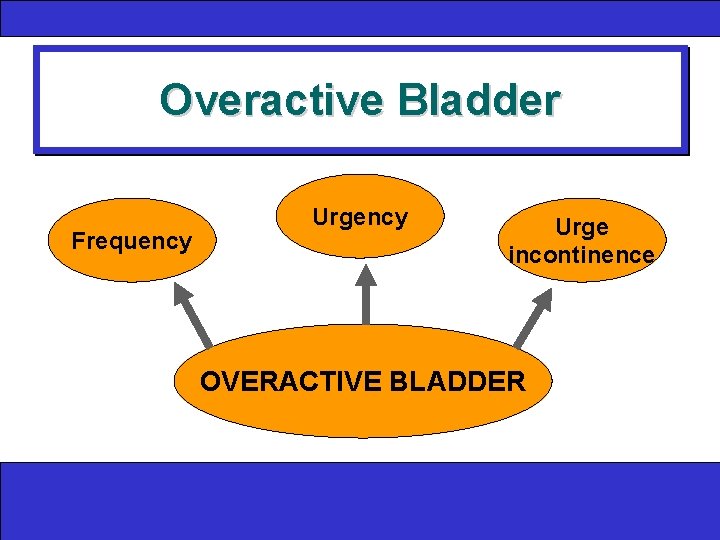
Overactive Bladder Frequency Urge incontinence OVERACTIVE BLADDER
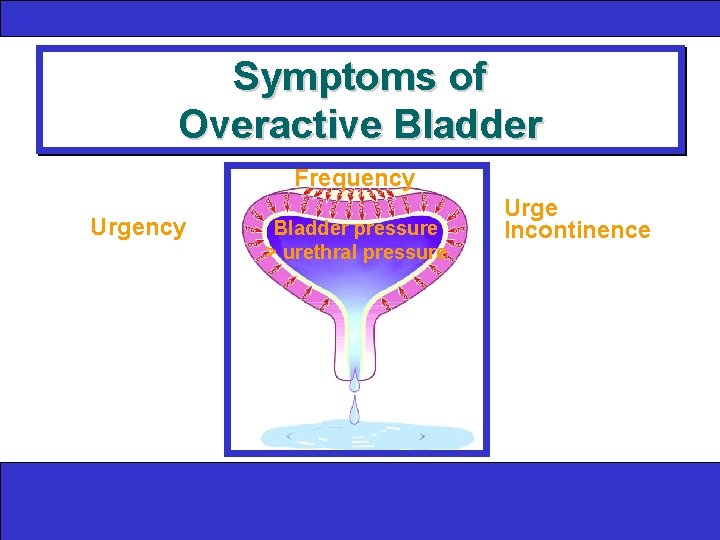
Symptoms of Overactive Bladder Frequency Urgency Bladder pressure > urethral pressure Urge Incontinence
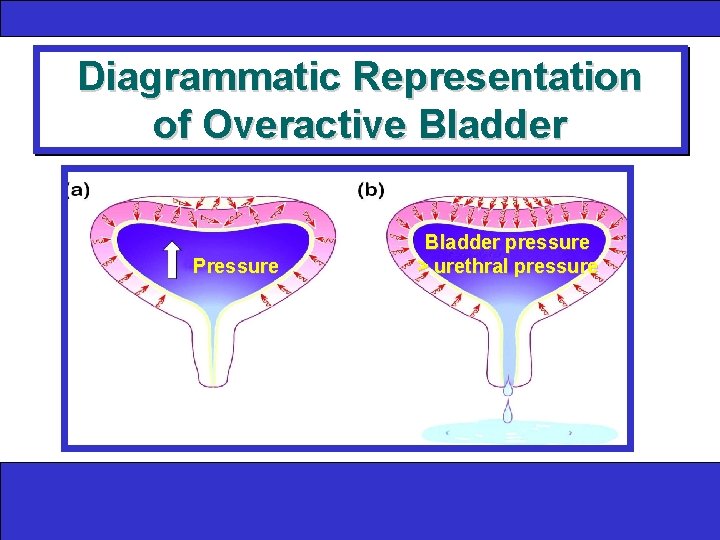
Diagrammatic Representation of Overactive Bladder Pressure Bladder pressure > urethral pressure
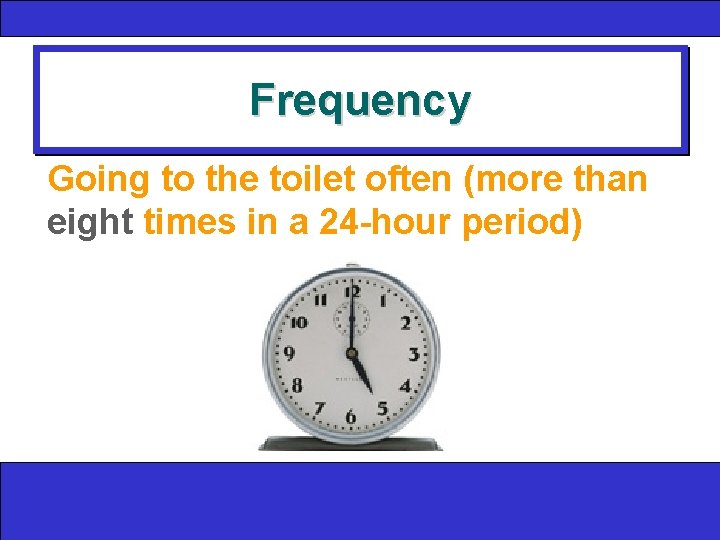
Frequency Going to the toilet often (more than eight times in a 24 -hour period)
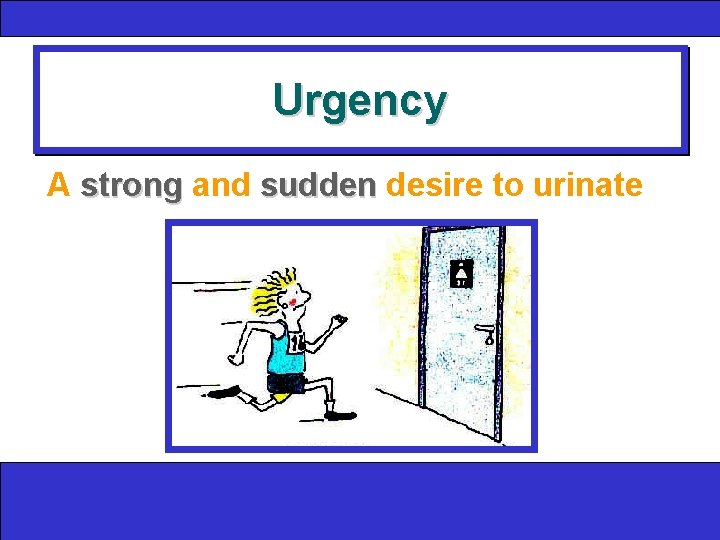
Urgency A strong and sudden desire to urinate
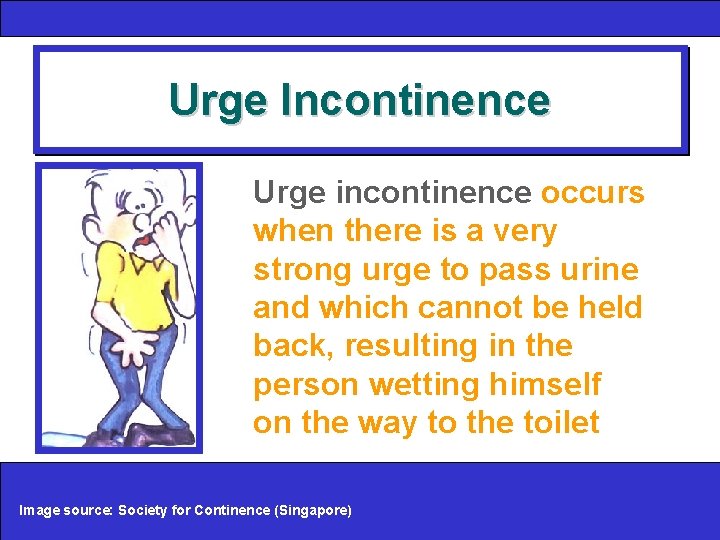
Urge Incontinence Urge incontinence occurs when there is a very strong urge to pass urine and which cannot be held back, resulting in the person wetting himself on the way to the toilet Image source: Society for Continence (Singapore)
Case Study 1 “My boyfriend and I don’t go out very often because of my problem. If we do go out, let’s say to a departmental store, the first thing that I look for is the toilet. If I can’t find one, I leave the store. That’s how serious the problem is. ” Devi, 27 years old
Case Study 2 “I visit the toilet frequently during the day – about 10 or 12 times, I think? And at night I wake up 3 or 4 times just to go to the toilet. I used to think that if I go to bed later, I wouldn’t have to get up so often. But that’s not true. ” Michelle, 36 years old

Case Study 3 “It’s so embarrassing. I see the lady who cleans the toilet more often than I see my colleagues or my boss. Because I am away from my desk so often, I always get these looks from my colleagues who think I’m lazy or trying to skive…I’m just too shy to tell anyone the truth. ” Ahmad, 53 years old
Case Study 4 “Having this problem is really bothersome! For instance, I totally avoid taking the bus or the MRT because I can’t ask the driver to stop when I suddenly have the urge to go to the toilet, can I? Also, I always wear dark clothing and carry extra pads wherever I go – just in case I leak suddenly. ” Mdm Tan, 67 years old
Problems Associated with Lack of Bladder Control • Physical • Psychological • Social • Sexual • Occupational/Financial
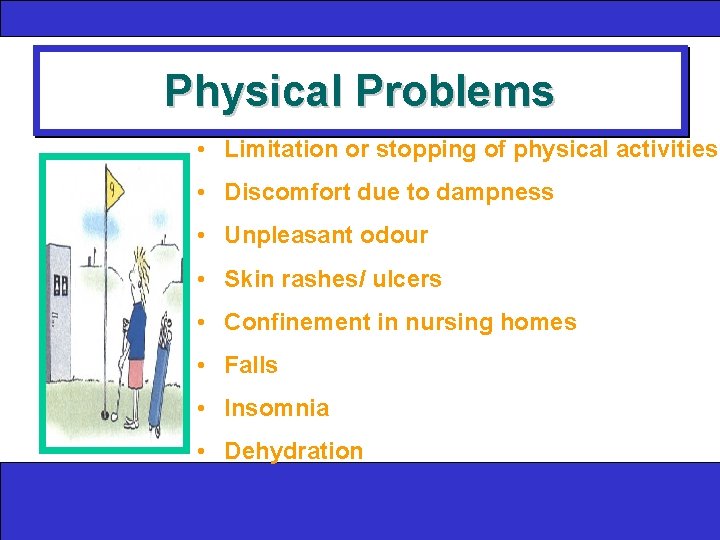
Physical Problems • Limitation or stopping of physical activities • Discomfort due to dampness • Unpleasant odour • Skin rashes/ ulcers • Confinement in nursing homes • Falls • Insomnia • Dehydration
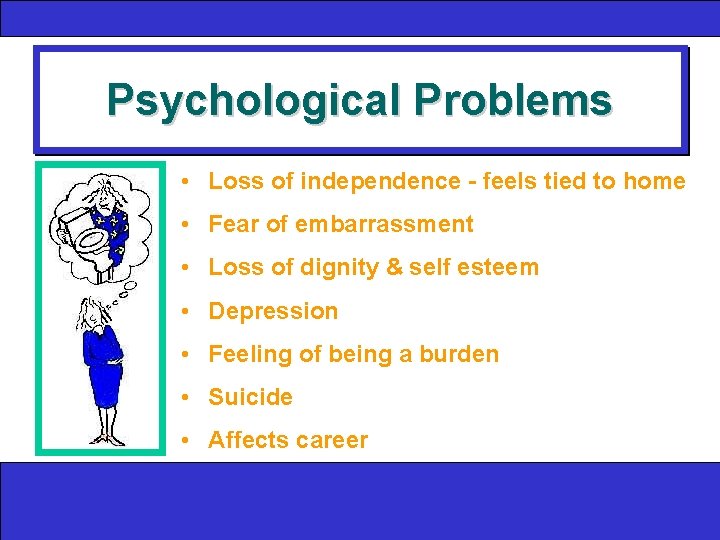
Psychological Problems • Loss of independence - feels tied to home • Fear of embarrassment • Loss of dignity & self esteem • Depression • Feeling of being a burden • Suicide • Affects career
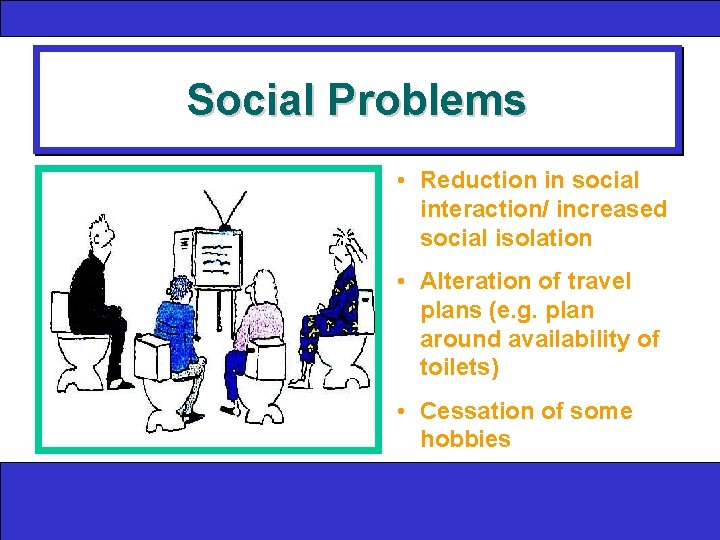
Social Problems • Reduction in social interaction/ increased social isolation • Alteration of travel plans (e. g. plan around availability of toilets) • Cessation of some hobbies
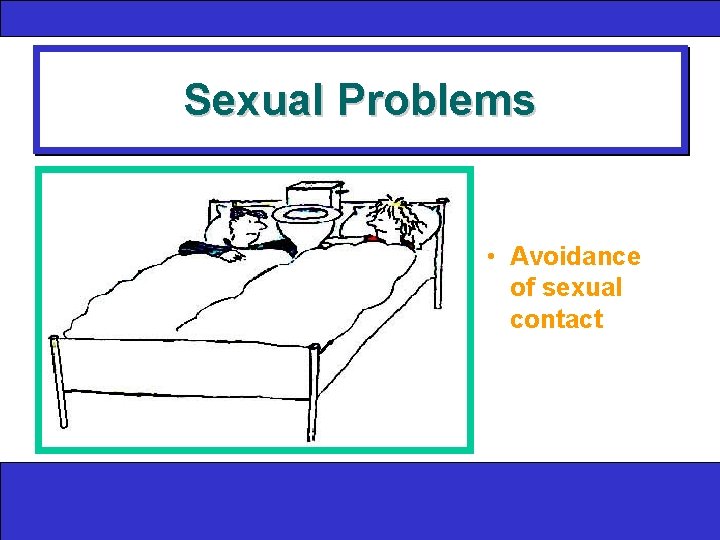
Sexual Problems • Avoidance of sexual contact
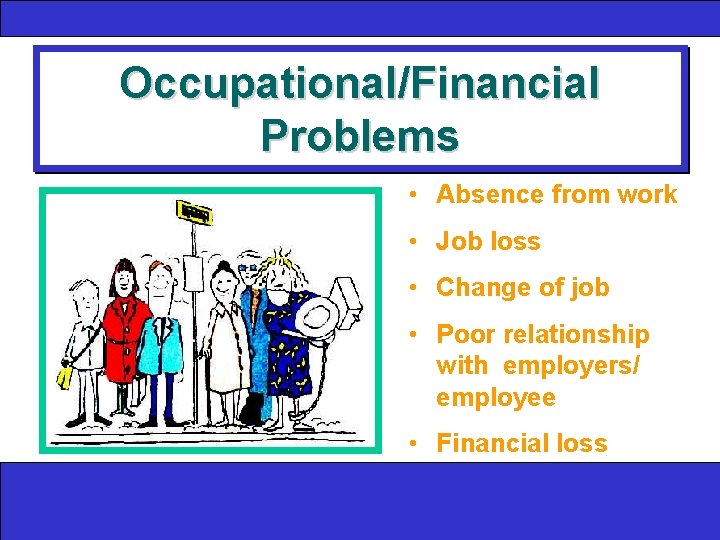
Occupational/Financial Problems • Absence from work • Job loss • Change of job • Poor relationship with employers/ employee • Financial loss
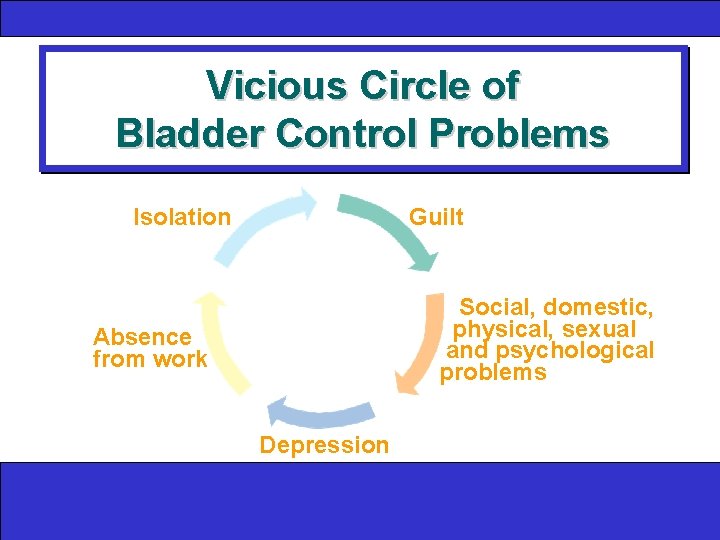
Vicious Circle of Bladder Control Problems Isolation Guilt Social, domestic, physical, sexual and psychological problems Absence from work Depression
Quality of Life • Studies show that the quality of life is significantly impaired in people with overactive bladder

Quality of Life • The Short-Form-36 measures quality of life in eight health domains: – – – – Physical functioning Role limitations due to physical health Bodily pain General health perceptions Vitality Social functioning Role limitations due to emotional problems Mental health
Quality of Life • Scores range from 0 to 100, with 100 representing perfect health. • Lower score represents lower quality of life.
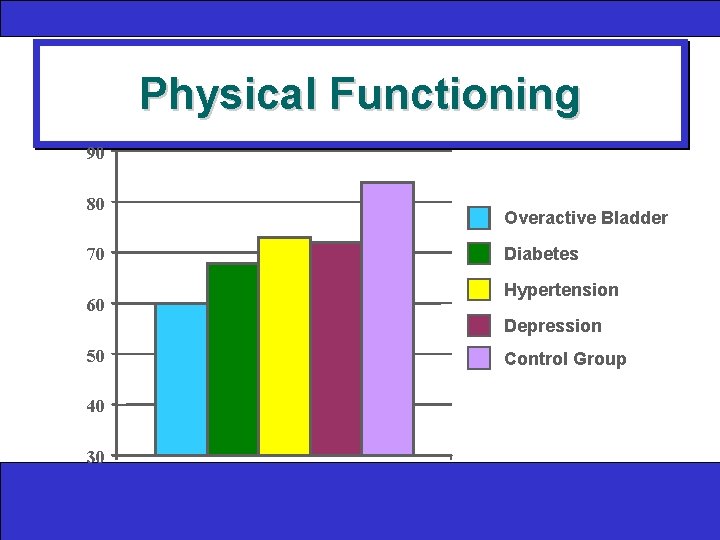
Physical Functioning 90 80 70 60 Overactive Bladder Diabetes Hypertension Depression 50 40 30 Control Group
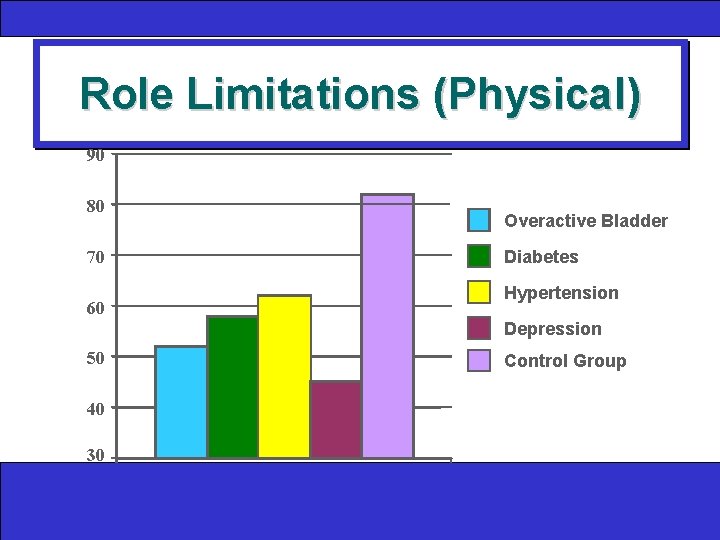
Role Limitations (Physical) 90 80 70 60 Overactive Bladder Diabetes Hypertension Depression 50 40 30 Control Group
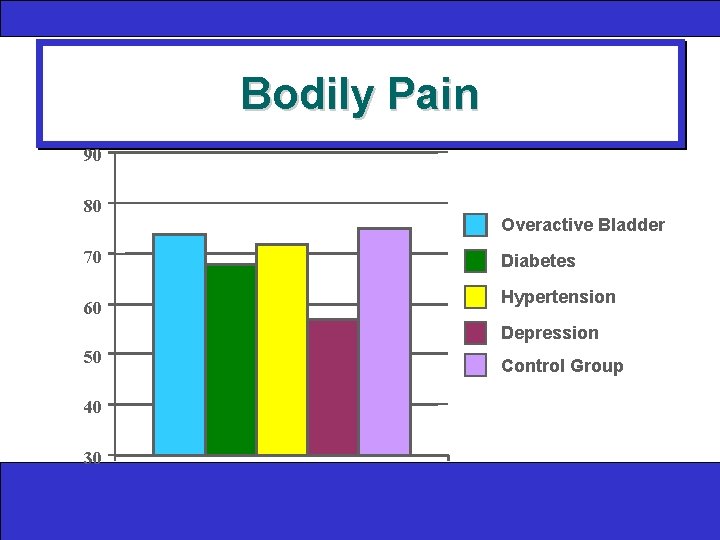
Bodily Pain 90 80 70 60 Overactive Bladder Diabetes Hypertension Depression 50 40 30 Control Group
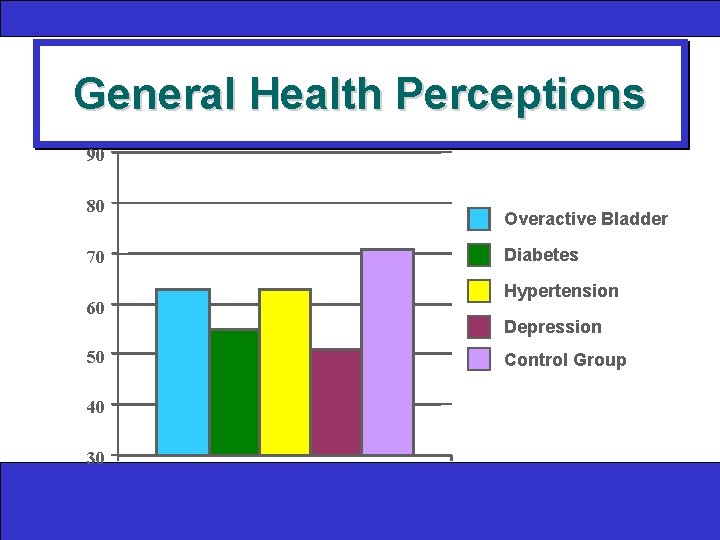
General Health Perceptions 90 80 70 60 50 40 30 Overactive Bladder Diabetes Hypertension Depression Control Group
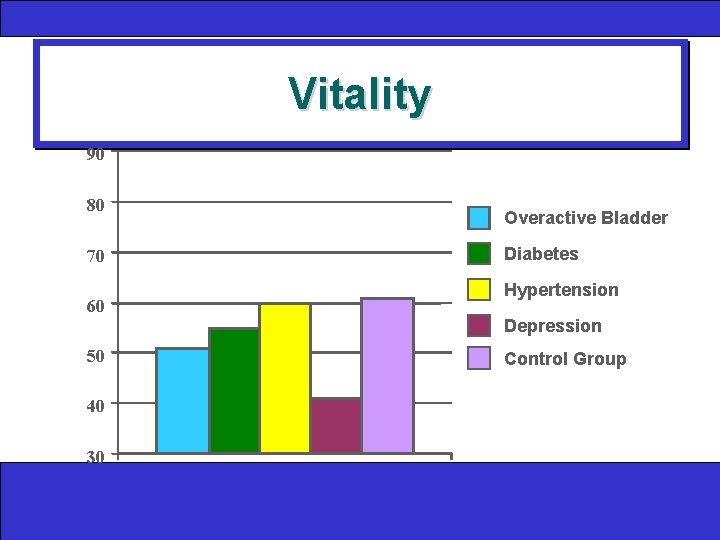
Vitality 90 80 70 60 50 40 30 Overactive Bladder Diabetes Hypertension Depression Control Group
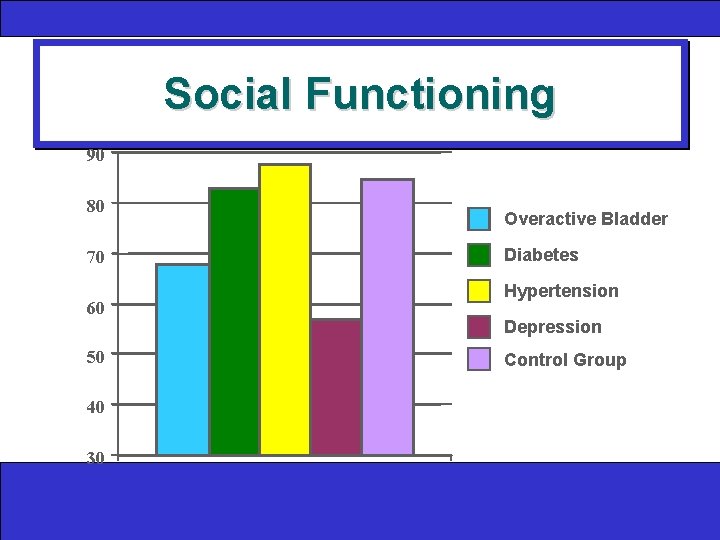
Social Functioning 90 80 70 60 50 40 30 Overactive Bladder Diabetes Hypertension Depression Control Group
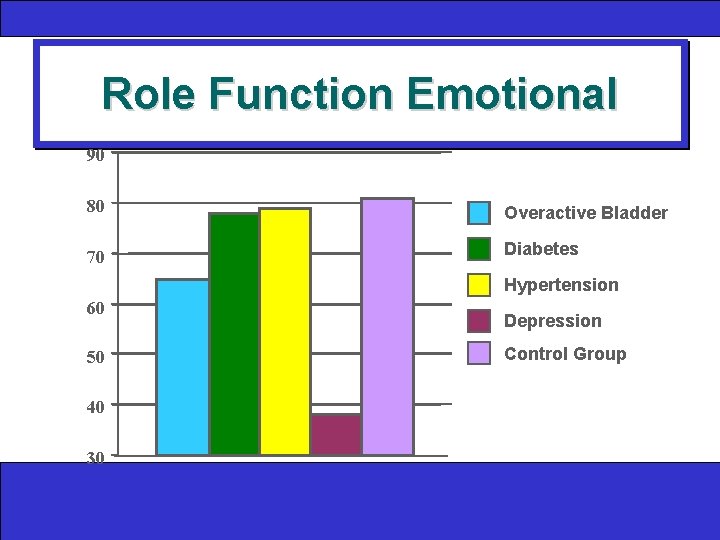
Role Function Emotional 90 80 Overactive Bladder 70 Diabetes Hypertension 60 50 40 30 Depression Control Group
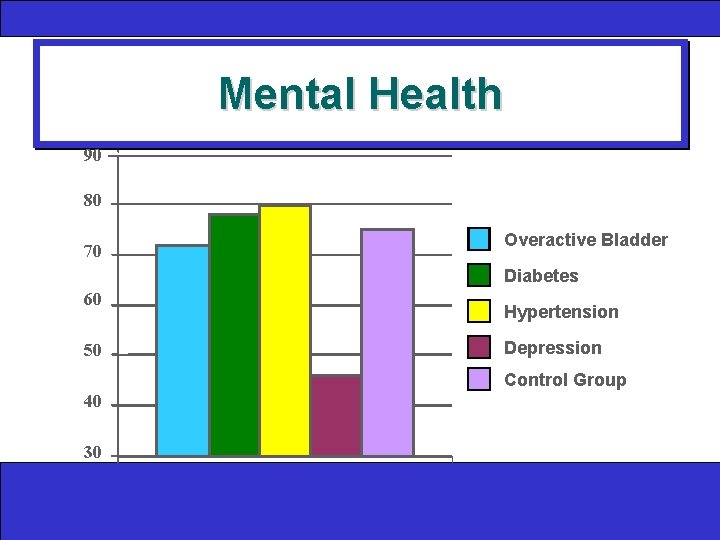
Mental Health 90 80 70 Overactive Bladder Diabetes 60 50 Hypertension Depression Control Group 40 30
Summary People with overactive bladder score similar to, or slightly lower than, individuals with diabetes or hypertension in the physical domains, and substantially lower than all other individuals, except those with depression, depression in the social and mental domains.
Cause of Overactive Bladder • In the majority of cases, the underlying cause is unknown • In some patients, the cause may be a neurological deficit. • Multiple sclerosis • Stroke • Parkinson’s Disease • Spina Bifida • Spinal cord damage
Summary • Overactive bladder is a disturbing problem. • It is NOT due to aging. • It can be treated and improved
- Slides: 33