
Outlook for the Economy in 2009 Steven Kyle
- Slides: 22
Outlook for the Economy in 2009 Steven Kyle Cornell University December 2008
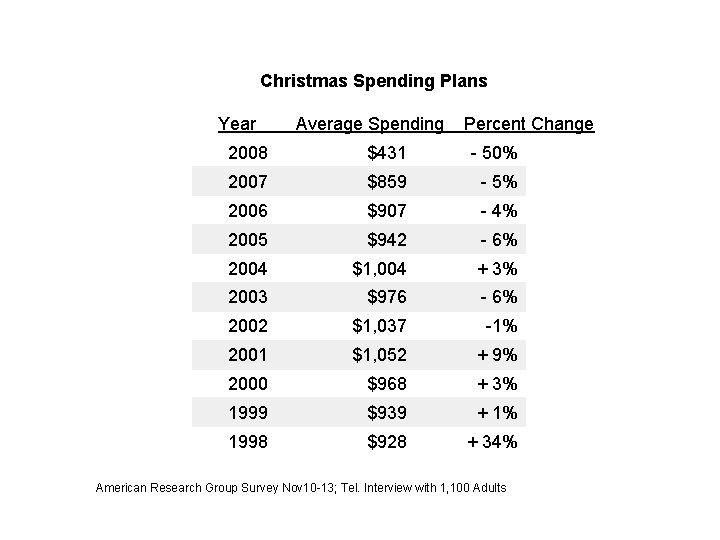
Christmas Spending Plans Year Average Spending Percent Change 2008 $431 - 50% 2007 $859 - 5% 2006 $907 - 4% 2005 $942 - 6% 2004 $1, 004 + 3% 2003 $976 - 6% 2002 $1, 037 -1% 2001 $1, 052 + 9% 2000 $968 + 3% 1999 $939 + 1% 1998 $928 + 34% American Research Group Survey Nov 10 -13; Tel. Interview with 1, 100 Adults
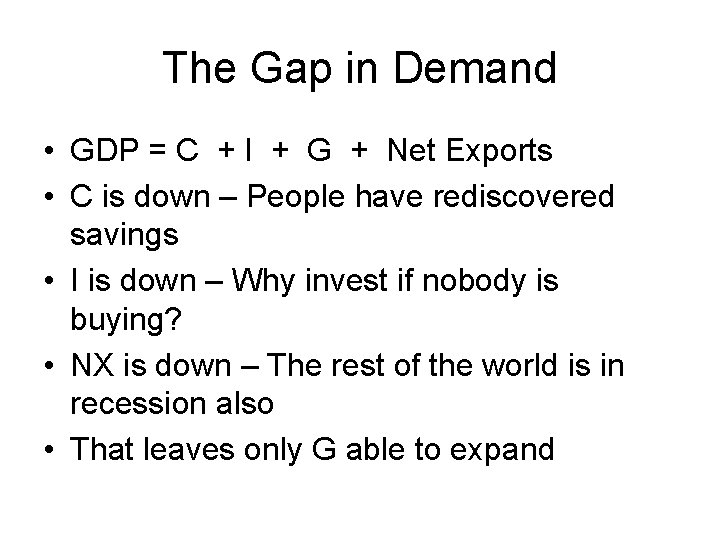
The Gap in Demand • GDP = C + I + G + Net Exports • C is down – People have rediscovered savings • I is down – Why invest if nobody is buying? • NX is down – The rest of the world is in recession also • That leaves only G able to expand
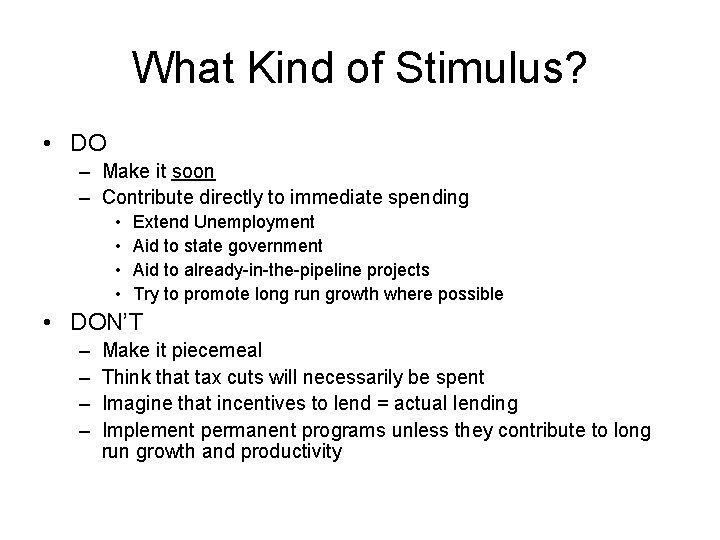
What Kind of Stimulus? • DO – Make it soon – Contribute directly to immediate spending • • Extend Unemployment Aid to state government Aid to already-in-the-pipeline projects Try to promote long run growth where possible • DON’T – – Make it piecemeal Think that tax cuts will necessarily be spent Imagine that incentives to lend = actual lending Implement permanent programs unless they contribute to long run growth and productivity
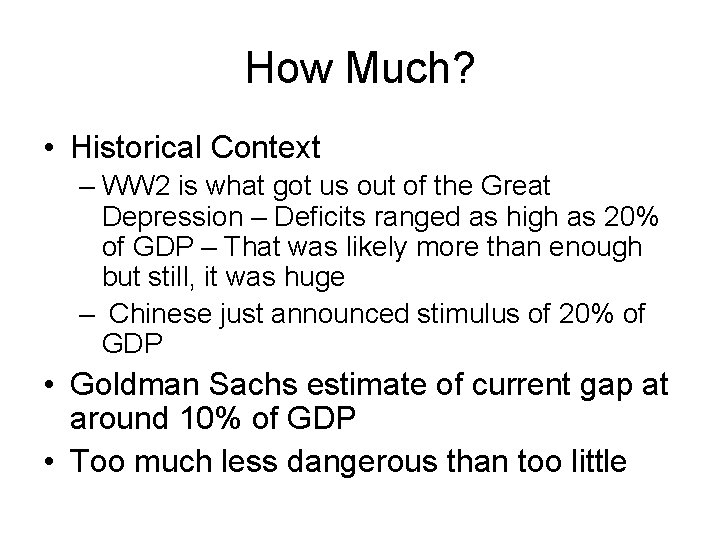
How Much? • Historical Context – WW 2 is what got us out of the Great Depression – Deficits ranged as high as 20% of GDP – That was likely more than enough but still, it was huge – Chinese just announced stimulus of 20% of GDP • Goldman Sachs estimate of current gap at around 10% of GDP • Too much less dangerous than too little
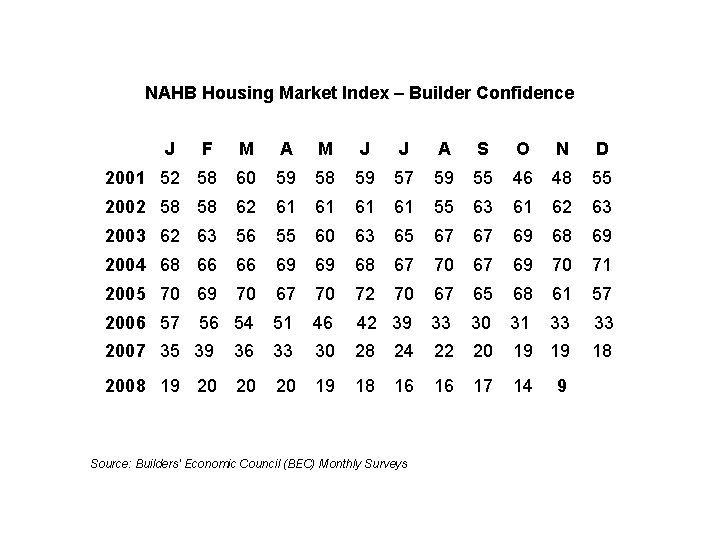
NAHB Housing Market Index – Builder Confidence J F M A M J J A S O N D 2001 52 58 60 59 58 59 57 59 55 46 48 55 2002 58 58 62 61 61 55 63 61 62 63 2003 62 63 56 55 60 63 65 67 67 69 68 69 2004 68 66 66 69 69 68 67 70 67 69 70 71 2005 70 69 70 67 70 72 70 67 65 68 61 57 56 54 51 46 42 39 33 30 31 33 33 18 2006 57 2007 35 39 36 33 30 28 24 22 20 19 19 2008 19 20 20 20 19 18 16 16 17 14 Source: Builders' Economic Council (BEC) Monthly Surveys 9