
OUTLINES Introduction Components of ABG Oxygenation Ventilation and
OUTLINES Introduction Components of ABG Oxygenation Ventilation and Acid-Base Status Pa. O 2, PH, Pa. CO 2, HCO 3, buffer system, base excess o rbase deficit and compensation. § Signs and Symptoms of Hypoxemia § Causes of Common Acid-Base Abnormalities § Steps in Arterial Blood Gas Interpretation § Blood gas interpretation § Examples of Arterial Blood Gases and Compensation § §
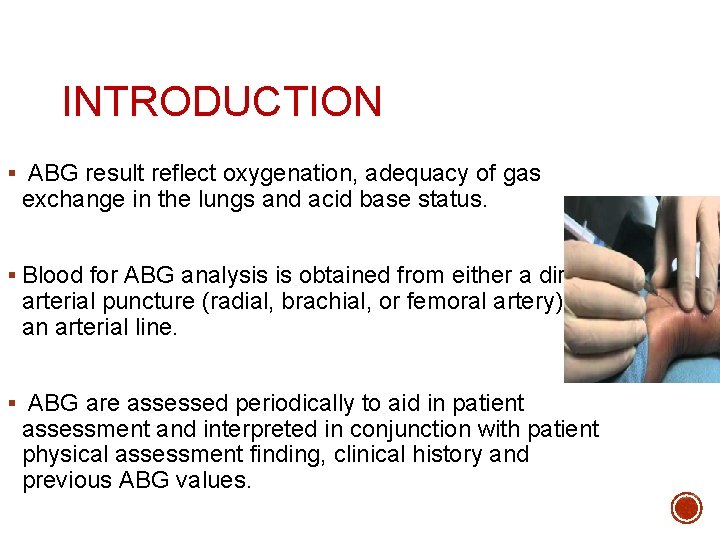
INTRODUCTION § ABG result reflect oxygenation, adequacy of gas exchange in the lungs and acid base status. § Blood for ABG analysis is obtained from either a direct arterial puncture (radial, brachial, or femoral artery) or an arterial line. § ABG are assessed periodically to aid in patient assessment and interpreted in conjunction with patient physical assessment finding, clinical history and previous ABG values.
COMPONENTS OF ABG § Components of ABG: Oxygenation: The ABG values that reflects oxygenation include the Partial pressure of arterial oxygen dissolve in arterial blood (Pa. O 2) and the arterial oxygen saturation of hemoglobin (Sa. O 2). 1. Ventilation and Acid-Base Status: Blood gas values that reflect ventilation and acid base or metabolic status include the partial pressure of carbon dioxide (Pa. Co 2), PH and bicarbonate (HCO 3). 2.
§ Pa. O 2: The normal is 80 to 100 mm. Hg and for persons 60 to 80 years of age usually ranges from 60 to 80 mm. Hg. If Pa. O 2 < 60 mm. Hg is referred to as hypoxemia. § Sa. O 2: The amount of Oxygen bound to hemoglobin, the normal range is 98% to 99%. § PH: The concentration of hydrogen ions (H+) in the blood, it is acid and the normal range is 7. 35 to 7. 45 § Pa. CO 2: It is dissolve in arterial plasma, regulated by the lungs and has a normal range of 35 to 45 mm. Hg. § HCO 3 (Sodium Bicarbonate): It is abase , a substance that neutralizes or buffer acids, it is regulated by the kidneys and it is normal range is 22 to 26 m. Eq/L
Buffer system: - The body regulates acid base balance through buffer system, which are subtances that minimize the changes in PH when either acids or bases are added. - Acids are neutralize through combination with a base and vice versa. - The most important buffer system is bicarbonate because it accounts for more than half of the total buffering. - Ii is activated as the H+ concentration increase and operates by using the lungs to regulate CO 2 and the kidney to regulate HCO 3.
§ Base excess or Base Deficit: - It reflects the sum of all of the buffer bases in the body, the total buffer base. The normal range is -2 to +2 m. Eq/L. - In metabolic acidosis; the body’s buffer are used up in attempt to neutralize the acids, and a base deficit occurs. - In metabolic alkalosis , the total buffer base increases and the patient will have a base excess. - All metabolic acid-base disturbances accompanied by change in base excess/base deficit. - In pure respiratory acid-base disturbances, the base exess/base deficit is normal.
§ Compensation: - Mechanism used by the body to normalize the PH when a primary acid-base abnormality occurs. - Compensation for primary metabolic acid-base abnormalities is via the respiratory system, which responds quickly: Ø In metabolic acidosis, the depth and rate of ventilation is increased in an effort to blow of more CO 2. Ø Im metabolic alkalosis, the rate and depth of ventilation may be decreased in an effort to retain acid. - Respiratory compensation is limited because of the body’s mechanism to limit hypoventilation. - The kidney excrete HCO 3 when respiratory alkalosis is present and retain HCO 3 when respiratory acidosis is present - Renal system activates more slowly and may take up to 2 days to regulate acid base balance. - The renal and respiratory system exist in harmony to
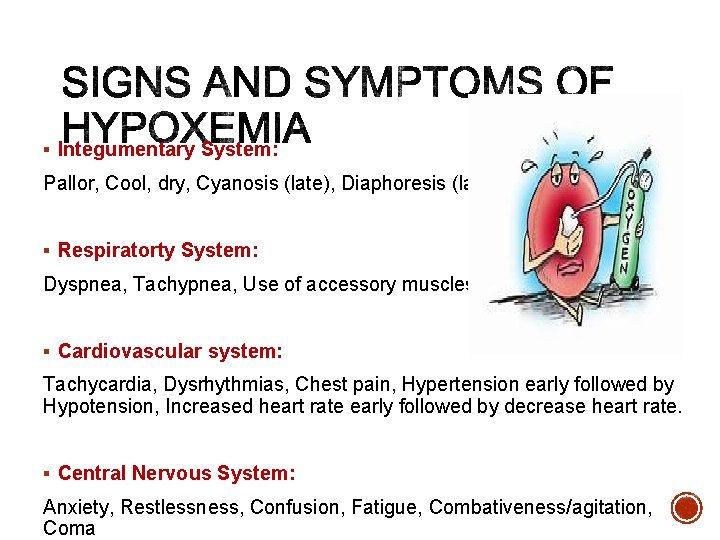
§ Integumentary System: Pallor, Cool, dry, Cyanosis (late), Diaphoresis (late) § Respiratorty System: Dyspnea, Tachypnea, Use of accessory muscles § Cardiovascular system: Tachycardia, Dysrhythmias, Chest pain, Hypertension early followed by Hypotension, Increased heart rate early followed by decrease heart rate. § Central Nervous System: Anxiety, Restlessness, Confusion, Fatigue, Combativeness/agitation, Coma
§ Respiratory Acidosis; Retention of CO 2: - Hypoventilation - CNS depression (anesthesia, narcotics, sedatives, drug overdose) - respiratory neuromuscular disorders - Trauma; spine, brain, chest wall - Restructive lung disease - Chronic obstructive pulmonary disease - Acute airway obstruction (late phase)
§ Respiratory Alkalosis; Hyperventilation: - Hypoxemia. - Anxiyty, fear - Pain - Fever - Stimulants - CNS irritation (e. g central hyperventilation) - Excessive ventilatory support (bag – valve –mask, mechanical ventilation)
§ Metabolic Acidosis: ØIncresde Acids; - Diabetic ketoacidosis - Renal failure - Lactic acidosis - Drug overdose (salicylate, methanol, ethylene glycol) ØLoss of Base; -Diarrhea -Pancreatic or small bowel fluid loss.
§ Metabolic Alkalosis Ø Gain base; - Excess ingestion of antacids - Excess administration of sodium bicarbonate. - Citrate in blood transfusion Ø Loss of metabolic acids: - Vomiting - Nasogastric suctioning - Low potassium and/or chloride - Diuretics (loss of chloride and/or potassium)
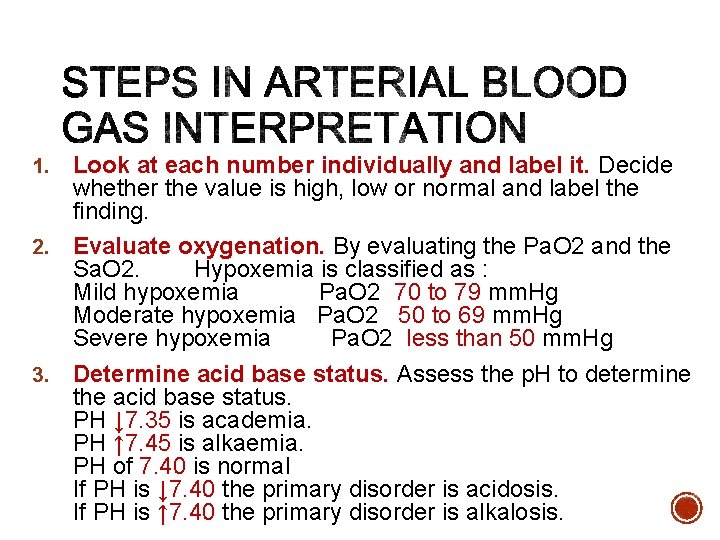
Look at each number individually and label it. Decide whether the value is high, low or normal and label the finding. 2. Evaluate oxygenation. By evaluating the Pa. O 2 and the Sa. O 2. Hypoxemia is classified as : Mild hypoxemia Pa. O 2 70 to 79 mm. Hg Moderate hypoxemia Pa. O 2 50 to 69 mm. Hg Severe hypoxemia Pa. O 2 less than 50 mm. Hg 3. Determine acid base status. Assess the p. H to determine the acid base status. PH ↓ 7. 35 is academia. PH ↑ 7. 45 is alkaemia. PH of 7. 40 is normal If PH is ↓ 7. 40 the primary disorder is acidosis. If PH is ↑ 7. 40 the primary disorder is alkalosis. 1.
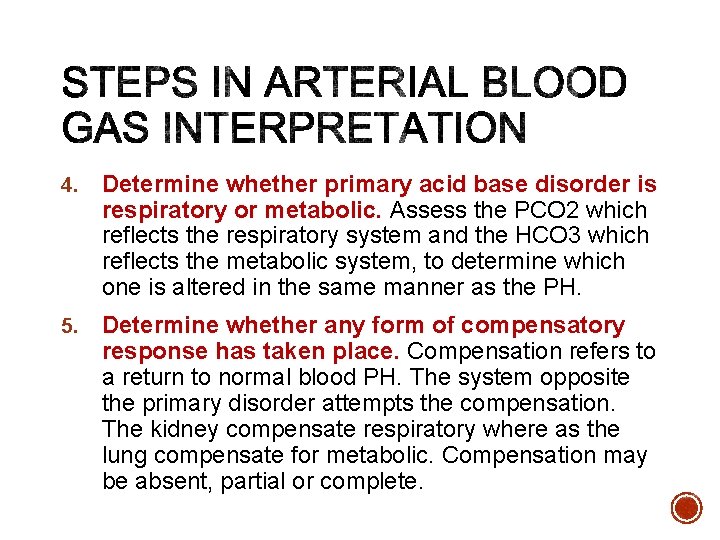
4. Determine whether primary acid base disorder is respiratory or metabolic. Assess the PCO 2 which reflects the respiratory system and the HCO 3 which reflects the metabolic system, to determine which one is altered in the same manner as the PH. 5. Determine whether any form of compensatory response has taken place. Compensation refers to a return to normal blood PH. The system opposite the primary disorder attempts the compensation. The kidney compensate respiratory where as the lung compensate for metabolic. Compensation may be absent, partial or complete.
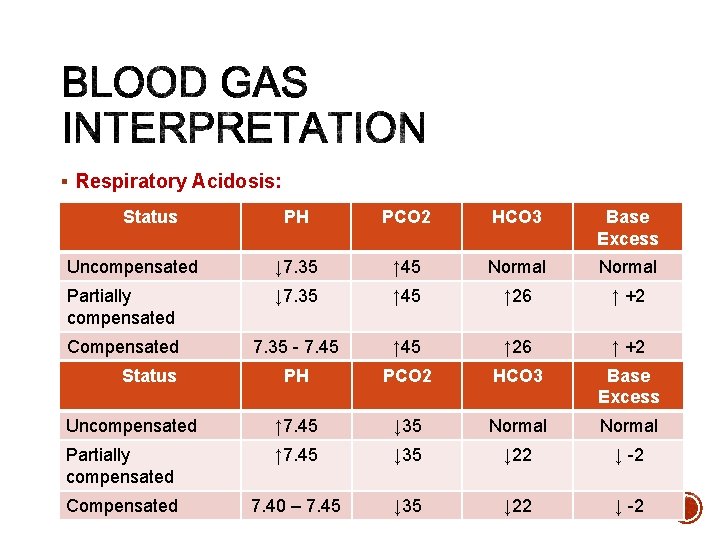
§ Respiratory Acidosis: Status PH PCO 2 HCO 3 Base Excess Uncompensated ↓ 7. 35 ↑ 45 Normal Partially compensated ↓ 7. 35 ↑ 45 ↑ 26 ↑ +2 PCO 2 HCO 3 Base Excess 7. 35 - 7. 45 §Compensated Respiratory Alkalosis: Status PH Uncompensated ↑ 7. 45 ↓ 35 Normal Partially compensated ↑ 7. 45 ↓ 35 ↓ 22 ↓ -2 Compensated 7. 40 – 7. 45 ↓ 35 ↓ 22 ↓ -2
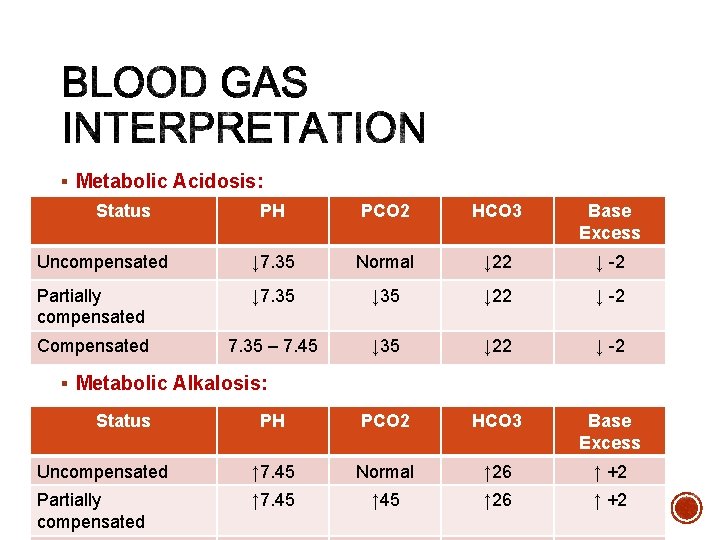
§ Metabolic Acidosis: Status PH PCO 2 HCO 3 Base Excess Uncompensated ↓ 7. 35 Normal ↓ 22 ↓ -2 Partially compensated ↓ 7. 35 ↓ 22 ↓ -2 Compensated 7. 35 – 7. 45 ↓ 35 ↓ 22 ↓ -2 PH PCO 2 HCO 3 Base Excess Uncompensated ↑ 7. 45 Normal ↑ 26 ↑ +2 Partially compensated ↑ 7. 45 ↑ 26 ↑ +2 § Metabolic Alkalosis: Status
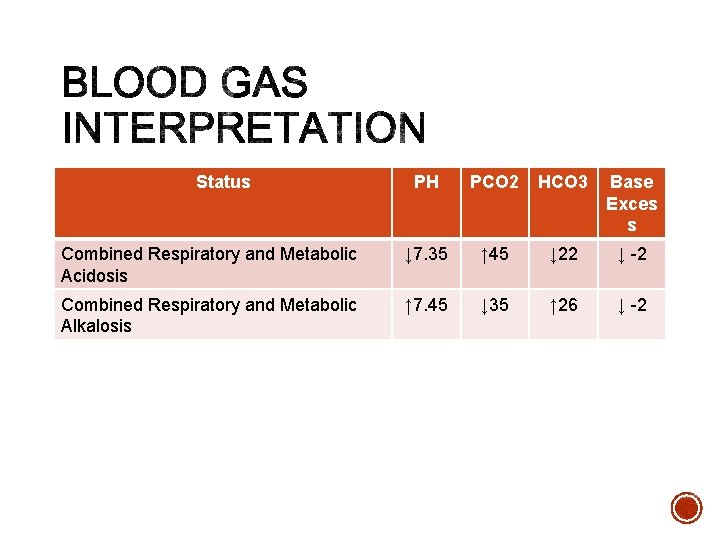
Status PH PCO 2 HCO 3 Base Exces s Combined Respiratory and Metabolic Acidosis ↓ 7. 35 ↑ 45 ↓ 22 ↓ -2 Combined Respiratory and Metabolic Alkalosis ↑ 7. 45 ↓ 35 ↑ 26 ↓ -2
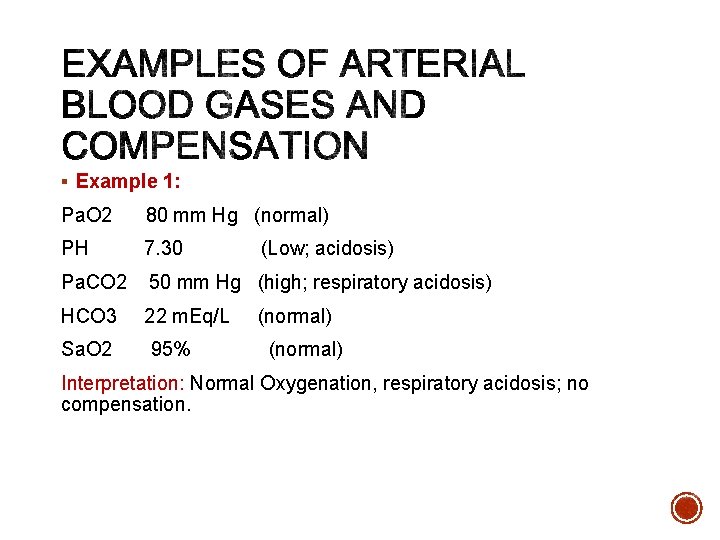
§ Example 1: Pa. O 2 80 mm Hg (normal) PH 7. 30 Pa. CO 2 50 mm Hg (high; respiratory acidosis) HCO 3 22 m. Eq/L Sa. O 2 95% (Low; acidosis) (normal) Interpretation: Normal Oxygenation, respiratory acidosis; no compensation.
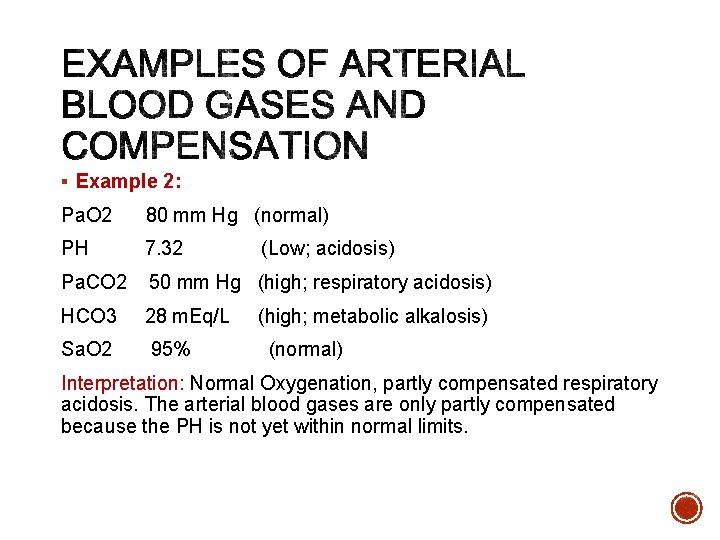
§ Example 2: Pa. O 2 80 mm Hg (normal) PH 7. 32 Pa. CO 2 50 mm Hg (high; respiratory acidosis) HCO 3 28 m. Eq/L Sa. O 2 95% (Low; acidosis) (high; metabolic alkalosis) (normal) Interpretation: Normal Oxygenation, partly compensated respiratory acidosis. The arterial blood gases are only partly compensated because the PH is not yet within normal limits.
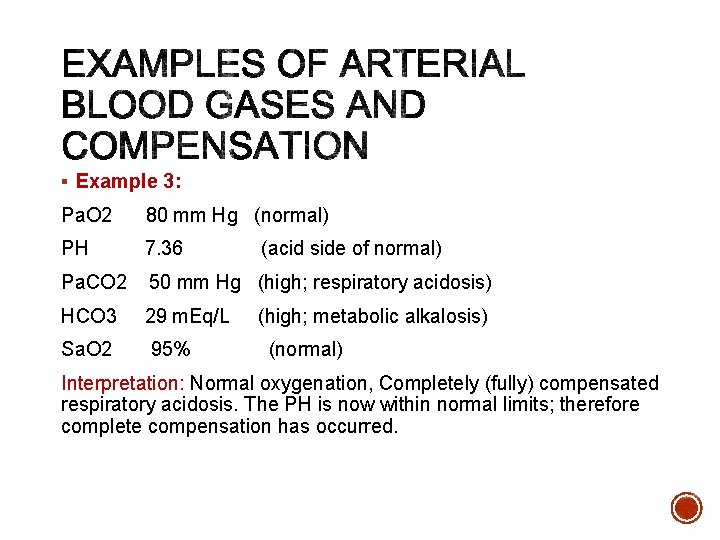
§ Example 3: Pa. O 2 80 mm Hg (normal) PH 7. 36 Pa. CO 2 50 mm Hg (high; respiratory acidosis) HCO 3 29 m. Eq/L Sa. O 2 95% (acid side of normal) (high; metabolic alkalosis) (normal) Interpretation: Normal oxygenation, Completely (fully) compensated respiratory acidosis. The PH is now within normal limits; therefore complete compensation has occurred.

Thank You
- Slides: 22