
Outlines DKA definition classification DKA manifestation DKA management

- Slides: 31
Outlines • • DKA definition & classification DKA manifestation DKA management Cerebral edema
A 6 yr old girl (wt =20 kg ) has refered to the pediatric emergency department with : • Complaint of abdominal pain , nausea , vomiting and , dyspnea. • History of polydipsia , polyuria, polyphagia , nocturia and weigh loss from 2 weeks ago (following viral infection). • PE : lethargic , dehydration , tachypnea , orthostatic hypotension.
DIFFERENTIAL DIAGNOSIS? GASTEROENTERITIS PNEUMONIA POISONING DIABETIC KETOACIDOSIS INBORN ERROR OF METABOLISM
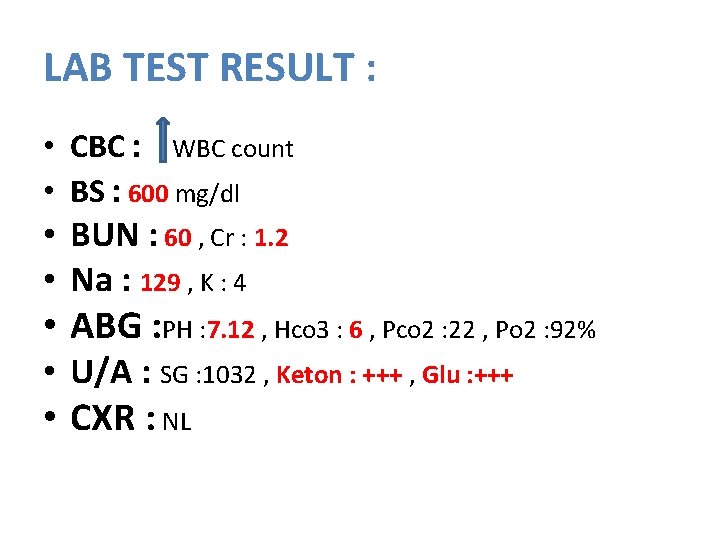
LAB TEST RESULT : • CBC : WBC count • BS : 600 mg/dl • BUN : 60 , Cr : 1. 2 • Na : 129 , K : 4 • ABG : PH : 7. 12 , Hco 3 : 6 , Pco 2 : 22 , Po 2 : 92% • U/A : SG : 1032 , Keton : +++ , Glu : +++ • CXR : NL
WHAT IS THE DIAGNOSIS? DIABETIC KETOACIDOSIS
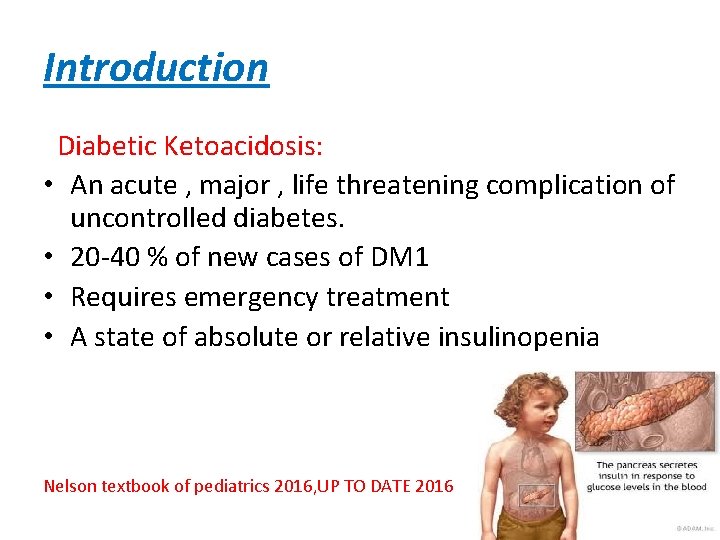
Introduction Diabetic Ketoacidosis: • An acute , major , life threatening complication of uncontrolled diabetes. • 20 -40 % of new cases of DM 1 • Requires emergency treatment • A state of absolute or relative insulinopenia Nelson textbook of pediatrics 2016, UP TO DATE 2016
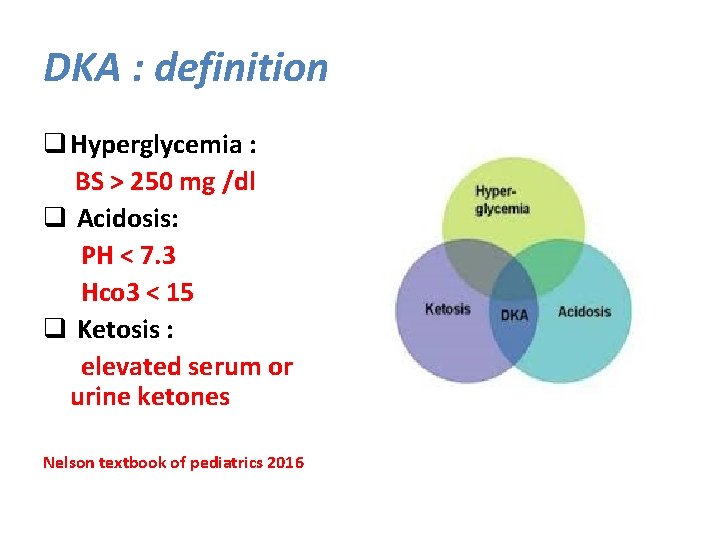
DKA : definition q Hyperglycemia : BS > 250 mg /dl q Acidosis: PH < 7. 3 Hco 3 < 15 q Ketosis : elevated serum or urine ketones Nelson textbook of pediatrics 2016
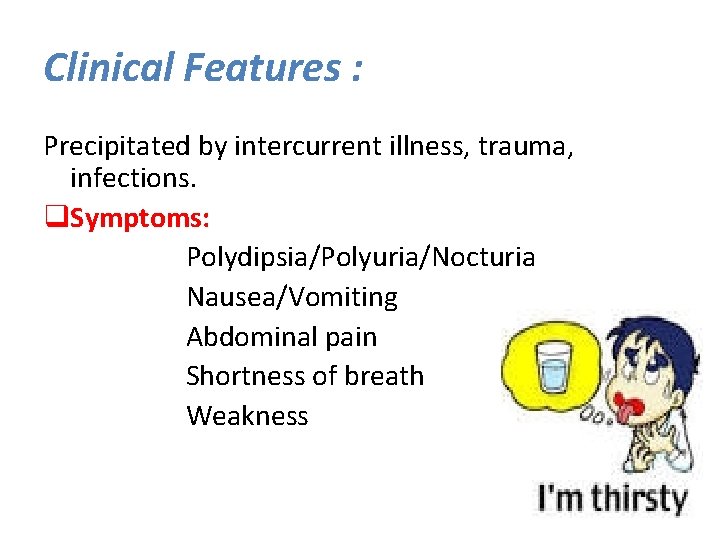
Clinical Features : Precipitated by intercurrent illness, trauma, infections. q. Symptoms: Polydipsia/Polyuria/Nocturia Nausea/Vomiting Abdominal pain Shortness of breath Weakness
Clinical Features : q. Signs: Dehydration Hypotention Tachycardia Tachypnea/Kussmaul respiration Aceton odour of breath Abdominal tenderness Lethargy………………coma
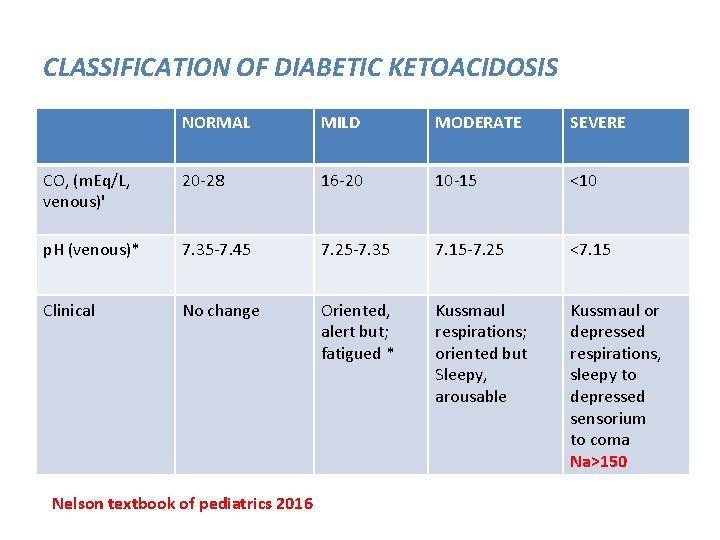
CLASSIFICATION OF DIABETIC KETOACIDOSIS NORMAL MILD MODERATE SEVERE CO, (m. Eq/L, venous)' 20 -28 16 -20 10 -15 <10 p. H (venous)* 7. 35 -7. 45 7. 25 -7. 35 7. 15 -7. 25 <7. 15 Clinical No change Oriented, alert but; fatigued * Kussmaul respirations; oriented but Sleepy, arousable Kussmaul or depressed respirations, sleepy to depressed sensorium to coma Na>150 Nelson textbook of pediatrics 2016
Aims of DKA management üRestore normal hemodynamic status üRestore normal acid-base balance üCorrect blood glucose üCorrect electrolyte losses üAvoid complications
“Children are not small adults” • • • Several protocols: ISPAD Milwaukee ADA ESPE , …. .
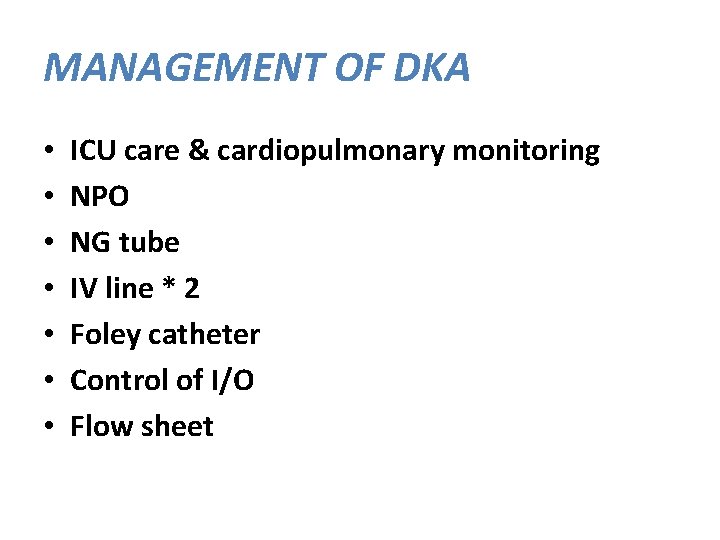
MANAGEMENT OF DKA • • ICU care & cardiopulmonary monitoring NPO NG tube IV line * 2 Foley catheter Control of I/O Flow sheet
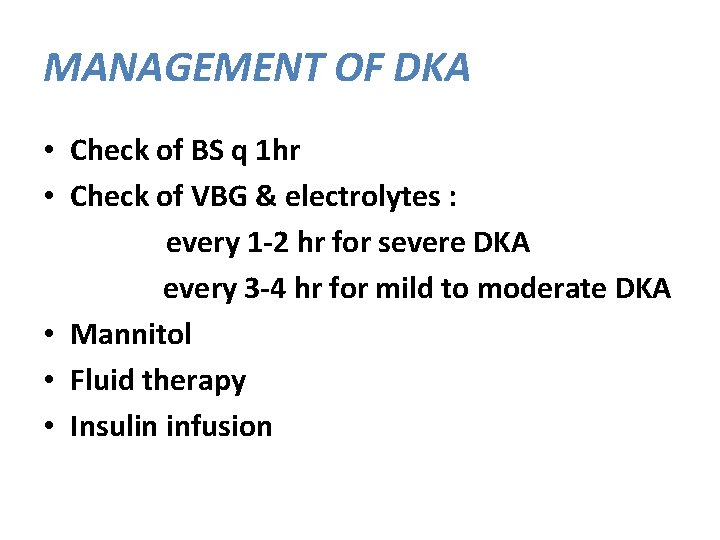
MANAGEMENT OF DKA • Check of BS q 1 hr • Check of VBG & electrolytes : every 1 -2 hr for severe DKA every 3 -4 hr for mild to moderate DKA • Mannitol • Fluid therapy • Insulin infusion
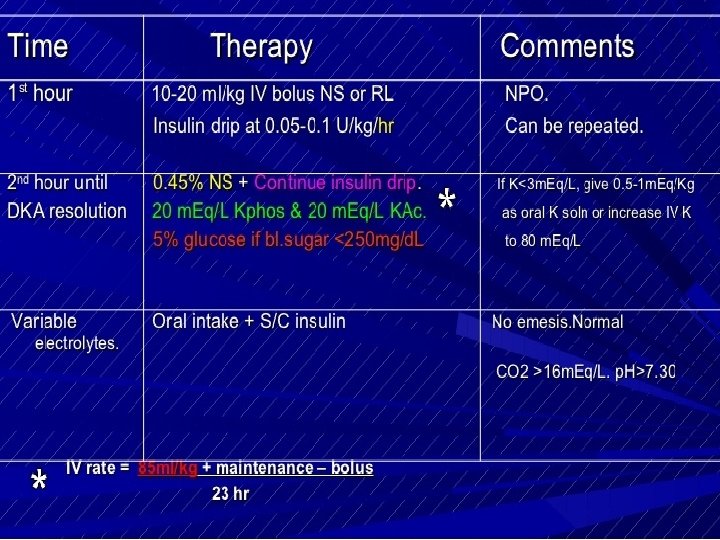
Milwaukee DKA Protocol :
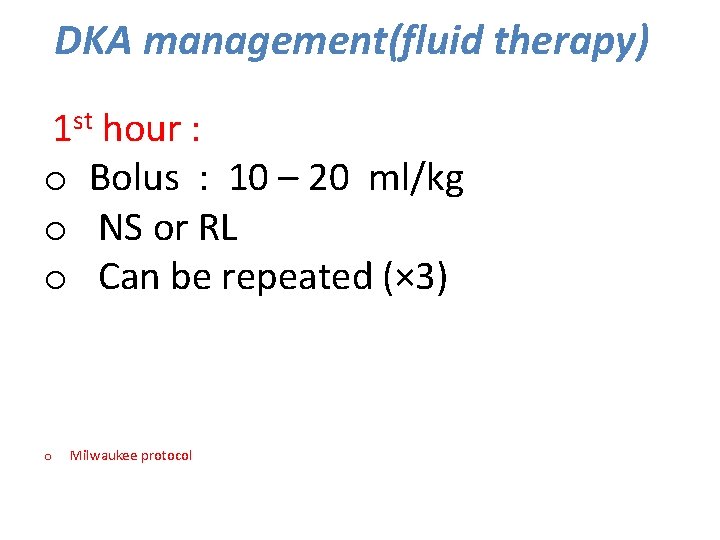
DKA management(fluid therapy) 1 st hour : o Bolus : 10 – 20 ml/kg o NS or RL o Can be repeated (× 3) o Milwaukee protocol
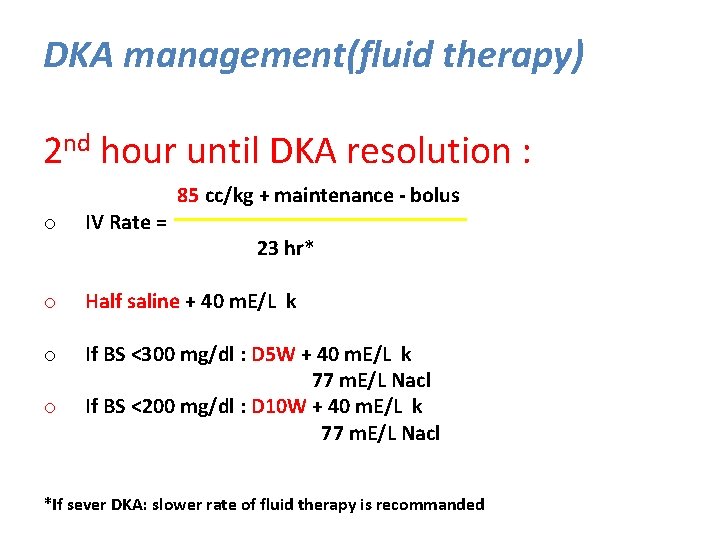
DKA management(fluid therapy) 2 nd hour until DKA resolution : 85 cc/kg + maintenance - bolus o IV Rate = o Half saline + 40 m. E/L k o If BS <300 mg/dl : D 5 W + 40 m. E/L k 77 m. E/L Nacl If BS <200 mg/dl : D 10 W + 40 m. E/L k 77 m. E/L Nacl o 23 hr* *If sever DKA: slower rate of fluid therapy is recommanded
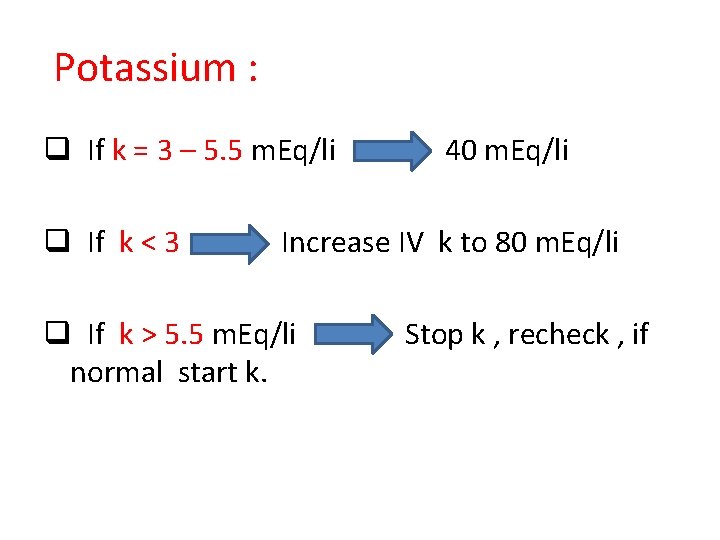
Potassium : q If k = 3 – 5. 5 m. Eq/li q If k < 3 40 m. Eq/li Increase IV k to 80 m. Eq/li q If k > 5. 5 m. Eq/li normal start k. Stop k , recheck , if
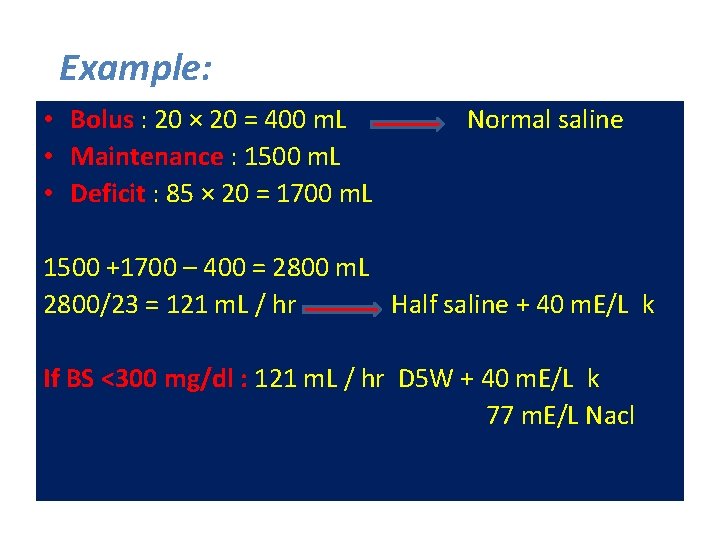
Example: • Bolus : 20 × 20 = 400 m. L • Maintenance : 1500 m. L • Deficit : 85 × 20 = 1700 m. L Normal saline 1500 +1700 – 400 = 2800 m. L 2800/23 = 121 m. L / hr Half saline + 40 m. E/L k If BS <300 mg/dl : 121 m. L / hr D 5 W + 40 m. E/L k 77 m. E/L Nacl
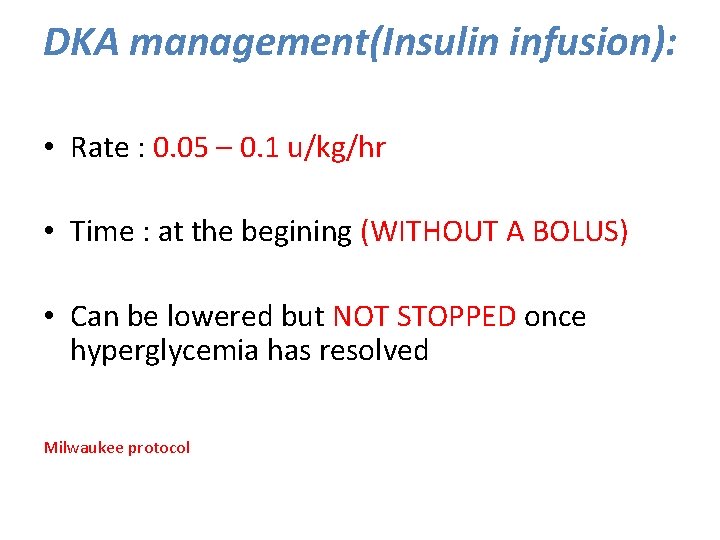
DKA management(Insulin infusion): • Rate : 0. 05 – 0. 1 u/kg/hr • Time : at the begining (WITHOUT A BOLUS) • Can be lowered but NOT STOPPED once hyperglycemia has resolved Milwaukee protocol
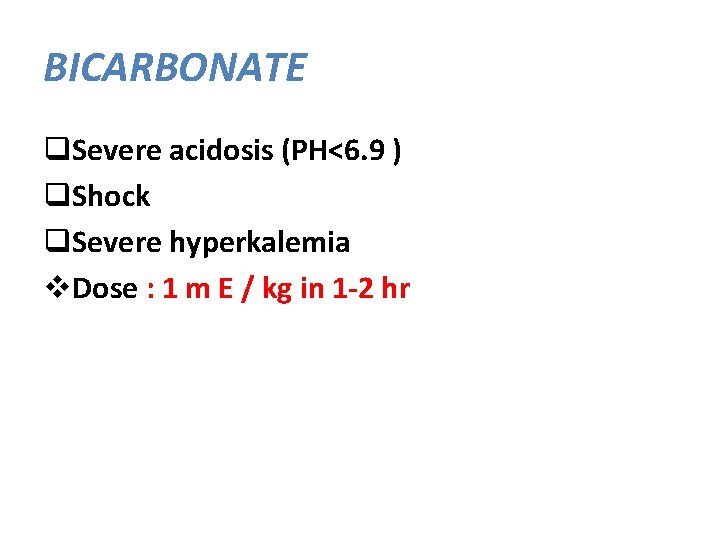
BICARBONATE q. Severe acidosis (PH<6. 9 ) q. Shock q. Severe hyperkalemia v. Dose : 1 m E / kg in 1 -2 hr
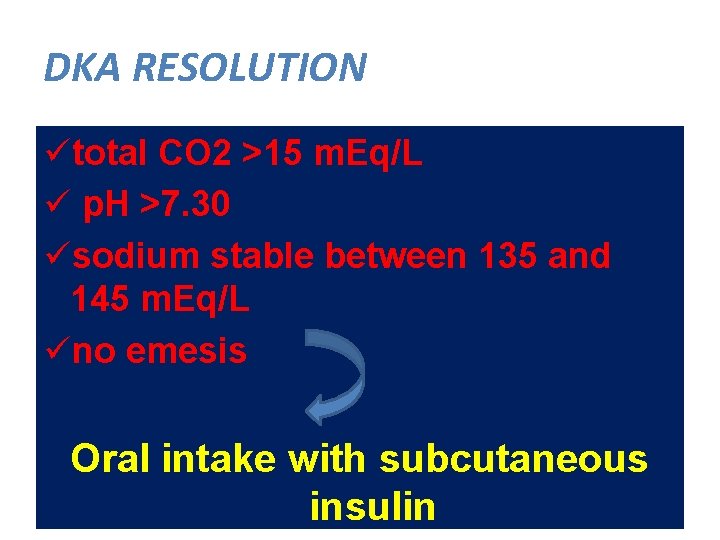
DKA RESOLUTION ütotal CO 2 >15 m. Eq/L ü p. H >7. 30 üsodium stable between 135 and 145 m. Eq/L üno emesis Oral intake with subcutaneous insulin
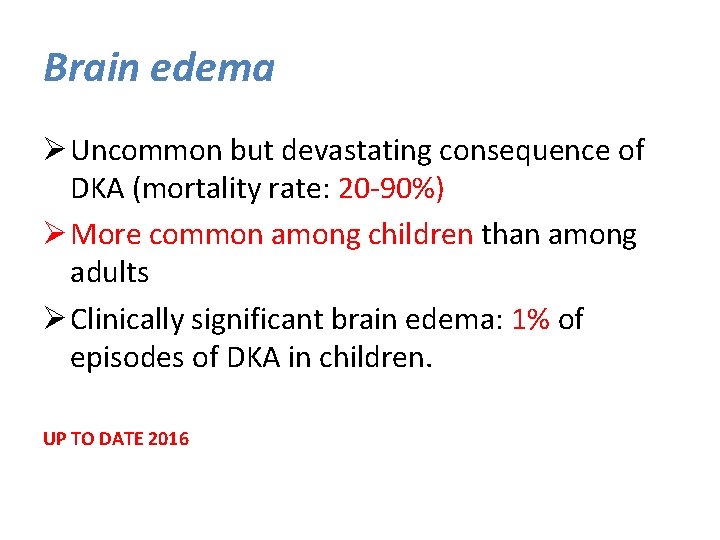
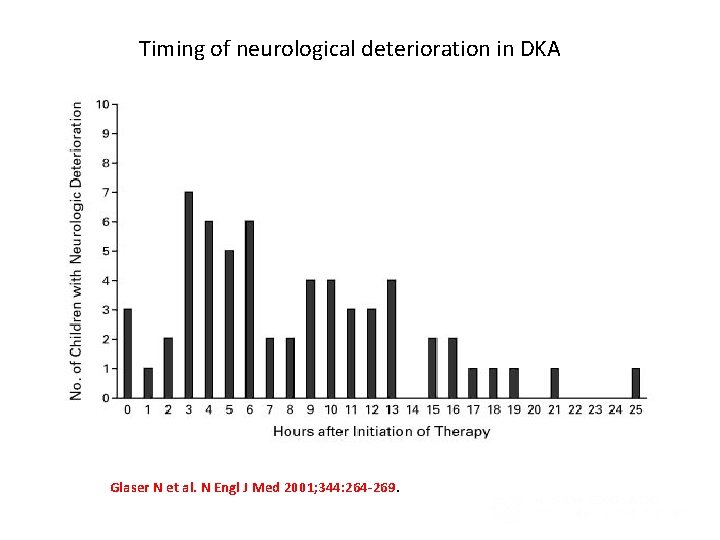
Brain edema Ø Uncommon but devastating consequence of DKA (mortality rate: 20 -90%) Ø More common among children than among adults Ø Clinically significant brain edema: 1% of episodes of DKA in children. UP TO DATE 2016
Timing of neurological deterioration in DKA Glaser N et al. N Engl J Med 2001; 344: 264 -269.
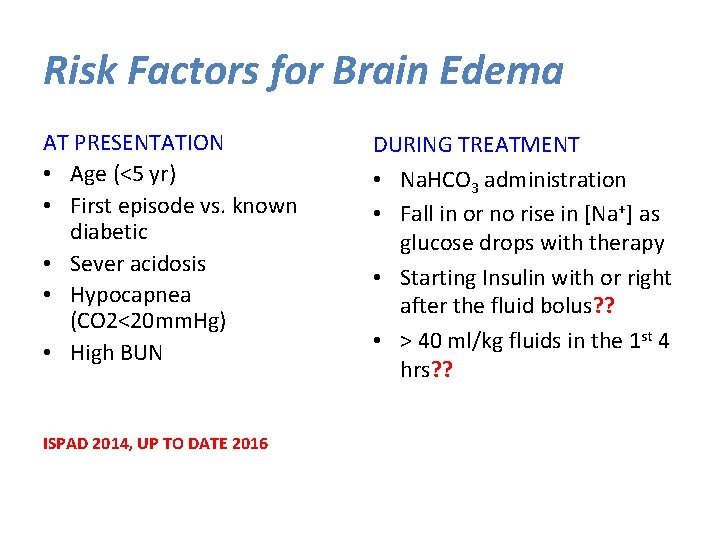
Risk Factors for Brain Edema AT PRESENTATION • Age (<5 yr) • First episode vs. known diabetic • Sever acidosis • Hypocapnea (CO 2<20 mm. Hg) • High BUN ISPAD 2014, UP TO DATE 2016 DURING TREATMENT • Na. HCO 3 administration • Fall in or no rise in [Na+] as glucose drops with therapy • Starting Insulin with or right after the fluid bolus? ? • > 40 ml/kg fluids in the 1 st 4 hrs? ?
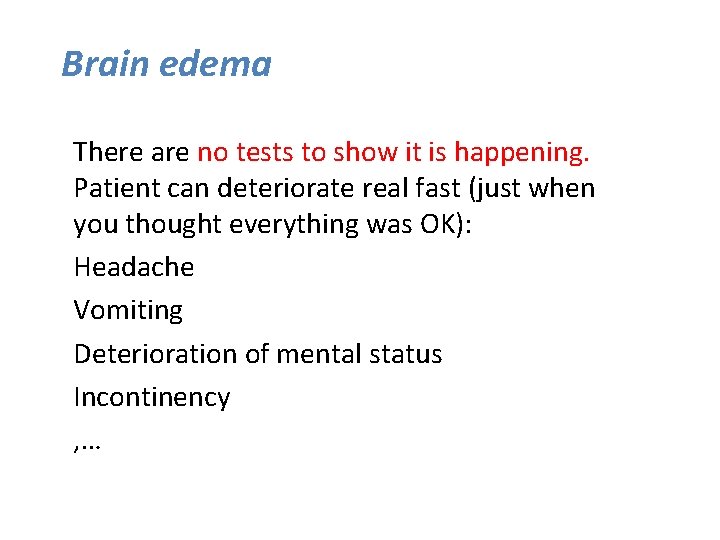
Brain edema There are no tests to show it is happening. Patient can deteriorate real fast (just when you thought everything was OK): Headache Vomiting Deterioration of mental status Incontinency , …
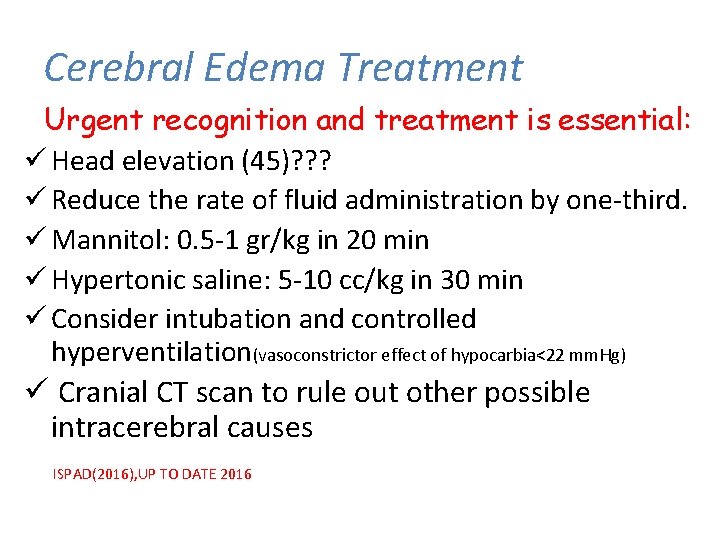
Cerebral Edema Treatment Urgent recognition and treatment is essential: ü Head elevation (45)? ? ? ü Reduce the rate of fluid administration by one-third. ü Mannitol: 0. 5 -1 gr/kg in 20 min ü Hypertonic saline: 5 -10 cc/kg in 30 min ü Consider intubation and controlled hyperventilation(vasoconstrictor effect of hypocarbia<22 mm. Hg) ü Cranial CT scan to rule out other possible intracerebral causes ISPAD(2016), UP TO DATE 2016
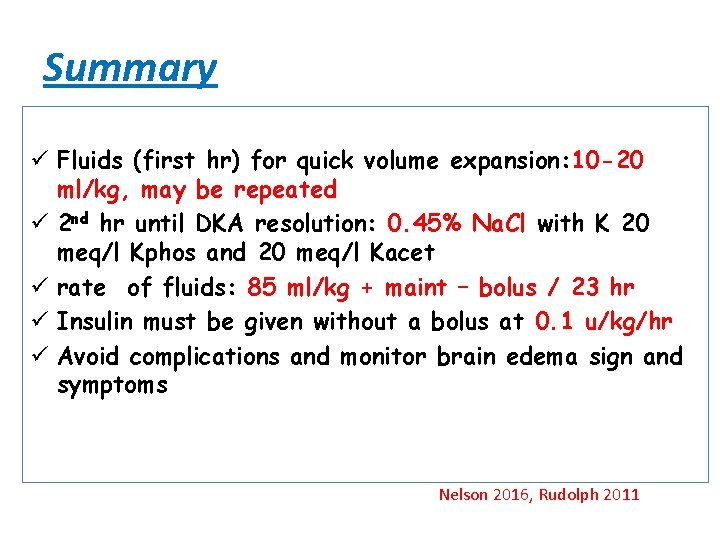
Summary ü Fluids (first hr) for quick volume expansion: 10 -20 ml/kg, may be repeated ü 2 nd hr until DKA resolution: 0. 45% Na. Cl with K 20 meq/l Kphos and 20 meq/l Kacet ü rate of fluids: 85 ml/kg + maint – bolus / 23 hr ü Insulin must be given without a bolus at 0. 1 u/kg/hr ü Avoid complications and monitor brain edema sign and symptoms Nelson 2016, Rudolph 2011
Refrences: 1. 2. 3. 4. 5. 6. 7. Nelson textbook of pediatrics 2016 Brook clinical pediatric endocrinology 2009 Glaser N et al. N Engl J Med 2001 ISPAD 2014 UP TO DATE 2016 Diabetologica 2006 Rudolph 2011
Thank you for your attention