
Outline Y Le Cun L Bottou Y Bengio
Outline • Y. Le. Cun, L. Bottou, Y. Bengio, and P. Haffner, “Gradient-based learning applied to document recognition, ” Proceedings of the IEEE, vol. 86, no. 11, pp. 2278 -2324, November, 1998. 10/30/2020 Computer Vision 1
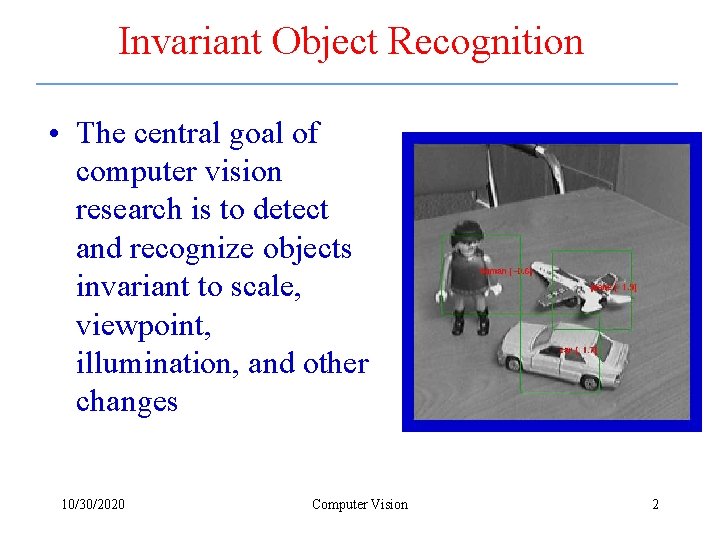
Invariant Object Recognition • The central goal of computer vision research is to detect and recognize objects invariant to scale, viewpoint, illumination, and other changes 10/30/2020 Computer Vision 2
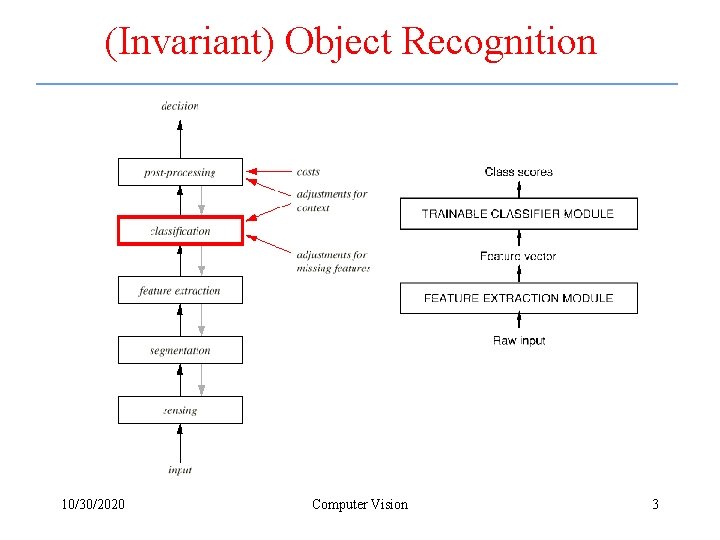
(Invariant) Object Recognition 10/30/2020 Computer Vision 3
Generalization Performance • Many classifiers are available – Maximum likelihood estimation, Bayesian estimation, Parzen Windows, Kn-nearest neighbor, discriminant functions, support vector machines, neural networks, decision trees, . . . . – Which method is the best to classify unseen test data? • The performance is often determined by features • In addition, we are interested in systems that can solve a particular problem well 10/30/2020 Computer Vision 4
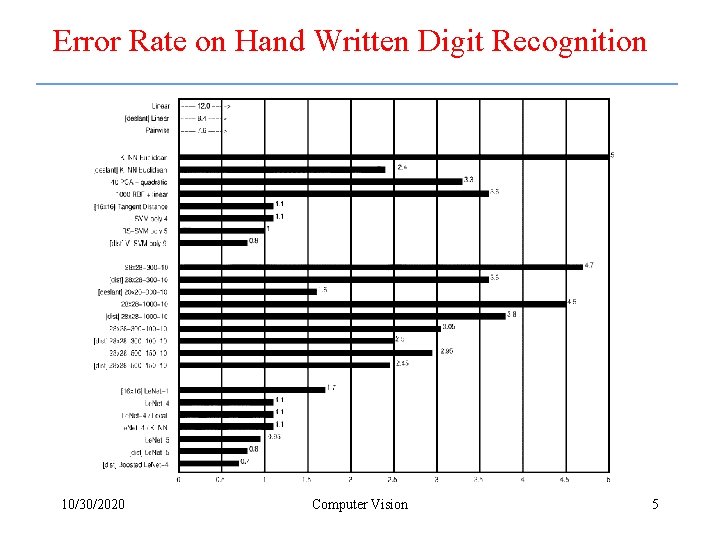
Error Rate on Hand Written Digit Recognition 10/30/2020 Computer Vision 5
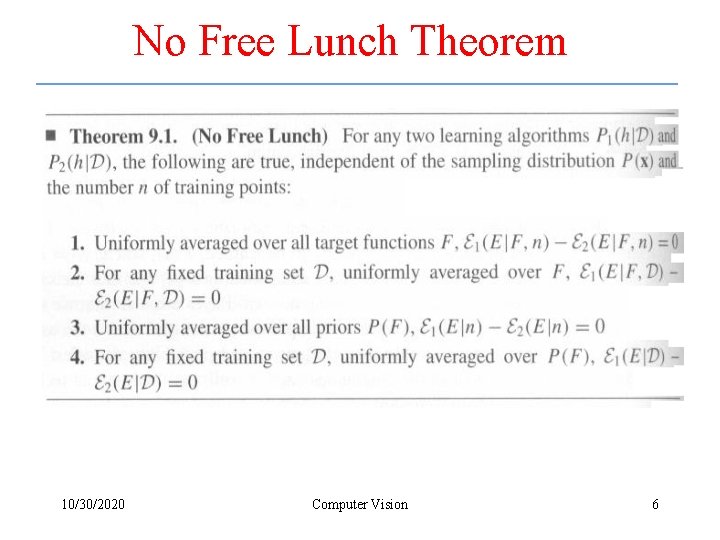
No Free Lunch Theorem 10/30/2020 Computer Vision 6
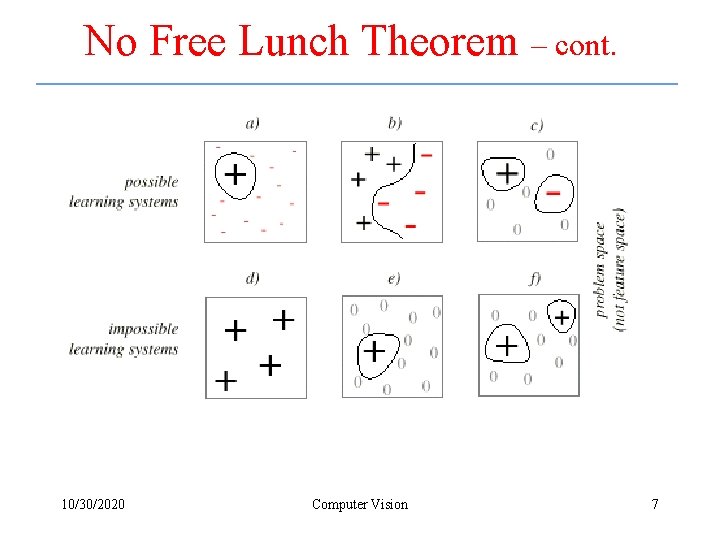
No Free Lunch Theorem – cont. 10/30/2020 Computer Vision 7
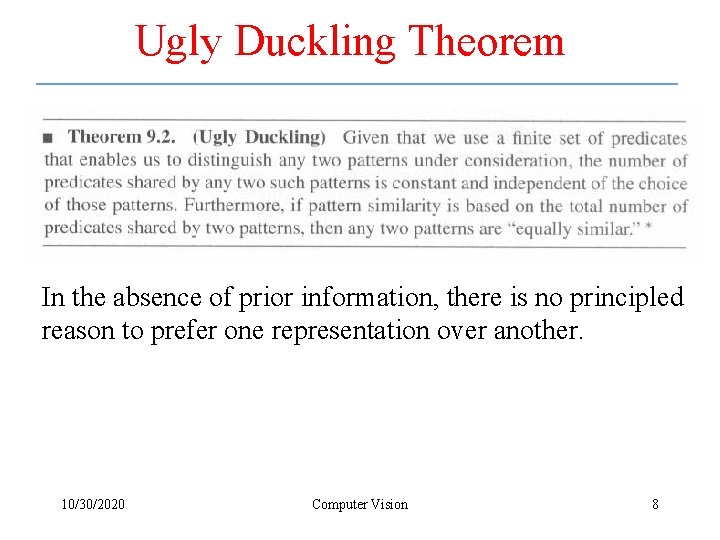
Ugly Duckling Theorem In the absence of prior information, there is no principled reason to prefer one representation over another. 10/30/2020 Computer Vision 8
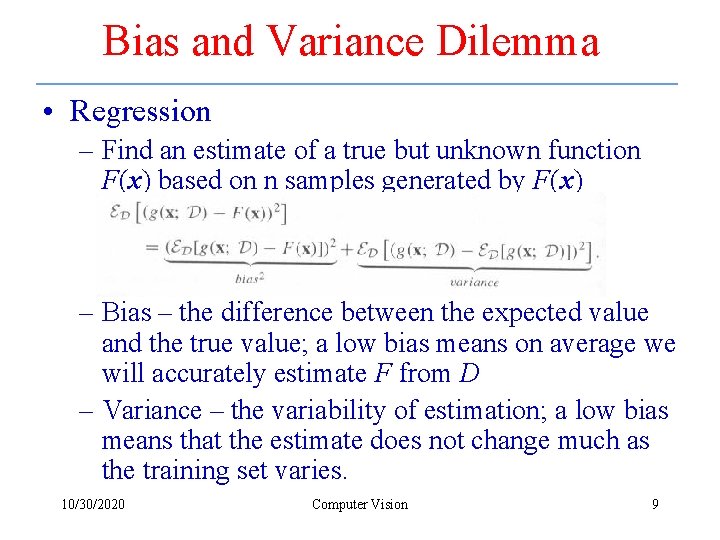
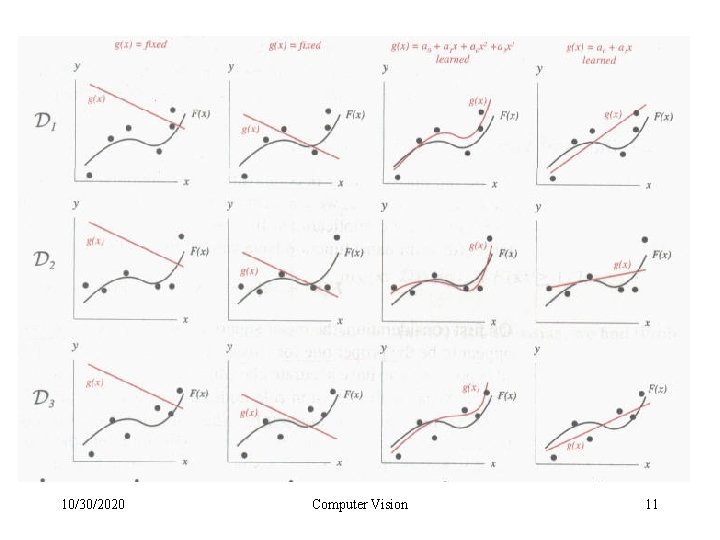
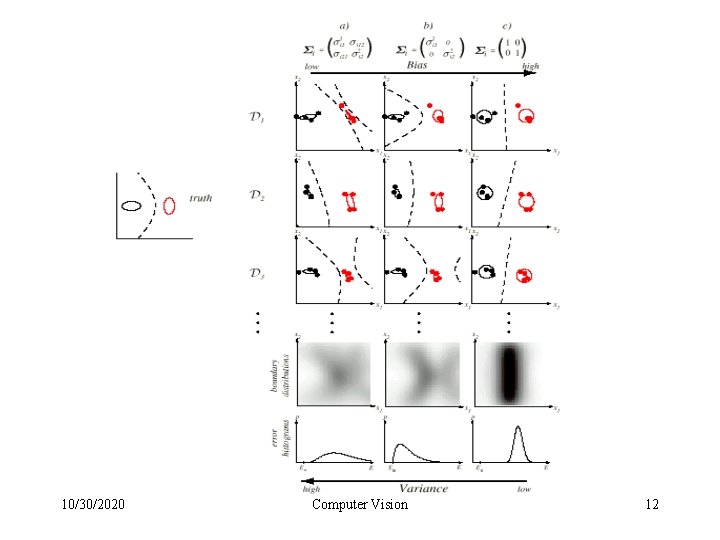
Bias and Variance Dilemma • Regression – Find an estimate of a true but unknown function F(x) based on n samples generated by F(x) – Bias – the difference between the expected value and the true value; a low bias means on average we will accurately estimate F from D – Variance – the variability of estimation; a low bias means that the estimate does not change much as the training set varies. 10/30/2020 Computer Vision 9
Bias-Variance Dilemma • When the training data is finite, there is an intrinsic problem of any classifier function – If the function is very generic, i. e. , a non-parametric family, it suffers from high variance – If the function is very specific, i. e. , a parametric family, it suffers from high bias – The central problem is to design a family of classifiers a priori such that both the variance and bias are low 10/30/2020 Computer Vision 10
10/30/2020 Computer Vision 11
10/30/2020 Computer Vision 12
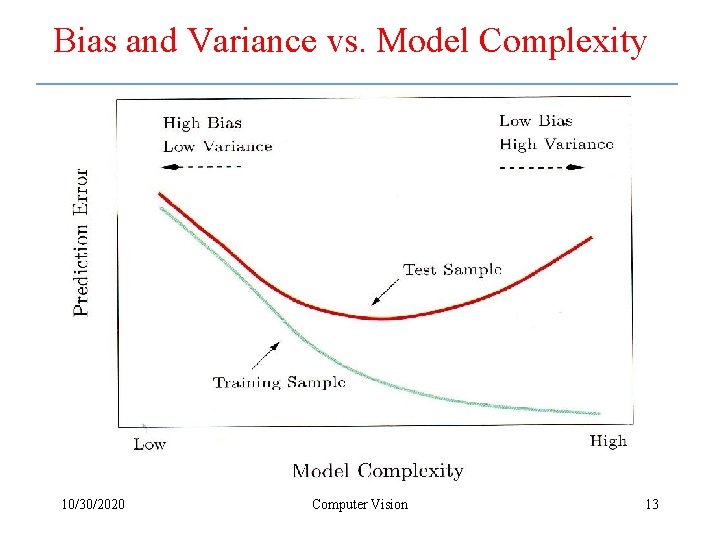
Bias and Variance vs. Model Complexity 10/30/2020 Computer Vision 13
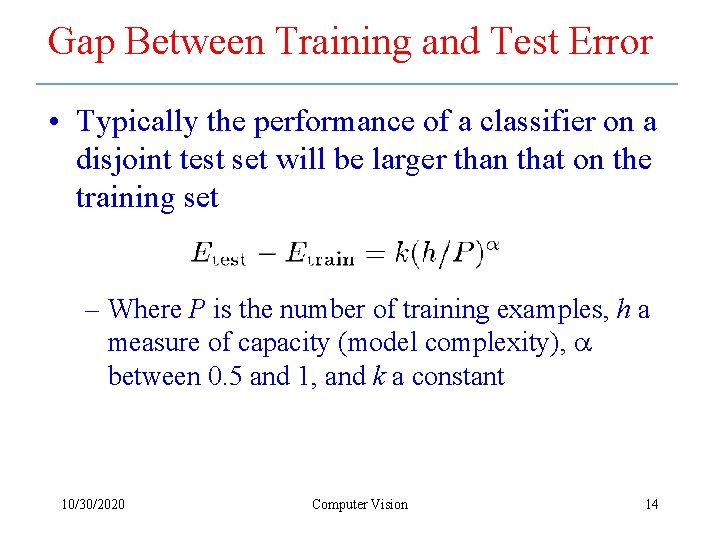
Gap Between Training and Test Error • Typically the performance of a classifier on a disjoint test set will be larger than that on the training set – Where P is the number of training examples, h a measure of capacity (model complexity), a between 0. 5 and 1, and k a constant 10/30/2020 Computer Vision 14
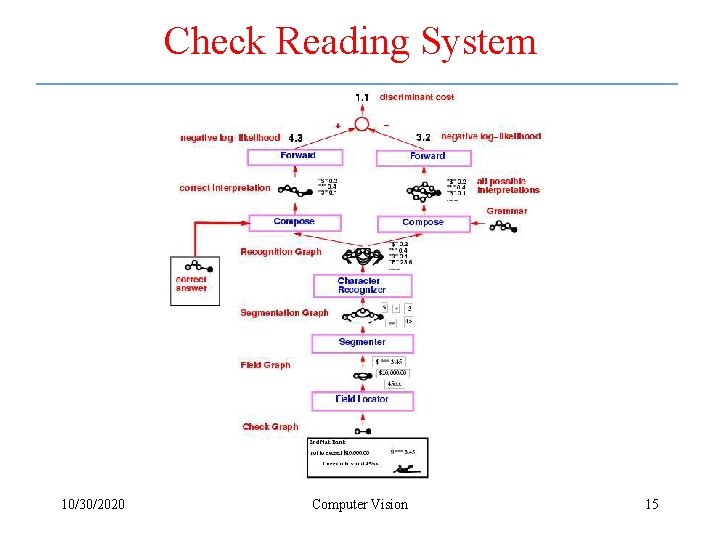
Check Reading System 10/30/2020 Computer Vision 15
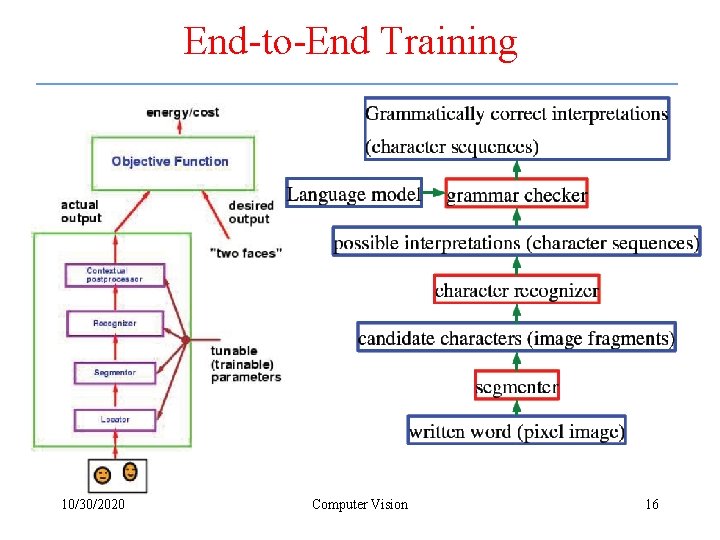
End-to-End Training 10/30/2020 Computer Vision 16
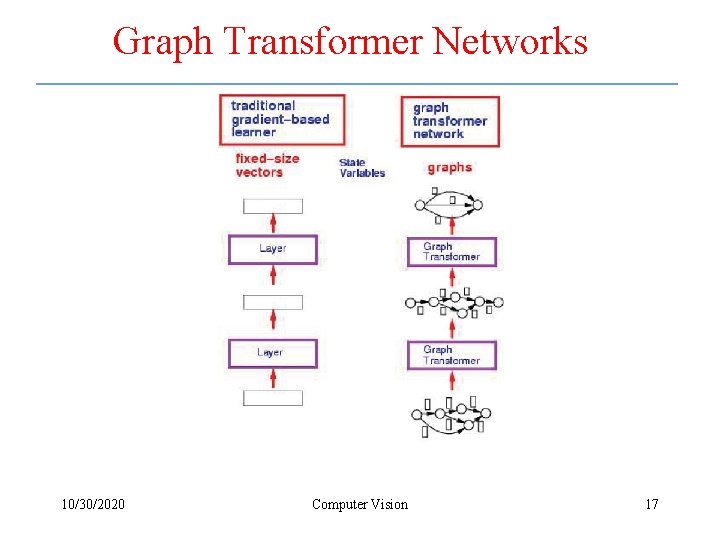
Graph Transformer Networks 10/30/2020 Computer Vision 17
Training Using Gradient-Based Learning • A multiple module system can be trained using a gradient-based method – Similar to backpropagation used for multiple layer perceptrons 10/30/2020 Computer Vision 18
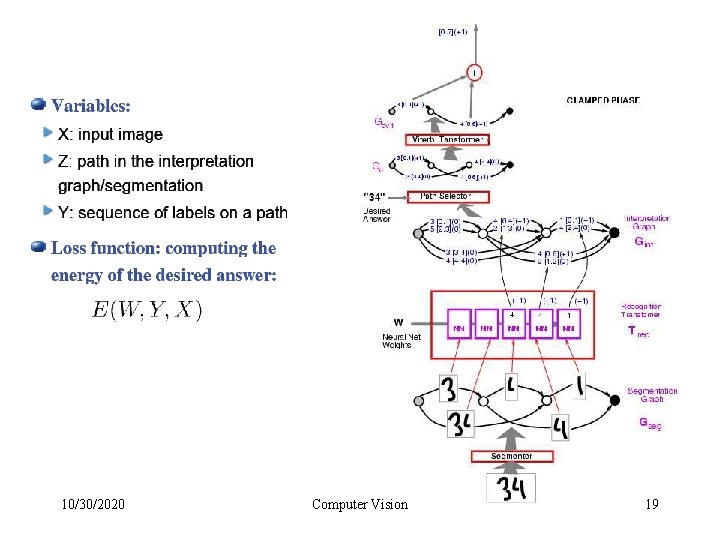
10/30/2020 Computer Vision 19
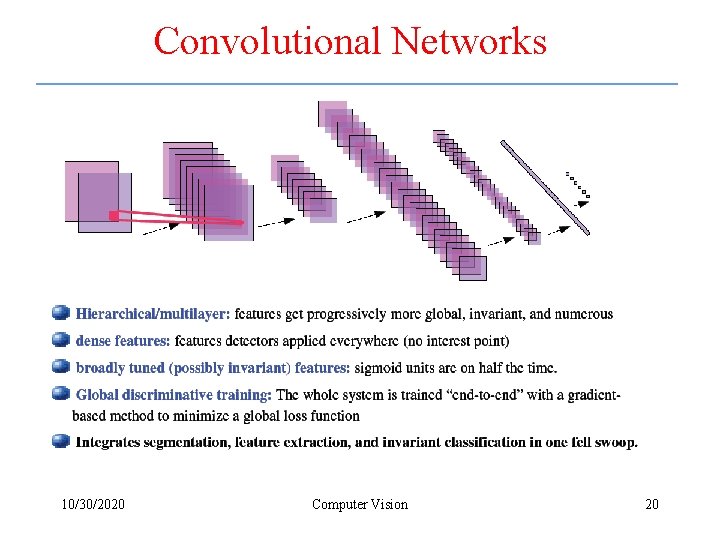
Convolutional Networks 10/30/2020 Computer Vision 20
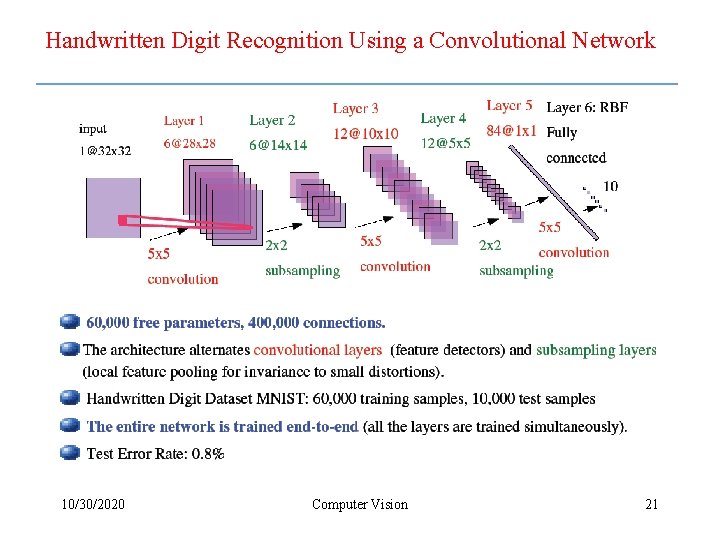
Handwritten Digit Recognition Using a Convolutional Network 10/30/2020 Computer Vision 21
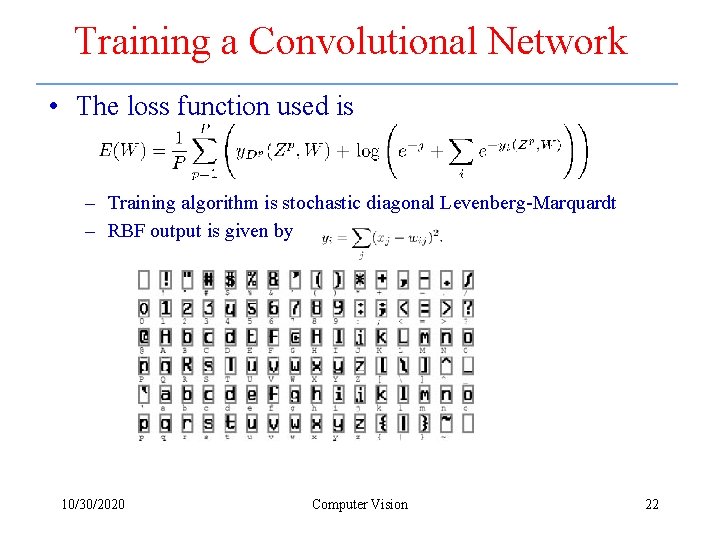
Training a Convolutional Network • The loss function used is – Training algorithm is stochastic diagonal Levenberg-Marquardt – RBF output is given by 10/30/2020 Computer Vision 22
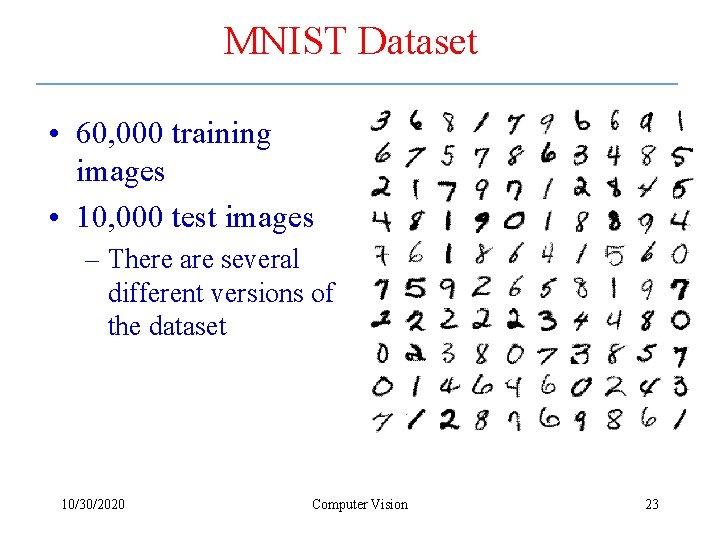
MNIST Dataset • 60, 000 training images • 10, 000 test images – There are several different versions of the dataset 10/30/2020 Computer Vision 23
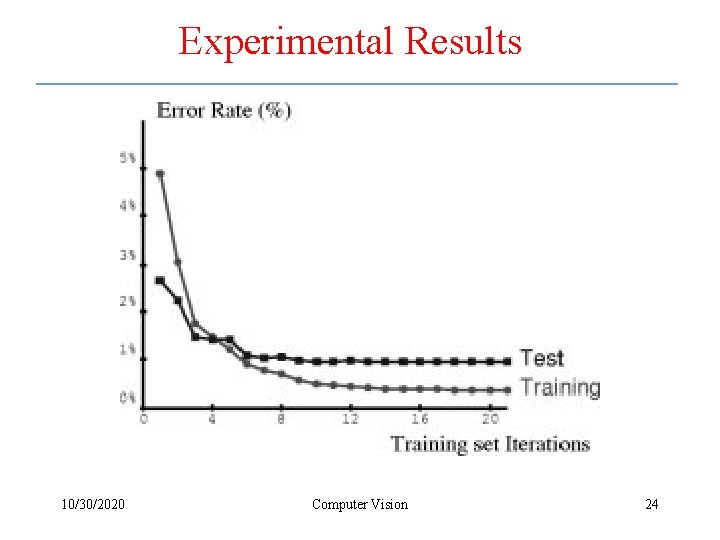
Experimental Results 10/30/2020 Computer Vision 24
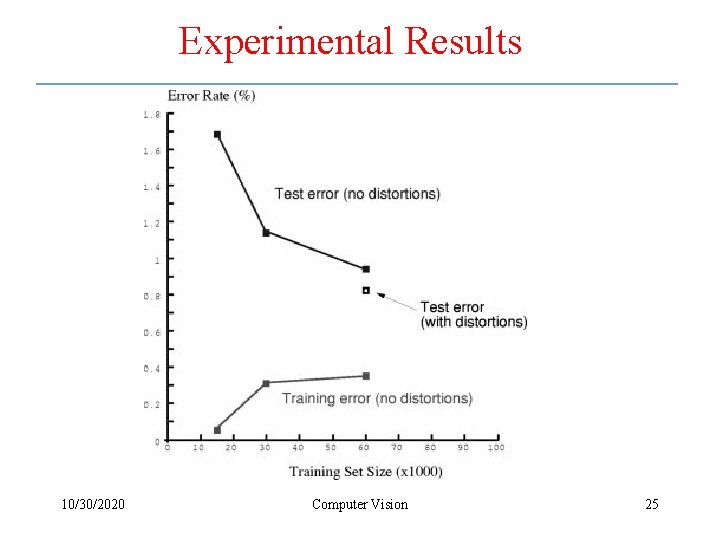
Experimental Results 10/30/2020 Computer Vision 25
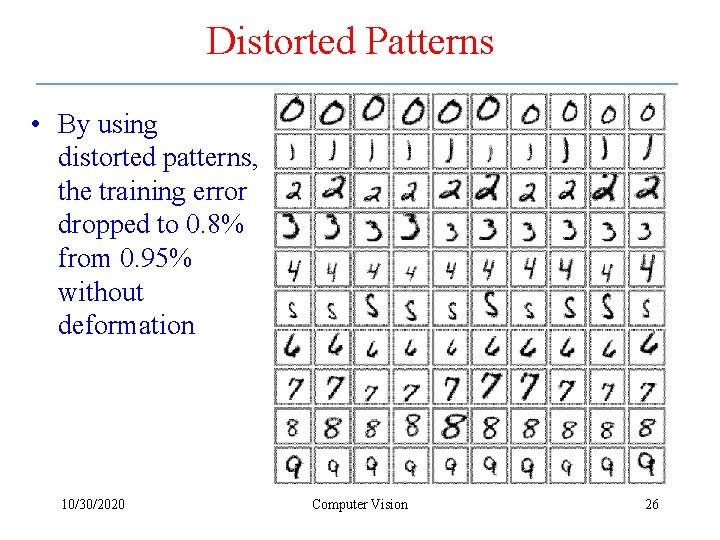
Distorted Patterns • By using distorted patterns, the training error dropped to 0. 8% from 0. 95% without deformation 10/30/2020 Computer Vision 26
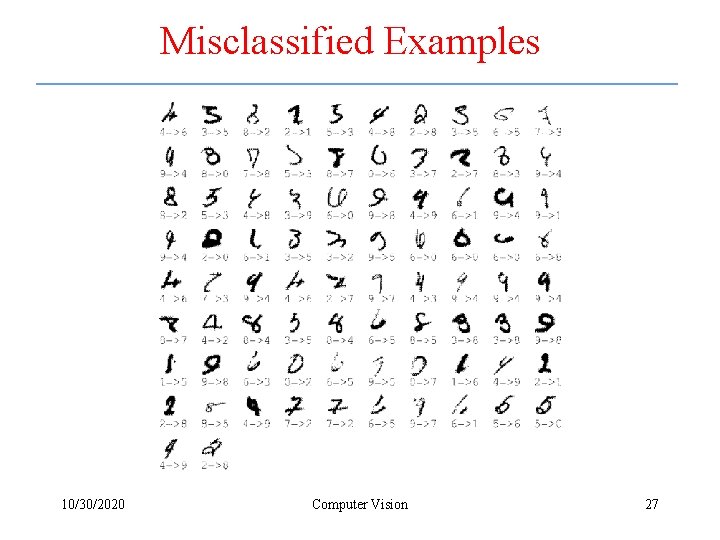
Misclassified Examples 10/30/2020 Computer Vision 27
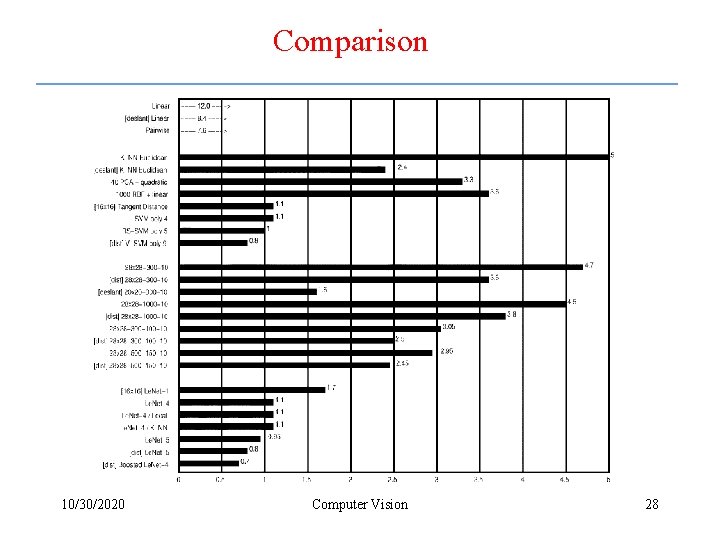
Comparison 10/30/2020 Computer Vision 28
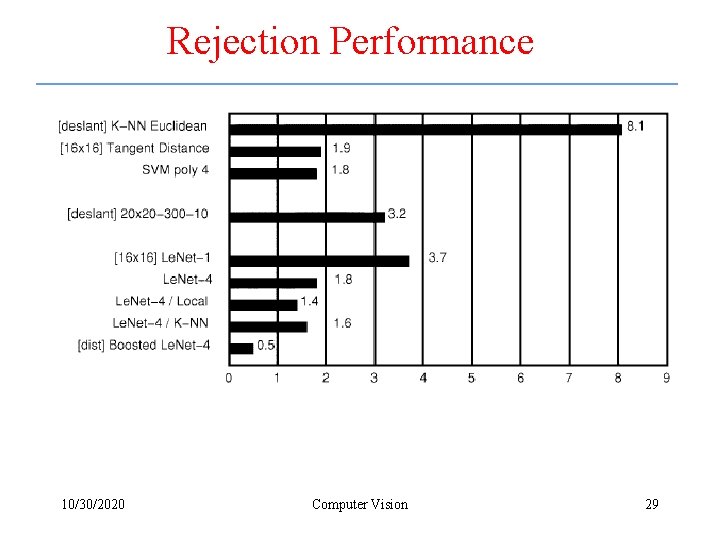
Rejection Performance 10/30/2020 Computer Vision 29
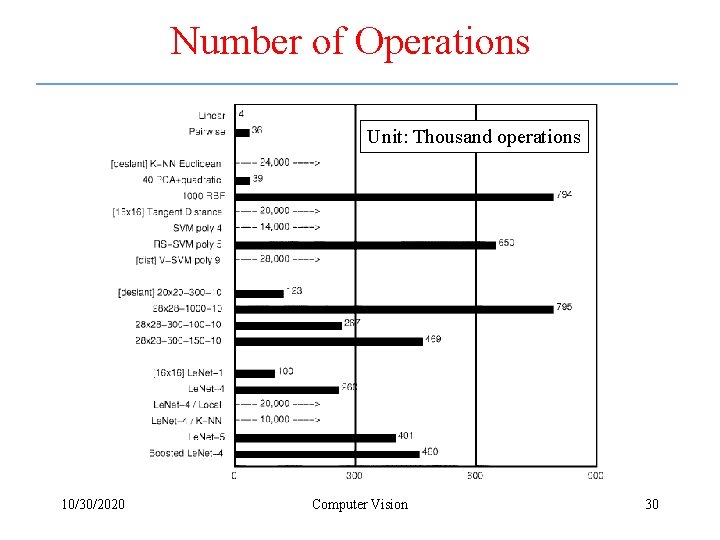
Number of Operations Unit: Thousand operations 10/30/2020 Computer Vision 30
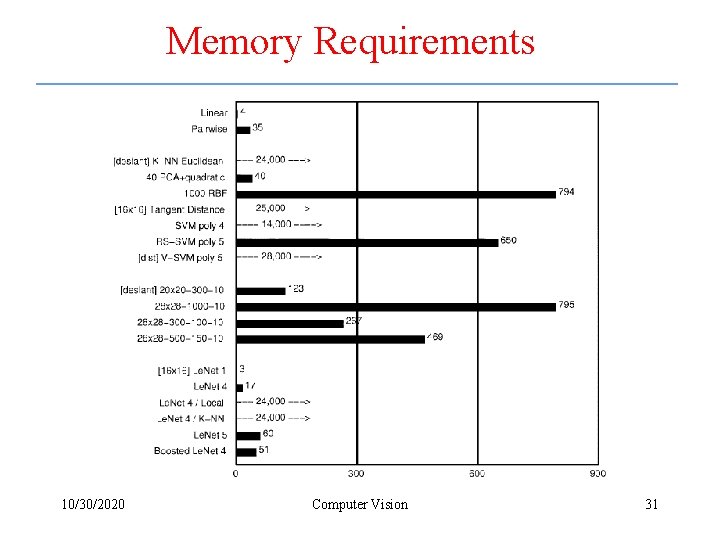
Memory Requirements 10/30/2020 Computer Vision 31
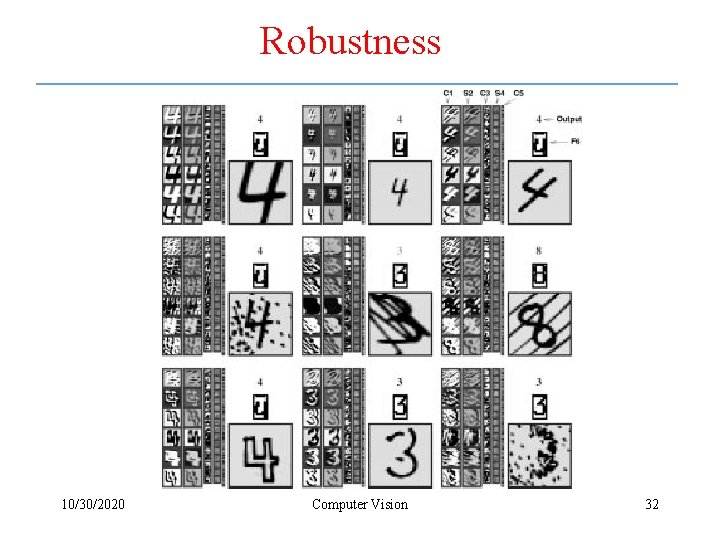
Robustness 10/30/2020 Computer Vision 32
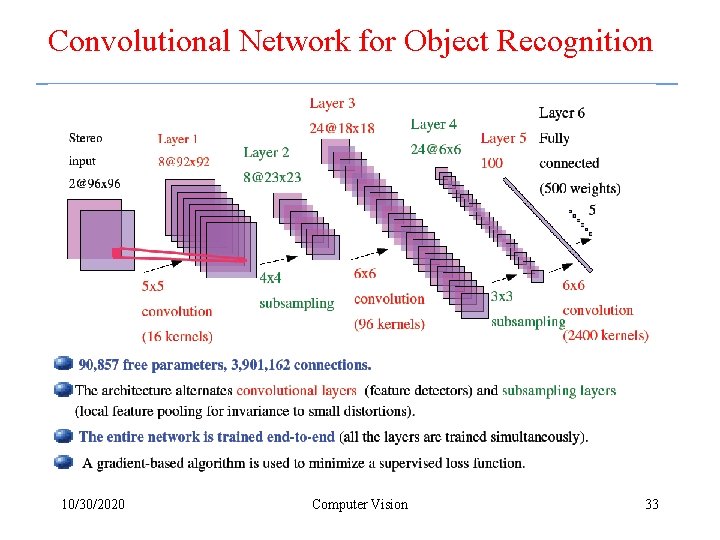
Convolutional Network for Object Recognition 10/30/2020 Computer Vision 33
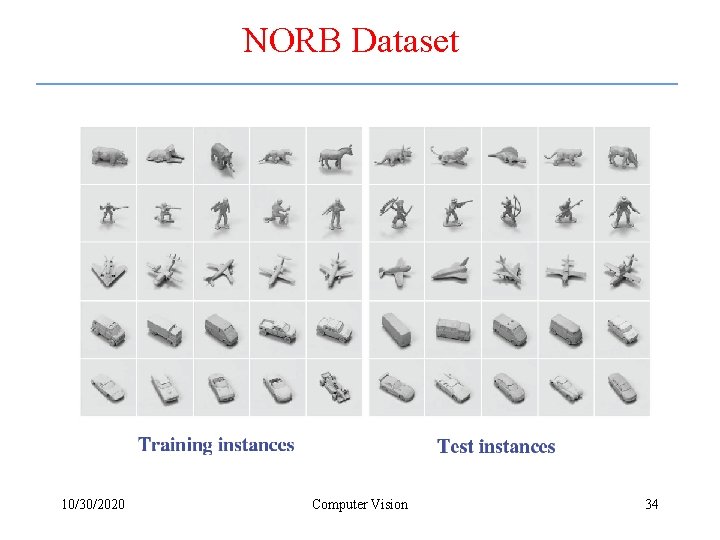
NORB Dataset 10/30/2020 Computer Vision 34
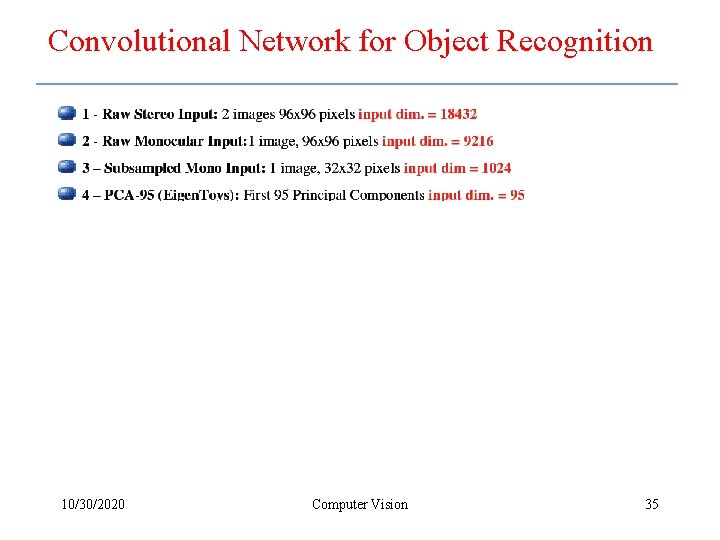
Convolutional Network for Object Recognition 10/30/2020 Computer Vision 35
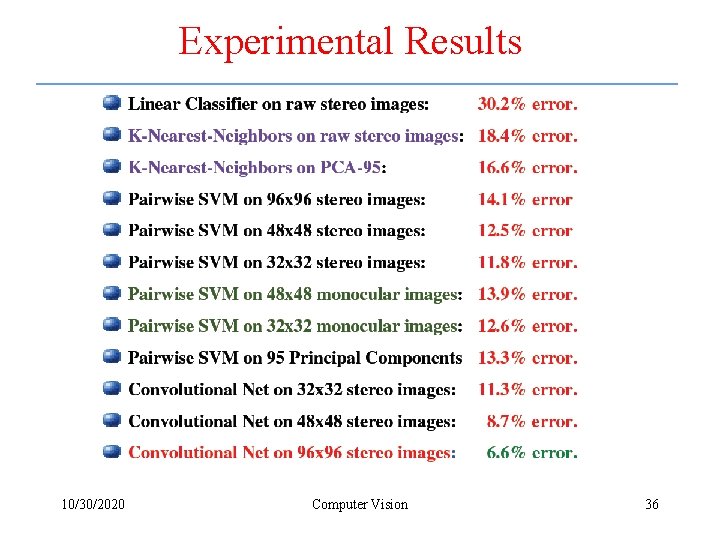
Experimental Results 10/30/2020 Computer Vision 36
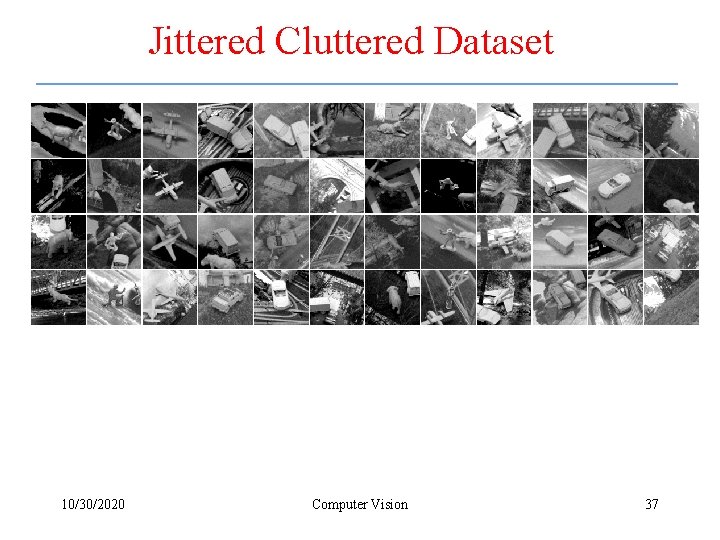
Jittered Cluttered Dataset 10/30/2020 Computer Vision 37
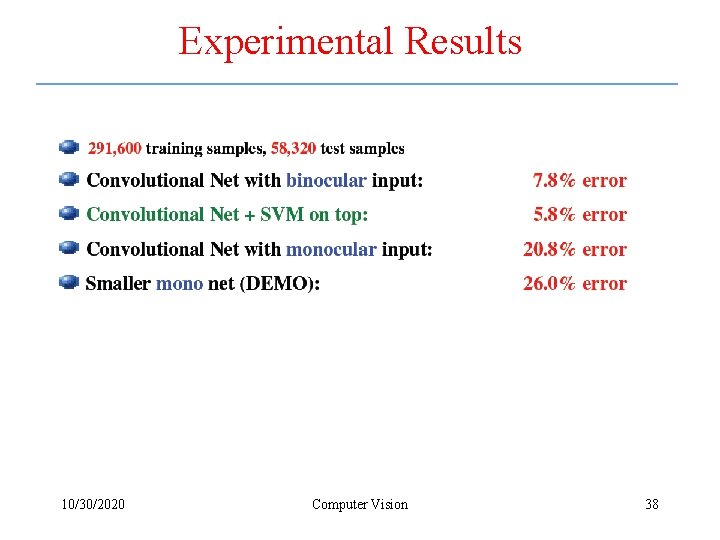
Experimental Results 10/30/2020 Computer Vision 38
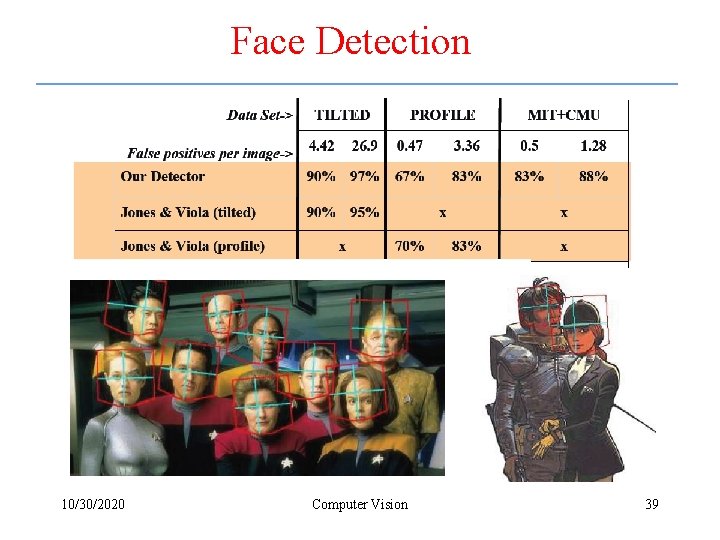
Face Detection 10/30/2020 Computer Vision 39
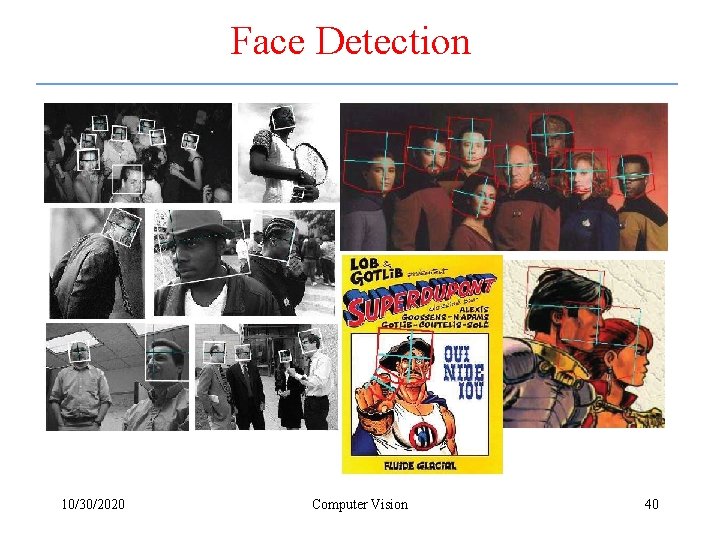
Face Detection 10/30/2020 Computer Vision 40
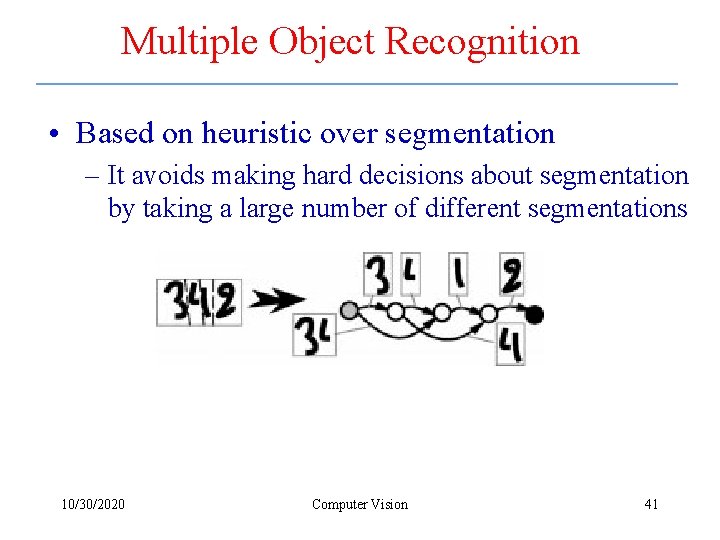
Multiple Object Recognition • Based on heuristic over segmentation – It avoids making hard decisions about segmentation by taking a large number of different segmentations 10/30/2020 Computer Vision 41
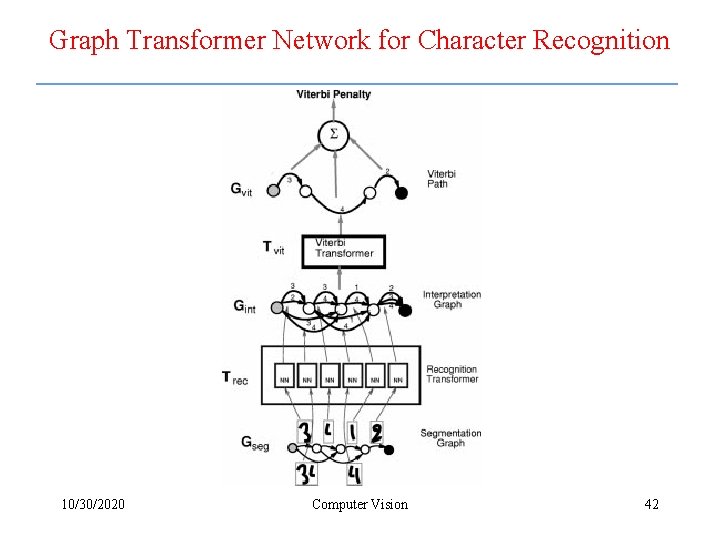
Graph Transformer Network for Character Recognition 10/30/2020 Computer Vision 42
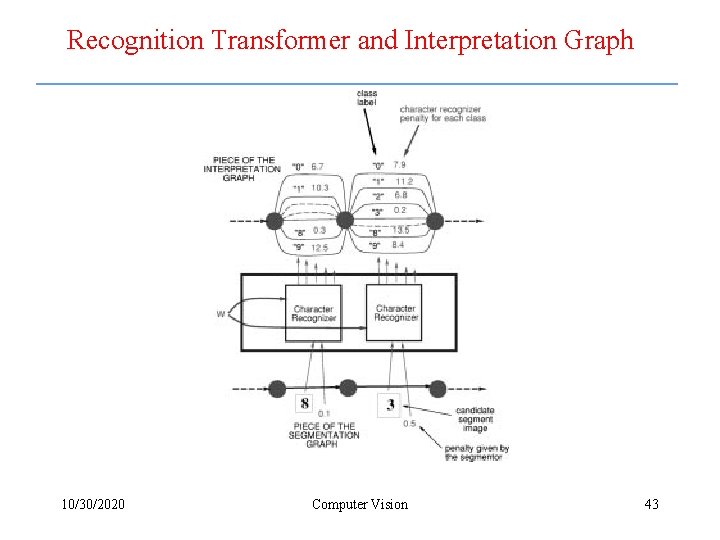
Recognition Transformer and Interpretation Graph 10/30/2020 Computer Vision 43
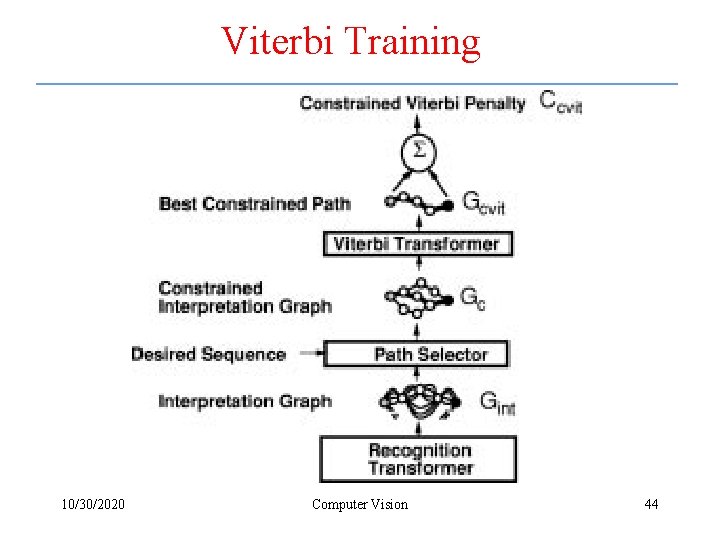
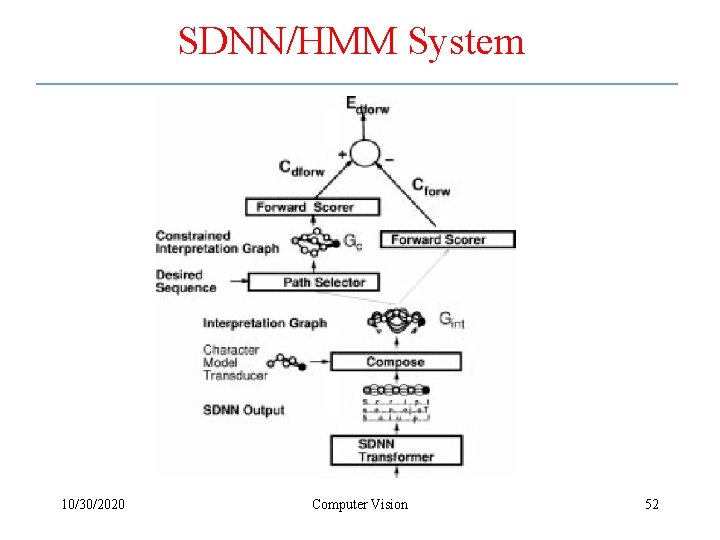
Viterbi Training 10/30/2020 Computer Vision 44
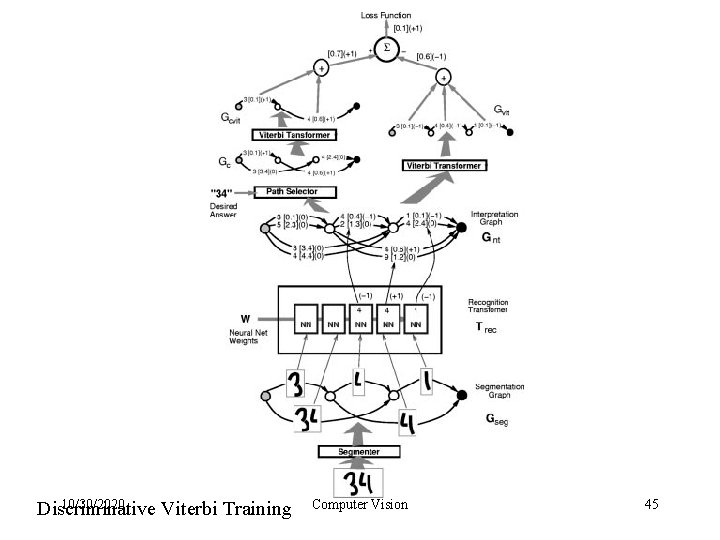
10/30/2020 Discriminative Viterbi Training Computer Vision 45
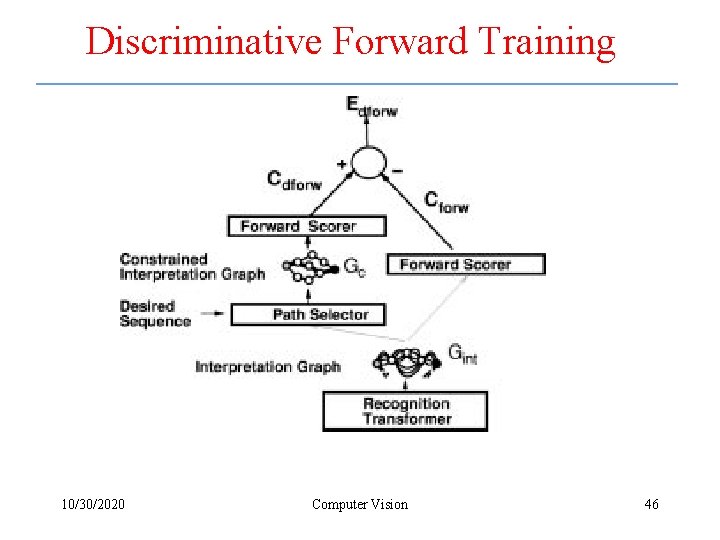
Discriminative Forward Training 10/30/2020 Computer Vision 46
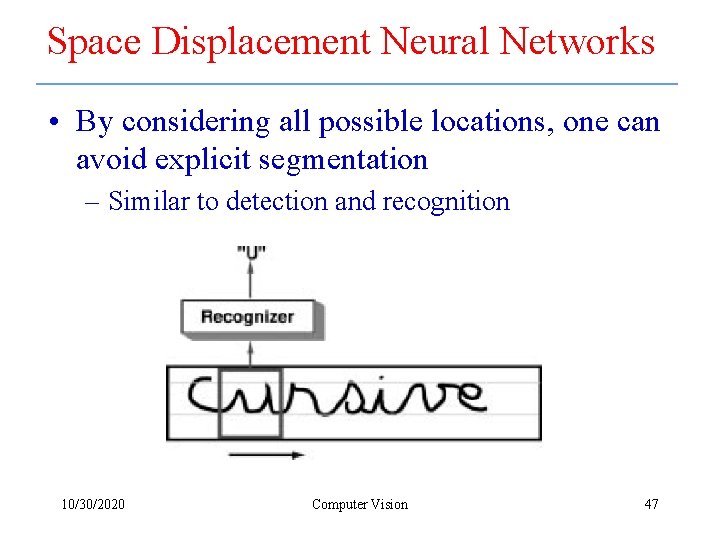
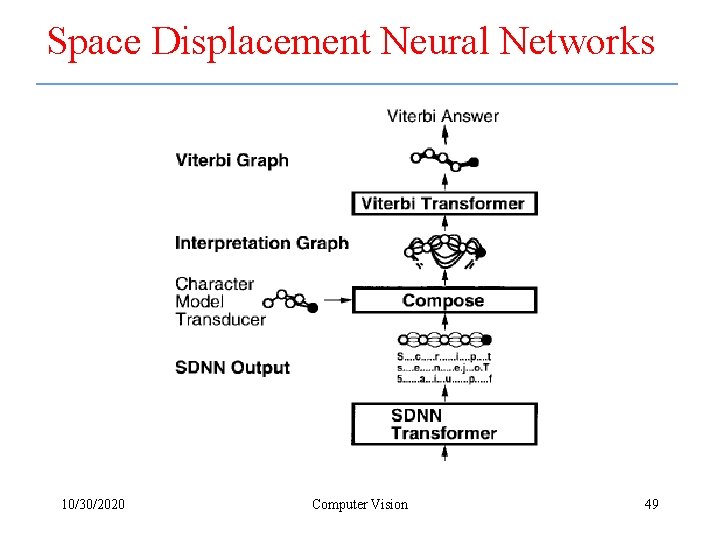
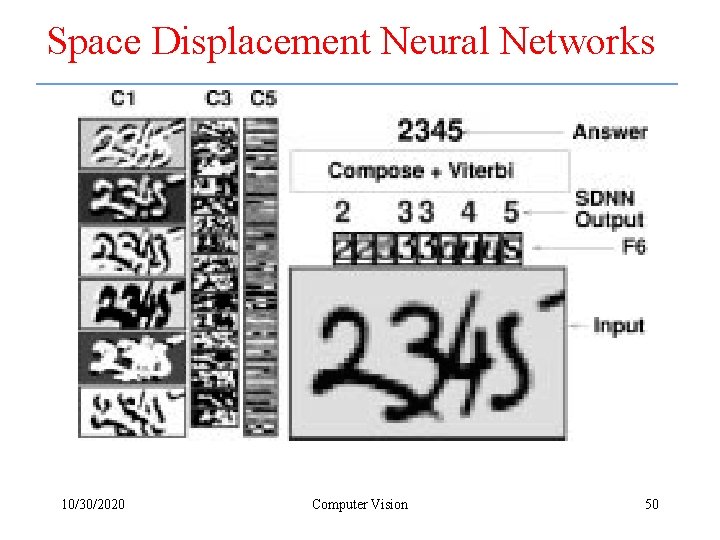
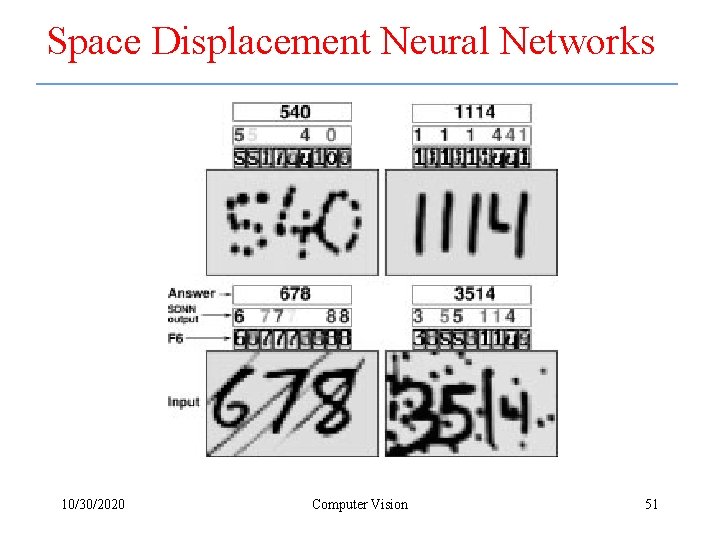
Space Displacement Neural Networks • By considering all possible locations, one can avoid explicit segmentation – Similar to detection and recognition 10/30/2020 Computer Vision 47
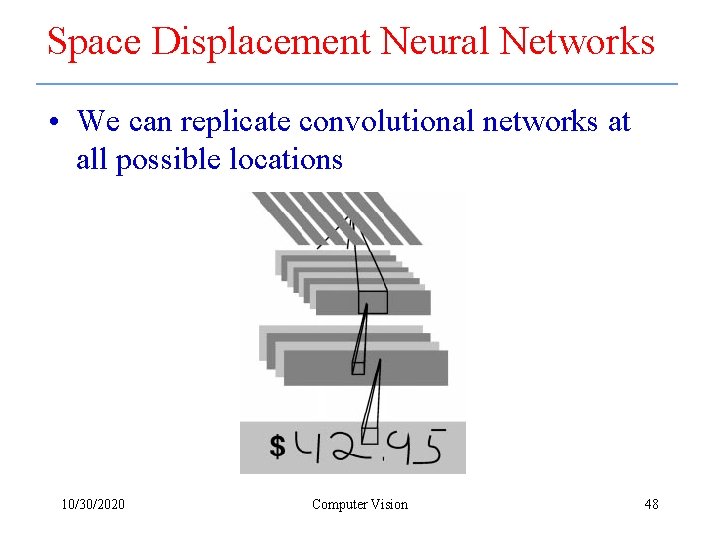
Space Displacement Neural Networks • We can replicate convolutional networks at all possible locations 10/30/2020 Computer Vision 48
Space Displacement Neural Networks 10/30/2020 Computer Vision 49
Space Displacement Neural Networks 10/30/2020 Computer Vision 50
Space Displacement Neural Networks 10/30/2020 Computer Vision 51
SDNN/HMM System 10/30/2020 Computer Vision 52
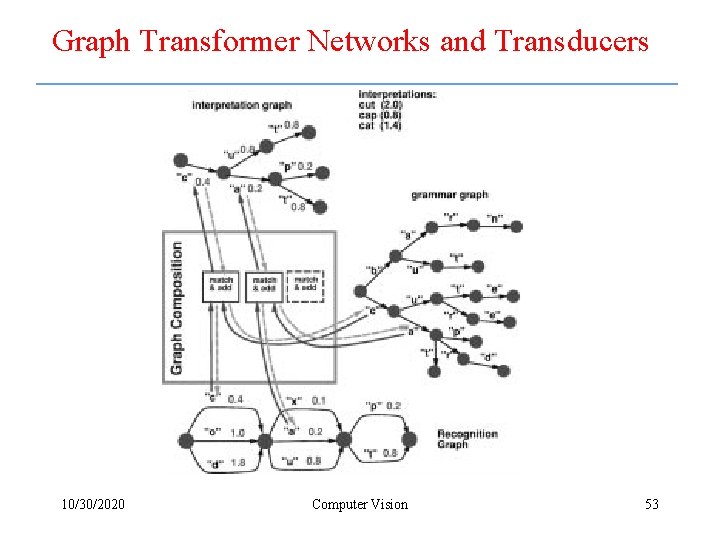
Graph Transformer Networks and Transducers 10/30/2020 Computer Vision 53
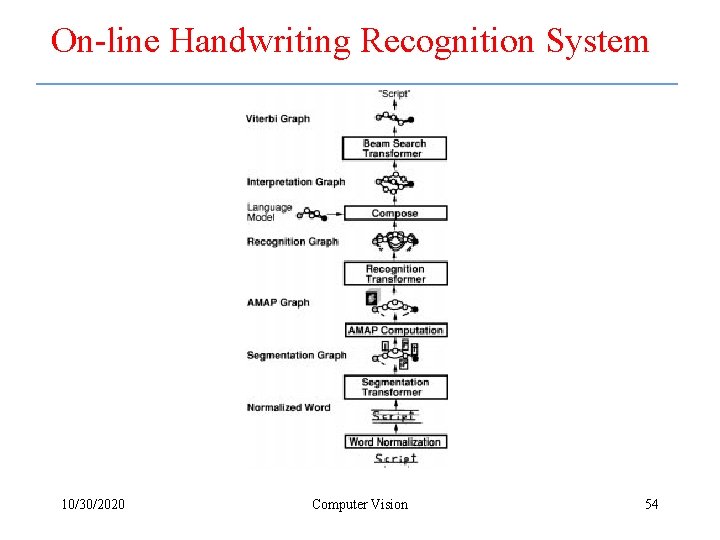
On-line Handwriting Recognition System 10/30/2020 Computer Vision 54
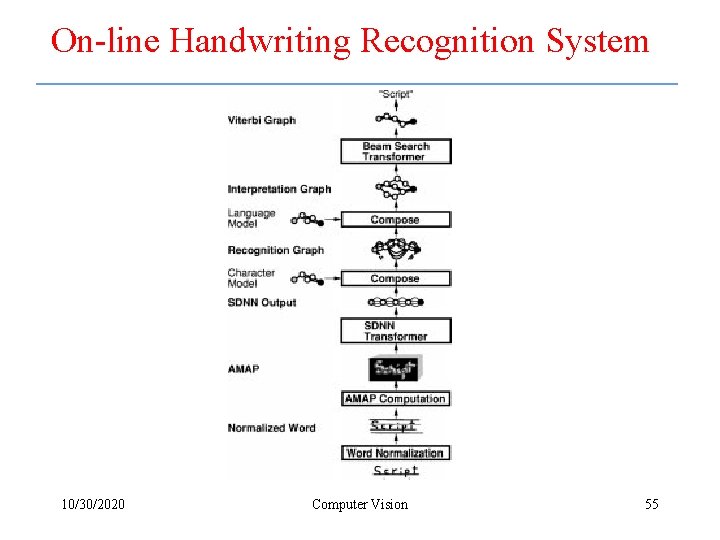
On-line Handwriting Recognition System 10/30/2020 Computer Vision 55
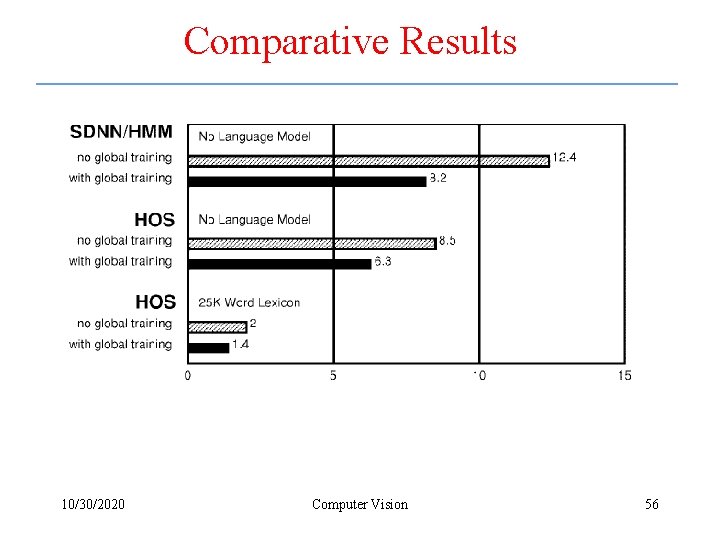
Comparative Results 10/30/2020 Computer Vision 56
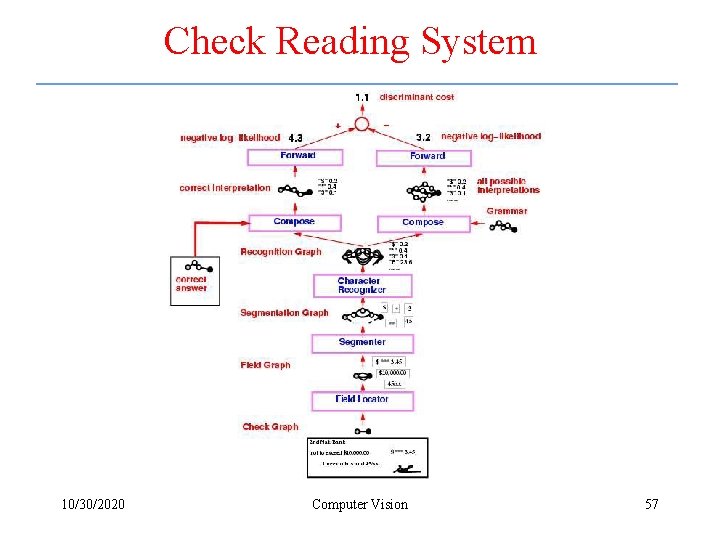
Check Reading System 10/30/2020 Computer Vision 57
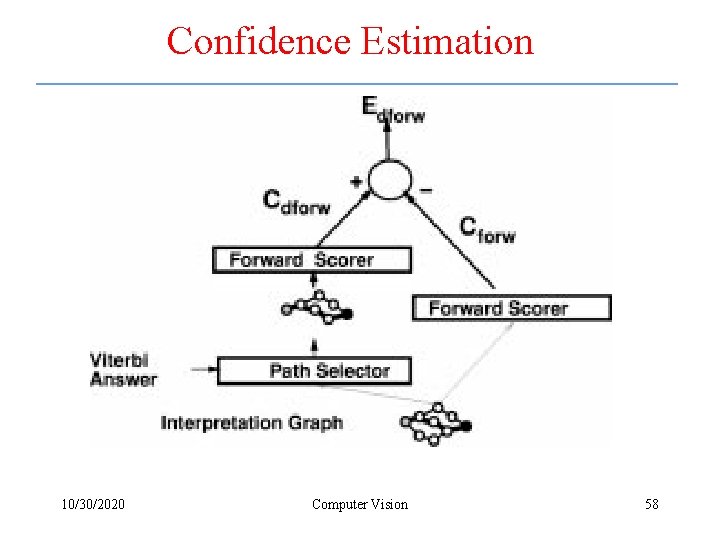
Confidence Estimation 10/30/2020 Computer Vision 58
Summary • By carefully designing systems with desired invariance properties, one can often achieve better generalization performance by limiting system’s capacity • Multiple module systems can be trained often effectively using gradient-based learning methods – Even though in theory local gradient-based methods are subject to local minima, in practice it seems it is not a serious problem – Incorporating contextual information into recognition systems are often critical for real world applications • End-to-end training is often more effective 10/30/2020 Computer Vision 59
- Slides: 59