
Outline Sketch map of the Worlds Climatic zones
- Slides: 22
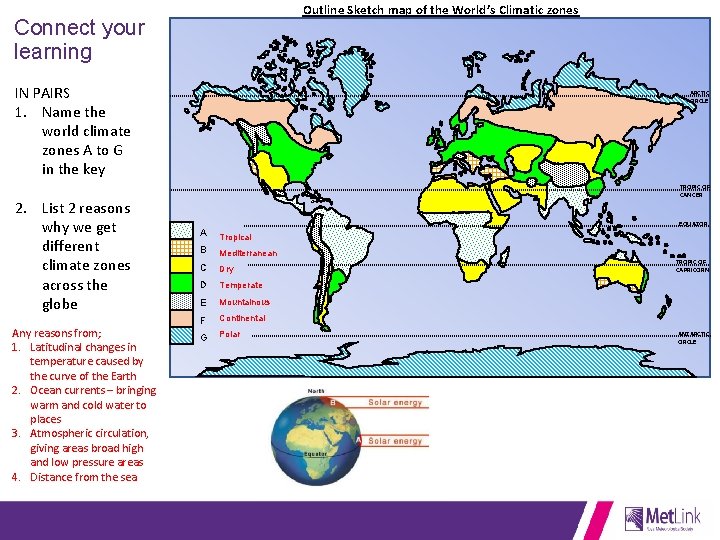
Outline Sketch map of the World’s Climatic zones Connect your learning IN PAIRS 1. Name the world climate zones A to G in the key 2. List 2 reasons why we get different climate zones across the globe Any reasons from; 1. Latitudinal changes in temperature caused by the curve of the Earth 2. Ocean currents – bringing warm and cold water to places 3. Atmospheric circulation, giving areas broad high and low pressure areas 4. Distance from the sea ARCTIC CIRCLE TROPIC OF CANCER EQUATOR A Tropical B Mediterranean C Dry D Temperate E Mountainous F Continental G Polar TROPIC OF CAPRICORN ANTARCTIC CIRCLE
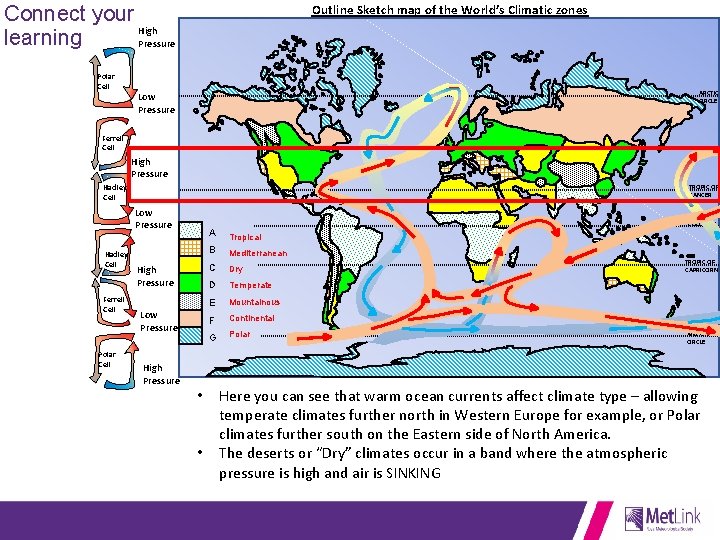
Connect your High learning Pressure Polar Cell Outline Sketch map of the World’s Climatic zones ARCTIC CIRCLE Low Pressure Ferrell Cell High Pressure Hadley Cell TROPIC OF CANCER Low Pressure Hadley Cell Ferrell Cell Polar Cell High Pressure Low Pressure High Pressure • • EQUATOR A Tropical B Mediterranean C Dry D Temperate E Mountainous F Continental G Polar TROPIC OF CAPRICORN ANTARCTIC CIRCLE Here you can see that warm ocean currents affect climate type – allowing temperate climates further north in Western Europe for example, or Polar climates further south on the Eastern side of North America. The deserts or “Dry” climates occur in a band where the atmospheric pressure is high and air is SINKING
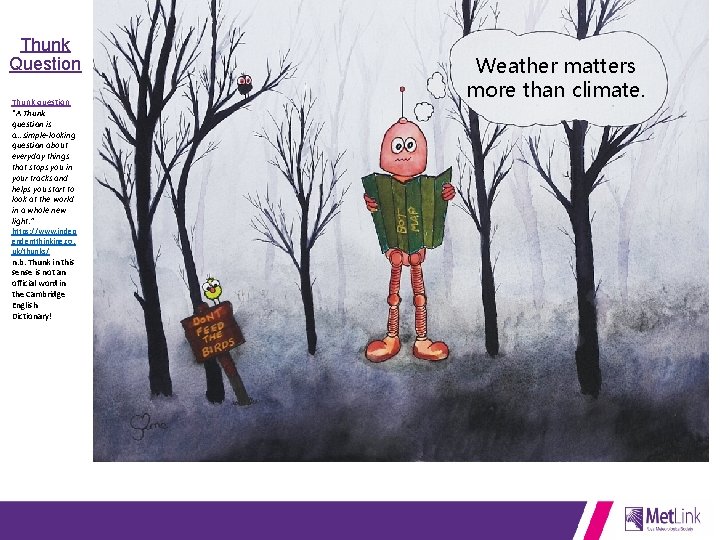
Thunk Question Thunk question “A Thunk question is a…simple-looking question about everyday things that stops you in your tracks and helps you start to look at the world in a whole new light. ” https: //www. indep endentthinking. co. uk/thunks/ n. b. Thunk in this sense is not an official word in the Cambridge English Dictionary! Weather matters more than climate.
Natural and Human causes of past climate change
Past Climate Change Objectives Outcomes 1. To be able to DESCRIBE the major changes to temperature over long periods of time 2. To be able to explain why climate changes over time 1. The ability to verbally describe what has happened to temperature over different time scales 2. A sequenced chart on how volcanoes affect climate change 3. Labelled diagrams on how changes to the Earth’s orbit affect temperature.
How has climate changed over time?
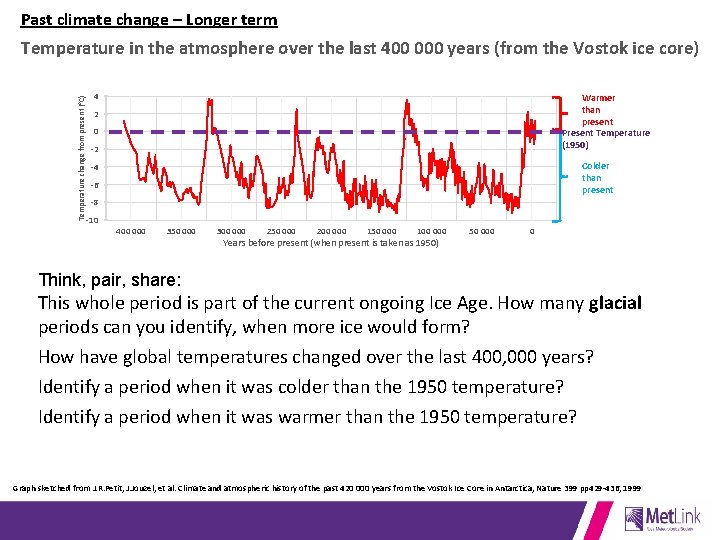
Glacial and Interglacial periods A glacial period is an interval of time (thousands of years) within an ice age that is marked by colder temperatures and glacier advances. Interglacials, on the other hand, are periods of warmer climate between glacial periods. The Last Glacial Period ended about 15, 000 years ago.
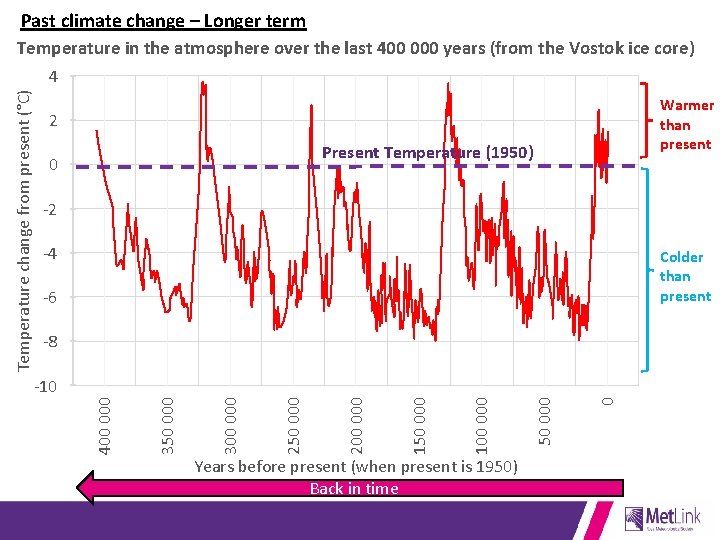
Past climate change – Longer term Temperature in the atmosphere over the last 400 000 years (from the Vostok ice core) Warmer than present 2 Present Temperature (1950) 0 -2 -4 Colder than present -6 -8 Years before present (when present is 1950) Back in time 0 50 000 100 000 150 000 200 000 250 000 300 000 350 000 -10 400 000 Temperature change from present (°C) 4
Past climate change – Longer term Temperature change from present (°C) Temperature in the atmosphere over the last 400 000 years (from the Vostok ice core) 4 Warmer than present Present Temperature (1950) 2 0 -2 Colder than present -4 -6 -8 -10 400 000 350 000 300 000 250 000 200 000 150 000 100 000 Years before present (when present is taken as 1950) 50 000 0 Think, pair, share: This whole period is part of the current ongoing Ice Age. How many glacial periods can you identify, when more ice would form? How have global temperatures changed over the last 400, 000 years? Identify a period when it was colder than the 1950 temperature? Identify a period when it was warmer than the 1950 temperature? Graph sketched from J. R. Petit, J. Jouzel, et al. Climate and atmospheric history of the past 420 000 years from the Vostok Ice Core in Antarctica, Nature 399 pp 429 -436, 1999
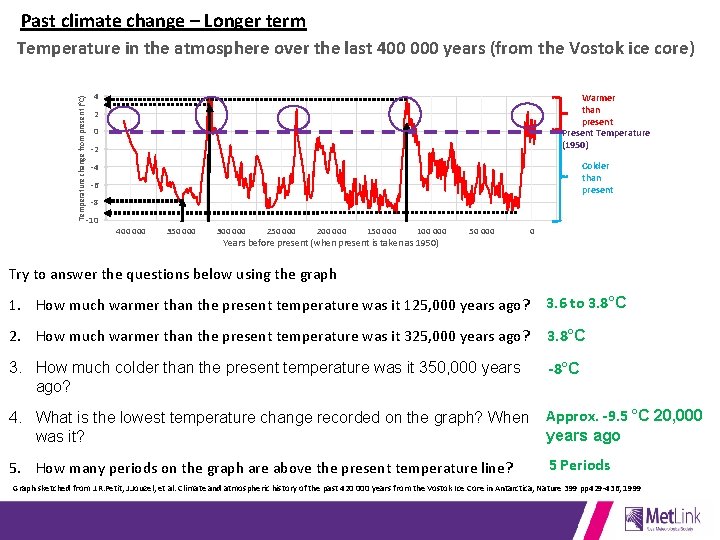
Past climate change – Longer term Temperature change from present (°C) Temperature in the atmosphere over the last 400 000 years (from the Vostok ice core) 4 Warmer than present Present Temperature (1950) 2 0 -2 Colder than present -4 -6 -8 -10 400 000 350 000 300 000 250 000 200 000 150 000 100 000 Years before present (when present is taken as 1950) 50 000 0 Try to answer the questions below using the graph 1. How much warmer than the present temperature was it 125, 000 years ago? 3. 6 to 3. 8°C 2. How much warmer than the present temperature was it 325, 000 years ago? 3. 8°C 3. How much colder than the present temperature was it 350, 000 years ago? -8°C 4. What is the lowest temperature change recorded on the graph? When was it? Approx. -9. 5 °C 20, 000 years ago 5. How many periods on the graph are above the present temperature line? 5 Periods Graph sketched from J. R. Petit, J. Jouzel, et al. Climate and atmospheric history of the past 420 000 years from the Vostok Ice Core in Antarctica, Nature 399 pp 429 -436, 1999
Why has Climate Changed in the past? Natural causes of climate change Much of this is to do with the way our planet orbits around the sun, the make up (composition) of our atmosphere and volcanoes and the position of the continents (continental drift)
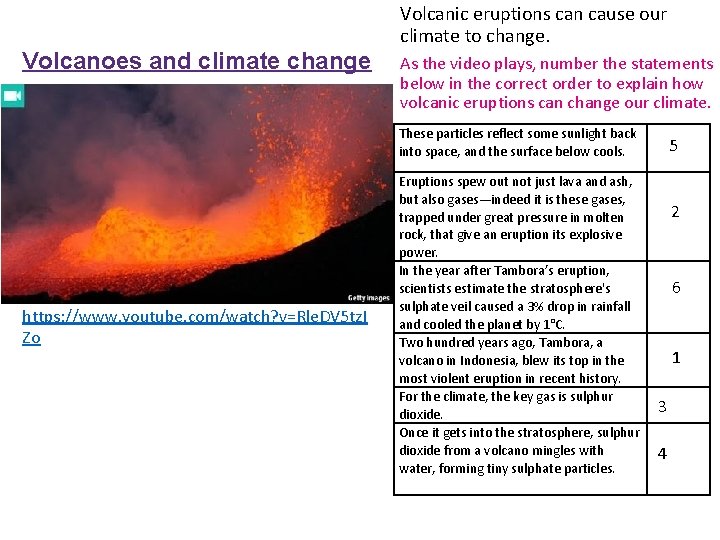
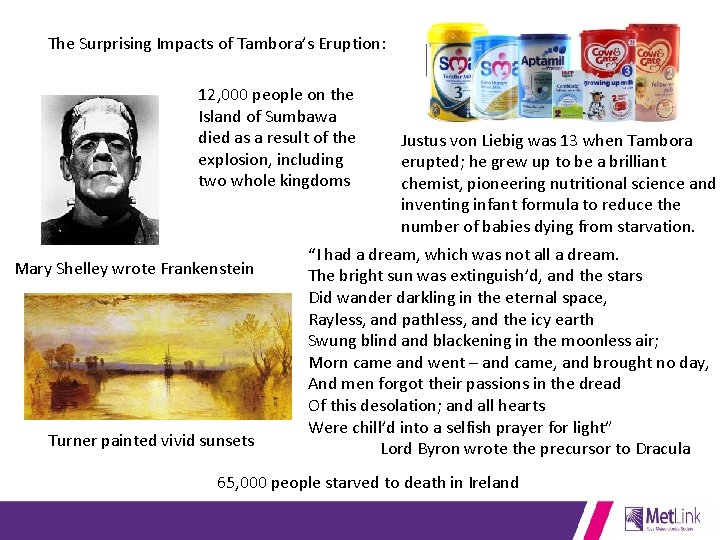
Volcanoes and climate change Volcanic eruptions can cause our climate to change. As the video plays, number the statements below in the correct order to explain how volcanic eruptions can change our climate. These particles reflect some sunlight back into space, and the surface below cools. https: //www. youtube. com/watch? v=Rle. DV 5 tz. I Zo Eruptions spew out not just lava and ash, but also gases—indeed it is these gases, trapped under great pressure in molten rock, that give an eruption its explosive power. In the year after Tambora’s eruption, scientists estimate the stratosphere's sulphate veil caused a 3% drop in rainfall and cooled the planet by 1°C. Two hundred years ago, Tambora, a volcano in Indonesia, blew its top in the most violent eruption in recent history. For the climate, the key gas is sulphur dioxide. Once it gets into the stratosphere, sulphur dioxide from a volcano mingles with water, forming tiny sulphate particles. 5 2 6 1 3 4
The Surprising Impacts of Tambora’s Eruption: 12, 000 people on the Island of Sumbawa died as a result of the explosion, including two whole kingdoms Mary Shelley wrote Frankenstein Turner painted vivid sunsets Justus von Liebig was 13 when Tambora erupted; he grew up to be a brilliant chemist, pioneering nutritional science and inventing infant formula to reduce the number of babies dying from starvation. “I had a dream, which was not all a dream. The bright sun was extinguish’d, and the stars Did wander darkling in the eternal space, Rayless, and pathless, and the icy earth Swung blind and blackening in the moonless air; Morn came and went – and came, and brought no day, And men forgot their passions in the dread Of this desolation; and all hearts Were chill’d into a selfish prayer for light” Lord Byron wrote the precursor to Dracula 65, 000 people starved to death in Ireland
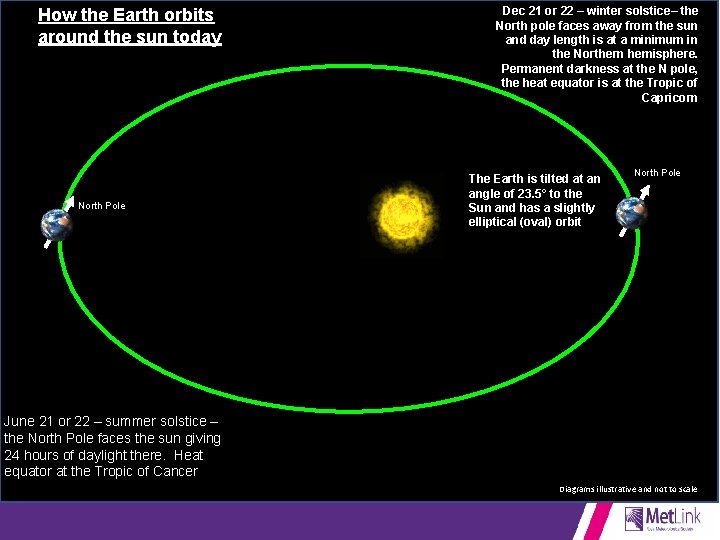
Dec 21 or 22 – winter solstice– the North pole faces away from the sun and day length is at a minimum in the Northern hemisphere. Permanent darkness at the N pole, the heat equator is at the Tropic of Capricorn How the Earth orbits around the sun today The Earth is tilted at an angle of 23. 5° to the Sun and has a slightly elliptical (oval) orbit North Pole to June 21 or 22 – summer solstice – the North Pole faces the sun giving 24 hours of daylight there. Heat equator at the Tropic of Cancer Diagrams illustrative and not to scale
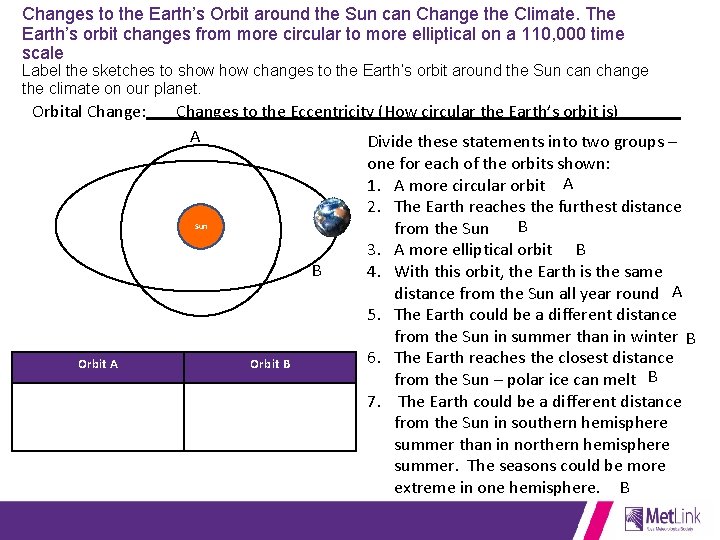
Changes to the Earth’s Orbit around the Sun can Change the Climate. The Earth’s orbit changes from more circular to more elliptical on a 110, 000 time scale Label the sketches to show changes to the Earth’s orbit around the Sun can change the climate on our planet. Orbital Change: Orbit A Changes to the Eccentricity (How circular the Earth’s orbit is) A Divide these statements into two groups – one for each of the orbits shown: 1. A more circular orbit A 2. The Earth reaches the furthest distance Sun B from the Sun 3. A more elliptical orbit B B 4. With this orbit, the Earth is the same distance from the Sun all year round A 5. The Earth could be a different distance from the Sun in summer than in winter B 6. The Earth reaches the closest distance Orbit B from the Sun – polar ice can melt B 7. The Earth could be a different distance from the Sun in southern hemisphere summer than in northern hemisphere summer. The seasons could be more extreme in one hemisphere. B
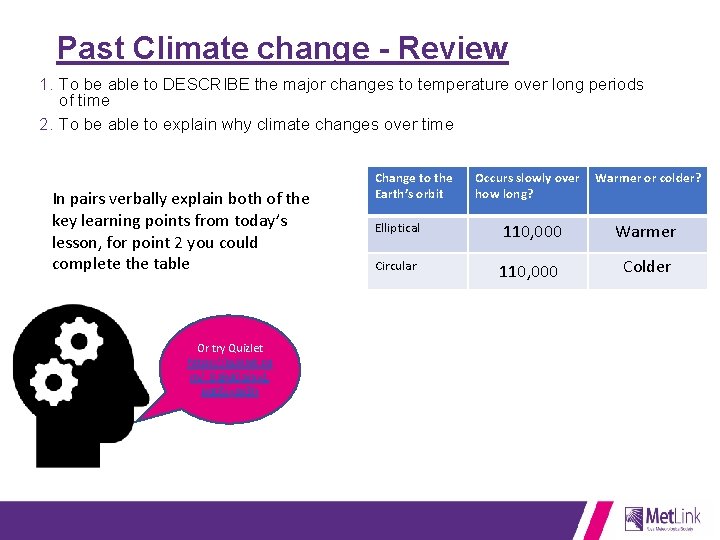
Past Climate change - Review 1. To be able to DESCRIBE the major changes to temperature over long periods of time 2. To be able to explain why climate changes over time In pairs verbally explain both of the key learning points from today’s lesson, for point 2 you could complete the table Or try Quizlet https: //quizlet. co m/_8 a 9 d 0 a? x=1 qqt&i=ay 3 h Change to the Earth’s orbit Occurs slowly over how long? Warmer or colder? Elliptical 110, 000 Warmer Circular 110, 000 Colder
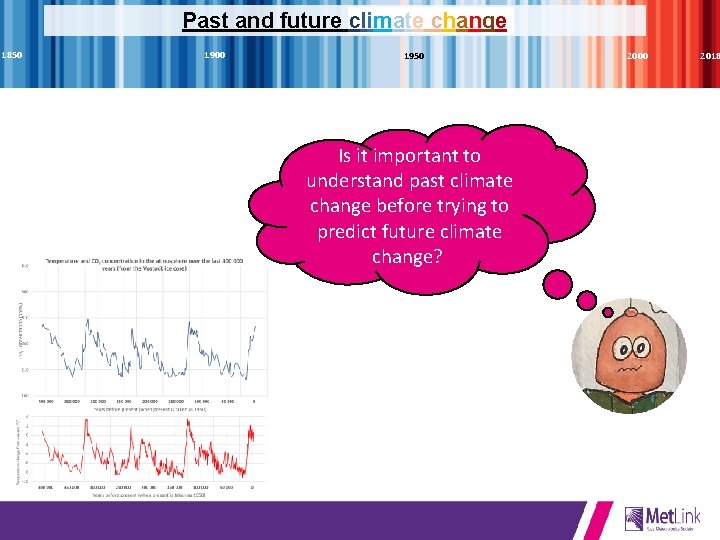
Past and future climate change 1850 1900 1950 Is it important to understand past climate change before trying to predict future climate change? 2000 2018
Homework – the Little Ice Age mystery Humans can change climate too
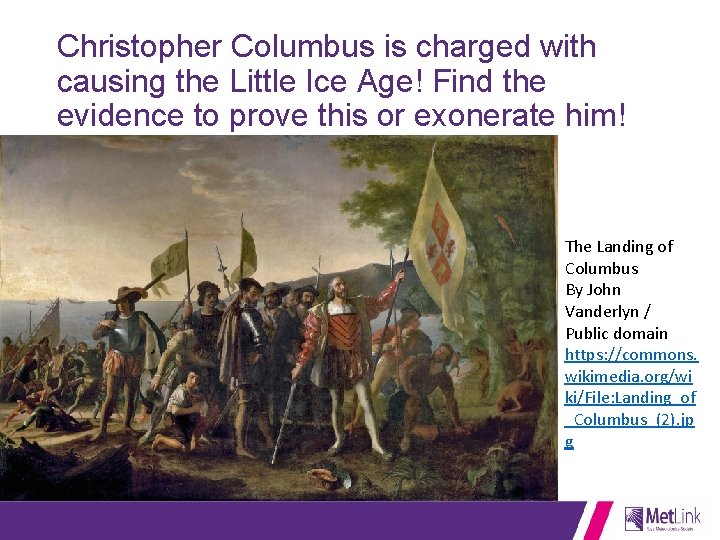
Christopher Columbus is charged with causing the Little Ice Age! Find the evidence to prove this or exonerate him! The Landing of Columbus By John Vanderlyn / Public domain https: //commons. wikimedia. org/wi ki/File: Landing_of _Columbus_(2). jp g
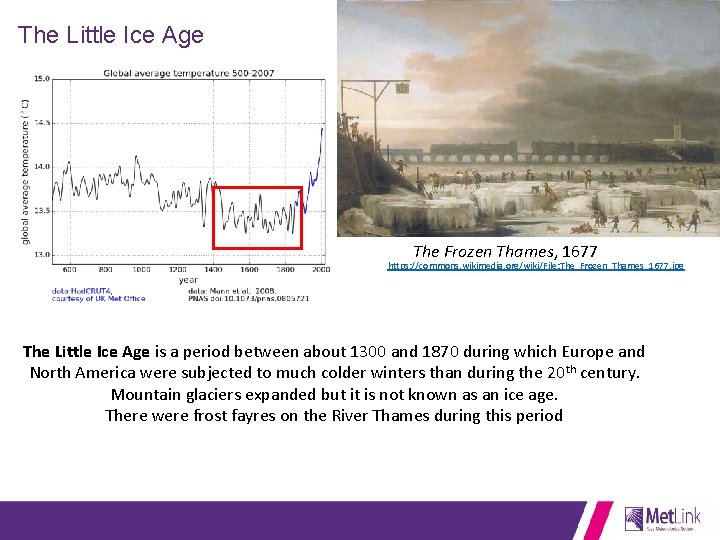
The Little Ice Age The Frozen Thames, 1677 https: //commons. wikimedia. org/wiki/File: The_Frozen_Thames_1677. jpg The Little Ice Age is a period between about 1300 and 1870 during which Europe and North America were subjected to much colder winters than during the 20 th century. Mountain glaciers expanded but it is not known as an ice age. There were frost fayres on the River Thames during this period
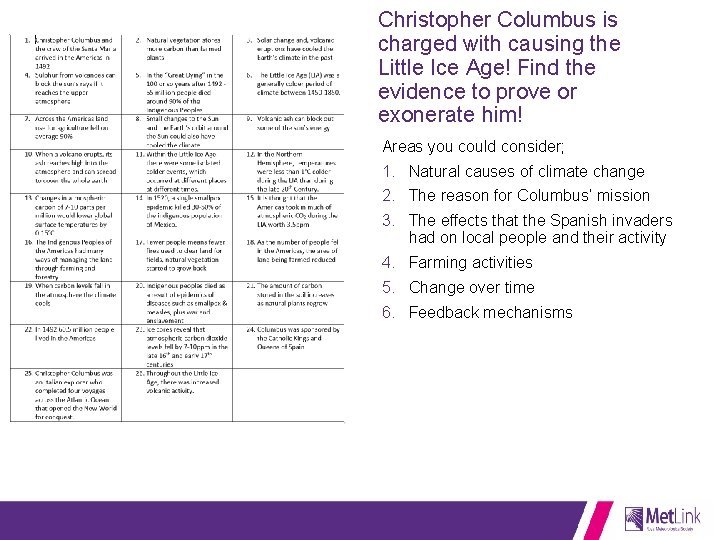
Christopher Columbus is charged with causing the Little Ice Age! Find the evidence to prove or exonerate him! Areas you could consider; 1. Natural causes of climate change 2. The reason for Columbus’ mission 3. The effects that the Spanish invaders had on local people and their activity 4. Farming activities 5. Change over time 6. Feedback mechanisms
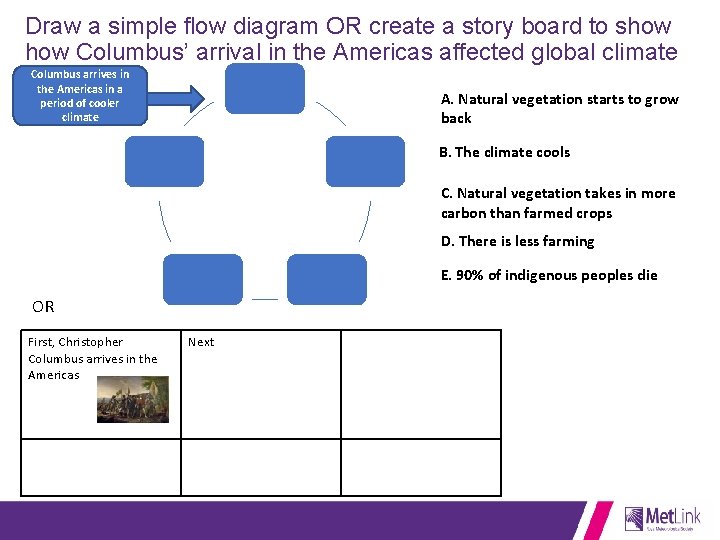
Draw a simple flow diagram OR create a story board to show Columbus’ arrival in the Americas affected global climate Columbus arrives in the Americas in a period of cooler climate A. Natural vegetation starts to grow back B. The climate cools C. Natural vegetation takes in more carbon than farmed crops D. There is less farming E. 90% of indigenous peoples die OR First, Christopher Columbus arrives in the Americas Next